Outremont
Outremont is a federal electoral district and a historic, affluent borough located on the northwestern slope of Mount Royal in Montreal, Quebec. The district encompasses the borough of Outremont itself along with parts of Côte-des-Neiges, Mile End, and several other adjacent neighbourhoods. It is known for its elegant residential character, significant francophone and Hassidic Jewish communities, and its role as a political bellwether in Quebec. The riding has been represented in the House of Commons since 1935 and is currently held by Liberal MP Rachel Bendayan.
Geography and Neighbourhood Character
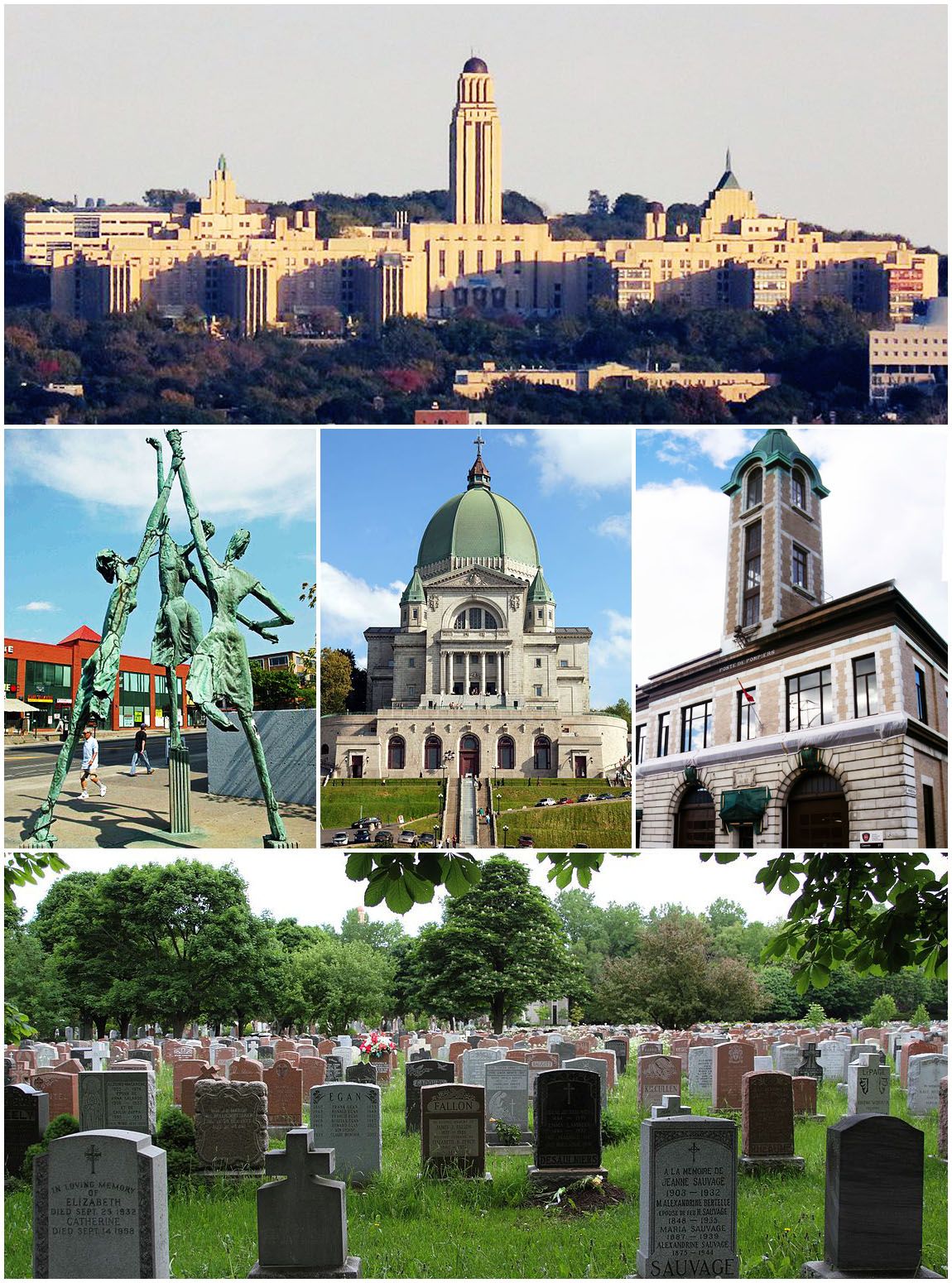
The Outremont electoral district is geographically diverse, covering a central portion of Montreal Island. It includes the entire borough of Outremont, the eastern part of Côte-des-Neiges, the western section of Mile End, and portions of upper Downtown Montreal, La Petite-Patrie, and Parc Extension. The borough of Outremont itself is a prestigious, predominantly residential area characterized by greystone and red-brick houses built between 1900 and 1940, bourgeois duplexes, and tree-lined streets planted with maples and oaks. It is often described as a city within a city, maintaining a distinct village-like atmosphere despite its location within Montreal. The neighbourhood is bounded by Côte-des-Neiges to the west, Van Horne Avenue to the north, Avenue du Parc to the east, and Mount Royal to the south. Its higher section, known as Upper Outremont or Haut Outremont, situated on the slopes of Mount Royal around streets like Maplewood and Springgrove, features the largest and most luxurious properties on the island.
The social and commercial heart of Outremont revolves around three main shopping avenues: Bernard, Laurier, and Van Horne. These streets are lined with cafés, bakeries, bookshops, boutiques, and well-known restaurants that cater to the local community. The area is calm, green, and academic, with the expansive grounds of the Université de Montreal and Mount Royal Park providing significant green space at its southern edge. The newer MIL campus, developed on a former rail yard, connects the neighbourhood to the north toward Parc Extension. Outremont's identity is also shaped by its long-established Hassidic Jewish community, which represents Montreal's largest such community and contributes to the area's cultural and linguistic diversity, notably reflected in the continued use of Yiddish.
Demographic Profile
Outremont presents a diverse and evolving demographic landscape. According to the 2016 Canadian census, French was the predominant language spoken at home by 54.9 percent of the population, followed by English at 23.5 percent. Reflecting its cultural communities, other significant home languages included Yiddish (4.9 percent), Spanish (2.7 percent), and Arabic (2.4 percent). The 2011 census provided a detailed snapshot of ethnic and religious composition. The population was 69.5 percent White, with notable communities identifying as Black (6.9 percent), Arab (6.7 percent), and Latino (3.8 percent). In terms of religion, just over half the population (50.7 percent) identified as Christian, while significant minorities identified as Jewish (11.0 percent) and Muslim (9.5 percent). 26.0 percent reported no religious affiliation. The district's median income was $22,551 as of 2010, with an average income of $39,486.
The demographic data shows Outremont's status as a primarily francophone neighbourhood that is experiencing diversification. The presence of the Hassidic Jewish community is a longstanding feature, while other immigrant communities have also established themselves in the area. This mix contributes to a varied streetscape and a range of cultural and culinary offerings. The district's population was recorded as 102,088 in the 2016 census, making it a densely populated urban riding. The socioeconomic profile tends toward higher education levels and professional occupations, consistent with its proximity to major universities and its historic affluence, though income levels within the broader electoral district show variation.
Political History and Significance
The federal electoral district of Outremont was created in 1933 from parts of the Laurier, Outremont and Mount Royal ridings. It was represented in the House of Commons continuously from the 1935 election onward. For a period between 1949 and 1968, it was known as Outremont, Saint-Jean. The riding's boundaries have been adjusted several times through electoral redistributions, most recently in 2022, when it gained territory south of Avenue Christophe-Colombe and west of Rue Rachel from Laurier, Sainte-Marie. Outremont has historically been a competitive riding, alternating between the Liberal Party and other parties, and it gained particular national significance in the 21st century due to the rise of the New Democratic Party (NDP) in Quebec.
The political geography of the riding is complex, with support patterns varying by neighbourhood. In the 2006 election, Liberal support was strongest in Côte-des-Neiges and Parc-Extension, while the Bloc Québécois was concentrated in the borough of Outremont and around the Université de Montreal. The NDP first showed strength by winning polls in Mile End. A key moment occurred with a 2007 by-election, triggered by the resignation of Liberal MP Jean Lapierre. The NDP candidate, Thomas Mulcair, won the by-election, capturing the riding for his party and giving the NDP only its second-ever seat in Quebec. Mulcair retained the seat in the 2008 general election, marking the NDP's first re-election victory in the province. Until the 2011 election, Outremont remained the sole Quebec riding held by the NDP. Mulcair was challenged in 2011 by former Liberal cabinet minister Martin Cauchon, but held the seat as part of the NDP's historic breakthrough in the province.
Transportation and Local Amenities
Outremont is well-served by Montreal's public transit network. The Metro's Blue Line provides service at three stations within the area: Outremont, Édouard-Montpetit (serving the Université de Montreal), and Acadie. An extensive bus network operates along major arteries such as Côte-Sainte-Catherine, Van Horne, Laurier, and Avenue du Parc. For cyclists and pedestrians, Mount Royal Park offers direct connections to downtown Montreal via its trail network. By car, the district is close to major highways including the Décarie (Highway 15) and the Metropolitan Autoroute. The neighbourhood's walkability is a key feature, with daily needs met along the commercial avenues and larger destinations like Jean-Talon Market and the Mile End district within walking distance.
The borough has several significant green spaces and recreational facilities. Key parks include the large Outremont Park with its pond, Beaubien Park, Joyce Park, and Saint-Viateur Park. The sprawling Mount Royal Park, with its lookouts, cemeteries, and forests, is directly adjacent to the south. Cultural amenities are centred on the Théâtre Outremont. The area falls under the Centre de services scolaire Marguerite-Bourgeoys and the English Montreal School Board for public education, with several prestigious private colleges nearby. Major post-secondary institutions on or near its territory are the Université de Montreal, HEC Montréal, and Polytechnique Montréal. Healthcare needs are served by neighbouring institutions like the CHU Sainte-Justine and the Jewish General Hospital. Local services include the Robert-Bourassa library, public swimming pools, and sports arenas.
Real Estate and Housing Market
The Outremont real estate market is among the most exclusive and expensive in Montreal. According to 2026 data, the borough is grouped with Westmount, Town of Mount Royal, and Hampstead in the real estate industry's Centre sector. The typical single-family home price in Outremont was $1,980,000, reflecting a slight decrease of 3 percent year-over-year and a minimal increase of just 1 percent over the previous five years. This stability contrasts with a 21 percent price increase for the island of Montreal overall during the same period. The typical condo price was $770,000, down 1 percent year-over-year but up 19 percent over five years. Properties in Outremont spent an average of 64 to 71 days on the market in 2026.
The market dynamics vary significantly by price range. In 2026, the market favoured sellers for homes priced below $2.44 million, was balanced for homes between $2.44 million and $2.93 million, and favoured buyers for properties above $2.93 million, where inventory levels reached 17.9 months. This indicates that the high-end segment of Montreal's market was experiencing the most negotiation room. For context, the island-wide median price for a single-family home in August 2026 was $820,000, selling in 57 days, while condos averaged $475,000. Outremont's price per square foot is among the highest on the island. The housing stock is dominated by detached homes, duplexes, and triplexes built in the early to mid-20th century, with some newer condominium developments, particularly in Lower Outremont near the Acadie metro station.
- Typical Single-Family Home (2026): $1,980,000
- Typical Condominium (2026): $770,000
- Price Change (5 years): +1% for houses, +19% for condos
- Market Classification (2026): Seller's market below $2.44M, balanced to $2.93M, buyer's market above.
- Days on Market (2026): 64-71 days
- Island Comparison (Aug 2026): Median house $820,000, median condo $475,000.
Comparative Context with Westmount
Outremont is often compared to Westmount, its affluent counterpart on the southwestern slope of Mount Royal. Both are historic, tree-lined residential neighbourhoods known for their elegant homes, excellent schools, and active commercial streets. They share a similar topography where property values and grandeur increase with elevation on the mountain. However, key distinctions define their characters. Outremont is predominantly francophone, rooted in the history of Montreal's French-Canadian elite, while Westmount has traditionally been an anglophone stronghold. Outremont's commercial life is distributed along Bernard, Laurier, and Van Horne avenues, whereas Westmount's centre is Sherbrooke Street West. Outremont is administratively a borough of Montreal, while Westmount retains a separate city status with its own municipal services and police force.
The architectural feel, while both largely traditional, also differs. Outremont features many greystone and red-brick duplexes and triplexes alongside detached homes, while Westmount is known for its larger, often detached, stone mansions. Upper Westmount is also a significantly larger geographic area than Haut Outremont. Culturally, Outremont is integrated with the adjacent Mile End and Plateau neighbourhoods, sharing parks and a bohemian-tinged vibe, while Westmount has a more self-contained and formal atmosphere. Both offer a high quality of life with immediate access to green space, upscale shopping, and dining, but the choice between them often comes down to linguistic and cultural preference, as well as specific architectural tastes.
Recent Developments and 2026 Outlook
The Outremont area continues to evolve while maintaining its core residential character. A major recent development is the MIL campus (Montréal Innovation District) on the former Outremont rail yard in the northern part of the borough. This project has brought new educational facilities, research centres, and green space, creating a bridge between Outremont and the Parc Extension neighbourhood. Provincially, the electoral map was reviewed in 2026, leading to the creation of the new provincial riding of Mont-Royal-Outremont, which includes the Town of Mount Royal and the borough of Outremont. This change reflects ongoing demographic and political adjustments in the region.
The 2026 real estate outlook for Outremont highlights a market in a state of recalibration. After five years of minimal price movement for single-family homes, the market presents a unique scenario where sellers must be precise with pricing based on recent comparable sales, while buyers have more time to negotiate, especially in the upper price brackets. The neighbourhood remains a top choice for those seeking an elegant, safe, and well-serviced urban village with excellent access to Mount Royal, top-tier schools, and universities. However, its high price point and static market mean it is less attractive for investors seeking rapid appreciation. The community continues to diversify, and its commercial streets remain active hubs supported by a loyal local population, ensuring Outremont's enduring status as one of Montreal's most coveted addresses.
Questions about Outremont
What is Outremont known for?
Outremont is recognized as one of Montreal's most elegant and affluent residential neighbourhoods. It is famous for its beautiful greystone and red-brick homes, tree-lined streets, and upscale shopping avenues like Bernard and Laurier. The area is also known for its significant francophone community and for being home to Montreal's largest Hassidic Jewish community. Its location on the northwestern slope of Mount Royal provides residents with direct access to the park's trails and lookouts.
Is Outremont an anglophone or francophone neighbourhood?
Outremont is a predominantly francophone neighbourhood. According to the 2016 census, 54.9 percent of the population reported French as their first language spoken at home, compared to 23.5 percent for English. The area has historic roots as a haven for Montreal's French-Canadian elite. However, it is also linguistically diverse, with notable communities speaking Yiddish, Spanish, Arabic, and other languages, reflecting its varied cultural makeup.
How expensive is it to live in Outremont?
Outremont is one of the most expensive housing markets in Montreal. In 2026, the typical price for a single-family home was $1,980,000, while a condominium averaged $770,000. Prices have shown remarkable stability, increasing only 1 percent for houses over the preceding five years. Rental costs can also be high, though some guides note more affordable options around $1,270 per month. The cost per square foot is among the highest on the island.
What are the main parks and green spaces in Outremont?
Outremont residents enjoy access to several beautiful parks. The largest is Outremont Park, which features a large pond. Other neighbourhood parks include Beaubien Park, Joyce Park, and Saint-Viateur Park. The greatest asset is the adjacent Mount Royal Park, offering extensive forests, walking and biking trails, and panoramic lookouts over the city. The Mount Royal Cemetery also provides expansive, park-like grounds for quiet recreation.
How is Outremont different from Westmount?
While both are affluent neighbourhoods on Mount Royal, key differences exist. Outremont is primarily francophone and integrated as a borough of Montreal, with commercial hubs on Bernard, Laurier, and Van Horne. Westmount is historically anglophone, a separate city with its own services, and centred on Sherbrooke Street West. Architecturally, Westmount features larger, detached stone mansions, while Outremont has more duplexes and triplexes. Both offer a high quality of life but with distinct cultural flavours.
Who is the current Member of Parliament for Outremont?
The current Member of Parliament for the federal electoral district of Outremont is Rachel Bendayan of the Liberal Party of Canada. This riding in Montreal, Quebec has been represented in the House of Commons since 1935. Historically, it was the only Quebec riding held by the New Democratic Party for a period, following Thomas Mulcair's victory in a 2007 by election. Mulcair retained the seat in the 2008 general election, marking the NDP's first re election and first general election victory in Quebec. The district includes the borough of Outremont, parts of Côte des Neiges and Mile End, and sections of several other Montreal boroughs. Its demographic profile is diverse, with a population of 102,088 as of the 2016 census.
Sources and further reading
- Outremont (Wikipedia)
- Living in Outremont, Montreal: 2026 Neighbourhood Guide and (loaamanseur-remax.ca)
- Mont-Royal-Outremont, Electoral division information sheet (electionsquebec.qc.ca)
- Montréal neighbourhoods: Discover Outremont and ... (mtl.org)
- Best Neighborhoods to Move to in Montreal (2026 Guide) (upandout.ca)
Checked by the Your Space Hamilton desk. Last updated 2026-10-29.