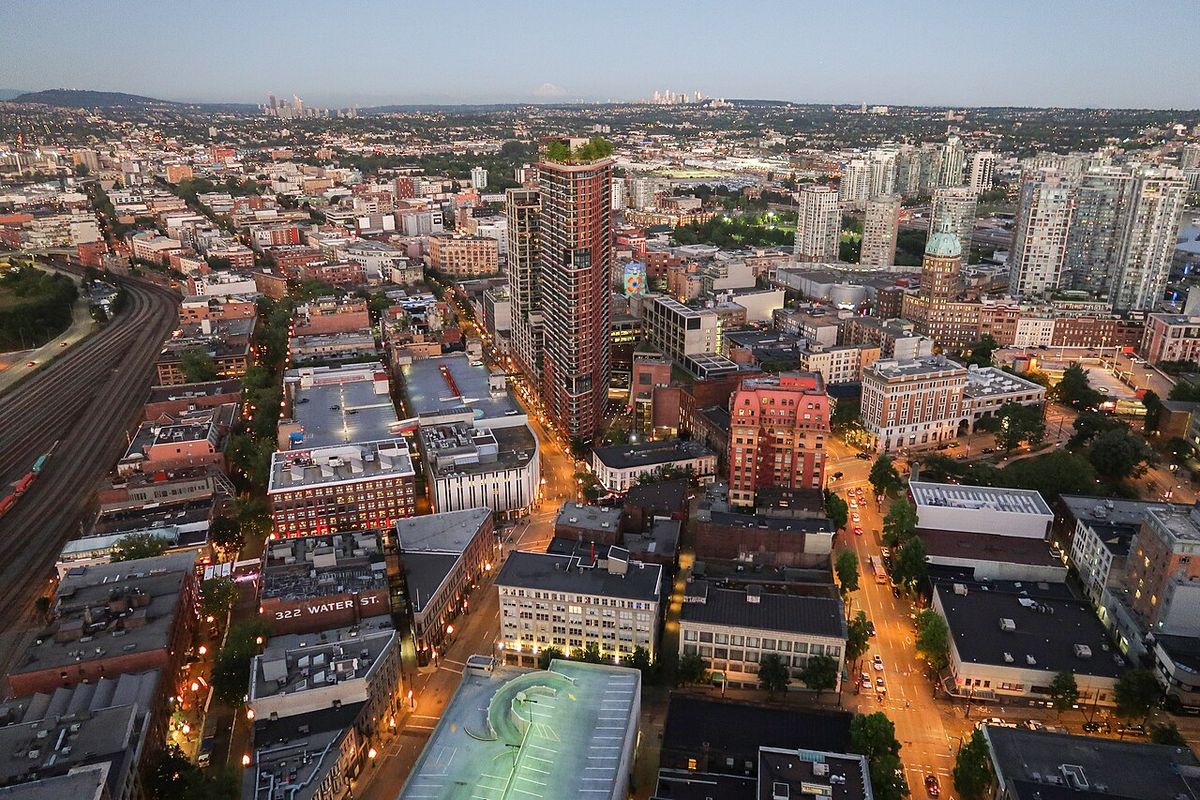
Hogan's Alley, Vancouver
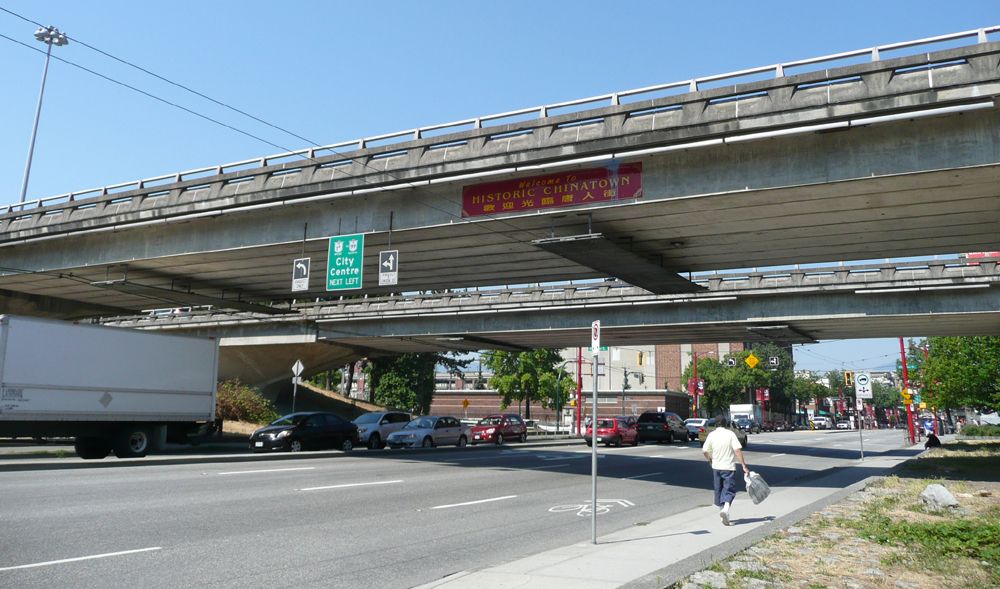
Hogan's Alley was the unofficial name for Park Lane, a short alley in the Strathcona neighbourhood of Vancouver, British Columbia. From the early 1900s until its demolition around 1970, it was the heart of the city's most concentrated Black community, home to families, businesses, and cultural institutions like the African Methodist Episcopal Fountain Chapel. The neighbourhood was largely destroyed to make way for the Georgia and Dunsmuir Viaducts, a project emblematic of urban renewal policies that disproportionately displaced racialized communities. Today, Hogan's Alley is the subject of memorialization, advocacy, and a landmark redevelopment effort led by the Hogan's Alley Society to restore a cultural and physical presence for Vancouver's Black community.
Origins and Growth of the Community
The roots of Hogan's Alley trace back to 1858, when Governor James Douglas extended an invitation to Black Californians seeking refuge from hostile racial conditions in San Francisco. Following the Fraser Canyon Gold Rush, some of these early migrants settled on Salt Spring Island before moving to Vancouver around the turn of the twentieth century, drawn by the city's economic opportunities. Concurrently, Black Albertans, whose families had originally migrated from Oklahoma, began arriving in Strathcona. The neighbourhood's growth was further bolstered by Black railway porters, members of the Brotherhood of Sleeping Car Porters, who settled there due to its proximity to the Great Northern Railway terminus. By 1914, the Black community centred on Hogan's Alley numbered approximately 300 residents. A 1957 city planning study noted that this area housed a large proportion of Vancouver's total Black population, attributing its appeal to cheap housing, employment near the railroads, and its status as a traditional home for non-white groups.
The area likely acquired its nickname, Hogan's Alley, in the early 1900s. The name was a wry reference to the setting of Richard F. Outcault's popular comic strip, The Yellow Kid, which depicted a chaotic, ethnically diverse tenement district. This borrowed moniker reflected the area's own mix of Black, Italian, Chinese, Japanese, Jewish, and Indigenous residents. For decades, the alley and its surrounding streets formed a cohesive, if unofficial, neighbourhood where community life thrived despite external pressures and negative portrayals. The strategic settlement by railway workers created a stable core, while families established deep roots, founding churches and businesses that served as anchors for social and cultural life.
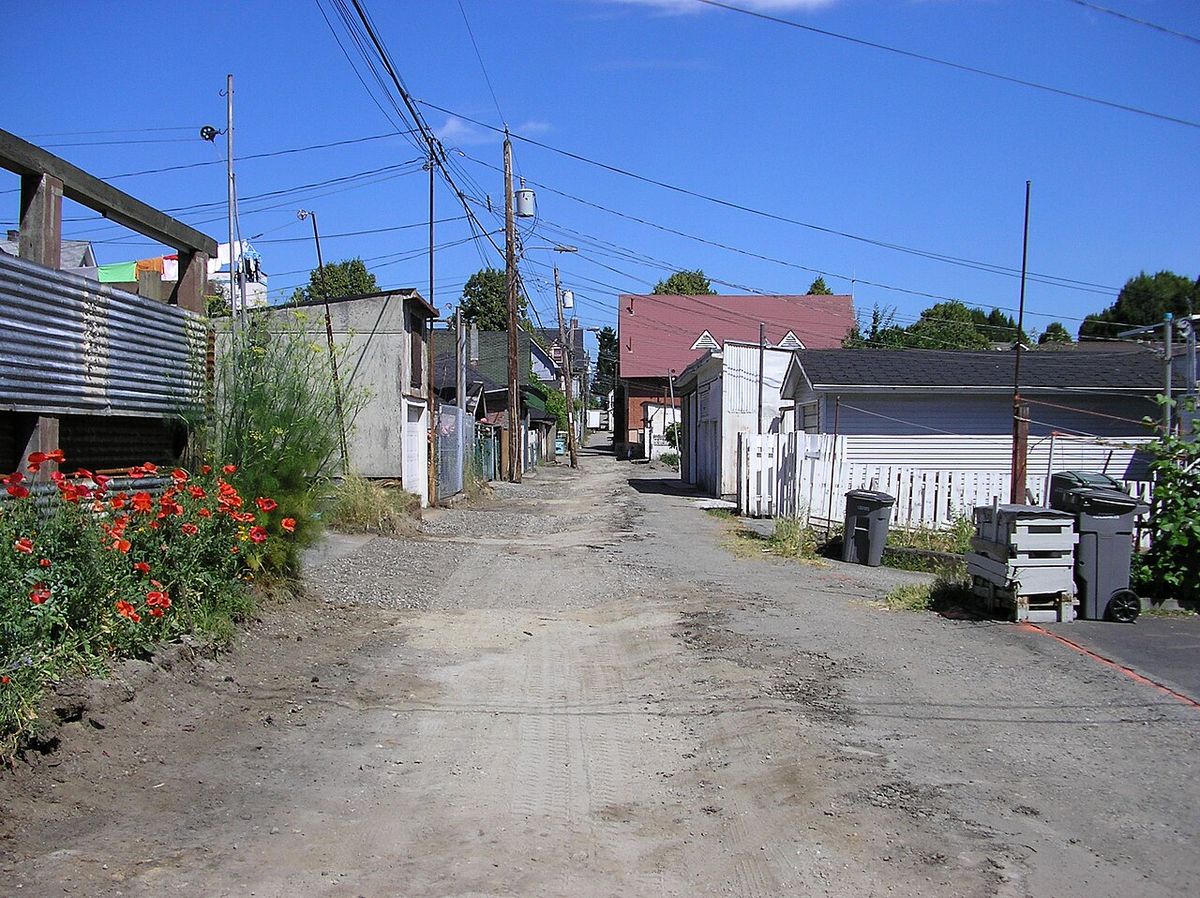
A Lively Cultural Hub
Hogan's Alley was known for its active atmosphere, hosting a variety of Black cultural institutions and nightlife. It also contained a red light district prior to 1935. This environment fostered an entertainment scene that attracted local residents, railway porters, and touring musicians. The neighbourhood's cultural strength was expressed through its restaurants, music venues, and its central religious institution, which together created a strong sense of identity and belonging for its residents.
Hogan's Alley was a lively area filled with a number of popular Black cultural institutions. The African Methodist Episcopal Fountain Chapel, established between 1918 and 1923, served as the cultural hub of the community. The area also housed Vie's Chicken and Steak House, a restaurant visited by famous musicians like Louis Armstrong and Nat King Cole. Other establishments included the Harlem Nocturne, the only Black-owned nightclub in Vancouver, and Leona Risby's Country Club, known for its floorshows.
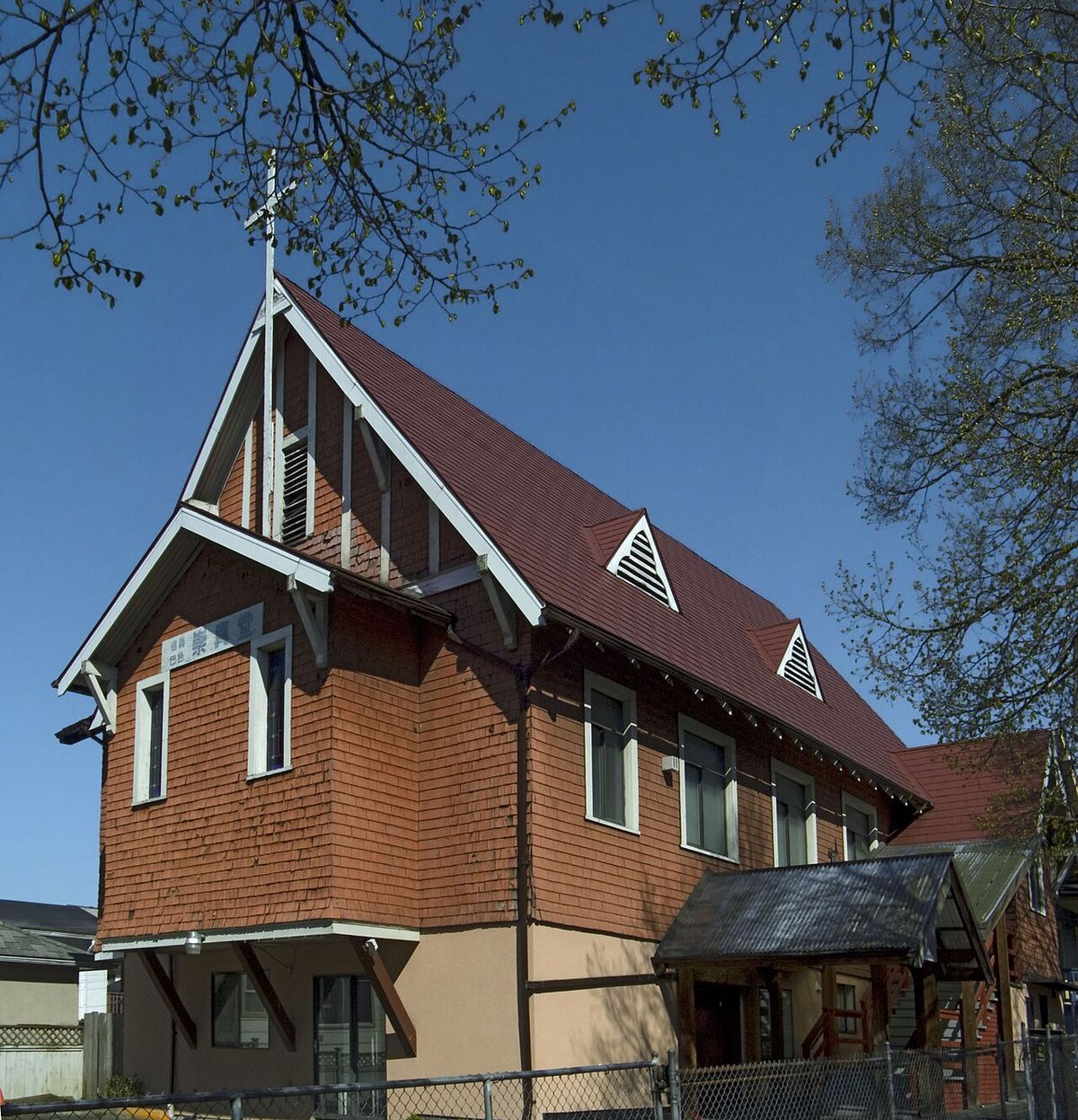
- The African Methodist Episcopal Fountain Chapel: Established between 1918 and 1923 at 823 Jackson Avenue, this church was co-founded by community members including Nora Hendrix. It served as the cultural hub of the community, hosting turkey dinners, chitlin dinners, and a choir that performed at venues like the Avenue Theatre.
- Vie's Chicken and Steak House: Opened in 1948 at 209 Union Street by Vie Moore and her husband Robert, this restaurant was a legendary hotspot that employed many local residents, including Nora Hendrix. It attracted famous musicians like Louis Armstrong, Sammy Davis Jr., and Nat King Cole before closing in 1980.
- Rosa Pryor's Chicken Inn: Located on Keefer Street, this was Vancouver's first chicken restaurant and the first restaurant owned by a Black woman.
- Harlem Nocturne: Owned by trombonist Ernie King at 343 E. Hastings Street, this was the only Black-owned nightclub in Vancouver.
- Leona Risby's Country Club: A restaurant at 247 E. Georgia Street known for its floorshows and jazz musician patrons.
- The Pullman Porters' Club on Main Street, which served Black railway porters.
Demolition and Displacement
The destruction of Hogan's Alley was the result of decades of municipal policy framed as urban renewal. In 1931, the City of Vancouver rezoned the area as industrial, leading to disinvestment and neglect. This devaluation was followed by academic and official reports labelling Strathcona a slum. Leonard Marsh's 1950 proposal, Rebuilding A Neighbourhood, and the city's 1957 Vancouver Redevelopment Study targeted the East End for major rehabilitation. These reports, combined with negative media portrayals of the area, helped justify clearance. The final catalyst was a massive freeway plan, 'Project 200,' developed largely in secret by the University of British Columbia and the Non-Partisan Association civic government. The 1967 Vancouver Transportation Study detailed an eight-lane freeway and viaduct system that would run through Hogan's Alley, Chinatown, and Gastown.
Community backlash was swift. Residents Bessie Lee and Mary Lee Chan formed the Strathcona Property Owners and Tenants Association (SPOTA) to fight the plan, gathering signatures and advocating forcefully. While SPOTA successfully halted the larger freeway project, saving Strathcona, Chinatown, and Gastown from complete razing, it was too late for much of Hogan's Alley. Construction on the Georgia and Dunsmuir Viaducts lasted from 1967 to 1971, and the structures opened in 1972. The viaducts required the demolition of most homes in the alley's path. A city freeze on property values and a ban on home improvement permits in the years prior had already spurred an exodus, and public works maintenance was neglected. Many Black families chose to disperse across Vancouver rather than relocate to the Maclean Park or Raymur (now Stamps Place) housing projects built for displaced residents between 1966 and 1970.
Memorialization and Advocacy
Since its destruction, Hogan's Alley has been remembered through cultural works and community activism. The Hogan's Alley Memorial Project, the Hogan's Alley Working Group, and the Hogan's Alley Society have been central to efforts to memorialize the area and advocate for Vancouver's Black community. Cultural references include Cornelia Wyngaarden and Andrea Fatona's 1994 documentary Hogan's Alley, Wayde Compton's poem Rune, and Stan Douglas's 2014 interactive work Circa 1948. In 2007, the 'Hogan's Alley Welcomes You' living sign of flowers was installed by artist Lauren Marsden and the Vancouver Flower Brigade. Canada Post issued a stamp featuring resident Nora Hendrix in 2014, and a mural honouring prominent residents was painted on the Georgia Viaduct for the 2020 Vancouver Mural Festival. Jamila Pomeroy's 2023 documentary Union Street also centres on the neighbourhood's history.
A significant step toward formal recognition came in 2015 when the City of Vancouver announced plans to remove the viaducts and establish a 27,000 square foot Cultural Centre in the Hogan's Alley area, focusing on Black Canadian history and community engagement. The city committed to working with the Hogan's Alley Working Group on long-term leases and a land trust. In 2019, temporary modular housing on Union Street was named Nora Hendrix Place. In 2021, the city approved naming a new street 'Nora Hendrix Way,' which will be the first official Vancouver street named after a Black woman, though the Hogan's Alley Society criticized the lack of community consultation in the process.
The Hogan's Alley Resurgence and Future Development
A landmark agreement in 2026 between the City of Vancouver and the Hogan's Alley Society has set the stage for the physical and cultural revival of the historic neighbourhood. The deal provides a community land trust to the society for the block bordered by Main and Gore streets and Union and Prior streets. In return, the society will develop housing, amenities, and a cultural centre on the site, aiming to redress the losses of the past and recreate a hub for the Black community. The redevelopment will require the eventual removal of the viaducts and the introduction of a new street network, projects still several years away as of 2026.
Central to this new chapter is the Hogan's Alley Resurgence, a free, Black-led annual celebration launched in 2026. Held at People's Park on September 26, 2026, the event features music, art, food, and community connection, honouring both the legacy and future of the neighbourhood. It acts as a reclaiming of space and memory ahead of the new developments. The society also hosts other community activations, such as a free outdoor film screening of works by Black directors in August 2026. These events, alongside ongoing advocacy and the planned cultural centre, represent a concerted effort to restore the visibility and strength of Black life in the heart of Vancouver.
Notable Residents and Their Legacies
The community of Hogan's Alley was home to many individuals who made significant contributions to Vancouver's cultural and social fabric. Nora Hendrix was a community pillar who immigrated from Tennessee in 1911, co-founded the Fountain Chapel, worked as a cook at Vie's, and was the grandmother of musician Jimi Hendrix. Barbara Howard, an athlete and teacher from the wider Strathcona area, was the first Black woman to compete for Canada in an international sporting event at the 1938 British Empire Games and later became the first visible minority educator hired by the Vancouver School Board. Ernie King was a trombonist, actor, and business owner who ran the Harlem Nocturne, Vancouver's only Black-owned nightclub.
The Gibson siblings, Leonard, Thelma, Chic, and Sy, were artists, dancers, and performers. Leonard founded the Negro Workshop Dance Group and was instrumental in CBC's Bamboula, while Thelma, an internationally touring Afro-Cuban dance teacher, received a Lifetime Achievement Award from the Black Historical Society of BC in 2005. Chic was the first Black person to work for BC Hydro, and their mother was Leona Risby, owner of the Country Club Inn. Other notable figures included Leonard Lane, a Fountain Chapel member and community activist, and the Crump Twins, Ronnie and Robert, a prominent performance duo inducted into the BC Entertainment Hall of Fame in 2019.
Historical Context and Lasting Impact
The story of Hogan's Alley is not an isolated incident but part of a broader pattern in twentieth-century North American urban planning, where so-called slum clearance and freeway construction disproportionately displaced racialized and low-income communities. The destruction of the neighbourhood fragmented Vancouver's Black community, scattering families and erasing a central geographic and cultural touchstone. Scholars and advocates like Stephanie Allen and Wayde Compton have highlighted how rezoning, disinvestment, and negative media portrayals were tools of systemic racism that facilitated the area's demolition. The fight against the freeway, led by SPOTA, is also a key chapter in Vancouver's history of successful community activism, preserving much of Strathcona and Chinatown even as Hogan's Alley was lost. The ongoing work of the Hogan's Alley Society and its partners represents a powerful movement toward restorative justice and cultural reclamation, aiming to reverse decades of erasure.
The 2026 land trust agreement is a concrete attempt to return agency over the land to the Black community. The planned cultural centre, housing, and commercial spaces aim to rebuild not just buildings, but the social and economic ecosystem that was destroyed. The Hogan's Alley Resurgence festival and related events actively reanimate public space with Black art and history. This comprehensive effort ensures that the legacy of Hogan's Alley is not confined to the past but is actively shaping Vancouver's future, serving as a reminder of the city's complex history and a model for an inclusive city.
Questions about Hogan's Alley, Vancouver
What is being done to remember Hogan's Alley today?
Multiple community groups, including the Hogan's Alley Society, work to memorialize the area. The City of Vancouver has announced plans for a Cultural Centre on the site and, in 2026, established a community land trust with the society for redevelopment. Annual events like the Hogan's Alley Resurgence festival celebrate Black culture and legacy. Memorials include a living flower sign, historical documentaries, public murals, and the naming of Nora Hendrix Place and Nora Hendrix Way.
What was the Fountain Chapel?
The African Methodist Episcopal Fountain Chapel was located at 823 Jackson Avenue and was established by several of Hogan's Alley's community members between 1918 and 1923. It served as the cultural hub of the community. Jimi Hendrix's grandmother Nora Hendrix was one of its founders. The church was sold in the 1980s to the Basel Hakka Lutheran Church.
Who was Nora Hendrix and what was her connection to Hogan's Alley?
Nora Hendrix was a prominent Hogan's Alley resident who immigrated from Tennessee in 1911. She was a co-founder of the Fountain Chapel and worked as a cook at the legendary Vie's Chicken and Steak House. She is also known as the grandmother of guitarist Jimi Hendrix, who visited her frequently in Vancouver. Her legacy is honoured through Nora Hendrix Place (modular housing) and the approved Nora Hendrix Way street name.
Where exactly was Hogan's Alley located in Vancouver?
Hogan's Alley was the local, unofficial name for Park Lane, an alley that ran through the southwestern corner of Strathcona in Vancouver, British Columbia, Canada. The alley was located between Union and Prior Streets (north-south) and ran from approximately Main Street to Jackson Avenue (west-east). This area was part of the ethnically diverse Strathcona neighbourhood during the first six decades of the twentieth century. It was home to a concentrated Black population, Black businesses, and the city's only Black church. The physical alley itself was a central feature of this lively community.
Why was Hogan's Alley demolished?
Most of Hogan's Alley was destroyed around 1970 by the civic government's construction of the Georgia Viaduct. This viaduct was the first phase of a planned interurban freeway, part of an urban renewal project that targeted the East End as an area of decay. The project, developed largely in secret, called for the complete demolition of the area. Although subsequent freeway construction was stopped by the Strathcona Property Owners and Tenants Association, the halting action came too late to save Hogan's Alley. The area had already been strategically devalued, including a 1931 rezoning to industrial, which facilitated the justification for its demolition.
What is the Hogan's Alley Resurgence?
The Hogan's Alley Resurgence is a free, Black led community celebration scheduled for September 26, 2026, in Vancouver. It is organized by the Hogan's Alley Society to honour the legacy and future of the neighbourhood. The event will feature music, art, food, and community connection, transforming People's Park into a living archive. This gathering is described as an active reclaiming of space, memory, and joy ahead of planned new developments in housing and cultural infrastructure. It aims to bring Vancouver's Black history, present, and future to life in the heart of the city.
Sources and further reading
- Hogan's Alley, Vancouver (Wikipedia)
- EVENTS, Hogan's Alley Society (hogansalleysociety.org)
- The renaissance of Hogan's Alley: Deal struck to revive ... (cbc.ca)
Checked by the Your Space Hamilton desk. Last updated 2026-10-29.