Strathcona, Vancouver
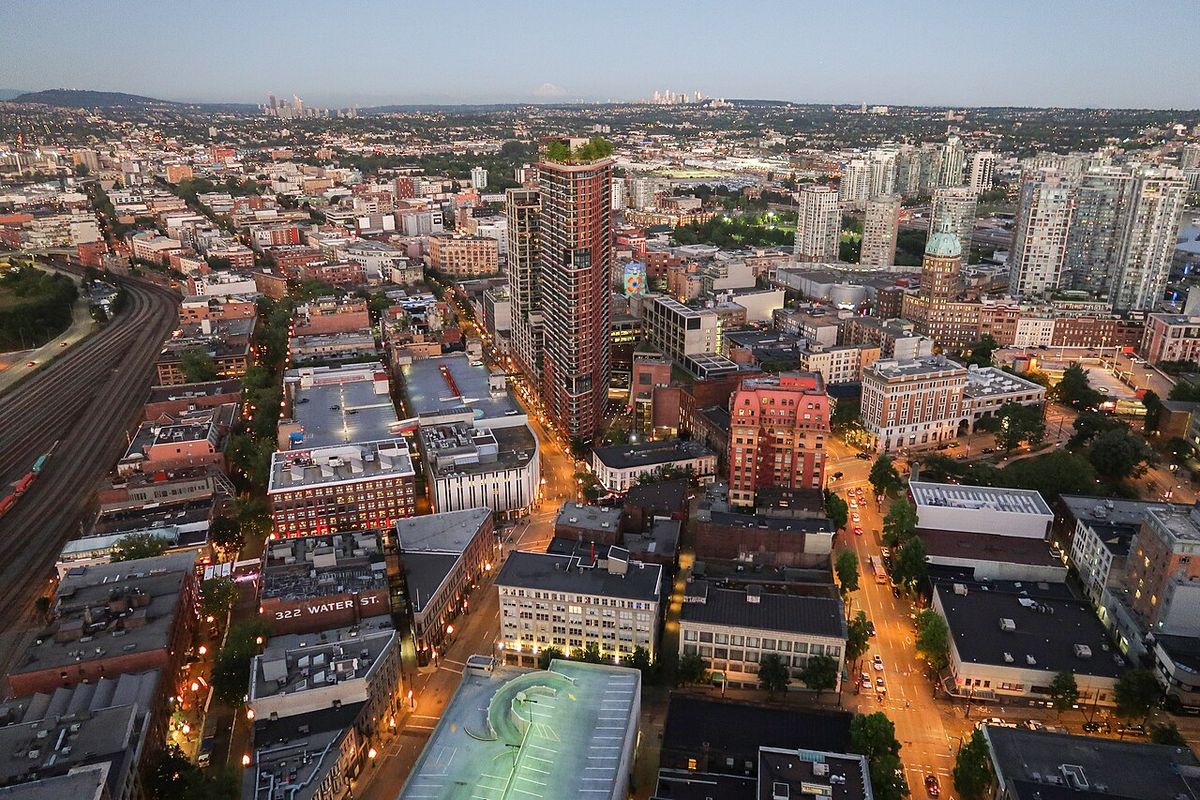
Strathcona is the oldest residential neighbourhood in Vancouver, British Columbia, established from the original settlement around Hastings Mill following the city's founding in 1886. Located on Vancouver's East Side, it is bordered by Chinatown and False Creek to the west, the Downtown Eastside to the north, Grandview-Woodland to the east, and Mount Pleasant to the south. The neighbourhood is historically significant as a long standing hub of immigration and culture, characterized by its Chinese, Vietnamese, and European communities, and more recently by an influx of middle class and affluent residents. Strathcona is renowned for its preserved late 19th and early 20th century heritage houses, strong community activism, and its unique identity within the rapidly evolving city.
History and Development
The neighbourhood that would become Strathcona grew rapidly between 1886 and 1920, fueled by Vancouver's emergence as a key railway terminus. Originally known as the East End, the area officially adopted the name Strathcona in the 1960s. Its demographic composition has always been ethnically diverse, and while historically working class, it now encompasses a wide range of socio economic groups. In the 1950s and 1960s, Strathcona was targeted for large scale urban renewal, a plan that would have demolished much of the area for social housing projects. This redevelopment proceeded with the construction of the MacLean Park housing development and Stamp's Place, resulting in the bulldozing of approximately 15 blocks, including the historic Black community of Hogan's Alley.
Community opposition, led by residents such as Bessie Lee, Mary Lee Chan, Walter Chan, and Shirley Chan, coalesced into the Strathcona Property Owners and Tenants Association (SPOTA). This successful grassroots movement halted further demolition and gave rise to important municipal political figures, including future mayor Mike Harcourt and the TEAM and COPE parties. In 1971, another community action group, the Militant Mothers of Raymur, occupied the north south rail line that bisected the neighbourhood, protesting the danger it posed to children walking to Admiral Seymour Elementary School. Their direct action led to the construction of a pedestrian and cyclist overpass at Keefer Street. Further plans for a freeway through the southern part of Strathcona, which would have damaged Chinatown and Gastown, were also abandoned due to public protest.
The Mau Dan Gardens Co operative was established in October 1981 as the last of five housing projects initiated by the Strathcona Area Housing Society. It was built on city owned land known as site 'C & D', which had been reserved for family housing after community protest stopped the construction of a fire hall there in 1972. The co op was created to provide housing for residents whose homes had been expropriated and demolished in the 1965 clearance scheme. Its founding membership was predominantly of Chinese ethnicity but also included families of Vietnamese, Cambodian, Japanese, and Canadian origin. In recent decades, Strathcona has experienced significant gentrification, with its rare stock of Victorian and Edwardian era heritage houses being renovated, often with support from the Vancouver Heritage Foundation's 'Restore It!' grant program, attracting wealthier homeowners and increasing property values.
Geography and Boundaries
Strathcona is situated on Vancouver's East Side, with its precise northern boundary a subject of differing definitions. By some accounts, its northern border extends to the roads just south of Burrard Inlet, which would place much of the Downtown Eastside within Strathcona. More commonly, its northern limit is defined as just south of Hastings Street, with the Downtown Eastside considered a separate neighbourhood to the north and northwest. To the west, Strathcona is bordered by Downtown Vancouver's Chinatown neighbourhood and the False Creek inlet, across Main Street. The eastern boundary is Clark Drive, beyond which lies Grandview Woodland. To the south, the neighbourhood is bounded by the area around Emily Carr University and the extensive Canadian National Railway and BNSF Railway classification yards, with Mount Pleasant beyond.
This central location provides Strathcona with easy access to adjacent cultural districts, parks, and downtown Vancouver. The neighbourhood's geography has been fundamentally shaped by transportation infrastructure, notably the rail yards to the south and the historic rail line that once cut through its centre. The construction of the Keefer Street overpass was a direct community response to this divisive infrastructure. The area's built form is characterized by a dense grid of streets lined with heritage homes, interspersed with community gardens, corner stores, and small businesses, creating a distinct urban fabric that differs from many other Vancouver neighbourhoods.
Demographics and Culture
As of the 2006 census, Strathcona had a population of 11,920, representing a 3 percent increase from 2001. The age distribution was 13.5 percent under 19, 23.5 percent between 20 and 39, 38.9 percent between 40 and 64, and 24.0 percent aged 65 or older. The neighbourhood has long been a primary entry point for immigrants to Vancouver. Linguistic data from 2006 showed that only 43.9 percent of residents spoke English as a first language, while 40.3 percent spoke a Chinese language, making Strathcona the only Vancouver neighbourhood where English is not the most commonly spoken mother tongue. The unemployment rate at that time was 4.1 percent.
Strathcona's culture is deeply rooted in its history of successive waves of immigration. Chinese, Vietnamese, and various European immigrant groups have fundamentally shaped the community's character. This multicultural foundation is visible in its family owned businesses, community organizations, and diverse range of restaurants and shops. The neighbourhood fosters a strong, activist oriented sense of community, a legacy of the successful fights against urban renewal and disruptive infrastructure. In recent years, the influx of middle class and affluent residents, alongside artists and professionals attracted by the heritage character and proximity to downtown, has added new layers to the area's socio economic and cultural diversity, though this gentrification has also heightened economic disparity.
Education and Community Institutions
Strathcona is served by two public elementary schools located within its boundaries. Lord Strathcona Elementary School, founded in 1891 and named for Donald Smith, 1st Baron Strathcona and Mount Royal, is the oldest school in Vancouver. It is physically attached to the Strathcona Community Centre, and its library once functioned as a branch of the Vancouver Public Library. Admiral Seymour Elementary School is named for Sir Edward Hobart Seymour, a former Admiral of the fleet of the Royal Navy. For secondary education, Strathcona falls within the catchment area for Britannia Secondary School, which is located in the Grandview Woodland neighbourhood. The Vancouver Japanese Language School, established in 1906 as the Vancouver Japanese Citizens School, is also located in Strathcona and holds the distinction of being the oldest Japanese school in Canada.
Its building on Alexander Street is historically significant as the only property in Canada where half of the ownership was returned to the Japanese Canadian community after the internment and property forfeitures of World War II. The school now offers a Japanese immersion preschool as well as various language courses. The neighbourhood is also home to several vital community centres that provide programming and services, including the Strathcona Community Centre, the RayCam Co operative Centre, the Carnegie Community Centre, and the Britannia Community Services Centre. These institutions are central to the neighbourhood's social fabric, and community led initiatives are supported through programs like the Neighbourhood Small Grants, administered in 2026 by a committee representing the Britannia, Carnegie, RayCam, and Strathcona communities for projects within Chinatown, Gastown, Downtown Eastside, Strathcona, and Grandview Woodland.
- Strathcona Community Centre: Linked to Lord Strathcona Elementary, it serves as a gathering place for recreation and community involvement.
- RayCam Co operative Centre: Located at East Hastings and Raymur, it offers programs for new immigrants, refugees, and a multi ethnic community of all ages.
- Carnegie Community Centre: Located in the Downtown Eastside, it provides free and low cost social, educational, and recreational activities.
- Britannia Community Services Centre: A 17 acre facility managed in collaboration with multiple public boards, serving Grandview Woodland and Strathcona.
Architecture and Housing
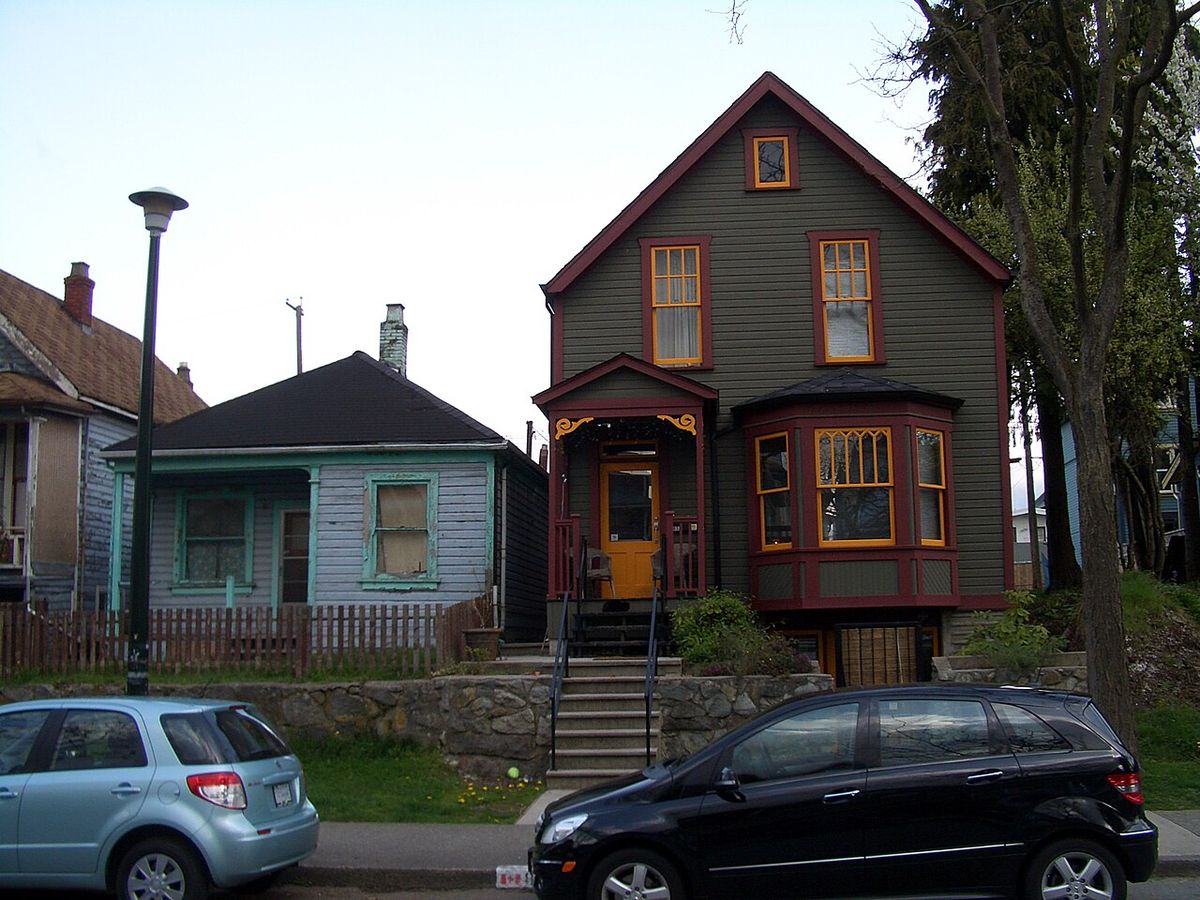
Strathcona possesses a housing stock that is a relative rarity in Vancouver, consisting largely of late 19th and early 20th century Victorian and Edwardian style homes. Many of these houses are designated heritage properties, contributing to the neighbourhood's distinct architectural character. The preservation and restoration of these homes has become a notable trend, with homeowners often paying particular attention to historically accurate 'true colours' of the period, sometimes aided by grants from the Vancouver Heritage Foundation. This renovation activity is a key driver of the area's gentrification, raising property values and attracting wealthier buyers.
The housing mix in Strathcona includes apartments, townhomes, and a limited number of detached heritage homes. The scarcity of detached heritage properties makes them a premium segment of the market. The neighbourhood also contains significant social and co operative housing developments that resulted from its history of community activism. The MacLean Park development and Stamp's Place are examples of the social housing built during the urban renewal period, while the Mau Dan Gardens Co operative is a later community driven housing solution. This combination of meticulously restored heritage homes, social housing, and newer infill developments creates a varied and visually interesting streetscape defined by row houses, flower gardens, and welcoming front porches.
Contemporary Profile and Metrics
In contemporary assessments, Strathcona is recognized for offering a unique blend of historic character, cultural authenticity, and proximity to downtown Vancouver, attributes that are increasingly valued. Data from 2026 provides quantified neighbourhood scores relative to other areas of Vancouver. Strathcona scores 31 out of 100 on safety, placing it at the 0th percentile with the city median at 48. Its strongest positive signal in this category is street lighting. The neighbourhood scores 46 out of 100 on property value, at the 14th percentile, with rental supply being a notable factor.
In terms of accessibility, which measures walkability and access to amenities, Strathcona scores a strong 61 out of 100, placing it at the 77th percentile, with dining options being a particular strength. Its climate score is 61 out of 100, at the 5th percentile. The census score, reflecting demographic and commuting data, is 45 out of 100 at the 36th percentile. These metrics highlight Strathcona's contrasts: it ranks highly for accessibility and urban lifestyle but lower on conventional safety and climate scores. The neighbourhood's value is increasingly seen as stemming from its fundamental character, constrained housing supply, and central location, factors that are perceived to hold their value over time.
Notable Landmarks and Features
Beyond its residential streets, Strathcona is home to several landmarks and community features that define its identity. The Strathcona Community Gardens and its associated fruit orchard represent a significant green space and community gathering point, situated on unceded traditional territories. The Keefer Street pedestrian and cyclist overpass is a tangible result of the Militant Mothers' activism. The neighbourhood's proximity to the commercial and cultural districts of Chinatown and Gastown is a key aspect of its appeal, offering residents immediate access to a rich array of shops, restaurants, and historic sites. The area is also known for its concentration of art galleries, artist studios, and small, independent businesses, contributing to a creative local atmosphere. The preservation of its heritage housing stock is itself a defining feature, setting it apart from more uniformly developed parts of the city. These elements combine to create a neighbourhood that, as noted in contemporary guides, is chosen deliberately for its distinct character rather than being merely a place of arrival. This intentional community, with its deep history and ongoing evolution, continues to be a focal point of cultural life and urban identity in Vancouver. The neighbourhood's character is reinforced by its many art galleries, family owned corner stores, and other small businesses that line its streets.
Questions about Strathcona, Vancouver
What is the history behind Strathcona's name?
The neighbourhood was originally called the East End from its founding in the late 19th century. It officially adopted the name Strathcona in the 1960s. The name honours Donald Smith, 1st Baron Strathcona and Mount Royal, a key figure in Canadian history and the construction of the Canadian Pacific Railway. This is also reflected in the name of the neighbourhood's oldest school, Lord Strathcona Elementary, which was founded in 1891.
How did the community save Strathcona from demolition?
In the 1950s and 1960s, the City of Vancouver planned large scale urban renewal that would have demolished much of Strathcona for social housing. Residents, including Bessie Lee and the Chan family (Mary Lee, Walter, and Shirley), organized the Strathcona Property Owners and Tenants Association (SPOTA) to oppose the plans. Their successful grassroots activism halted the wholesale redevelopment, though some areas like Hogan's Alley were lost. This movement also propelled figures like Mike Harcourt into municipal politics and influenced the formation of local parties.
What are the main languages spoken in Strathcona?
Strathcona is linguistically diverse. According to 2006 census data, 43.9 percent of residents spoke English as a first language, while 40.3 percent spoke a Chinese language. This makes Strathcona the only neighbourhood in Vancouver where English is not the most commonly reported mother tongue. The neighbourhood has historically been a gateway for immigrants, with Chinese, Vietnamese, and various European languages contributing to its multicultural soundscape.
What types of homes are available in Strathcona?
Strathcona features a mix of housing types, including apartments, townhomes, and a limited number of detached heritage homes. Its defining architectural characteristic is its stock of late 19th and early 20th century Victorian and Edwardian style houses, many of which are designated heritage properties. There is also social and co operative housing, such as the MacLean Park development and the Mau Dan Gardens Co operative. The scarcity of detached heritage homes makes them a premium and highly sought after segment of the local real estate market.
How safe and walkable is Strathcona?
According to 2026 neighbourhood metrics, Strathcona scores 31 out of 100 on safety, placing it at the 0th percentile compared to other Vancouver neighbourhoods. It is considered very walkable and bike friendly, with easy access to Chinatown, parks, community centres, and cultural landmarks. The neighbourhood offers excellent access to dining and amenities. Its location provides close proximity to downtown Vancouver.
What schools and community centres serve the area?
Strathcona is served by two public elementary schools: Lord Strathcona Elementary (the city's oldest) and Admiral Seymour Elementary. Secondary students attend Britannia Secondary School. The Vancouver Japanese Language School, the oldest in Canada, is also located here. Key community centres include the Strathcona Community Centre, linked to the elementary school. The RayCam Co operative Centre, serving a diverse population. And the Carnegie Community Centre. These centres provide vital recreational, social, and support programs for residents of all ages.
Sources and further reading
- Strathcona, Vancouver (Wikipedia)
- Why Strathcona Is Becoming One of Vancouver's Most ... (hammergrouprealtors.com)
- Britannia, Carnegie, RayCam and Strathcona (neighbourhoodsmallgrants.ca)
- Strathcona, Vancouver: Safety, Prices and Scores 2026 (pickyourplace.app)
Checked by the Your Space Hamilton desk. Last updated 2026-10-30.