Downtown Calgary
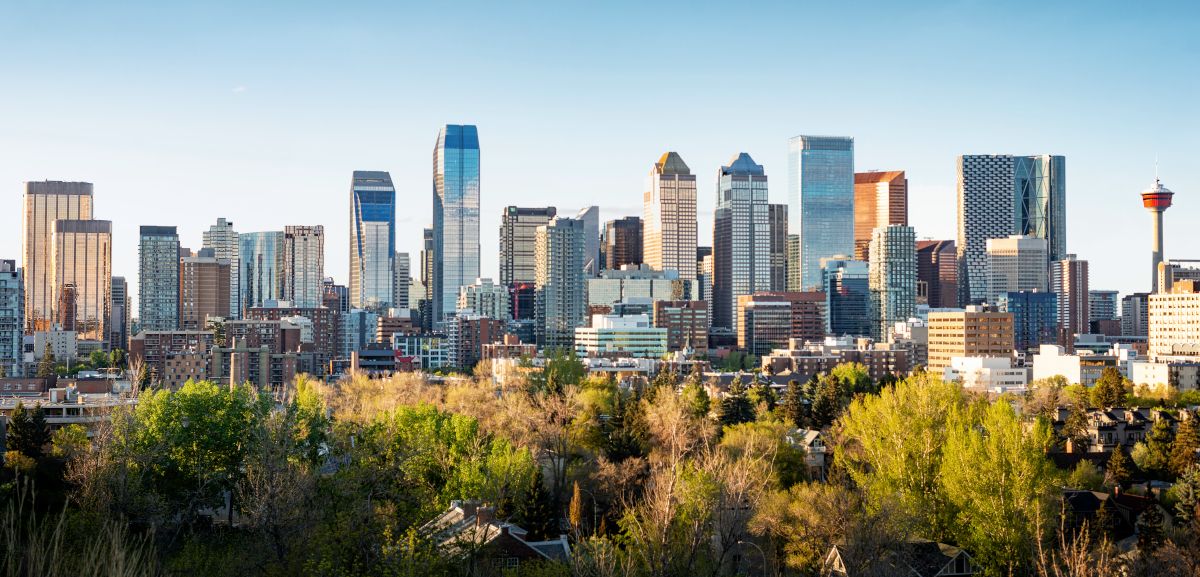
Downtown Calgary is the dense urban core and central business district of Calgary, Alberta. It is distinguished by having the second largest concentration of corporate head offices in Canada, a remarkable feat for the nation's third largest city by population. The district is a mosaic of distinct neighbourhoods including the Financial District, Eau Claire, Chinatown, East Village, and the West End, each contributing to its active urban character. Bordered by the Bow River to the north and railway lines to the south, downtown is the economic and cultural heart of the city, home to major arts institutions, extensive retail, and a growing residential population.
Neighbourhoods and Districts
Downtown Calgary is not a monolithic area but a collection of distinct neighbourhoods and informal districts, each with its own identity and function. The commercial core forms the dense heart of the district, dominated by skyscrapers and corporate headquarters. This area is serviced by the world's largest enclosed walkway system, known as the +15, which spans 18 kilometres and connects many buildings. Surrounding this core are primarily residential and mixed-use areas like the West End and Eau Claire, while specialized cultural and government zones are integrated within. The district's boundaries are generally defined by 14th Street W. to the west, the Bow River to the north, the Elbow River to the east, and the Canadian Pacific Railway mainline to the south.
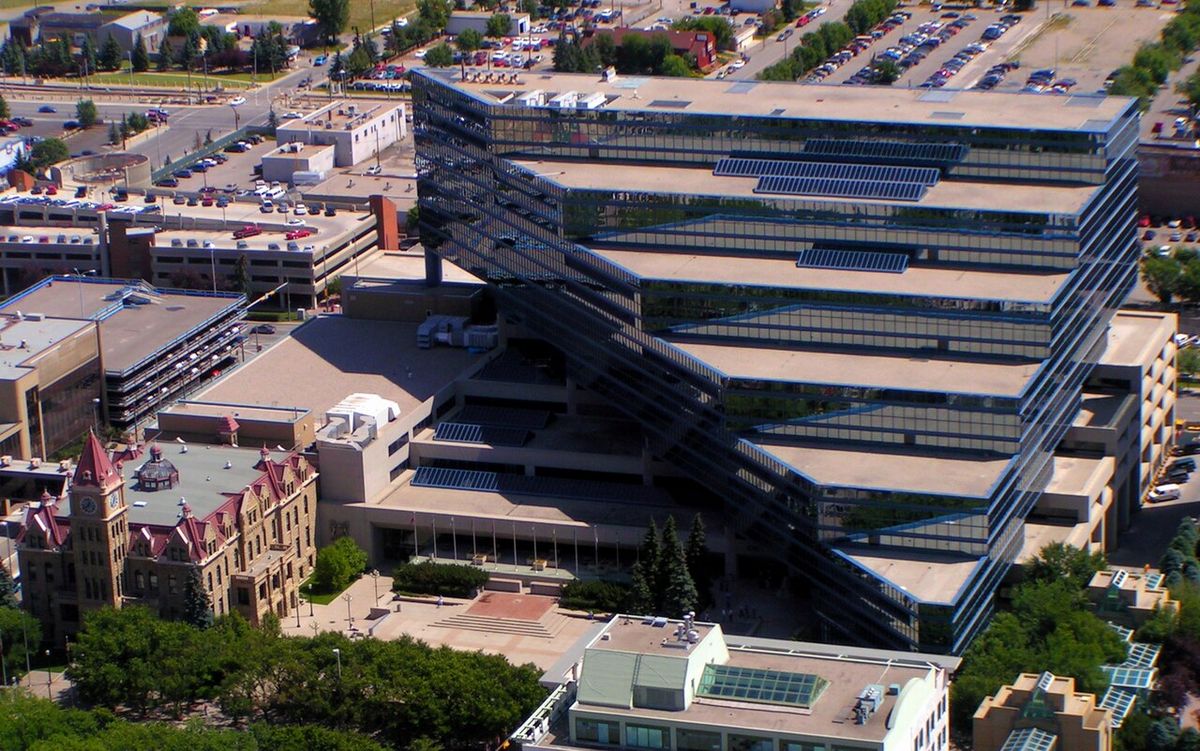
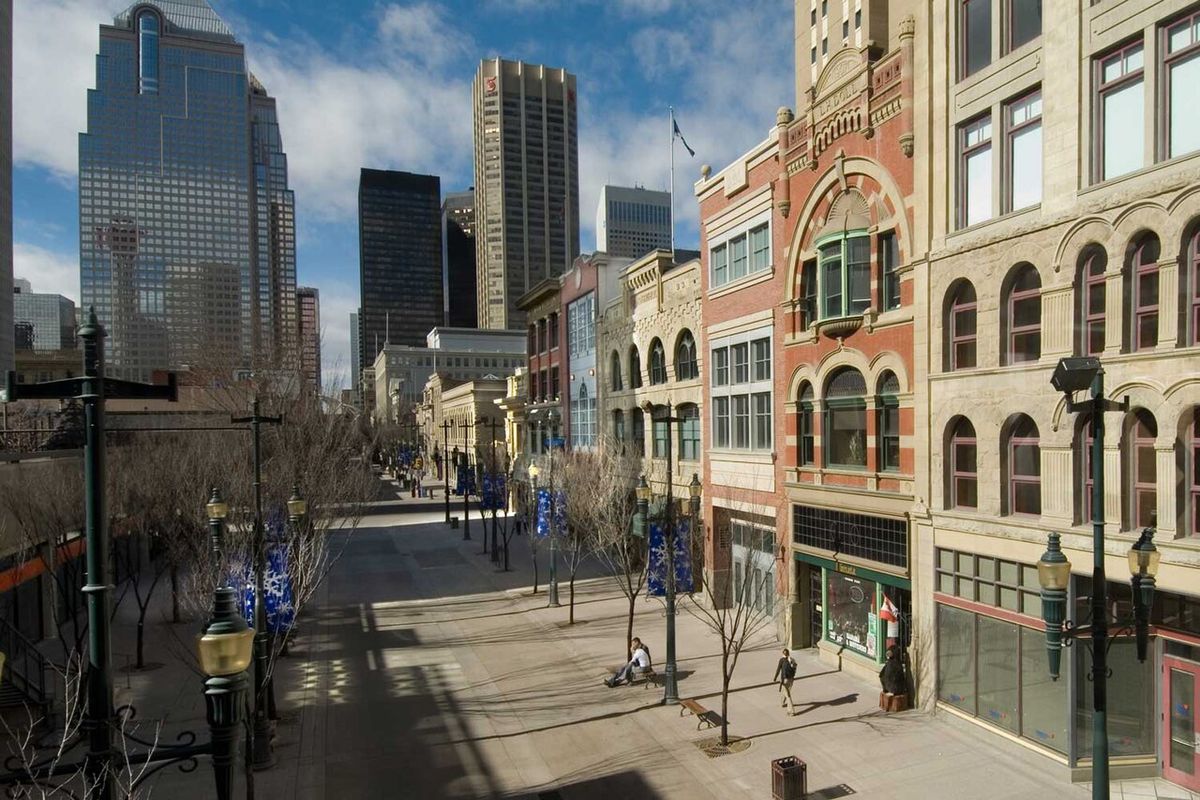
The commercial core itself is subdivided into several key districts centred on major civic functions. The Government District, centred along Macleod Trail, houses municipal, provincial, and federal offices including Calgary City Hall, the Calgary Police headquarters, and the Harry Hays federal building. The Cultural District, focused on Olympic Plaza and the Burns Building, is home to major performing arts and museum spaces. The Entertainment District is anchored by the Stephen Avenue Walk pedestrian mall, a historic street lined with shops, restaurants, and enclosed shopping centres like The Core and Scotia Centre. This area also contains landmarks such as the Calgary Tower and the Devonian Gardens, a large indoor public park.
- East Village: A rapidly redeveloping area east of the core, once plagued by social issues but now a hotspot with over $2.7 billion in investment, featuring the National Music Centre and the new Central Library.
- West End: A high-density residential neighbourhood west of the core, featuring Millennium Park and serving as the home for the annual Calgary Pride celebration.
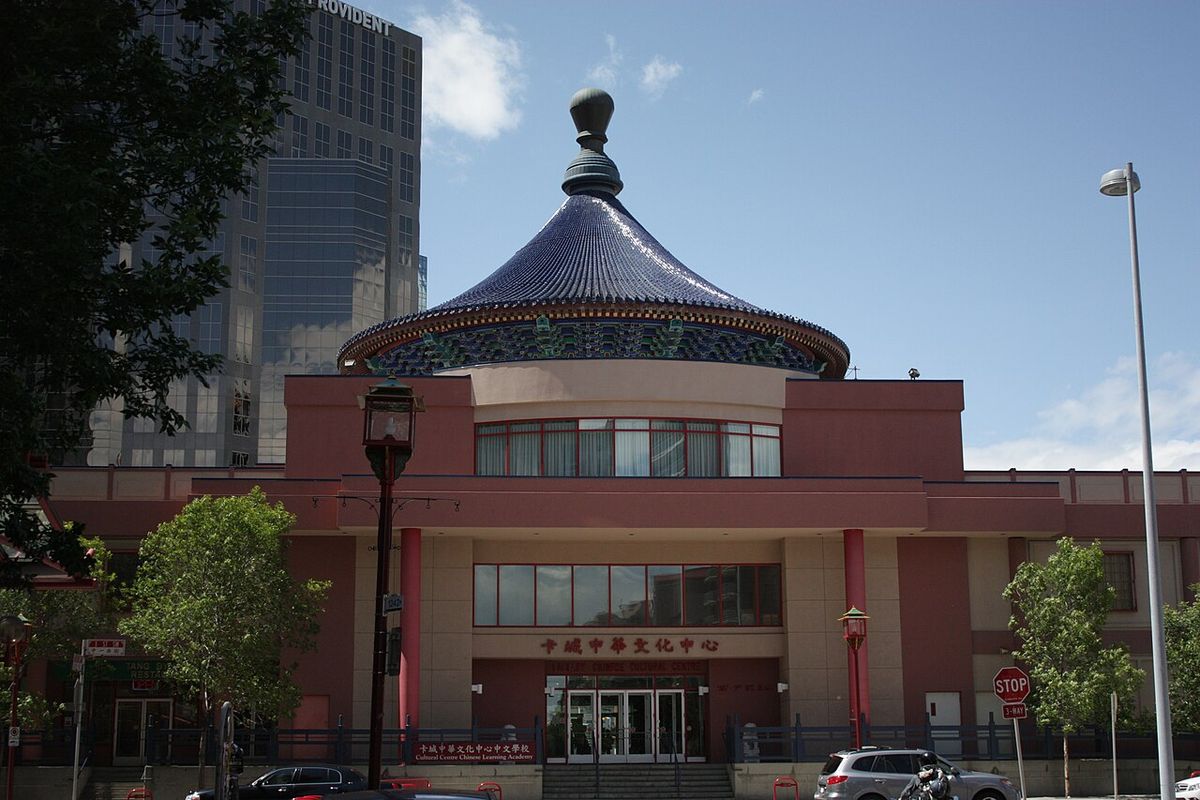
- Chinatown: Located north of the core, characterized by East Asian retail and restaurants, and home to the largest Chinese Cultural Centre in North America.
- Eau Claire: A riverfront neighbourhood north of the core, developed on reclaimed industrial land, offering pubs, restaurants, and direct access to Prince's Island Park.
Economy and Built Form
Downtown Calgary is the undisputed economic engine of the city and a significant national corporate centre. It hosts the second highest concentration of head offices in Canada, trailing only downtown Toronto. This corporate presence is manifested in a dense forest of skyscrapers. As of 2017, eight of the ten tallest buildings in Western Canada were located in downtown Calgary. The architectural density is such that it is considered one of the densest downtowns for a city of its size in North America. The office towers are complemented by major retail complexes, including The Core Shopping Centre and Scotia Centre, which are bookended by historic department stores like Hudson's Bay and Holt Renfrew.
The built environment is designed for efficiency and connectivity, particularly during the city's harsh winters. The +15 skywalk system allows pedestrians to traverse much of the core without going outside, linking offices, retail, and amenities. At street level, the Stephen Avenue Walk provides a pedestrian-oriented retail and dining experience. Major infrastructure projects continue to shape the area, such as the Calgary Municipal Land Corporation's $357 million investment in East Village infrastructure to mitigate flood risks and enable new development. Future transportation improvements include the planned Green Line LRT, which will run underground through downtown in a north-south direction along 2nd Street.
Culture, Arts, and Entertainment
Downtown Calgary serves as the primary cultural hub for the city and region, hosting a wide array of institutions and festivals. The cultural district is anchored by Arts Commons, a major performing arts centre that is home to the Calgary Philharmonic Orchestra, Theatre Calgary, Alberta Theatre Projects, and One Yellow Rabbit theatre company. The Glenbow Museum, one of Western Canada's largest museums with a collection of over 250,000 artifacts, is currently closed for major renovations until 2026. Visual arts are represented by venues like the Art Gallery of Calgary and Contemporary Calgary, which hosts international exhibitions. The district's calendar is filled with annual events that draw residents and visitors alike.
The Calgary Stampede parade winds through downtown streets, while the Calgary Folk Music Festival and Shakespeare in the Park take place on Prince's Island Park. Other notable events include the Calgary Comic & Entertainment Expo, with its POW! Parade of Wonders along Stephen Avenue, and the mid-winter Chinook Blast festival featuring light installations and outdoor art. For cinema, the Globe Cinema operates as the city's primary art house movie theatre, also serving as a venue for the Calgary International Film Festival. Dining and nightlife are concentrated along Stephen Avenue and in areas like East Village, with venues ranging from historic pubs like The Unicorn to upscale restaurants such as Major Tom.
- Major Venues: Arts Commons (Jack Singer Concert Hall, Max Bell Theatre, Martha Cohen Theatre), Palace Theatre (live music), Globe Cinema (film).
- Key Festivals: Calgary Stampede, Calgary Folk Music Festival, Calgary Comic & Entertainment Expo, Chinook Blast.
- Public Art & Spaces: Olympic Plaza, statue of The Famous Five, "Udderly Art Legacy Pasture" cow sculptures, Devonian Gardens indoor park.
Demographics and Residential Life
The residential population of downtown Calgary has seen substantial growth, reflecting a North American trend towards urban living. As of the 2016 Canadian Census, the combined population of the five downtown neighbourhoods was approximately 38,663 people living on about 6.0 square kilometres of land. This gives the area a significantly larger downtown population than other Canadian cities of comparable size like Ottawa and Edmonton. The population is characterized by a high proportion of renters and immigrants. As of 2006, 95.9 percent of housing was used for renting and 44.3 percent of residents in the commercial core were immigrants. The median household income in 2005 was $30,126, with 41.4 percent of residents considered low income.
Housing in the downtown core is almost exclusively high-density. As of 2006, 99.7 percent of buildings were condominiums or apartments. The majority of new residential development in the inner city has been occurring just south of downtown in the Beltline neighbourhood, which had a population of 21,958 as of 2016. Downtown residential life is supported by amenities like the RiverWalk in East Village, the network of pedestrian pathways along the Bow River, and community events such as Neighbour Day, celebrated across Calgary on the third Saturday of June. The area is well-served by Calgary Transit, with the CTrain light rail system offering free rides along the 7th Avenue transit corridor through the heart of downtown.
Safety and Community Dynamics
Like many major urban cores, downtown Calgary faces challenges related to crime and public safety, with rates varying significantly between its neighbourhoods. According to data from May 2023 to May 2024, the Downtown Commercial Core had a crime rate of 12.705 incidents per 100 people. This represented a decrease from the previous reporting period. For context, this rate is higher than many suburban Calgary communities such as Saddle Ridge (1.358/100) or Brentwood (2.348/100) but lower than some other inner-city areas. The Downtown East Village neighbourhood, part of the broader downtown area, had a higher reported crime rate of 15.605/100 for the same period.
Community dynamics are shaped by ongoing revitalization efforts, particularly in areas like the East Village. The East Village was historically plagued by crime and homelessness but has since seen a great amount of redevelopment. This redevelopment has brought billions of dollars in investment and new attractions like the National Music Centre of Canada. The presence of major civic institutions like the Calgary Public Library and police headquarters within the Government District contributes to the area's governance. The concentration of services and high pedestrian traffic creates an urban environment where safety considerations are a focus.
Transportation and Connectivity
Downtown Calgary is a major transportation hub, designed to move large numbers of people efficiently within the core and connect to the wider city. The centrepiece of public transit is the CTrain light rail system, which runs along 7th Avenue S. in an exclusive right-of-way. A unique feature is the Free Fare Zone, where rides on the CTrain within the downtown portion are free of charge. The future Green Line LRT expansion will add a north-south underground route through downtown under 2nd Street, significantly enhancing cross-town connectivity. Surface bus routes also converge on the core, with major terminals at key locations.
For pedestrians, connectivity is achieved through a multi-level system. At grade, the street grid and the Stephen Avenue Walk pedestrian mall provide access. Above street level, the extensive +15 enclosed skywalk network allows climate-controlled movement between buildings. Below grade, some buildings are connected via underground concourses. For cyclists and pedestrians, the pathway network along the Bow and Elbow riverbanks provides scenic routes into and through the district, linking to parks like Prince's Island. This multi-modal approach is essential for managing the approximately 137,030 people who worked downtown as of 2016, in addition to its growing residential population and visitors.
Future Development and Outlook
The downtown area continues to evolve with significant public and private investments shaping its future. Major cultural institutions are undergoing transformation, most notably the Glenbow Museum, which is closed for major renovations until 2026. The East Village redevelopment, spearheaded by the Calgary Municipal Land Corporation, represents a $2.7 billion investment that has introduced the National Music Centre, the new Central Library, and new residential towers. Infrastructure spending remains a priority, with The City of Calgary investing $106.9 million on capital infrastructure for new communities across the city in 2023, a strategy that indirectly supports downtown by managing regional growth. The broader city context also influences downtown's trajectory, with council adopting recommendations on growth applications for new peripheral communities like Glacier Ridge and Belvedere in 2025.
While new suburban communities are developed, inner-city neighbourhoods adjacent to downtown, such as those in the Beltline, continue to see intense residential development. This focus on densification near the core aligns with municipal goals for sustainable growth. The ongoing addition of residential units, cultural amenities, and improved transit ensures downtown Calgary remains a dynamic and central part of the city's identity and economy. The structured Growth Application process guides Calgary's expansion, balancing new community development on the periphery with the continued intensification and investment in the established urban core.
Questions about Downtown Calgary
What is the +15 system in downtown Calgary?
The +15 is an extensive network of enclosed pedestrian skywalks that connect buildings in downtown Calgary approximately 15 feet above street level. Spanning 18 kilometres, it is the largest indoor walkway system of its kind in the world. It allows office workers, residents, and visitors to move between many buildings, shopping centres, and amenities without having to go outside, which is particularly valuable during Calgary's cold winters. The system includes bridges, atriums, and concourses, creating a second level of pedestrian circulation throughout the commercial core.
Is the CTrain free in downtown Calgary?
Yes, travel on the CTrain light rail system is free within the downtown portion along 7th Avenue S. This area is designated as the Free Fare Zone. Passengers can board and disembark at any downtown station on 7th Avenue without paying a fare or tapping a ticket. If you are travelling to or from a station outside this zone, you must pay the applicable fare. This policy encourages transit use for short trips within the core and helps reduce vehicular traffic and congestion in the downtown area.
When will the Glenbow Museum reopen?
The Glenbow Museum, one of western Canada's largest museums located on Stephen Avenue, is currently closed for major renovations. According to current information, the museum is scheduled to reopen in 2026. The renovation project is a significant transformation of the institution, which houses a collection of over 250,000 artifacts. During the closure, some of Glenbow's programming and collaborations continue at other venues in the city, but the main building and its exhibitions are not accessible to the public until the renovations are complete.
What are the main residential neighbourhoods in downtown Calgary?
The primary residential neighbourhoods within downtown Calgary are the West End, Eau Claire, Chinatown, and East Village, along with portions of the commercial core that include condominium towers. The West End is a high-rise, high-density area west of the core, while Eau Claire is a riverfront neighbourhood with pubs and pathways. Chinatown offers high-density living with cultural retail, and East Village is a rapidly redeveloping area with new condo towers. The adjacent Beltline neighbourhood to the immediate south has taken up the majority of recent inner-city residential development and has a larger population.
What is the crime rate in downtown Calgary?
Crime rates vary within downtown's different neighbourhoods. For the period from May 2023 to May 2024, the Downtown Commercial Core had a crime rate of 12.705 incidents per 100 people, which was a decrease from the previous period. The Downtown East Village area had a higher reported rate of 15.605/100 for the same timeframe. These rates are higher than many suburban Calgary communities but are part of the urban reality of a major city core. The Calgary Police Service and community initiatives work to address safety concerns in these high-traffic, densely populated areas.
What major new developments have happened in downtown Calgary recently?
The most significant recent development has been the transformation of the East Village, a once-neglected area that has seen over $2.7 billion in investment. Key projects include the $191 million National Music Centre, the $245 million New Central Library, and extensive infrastructure upgrades. The area now features award-winning public spaces like the RiverWalk, new condominium towers, and restaurants in historic buildings like the Simmons Mattress Factory. Elsewhere, the commercial core continues to see new skyscrapers and retail offerings, and major cultural institutions like Arts Commons are planning renovations and expansions for the future.
Sources and further reading
- Downtown Calgary (Wikipedia)
- Downtown Calgary Neighbourhood Guide (visitcalgary.com)
Checked by the Your Space Hamilton desk. Last updated 2026-10-26.