Notre-Dame-de-Grâce
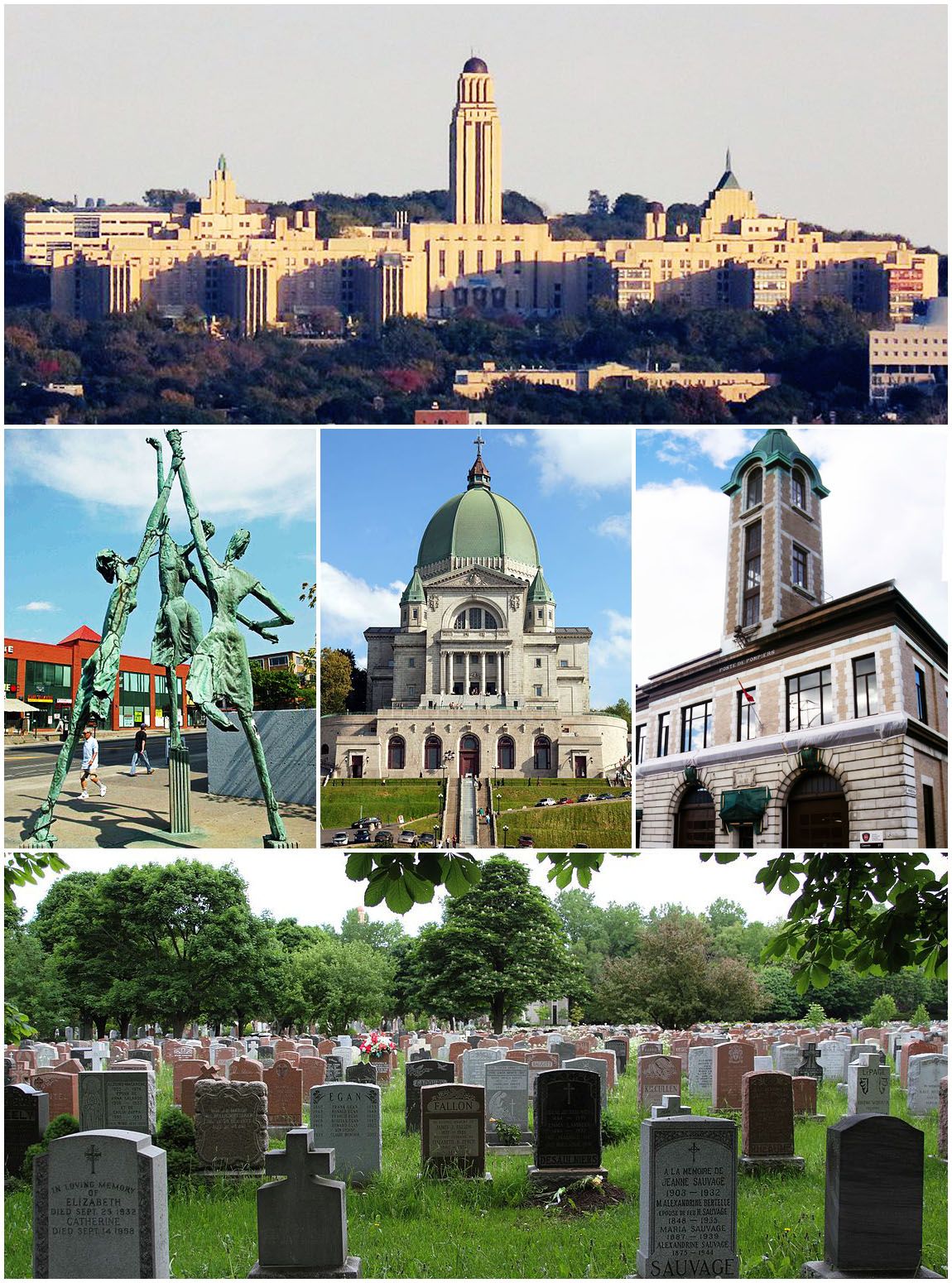
Notre-Dame-de-Grâce, commonly known as NDG, is a residential neighbourhood in the West End of Montreal, Quebec. With a population of 68,152 as of 2021, it forms the western half of the borough of Côte-des-Neiges-Notre-Dame-de-Grâce. Historically an independent municipality until its annexation by Montreal in 1910, NDG serves as a major commercial and cultural hub for Montreal's predominantly English-speaking West End. The neighbourhood is defined by its tree-lined streets, historic housing, and diverse, multi-ethnic population.
History and development
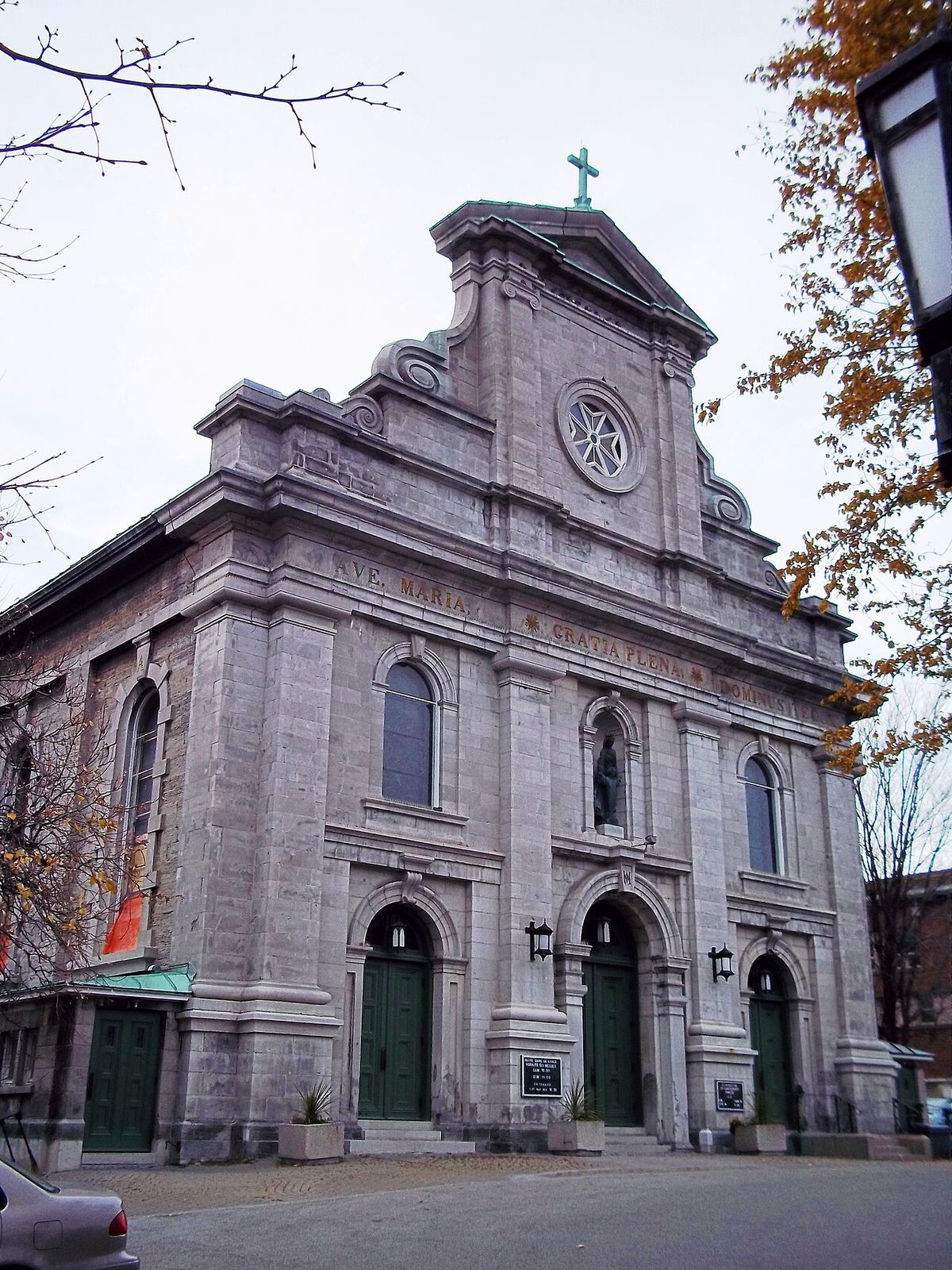
The area that became Notre-Dame-de-Grâce was first settled by Europeans on November 18, 1650, eight years after the founding of Ville-Marie. The initial settlers were Jean Descarries dit le Houx and Jean Leduc, who each received 30 acres of land stretching from what would become Atwater Avenue to Lachine. For centuries, the territory remained largely agricultural, with the Church of Notre-Dame-de-Grâce completed in 1853 becoming a focal point. The Municipality of the Village of Notre-Dame-de-Grâce was officially established by proclamation in December 1876. The village grew steadily, incorporating as a town in 1906 before being annexed to the City of Montreal on June 4, 1910. The Décarie family, descendants of the original settlers, played a prominent role in this era, with Daniel-Jérémie Décarie serving as mayor from 1877 to 1904 and his son Jérémie-Louis Décarie becoming a Quebec parliamentarian.
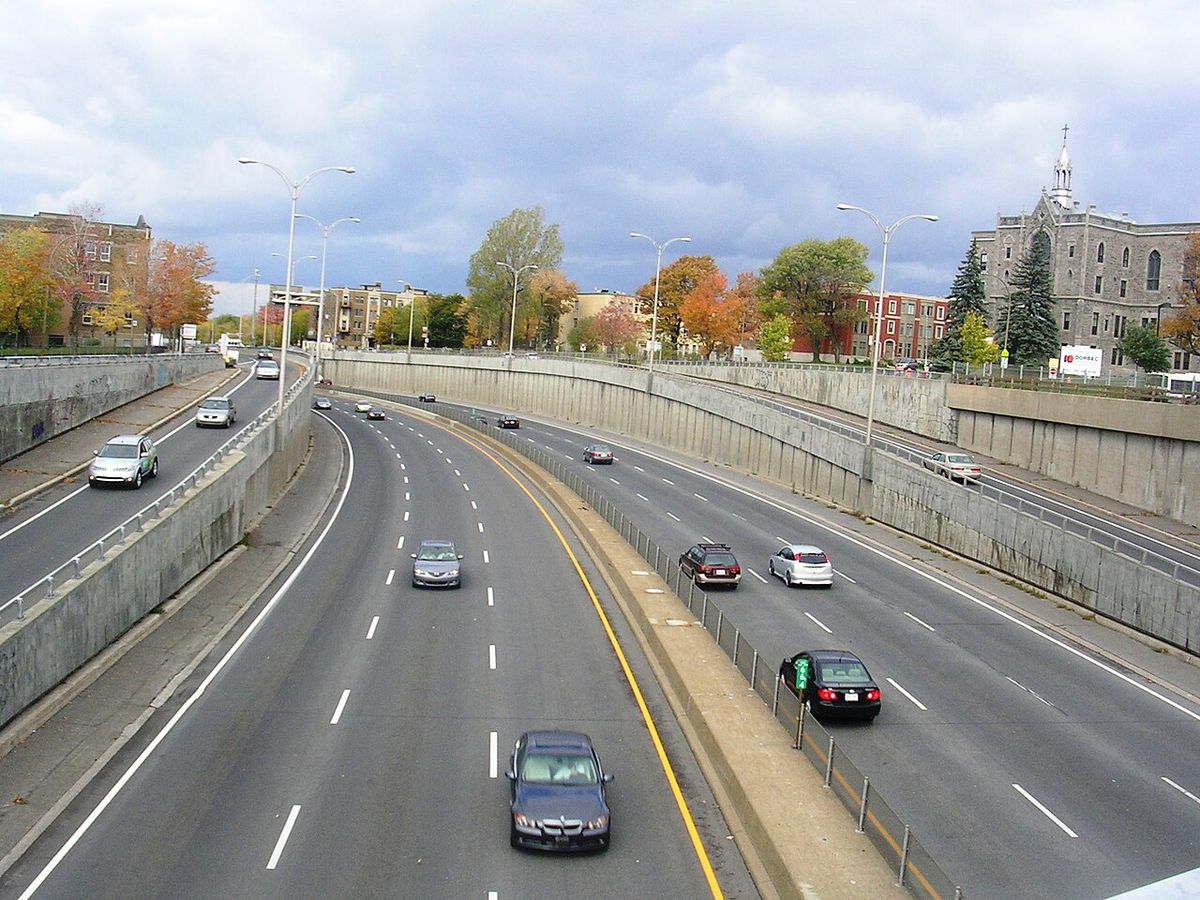
Development accelerated in the early 20th century with the arrival of tramway service in 1908, connecting the area to central Montreal. Around 1920, Anglophones began settling in NDG in significant numbers, leading to the construction of new schools and churches. The neighbourhood's growth was shaped by major infrastructure projects in the mid-20th century, most notably the Décarie Expressway which opened in April 1967. The construction of this sunken highway severed the eastern part of the community and displaced 285 families. Since 2002, NDG has been administratively joined with Côte-des-Neiges to form the present-day borough. The community has also been a site of social tension, notably in November 1987 when the killing of unarmed 19-year-old Black resident Anthony Griffin by a Montreal police officer sparked large protests, though the officer was later found not guilty due to a faulty firearm.
Geography and cityscape
Notre-Dame-de-Grâce is situated on a plateau extending southwest from Mount Royal, bounded by Claremont Avenue to the east, Côte-Saint-Luc Road to the north, Brock Avenue to the west, and Highway 20 and the Saint-Jacques Escarpment to the south. The land division follows the traditional Quebec pattern of long, narrow lots perpendicular to the ridge, resulting in numerous north-south avenues but fewer east-west streets. This layout concentrates commercial activity on major boulevards like Sherbrooke Street West, which runs the length of the community. The area is predominantly residential and institutional, with housing largely built between 1910 and 1940 featuring a mix of Art Nouveau, Art Deco, and Beaux-Arts influences on traditional Quebecois styles, with the red brick duplex row-house being dominant.
Two major barriers physically segment the neighbourhood: the sunken trench of the Décarie Expressway and the mainline of the Canadian Pacific railway. These have led to the creation of distinct sub-districts within NDG. The area between the rail line and the Saint-Jacques Escarpment, from Cavendish Boulevard to the Décarie Expressway, is known as St. Raymond's and has a strong association with Montreal's Italian community. The easternmost section, separated by the highway and bordering Westmount, is sometimes called 'Old NDG' as it is near the site of the original village. A notable residential project is Benny Farm on Cavendish Boulevard, built for Second World War veterans and later converted to subsidized housing before being rehabilitated in the early 2000s with new low-cost housing and a CLSC community centre. The community is known for its tree-lined streets and general walkability, supported by a distribution of public schools, libraries, parks, and athletic facilities including a local chapter of the Montreal YMCA.
Demographics and character
NDG is a culturally and linguistically diverse, middle-class urban neighbourhood. Historically, it was developed by an upwardly mobile French Canadian middle class between Confederation and the First World War. The arrival of Anglophones around 1920 and successive waves of immigration after the Second World War transformed its demographic profile. Today, the visible minority population is 33 percent, with significant Afro-Canadian, Italian, Chinese, and other immigrant communities. The area south of the Canadian Pacific line, including Saint Raymond and Westhaven Elmhurst, has a population of 5,915 with a Black population of 19 percent and a Chinese population of 12 percent. Affordable housing and proximity to anglophone post-secondary educational institutions, particularly Dawson College and Concordia University, has resulted in a large and consistent student population residing in NDG.
The community is officially divided into an eastern and western ward, with Cavendish Boulevard as the dividing line. The eastern ward, centred around the historic parish church at Décarie and Notre-Dame-de-Grâce Avenue, is primarily francophone and middle class with a strong Quebecois character. The western ward, developed more during the interwar and post-war periods, is more varied in housing, income, and culture. While NDG is associated with Montreal's multi-ethnic anglophone community due to institutions like Loyola College and the MUHC, many residents are bilingual. The neighbourhood has become highly desirable for young professionals, though significant gentrification has largely been confined to the Monkland Village commercial cluster. The multitude of services, including parks, schools, clinics, and major institutions, make it an area sought after by families seeking to live close to Montreal's city centre and its Central Business District.
Landmarks and institutions
Notre-Dame-de-Grâce is anchored by major anglophone civic institutions at its eastern and western ends. The McGill University Health Centre (MUHC) super-hospital is located at the Glen Yards site adjacent to the Vendôme intermodal station. At the western edge sits the Loyola campus of Concordia University, situated next to the Montreal-West commuter rail station. The neighbourhood is also home to numerous public schools, libraries, and places of worship that serve its diverse population. The NDG YMCA provides a pool, gym, and recreation programs for youth and adults. A key community hub is the Benny Farm CLSC, a community centre offering social services and a clinic run by the provincial health ministry, part of the rehabilitated Benny Farm housing project. The area features several distinct commercial districts, including Monkland Village, a cluster of businesses on the eastern part of Monkland Avenue that was revitalized in the 1990s.
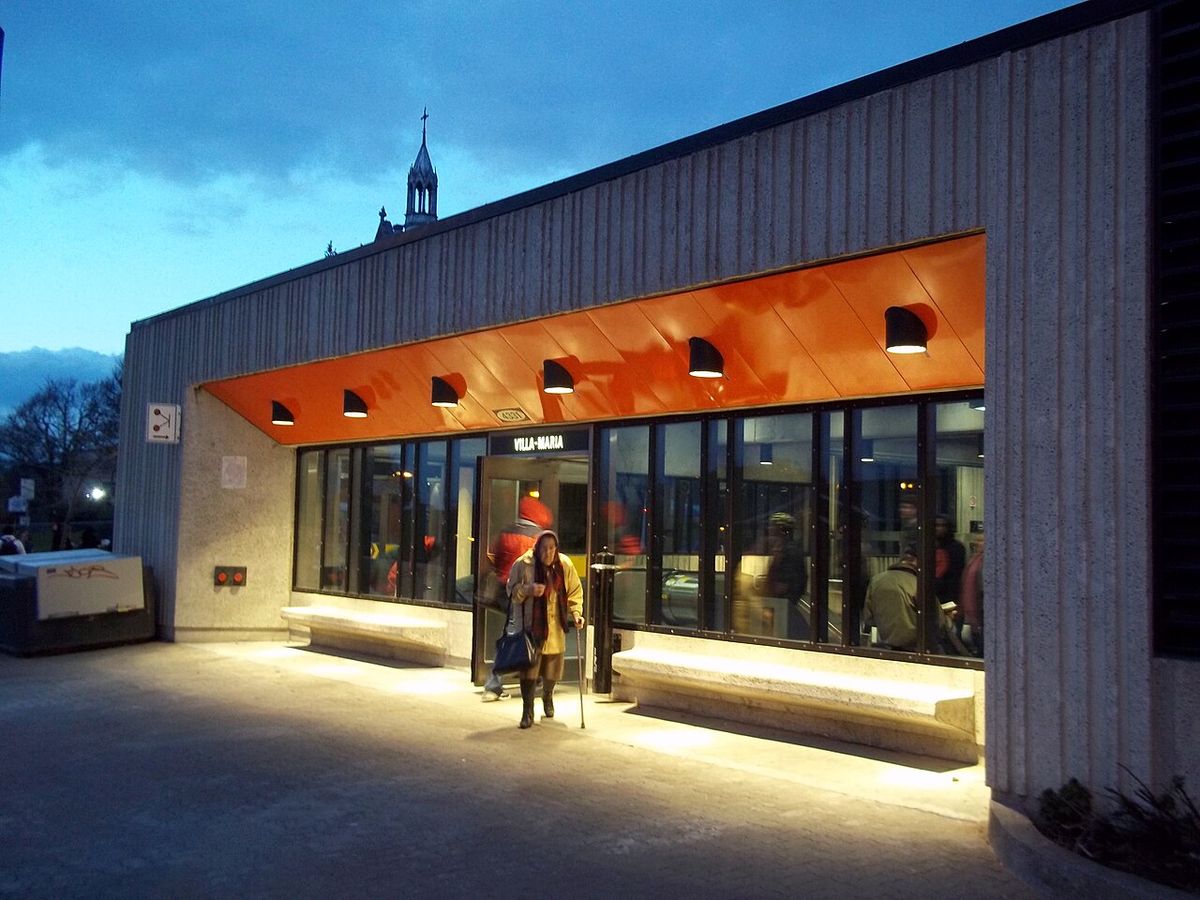
Sherbrooke Street West functions as the primary commercial artery running the length of the community, while Somerled Avenue is another important east-west commercial street. The 'Westmount Adjacent' area, a term used by realtors for the district between Westmount and the Décarie Expressway, houses both of NDG's metro stations, Vendôme and Villa-Maria. This area implies a housing cost and lifestyle more comparable to affluent Westmount, partly due to its severance from the rest of NDG by the highway construction which forced the displacement of hundreds of families. The construction of the Décarie Expressway had a major impact on the neighbourhood, leading to the area being referred to as Westmount Adjacent rather than as part of the broader, more middle-income NDG community.
Sports and recreation
NDG is well served by parks and recreational facilities, contributing to its family-friendly appeal. The neighbourhood features several large green spaces including NDG Park (commonly known as Girouard Park), Loyola Park, Trenholme Park, Benny Park, Somerled Park, and Parc de la Confédération. These parks provide venues for leisure and organized sports. The community is home to three indoor hockey arenas: the public Doug Harvey Arena, formerly Confederation Arena, and the private rinks at Lower Canada College High School and Concordia University's Ed Meagher Arena. Sports organizations are an important part of community life, with NDG Hockey and NDG Baseball being particularly well-known and respected. NDG Baseball joined Baseball Québec in 2022 after many years and several championships as part of Little League Quebec. The Montreal Exiles Rugby Football Club, founded in 2011, has senior men's, junior, and mini-rugby teams called the NDG Dragons, and uses Confederation Park as its home field.
Notre-Dame-de-Grâce is home to several notable sports organizations and facilities. The community has three indoor hockey arenas: the public Doug Harvey Arena and the private rinks at Lower Canada College High School and Concordia University's Ed Meagher Arena. Well-known sports organizations include NDG Hockey and NDG Baseball, with NDG Baseball joining Baseball Québec in 2022. The Montreal Exiles Rugby Football Club, founded in 2011, also calls NDG home and uses Confederation Park as its home field.
- NDG Hockey: A long-standing community hockey organization.
- NDG Baseball: A championship-calibre youth baseball organization.
- Montreal Exiles Rugby Football Club: Founded in 2011, with senior men's, junior (U-18), and mini-rugby teams (NDG Dragons) for ages U-6 to U-14. The senior men won the Division C league and cup in 2012.
- Doug Harvey Arena: Public ice hockey arena.
- Ed Meagher Arena: Ice rink at Concordia University's Loyola Campus.
- Confederation Park: Home field for the Montreal Exiles Rugby Club.
These facilities support an active culture of recreational and competitive sports for residents of all ages. The NDG YMCA includes a pool, gym, and recreation programs for youth and adults. The community is well known for its many large parks, including NDG Park, Loyola Park, Trenholme Park, Benny Park, Somerled Park, and Parc de la Confédération. Sports organizations cater to both children and adults, with mini-rugby teams for younger players and senior men's rugby.
Transportation
NDG is exceptionally well-connected by public transit, making it one of Montreal's more walkable neighbourhoods. The Orange Line of the Montreal Metro runs through the borough alongside the Décarie Expressway, with two stations: Villa Maria and Vendôme. Vendôme is an intermodal station that also connects with commuter rail. The area is served by a dense network of Société de transport de Montréal (STM) bus lines offering local, express, and night service. Key east-west routes include the 24 Sherbrooke, 105 Sherbrooke, 90 Saint-Jacques, 103 Monkland, 102 Somerled, and 162 Westminster buses. Major north-south routes are the 17 Décarie and 63 Girouard. The 420 Notre-Dame-De-Grâce Express provides commuter service to downtown, and the 356 night bus operates on Sherbrooke Street from 2:30 a.m. to 5:00 a.m.
Notre-Dame-de-Grâce is served by a variety of STM bus lines offering different service levels. Key east-west local buses include the 24 Sherbrooke, 51 Édouard-Montpetit, 105 Sherbrooke, 90 Saint-Jacques, 103 Monkland, and 162 Westminster. Important north-south local buses are the 17 Décarie and 63 Girouard. Other services include the 102 Somerled and 104 Cavendish east-west buses, the 138 Notre-Dame-de-Grâce east-west bus, and the 420 Notre-Dame-De-Grâce Express commuter bus.
| Route | Service Type | Key Corridor / Termini |
|---|---|---|
| 24 Sherbrooke | 10-min max (6am-9pm) | East-west on Décarie. Terminus at Villa Maria |
| 105 Sherbrooke | 10-min max (6am-9pm) | East-west on Sherbrooke. Between Vendôme & Montreal-Ouest station |
| 103 Monkland | 10-min max (directional) | East-west on Monkland. Terminus at Villa Maria |
| 90 Saint-Jacques | 10-min max (directional) | East-west on Saint-Jacques. Connects to Vendôme |
| 102 Somerled | Local (day) | East-west on Somerled. Terminus at Vendôme |
| 420 Express | Express (day) | Commuter route on Cavendish & Sherbrooke to downtown |
| 356 | All night | Night bus on Sherbrooke Street (2:30am-5am) |
For vehicular travel, the Décarie Expressway is a major north-south highway that cuts through eastern NDG. It opened to motorists in April 1967. The Décarie Expressway trench and the mainline of the Canadian Pacific railway each form barriers within the borough. Several bridges span these trenches to maintain connectivity. The major commercial streets are Sherbrooke Street West, which runs the length of the community as the main commercial artery, Monkland Avenue, and Somerled Avenue.
Notable street names
The street names in Notre-Dame-de-Grâce reflect its history and the influence of British and Canadian figures. Many avenues are named after governors general, prime ministers, and other prominent individuals from the late 19th and early 20th centuries. Décarie Boulevard, a central north-south artery, is named for the prominent local family, possibly specifically Jérémie-Louis Décarie, the Quebec parliamentarian born in NDG. Monkland Avenue references James Monk, a former Chief Justice of Lower Canada and landowner. Cavendish Boulevard is most likely named for the British House of Cavendish. Other streets honour political figures such as Prime Minister Robert Borden (Borden Avenue) and Nova Scotia Premier William Stevens Fielding (Fielding Avenue). Girouard Avenue is named for Désiré Girouard, a Canadian lawyer, politician, and Puisne Justice of the Supreme Court of Canada.
The street names in Notre-Dame-de-Grâce reflect its history. Décarie Boulevard was officially designated in May 1912, named for the prominent Décarie family. Daniel-Jérémie Décarie was mayor from 1877 to 1904, and his son Jérémie-Louis Décarie was a Quebec parliamentarian. Other streets follow the traditional Quebec land division system, which uses long, narrow strips. This system results in many avenues running north-south but far fewer running east-west.
- Bessborough: For Vere Ponsonby, 9th Earl of Bessborough, 14th Governor General of Canada.
- Connaught: For Prince Arthur, Duke of Connaught and Strathearn, 10th Governor General of Canada.
- Hingston: For William Hales Hingston, a Canadian senator and Mayor of Montreal.
- Marcil: For Georges Marcil, the last mayor of NDG before its annexation into Montreal.
- Harvard & Oxford: Neighbouring streets likely named for the famous universities.
- Hampton & Kensington: Named after royal residences in England, with a nearby Windsor street later renamed Godfrey.
The street grid and names illustrate the history that has shaped the neighbourhood. The land is divided in long, narrow strips, an evolution of the seigneurial land division system from Quebec's colonial era. This design traces its history back to the earliest urban planning native to Canada. Consequently, the community has many avenues running north-south but far fewer running east-west, with commercial activity concentrated on several prominent boulevards.
Questions about Notre-Dame-de-Grâce
What does NDG stand for in Montreal?
NDG is the common abbreviation for the Montreal neighbourhood of Notre-Dame-de-Grâce. The name, meaning 'Our Lady of Grace' in French, originates from the parish church built in the area in 1853. The neighbourhood was an independent municipality before being annexed by the City of Montreal in 1910. Today, it forms the western half of the borough of Côte-des-Neiges-Notre-Dame-de-Grâce.
Is NDG an anglophone or francophone neighbourhood?
NDG is a linguistically diverse neighbourhood. Its historical roots are francophone, developed by a French Canadian middle class. A significant anglophone population began settling around 1920, and the presence of major institutions like Concordia University's Loyola Campus and the MUHC reinforces its association with Montreal's English-speaking community. However, many residents are bilingual, and the area is home to a mix of linguistic groups, reflecting its multi-ethnic character.
What are the main commercial streets in NDG?
The primary commercial artery in NDG is Sherbrooke Street West, which runs the entire length of the community. Other important commercial streets include Monkland Avenue and Somerled Avenue. Sherbrooke Street West serves as the main commercial artery for the neighbourhood. These streets host the majority of the neighbourhood's commercial activity and services for daily needs.
How is NDG connected by public transit?
NDG is very well served by public transit. It is on the Orange Line of the Montreal Metro, with two stations: Villa Maria and Vendôme. Vendôme is also an intermodal station connecting to commuter rail. A comprehensive network of STM bus lines covers the area, including frequent services on Sherbrooke, Monkland, and Somerled avenues, as well as express and night buses. This connectivity makes NDG one of the more walkable and transit-accessible neighbourhoods in Montreal.
What is the 'Westmount Adjacent' area?
'Westmount Adjacent' is a term applied by realtors to a district along the eastern edge of Notre-Dame-de-Grâce. It is located between the city of Westmount to the east and the Décarie Expressway to the west. The construction of the Décarie Expressway severed this easternmost part from the rest of NDG. The term implies housing costs and lifestyles more on par with Westmount rather than the more middle-income NDG as a whole. Both of NDG's metro stations, Vendôme and Villa-Maria, are located in this area.
What sports facilities are available in NDG?
NDG offers numerous sports and recreation facilities. The neighbourhood has several large parks, including Girouard Park (NDG Park), Loyola Park, and Confederation Park. For ice sports, there are three indoor arenas: the public Doug Harvey Arena and private rinks at Lower Canada College and Concordia University. The community is home to popular sports organizations like NDG Hockey, NDG Baseball, and the Montreal Exiles Rugby Football Club. The NDG YMCA also provides a pool, gym, and various recreational programs.
Sources and further reading
- Notre-Dame-de-Grâce (Wikipedia)
- À la découverte de Notre-Dame-de-Grâce (mtl.org)
- Découvrez Côte-des-Neiges, Notre-Dame-de-Grâce (montreal.ca)
- Visitez Notre-Dame-de-Grâce : petit bijou de l'ouest de ... (viarail.ca)
- Notre-Dame-de-Grâce (centraide-mtl.org)
Checked by the Your Space Hamilton desk. Last updated 2026-10-22.