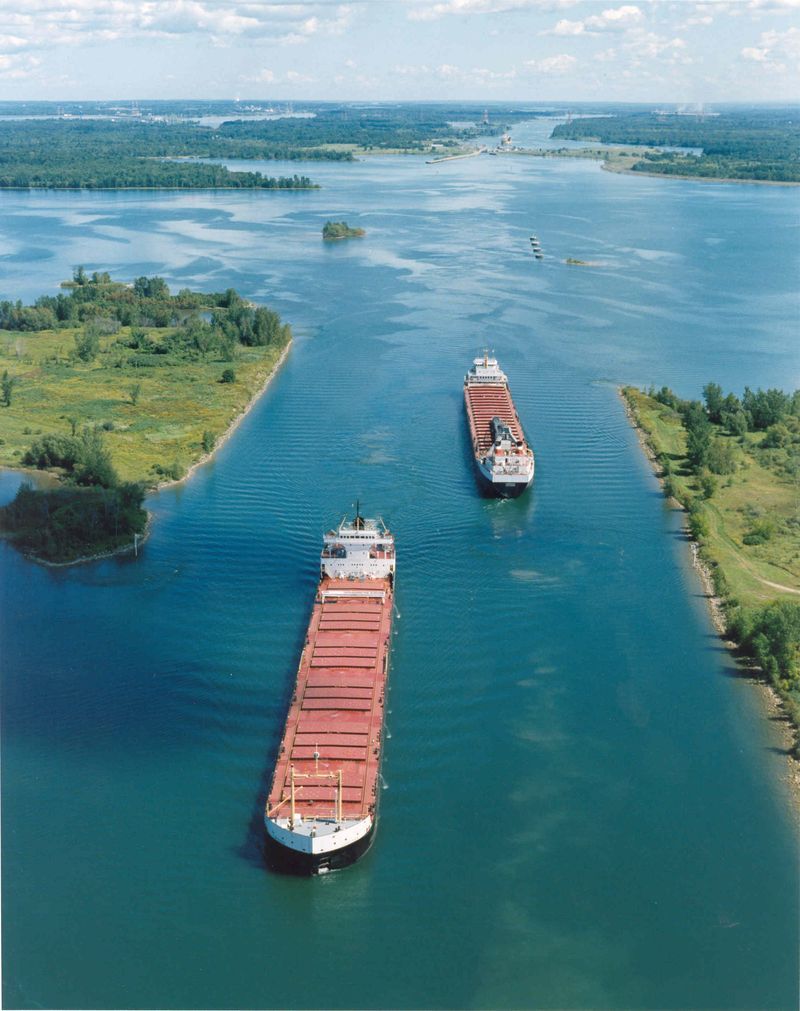
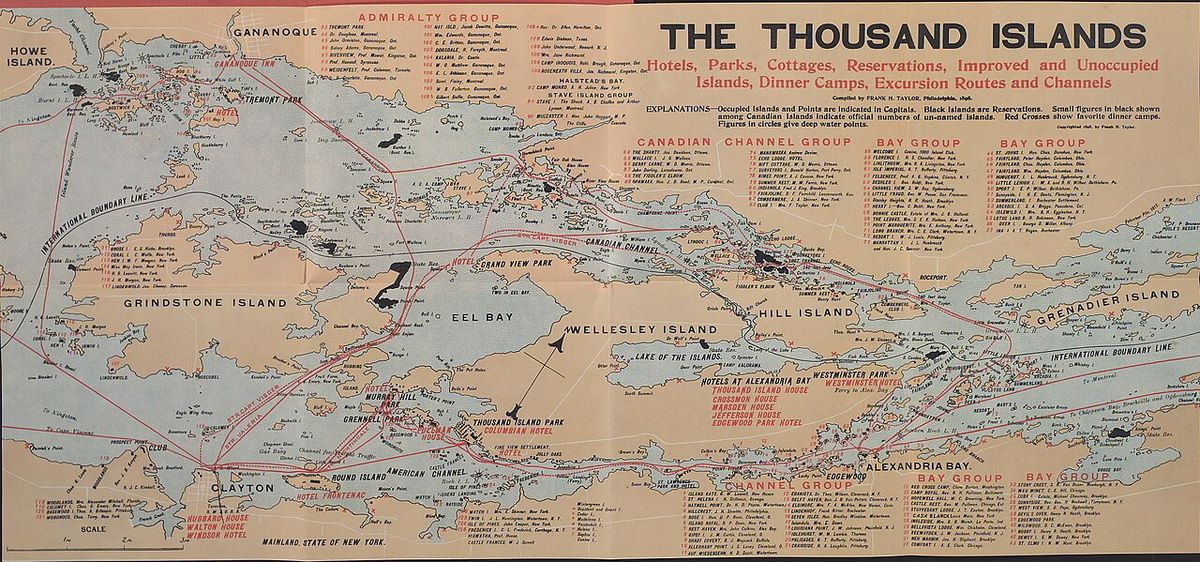
Thousand Islands Bridge
The Thousand Islands International Bridge is a vital binational infrastructure system spanning the St. Lawrence River, connecting northern New York State with southeastern Ontario. Completed in 1938, this series of five bridges stretches 8.5 miles (13.7 kilometres) across the scenic Thousand Islands region and serves as a critical conduit for tourism, commerce, and daily travel between Canada and the United States. The bridge is jointly owned and operated by the American Thousand Islands Bridge Authority and Canada's Federal Bridge Corporation Limited. With annual vehicle crossings exceeding two million, it is one of the busiest border crossings along the shared waterway.
Engineering and Structure
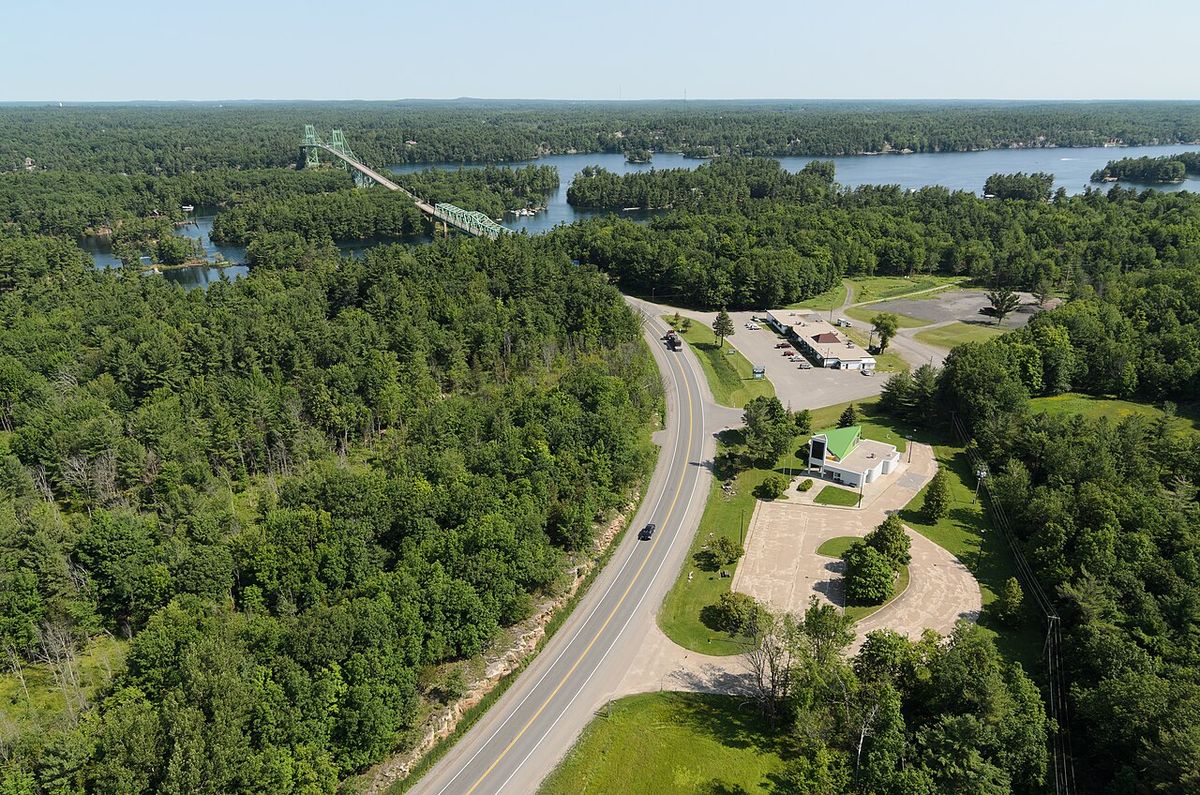
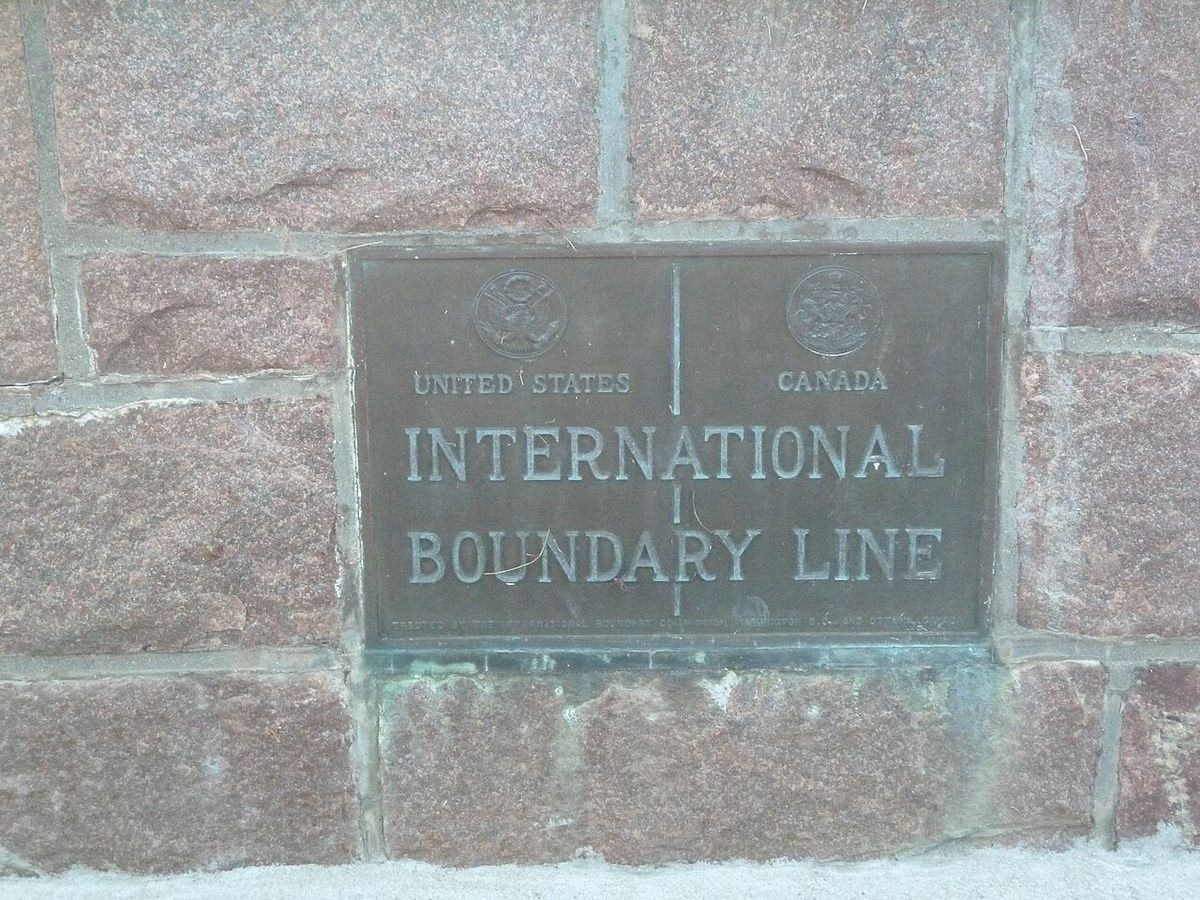
The Thousand Islands International Bridge is not a single structure but a linked system of five separate bridges traversing the islands of the St. Lawrence River. The system's total length is 8.5 miles or 13.7 kilometres from the American mainland to the Canadian shore. Each bridge in the system carries two lanes of traffic, one in each direction, and includes pedestrian sidewalks. The sequence of spans from the southern US side to the northern Canadian side is as follows. The first bridge connects the American mainland near Collins Landing to Wellesley Island. The second, and most significant for border formalities, consists of two parallel 90-foot (27-metre) bridges linking Wellesley Island in the US to Hill Island in Canada, which constitutes the actual international crossing. From Hill Island, the system continues with bridges to Constance Island, then to Georgina Island, and finally from Georgina Island to the Canadian mainland at Ivy Lea, Ontario.
The southern terminus of the bridge system provides a direct connection to Interstate 81, a major north-south highway in the United States. On the Ontario side, the northern terminus connects to Highway 137, which provides access to the Trans-Canada Highway, Highway 401. There is also an interchange with the scenic Thousand Islands Parkway on the Ontario side, offering an alternative route for local traffic and tourists. The bridges were designed to accommodate the challenging geography of the region, moving between numerous islands and maintaining navigational clearances for shipping on the St. Lawrence Seaway. The design faced early challenges with aerodynamic oscillation shortly after opening, which required prompt structural upgrades to correct.
Ownership and Administration
The bridge system is a unique binational enterprise, co-owned and jointly managed by public corporations from both countries. The American portions are owned and operated by the Thousand Islands Bridge Authority (TIBA), a New York State public benefit corporation. The Canadian portions are owned and operated by the Federal Bridge Corporation Limited (FBCL), a Crown corporation of the Government of Canada. The two entities collaborate under a formal agreement, with the TIBA taking the lead on day-to-day management and operations for the entire system. The TIBA's seven-member board of directors includes four American and three Canadian members, all appointed by the Jefferson County Board of Legislators in New York.
Beyond the bridge itself, the TIBA is also responsible for maintaining and administering Boldt Castle, the historic landmark situated on Heart Island within the archipelago. The authority's operational mandate is established through a combination of New York State law and its agreement with the FBCL, which grants its rules and regulations the force of law in both jurisdictions. These rules cover all aspects of bridge use, from vehicle traffic and tolling to pedestrian access and security. The TIBA's administrative offices are located at Collins Landing in Alexandria Bay, New York, and are open from 8:00 a.m. to 4:30 p.m., Monday through Friday. The current Rules and Regulations governing the facility took effect on March 1, 2026.
Border Crossing and Traffic Operations
The international bridge system hosts the Thousand Islands Border Crossing, formally connecting the town of Alexandria Bay, New York, with the community of Ivy Lea, Ontario. It is the westernmost of the three primary St. Lawrence River road crossings between Ontario and New York. The US border inspection facility on the American side is often referred to as the Thousand Islands port of entry, while the Canadian facility on the Ontario side is called the Lansdowne port of entry, sometimes referenced as Gananoque due to its proximity to that town. Both the Canada Border Services Agency (CBSA) and US Customs and Border Protection (CBP) operate these land border stations.
This crossing is exceptionally busy, particularly during the summer tourism season, where wait times can reach up to two hours. In its inaugural year of 1938, the bridge saw over 118,000 vehicle crossings. By 2019, that annual volume had grown to exceed two million vehicles. The border agencies are also responsible for inspecting vessel traffic on the river, with seasonal marine inspection stations operated by the US on Heart Island and at Cape Vincent, New York, and by Canada at Rockport and Gananoque, Ontario. Officers from both countries can also travel to marinas upon request to conduct inspections. The crossing's operations are integral to the regional economy, facilitating the movement of tourists and goods.
- US Port of Entry: Alexandria Bay, New York (also called Thousand Islands).
- Canadian Port of Entry: Lansdowne, Ontario (also called Gananoque).
- Peak Season Wait Times: Can extend to two hours.
- Annual Crossings (1938): 118,000 vehicles.
- Annual Crossings (2019): Over 2,000,000 vehicles.
- US Marine Inspection Stations: Heart Island and Cape Vincent, NY (seasonal).
- Canadian Marine Inspection Stations: Rockport and Gananoque, ON (seasonal).
Construction and Historical Milestones
The ambitious project to bridge the Thousand Islands was realized with remarkable speed. Construction began with a groundbreaking ceremony on April 30, 1937, and the entire five-bridge system was completed in just sixteen months. The total cost was $3.05 million, equivalent to approximately $52.14 million in 2024 dollars. The official opening ceremony on August 18, 1938, was a significant binational event, featuring the ribbon-cutting by US President Franklin D. Roosevelt and Canadian Prime Minister William Lyon Mackenzie King. The project was finished ten weeks ahead of its original schedule, reflecting the coordinated effort between the two nations.
Shortly after opening, engineers identified aerodynamic oscillation problems affecting the spans. These issues were promptly addressed through structural upgrades to ensure the bridge's stability and safety. The bridge has undergone several expansions and rehabilitations since its debut. A major addition was completed in 1959 to accommodate growing traffic. More recently, a multi-year rehabilitation project on the Canadian Span was undertaken. The final phase of this work, involving the wrapping of the west main cable, resumed in the week of May 12, 2025, after a winter pause. This project highlights the ongoing investment in the bridge's long-term integrity.
- April 30, 1937: Groundbreaking ceremony.
- August 18, 1938: Official opening by President Roosevelt and Prime Minister King.
- 1959: Major expansion of the bridge system.
- June 2019: Introduction of electronic toll collection via E-ZPass.
- April 1, 2021: Effective date of the current operational agreement between TIBA and FBCL.
- May 12, 2025: Resumption of final rehabilitation phase on the Canadian Span.
- March 1, 2026: Effective date of the TIBA's current Rules and Regulations.
Tolls, Payment Systems, and User Regulations
The Thousand Islands Bridge Authority collects tolls from vehicles crossing from the United States into Canada. Tolls are not collected for travel from Canada into the United States. The authority accepts several payment methods, including cash, E-ZPass transponders, and a prepaid Commuter Discount Fare Trip Tag program. The Trip Tag is purchased for 72 trips at a cost of US$48.00, offering a discounted rate for frequent crossers. The TIBA became a member of the multi-state E-ZPass consortium and implemented full electronic toll collection in June 2019, significantly streamlining the payment process for many users.
Currently, the TIBA does not accept other electronic toll collection transponders, such as those from Canadian provincial systems. However, as a service to Canadian travellers heading south, the Bridge Authority offers sales of Florida's SunPass transponders at its toll plazas for convenience on their journeys. The authority's operational rules, which have the force and effect of law in both New York and Ontario, are detailed in a document that took effect on March 1, 2026. These rules govern speed limits, vehicle restrictions, pedestrian use, and security protocols on the bridge facilities. Copies of the rules can be obtained at any toll plaza or the administration office at Collins Landing.
Regional Economic and Tourism Role
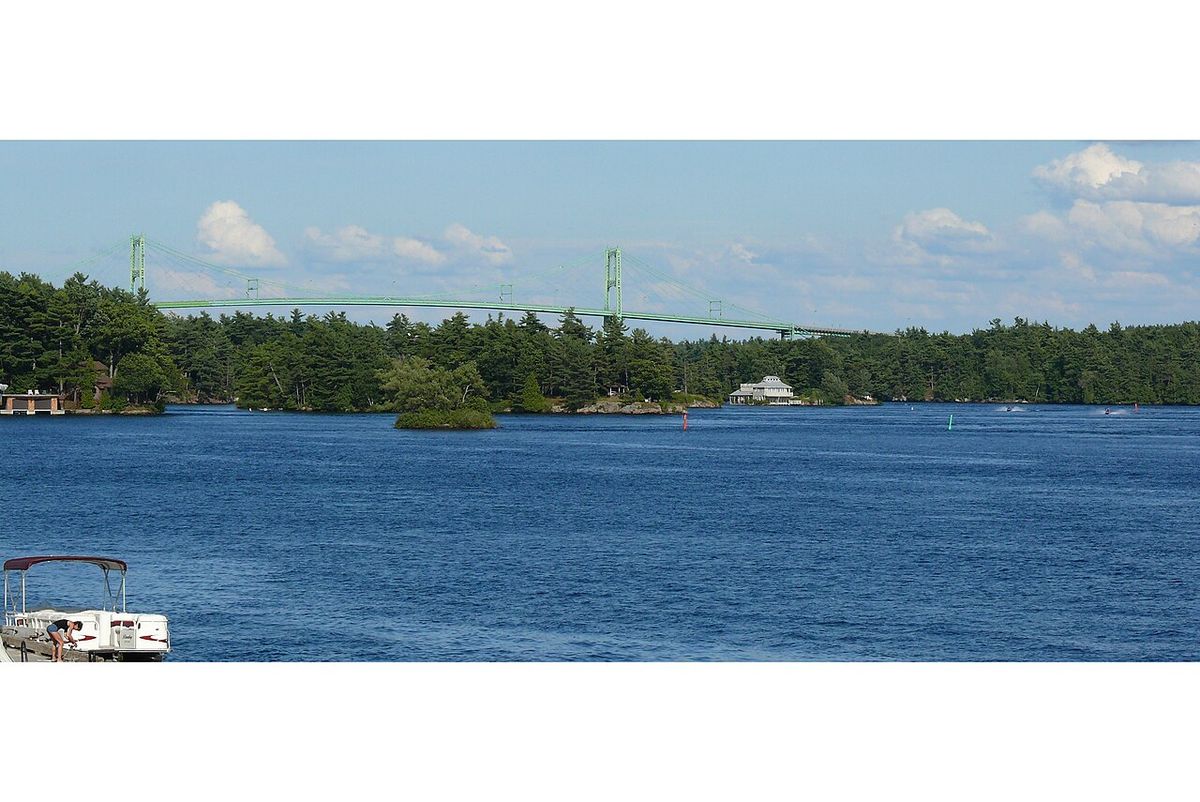
The Thousand Islands International Bridge is a foundational element for the economy and tourism of the surrounding region. The Thousand Islands area, famed for its clear waters, forested islands, and historic estates, depends on the bridge for tourist access from both countries. The structure itself is a tourist attraction, offering panoramic views of the archipelago, including sights of notable landmarks like Boldt Castle, which is owned and maintained by the bridge authority. Many tour boat cruises, such as those through Fiddlers Elbow, pass under the Canadian span, providing a unique vantage point of the engineering from the water.
The bridge facilitates a significant cross-border flow of visitors who contribute to the local economies of communities such as Alexandria Bay, Clayton, Sackets Harbor, and Gananoque. The region markets itself as a destination for romance, fishing, boating, and cultural events, with the bridge serving as a critical access point. The connection to major highways like I-81 and Highway 401 integrates the region into broader North American travel networks, supporting not only tourism but also regional commerce and supply chains. The ongoing maintenance and rehabilitation projects, such as the cable wrapping completed in 2025, are part of the commitment to preserving this vital binational asset.
| Connected Community (US) | Connected Community (Canada) | Primary Attraction/Function |
|---|---|---|
| Alexandria Bay, NY | Ivy Lea, ON | Bridge Terminus, Border Inspection |
| Collins Landing, NY | Lansdowne, ON | TIBA Administration, Port of Entry |
| Heart Island (via boat) | Gananoque, ON | Boldt Castle, Marine Inspection |
| Clayton, NY | Rockport, ON | Tourism, Seasonal Marine Inspection |
| Sackets Harbor, NY | Kingston, ON (via Hwy 401) | Historical Sites, Regional Events |
Communications and Public Engagement
The Thousand Islands Bridge Authority and the Federal Bridge Corporation Limited maintain active public communications to keep users informed about operations, tolls, and construction projects. For the major rehabilitation work on the Canadian Span that resumed in May 2025, both corporations issued public notices thanking users for their patience and support. The authority also uses social media platforms such as X (Twitter) under the handle @TIslebridge and Facebook under @Thousand Islands Bridge to provide real-time updates. The Federal Bridge Corporation Limited, which owns the Canadian portions, also maintains a presence on X, Facebook, LinkedIn, and Instagram. This multi-platform approach ensures that travellers can access information on wait times, toll changes, and scheduled maintenance. The authority's public engagement includes distributing its official Rules and Regulations, which can be downloaded from its website or picked up in person. This focus on communication supports the safe and efficient use of the international crossing, aligning with both corporations' mandates to provide reliable transportation facilities that promote international commerce and tourism.
Questions about Thousand Islands Bridge
How much does it cost to cross the Thousand Islands Bridge?
Tolls are collected only for travel from the United States into Canada. Payment can be made with cash, an E-ZPass transponder, or a prepaid Commuter Discount Fare Trip Tag. The Trip Tag costs US$48.00 for 72 trips, offering a discounted rate for frequent crossers. The specific toll rate for a single cash or E-ZPass crossing is managed by the Thousand Islands Bridge Authority, which introduced electronic toll collection in June 2019.
Where does the Thousand Islands Bridge go?
The bridge system connects northern New York State in the United States with southeastern Ontario in Canada. Its southern end links to Interstate 81 near Alexandria Bay, New York. Its northern end connects to Highway 137 at Ivy Lea, Ontario, which provides access to Highway 401, the Trans-Canada Highway. The series of five bridges spans the St. Lawrence River through the Thousand Islands archipelago, passing over Wellesley, Hill, Constance, and Georgina Islands.
When was the Thousand Islands Bridge built?
Construction of the Thousand Islands International Bridge began on April 30, 1937. The entire five-bridge system was built in just sixteen months and opened to traffic on August 18, 1938. The opening ceremony was a major binational event, with the ribbon cut by US President Franklin D. Roosevelt and Canadian Prime Minister William Lyon Mackenzie King. The project was completed ten weeks ahead of schedule at a total cost of $3.05 million.
Who owns and operates the Thousand Islands Bridge?
The bridge is jointly owned and operated by two public corporations. The American portions are owned by the Thousand Islands Bridge Authority (TIBA), a New York State public benefit corporation. The Canadian portions are owned by the Federal Bridge Corporation Limited (FBCL), a Canadian federal Crown corporation. Day-to-day management and operation of the entire system are the responsibility of the TIBA under a formal agreement with the FBCL that took effect April 1, 2021.
What is the border crossing called at the Thousand Islands Bridge?
The land border crossing at the bridge is known as the Thousand Islands Border Crossing. On the American side, the port of entry is located at Alexandria Bay, New York, and is sometimes called Thousand Islands. On the Canadian side, the port of entry is at Lansdowne, Ontario, and is sometimes referred to as Gananoque due to its proximity to that town. Both Canada Border Services Agency and US Customs and Border Protection operate inspection facilities there.
Can I use an E-ZPass on the Thousand Islands Bridge?
Yes, the Thousand Islands Bridge Authority accepts E-ZPass for toll payment. The authority became a member of the multi-state E-ZPass consortium and fully implemented electronic toll collection in June 2019. The TIBA does not currently accept other electronic toll transponders from different networks. For Canadian travellers, the authority sells Florida's SunPass transponders at its plazas as a convenience for those driving to Florida.
Sources and further reading
- Thousand Islands Bridge (Wikipedia)
- The Thousand Islands Bridge Authority and ... (federalbridge.ca)
- Rules and Regulations (tibridge.com)
- Visit 1000 Islands | There's More To Discover (visit1000islands.com)
Checked by the Your Space Hamilton desk. Last updated 2026-10-26.