Thousand Islands
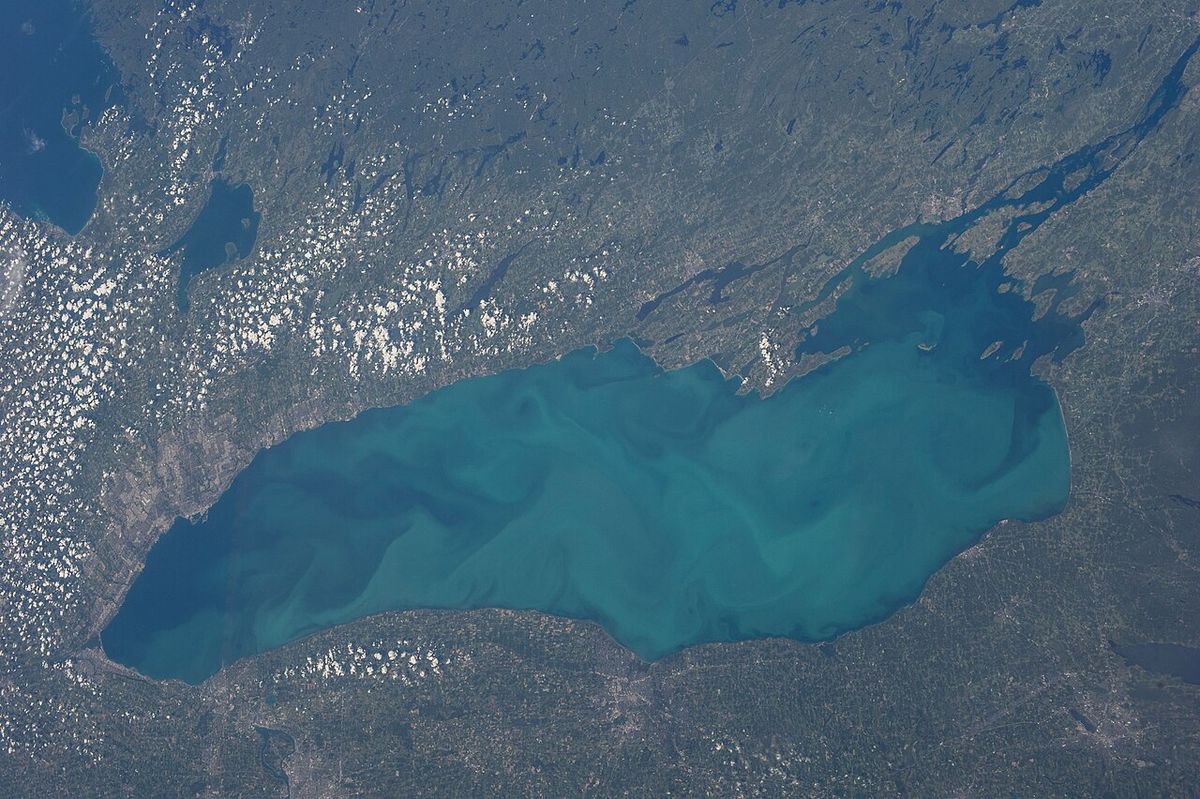
The Thousand Islands is a North American archipelago of 1,864 islands straddling the Canada-United States border in the Saint Lawrence River as it emerges from Lake Ontario. Stretching approximately 80 kilometres downstream from Kingston, Ontario, the islands range from large landmasses over 100 square kilometres to tiny outcroppings supporting just two trees. The region is a historically significant summer resort area and a major recreational destination, recognized for its boating, fishing, and collection of grand historic summer homes. Its unique geography and ecology were designated a UNESCO World Biosphere Reserve in 2002, underlining its importance to Canadians as a natural and cultural treasure on the St. Lawrence Seaway.
Geography and Geology
The Thousand Islands archipelago is situated at the head of the Saint Lawrence River where it flows out of Lake Ontario. The international border bisects the region, covering portions of Jefferson and St. Lawrence counties in New York and the United Counties of Leeds and Grenville and Frontenac County in Ontario. The islands themselves are defined by a specific criteria: to be counted, an emergent landform must have at least one square foot of land above water year-round and support at least two living trees. This results in a diverse array of islands, from substantial landmasses to minute rocky islets. The archipelago stretches for about 80 kilometres downstream from Kingston, with the single largest island being Wolfe Island, which lies entirely within Ontario. Other large islands include Grindstone Island and Wellesley Island in New York, and Howe Island in Ontario. Geologically, the islands represent a southern extension of the Canadian Shield known as the Thousand Islands, Frontenac Arch region, which runs south across the river to connect with the Adirondack Mountains in New York. This ancient granite bedrock forms the foundation of the islands and creates a distinctive landscape. The unique ecological significance of this transition zone between two major forest regions and its importance for biodiversity led UNESCO to designate it as a World Biosphere Reserve in 2002.
History and Development
Prior to European colonization, the region was home to or visited by members of the Iroquois Confederacy and Ojibwa peoples, who called the islands Manitouana, meaning "Garden of the Great Spirit." The area became a theatre of conflict during the War of 1812, with several fortifications built, including Fort Wellington in Prescott, Ontario, and a garrison on Chimney Island in Mallorytown, Ontario. Museums on both sides of the border now interpret this history. The late 19th and early 20th centuries marked the transformation of the Thousand Islands into a famed summer resort destination for wealthy families from cities like New York, Chicago, Cleveland, Pittsburgh, and other urban centres in the United States and Canada. This half-century period from 1874 to 1912 represented the resort's greatest prominence.
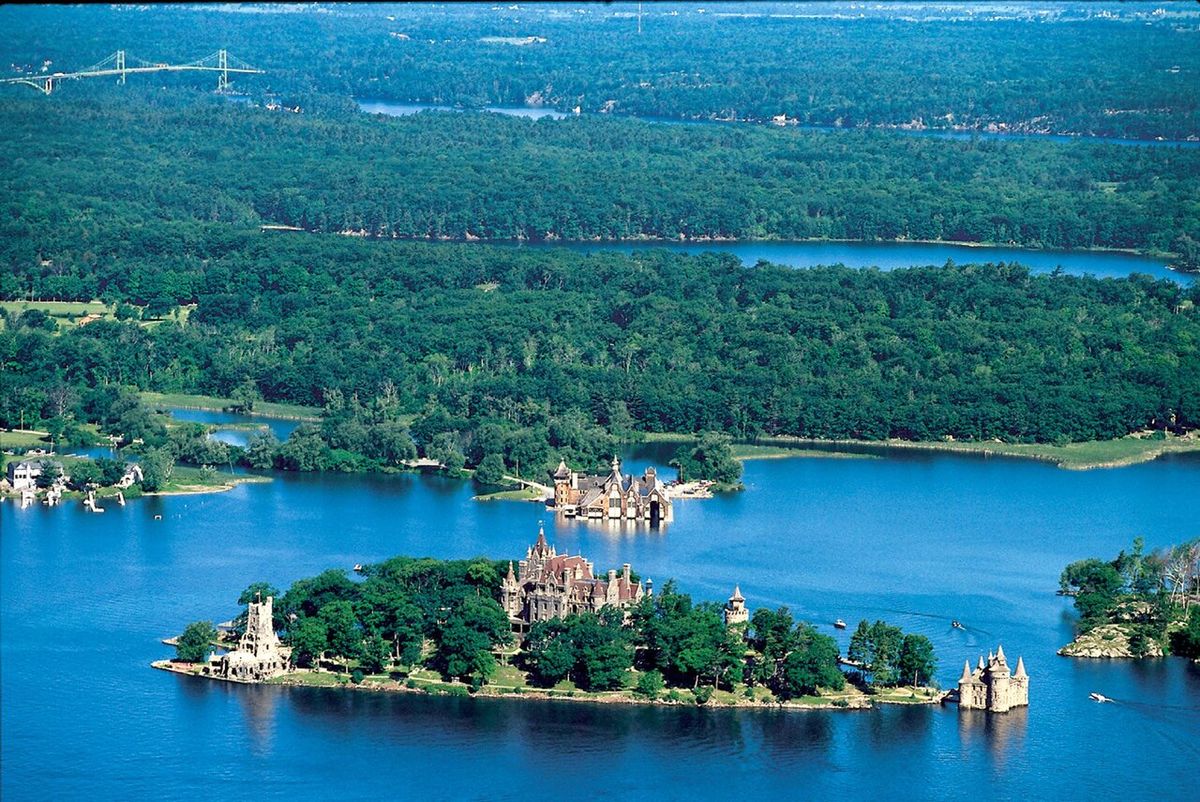
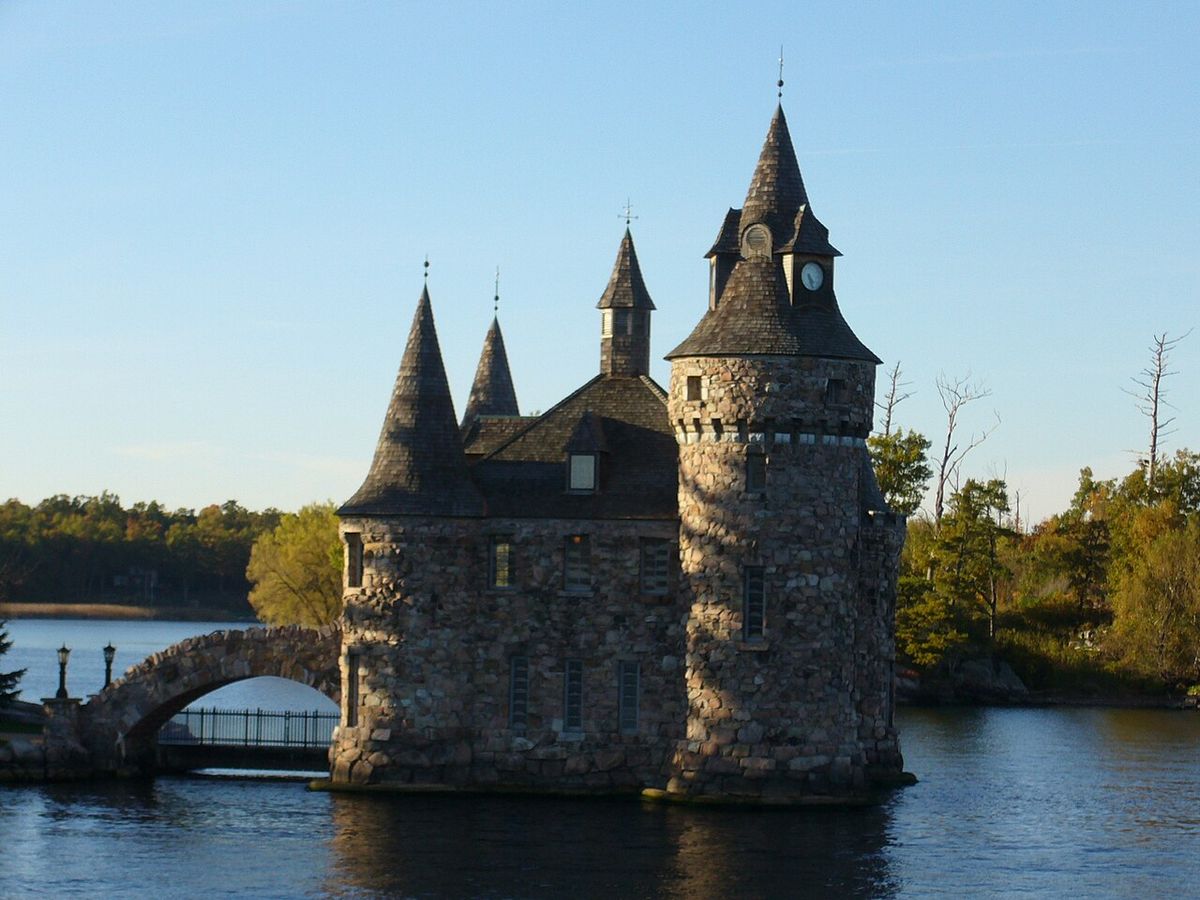
This era saw the construction of grand hotels, extensive steamboat tours, and numerous vacation homes. The most extravagant constructions were masonry castles, which remain significant landmarks. Castle Rest, built in 1888, was the first but was later destroyed in the mid-20th century. The most famous surviving examples are Singer Castle, originally called "The Towers" on Dark Island, and Boldt Castle on Heart Island. Boldt Castle was left unfinished for over 75 years after the death of hotel magnate George Boldt's wife in 1904 and has been gradually completed according to the original plans by the Thousand Islands Bridge Authority since 1977. The region also became a centre for recreational boating, hosting large steam yachts, many designed by Nathanael Herreshoff, which required distinctive yacht houses. Three local yacht clubs hosted the American Power Boat Association's Gold Cup Races for nine consecutive years during this period of innovative power boating.
Notable Islands and Landmarks
The archipelago contains several islands of particular historical, natural, or cultural interest. Adjacent to Wolfe Island is Carleton Island in New York, the site of the ruined Fort Haldimand, built by the British in 1779 during the American Revolutionary War and captured by American soldiers in the War of 1812. Deer Island, about 3.2 kilometres north of Alexandria Bay, is privately owned by the Skull and Bones society. A common misconception involves Zavikon Island, often said to host the "shortest international bridge" between a Canadian and American island. In reality, both islands are entirely within Canada and belong to the municipality of Leeds and Grenville. Ironsides Island, an uninhabited rocky island owned by The Nature Conservancy, was listed as a National Natural Landmark in 1967 and hosts one of northern New York's largest great blue heron rookeries, with over a thousand birds returning to breed each April.
Other significant islands include Calumet Island near Clayton, New York, which once featured a castle mansion belonging to New York tobacco tycoon Charles G. Emery and later hosted a marina in the 1960s. Longue Vue Island is noted as the region's only artificial island. The title of the world's smallest inhabited island is often claimed by Just Room Enough Island. The area is also defined by its grand historic estates, which are major tourist attractions. Boldt Castle, a 120-room mansion on Heart Island, is operated by the Thousand Islands Bridge Authority and includes the main castle, a power house, a play house, and a separate boat house. Singer Castle on Dark Island, built with secret passageways and hidden wine cellars by sewing machine magnate Frederick Bourne, is privately owned and open for tours. These structures are enduring symbols of the region's Gilded Age resort history.
- Carleton Island (NY): Site of Fort Haldimand (1779), captured in War of 1812.
- Deer Island (NY): Owned by the Skull and Bones society.
- Zavikon Island (ON): Often misrepresented. Both islands are in Canada.
- Ironsides Island (NY): National Natural Landmark (1967), major heron rookery.
- Calumet Island (NY): Former site of Charles G. Emery's mansion.
- Longue Vue Island: The only artificial island in the region.
- Just Room Enough Island: Claimed as world's smallest inhabited island.
Recreation and Public Lands
The Thousand Islands region is a premier destination for outdoor recreation, centred on the water and its extensive public parklands. In Canada, a group of 21 islands forms the Thousand Islands National Park, the oldest national park east of the Rocky Mountains, originally established in 1904. It offers campgrounds, inland walking trails, annual family events, and a national heritage building. On the New York side, thirty state parks are managed as part of the Thousand Islands Region by the New York State Office of Parks, Recreation and Historic Preservation. Many of these river parks were established in the late 19th and early 20th century as part of the St. Lawrence Reservation, among New York's earliest land acquisitions for preservation and recreation. Major parks include Wellesley Island State Park, which features the largest camping complex in the region, and Robert Moses State Park. These parks provide extensive public access to the riverfront for picnicking, hiking, and swimming.
Boating and fishing are central to the area's identity. The Lake of the Isles, a secluded area cut off from the main river by Wellesley Island and Hill Island, is a popular location for swimming or anchoring, accessible through two narrow passages including the small, winding International Rift. Eel Bay, just southwest of Wellesley Island, is known for fishing, especially for pike. Potter's Beach on Grindstone Island, conserved by the Thousand Islands Land Trust (TILT), is one of the few beaches with a fine, shallow sandy bottom. TILT itself conserves over 8,500 acres of land with more than 48 kilometres of public trails open year-round and runs extensive educational programs like TILTreks and TILTKids Camp. The clear waters, markedly improved since the arrival of zebra mussels in the mid-1990s which increased visibility to observe a rocky bottom in 24 metres of water, also facilitate freshwater shipwreck diving, with wrecks like the America, Islander, and Keystorm attracting divers of various skill levels, some lying in as little as 4.6 metres of water.
Transportation, Access, and Aviation
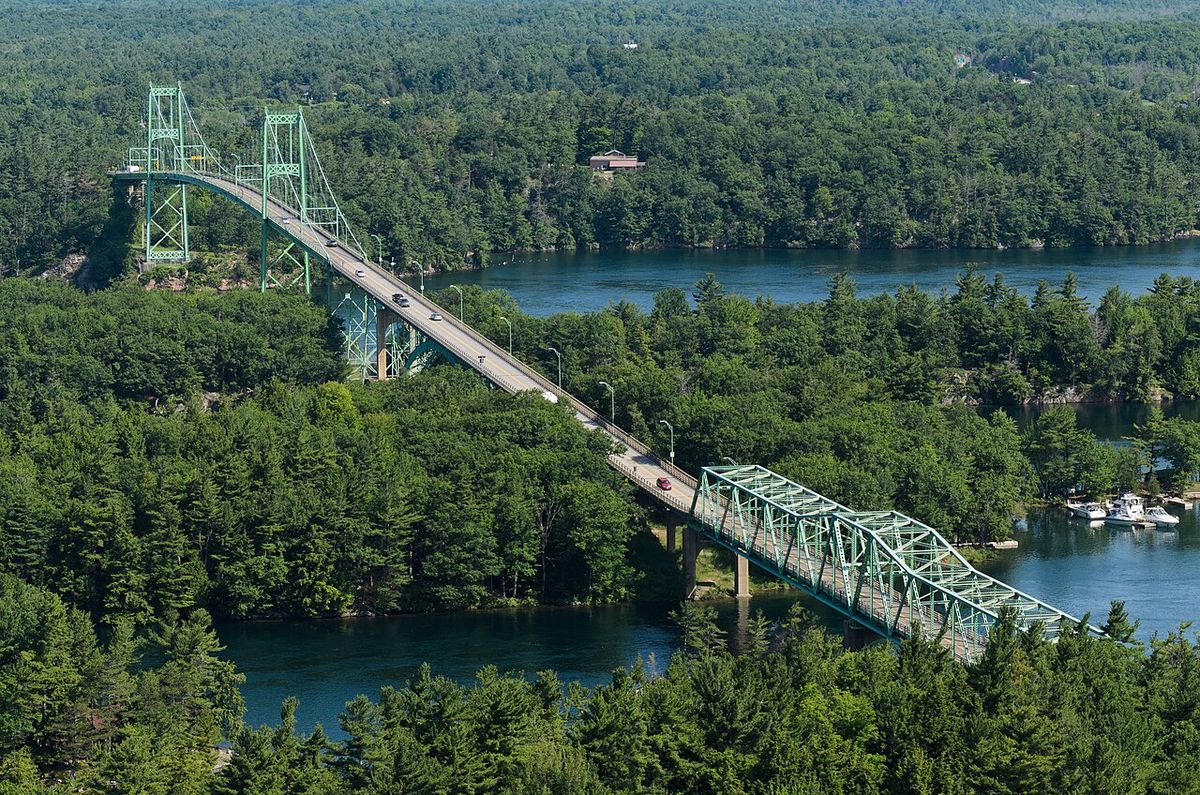
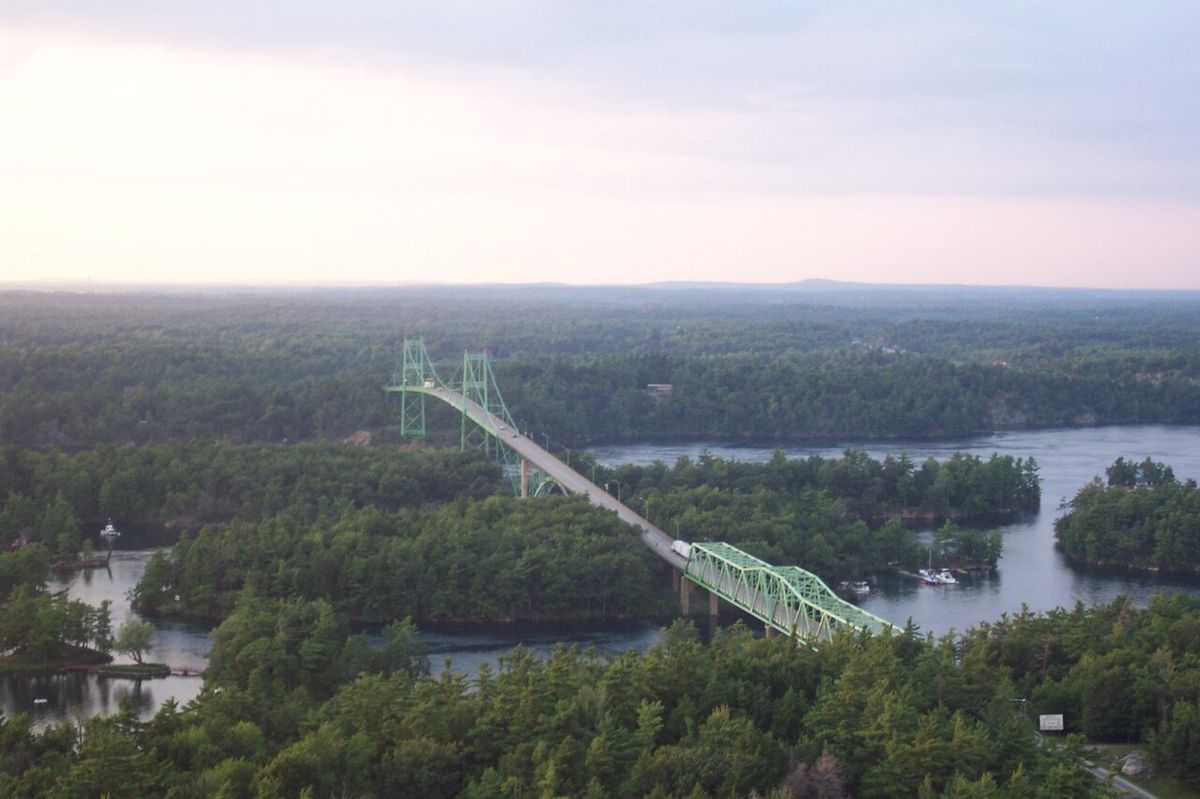
The region is connected by major road and water routes. The Thousand Islands Bridge, carrying Interstate 81 from New York, traverses Wellesley Island at the northernmost point of I-81 and connects to Ontario Highway 137, which leads to Highway 401. The New York waterfront is served by State Routes 12 and 37, while the Ontario side is paralleled by the scenic Thousand Islands Parkway and the Waterfront Trail for cyclists. Navigation on the river requires caution due to the complex underwater topography of deep channels and shallow shoals. Vessels typically use marked channels and maritime pilots for safety, as navigation outside marked channels at night is considered dangerous. The Saint Lawrence Seaway is a major shipping corridor for Seawaymax lake freighters that often ply these waters.
Commercial and private air service is available through several airports. Watertown International Airport (ART) in New York offers daily American Airlines service connecting through Philadelphia. In Ontario, Norman Rogers Airport (YGK) in Kingston provides service on FlyGTA Airlines connecting through Billy Bishop Toronto City Airport as well as service to Montréal-Trudeau via Pascan Aviation. Both airports also handle private aviation. Additional general aviation facilities include the privately owned Maxson Airfield (FAA LID: 89NY) south of Alexandria Bay, New York, which once had commercial service by Mohawk Airlines under the IATA code AXB. On the Canadian side, the Brockville-Thousand Islands Regional Tackaberry Airport (IATA: XBR), also known as Brockville Municipal Airport, is located 8.9 kilometres northwest of Brockville, Ontario. These transport links support both the local population and the significant seasonal tourist influx.
Cultural Attractions and Museums
Beyond the natural landscape, the Thousand Islands region contains several cultural institutions dedicated to its history and maritime heritage. The Antique Boat Museum in Clayton, New York, houses a significant collection of antique wooden boats used or built in the region and features exhibits on regional maritime culture. Its notable artifact is La Duchesse, the luxurious houseboat built for George Boldt. On the Canadian side, the Thousand Islands Boat Museum in Gananoque, Ontario, is a hands-on waterfront museum with a collection of 36 boats, workshops, and events celebrating the heritage of the St. Lawrence River. These museums preserve the story of the area's deep connection to boating and river life, including its history of yacht design and powerboat racing.
The historic castles remain the most prominent cultural landmarks, drawing thousands of visitors annually. Boldt Castle's ongoing restoration and Singer Castle's preserved interiors, complete with features built for the Prohibition era, offer direct glimpses into the opulent past. The region also claims a famous culinary connection: Thousand Island dressing. According to The Oxford Companion of Food and Drink, the name presumably comes from the islands. One common story describes how a fishing guide's wife, Sophia LaLonde, made the condiment, with the recipe requested by actress May Irwin and then given to George Boldt, who instructed the Waldorf-Astoria's maître d'hôtel, Oscar Tschirky, to put it on the menu in 1894. Sociologists note multiple conflicting origin stories exist within the various islands and villages, none with strong written evidence to support specific claims.
- Antique Boat Museum (Clayton, NY): Houses antique wooden boats and La Duchesse, George Boldt's houseboat.
- Thousand Islands Boat Museum (Gananoque, ON): Hands-on museum with 36 boats and workshops.
- Boldt Castle (Heart Island): 120-room mansion under renovation since 1977 by the Thousand Islands Bridge Authority.
- Singer Castle (Dark Island): Privately renovated castle with secret passageways, open for tours.
- Thousand Island Dressing: Named for the region. Popular origin story involves Sophia LaLonde and George Boldt.
Population, Communities, and Environment
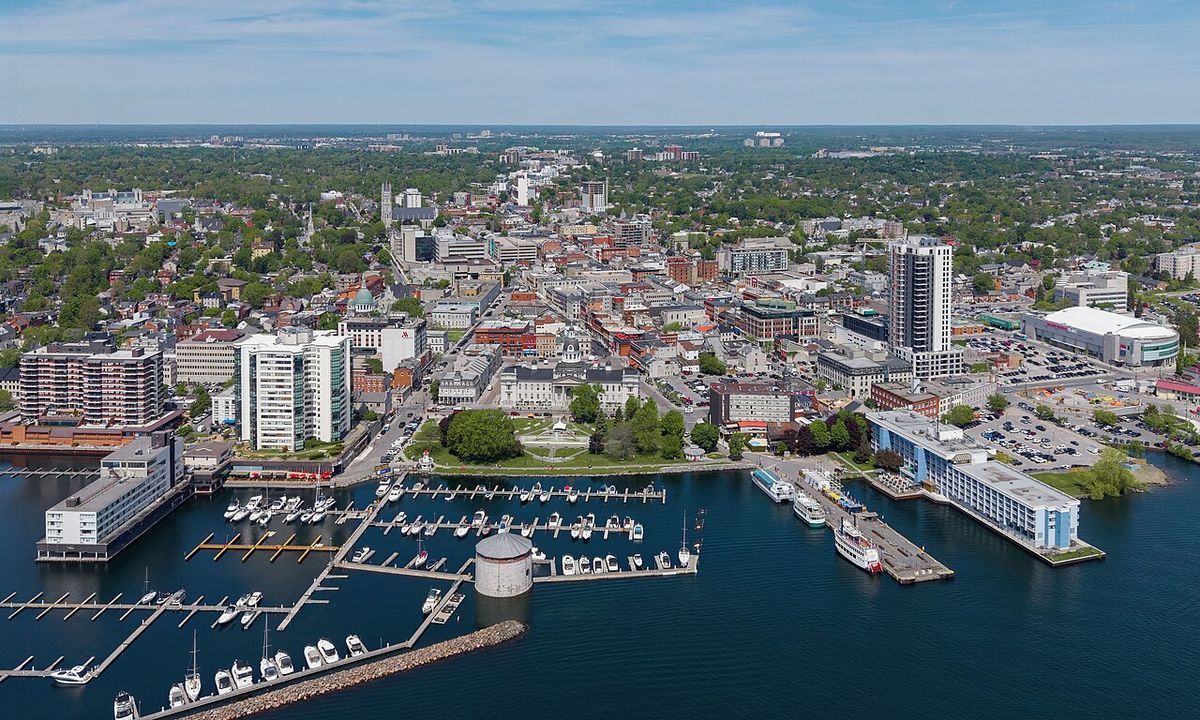
The population distribution in the Thousand Islands region is asymmetrical across the border. The single largest urban centre is Kingston, Ontario, with a metropolitan population exceeding 170,000 as of 2021. It marks the western gateway to the Canadian islands. Further east, Brockville, Ontario, serves as another significant population hub. On the American side, settlement is less dense, with the largest city being Watertown, New York, approximately 32 kilometres inland and with a population of around 25,000 as of 2020. The riverfront itself in New York is characterized by smaller villages and seasonal communities that swell in size during the summer months, such as Thousand Island Park. These seasonal communities are a defining feature of the area's social fabric, reflecting its long history as a summer resort for distinguished visitors.
The seasonal influx supports a tourism economy centred on hospitality, marinas, and recreational services. The permanent communities maintain museums, historical societies, and infrastructure for both residents and visitors. Environmentally, the region has undergone a significant change in water clarity since the introduction of the zebra mussel, an invasive species that feeds on algae. Before its arrival, visibility was typically 3 to 4.6 metres, but clarity improved markedly in the mid-1990s, allowing a rocky bottom to be observed in 24 metres of water in some areas. This change has affected the aquatic ecosystem and enhanced the experience for divers and boaters, even as it represents a broader ecological shift in the Great Lakes-St. Lawrence system.
Maritime and Diving Heritage
The Thousand Islands have a rich maritime heritage shaped by commerce, recreation, and sometimes tragedy. The Saint Lawrence Seaway is a vital commercial channel, but the river's hidden dangers have resulted in a number of shipwrecks that now form a unique underwater museum. Due to the great number of rocks and shoals just above or below the water's surface, navigation has always required skill. Before modern aids and piloting, this led to groundings and sinkings. The area now facilitates freshwater shipwreck diving appropriate for all skill levels, with some wrecks lying in very shallow water. The wreck of the America, for instance, is a popular dive site, as are the Islander and Keystorm. Most wrecks are over 30 metres underwater, but some are a mere 4.6 metres down and can be seen from the surface on a clear day.
This diving activity is supported by the remarkable water clarity brought about by the zebra mussel. The improved visibility allows divers to safely explore these historical sites and observe the marine life that now inhabits them. The region's museums actively work to preserve this heritage above water. The Antique Boat Museum's collection and the Thousand Islands Boat Museum's hands-on approach both educate the public about the wooden boats, steam yachts, and powerboats that were essential to life and leisure in the islands. This combination of preserved surface vessels and accessible underwater wrecks provides a comprehensive view of the area's deep connection to the St. Lawrence River.
Questions about Thousand Islands
Can you visit Boldt Castle and Singer Castle?
Yes, both historic castles are open to the public. Boldt Castle on Heart Island is owned and operated by the Thousand Islands Bridge Authority and can be reached by boat or tour cruise from locations like Alexandria Bay, New York. Singer Castle on Dark Island is privately owned and also offers tours. Boldt Castle has been under renovation since 1977 to complete the original 120-room mansion, while Singer Castle retains features like secret passageways built during the Prohibition era.
What is there to do in the Thousand Islands?
The region is a major centre for boating, fishing, kayaking, and scuba diving to explore numerous shipwrecks like the America and Keystorm. Visitors can camp or hike in Thousand Islands National Park in Canada or in one of thirty New York state parks like Wellesley Island State Park. Touring the historic castles, visiting maritime museums like the Antique Boat Museum in Clayton, or cycling the Thousand Islands Parkway and Waterfront Trail are all popular activities. The Thousand Islands Land Trust also offers over 48 kilometres of public trails.
What is the Thousand Islands connection to Thousand Island dressing?
The popular salad dressing is named for the region, though its exact origin is disputed and multiple stories exist among the islands' communities. One common story states that a local fishing guide's wife, Sophia LaLonde, created the recipe for her husband's shore dinners. It was supposedly shared with actress May Irwin, who then gave it to hotel magnate and summer resident George Boldt. Boldt is said to have introduced it at the Waldorf-Astoria Hotel in New York City in 1894 through maître d'hôtel Oscar Tschirky.
Is there a national park in the Thousand Islands?
Yes, the Thousand Islands National Park is located on the Canadian side of the border. It is comprised of 21 islands plus numerous islets and mainland properties. Established as St. Lawrence Islands National Park in 1904, it is the oldest national park east of the Canadian Rocky Mountains. The park offers camping, hiking trails, heritage buildings, and educational programs. On the American side, thirty New York state parks provide similar public access and recreational facilities.
How many islands are in the Thousand Islands?
There are 1,864 islands in the Thousand Islands archipelago. To be officially counted, an emergent landform within the river must have at least one square foot of land above water level year-round and support at least two living trees. The islands range dramatically in size from over 40 square miles to tiny outcroppings. This diverse archipelago stretches along the Saint Lawrence River, bisected by the Canada-US border. The region was designated a UNESCO World Biosphere Reserve in 2002 due to its unique geological features where the Canadian Shield extends south to meet the Adirondacks.
Where are the Thousand Islands located?
The Thousand Islands are located in the Saint Lawrence River as it emerges from the northeast corner of Lake Ontario. The archipelago stretches for about 50 miles downstream from Kingston, Ontario, straddling the Canada-US border. The Canadian islands are within the province of Ontario, specifically in the United Counties of Leeds and Grenville and Frontenac County. The American islands are part of New York State, within Jefferson and St. Lawrence counties. This geographical position places the islands at the head of the Saint Lawrence River, a key waterway connecting the Great Lakes to the Atlantic Ocean.
Sources and further reading
- Thousand Islands (Wikipedia)
- Thousand Islands National Park (parks.canada.ca)
- Thousand Islands Parkway, Camping & Beaches (stlawrenceparks.com)
- Thousand Islands National Park (visit1000islands.com)
Checked by the Your Space Hamilton desk. Last updated 2026-10-20.