Peterborough, Ontario
Peterborough is a city and the county seat of Peterborough County in Ontario, Canada, located approximately 125 kilometres northeast of Toronto. With a population of 83,651 as of the 2021 census, it serves as the commercial and cultural hub for the surrounding Kawartha Lakes region. The city is historically known as "The Electric City" for its early adoption of electric streetlights and its legacy of manufacturing, though its economy has shifted toward services and tourism. Peterborough is governed by a mayor and council, with Jeff Leal serving as mayor and the next municipal election scheduled for October 26, 2026.
History and Settlement
The area that became Peterborough was traversed by Samuel de Champlain in 1615, coming down from Lake Chemong and portaging to the Otonabee River near present-day Bridgenorth. Permanent European settlement began in 1818 when Adam Scott built a sawmill and gristmill on the west shore of the Otonabee River, powered by Jackson Creek, and named the site Scott's Plains. This location, at the foot of present-day King Street, is also known by the Ojibway name "Nogojiwanong," meaning "the place at the end of the rapids." A major demographic and cultural shift occurred in 1825 under Peter Robinson, a member of the Legislative Assembly of Upper Canada and a prominent businessman from York, who oversaw the immigration of 2,024 poor Irish Catholic families from County Cork. Robinson personally selected families who were Catholic, poor, knowledgeable in farming, and in good health, with the majority coming from Fermoy, North Cork. The settlers endured a 30-day Atlantic crossing, a further journey by bateau to Cobourg, and a campout that led to fever and ague before Robinson led them to their final destination, after which Scott's Plains was renamed Peterborough in his honour.
By 1846, the community was flourishing with a population of about 2000. A stone jail and court house had been built and there were seven churches and various government offices. There was a fire company, two newspapers and a post office that received mail daily. Industry included two grist mills, two saw mills, one brewery, one ashery, two distilleries, three foundries, three tanneries and tradesmen of various types worked there. One school and one bank agency were operating.
- Two grist mills and two saw mills
- One brewery, one ashery, and two distilleries
- Three foundries and three tanneries
- Seven churches and a stone jail and courthouse
- Two newspapers and a post office receiving mail daily
- One school and one bank agency
- A fire company and various government offices
Sandford Fleming, the inventor of Standard Time and designer of Canada's first postage stamp, lived in the city from 1845 to 1847 with Dr. John Hutchison, one of Peterborough's first resident doctors. Peterborough was incorporated as a town in 1850 with 2,191 residents. The late 19th century saw significant industrial growth, anchored by being one of the first places in Canada to generate hydroelectric power, which attracted major companies like Edison General Electric Company, later Canadian General Electric, and America Cereal Company, later Quaker Oats. The Peterborough Canoe Company, founded in 1893 on the site of Adam Scott's original mill, led a substantial local industry, and by 1930, 25 percent of all employees in Canada's boatbuilding industry worked in the Peterborough area.
The 20th century brought further milestones, including the completion of the innovative Peterborough Lift Lock on the Trent-Severn Waterway on July 9, 1904, eight years after construction was approved. The community was incorporated as a city on July 1, 1905, with a population of about 14,300, and its flag and coat of arms were adopted in 1951. Mid-century development included provincially sponsored projects like Peterborough Square, a downtown mall built in the 1970s with aid from the Ontario Downtown Renewal Programme, originally anchored by an Eaton's store. In the 21st century, key infrastructure changes included the opening of the Peterborough Regional Health Centre in 2008, replacing the Civic Hospital and St. Joseph's Health Centre. The city's industrial landscape continued to evolve, with General Electric closing its last Peterborough facility in 2018 after operating since 1892. In a more recent industrial transition, GE Vernova received city council approval on October 14, 2025, to demolish 26 vacant buildings at the former General Electric complex at 107 Park St N.
Geography and Climate
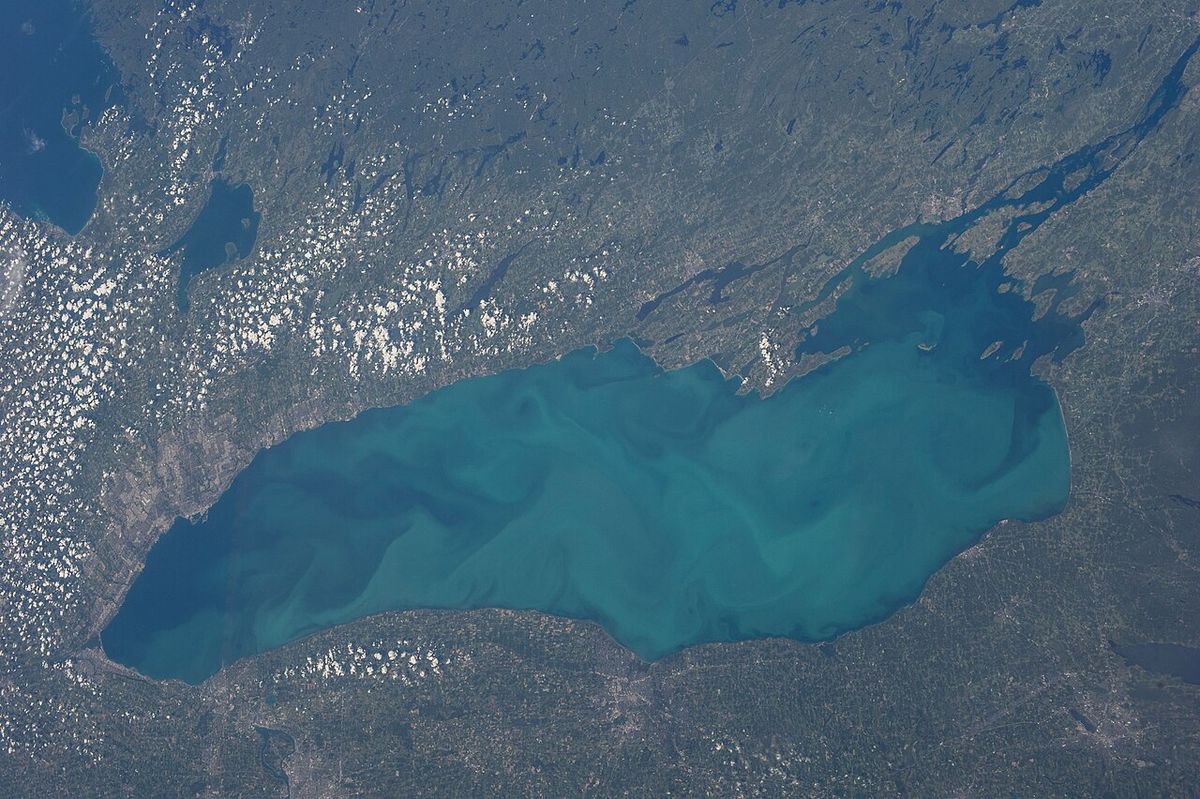
Peterborough is situated in Central Ontario within the Kawartha Lakes region, lying in the St. Lawrence Lowlands ecoregion just south of the Canadian Shield and approximately 35 km north of Lake Ontario. The city is sited on a series of rapids in the Otonabee River, approximately halfway between the river's source at Katchewanooka Lake and its mouth at Rice Lake. The city completely surrounds the only lake on the Otonabee, Little Lake, and the Trent Canal runs along the eastern edge of the city, connecting Little Lake to a section of the Otonabee above the rapids. The topography is defined by glacial formations from the receding Wisconsian glaciers 10,000 to 15,000 years ago. The downtown and south end sit on the flat, low-lying bed of glacial Lake Peterborough, part of a glacial spillway, with elevations between 191 and 200 metres above sea level, making the area prone to flooding.
The ground elevation rises to the west, north, and east into a large upland area known as the Peterborough Drumlin field. Much of the land in the north and west ends rises to between 230 and 274 metres above sea level, with Tower Hill at 286 metres being the highest point. Another prominent drumlin, Armour Hill in the east city, forms the physical obstacle that the Trent-Severn Waterway ascends via the Peterborough Lift Lock. The Oak Ridges Moraine is located approximately 15 km south of the city and significantly influences local weather patterns. Peterborough has a humid continental climate with four distinct seasons, lying in a transitional zone between milder southern areas and colder, snowier northern regions within the Canadian Shield. The city's hardiness zone is 5b, and its climate can vary greatly within the city due to the effects of the moraine and elevation changes, with the south end often receiving less precipitation than the north and west ends.
The highest temperature ever recorded in Peterborough was 38.9 degrees Celsius on July 11, 1936. The coldest temperature ever recorded was minus 39.4 degrees Celsius on December 21, 1871. In 2004, Peterborough experienced a major flood which caused over 100 million dollars in damage and led to improvements in the storm sewer system. The city was also involved in the May 2022 Canadian derecho which left many without power and had an estimated cleanup cost of 3.3 million dollars. An ice storm in March 2025 caused Peterborough to declare a state of emergency and resulted in a cleanup cost of over 11 million dollars.
- July 15, 2004 Flood: Up to 240 mm of rain caused over $100 million in damage, 32 million litres at the sewage plant, and led to major storm sewer improvements from 2021 to 2023.
- May 2022 Derecho: Wind speeds up to 132 km/h left thousands without power, with a city cleanup cost of $3.3 million.
- March 2025 Ice Storm: Over 20 mm of ice caused week-long outages and a city cleanup cost exceeding $11 million, prompting a state of emergency.
On July 15, 2004, a major flood caused by up to 240 millimetres of rain resulted in over $100 million in damage, with the sewage treatment plant recording 32 million litres of water compared to a 5.9 million litre average. The flood led to emergency evacuations, over 12,500 tonnes of debris, and major storm sewer improvements focused on Little Lake and Jackson Creek, largely completed between 2021 and 2023. In May 2022, the city was hit by a derecho with wind speeds up to 132 km/h, leaving thousands without power and costing an estimated $3.3 million for cleanup. Another state of emergency was declared in March 2025 when an ice storm deposited over 20 millimetres of ice, causing week-long power outages for some residents and cleanup costs exceeding $11 million for the city.
Demographics
According to the 2021 Census of Population conducted by Statistics Canada, the City of Peterborough had a population of 83,651 living in 35,977 of its 38,006 total private dwellings, a change of 3.2% from its 2016 population of 81,032. With a land area of 64.76 square kilometres, it had a population density of 1,291.7 people per square kilometre in 2021. The larger Peterborough Census Metropolitan Area, which includes the Townships of Selwyn, Cavan Monaghan, Otonabee-South Monaghan, and Douro-Dummer, had a population of 128,624 living in 53,370 dwellings, a change of 5.7% from 2016. With a land area of 1,508.44 square kilometres, the CMA had a population density of 85.3 people per square kilometre. In 2021, Peterborough ranked 32nd among the country's 41 census metropolitan areas according to Statistics Canada.
| Demographic Category | 2021 Percentage (City) | Notes |
|---|---|---|
| White / European | 85.7% | |
| Visible Minorities | 9.4% | Largest groups: South Asian (3.1%), Black (1.4%), Chinese (1.0%) |
| Indigenous | 5.0% | |
| Christian | 50.9% | Down from 67.3% in 2011. Includes Catholic (20.6%), Protestant (19.2%), Christian n.o.s. (6.4%) |
| Non-religious / Secular | 43.7% | Up from 29.9% in 2011 |
| Other Religions | 5.5% | Up from 2.7% in 2011. Includes Islam (1.5%), Hinduism (1.4%), Buddhism (0.5%) |
| Mother Tongue: English | 90.2% | |
| Mother Tongue: French | 1.0% | |
| Mother Tongue: Chinese languages | 0.6% | |
| Mother Tongue: Arabic | 0.5% |
The demographic composition shows a trend toward greater ethnic and religious diversity alongside a significant rise in the non-religious population. The visible minority population has grown, with South Asian, Black, and Chinese communities forming the largest groups. The Indigenous population accounts for five percent of city residents. The linguistic landscape remains predominantly English-speaking, with small but established French, Chinese, and Arabic-speaking communities.
Economy and Major Employers
Peterborough's economy has undergone a significant transition from its historical base in heavy manufacturing toward service industries, with tourism now the leading industry in the area. The availability of cheap hydroelectric power was also a key reason Quaker Oats, now part of PepsiCo, moved to the city, and it remains a major fixture downtown. The North American Free Trade Agreement of the early 1990s led to shifts in trading patterns that contributed to the decline of large manufacturing plants. In the 2000s, Peterborough frequently had one of the highest unemployment rates among Canadian census metropolitan areas, though by December 2017 it had fallen to roughly the national average of under 5%.
The service sector and public institutions now dominate the employment landscape. The Peterborough Regional Health Centre is the city's largest employer, with about 2,500 employees and 500 volunteers as of 2023. Other major employers include Trent University and the Ontario Ministry of Natural Resources, whose central office relocated to 300 Water Street, kitty-corner from Peterborough Square. Recent years have seen further contractions in manufacturing and corporate services, with Siemens announcing in 2025 it would wind down its Peterborough facility, impacting 160 jobs. Shortly afterward, airline company Lufthansa announced the closure of its Peterborough customer service centre, resulting in 400 layoffs. An economic analysis in 2017 foresaw moderate but improving growth for the region, noting a continued shift to service-producing industries, with a growing portion becoming export-oriented. In 2018, then-mayor Daryl Bennett noted employment had shifted toward smaller manufacturing plants and service industries, and that the shift away from large-scale manufacturing had started before NAFTA.
The city remains a regional retail and shopping destination for the Kawarthas, with three main shopping centres: Peterborough Square, Portage Place, and Lansdowne Place. Lansdowne Place underwent a renovation in 2009, adding over 15,000 square metres of retail space. Large-format retailers like Walmart, Costco, Sobey's, and Real Canadian Superstore have major operations in Peterborough, drawing customers from the surrounding area. Sears, an anchor in Lansdowne Place, closed in 2018 due to bankruptcy. The city has pursued several development projects to stimulate the economy.
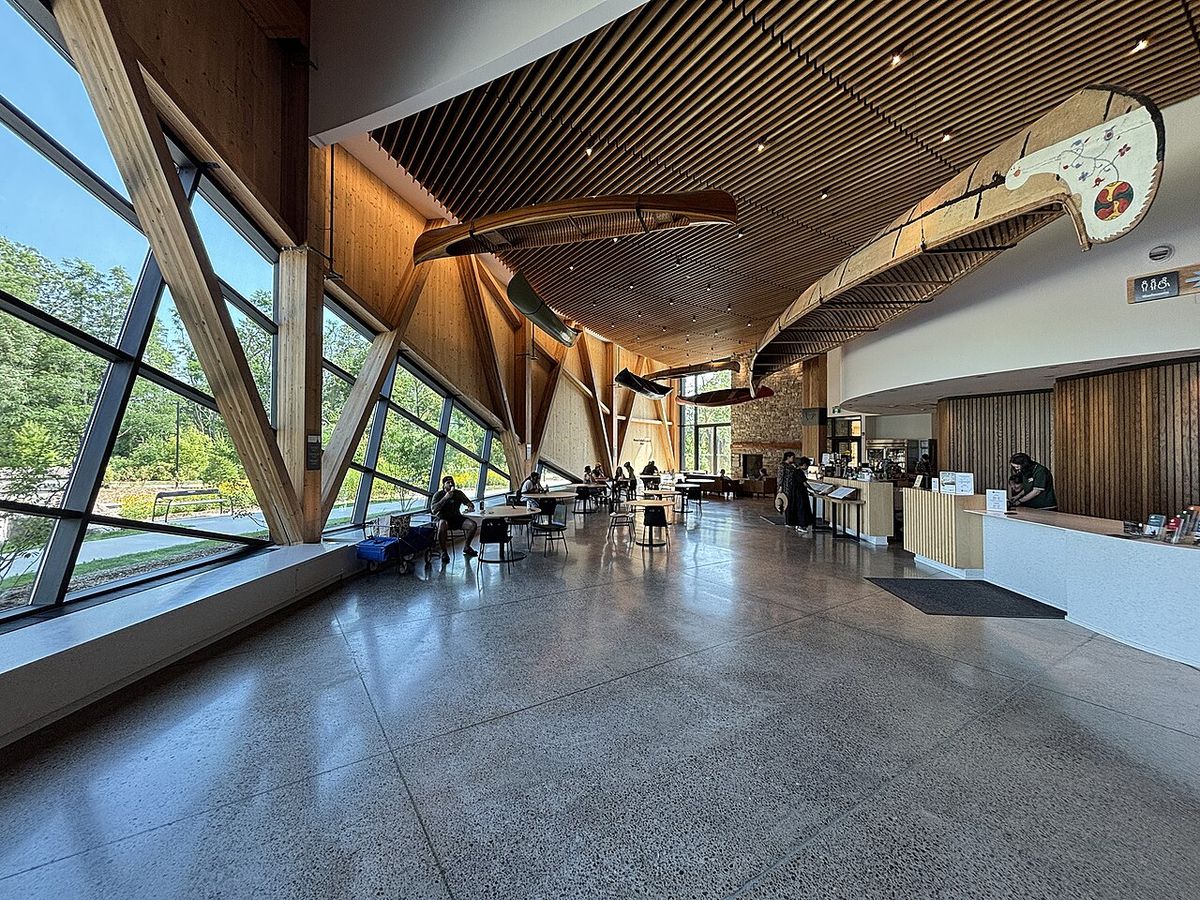
- A $24-million Canadian Canoe Museum, completed in 2024.
- Plans for a new casino and a new library.
- The VentureNorth building in downtown Peterborough.
- Development of lands at Trent University.
- Storm sewer improvements under Townsend Street and Bethune Street, largely completed between 2021 and 2023.
Peterborough's economic base has historically included technology and manufacturing from large multi national companies and local businesses. Local businesses in the city have included Merit Precision Ltd., Dynacast, and Bryston. Large multi national companies that have had operations in Peterborough include Siemens, Rolls Royce Limited, and General Electric. However, over the years the number of major manufacturing plants has declined, and General Electric closed its last remaining facility in 2018.
Government and Civic Affairs
The City of Peterborough operates under a mayor-council system and is politically independent from Peterborough County, though it serves as the county seat. The mayor is Jeff Leal, and the city is divided into five wards, each represented by a councillor. City Hall is located at 500 George Street North, with a mailing address of K9H 3R9. The next municipal and school board election is scheduled for October 26, 2026, with online voting available in advance and accessible in-person voting options before Election Day. The city follows an annual budget process that involves extensive public consultation, including community surveys, casual drop-in meetings, and formal opportunities for registered delegations to address Council. For the 2026 fiscal year, the budget process began with community consultation in April 2025. The Draft 2026 Budget was presented to Council on November 3, 2025, ahead of a series of public meetings throughout November and December.
The budget review process includes specific meetings for presentations from local boards and agencies, registered public delegations, and Council deliberations. Key dates in the 2026 process included a public meeting at the Healthy Planet Arena on November 5, 2025, an informal drop-in at City Hall on November 10, and General Committee meetings for review and debate on November 17 and 18, 2025. The Mayor is expected to table the Mayor's 2026 Budget at the Council meeting on Monday, December 8, 2025, and it is anticipated the budget will be adopted on the same date. Residents can register to speak as a delegation at Council meetings by visiting the city website or calling 705-742-7777 extension 1820. Council meetings are held in the Council Chambers at City Hall and are broadcast live online at the city's website for public viewing. The city provides a wide range of services, and major capital projects, such as storm sewer improvements following the 2004 flood, are often detailed in the capital budget, which includes an interactive map on the city website.
Culture, Landmarks and Events
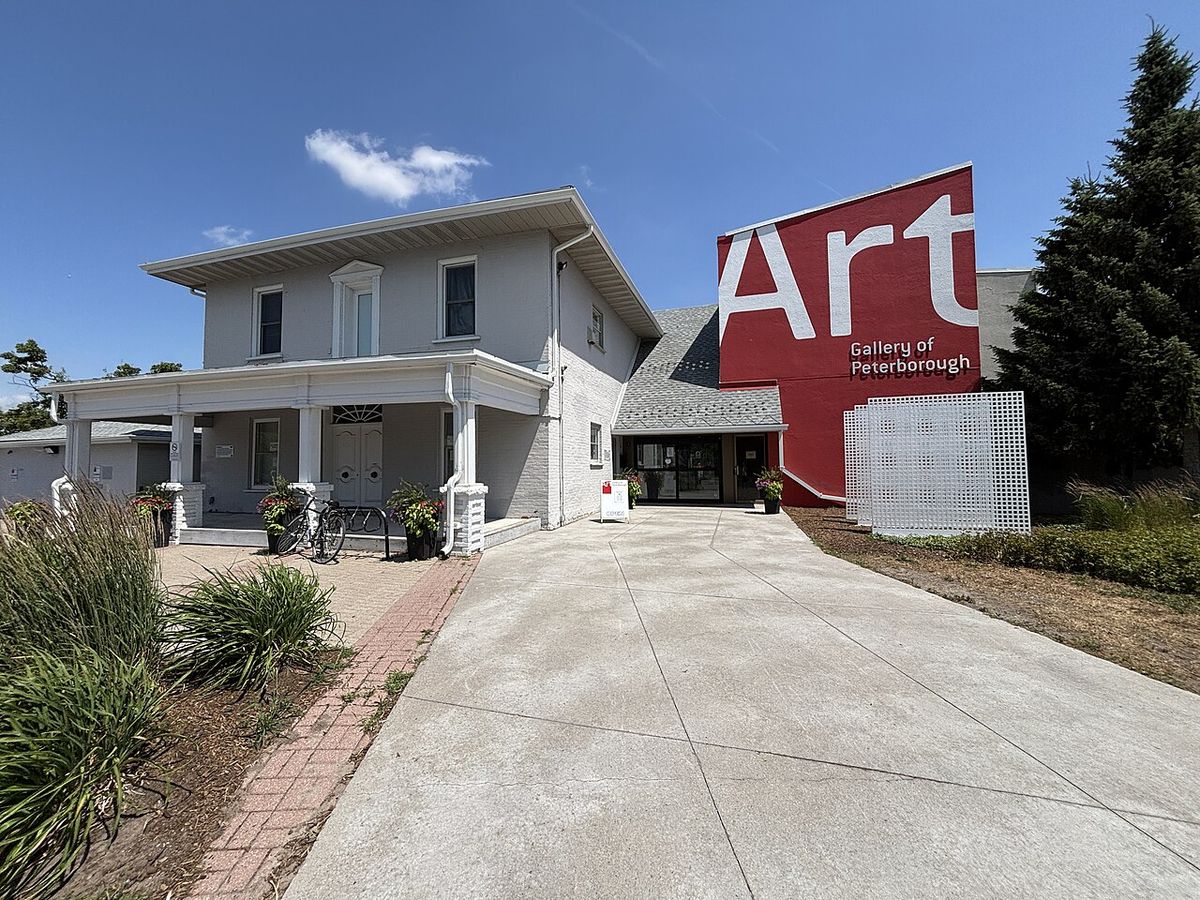
Peterborough is a four-season festival destination with a full calendar of celebrations that highlight the region's arts, culture, food, and outdoor lifestyle. Signature annual events include Peterborough Musicfest, a summer waterfront concert series, the Kawartha Autumn Studio Tour, the Peterborough Folk Festival, Peterborough-Nogojiwanong Pride Week, and the ReFrame Film Festival. The city also hosts numerous spring fishing shows and derbies, food festivals, and cozy winter traditions. Event organizers are encouraged to submit events to the city's Calendar of Events and can access supports for planning. The city's festival scene was recognized with a Festivals & Events Ontario Sustainability Award. The Peterborough Museum & Archives, established in 1897 and located on Armour Hill since 1967, holds significant collections for research and public interest. Its Archives collection includes items from early settler and author Catharine Parr Traill, the original Peter Robinson papers, the Park Studio Fonds, and the Balsillie collection of Roy Studio Images, comprising over 300,000 film and glass plate negatives dating back to 1896.
The city's landscape is marked by several notable landmarks and sites of historical, architectural, and recreational interest. The Peterborough Lift Lock, completed on July 9, 1904, is a National Historic Site on the Trent-Severn Waterway and was the conceptual work of Richard Rogers, remembered by landmarks like Rogers Cove on Little Lake and Rogers Street. The Canadian Canoe Museum, opened in 2024, celebrates the national history of canoeing and boatbuilding, industries central to Peterborough's past where the Peterborough Canoe Company was founded. The Peterborough Memorial Cenotaph, titled "Valour Defeating Barbarism," was designed by Walter Seymour Allward and unveiled in 1929. Peterborough Square is a downtown mall built in the 1970s with aid from the Ontario Downtown Renewal Programme, originally anchored by an Eaton's store and now housing offices, stores, and a food court. Little Lake, the only lake on the Otonabee River and entirely surrounded by the city, is a focal point for recreation and community events. The YMCA building is a designated architectural landmark in the city.
The Trent-Severn Waterway, a historic canal system, passes through Peterborough, offering recreational boating and connecting the city to a wider network of lakes and rivers. The waterway's path ascends Armour Hill via the Lift Lock. The city's downtown area features the government building for the Ontario Ministry of Natural Resources at 300 Water Street. Other notable companies with a historical presence include Quaker Oats, part of PepsiCo, which remains a major downtown fixture. The city promotes its events and updates through channels like the Hello Peterborough email newsletter, encouraging visitors to experience its year-round energy.
Questions about Peterborough, Ontario
What is Peterborough, Ontario known for?
Peterborough is historically known as "The Electric City" for being one of the first towns in Canada to use electric streetlights. It is renowned as the gateway to the Kawartha Lakes cottage country region. The city is also famous for the Peterborough Lift Lock on the Trent-Severn Waterway, a National Historic Site and engineering marvel. Its industrial heritage includes major manufacturing by companies like General Electric and a globally significant canoe and boatbuilding industry led by the Peterborough Canoe Company, which by 1930 employed 25 percent of Canada's boatbuilding workforce.
What is the population of Peterborough?
According to the 2021 Census, the population of the City of Peterborough is 83,651. The larger Peterborough Census Metropolitan Area, which includes the surrounding townships of Selwyn, Cavan Monaghan, Otonabee-South Monaghan, and Douro-Dummer, has a population of 128,624. The city's population density is 1,291.7 people per square kilometre, while the CMA density is 85.3 people per square kilometre. Between 2016 and 2021, the city's population grew by 3.2%, while the metropolitan area grew by 5.7%. Peterborough ranked 32nd among Canada's 41 census metropolitan areas in 2021.
Who is the current mayor of Peterborough?
The current mayor of Peterborough is Jeff Leal. The city is governed by a mayor and a council with representatives from five wards. The next municipal and school board election is scheduled for October 26, 2026, and the city offers both online voting and accessible in-person voting options in advance of Election Day. The mayor and council oversee the city's operations and budget, with the 2026 budget process underway, featuring public consultation since April 2025 and adoption anticipated for December 8, 2025. City Hall is located at 500 George Street North.
What major employers are in Peterborough?
The largest employer in Peterborough is the Peterborough Regional Health Centre, with about 2,500 employees and 500 volunteers as of 2023. Other major public sector employers include Trent University and the Ontario Ministry of Natural Resources, whose central office is at 300 Water Street. Historically, General Electric was a dominant employer with up to 6,000 workers before closing in 2018. Recent announcements have signalled further changes, with Siemens winding down its Peterborough facility in 2025, affecting 160 jobs, and Lufthansa closing its customer service centre, resulting in 400 layoffs. The economy has increasingly shifted toward service industries, smaller manufacturing, and tourism.
What are some key events in Peterborough's history?
Key events include the settlement by Adam Scott in 1818, the renaming of the community to Peterborough in honour of Peter Robinson after the 1825 Irish immigration of over 2,000 people, and incorporation as a town in 1850. The completion of the Peterborough Lift Lock in 1904 and incorporation as a city on July 1, 1905, were major 20th-century milestones. Significant recent events include the devastating flood of July 2004, the opening of the Peterborough Regional Health Centre in 2008, the closure of General Electric in 2018, and the city council approval in October 2025 to demolish the former GE complex. The new Canadian Canoe Museum opened in 2024.
What is there to do in Peterborough?
Peterborough offers a wide range of year-round activities centred on its festivals, cultural institutions, and natural surroundings. Visitors can explore the Trent-Severn Waterway and the Peterborough Lift Lock, attend events like Peterborough Musicfest or the Folk Festival, and visit the Peterborough Museum & Archives or the Canadian Canoe Museum. The city is a hub for accessing the recreational Kawartha Lakes region for boating, fishing, and cottaging. Downtown features shopping and dining, including the Peterborough Square mall, while numerous parks and Little Lake provide outdoor space for walking and community events. The city's calendar includes spring fishing derbies, food festivals, autumn studio tours, and winter traditions.
Sources and further reading
- Peterborough, Ontario (Wikipedia)
- 2026 Budget Process Update (1) (peterborough.ca)
- Calendar of Events (ptbotourism.ca)
- 2026 Budget (connectptbo.ca)
Checked by the Your Space Hamilton desk. Last updated 2026-10-27.