Niagara-on-the-Lake
Niagara-on-the-Lake is a historic town in Ontario, Canada, located at the confluence of the Niagara River and Lake Ontario. It is renowned as the first capital of Upper Canada and for its important role in the War of 1812. Today, the town is a premier tourist destination celebrated for its impeccably preserved 19th-century architecture, the prestigious Shaw Festival theatre, and its position as the heart of Ontario's wine country. With a population of 19,088 as of the 2021 census, it remains the only municipality in Canada whose elected leader holds the title of lord mayor.
History and settlement
The area of present-day Niagara-on-the-Lake was originally inhabited by Neutral, Seneca, and Mississauga peoples. British settlement began in 1781 with the founding of Butlersburg, named for Colonel John Butler of Butler's Rangers, which served as a haven for Loyalists after the American Revolution. Lieutenant Governor John Graves Simcoe renamed the settlement Newark in 1792 and established it as the first capital of Upper Canada, with the legislature first meeting at Navy Hall on September 17, 1792. Due to its proximity to the American border, the capital was moved to York (Toronto) in 1797, and the community was renamed Niagara in 1798. The town's current name, Niagara-on-the-Lake, was adopted around 1880 for postal purposes to avoid confusion with Niagara Falls and was made official in 1970 following a municipal merger.
During the War of 1812, the town was a major battleground. Fort George, constructed just south of the settlement between 1796 and 1799, was captured by American forces in May 1813 after a fierce bombardment and battle. Upon their withdrawal in December 1813, American soldiers razed the town. The British subsequently retook Fort George and captured the American Fort Niagara across the river. After the war, citizens rebuilt the town, shifting its residential core further from the river out of range of American cannons. The 1846 Smith's Canadian Gazetteer described Niagara as a place of considerable trade with steamboat connections, a busy shipyard, and significant shipments of fruit and cider.
Historic sites and designation
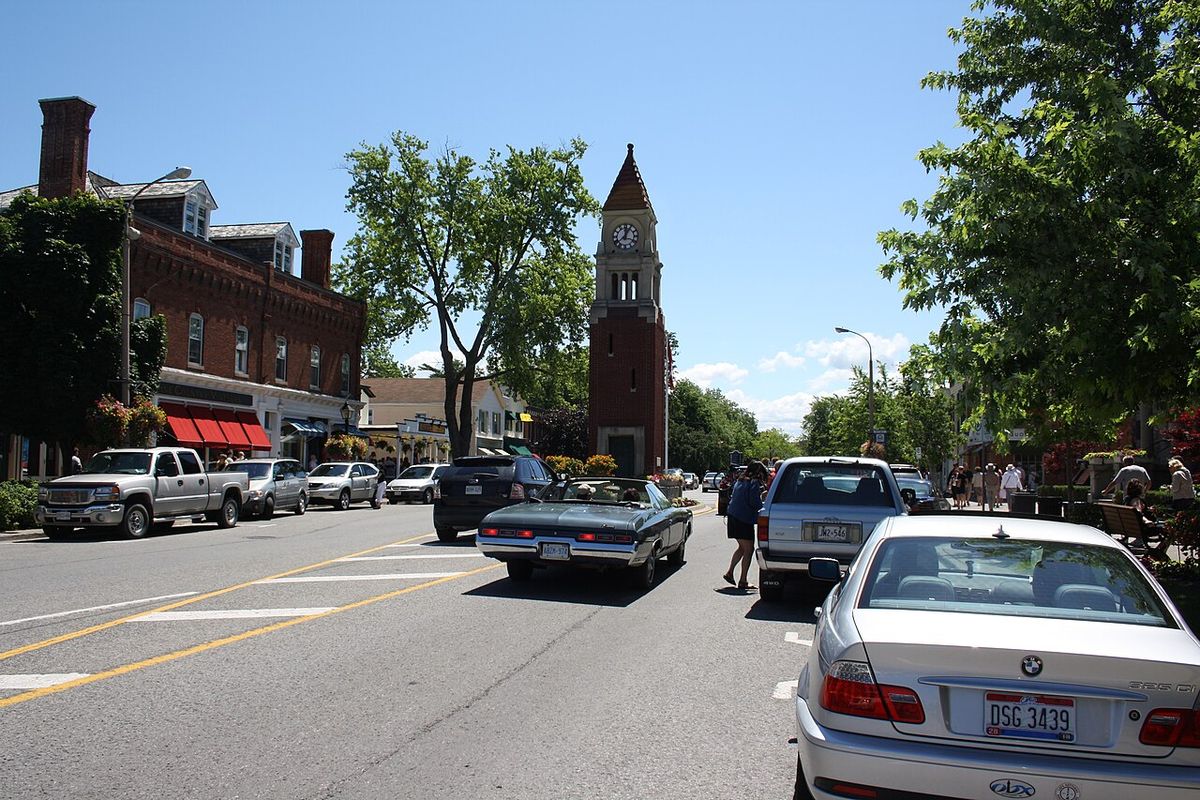
Niagara-on-the-Lake possesses an exceptional collection of historic sites, many related to its military and political history. A key collection is the Niagara National Historic Sites, managed by Parks Canada, which includes Fort George, Fort Mississauga, Navy Hall, Butler's Barracks, and the site of the Mississauga Point Lighthouse, the first on the Great Lakes, built in 1804. Fort George's restoration in the 1930s was an early example of historic preservation in Canada. The town's historic district, with its superb stock of Regency and Classical Revival buildings from the post-War of 1812 period, was designated a National Historic Site of Canada in 2003, having previously been named a provincial Heritage Conservation District in 1986.
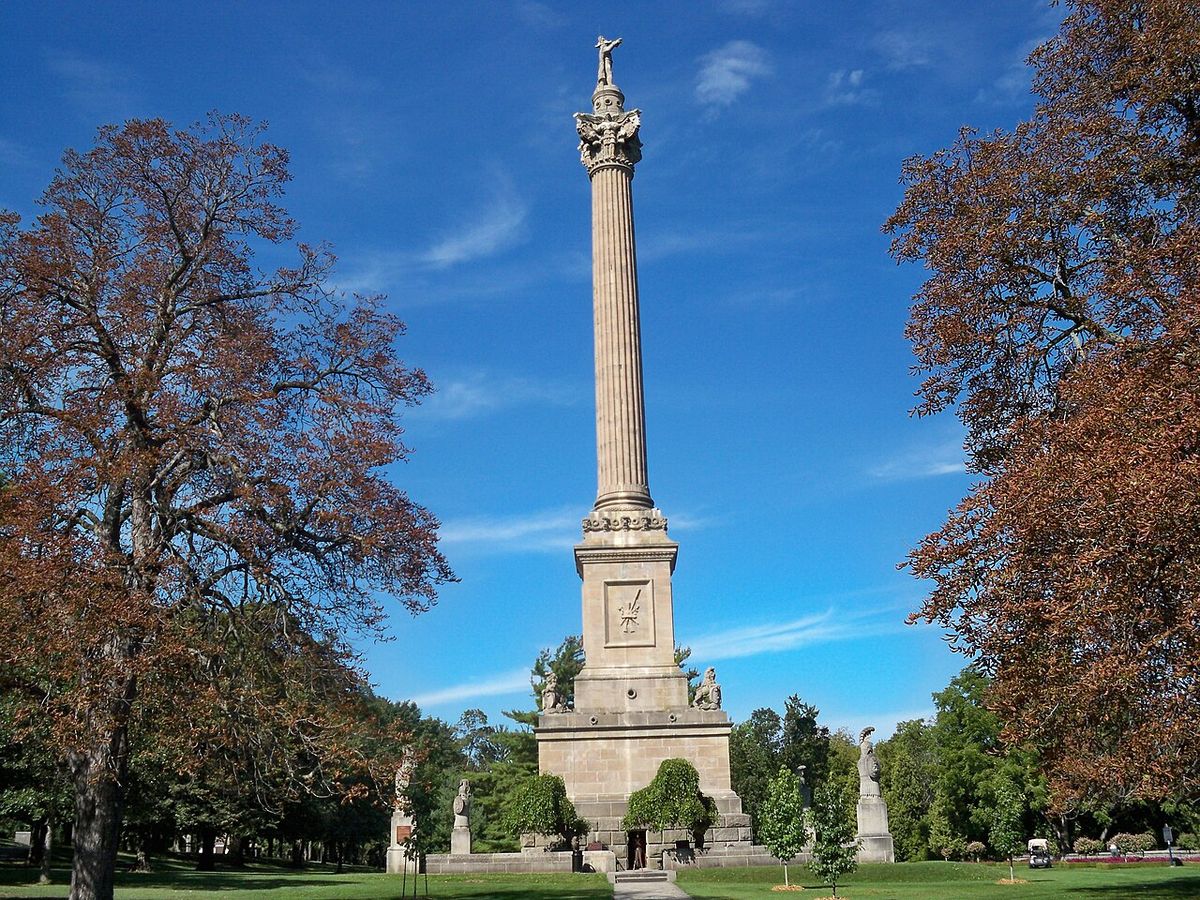
Numerous other National Historic Sites are located within the town's boundaries. These include the Battlefield of Fort George, Fort Drummond, the Niagara Apothecary (the oldest in Canada), the Niagara District Court House, Queenston Heights, the Queenston-Chippawa Hydro-electric Plant, Willowbank, and Vrooman's Battery. The town is also famed for housing several of Ontario's oldest institutions. Key historic buildings and sites include:
- St. Vincent de Paul Church, the oldest Catholic church in Ontario.
- St. Mark's Church, the second-oldest Anglican church in Ontario after the Mohawk Chapel.
- The McFarland House, the oldest building in the town.
- The Niagara Golf Club, the oldest surviving golf course in North America.
- The Gate House, site of the former Wilson's Hotel and the inaugural 1797 meeting of the Law Society of Upper Canada.
- The Niagara Lodge No. 2, the oldest Masonic lodge in Ontario and site of the first Upper Canada legislature.
The town served as a stop on the Underground Railroad for those travelling further into Upper Canada and also as a refuge in its own right. It is associated with the heroism of Laura Secord, who walked 32 km out of American-occupied territory in 1813 to warn British forces of an impending American attack. The Niagara Historical Society Museum, opened in 1907, continues to preserve and promote this rich local history through exhibitions and programs. In June 2024, the museum for the town received funding from Library and Archives Canada to document oral histories about the Mennonite community in Virgil.
Government and unique title
Niagara-on-the-Lake is represented federally in the riding of Niagara Falls, Niagara-on-the-Lake by Member of Parliament Tony Baldinelli and provincially in the Niagara Falls riding by Member of Provincial Parliament Wayne Gates. The town's most distinctive governmental feature is its elected leader, who holds the title of lord mayor. Popular legend attributes the title to a visit by Prince Edward, Duke of Kent, in the early 19th century, but there is no record of its use until the early 1920s. The title was formalized by the Regional Municipality of Niagara Act in 1969, which legislated that the mayor of the town shall be known as the lord mayor, making Niagara-on-the-Lake the only municipality in Canada with this designation. The current lord mayor is Gary Zalepa, elected in 2022. Previous lord mayors have included Betty Disero, Patrick Darte, and Dave Eke. The town held its 2026 Municipal Council and School Board election in October of that year, with internet advance voting open until October 25.
Communities and demographics
The Town of Niagara-on-the-Lake encompasses several distinct communities beyond its historic Old Town core. These include Colemans, Homer, McNab, Mississauga Beach, Queenston, St. Davids, and Virgil. Glendale, near the junction of the Queen Elizabeth Way, Highway 405, and Highway 55, is home to the Niagara College campus and a large outdoor shopping mall. Virgil, southwest of the Old Town, has a significant Mennonite community and is a major tourist area featuring a large sports park with arenas and baseball diamonds. The community holds an annual Virgil Stampede festival on the Victoria Day weekend. According to the 2021 Canadian census, the town's population was 19,088, a 9% increase from 17,511 in 2016. The population density was 145.3 persons per square kilometre over a land area of 131.35 square kilometres. The Niagara Region has one of the highest percentages of seniors in Ontario.
The town's educational landscape has shifted in recent years. The only secondary school, Niagara District Secondary School, was closed in 2010, with high school students now bussed to schools in St. Catharines or Niagara Falls. Several elementary schools serve the community, including St. Davids Public School, St. Michael Catholic Elementary School, and Crossroads Public School in Virgil, which opened in 2011. Parliament Oak Public School in the Old Town, located on the site where the 1793 Act Against Slavery was signed, was closed in 2015.
Economy and tourism
Tourism is a primary driver of Niagara-on-the-Lake's economy, driven by its historic charm, cultural offerings, and viticulture. The Shaw Festival, Canada's second-largest producing theatre, operates from April to December each year, presenting works by George Bernard Shaw and his contemporaries. The 2026 season marked the festival's 64th annual run. It employs over 520 people and stages more than 750 performances annually across four downtown theatres: the Festival Theatre, The Jackie Maxwell Studio, The Royal George Theatre, and the Court House Theatre. The town's historic Old Town is a popular destination for shopping and dining, featuring many boutiques and restaurants. The region is the heart of Ontario's wine country, with numerous award-winning wineries and a growing number of breweries, some located in repurposed historic buildings like the 1880 telephone exchange turned brewery. A notable attraction is the RiverBrink Art Museum in Queenston, housing a collection of over 1,400 artworks assembled by Samuel E. Weir. The town also hosts seasonal fruit festivals celebrating strawberries, cherries, and peaches. In 2014, the Outlet Collection at Niagara opened as Canada's largest open-air outlet mall. The town's scenic beauty led to it being named the Prettiest Town in Canada in 1996 by the Communities in Bloom program. The climate is moderated by Lake Ontario, resulting in warmer temperatures and lower snowfall than many inland areas, which benefits both tourism and agriculture.
Culture, recreation and sports
Niagara-on-the-Lake offers a wide array of cultural and recreational activities. Beyond the Shaw Festival, cultural institutions include the Niagara Pumphouse Arts Centre, located in a converted historic waterworks building, and the Niagara Historical Society Museum. The town's Doors Open event, held annually, allows the public to explore many heritage sites. Recreational boating has a long history, with the Niagara-on-the-Lake Sailing Club and Smuggler's Cove Boat Club operating on the waterfront. The town also has a rich history in lacrosse. Organized sports are centred in communities like Virgil. The Meridian Credit Union Arena, built between 2003 and 2005 with a capacity of 500, is home to the Niagara Predators junior men's hockey team, which plays in the Greater Metro Junior A Hockey League. The town also fields the Lakers men's soccer team in the Peninsula Soccer League. The Niagara-on-the-Lake Lawn Bowling Club, founded in 1877, is one of the oldest in Canada. The town gained international recognition in 1955 by hosting the 8th World Scout Jamboree, the first held outside Europe, which attracted over 11,000 Scouts from 71 countries.
Film location and notable events
The picturesque and historic setting of Niagara-on-the-Lake has made it a popular filming location for numerous movies and television productions over the decades. The town's well-preserved 19th-century architecture and scenic landscapes have doubled for various American and Canadian settings. Notable films shot in whole or in part in Niagara-on-the-Lake include the 1972 television film When Michael Calls, the 1983 Stephen King adaptation The Dead Zone, and the 1994 comedies Trapped in Paradise and The Ref. Other productions include Canadian Bacon (1995), The Experts (1989), and the biographical drama Amelia (2009). The town calendar is filled with annual events that draw visitors. Key highlights include the Shaw Festival season, the Virgil Stampede on the Victoria Day weekend, and a series of fruit festivals celebrating the local harvest. The town also participates in the Doors Open Ontario initiative, offering special access to historic sites. In 2024, the local museum received funding from Library and Archives Canada to document oral histories of the Mennonite community in Virgil, highlighting ongoing efforts to preserve the area's diverse cultural heritage.
Questions about Niagara-on-the-Lake
What is the Shaw Festival and when does it run?
The Shaw Festival is one of Canada's major theatre festivals and the second-largest producing theatre in the country. It is a repertory company that specializes in presenting plays by George Bernard Shaw, his contemporaries, and works set during his era (1856 to 1950). The festival operates four theatres in downtown Niagara-on-the-Lake: the Festival Theatre, The Jackie Maxwell Studio, The Royal George Theatre, and the Court House Theatre. Its season runs annually from April through December, featuring over 750 performances. The 2026 season was its 64th annual festival.
What is the significance of the lord mayor title?
Niagara-on-the-Lake is the only municipality in Canada whose elected leader is designated as lord mayor. The title was formally entrenched in law by the Regional Municipality of Niagara Act in 1969, which specifically states the mayor of the town shall be known as the lord mayor. The current lord mayor is Gary Zalepa, elected in 2022. The title is a unique honour reflecting the town's history as the first capital of Upper Canada.
What are some of the oldest attractions in Niagara-on-the-Lake?
The town is home to several notable historic firsts and oldest surviving institutions in Canada. These include the Niagara Golf Club, the oldest golf course in North America still in use. St. Vincent de Paul Church, the oldest Catholic church in Ontario. And the Niagara Apothecary, the oldest apothecary in Canada. Other historic sites are the McFarland House, the oldest building in town. St. Mark's Church, the second-oldest Anglican church in Ontario. And the Niagara Lodge No. 2, the oldest Masonic lodge in Ontario.
What communities are part of the Town of Niagara-on-the-Lake?
In addition to the historic Old Town, the Town of Niagara-on-the-Lake includes several distinct communities. These are Colemans, Homer, McNab, Mississauga Beach, Queenston, St. Davids, and Virgil. Glendale is an area known for Niagara College and a large outlet mall. Virgil is a major tourist area with a significant Mennonite community and a large sports park. St. Davids and Queenston are historic villages that were sites of key battles during the War of 1812 and are now integrated into the larger municipality.
How do I get to Niagara-on-the-Lake and what is there to do?
Niagara-on-the-Lake is easily accessible by car via the Queen Elizabeth Way highway, with public transit provided by Niagara-on-the-Lake Transit. Visitors can explore the historic Old Town with its shops and restaurants, attend performances at the Shaw Festival, and tour numerous wineries and breweries. Key attractions include Fort George National Historic Site, the RiverBrink Art Museum, and scenic cycling along the Niagara Parkway. Seasonal events like fruit festivals and the Virgil Stampede offer family-friendly activities, while the Outlet Collection at Niagara provides shopping.
Why is Niagara-on-the-Lake called the prettiest town in Canada?
Niagara-on-the-Lake was named the Prettiest Town in Canada in 1996 by Communities in Bloom, a nationwide beautification programme. This recognition is based on the town's exceptionally well-preserved historic charm and scenic setting. Its historic district, designated a National Historic Site of Canada in 2003, is considered to have the best collection of Regency and Classical Revival buildings in the country from the post-War of 1812 period. The town's location at the point where the Niagara River meets Lake Ontario, along the scenic Niagara Parkway, adds to its picturesque beauty. This combination of architectural heritage and natural setting makes it a premier tourist destination.
Sources and further reading
- Niagara-on-the-Lake (Wikipedia)
- Tourism Niagara-on-the-Lake | Explore NOTL (niagaraonthelake.com)
- Town of Niagara-on-the-Lake: Home (notl.com)
- Niagara-on-the-Lake (doorsopenontario.on.ca)
Checked by the Your Space Hamilton desk. Last updated 2026-10-29.