Newmarket, Ontario
Newmarket is a town in Ontario, Canada, and the regional seat of York Region within the Greater Toronto Area. With a population of 87,942 as of the 2021 census, it is a significant residential and commercial hub located north of Toronto. The town's history is deeply rooted in its 19th-century origins as a market and railway centre, evolving into a modern community with a diverse economy. Key landmarks include its historic Main Street district, Upper Canada Mall, and the Southlake Regional Health Centre.
History and Settlement
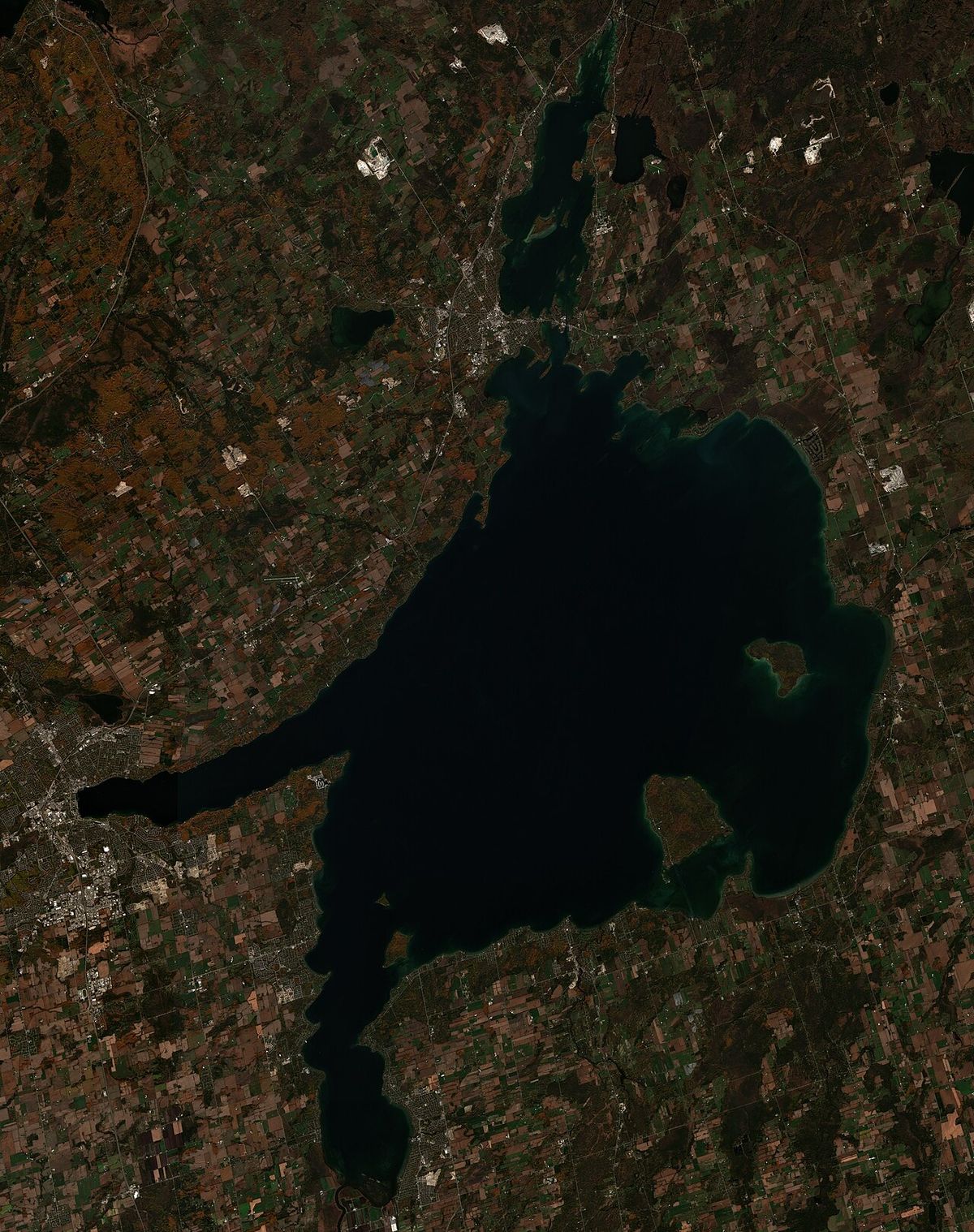
The area that became Newmarket was originally part of the Toronto Carrying-Place Trail, a portage route between Lake Ontario and Lake Simcoe used by Indigenous peoples. In 1793, Lieutenant Governor John Graves Simcoe travelled this eastern route and subsequently directed the construction of Yonge Street along its path. The first permanent European settlement began in 1801 when Quaker Timothy Rogers led several families from Vermont and Pennsylvania to the area, receiving a land grant of 8,000 acres around the Holland River. Early settlers like Joseph Hill built a mill on the river, creating the mill pond known today as Fairy Lake, and established a tannery and general store. The community, initially known as Upper Yonge Street, grew around these industries and the river.
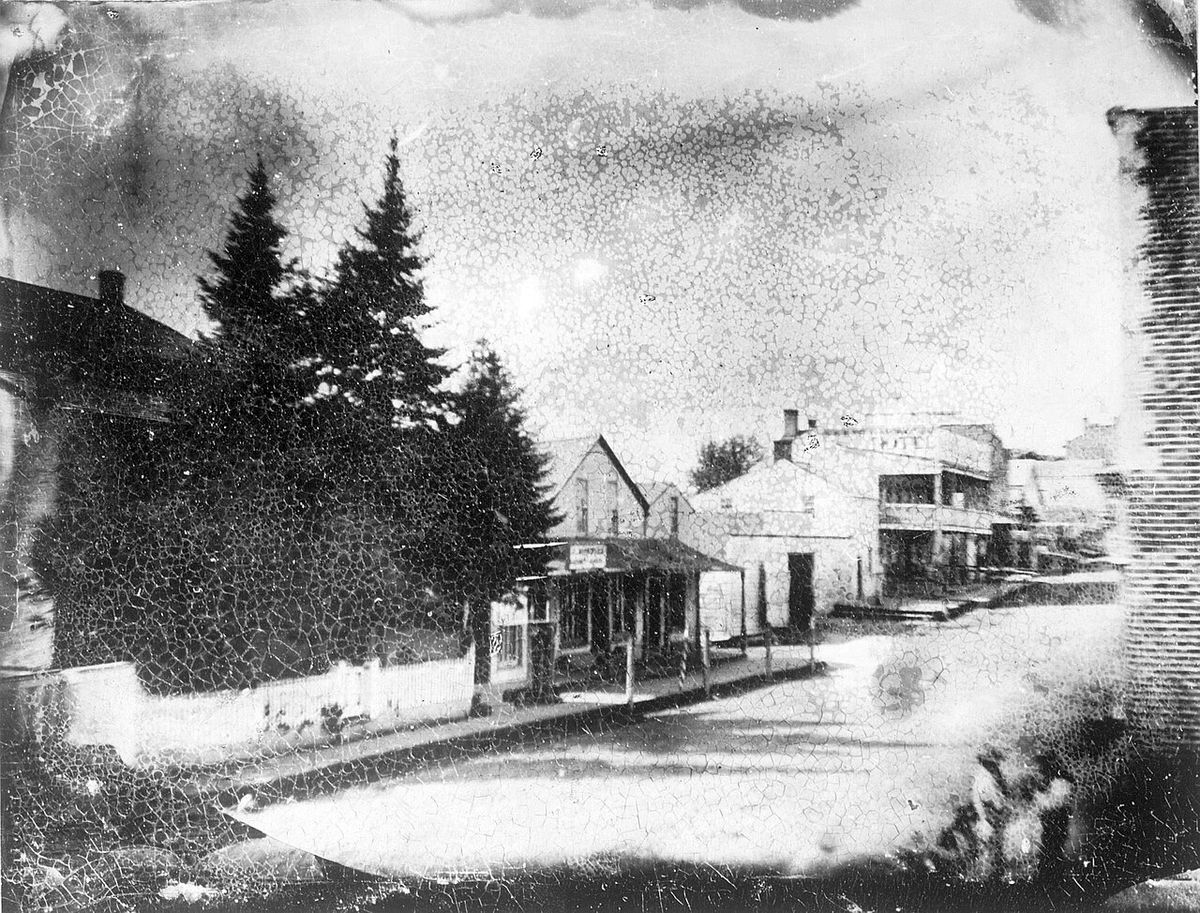
By 1814, the settlement had several residences and continued to expand. A post office opened in 1826, and for many years the name was spelled as two words: New Market. The town played a notable role in the Rebellions of 1837 to 1838, serving as a centre of discontent against the governing Family Compact. Rebel leader William Lyon Mackenzie delivered a key speech from the veranda of the North American Hotel in Newmarket on August 3, 1837, which helped rally local farmers to his cause. The arrival of the Toronto, Simcoe & Lake Huron Union Railroad in June 1853, the first railway in Upper Canada, was a major event that linked Newmarket to Toronto and spurred further industrial and agricultural trade.
Municipal Growth and 20th-Century Development
Newmarket was incorporated as a village in 1857 with a population of 700, with Donald Sutherland serving as the first reeve. It achieved town status in 1880 under its first mayor, William Cane. The late 19th and early 20th centuries saw continued growth fueled by transportation. The Toronto and York Radial Railway streetcar line arrived in 1899, bringing shoppers to the downtown market, though service ended in the early 1930s. An ambitious but ultimately failed project was the Newmarket Canal, an attempt to create a commercial waterway on the Holland River to bypass rising railway costs. Construction was nearly complete by 1912 when it was cancelled by the federal government. Its remnants are known locally as the Ghost Canal.
For much of the 20th century, development was concentrated along the Davis Drive corridor. A major suburban building boom began in the 1950s, doubling the population from 5,000 to 11,000 by 1970. The formation of the Regional Municipality of York in 1971 expanded Newmarket's boundaries by annexing land from surrounding townships. A significant shift occurred in 1974 with the opening of Upper Canada Mall at Yonge Street and Davis Drive, which began drawing commercial focus westward from the historic Main Street downtown. This led to a period of decline for the old core, which was successfully revitalized through concerted efforts and public investment starting in the late 1980s.
Geography and Planning
Newmarket is situated within the Greater Toronto Area's Golden Horseshoe, characterized by glacial deposits known as Newmarket Till. The town's topography features gently rolling hills south of the Algonquin Shoreline, which drops off to the flatter land of the Holland Marsh to the north. The primary watercourse is the East Holland River, with several tributary streams including Bogart Creek, Western Creek, and Tannery Creek. The town contains two notable reservoirs: Fairy Lake, a former mill pond and popular recreational area in the town centre, and Bogart Pond in the Bogarttown area.
As an Urban Growth Centre under Ontario's Places to Grow Plan, Newmarket has directed future growth to four key areas well-served by transit. These are the Yonge-Davis intersection, Yonge Street south of Green Lane, the area around the Southlake Regional Health Centre, and the Historic Downtown Centre around Main Street. The town's official plan emphasizes controlled intensification and mixed-use development in these nodes, while prohibiting new big-box retail along the Yonge Street corridor. A portion of the town's southwest lies within the protected Oak Ridges Moraine, subject to Greenbelt legislation.
- Major Watercourses: East Holland River, Bogart Creek, Western Creek, Tannery Creek.
- Key Reservoirs: Fairy Lake, Bogart Pond.
- Designated Growth Areas: Yonge-Davis, Yonge Street (south of Green Lane), Regional Healthcare Centre, Historic Downtown Centre.
- Protected Area: Southwest portion within the Oak Ridges Moraine.
Demographics
According to the 2021 census, Newmarket had a population of 87,942, representing a 4.4% increase from 2016. The population density was 2,284.2 people per square kilometre. The town's population is projected to reach approximately 98,000 by 2026. The 2016 census indicated a median household income of $95,589, significantly above the provincial average of $75,287. Immigration between 2011 and 2016 saw significant numbers of newcomers from China, Iran, and the Philippines.
The ethnic composition of Newmarket in 2021 was 63.9% white or European, 34.9% visible minorities, and 1.2% Indigenous. The largest visible minority groups were Chinese (10.0%), West Asian (6.5%), South Asian (4.3%), Black (2.9%), Southeast Asian (2.5%), Filipino (2.4%), and Latin American (1.5%). English was the mother tongue for 64.2% of residents. Other common first languages included Chinese languages (7.5%), Persian (5.7%), Russian (2.7%), Italian (1.4%), and Spanish (1.4%). In terms of religion, 50.6% of residents identified as Christian, while 36.5% reported no religious affiliation. The largest non-Christian religions were Islam (6.5%), Buddhism (2.2%), Judaism (2.0%), and Hinduism (1.3%).
| Demographic Characteristic | 2021 Census Data |
|---|---|
| Total Population | 87,942 |
| Population Change (2016 to 2021) | +4.4% |
| Land Area | 38.5 km² |
| Population Density | 2,284.2/km² |
| Median Household Income (2015) | $95,589 |
| Projected 2026 Population | 98,000 |
Economy and Major Employers
Newmarket's economy is diverse, with strengths in business services, healthcare, knowledge sectors, manufacturing, and retail. The town serves as a significant employment centre within York Region, with approximately 50% of residents commuting less than 30 minutes to work. Major public sector employers are anchored by the Southlake Regional Health Centre, a leading regional hospital. Other key public institutions include the Town of Newmarket administration, the Regional Municipality of York headquarters, York Regional Police, and various courts and school boards.
The private sector features a mix of manufacturing, technology, and service companies. Significant employers have included Celestica Inc., Magna International, and Mars Canada Inc. The town has also been home to operations for companies like BYD Company, though its bus plant closed around 2023. This strong employment base supports the local economy and contributes to the town's above-average household income. The retail sector is prominently served by Upper Canada Mall, one of the largest shopping centres in the region, which continues to be a major commercial draw.
- Major Public Employers: Southlake Regional Health Centre, Regional Municipality of York, Town of Newmarket, York Regional Police, York Region school boards.
- Major Private Employers: Celestica Inc., Magna International, Mars Canada Inc., Bill Gosling Outsourcing, TS Tech Canada Inc.
- Key Economic Sectors: Business services, healthcare, knowledge industries, manufacturing, retail.
- Commuting: 50% of residents have a commute under 30 minutes.
Arts, Culture, and Heritage
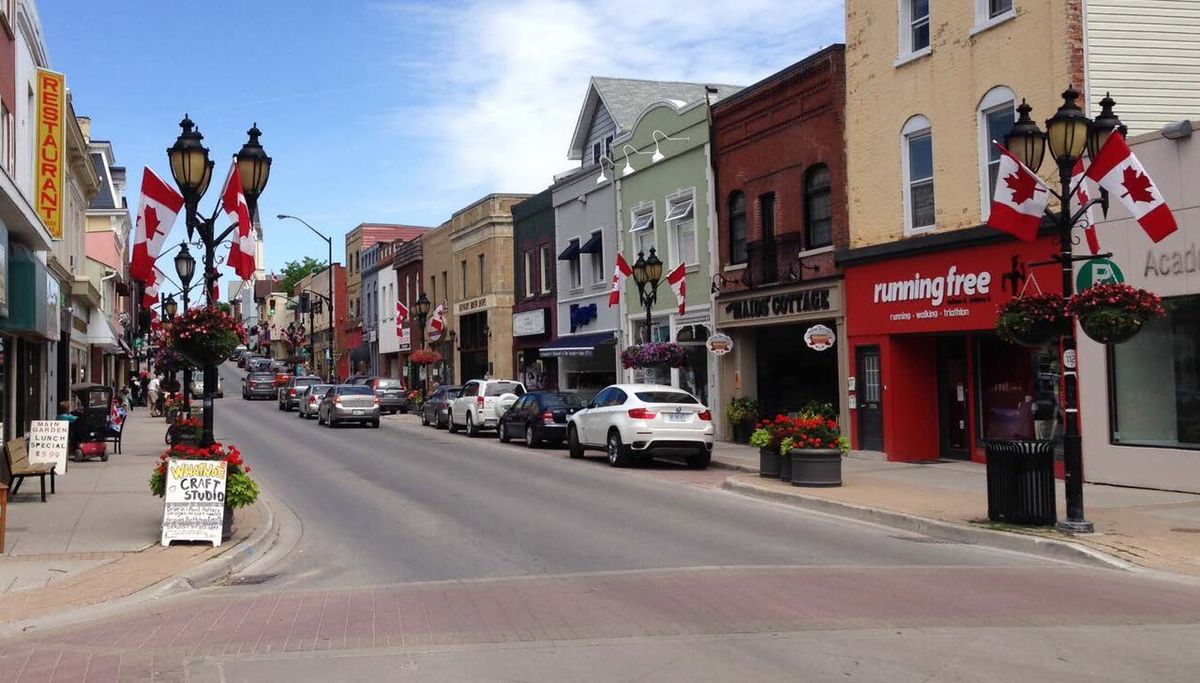
The historic Main Street Heritage Conservation District is the cultural heart of Newmarket. This area, recognized as a Provincial Heritage Conservation District in October 2013, contains numerous well-preserved 19th-century buildings and serves as a hub for commerce and community events. Significant public investments have been made to revitalize this district, including streetscape improvements, the creation of the Riverwalk Commons urban park, and renovations to the Old Town Hall and Newmarket Community Centre. A major infrastructure project, the Davis Drive Rapidway for bus rapid transit, was completed in 2015 and involved the careful relocation of the historic Union Hotel buildings to preserve them.
Cultural and recreational life in Newmarket centres around its parks, trails, and community facilities. The Wesley Brooks Conservation Area, locally known as Fairy Lake Park, is a central green space offering walking trails and recreational activities along the Holland River. The town hosts annual events and shows, such as the Newmarket Home and Lifestyle Show. General park hours run from 5 a.m. to 11 p.m., with specific amenities and holiday hours varying. The town also maintains an active calendar of registered programs for sports, fitness, arts, and swimming, with resident registration typically opening in August.
Governance and Recent Developments
Newmarket is governed by a mayor and council, with Mayor John Taylor leading the town into 2026 with plans for new facilities, a park, and updated branding. The town operates as part of the Regional Municipality of York, providing services in a two-tier municipal structure. The 2026 municipal election is scheduled for October 17 to 26, featuring online voting for eligible residents. The town's budget process aims to balance investments in community assets with maintaining low municipal tax rates. Recent and upcoming initiatives reflect a focus on growth management and community enhancement, guided by the official plan.
Recent developments show the town's ongoing evolution. A report highlights community accomplishments and milestones, emphasizing a commitment to purposeful growth. In March 2026, the provincial government announced new affordable homes are coming to Newmarket, addressing housing needs. The town continues to engage residents through public consultations on matters like the annual budget.
Questions about Newmarket, Ontario
What is the population of Newmarket, Ontario?
According to the 2021 census, the population of Newmarket is 87,942. The town has experienced steady growth, with a 4.4% increase from its 2016 population of 84,224. The York Region Planning Department projects the population will reach approximately 98,000 by the year 2026. The population density is 2,284.2 people per square kilometre, making it one of the denser municipalities in Ontario.
When is the next municipal election in Newmarket?
The next municipal election in Newmarket is scheduled for 2026. The voting period will run from October 17 to October 26, 2026. Eligible voters will be able to cast their ballot online at any time during this period using an internet-connected computer, tablet, or smartphone. The town has published a list of certified and acclaimed candidates for the election, and information on election signs and voter registration is available through the town's official channels.
What are the major employers in Newmarket?
Newmarket's economy features a mix of major public and private sector employers. The largest public employer is the Southlake Regional Health Centre, a major regional hospital. Other significant public employers include the Town of Newmarket itself, the Regional Municipality of York headquarters, York Regional Police, and the local school boards. Major private sector employers have included Celestica Inc., Magna International, Mars Canada Inc., and Bill Gosling Outsourcing. This diverse base means about half of residents commute less than 30 minutes to work.
What is the Main Street Heritage Conservation District?
The Main Street Heritage Conservation District is the historic downtown core of Newmarket, officially recognized as a Provincial Heritage Conservation District in October 2013. This area contains numerous well-preserved 19th-century buildings and has been the town's commercial and cultural hub for over a century. The designation helps protect and preserve the architectural and historical character of the area. Recent multi-million dollar investments in streetscaping, the Riverwalk Commons park, and building renovations have revitalized this district as a major focal point for the community.
Is Newmarket part of the Greater Toronto Area (GTA)?
Yes, Newmarket is part of the Greater Toronto Area (GTA) and is located within the Golden Horseshoe region of Southern Ontario. It is situated approximately 40 kilometres north of downtown Toronto. The town is also the regional seat of York Region, one of the regional municipalities that comprise the GTA. Its location provides residents with connectivity to Toronto via major highways like the 404 and 400, as well as public transit corridors, while maintaining its own distinct community identity.
What recreational amenities are available in Newmarket?
Newmarket offers a wide range of recreational amenities for residents. The Wesley Brooks Conservation Area, commonly called Fairy Lake Park, is a central natural space with trails and a pond. The town operates numerous other parks, with general hours from 5 a.m. to 11 p.m. The Newmarket Community Centre and Lions Hall, located in the Riverwalk Commons, provides facilities for various activities. The town's recreation department runs registered programs for sports, fitness, arts, and swimming, with registration typically opening for residents in August. Annual events like the Home and Lifestyle Show also contribute to community life.
Sources and further reading
- Newmarket, Ontario (Wikipedia)
- Town of Newmarket (newmarket.ca)
Checked by the Your Space Hamilton desk. Last updated 2026-10-28.