Moosonee
Moosonee is a town in Northeastern Ontario, Canada, situated on the Moose River near the southern shore of James Bay. It is a critical transportation hub for Ontario's Far North, serving as the railhead for the Ontario Northland Railway's Polar Bear Express passenger train and hosting the province's only saltwater port. Often called 'the Gateway to the Arctic,' Moosonee provides essential air, rail, and seasonal ice-road connections to remote coastal First Nations communities and resource developments. The town, incorporated in 2001, has an economy historically rooted in the fur trade and now centred on logistics, government services, and tourism.
History and Development
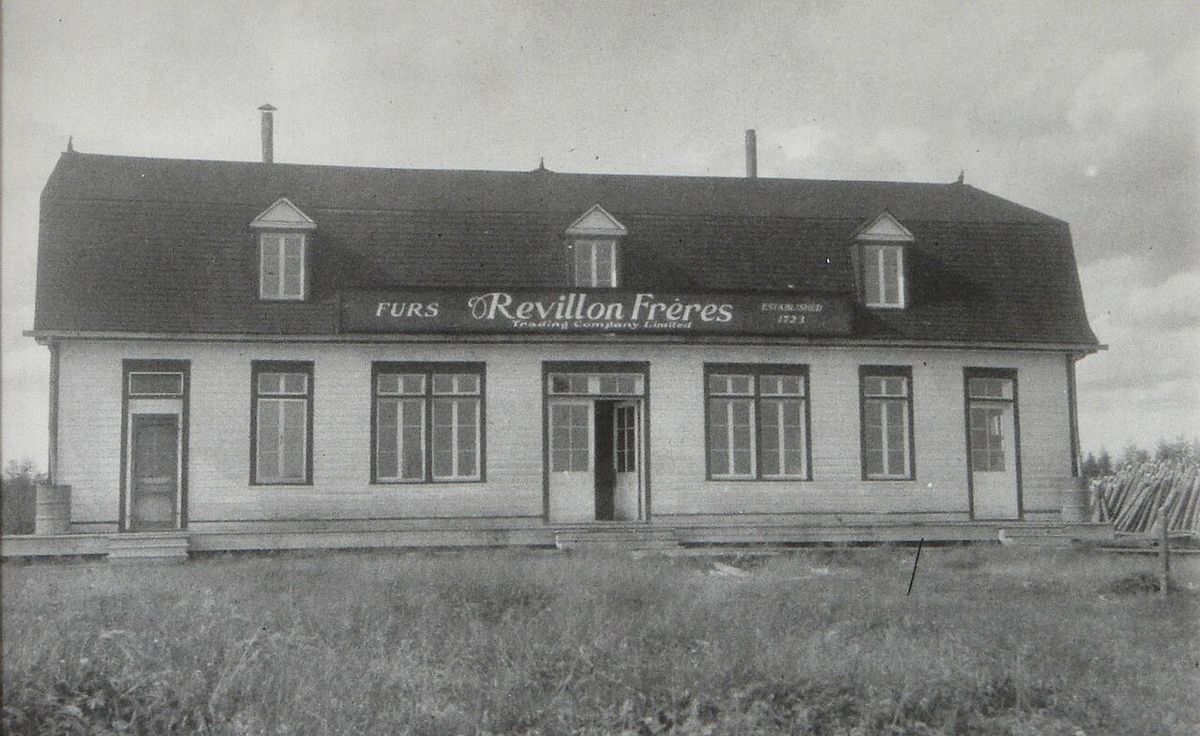
The site of modern Moosonee saw its first permanent settlers in 1900 with Annie Hardisty and her two daughters. Significant development began on 6 June 1903 when the Parisian fur trading company Revillon Frères arrived with four canoes and a crew of 21 to establish the Moose River Post, directly competing with the Hudson's Bay Company at nearby Moose Factory. The post quickly expanded with a staff house, carpenter's shop, warehouse, and sawmill, becoming the company's most important location in the region. By 1912, a line of substantial buildings stretched along the riverfront for nearly a mile north from the inspector's residence, built principally for French Canadian employees. For decades, the isolated community was supplied only once per year by ship from Montreal, with mail arriving just four times annually, twice by canoe and twice by toboggan. In 1932, the Temiskaming and Northern Ontario Railway was extended to the settlement, which was renamed Moosonee, derived from the Cree word môsonihk meaning 'at the Moose [River].' The arrival of the railway ended the community's reliance on annual maritime and river scow supply. Revillon Frères sold its Canadian operations to the Hudson's Bay Company in 1936, leading to the closure of the fur trading post, though the HBC later opened a retail store which now operates as the Northern Store. From 1962 to 1975, the town hosted RCAF Station Moosonee, a radar station part of NORAD's Pinetree Line, with some of its facilities like the base swimming pool and recreation centre repurposed for community use after its closure. Moosonee was governed as a unique development area board from 1968 until it was formally incorporated as the Town of Moosonee on 1 January 2001.
Geography and Climate
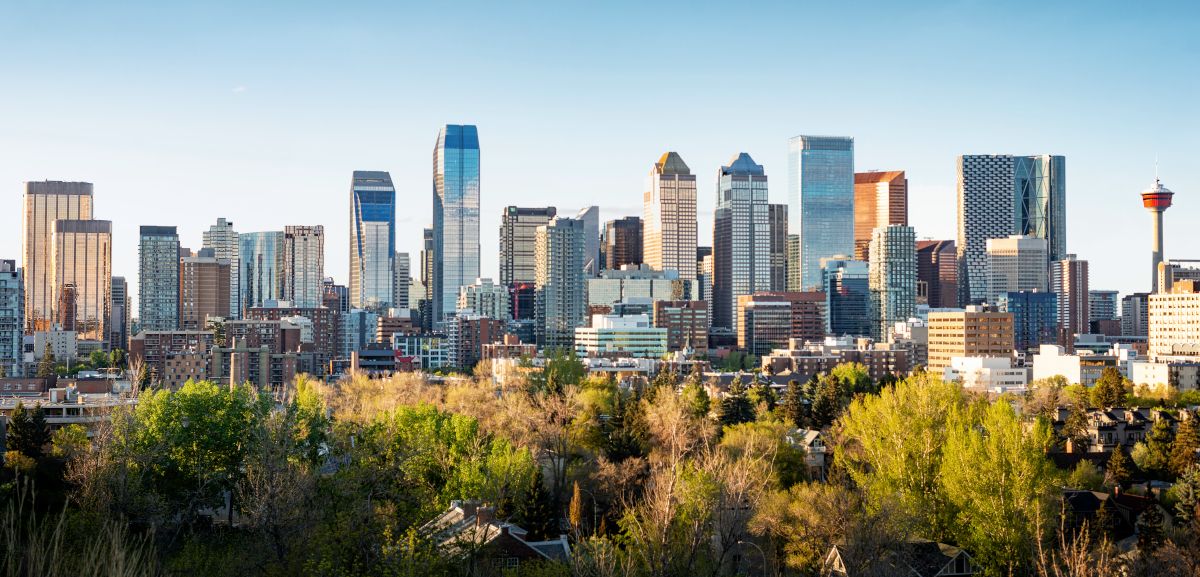
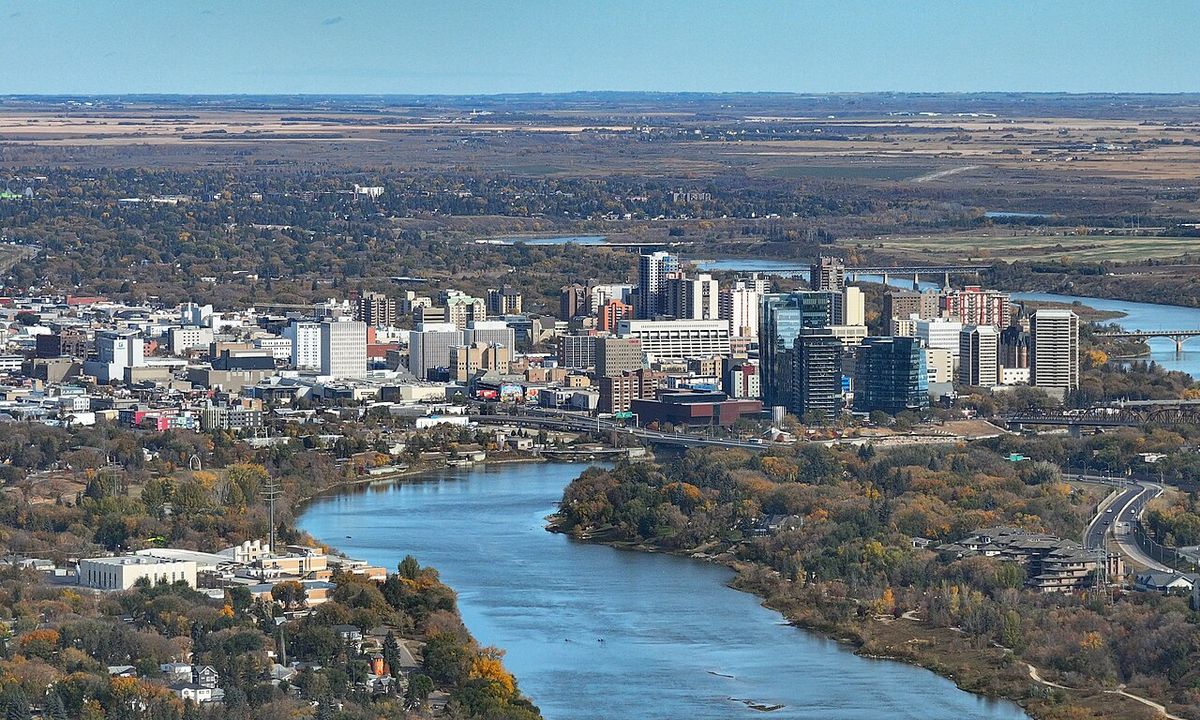
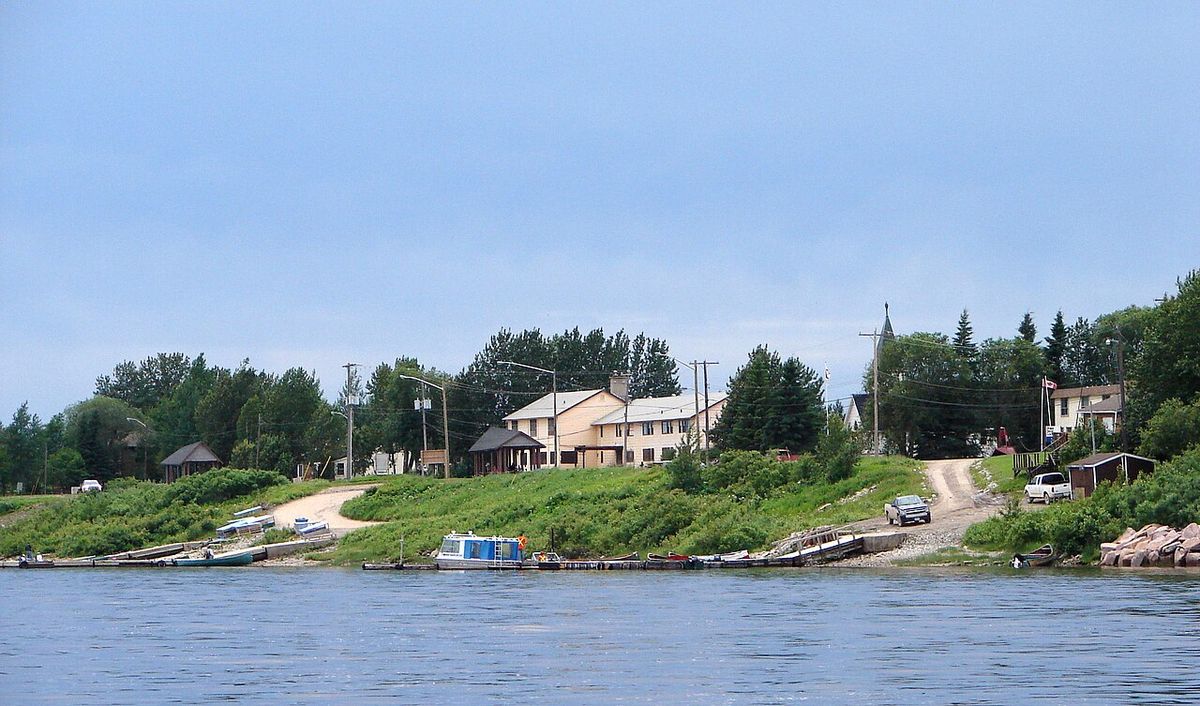
Moosonee is located approximately 19 kilometres south of James Bay at the mouth of the Moose River. While its latitude of 51°N is similar to cities like Saskatoon and Calgary, its climate is significantly colder and more severe due to the strong continental influence of nearby Hudson Bay and its isolation from the provincial road network. The town has a humid continental climate with strong subarctic influences, characterized by warm summers and very cold winters. James Bay acts as a thermal reservoir, moderating spring and fall temperatures. The Moose River typically freezes between late November and mid-December, with mean daily minimum temperatures in January around -25 °C. The spring thaw or break-up usually occurs in April. Mean annual precipitation is 703.6 millimetres, with mean annual snowfall of 226.8 centimetres, and precipitation is somewhat higher in summer than at other times of the year. The highest temperature ever recorded in Moosonee was 37.8 °C on 31 July 1975, while the coldest recorded nearby was -48.9 °C at Moose Factory on 24 January 1935. Historically classified as having a subarctic climate with a yearly mean of -1.3 °C, warming trends have shifted its yearly mean temperature to 0.1 °C. Severe thunderstorms can occur from time to time, adding to the dynamic weather patterns of the region.
Demographics and Community Profile
According to the 2021 Canadian census, Moosonee had a population of 1,512, a slight increase of 2.1% from its 2016 population of 1,481. These residents lived in 487 of the town's 629 total private dwellings. With a vast land area of 547.83 square kilometres, the population density is very low at 2.8 persons per square kilometre. The linguistic makeup of the community is predominantly English-speaking, with 86.0 per cent of residents reporting English as their mother tongue. Indigenous languages, mainly Cree, are the mother tongue for 8.5 per cent of the population, while French accounts for 1.0 per cent and other languages for 4.4 per cent. Ethnically, the population is primarily First Nations at 66.8 per cent, with 32.5 per cent non-indigenous and 1.0 per cent Métis. This demographic composition reflects the town's role as a service centre for the surrounding Cree communities of the James Bay coast. The community's social services are significantly supported by Payukotayno Family Services, a recognized Ontario Children's Aid society whose name means 'one family' in Cree, providing child care and social assistance to Moosonee, Moose Factory, Attawapiskat First Nation, Fort Albany First Nation, Kashechewan First Nation and Peawanuck.
Transportation Hub and Infrastructure
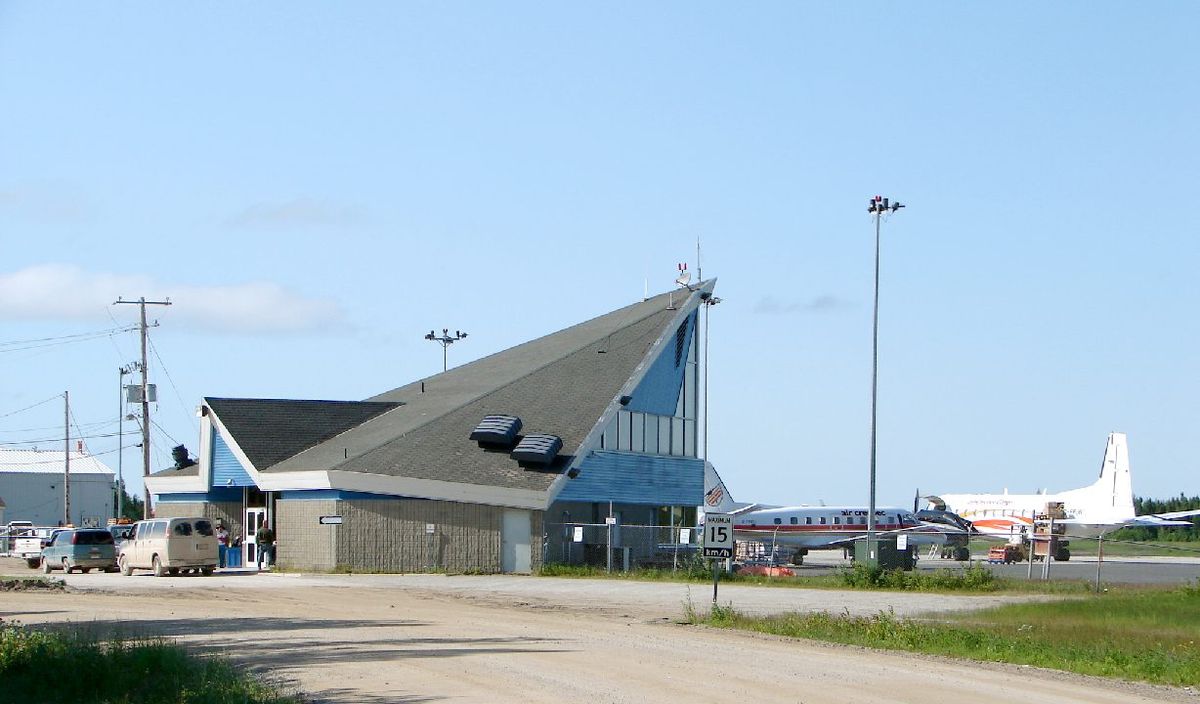
Moosonee's isolation from the provincial road network makes its transportation infrastructure uniquely vital and defines its economic function. The primary year-round access is via the Ontario Northland Railway, which reached the town in 1932. The Polar Bear Express passenger train operates from Moosonee station to Cochrane six days a week in summer and five days a week the rest of the year, offering flag stop service and one of only two motorail services in North America for vehicles like cars, canoes, ATVs, and snowmobiles, provided they are booked in advance. Tickets are sold by phone or at offices in Cochrane, Moosonee, Moose Factory and Timmins. There are also two freight trains per week servicing the community. The town is also served by Moosonee Airport, with scheduled flights provided by Air Creebec and Thunder Airlines and cargo service through North Star Air. Floatplanes can use the Moosonee Water Aerodrome in summer. There is no permanent all-season road connection to southern Ontario. The nearest road ends at Otter Rapids, 148.9 kilometres to the south, and local residents have reported the journey from Moosonee to Timmins via Otter Rapids and Smooth Rock Falls taking five or six hours when a winter road was briefly open in early 2008. Seasonal winter and ice roads are critical for local and regional mobility and heavy freight.
Key transportation links and developments include the Ontario Northland Railway, which reached the town in 1932. The Polar Bear Express passenger train runs from Moosonee to Cochrane. Goods can be transported from Moosonee by barge during the summer and early fall shipping season. The Port of Moosonee was transferred from the federal government to the Town of Moosonee in January 2007. Feasibility studies have been undertaken on the construction of a permanent all-season road to connect Moosonee, Fort Albany, Kashechewan and Attawapiskat.
- The Polar Bear Express passenger train to Cochrane, with Moosonee station located at the end of First Street featuring a station building, freight shed, diesel shed and outdoor storage yard.
- Two weekly Ontario Northland freight trains.
- Scheduled air service via Moosonee Airport.
- The MV Niska 1 passenger and vehicle ferry to Moose Factory Island operating in summer, with an ice road used in winter.
- Plowed ice roads across the Moose River to Moose Factory and winter roads to the coastal First Nations communities of Fort Albany, Kashechewan and Attawapiskat, with much recent traffic destined for the De Beers Canada Victor Diamond Mine west of Attawapiskat.
- The 311-kilometre James Bay Winter Ice Road, operated by Kimesskanemenow LP, a limited partnership between the four communities it connects, which opened in winter 2021 and accepts loads up to 50,000 kilograms.
During the summer shipping season, the Port of Moosonee facilitates the transfer of goods from rail to barges for transport to more northerly communities. Responsibility for the port was transferred from the federal government to the Town of Moosonee in January 2007. Feasibility studies have been undertaken on the construction of a permanent all-season road to the communities of Moosonee, Fort Albany, Kashechewan and Attawapiskat. This project would entail a coastal road connecting the four communities with each other, as well as a road to link the coastal road to the provincial highway system at Fraserdale, Kapuskasing or Hearst.
Local Economy, Education and Health Services
Moosonee's economy transitioned from the fur trade to a focus on transportation, government services, and regional retail. The town is a major transshipment point where goods from rail and truck are transferred to barges and aircraft for communities further north, a role formalized with its designation as Ontario's only saltwater port. Government services provide significant employment, including through the local offices of provincial ministries like the Ministry of Natural Resources, which operates an Interpretive Centre. Retail needs are primarily met by the Northern Store, operated by The North West Company, which traces its presence to the Hudson's Bay Company store opened after it bought out Revillon Frères. Health services are delivered through the Moosonee Health Clinic, part of the Weeneebayko Area Health Authority, which was formed from the merger of the former James Bay General Hospital and the Weeneebayko Health Ahtuskaywin, operator of Weeneebayko General Hospital in Moose Factory. For education, the town has two elementary schools, Moosonee Public School and Bishop Belleau Separate School, the latter of which is Roman Catholic and includes a French Language Instructional Unit for children entitled to French education. Secondary education is provided by Northern Lights Secondary School for grades nine through twelve. Northern College operates a Moosonee campus offering post-secondary and trades programs, including a satellite Trades Centre linked to its Timmins Campus which, as of 2020, offered courses in technology, trades and apprenticeship programs.
Attractions, Tourism and Cultural Sites
Tourism in Moosonee centres on its unique northern access and historical sites, with agencies recommending the Polar Bear Express as a great summer rail excursion to view hydroelectric dams, isolated homes and wildlife. Visitors frequently take a ferry or freighter-canoe across the Moose River to explore the historic community of Moose Factory, where Centennial Park exhibits 19th-century buildings from the fur-trading era. Local attractions highlight the area's natural and cultural heritage, providing insights into its fur-trade past and ecological present. The town's role as a former fur trade post and transportation hub is physically preserved in several museums and sites.
Notable local attractions and cultural sites include the Railway Car Museum, which displays the cultural history of the area in an old baggage car of the Temiskaming and Northern Ontario Railway. The MNR Interpretive Centre has displays and videos highlighting the wildlife, geological, and geographical features of the region. Excursions are available to the bird sanctuaries of Shipsands Island and the Southern James Bay. Other attractions include the Revillon Frères Museum on First Street and Christ the King Basilica, a Roman Catholic minor basilica.
- The Railway Car Museum, housed in an old Temiskaming & Northern Ontario Railway baggage car, displaying the cultural history of the region.
- The MNR Interpretive Centre at the Ministry of Natural Resources office, with displays and videos on local wildlife, geology, and geography.
- Excursions to the bird sanctuaries on Shipsands Island and the Southern James Bay.
- Tidewater Provincial Park on nearby Charles Island, adjacent to Moose Factory Island, accessible by boat.
- Christ the King Basilica, a Roman Catholic minor basilica that served as the cathedral of the Diocese of Moosonee from its establishment in 1936 until 2018.
- The Revillon Frères Museum located on First Street, commemorating the town's founding fur trade company.
These sites collectively tell the story of Moosonee's evolution from a remote fur trade outpost to a modern service and transport centre. Moosonee was the site of a fur trading post set up in 1903 by Revillon Frères. The economy later became centred on transportation after the end of the fur trade. The town is now billed as a major transportation hub for Ontario's Far North. Its key transportation links include the railway, airport, and seasonal water and ice routes.
Communications and Media
Local media and telecommunications in Moosonee reflect its remote location and community needs. The community is served by volunteer-operated local radio station CHMO 1450 AM. CBC Radio One programming from CBCS-FM in Sudbury is rebroadcast in the area on 1340 AM. Following the closure of local CBC Television and TVOntario repeaters in 2012, most residents receive television programming through Creecable cable TV or satellite TV services. Telecommunications services, including landline and internet, are provided by Ontera, which was formerly Ontario Northland Telecommunications and is now owned by Bell Canada, operating under the area code 705 and the local exchange 336. This communications infrastructure is essential for connecting residents to each other, to services in the south, and for the operation of local businesses and government functions.
Governance and Municipal Administration
Moosonee is governed by a mayor and a four-person council, a structure established upon its incorporation as a town on 1 January 2001. Prior to that, from 1968, it was uniquely classified as a development area board, the only community in Ontario with that designation, governed by a locally-elected board subject to provincial appointment. As of 2023, the mayor is Wayne Taipale. The four councillors are Theresa Chavez, Sheldon Ross, Diane Ryder, and Carman Tozer. The municipal government manages local services and infrastructure, including the Port of Moosonee, which was transferred from federal to town control in January 2007. This local administration is responsible for coordinating with provincial and federal agencies on major infrastructure projects, such as studies for an all-season road, and managing the town's role as a critical hub for regional transportation and logistics.
Questions about Moosonee
How do you get to Moosonee, Ontario?
Moosonee is accessible primarily by train and air, as there is no permanent all-season road connection. The Ontario Northland Railway's Polar Bear Express passenger train provides regular service from Cochrane to Moosonee station six days a week in summer and five days a week the rest of the year. Scheduled flights are available through Moosonee Airport via Air Creebec and Thunder Airlines, with cargo service through North Star Air. In winter, seasonal ice roads connect to Moose Factory and other coastal communities, and a winter road was constructed south to Otter Rapids in 2008 to support power line work, though it was not in service in 2009. In late 2009, members of the Moose Cree First Nation voted for the construction of a seasonal winter road south to Otter Rapids.
What is the population of Moosonee?
According to the 2021 Canadian census, Moosonee had a population of 1,512 people living in 487 of its 629 total private dwellings. This represents a slight increase of 2.1% from the 2016 population of 1,481. With a land area of 547.83 square kilometres, the population density is very low at 2.8 persons per square kilometre. The demographic composition is predominantly First Nations at 66.8 per cent, with 32.5 per cent non-indigenous and 1.0 per cent Métis. Linguistically, 86.0 per cent speak English as a mother tongue, 8.5 per cent an Indigenous language, 1.0 per cent French, and 4.4 per cent other languages.
What is there to do in Moosonee?
Tourist activities in Moosonee often begin with the scenic Polar Bear Express train ride from Cochrane, recommended for viewing hydroelectric dams and wildlife. Visitors can take a ferry or freighter-canoe to Moose Factory Island to see historic fur trade sites at Centennial Park. Local attractions include the Railway Car Museum in an old T&NO baggage car, the MNR Interpretive Centre with displays on regional wildlife and geography, and excursions to bird sanctuaries on Shipsands Island and Southern James Bay. Tidewater Provincial Park on Charles Island offers outdoor recreation, and the historic Christ the King Basilica, a former cathedral, is a notable landmark. The Revillon Frères Museum on First Street also details the town's founding era.
Why is Moosonee called the Gateway to the Arctic?
Moosonee is called the Gateway to the Arctic because it serves as the primary transportation and supply hub for accessing more remote communities in Ontario's Far North and along the James Bay coast. It is the northern terminus of the Ontario Northland Railway, hosts Ontario's only saltwater port, and is a base for air services. Goods and passengers are transferred here from train and truck to barges, aircraft, and seasonal ice roads for transport to isolated First Nations communities like Attawapiskat, Kashechewan, and Fort Albany, and to resource developments such as the Victor Diamond Mine further north. This logistical role is essential for the region's connectivity and supply.
What is the climate like in Moosonee?
Moosonee has a humid continental climate with strong subarctic influences, leading to warm summers and very cold winters. Its proximity to James Bay and Hudson Bay results in more severe weather than other locations at the same latitude, though the bay moderates spring and fall temperatures. Average January lows are around -25 °C, and the river freezes from late November to mid-December, with spring break-up in April. The highest recorded temperature was 37.8 °C in July 1975, while the coldest nearby was -48.9 °C at Moose Factory in January 1935. Annual precipitation averages 703.6 millimetres, with 226.8 centimetres of snowfall, and precipitation is higher in summer. The mean annual temperature has risen from a historical -1.3 °C to 0.1 °C.
When did Moosonee become a town and who is the mayor?
Moosonee was officially incorporated as a town on 1 January 2001. Before that, it held the unique status of a development area board from 1968, which was the only community in Ontario with that designation, governed by a locally-elected board subject to appointment by the Ontario government. Incorporation established the current municipal structure of an elected mayor and a four-person council. As of 2023, the mayor is Wayne Taipale, and the councillors are Theresa Chavez, Sheldon Ross, Diane Ryder, and Carman Tozer. This council manages local services, including the Port of Moosonee which was transferred to the town in 2007.
Sources and further reading
- Moosonee (Wikipedia)
- Town of Moosonee: Home (moosonee.ca)
- Complete Guide to Moosonee & Moose Factory Island (northernontario.travel)
- Did you know about Moosonee? (northwest.ca)
Checked by the Your Space Hamilton desk. Last updated 2026-11-02.