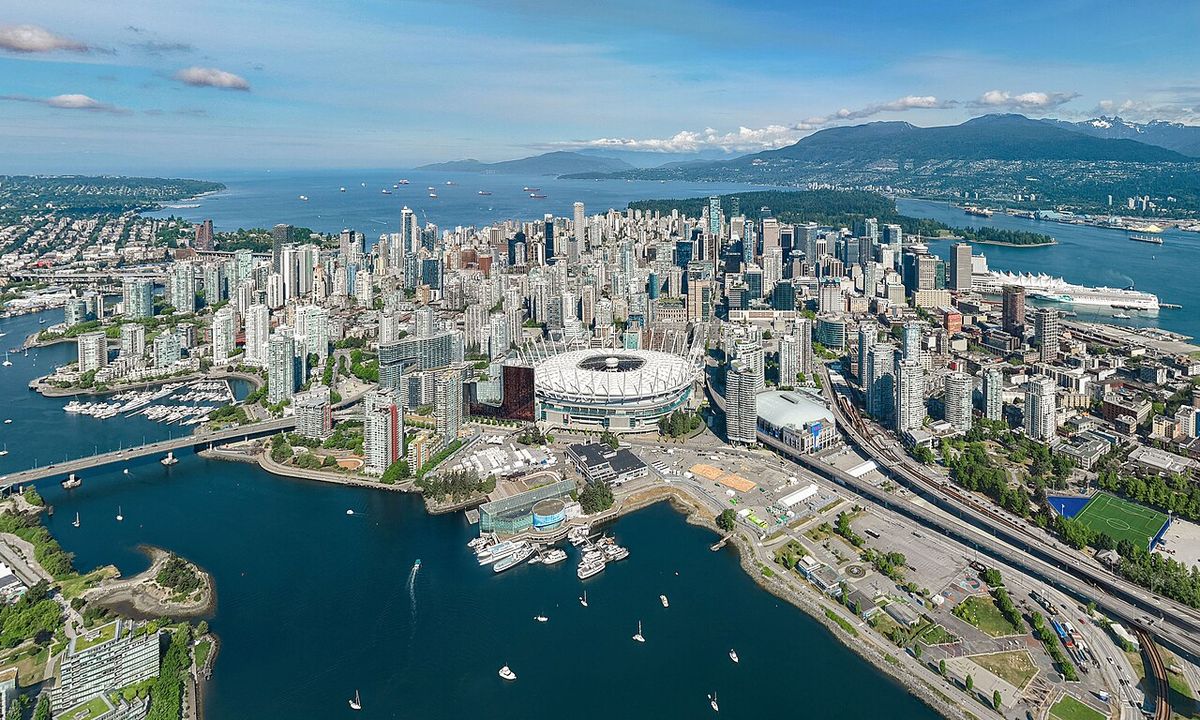
Saskatoon
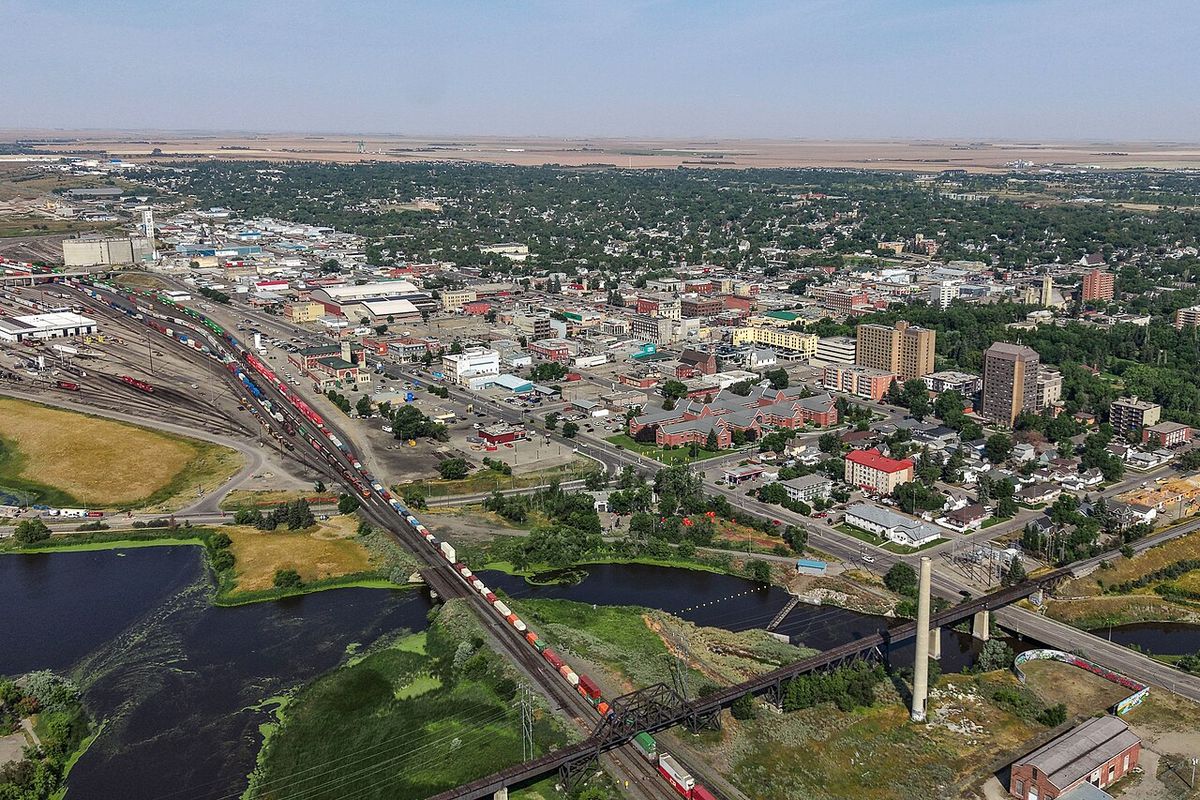
Saskatoon is the largest city in the province of Saskatchewan and serves as the economic and administrative hub of central Canada. Founded in 1882 as a Temperance colony, the city straddles a bend in the South Saskatchewan River along the Trans-Canada Yellowhead Highway. With a 2021 census population of 266,141, it is the 17th largest Census Metropolitan Area in the country, home to the University of Saskatchewan and significant Indigenous heritage sites. The city is known for its nine river crossings, diverse arts scene, and its namesake, the saskatoon berry native to the region.
History and Founding
The settlement that became Saskatoon was established in 1883 by settlers from the Toronto-based Temperance Colonization Society, led by John Neilson Lake. The group aimed to create a community free from the liquor trade on 21 sections of land granted along the South Saskatchewan River between present-day Warman and Dundurn. The settlers travelled by railway from Ontario to Moose Jaw and completed their journey by horse-drawn cart, as the railway had not yet reached the site. In 1885, the North-West Rebellion touched the small community, with Chief Whitecap and Charles Trottier passing through the present-day university campus on their way to join Louis Riel's forces at Batoche. Following the battles at Fish Creek and Batoche, wounded Canadian soldiers convalesced at the Marr Residence, a historic site where some died and were buried in the nearby Pioneer Cemetery.
The west side of the river obtained a town charter in 1903 and adopted the name Saskatoon, while the original townsite became the village of Nutana. Saskatoon was incorporated as a city in 1906 with a population of 4,500, amalgamating the communities of Saskatoon, Riversdale, and Nutana. The city expanded through annexations, including Montgomery Place in 1955 and the neighbouring town of Sutherland in 1956. Throughout the 20th century, Saskatoon solidified its role as the regional centre for the northern prairies and for central and northern Saskatchewan. The historic neighbourhoods of Nutana and Riversdale, with their main streets of Broadway Avenue and 20th Street, have seen significant reinvestment and redevelopment in recent decades.
Geography and Climate
Saskatoon is situated on a long belt of rich, potassic chernozem soil within the aspen parkland biome, northwest of Regina, northeast of Calgary, and east of Edmonton. The city's topography is relatively flat due to a lack of surrounding mountains, though it sprawls over a few hills and valleys, with the South Saskatchewan River dividing it into east and west sides. The lowest point in the city is the river, while the highest point is in the Sutherland-College Park area. A second major water feature is the Hudson Bay Slough, a remnant of a glacier-formed body of water that once dominated the city's northern end, with portions preserved in RCAF Memorial Park and the Hudson Bay Industrial area. Several residential communities, beginning with Lakeview in the early 1980s, feature man-made lakes for recreation.
Saskatoon experiences a borderline cold semi-arid climate to humid continental climate, with typically warm summers and long, cold winters. Climate data from the University of Saskatchewan in the inner city meets semi-arid criteria due to slightly higher temperatures and lower precipitation than at the airport on the northwest periphery. The city is in plant hardiness zone 3b, averages 352.3 millimetres of precipitation per year, and is sunnier than average in Canada with 2,350.4 hours of bright sunshine annually. The frost-free growing season typically lasts from May 21 to September 15, though damaging frosts have occurred as late as June 14 and as early as August. The average daytime high temperature peaks at 25.8 °C from July 31 to August 8, and extreme weather events include severe thunderstorms with hail and tornadoes, as well as major blizzards like the one in 2007 which paralyzed the city with high winds and 25 centimetres of snow.
Demographics and Population
According to the 2021 Canadian census, Saskatoon had a population of 266,141 living in 107,052 of its 115,619 total private dwellings, a 7.7% increase from 2016. The gender distribution is 50.9% women and 49.1% men, with a city land area of 226.56 square kilometres resulting in a density of 1,174.7 people per square kilometre. The Saskatoon Census Metropolitan Area had a population of 317,480 in 2021, a change of 7.6% from 2016, spread over a land area of 5,864.48 square kilometres. Immigrants comprise 53,210 persons or 20.4% of the total city population, with the top countries of origin being the Philippines (11,840 persons), India (5,845), China (4,695), Pakistan (3,975), and Nigeria (2,090). Other significant source countries include the United Kingdom, Bangladesh, Vietnam, the United States, and Iraq.
The city has the second highest percentage of Indigenous population among major Canadian cities at approximately 11.5%, behind only Winnipeg. In certain neighbourhoods such as Pleasant Hill, this percentage exceeds 40%, and the First Nations population in Saskatoon increased by 382% from 1981 to 2001, partly due to changes in self-identification. Most First Nations residents are of Cree or Dakota cultural background, with smaller Saulteaux, Assiniboine, and Dene communities also present. Saskatoon also has a substantial Métis population and is close to historic Southbranch Settlements and the Prairie Ronde settlement near Dundurn. In terms of religious affiliation, the 2021 census reported Christianity at 51.7% (with Catholics the largest denomination at 28.5% in 2011), irreligion at 37.8%, Islam at 5.0%, Hinduism at 2.0%, Sikhism at 1.2%, Buddhism at 0.7%, and Indigenous Spirituality at 0.6%.
Culture and Major Institutions
Saskatoon's major arts venue is TCU Place, opened in 1967 next to Midtown Plaza downtown, which hosts concerts, theatrical performances, the Telemiracle telethon, and convocations, and is home to the Saskatoon Symphony Orchestra. The facility underwent a multimillion-dollar renovation to its main theatre, named for former mayor Sidney Buckwold. For larger concerts and events, the SaskTel Centre is the primary arena with a capacity of 15,195 for sports and 14,000 for concerts, and it hosted the Juno Awards in 2007. Musical acts from Saskatoon include Joni Mitchell, Kyle Riabko, Wide Mouth Mason, The Northern Pikes, The Sheepdogs, One Bad Son and The Deep Dark Woods. The city's francophone community is represented by the Fédération des francophones de Saskatoon, which organizes many cultural events throughout the year.
Summer in the city features a dense schedule of festivals and events including the Shakespeare on the Saskatchewan Festival, The Great Plains Comedy Festival, the Jazz Festival, the Saskatchewan Children's Festival, and the Saskatoon Fringe Theatre Festival. Other major events include Saskatoon Folkfest, Doors Open Saskatoon, Fairy Door Tours Saskatoon and the Canada Remembers Airshow. For over 25 years, Saskatoon has hosted Cruise Weekend on the last weekend in August, a gathering of over 800 antique automobiles featuring a poker derby, dances, and a show 'N' shine. The city's annual exhibition, now called the Saskatoon Exhibition but previously known as Pioneer Days and 'The Ex', is held every August at Prairieland Park, having been rescheduled in the late 1990s to avoid competition with the Calgary Stampede. The Sikh community celebrates Vaisakhi with a parade held in May.
- Shakespeare on the Saskatchewan Festival: Summer theatre festival.
- Saskatoon Jazz Festival: Major music festival.
- Saskatoon Fringe Theatre Festival: Event featuring alternative theatre.
- Saskatoon Folkfest: Cultural festival celebrating diversity.
- Cruise Weekend: Antique automobile gathering every August.
- Saskatoon Exhibition: Annual exhibition at Prairieland Park.
Galleries, Museums and Landmarks
Saskatoon is home to several prominent galleries and museums. The Remai Modern art museum, opened on October 21, 2017 at River Landing, is a 11,582 square metre building designed by Bruce Kuwabara that won the Award of Excellence from Canadian Architect magazine in 2011. It houses a collection of over 8,000 works, including pieces by Pablo Picasso and Georges Braque, inherited from the defunct Mendel Art Gallery which operated from 1964 to 2015. The Remai Modern was listed at number 18 in the New York Times '52 places to go in 2018'. The Saskatchewan Craft Council Gallery on Broadway Avenue is Saskatchewan's only public exhibition gallery dedicated to fine craft, presenting seven to eight exhibitions each year and featuring a boutique with work from over 75 artists. The Ukrainian Museum of Canada, founded in 1941 by the Ukrainian Women's Association of Canada, is located on the banks of the South Saskatchewan River.
The Meewasin Valley Centre in Friendship Park provides information on Saskatoon's history, the river, and the future of the Meewasin Valley Authority which protects the riverbank park spaces. The Saskatchewan Western Development Museum, one of four in the province, documents pioneer life with an interior recreation of a 'Boom Town' main street, including one original relocated building. The Saskatchewan Railway Museum just outside the city displays rolling stock and historic railway buildings. The Forestry Farm Park and Zoo is a National Historic Site in the city's northeast that originated as a historic tree nursery in 1913, responsible for growing many trees planted across the prairies before becoming a municipal park and zoo with over 80 animal species in 1966. Wanuskewin Heritage Park, a National Historic Site and UNESCO World Heritage applicant 5 kilometres north of the city, represents 6,000 years of First Nations history through archaeological work, displays, and special events, though recent renovations have been on hold due to funding issues.
- Remai Modern: Major art museum with Picasso and Braque works, opened 2017.
- Saskatchewan Craft Council Gallery: Only public fine craft gallery in the province.
- Ukrainian Museum of Canada: Founded in 1941 on the riverbank.
- Saskatchewan Western Development Museum: Features a pioneer 'Boom Town' street.
- Forestry Farm Park and Zoo: National Historic Site and zoo from a 1913 nursery.
- Wanuskewin Heritage Park: National Historic Site with 6,000 years of Indigenous history.
Neighbourhoods and Urban Structure
Saskatoon is divided by the South Saskatchewan River into east and west sides, further organized into Suburban Development Areas composed of neighbourhoods. The original historic neighbourhoods of Nutana, Riversdale, and Sutherland were separate towns before amalgamating into the city, with Nutana and Riversdale seeing significant reinvestment on their main streets of Broadway Avenue and 20th Street. Sutherland was a rail town beyond the University of Saskatchewan lands, annexed by the city in 1956. Street addresses use a demarcation system where on the west side, 22nd Street divides north and south avenues, and Idylwyld Drive (north of 20th Street) and Avenue A (south of 20th) divide east and west streets. On the east side, Lorne Avenue demarcates east and west while Aird Street marks the north-south boundary, except in Sutherland where Central Avenue serves as the east/west boundary, resulting in few streets carrying directional designations.
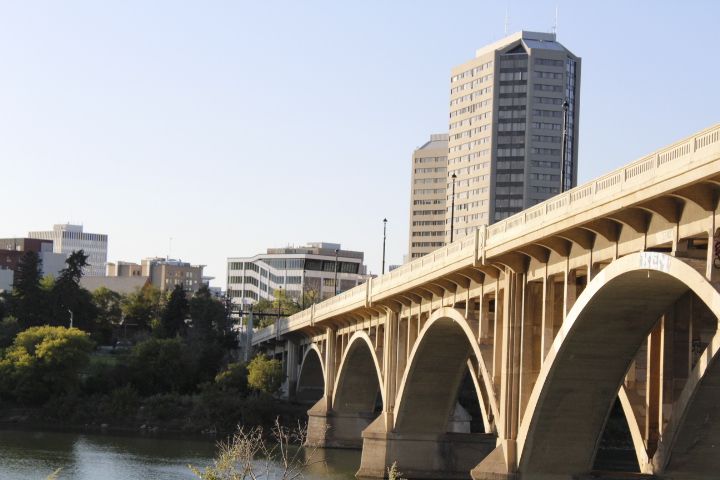
The city features nine river crossings, earning it the nicknames 'Paris of the Prairies' and 'The City of Bridges'. The Rural Municipality of Corman Park No. 344, the most populous rural municipality in Saskatchewan, surrounds the city and contains many associated developments including Wanuskewin. Residential communities like Lakeview, developed from the early 1980s, feature man-made lakes, adding to the city's recreational spaces. Pike Lake and Blackstrap Provincial Parks are both approximately 40 kilometres south of the city on Highways 60 and 11 respectively, and the Batoche national historic site is 90 kilometres north, all popular destinations for school field trips and recreation. The city's grid is generally flat but sprawls over a few hills and into valleys, with a general decline in elevation from west to east towards the river.
Economy and Regional Role
Saskatoon serves as the primary economic and service hub for central and northern Saskatchewan, with a diverse economy anchored by sectors like mining, agriculture, and education. The University of Saskatchewan is a major employer and research centre, and the city's location on the Trans-Canada Yellowhead Highway supports its role in trade and logistics. The presence of urban reserves and a significant Indigenous population contributes to unique economic partnerships and developments. The Meewasin Valley Authority, which protects the South Saskatchewan River and provides popular riverbank park spaces, also contributes to the city's quality of life and tourism appeal. Key industries benefit from the region's rich potash and uranium resources, with many corporate headquarters and service providers based in the city.
Cultural tourism, driven by festivals, museums like the Remai Modern, and the river valley park system, forms an important part of the local economy. The Saskatoon CMA includes the surrounding Rural Municipality of Corman Park No. 344, which facilitates suburban and industrial development linked to the city. Live theatre is a central part of Saskatoon's culture with venues such as the Persephone Theatre in the Remai Arts Centre, The Refinery, the Saskatchewan Native Theatre Company, and the University of Saskatchewan's Greystone Theatre. The city's role as a regional centre is further emphasized by its function as a destination for major concerts, conventions, and sporting events held at facilities like SaskTel Centre.
Population Growth and Census Data
Saskatoon has experienced steady population growth, with a 7.7% increase in its city population from 2016 to 2021. The census metropolitan area saw a similar growth of 7.6% over the same period, expanding from 295,095 to 317,480 residents. The immigrant population has grown significantly, comprising 53,210 persons or 20.4% of the total city population in 2021, with leading sources being the Philippines, India, and China. This demographic change contributes to the city's diversity, evident in its festivals, religious institutions, and neighbourhoods. The following table illustrates recent population figures for the city and its CMA, along with key demographic metrics.
The population of Saskatoon is made up of 50.9% women and 49.1% men, and the city's private dwelling count increased from 115,619 total dwellings in 2021, with 107,052 of them occupied. The surrounding CMA land area of 5,864.48 square kilometres supports a much lower density of 54.1 people per square kilometre, reflecting the rural and suburban nature of the broader region. The leading countries of origin for immigrants highlight global migration patterns, with strong communities from South Asia, Southeast Asia, and Africa establishing themselves in the city. The Indigenous population growth and urban migration have also reshaped the social and cultural fabric of Saskatoon over recent decades.
Questions about Saskatoon
What is Saskatoon known for?
Saskatoon is known as the largest city in Saskatchewan and the economic hub of central Saskatchewan. It is famous for its nine bridges across the South Saskatchewan River, earning it the nickname 'The City of Bridges.' The city is also known for the University of Saskatchewan and Wanuskewin Heritage Park. It is named after the saskatoon berry. Its cultural scene includes major festivals and the Remai Modern art museum. Saskatoon has a significant Indigenous population.
What is the population of Saskatoon?
According to the 2021 Canadian census, the city of Saskatoon had a population of 266,141. The larger Saskatoon Census Metropolitan Area, which includes surrounding communities, had a population of 317,480. The city has seen steady growth, with a 7.7% increase from its 2016 population of 247,201. The population density within the city is 1,174.7 people per square kilometre.
What are the major attractions in Saskatoon?
Major attractions include the Remai Modern art museum, the Wanuskewin Heritage Park National Historic Site, and the University of Saskatchewan campus. The Meewasin Valley trail system along the river offers extensive park spaces. Cultural venues like TCU Place and the SaskTel Centre host performances and events. The Saskatchewan Western Development Museum, the Forestry Farm Park and Zoo, and seasonal festivals like the Jazz Festival and Shakespeare on the Saskatchewan are also key draws.
What is the Indigenous significance of Saskatoon?
Saskatoon has a significant Indigenous population, approximately 11.5% of residents, which is the second highest among major Canadian cities. The area has been inhabited for millennia, evidenced by the archaeological site at Wanuskewin Heritage Park, which represents 6,000 years of First Nations history. The city is close to historically important Métis settlements and has several urban reserves. Most First Nations residents are of Cree or Dakota cultural background.
Why is it called Saskatoon?
The city is named after the saskatoon berry, which is native to the region. The name comes from the Cree word misâskwatômina, referring to the sweet, violet-coloured serviceberry. According to a popular story, founder John Neilson Lake exclaimed 'Arise Saskatoon, Queen of the North!' upon being told the berry's name in 1883. However, the exact origin is unclear, and an alternative theory suggests it may derive from a Cree term meaning 'the place where willows are cut,' alluding to the practice of cutting saskatoon berry willows for arrow shafts. The city's name is therefore deeply connected to the Indigenous Cree language and the local flora.
What is the climate like in Saskatoon?
Saskatoon experiences a borderline cold semi-arid to humid continental climate with four distinct seasons. Winters are long and cold, while summers are typically warm. The average daytime high temperature peaks at 25.8 degrees Celsius from late July to early August. Extreme temperatures have ranged from a record high of 41.5 degrees Celsius to a record low of -50.0 degrees Celsius. The frost-free growing season is relatively short, lasting from late May to mid-September.
Sources and further reading
- Saskatoon (Wikipedia)
- City of Saskatoon: Home (saskatoon.ca)
- City of Saskatoon (spsd.sk.ca)
- Discover Saskatoon, Hotels, Restaurants & Things To Do (discoversaskatoon.com)
Checked by the Your Space Hamilton desk. Last updated 2026-10-19.