Humboldt Broncos bus crash
The Humboldt Broncos bus crash was a catastrophic traffic collision that occurred on April 6, 2018, at the intersection of Saskatchewan Highways 35 and 335 near Armley, Saskatchewan. A semi-trailer truck driven by Jaskirat Singh Sidhu failed to stop at a flashing stop sign and struck a northbound coach bus carrying the Humboldt Broncos junior ice hockey team. The crash resulted in the deaths of 16 people and injuries to 13 others, most of whom were players, coaches, and staff of the team. This event prompted an unprecedented national outpouring of grief, solidarity, and support for the affected community and for organ donation awareness.
Background of the Intersection and Road Safety
The collision occurred at a right-angle intersection commonly known as Armley Corner, where Highway 335 meets Highway 35 in the Rural Municipality of Connaught. Traffic on the north-south Highway 35 has the right of way with a speed limit of 100 km/h. Traffic on Highway 335 faces an oversized stop sign, 1.2 metres across, mounted with a blinking red light and placed 19 metres before the intersection, with the speed limit dropping to 60 km/h. This intersection had a fatal history, with a 1997 crash claiming six lives, after which the flashing lights were installed. A coroner's report from that earlier accident suggested additional warning measures like rumble strips, but these were not implemented as the last serious crash before 1997 had occurred in 1988. Six memorial crosses were placed in the intersection's southeast corner to commemorate the 1997 victims. Saskatchewan's traffic fatality rate from 2011 to 2015 was 13.2 deaths per 100,000 people, the highest provincial rate in Canada and more than double the national average of that period.
Details of the Collision and Emergency Response
The crash happened at approximately 5:00 p.m. CST on April 6, 2018. Jaskirat Singh Sidhu was driving a westbound semi-trailer truck loaded with peat on Highway 335 at a speed between 86 and 96 km/h. The Humboldt Broncos' bus, carrying 29 people, was travelling northbound on Highway 35 between 96 and 107 km/h. According to the agreed statement of facts, Sidhu failed to heed the stop sign and entered the intersection, completely blocking it. The bus driver, Glen Doerksen, applied brakes 24 metres before impact but could not avoid a T-bone collision with the truck's front trailer. Weather conditions were clear and sunny, with no obstructions to Sidhu's view of the signage, and he was not under the influence of drugs or alcohol nor distracted by a cellphone. Sidhu later stated distraction came from a loose tarp, and he had passed advance warning signs for the intersection. The force of the impact caused both vehicles to come to rest on their sides in the northwest corner of the intersection, with the truck's load of peat moss strewn across the ground.
The bus sustained massive front-end damage. The driver and 13 passengers were killed immediately, with two more succumbing to injuries in hospital later. Survivor accounts noted the seating arrangement had 18-year-old players towards the front, 19-year-olds in the middle, and 20-year-olds in the back, which correlated with the higher fatality rate among the younger rookies. Emergency response was massive and complex, involving multiple ground ambulance services from Tisdale, Nipawin, Melfort, and Carrot River. Three Shock Trauma Air Rescue Society (STARS) helicopters and four Saskatchewan Air Ambulance Service planes were dispatched to transport the most critically wounded to Royal University Hospital in Saskatoon, about 250 km away. The hospital declared a Code Orange for mass casualties. An estimated 80 first responders were on scene, with a Tisdale crane operator using his equipment to lift the bus roof to access victims trapped underneath. The Saskatchewan Health Authority encouraged first responders to access counselling, as many had personal ties to hockey and the community. Paramedic manager Jessica Brost of Nipawin's North East EMS noted the crash was too close to home in a province where many are billets, hockey-obsessed, or parents of teenage players.
Victims, Survivors, and the Identification Error
The bus carried 29 individuals, including the driver. The final toll was 16 dead and 13 injured. The deceased included head coach and general manager Darcy Haugan, team captain Logan Schatz, bus driver Glen Doerksen, radio announcer Tyler Bieber, statistician Brody Hinz, and athletic therapist Dayna Brons, the only woman on the bus, who died four days after the crash from head injuries. Doerksen was a former board member for the Carrot River Outback Thunder from 2006 to 2011 and drove for Charlie's Charters. A tragic error in identification occurred when the coroner misidentified Parker Tobin as survivor Xavier LaBelle, a mistake discovered when LaBelle regained consciousness and identified himself, prompting an apology from the coroner. The truck driver, Jaskirat Singh Sidhu, was not physically injured in the collision and was provided with mental health and wellness assistance by the RCMP after his release. Survivors faced life-altering injuries, with Ryan Straschnitzki paralyzed from the waist down and pursuing sledge hockey, and Jacob Wassermann, also paralyzed, taking up Pararowing and making his Team Canada debut at the 2024 Summer Paralympics.
Police Investigation and Court Proceedings
The Royal Canadian Mounted Police conducted an extensive investigation, taking over 5,500 photographs, using 3D technology and drones, and conducting more than 50 interviews with witnesses, victims, Sidhu, and the trucking company owner. Key eyewitness Kelsey Fiddler, who was waiting at the eastbound stop sign to turn onto Highway 35, reported seeing the bus approaching at what seemed like regular highway speed and had to swing her vehicle away to avoid the collision. She was one of the first to call 911. Investigators examined the engine computers of both vehicles, the drivers' logs, and their experience. On July 6, 2018, the RCMP charged Sidhu with 16 counts of dangerous operation of a motor vehicle causing death and 13 counts of causing bodily injury. In early 2019, Sidhu pleaded guilty to all charges. He was sentenced to eight years in prison. Sidhu, an immigrant from India, faced deportation following his sentence. His removal was scheduled for April 27, 2026, but the Federal Court granted a stay on April 24, 2026, pending his legal challenge to the deportation order. The owner of Adesh Deol Trucking Ltd. confirmed Sidhu was receiving psychological support after his release from custody.
National and Hockey Community Response
The crash triggered an immense national and international response of condolences from figures including Queen Elizabeth II, Prince Philip, Prime Minister Justin Trudeau, Saskatchewan Premier Scott Moe, Alberta Premier Rachel Notley, U.S. President Donald Trump, and Pope Francis, whose message was read by the Bishop of Saskatoon. The Saskatchewan Junior Hockey League indefinitely suspended its playoffs, later allowing the Nipawin Hawks and Estevan Bruins to contest the championship. The Manitoba Junior Hockey League delayed its championship series by four days out of respect. A GoFundMe campaign set a Canadian record, raising over $15 million for the victims and families. The tragedy also spurred a remarkable increase in organ donor registration after it was revealed that victim Logan Boulet had been an organ donor. In the weeks following the crash, almost 150,000 Canadians registered as donors, compared to a weekly average of 425 in Alberta prior, with 3,071 Albertans registering in one weekend alone. Blood donations in Western Canadian cities increased by up to 25 percent.
Notable tributes from the sports world included many gestures from professional leagues and teams. The National Hockey League, Canadian Hockey League, and other leagues offered tributes to the Broncos team. On April 7, 2018, players for the Winnipeg Jets and Chicago Blackhawks wore jerseys with "Broncos" name bars during their final regular season game. That same night, the Nashville Predators played "O Canada" before their last home game despite not being a Canadian-based team. The Saskatchewan Roughriders of the Canadian Football League and the Saskatchewan Rush of the National Lacrosse League also paid tribute.
- The Winnipeg Jets and Chicago Blackhawks wearing "Broncos" name bars on April 7, 2018, with a pre-game circle at centre ice.
- The Nashville Predators playing "O Canada" before their game on April 7 despite being a U.S.-based team.
- Numerous teams adding helmet decals to honour the Broncos.
- Pittsburgh Penguins captain Sidney Crosby sending a team-signed "BRONCOS 18" jersey.
- Don Cherry dedicating an April 7 Coach's Corner segment to the crash, calling it a national nightmare and discussing the 1986 Swift Current Broncos crash.
- The Winnipeg Jets featuring survivor Matthieu Gomercic on their jumbotron during the 2018 playoffs after eliminating the Minnesota Wild.
- Washington Capitals player Chandler Stephenson taking the Stanley Cup to Humboldt in August 2018.
- Ten survivors being honoured at the 2018 NHL Awards in Las Vegas.
- Darcy Haugan posthumously receiving the inaugural Willie O'Ree Community Hero Award.
- The Humboldt Broncos organization receiving the E.J. McGuire Award of Excellence at the 2018 NHL Draft.
Survivors of the 1986 Swift Current Broncos bus crash, led by Sheldon Kennedy, travelled to Humboldt to offer support to the community and hockey team. The truck involved was from the Calgary-based company Adesh Deol Trucking Ltd, which had been operating for only one year. Adesh Deol's safety certificate was automatically suspended by the Alberta Transportation ministry while the company was investigated. In response to the tragedy, Saskatchewan Government Insurance announced plans on April 13, 2018, to improve training standards for truck drivers by 2019, as no training was required from certified schools at that time.
Community Vigils and Family Gathering
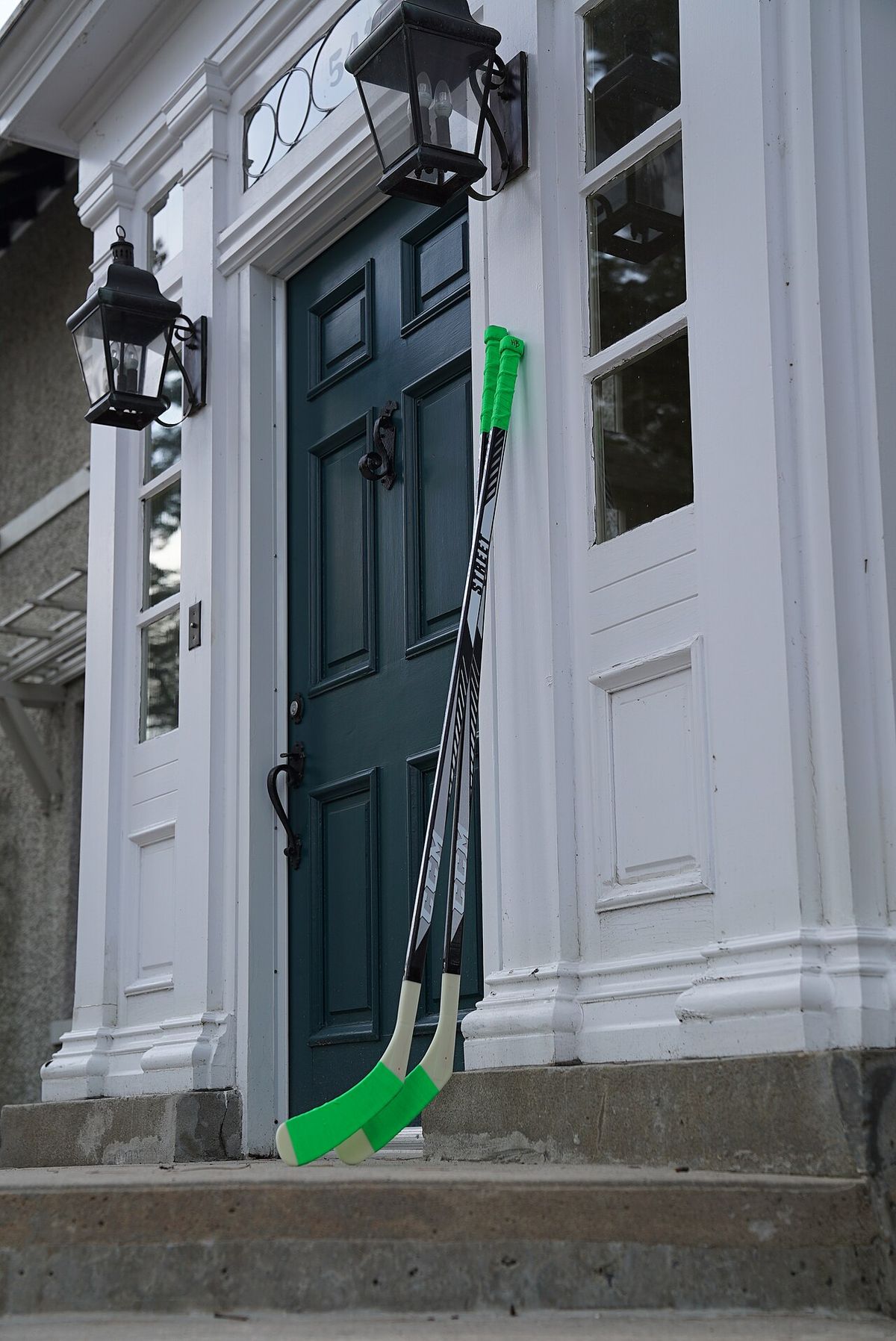
In the immediate aftermath, vigils were held across Canada and people placed hockey sticks outside their doors as a tribute. The team chaplain, Sean Brandow, arrived at the crash scene shortly after the collision to offer prayers and aid. RCMP officers directed families of the team members to the Nipawin Apostolic Church to wait for news. One father recounted the agonizing process, noting that parents of veteran players began receiving calls to go to the hospital, leaving mostly the parents of rookies at the church by the end of the night to have difficult conversations with police. Humboldt schools reopened on April 10, 2018, with crisis workers present, though regular classes were not expected. A letter of support for the unidentified truck driver, posted on Reddit and shared on Facebook, was widely circulated online. The Saskatchewan Volunteer Firefighters Association sent peer counsellors to aid firefighters from Nipawin and Tisdale who responded to the crash, acknowledging the personal toll on first responders in a province where many have direct connections to junior hockey.
Ongoing Commemorations and Safety Legacy
The crash highlighted longstanding safety concerns at rural highway intersections in Saskatchewan. The intersection at Armley Corner had been the site of the fatal 1997 collision, and while flashing lights were added then, earlier recommendations for rumble strips were not acted upon. The catastrophic loss of life in 2018 renewed scrutiny of intersection design and commercial driver training. The annual Green Shirt Day was established to honour the victims and promote organ donor awareness in memory of Logan Boulet. The day encourages Canadians to wear green and register as organ donors. The community of Humboldt, along with the broader hockey world, continues to remember the team through memorials, tributes at games, and ongoing support for the survivors and families of those lost. The crash was the deadliest road accident in Canada since the 1997 Les Éboulements bus accident in Quebec, which killed 44 people. The legacy of the crash includes the sustained national conversation on road safety, the inspirational stories of survivors in adaptive sports, and the powerful, ongoing promotion of organ donation across the country.
Questions about Humboldt Broncos bus crash
What caused the Humboldt Broncos bus crash?
The crash was caused when the driver of a westbound semi-trailer truck, Jaskirat Singh Sidhu, failed to stop at a flashing stop sign at the intersection of Saskatchewan Highways 335 and 35 near Armley. The truck, travelling between 86 and 96 km/h, entered the intersection and was struck by the northbound bus carrying the hockey team. Investigators confirmed the weather was clear, Sidhu's view was unobstructed, and he was not impaired or using a cellphone, though he stated he was distracted by a loose tarp. The bus driver applied his brakes 24 metres before the intersection but could not avoid the collision. The truck was completely blocking the intersection when the bus slammed into its lead trailer.
How many people died and were injured in the crash?
The collision resulted in 16 fatalities and 13 injuries. The bus was carrying 29 people in total, including players, coaches, staff, the driver, and media personnel. Fourteen people died immediately at the scene, and two of the critically injured later died in hospital. The RCMP reported that 15 people suffered injuries initially, with three in critical condition. The victims included the bus driver, head coach Darcy Haugan, team captain Logan Schatz, and athletic therapist Dayna Brons, who died four days later from head injuries.
What was the sentence for the truck driver, Jaskirat Singh Sidhu?
Jaskirat Singh Sidhu pleaded guilty in early 2019 to sixteen counts of dangerous operation of a motor vehicle causing death and thirteen counts of dangerous operation causing bodily injury. He was sentenced to eight years in prison. Sidhu, an immigrant from India, was scheduled to be deported on April 27, 2026, but the Federal Court granted a stay on April 24 pending his legal challenge to the deportation. The charges were laid by the RCMP on July 6, 2018, following a detailed investigation into the crash.
What is Green Shirt Day?
Green Shirt Day is an annual event in Canada that honours the victims and families of the Humboldt Broncos bus crash and promotes organ donor awareness and registration. It was inspired by Logan Boulet, a crash victim whose organ donations saved several lives. In the weeks following the crash, almost 150,000 Canadians registered as organ and tissue donors, a significant increase attributed to Boulet's story. The day serves as a tribute to all those affected by the tragedy and encourages people to wear green and consider donor registration.
How did the hockey community respond to the tragedy?
The hockey community responded with widespread tributes and support. The Saskatchewan Junior Hockey League indefinitely suspended its playoffs following the crash. NHL teams, including the Winnipeg Jets and Chicago Blackhawks, wore "Broncos" name bars on their jerseys, and many added special helmet decals. Survivors were honoured at the 2018 NHL Awards in Las Vegas, and the late head coach Darcy Haugan posthumously won the Willie O'Ree Community Hero Award. The Stanley Cup was also brought to the hospital where injured players were recovering to improve their spirits.
What were some long-term impacts of the crash?
The crash had several long term impacts, including a national surge in organ donor registrations, with nearly 150,000 Canadians signing up. It prompted Saskatchewan Government Insurance to announce plans to improve training standards for commercial truck drivers by 2019. Survivors pursued new athletic paths, with Ryan Straschnitzki aiming to play sledge hockey and Jacob Wassermann taking up Pararowing and competing for Team Canada. The tragedy also led to increased scrutiny of rural intersection safety and prompted widespread vigils and a record setting GoFundMe campaign that raised over 15 million dollars.
Sources: Wikipedia and current public reporting, checked by the Your Space Hamilton desk. Last updated 2026-10-26.