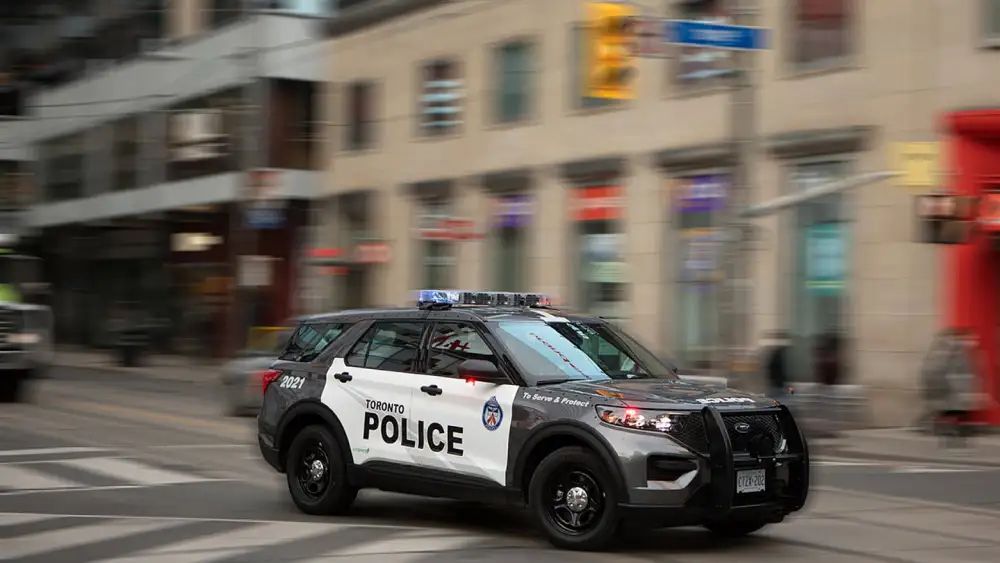
Toronto Police Expand High Holiday Security Amid Rising Antisemitic Threats
Toronto police are deploying tactical units and increasing patrols at synagogues and Jewish community spaces during Rosh Hashanah and Yom Kippur following multiple antisemitic attacks this year, including synagogue shootings and business vandalism.
Toronto police are implementing their most extensive holiday security operation in recent memory as the city's Jewish community prepares for Rosh Hashanah and Yom Kippur. The heightened measures come during what police describe as an unprecedented surge in antisemitic incidents targeting Jewish institutions across Toronto throughout 2024. This security response transforms what is traditionally a period of spiritual reflection into one requiring significant law enforcement coordination and visible protective measures.
Multi-Layered Security Deployment
At a Tuesday press conference, Police Chief Myron Demkiw outlined a comprehensive security strategy that will place officers at every Jewish place of worship, community center and known gathering space across Toronto. The operation spans from September 11 through the October 7 anniversary, covering not only Rosh Hashanah (September 11-13) and Yom Kippur (September 22-23) but also the intermediate Days of Awe and a period of heightened geopolitical tensions.
The police plan includes strategically positioned command posts throughout the city, with a primary hub at the Bathurst and Sheppard intersection, the epicenter of Toronto's Jewish community. Chief Demkiw emphasized the specialized capabilities being deployed:
'Task Force Guardian will consist of officers with specialized tactical training and capabilities, including having access to patrol rifles.'This marks one of the most heavily armed holiday security operations in Toronto's history.
Context of Rising Antisemitism
The extraordinary security measures respond to a disturbing pattern of attacks against Jewish targets that began earlier this year. In March, Toronto experienced an unprecedented cluster of attacks when three synagogues were struck by gunfire within a single week. The summer brought further violence, including coordinated overnight attacks in July that targeted two locations of Kiva's Bagel Bar, a Jewish-owned business, with both vandalism and gunfire.
Chief Demkiw placed these incidents within a global context, stating
'We have seen an alarming increase in hate-motivated incidents targeting the Jewish community in Toronto and indeed in cities around the world.'Police intelligence suggests these trends often intensify during Jewish holidays and conflict anniversaries, prompting the extended security timeline.
Municipal and Community Response
Mayor Olivia Chow joined Chief Demkiw at the security announcement, condemning what she termed an 'unacceptable rise in antisemitic incidents.' The city has implemented several complementary safety initiatives, including new security grants for faith-based institutions and expanded anti-hate education campaigns. These measures represent an attempt to address both immediate security concerns and longer-term prevention strategies.
The press conference occurred hours before a mayoral debate hosted by Jewish Lawyers of Canada, where candidates Brad Bradford and Chris Alexander discussed community safety concerns. Mayor Chow maintained her policy of avoiding campaign events prior to her official September 9 launch, instead focusing on her official duties regarding public safety.
Impact on Religious Observance
The security operation fundamentally alters the atmosphere surrounding the High Holidays, traditionally a time of spiritual renewal and communal gathering. Synagogues that would normally focus on welcoming attendees for lengthy prayer services and festive meals must now coordinate with police and security teams. The presence of armed officers and tactical units introduces an element of vigilance into what are typically introspective religious experiences.
Community leaders face the challenge of maintaining the holidays' spiritual focus while ensuring physical safety. Many congregations are implementing additional security protocols beyond the police presence, including volunteer security teams and enhanced access control measures. This layered approach reflects the community's determination to preserve religious traditions despite security challenges.
National Security Context
Toronto's situation reflects broader national trends, with Jewish communities across Canada reporting increased security concerns. The federal government has responded by boosting funding for the Security Infrastructure Program, which helps protect vulnerable institutions. This program has become increasingly vital as communities balance openness with security needs.
Police services in other major Canadian cities with significant Jewish populations, including Montreal and Vancouver, are monitoring Toronto's approach as they develop their own High Holiday security plans. The interagency sharing of best practices has intensified following this year's spike in antisemitic incidents nationwide.
Global Patterns of Antisemitism
The challenges facing Toronto's Jewish community mirror those in cities worldwide since the outbreak of the Israel-Hamas conflict. Major metropolitan areas including New York, London, Paris and Berlin have all documented substantial increases in antisemitic incidents over the past year. International law enforcement agencies have noted similar patterns in the timing of attacks, often coinciding with Jewish holidays or Middle East-related anniversaries.
This global context informs Toronto police's decision to maintain enhanced security through the October 7 anniversary. Intelligence sharing with international partners suggests that threat levels remain raised during this period, requiring continued vigilance beyond the High Holidays themselves.
Long-Term Implications
The necessity of armed police protection during religious observances raises profound questions about social cohesion in one of the world's most multicultural cities. Toronto has long prided itself on successful ethnic and religious coexistence, making this level of security deployment particularly striking. The situation prompts reflection on whether current measures represent a temporary response or a new normal for religious institutions.
Community leaders and security experts alike are grappling with how to balance accessibility with safety, particularly for institutions that traditionally welcome all visitors during High Holiday services. The evolution of security protocols may have lasting impacts on how Jewish communities gather and practice their faith in public spaces.
Community Resilience
Despite security concerns, Toronto's Jewish community is preparing to observe the High Holidays with traditional practices and celebrations. Synagogues report strong attendance expectations, suggesting that security measures are enabling rather than deterring participation. This resilience reflects a determination to maintain religious and cultural traditions even in challenging circumstances.
As police implement their security plan, community leaders emphasize that the spiritual significance of the holidays remains paramount. The increased protection enables focus on the themes of repentance, renewal and community that define this sacred period in the Jewish calendar. The collaboration between law enforcement and community organizations represents a shared commitment to preserving both physical safety and religious freedom.