Steller's jay
Steller's jay (Cyanocitta stelleri) is a distinctive and intelligent songbird native to the coniferous and pine-oak forests of western North America, from Alaska to Nicaragua. It is the only crested jay species found west of the Rocky Mountains, where it replaces its close relative, the blue jay. In Canada, its range extends from coastal British Columbia across the Coast Mountains into southern Yukon, and it holds the honour of being the provincial bird of British Columbia. Known for its bold character, varied vocalizations, and striking blue and black plumage, the Steller's jay is a common and recognizable resident of western Canadian forests, parks, and even suburban areas.
Taxonomy and naming
The Steller's jay was formally described for European science in 1788 by the German naturalist Johann Friedrich Gmelin in his revised edition of Carl Linnaeus's Systema Naturae. Gmelin placed it in the crow genus Corvus, coining the binomial name Corvus stelleri. His description was based on an earlier account of "Stellers crow" by English ornithologist John Latham in 1781. Latham had examined a specimen collected in Nootka Sound on Vancouver Island, which was obtained during Captain James Cook's third voyage to the Pacific Ocean in 1778. The bird is now classified in the genus Cyanocitta, introduced in 1845 by ornithologist Hugh Strickland, which it shares with the blue jay. The species is named after the German naturalist and explorer Georg Wilhelm Steller, who was the first European to record the bird in 1741. There are 18 recognized subspecies of Steller's jay, with nine found north of Mexico, exhibiting significant regional variation in plumage and markings.
Physical description and identification
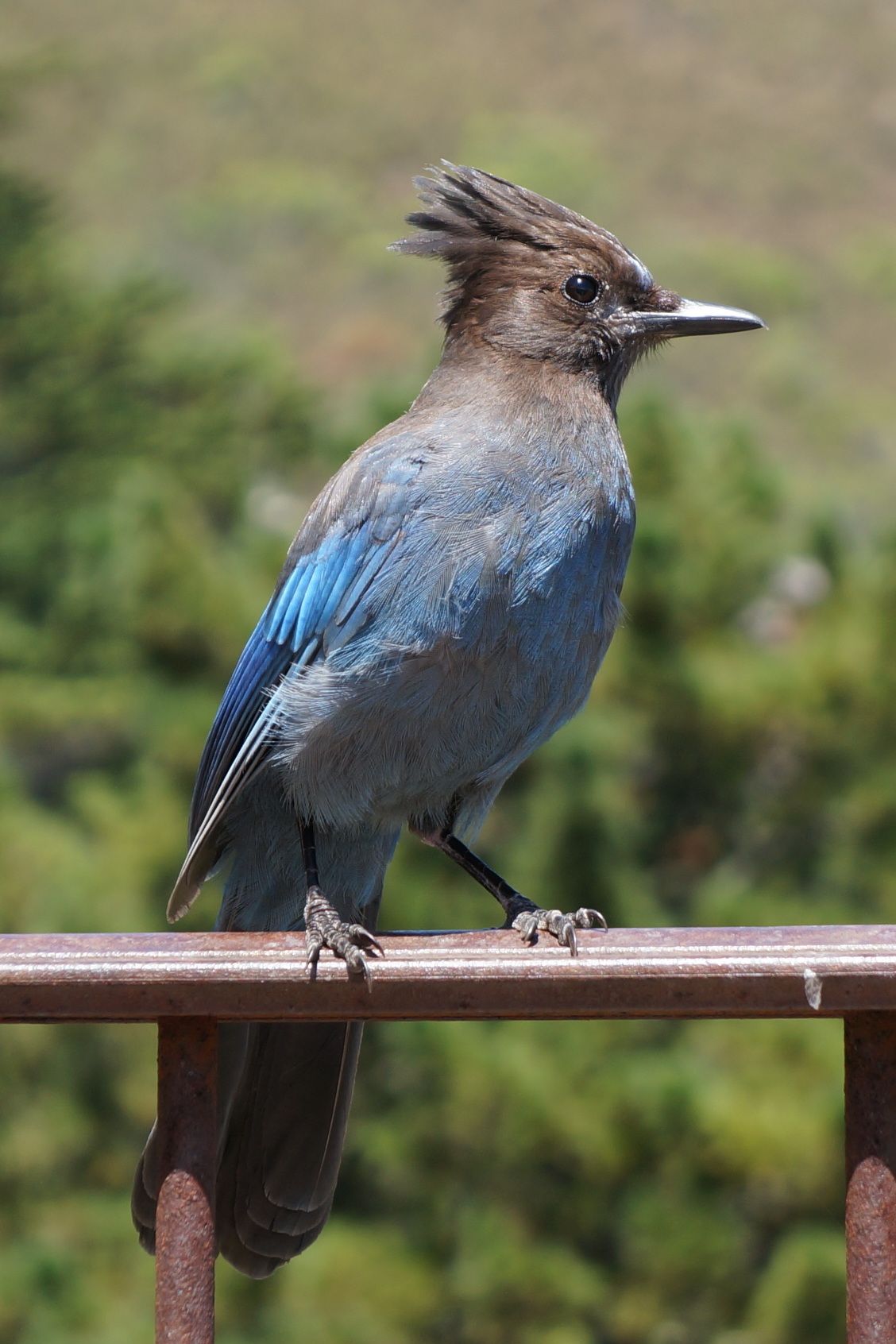
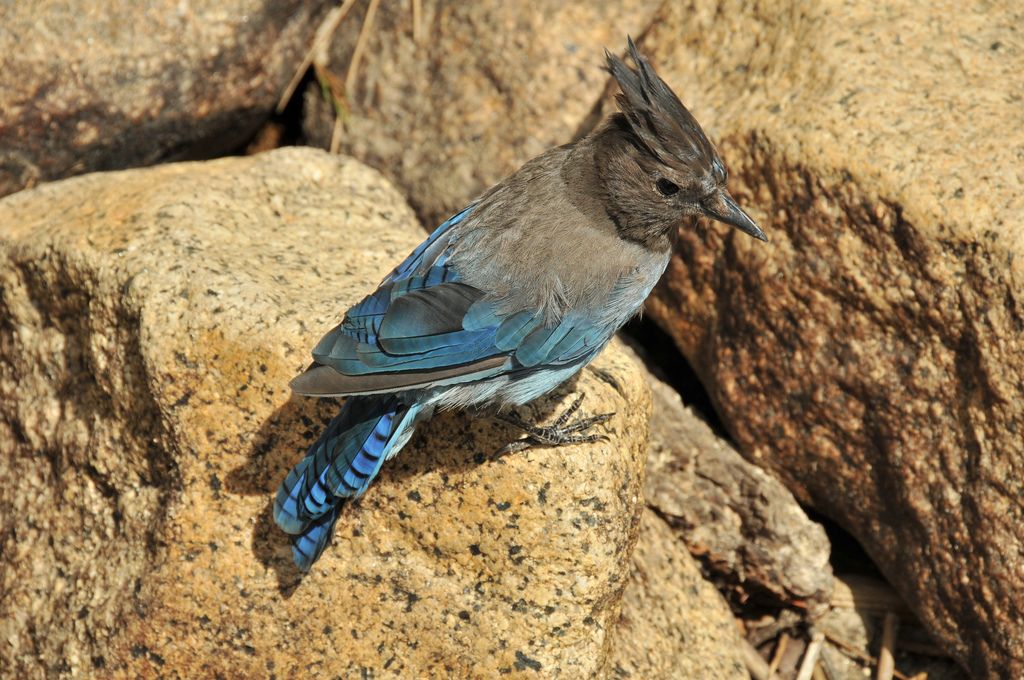
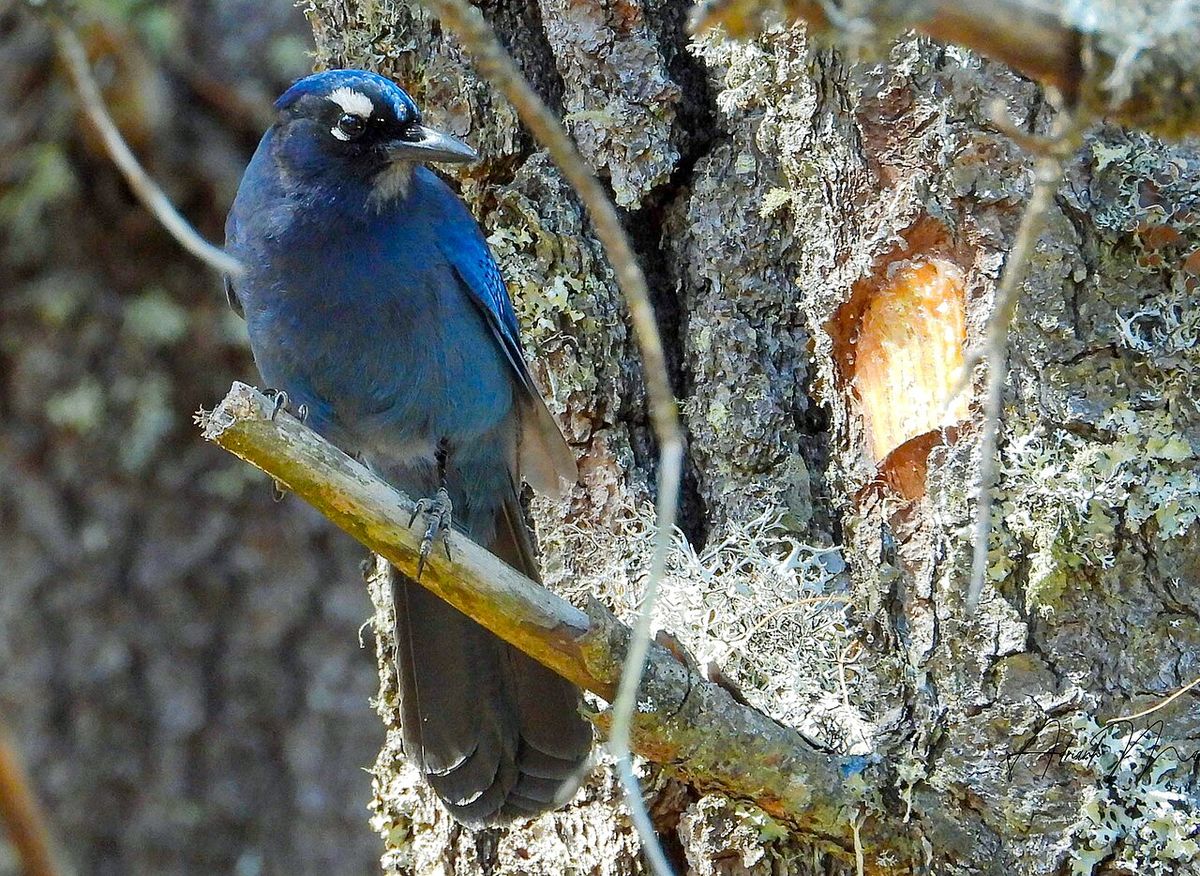
Steller's jay is a medium-sized songbird measuring 30 to 34 centimetres in length and weighing between 100 and 140 grams. It possesses a prominent, shaggy crest on its head, a feature that distinguishes it from most other western jays. The species exhibits considerable regional variation in colouration across its vast range. Generally, the head is a dark blackish-brown, black, or deep blue, contrasting sharply with the silvery blue of the shoulders, back, and lower breast. The wings and tail are a rich blue with darker barring. Populations in the eastern part of its range, such as along the Great Divide, often have conspicuous white markings above the eyes, while birds further west have light blue markers, and Pacific Coast birds may have very faint or no light markings at all. Compared to the blue jay of eastern North America, the Steller's jay has a more slender bill, longer legs, and in northern populations, a much more pronounced crest. Its overall size is also somewhat larger than that of the blue jay.
Distribution and habitat in Canada
In Canada, the Steller's jay is a bird of the western provinces, primarily associated with British Columbia and the coastal mountains. Its range extends from the coastal forests of southeast Alaska across the Coast Mountains into southern Yukon Territory, indicating a gradual northward expansion. The species occurs throughout most of the forested areas of British Columbia, being particularly common in coastal and interior coniferous forests. It is largely absent from the prairies and the central Rocky Mountain regions of Alberta, as its eastern limit is generally the eastern foothills of the Rockies. The Steller's jay thrives in coniferous forests, especially those dominated by Douglas-fir, hemlock, and pine, but it is also found in mixed pine-oak woodlands. It readily adapts to human-modified landscapes and is a common sight in residential areas, parks, campgrounds, and agricultural zones with nearby forest cover. The bird can be found from low elevations up to the tree line, though it is most abundant at low to moderate heights. The species' status as the provincial bird of British Columbia reflects its cultural and ecological significance in the region. Its density is lower in the central Rocky Mountain region and the scrubland areas of the Great Basin to the south. In areas where its range overlaps with the blue jay in the eastern foothills of the Rockies, particularly in Colorado, limited natural hybridization has been documented, which has led to some debate about the distinctness of the two species.
Diet and foraging behaviour
Steller's jays are opportunistic omnivores, with a diet consisting of roughly two-thirds plant matter and one-third animal matter. They are adept foragers, searching for food both on the ground and in the trees. Their plant-based diet is extensive and includes a wide variety of seeds, nuts, berries, and other fruits. Acorns and conifer seeds, such as those from pines and firs, are critical staples, especially during the non-breeding season. A key survival behaviour is food caching. Jays will collect and hide these seeds in the ground or in tree crevices to retrieve during leaner times. The animal portion of their diet is equally diverse, encompassing many types of invertebrates like insects and spiders, small rodents, and the eggs and nestlings of other birds, such as the marbled murrelet. There are even occasional reports of them consuming small snakes and lizards. These jays are highly skilled at exploiting human food sources, making them frequent and sometimes bold visitors to picnic areas, campgrounds, and backyard bird feeders. At feeders, they show a strong preference for certain offerings.
- Black-oil sunflower seeds
- White striped sunflower seeds
- Cracked corn
- Shelled raw peanuts
- Whole raw peanuts (a particular favourite)
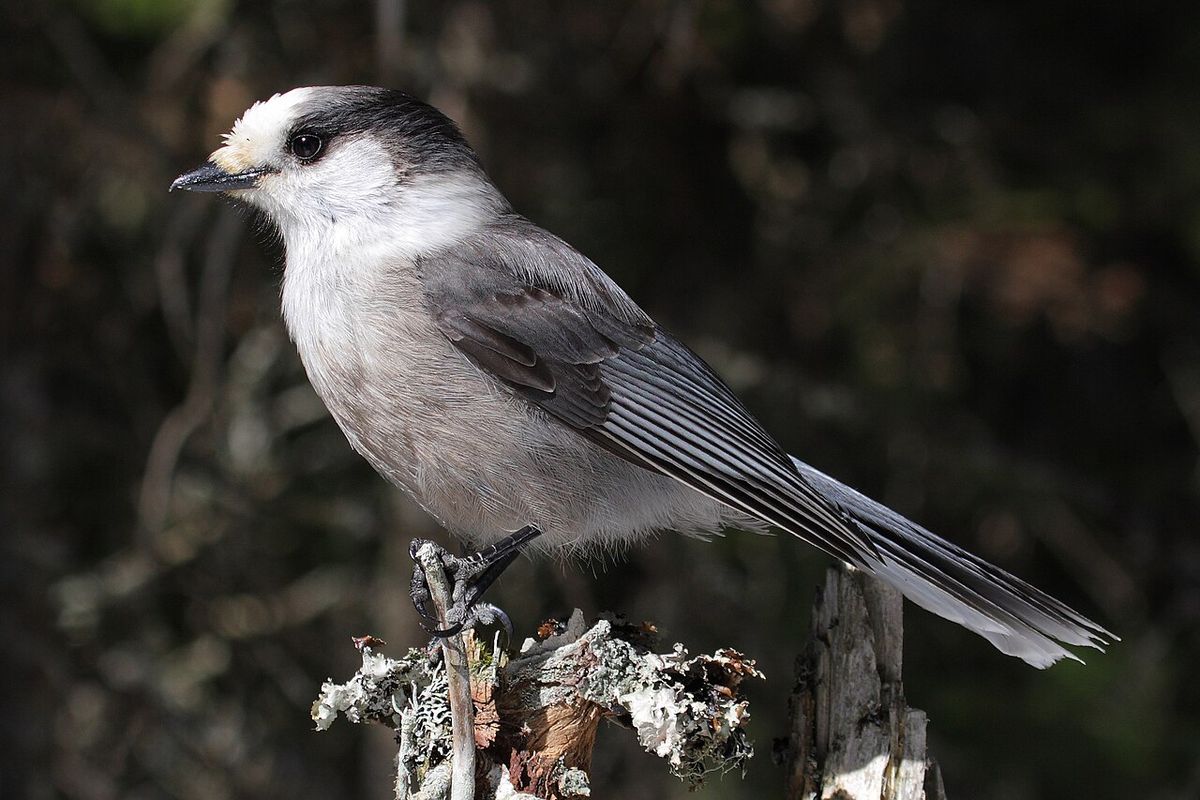
Suet is also consumed but mostly in the winter season. They exploit human-provided food sources, frequently scavenging picnics and campsites. At these sites, it competes with the Canada jay. Steller's jays are omnivores with a diet of about two-thirds plant matter and one-third animal matter.
Breeding and nesting
Steller's jays are monogamous, typically forming long-term pair bonds for breeding. The breeding season involves careful nest construction, usually placed in a coniferous tree, though they occasionally use tree hollows or the sheltered eaves of houses and other structures. The nest itself is a bulky cup, similar to but often larger than a blue jay's nest, measuring between 25 and 43 centimetres across. It is constructed from an assortment of natural materials like twigs, moss, and leaves, frequently bound together with mud, and may incorporate scavenged human trash such as paper or string. The female lays a clutch of two to six eggs, which are oval with a somewhat glossy surface. The eggs have a pale greenish-blue background colour adorned with speckles in shades of brown or olive. Incubation is performed solely by the female for approximately 16 days, during which the male is responsible for feeding her. Despite being notoriously vocal birds, breeding pairs become notably quiet near their nest site to avoid attracting the attention of predators. After hatching, both parents cooperate to feed and care for the altricial nestlings until they are ready to fledge.
Vocalizations and mimicry
Steller's jays possess a complex and variable repertoire of vocalizations, used for communication, alarm, and territorial defence. One of the most common calls is a harsh, rattling "SHACK-Sheck-sheck-sheck-sheck-sheck" series. Another distinctive call, a loud "skreeka! skreeka!", is often compared to the sound of an old-fashioned water pump handle. They also produce a softer, breathy "hoodle hoodle" whistle. Their standard alarm call is a harsh, nasal "wah". Some vocalizations are sex-specific, with females producing a unique rattling sound and males making a high-pitched "gleep gleep" call. Beyond their innate calls, Steller's jays are accomplished mimics, a trait shared with other corvids. They can accurately imitate the calls of numerous other bird species, animals, and even non-biological sounds from their environment. A particularly strategic use of mimicry involves imitating the piercing cries of birds of prey. They deploy these mimicry calls as warnings of danger or as a territorial tactic, which effectively causes other birds to scatter and flee feeding areas. The species they are known to mimic include several raptors.
- Red-tailed hawk
- Red-shouldered hawk
- Osprey
Research indicates that Steller's jays conduct sophisticated risk assessments based on predator detection cues. They have different alarm calls that depend on the interaction between the identity of the predator and the type of cue, whether visual or auditory. For instance, upon seeing a sharp-shinned hawk, they cease foraging for the same duration as if they had heard it. However, when they see a northern goshawk, they wait significantly longer to return to feeding than if they had only heard it. In response to these different threats, the jays strategically vary their production of "wah" calls, "wek" calls, and mimicked red-tailed hawk calls.
Relationship with other jay species
The Steller's jay is one of only two species in the genus Cyanocitta, the other being the familiar blue jay of eastern North America. Their ranges are largely separate, with the Steller's jay dominating western forests and the blue jay prevalent in the east. The Steller's jay completely replaces the blue jay in western North America as far east as the eastern foothills of the Rocky Mountains. In the limited zone where their ranges meet, primarily in the eastern foothills of the Rockies in states like Colorado, the two species sometimes interbreed naturally. This occasional hybridization has, in the past, led some to question their status as fully distinct species. However, they remain classified as separate due to consistent morphological, behavioural, and vocal differences across the majority of their ranges. At least some of the plumage variation observed among the many subspecies of Steller's jay is attributed to differing historical degrees of hybridization with blue jays. Both species belong to the large and intelligent passerine family Corvidae, which includes crows, ravens, magpies, and nutcrackers.
Subspecies and regional variation
The Steller's jay exhibits remarkable geographical variation across its extensive range from Alaska to Nicaragua, which is reflected in the recognition of 18 distinct subspecies. These subspecies often occupy isolated regions separated by areas where the species is absent or scarce. The most noticeable variation occurs in the colouration of the head and the presence of light markings. Northern subspecies, such as those in Alaska and British Columbia, typically have blackish-brown heads. As one moves south through the interior and along the Pacific Coast, the head colour gradually shifts to a darker blue. The pattern of light markings on the head is a key identifying feature. Eastern subspecies, found along the Continental Divide, usually have prominent white streaks above the eyes, known as supercilia. Central and coastal subspecies replace these with light blue streaks, while the southernmost Pacific Coast populations may have very faint markings or none at all. This clinal variation, along with subtle differences in size and crest length, helps ornithologists distinguish between the different regional forms of this adaptable bird. The species' range extends through numerous countries and regions.
- Alaska (USA)
- British Columbia and Yukon (Canada)
- Western United States
- Mexico (interior highlands from Chihuahua to Jalisco)
- Guatemala (south-central)
- Northern El Salvador
- Honduras
- Nicaragua
Questions about Steller's jay
What is the provincial bird of British Columbia?
The Steller's jay is the official provincial bird of British Columbia. This designation highlights the bird's strong association with the coniferous forests and coastal regions that characterize much of the province. It is a common and recognizable species throughout British Columbia, often seen in both wild and suburban settings. Its bold character and striking appearance make it a fitting avian emblem for the province.
What is the difference between a Steller's jay and a blue jay?
While both are crested jays in the same genus, they differ in appearance, range, and some behaviours. The Steller's jay has a blackish or dark blue head and a blue body, while the blue jay has a white face and a blue crest. Steller's jays are found west of the Rocky Mountains, whereas blue jays are found in eastern North America. Physically, the Steller's jay has a more slender bill, longer legs, and often a more pronounced crest than the blue jay. Their ranges only overlap in a narrow zone in the eastern Rocky Mountain foothills where they occasionally hybridize.
What do Steller's jays eat?
Steller's jays are omnivorous and have a highly varied diet. Approximately two-thirds of their diet is plant matter, including seeds, nuts, acorns, berries, and fruit. The remaining third is animal matter, such as insects, spiders, small rodents, and the eggs and nestlings of other birds. They are famous for caching food, especially acorns and pine seeds, for later consumption. They are also frequent visitors to bird feeders, where they prefer sunflower seeds, cracked corn, and peanuts, and they commonly scavenge for food at campgrounds and picnic areas.
Where can I see Steller's jays in Canada?
In Canada, Steller's jays are primarily found in British Columbia and southern Yukon. They are common residents in the coastal and interior coniferous forests of British Columbia, including Vancouver Island and the mainland coast. They are frequently observed in provincial and national parks, such as Pacific Rim National Park Reserve and the forests of the Interior. They also readily adapt to human environments, so they are common in suburban neighbourhoods, backyards with mature trees, and campgrounds throughout their range.
Why are Steller's jays so noisy?
Steller's jays use a wide array of vocalizations for communication. Their loud calls serve several purposes, including maintaining contact with mates or flock members, defending territories from rivals, and issuing alarm calls to warn of predators. They are also skilled mimics, often imitating the calls of hawks, which may serve to scare other birds away from food sources or to signal danger. While they can be noisy throughout the day, they become notably quiet near their nest during breeding season to avoid drawing attention to their vulnerable young.
How did the Steller's jay get its name?
The Steller's jay is named after the German naturalist and explorer Georg Wilhelm Steller. Steller was the first European to scientifically observe and record the bird in 1741, likely during Vitus Bering's expedition to Alaska. The species was later formally described in 1788 by Johann Friedrich Gmelin, who used Steller's name in the scientific binomial Corvus stelleri. The type specimen used for its formal description was collected in Nootka Sound on Vancouver Island during Captain James Cook's third voyage in 1778.
Sources and further reading
- Steller's jay (Wikipedia)
- Species Spotlight, Steller's Jay (ridgefieldfriends.org)
- Steller's Jay (vancouverbirdcelebration.ca)
- Steller's Jays: The birds you hate to love, Shannon Pappas (dirtyclassroom.com)
- Steller's Jay (nationalgeographic.com)
Checked by the Your Space Hamilton desk. Last updated 2026-10-23.