Ruffed grouse
The ruffed grouse (Bonasa umbellus) is a medium-sized, non-migratory game bird native to North American forests, ranging from the Appalachian Mountains across all Canadian provinces to Alaska. It is the most widely distributed resident game bird on the continent, living in 38 U.S. states and every Canadian province. The bird is renowned for its unique, non-vocal courtship display known as drumming, where males beat their wings to create a low-frequency sound. As a popular upland game species subject to regulated hunting, the ruffed grouse holds significant cultural and ecological importance across Canada, particularly in regions with extensive mixed woodlands.
Taxonomy and Subspecies
The ruffed grouse was first formally described by Carl Linnaeus in 1766, who classified it as Tetrao umbellus. The genus Bonasa was later applied by British naturalist John Francis Stephens in 1819. It is the only species within this genus, and the preferred common name is ruffed grouse to avoid confusion with unrelated birds like partridges or pheasants. The species exhibits significant geographical variation, which is recognized through 13 distinct subspecies. These subspecies are distributed across the continent, with several having ranges primarily within Canada. For instance, Bonasa umbellus brunnescens is found on Vancouver Island, while B. u. labradorensis inhabits the Labrador Peninsula. Other Canadian subspecies include B. u. obscura in northern Ontario, B. u. phaios in southeastern British Columbia, and B. u. sabini along the western coast. The widespread B. u. umbelloides ranges from southeastern Alaska through central Canada to the northwestern United States.
Physical Description and Identification
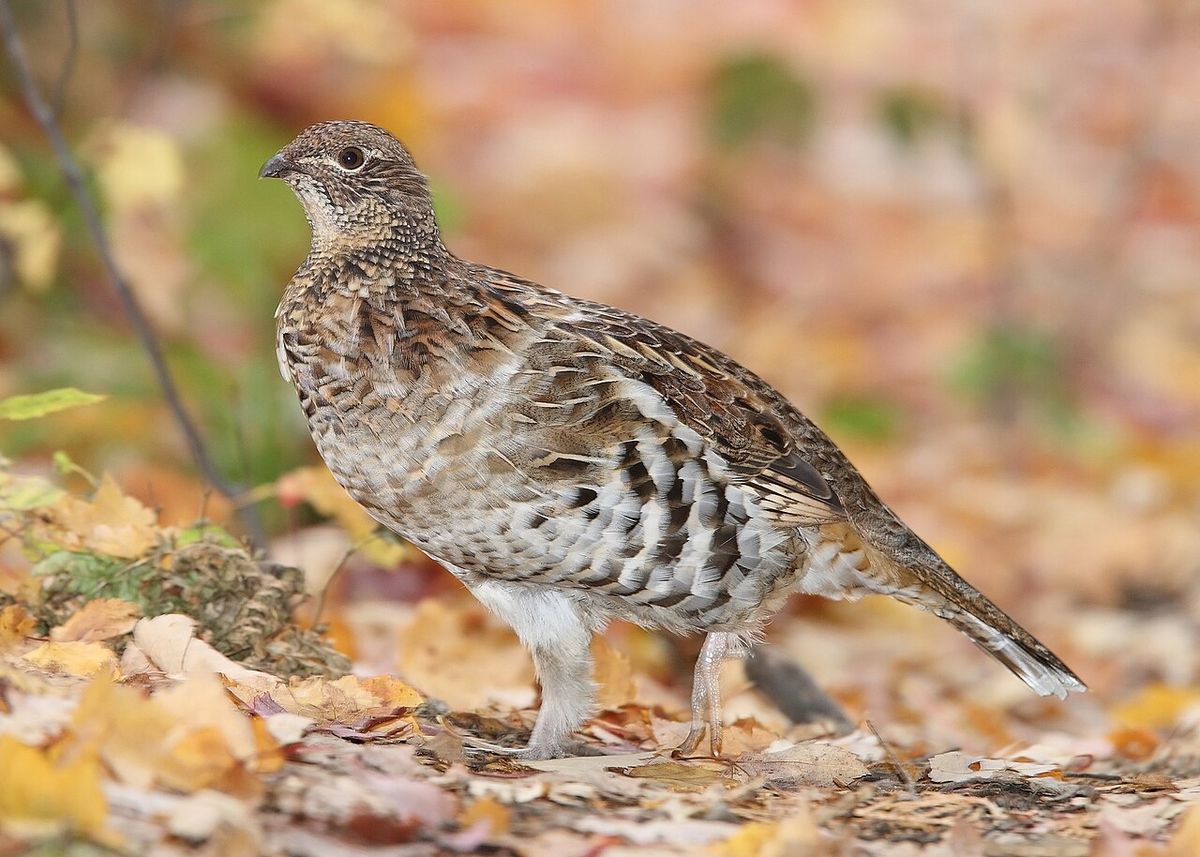
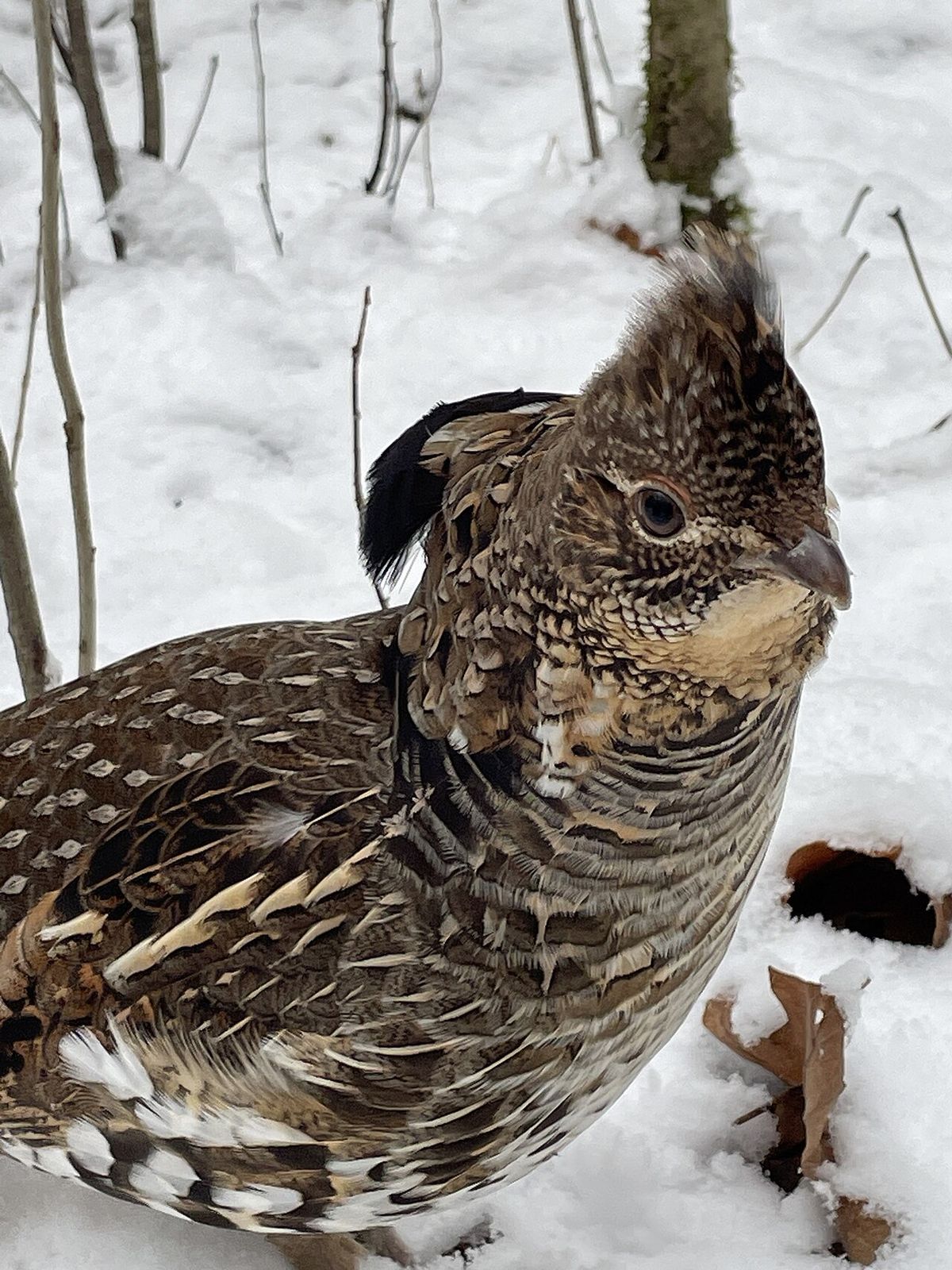
Ruffed grouse are chunky, chicken-like birds with a fan-shaped tail and a crest that can be raised or lie flat. Their plumage provides excellent camouflage, featuring a complex pattern of grey, rusty, black, and white markings. The species has two primary colour morphs, grey and brown or red, with many intergrades between them. Red-phased birds are more prevalent in milder climates like the Pacific Coast and the southern Appalachians, while grey birds are more common in areas with severe winters. Both sexes possess the namesake neck ruff, which is most prominent in displaying males. Telling males and females apart is challenging as they are similarly marked and sized. Several subtle characteristics can aid in identification. Males often, but not always, have an unbroken dark or copper-coloured band near the tip of the tail, while females may have a broken or faded band. A more reliable method is to measure tail length, with feathers over 5-7/8 inches typically belonging to males and those under 5-1/2 inches to females. Examining rump feathers can also help, as two or three whitish spots usually indicate a male, while none or one suggests a female.
Habitat and Range
The ruffed grouse is a bird of the woodlands, thriving in deciduous and mixed forests across a vast range. Its distribution extends from near the tree-line in Labrador across all Canadian provinces to the Yukon River valley in Alaska. In the United States, it lives now or recently in 38 states, with its eastern range reaching northern Georgia and its western limits in central Utah and Wyoming. The core of its population exists in regions where consistent snow cover is a major feature of winter. Ideal habitat includes young to middle-aged aspen forests, which provide crucial food and cover. Alder lowlands and patches of gray dogwood are also attractive, especially in summer and fall. The birds are not migratory, but they may make local, seasonal movements within a small area, often spending their entire life within just a few acres or hectares. They have been successfully introduced to areas outside their native range, including Newfoundland and Nevada, through the transplanting of wild-trapped birds.
Diet and Foraging Behaviour
Ruffed grouse are omnivorous and adaptable foragers, a trait that allows them to inhabit a wide variety of forested environments. Their diet shifts with the seasons and their life stage. During winter, they feed almost exclusively on the buds and twigs of deciduous trees and shrubs, with a strong preference for aspen. From late afternoon until dusk, they can often be seen in trees consuming these buds. In spring, summer, and fall, their menu expands significantly. They eat leaves, fruits, and berries from plants like dogwood, mountain ash, thornapple, and rose hips. They also consume green leaves from clover, strawberries, bunchberry, and some ferns. Insects are a critical food source, especially for growing chicks in their first weeks of life. Grouse forage on the ground, scratching through leaf litter, and will also feed in trees. Their crop, a pouch in the throat, can sometimes contain surprising items, illustrating their opportunistic nature, with historical records including salamanders and small snakes among more typical plant matter.
Behaviour and Life Cycle
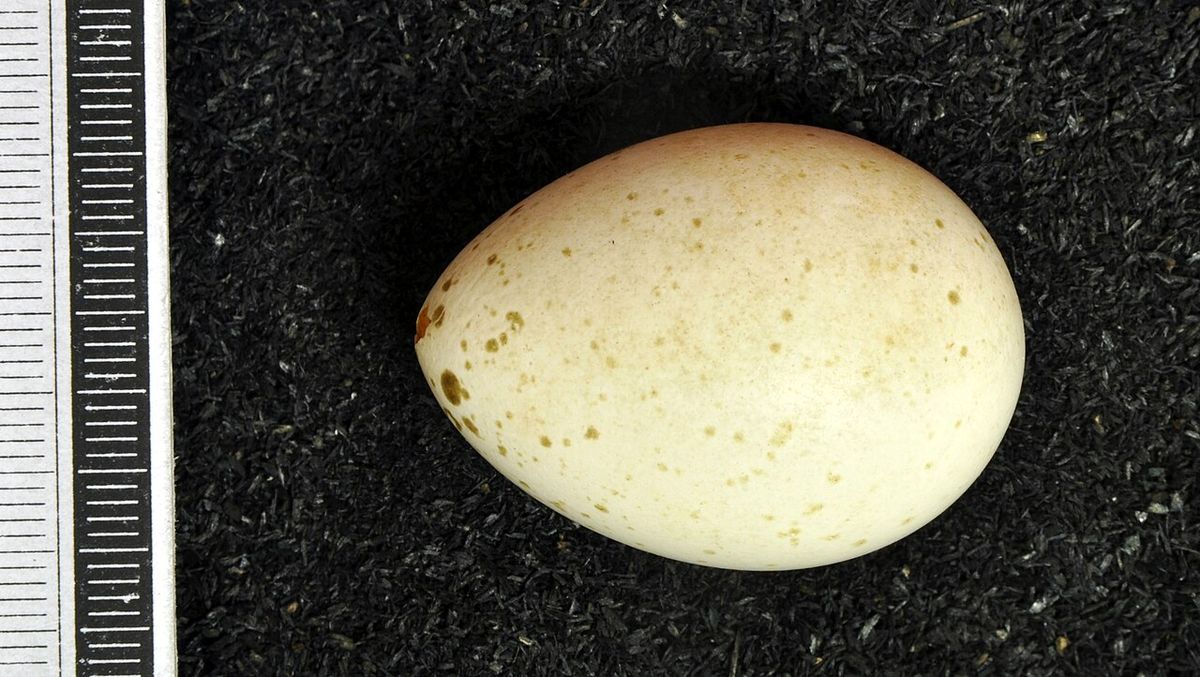
Ruffed grouse are solitary for most of the year, unlike many other game birds that form flocks. They spend most of their time quietly on the ground, relying on their camouflage for protection. When startled, they explode into flight with a very loud wing beat, a behaviour known as flushing that often startles hikers. In winter, they burrow into the snow for warmth and to evade predators, and they can burst out suddenly if approached. The breeding season begins in spring, marked by the male's famous drumming display. This non-vocal acoustic performance involves the male standing on a log, stone, or mound and beating his wings against the air to create a rapid, low-frequency thumping that accelerates. This sound can be heard for 400 metres or more and serves to attract females and proclaim territory. The nest is a simple, bowl-shaped depression on the forest floor, often at the base of a tree. A typical clutch contains 10 to 14 eggs, which hatch after about 23 days. The male plays no role in parenting. The precocial chicks can fly short distances within about five days and stay with the hen until late September, reaching full size in about 16 weeks. Mortality is high, especially among juveniles. From a brood of 10 or 12 hatched in late spring, often only 5 or 6 survive to mid August, and the average lifespan is just one year, though some individuals may live up to 11 years. The species is polygynous, with males often mating with several females.
Key behaviours and life cycle stages include the male's unique courtship display known as drumming, where he beats his wings against the air to create a low-frequency sound. The ruffed grouse spends most of its time quietly on the ground and will burrow into snow for warmth in winter. The species is polygynous, with males mating with several females during the breeding season. The nest is a bowl-shaped depression on the forest floor where the female lays a clutch of 9 to 14 eggs. Ruffed grouse populations follow a natural cycle of rise and fall at intervals of about 10 years, which is not significantly impacted by hunting. The average lifespan is one year, although some birds can live for up to 11 years.
- Drumming Display: A non-vocal wing-beating ritual performed by males in spring on a raised surface like a log.
- Nesting: Ground nests in forest depressions, with clutches of 9 to 14 eggs.
- Chick Development: Chicks can fly short distances within 5 days and are fully grown in 16 weeks.
- Winter Adaptation: Burrowing into snow for warmth and using comb-like fringes on toes (pectinations) as snowshoes.
- Solitary Nature: Adults spend most of the year alone, except during the mating season.
Population Cycles and Management
Ruffed grouse populations are famous for their dramatic, predictable cycles, rising and falling at intervals of about 10 years. This pattern, shared with species like snowshoe hares, has long puzzled scientists, and the exact causes remain unknown. Management agencies closely monitor these cycles through annual surveys, such as roadside drumming counts. For example, Wisconsin's 2026 survey showed an 11 percent decrease in statewide drumming activity compared to 2025, which biologists anticipated as part of the cyclical low point. The department organizes survey data by priority management areas as outlined in long term plans like the Wisconsin Ruffed Grouse Management Plan 2020 2030. Research indicates that regulated hunting does not significantly impact population trends either at the peak or the trough of these cycles. In Minnesota, the annual hunter harvest fluctuates with the cycle, ranging from 250,000 to over one million birds. While habitat loss is a persistent concern, the introduction of West Nile virus has been identified as an additional source of mortality in some regions. Despite these challenges, the ruffed grouse remains a resilient species with a secure future across most of its Canadian range, aided by sustainable forest management and hunting regulations.
Predators and Survival Strategies
As a ground dwelling bird, the ruffed grouse faces predation from a wide array of animals throughout its life. Avian predators are a constant threat, including northern goshawks, great horned owls, and other birds of prey. Mammalian predators such as foxes, fishers, bobcats, and various weasels also hunt grouse. Humans are a significant predator through regulated hunting. To survive, grouse employ several key strategies. Their patterned plumage provides exceptional camouflage against the forest floor. When threatened, they rely on remaining motionless and hidden, often bursting into rapid, loud flight only at the last possible moment to startle a predator. In winter, their snow burrows offer concealment and thermal protection. The species' high reproductive rate, with large clutches of eggs, helps offset the high mortality rate from predation and other factors, ensuring population persistence despite individual losses.
Hunting and Cultural Significance
The ruffed grouse is one of North America's most popular and widely pursued upland game birds, highly valued for its challenging flight and tasty meat. Hunting seasons are carefully regulated by provincial and state wildlife agencies. For instance, Michigan's 2026 season was open from September 15 to November 14 and again from December 1 to January 1. The bird's status as a game species fosters a strong cultural connection to the forests it inhabits, particularly in Canada where it is a staple for many hunters. It holds the official designation as the state game bird of Pennsylvania. The ruffed grouse also plays an important role in forest ecology, influencing vegetation through its browsing and serving as prey for numerous carnivores. Its distinctive drumming is a celebrated sound of spring in northern woodlands, symbolizing wilderness for naturalists and outdoor enthusiasts alike.
Questions about Ruffed grouse
Where can you find ruffed grouse in Canada?
Ruffed grouse are found in forested areas across all Canadian provinces, from coast to coast. They thrive in deciduous and mixed woodlands, particularly those rich in aspen trees. They are scarce in intensive agricultural regions and the far northern boreal forest. In Manitoba, for example, they can be found in parks like Riding Mountain National Park and Whiteshell Provincial Park, often along quiet roadsides in the early morning where they seek grit for digestion.
How can you tell a male ruffed grouse from a female?
Distinguishing males from females is difficult as they are similarly sized and marked. Subtle clues include tail band patterns, where males more often have an unbroken dark or copper band, and females may have a broken or faded band. More reliable methods involve measuring tail length, with longer feathers typically indicating a male, or examining the rump feathers for multiple white spots (male) versus none or one (female). Both sexes have the neck ruff, which is displayed during courtship or distraction displays.
What do ruffed grouse eat?
Ruffed grouse have a varied, omnivorous diet that changes with the season. In winter, they rely almost entirely on the buds and twigs of trees like aspen, willow, and poplar. During warmer months, they eat leaves, berries, seeds, and fruits from plants such as dogwood, mountain ash, and strawberries. Insects are a crucial food source for chicks. Their ability to thrive on a wide range of foods is key to their adaptation across diverse forest habitats.
Why do ruffed grouse populations cycle?
Ruffed grouse populations undergo dramatic 10 year cycles, rising and falling in a pattern that also affects species like snowshoe hares. The precise causes of these cycles are not fully understood and have long been a subject of scientific study. Factors may include complex interactions between predation, disease, food availability, and habitat conditions. Wildlife agencies monitor these cycles through annual surveys, and hunting regulations are designed to be sustainable regardless of population highs and lows.
How does a ruffed grouse survive the winter?
Ruffed grouse are well adapted to harsh northern winters. They grow comb like fringes on their toes that act as natural snowshoes for walking on top of snow. To conserve heat and avoid predators, they spend nearly all their time in snow burrows, diving into soft snow from flight or walking in. They also shift their diet to focus on the nutrient rich buds of deciduous trees, which they feed on from late afternoon until dusk.
What does a ruffed grouse drumming sound like?
The drumming of a male ruffed grouse is a unique, low frequency sound created by beating its wings against the air to create a vacuum. It starts slowly with individual thumps that rapidly accelerate into a continuous roll, often described as 'thump... thump... thump..thump-thump-thump-thump'. This nonvocal, acoustic display can be heard for a quarter mile or more through thick woods. The male usually stands on a log, stone, or mound of soil when drumming, using it as a stage. This behaviour is the bird's primary courtship display to attract females and proclaim its territory during the spring mating season.
Sources and further reading
- Ruffed grouse (Wikipedia)
- Grouse Facts New (ruffedgrousesociety.org)
- Ruffed grouse (dnr.state.mn.us)
- DNR Announces 2026 Ruffed Grouse And Pheasant Survey ... (dnr.wisconsin.gov)
- Ruffed Grouse, Nature Manitoba (naturemanitoba.ca)
Checked by the Your Space Hamilton desk. Last updated 2026-10-29.





