Ring-necked snake
The ring-necked snake (Diadophis punctatus) is a small, non-venomous colubrid snake native to North America, with a range extending into southeastern Canada from Nova Scotia to Ontario. It is best known for the distinctive yellow, orange, or red ring around its neck and its unique defensive behaviour of coiling its tail to expose a brightly coloured underside. In Canada, the northern subspecies (Diadophis punctatus edwardsii) inhabits forested areas and is considered a species of greatest conservation need in some jurisdictions due to its secretive, colonial nature. While generally common, these nocturnal snakes are seldom seen, contributing to gaps in scientific understanding of their ecology and population status.
Physical Description and Identification
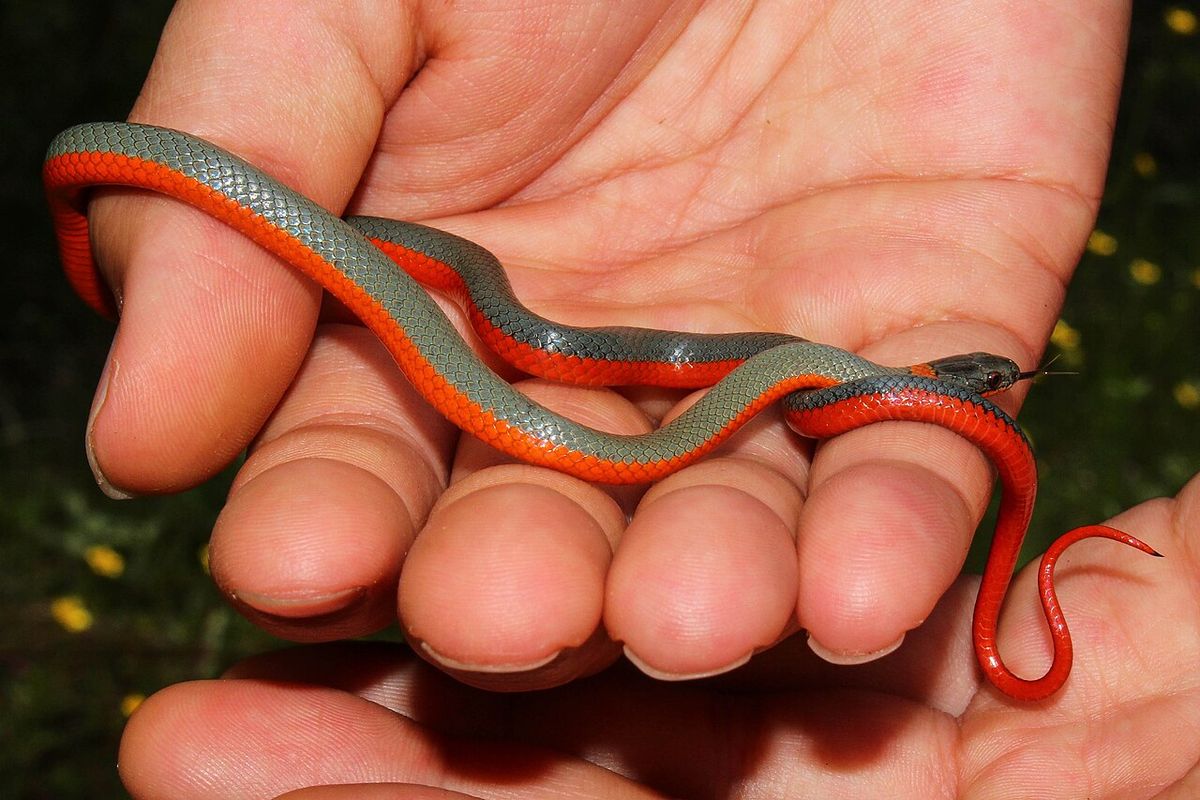
The ring-necked snake is a slender, smooth-scaled reptile with a consistent morphology across its vast range. Its dorsal colour is typically a solid olive, brown, bluish-gray, or smoky black. The namesake feature is a distinct band around the neck, which is usually yellow, orange, or red, though this ring can be incomplete or absent in some populations, such as the Key ring-necked snake in Florida. The head is often slightly darker than the body. The ventral side, or belly, exhibits a bright yellow-orange to red coloration, frequently marked with a series of crescent-shaped black spots along the margins. Juveniles resemble adults but are often darker with a velvety skin texture. In Canada, the northern ring-necked snake can be distinguished from similar species like the red-bellied snake or Dekay's brownsnake by its solid-coloured back and the presence of the neck ring alongside the brightly coloured, spotted belly.
Size varies among the 14 recognized subspecies. Most adults, including the Canadian northern ring-necked snake, measure between 25 and 38 centimetres in total length. The regal ring-necked snake (D. p. regalis) of the southwestern United States is larger, typically measuring 38 to 46 cm. The maximum recorded size for the southern ring-necked snake (D. p. punctatus) is 52 cm. Sexual dimorphism is subtle, with males sometimes possessing small tubercles on the scales near the vent, a feature usually absent in females. Scale rows also differ geographically, with eastern subspecies like Canada's D. p. edwardsii having 15 rows at midbody, while western subspecies have 17.
Distribution and Range in Canada
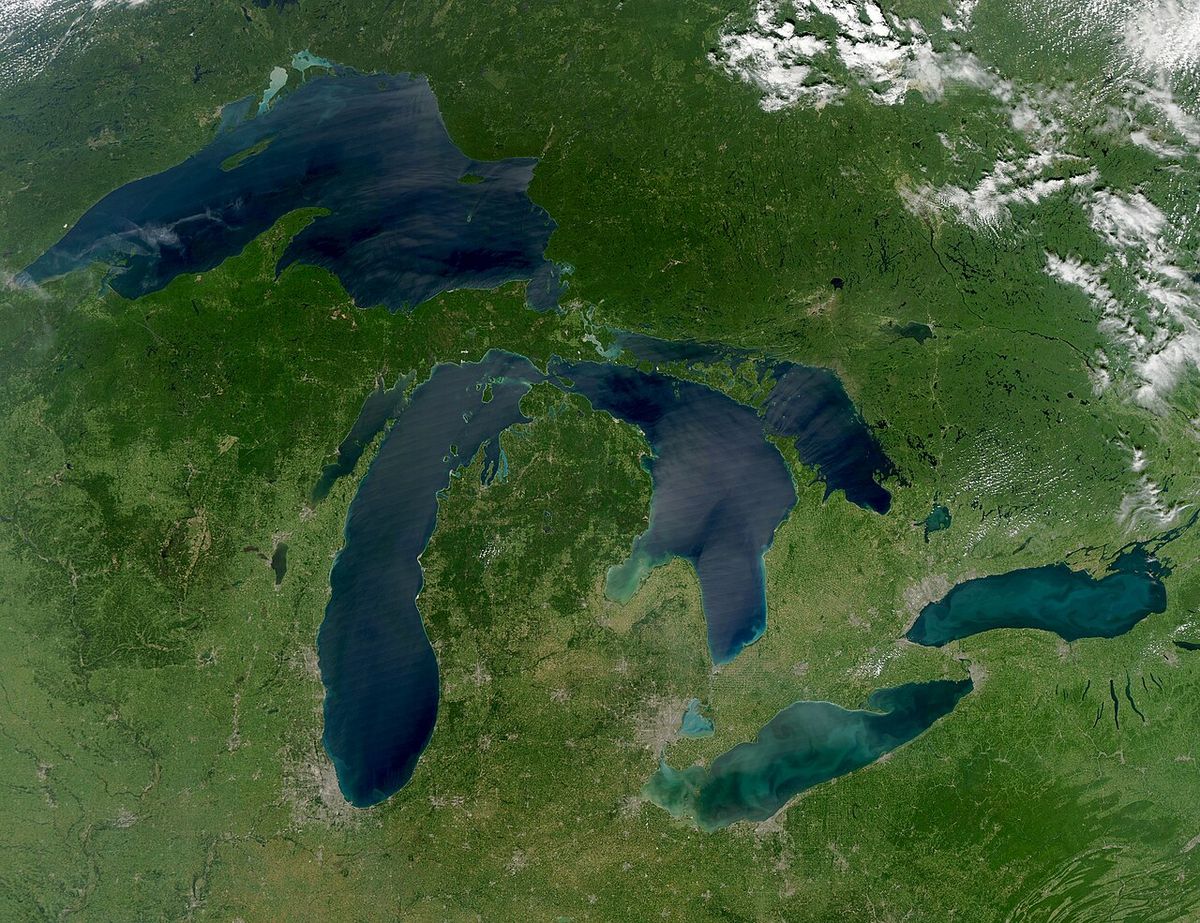
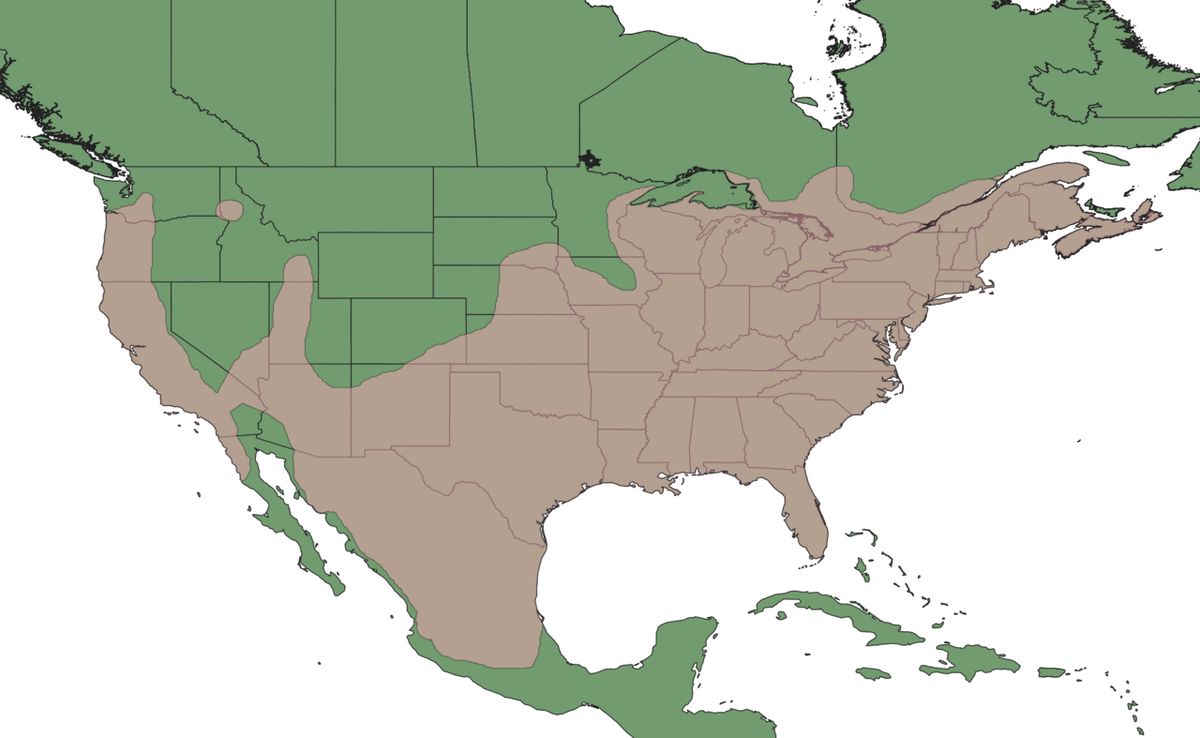
The ring-necked snake has one of the broadest distributions of any North American snake, ranging from south-central Mexico north to Nova Scotia. In Canada, its presence is confirmed in Nova Scotia, southern Quebec, and Ontario, representing the northern limit of the species' range. The eastern populations form a largely continuous distribution along the Eastern Seaboard, extending inland through the Great Lakes region. In Ontario, the northern ring-necked snake is found in forested areas, particularly on the Precambrian Shield where shallow soils and exposed bedrock provide ideal habitat. Populations are often localized and secretive, existing in small colonies, which makes comprehensive surveys challenging. An interactive range map maintained by Ontario authorities helps document known occurrences. The species' range does not extend above elevations of 2,200 metres, a factor that does not limit it in the relatively low-lying regions of eastern Canada where it resides.
Habitat and Behaviour
Ring-necked snakes are fossorial and secretive, showing a strong preference for habitats with abundant cover and moist soil conditions. In Canada, they inhabit forested areas, forest edges, and clearings, particularly where there is shallow soil over bedrock. They rely on subsurface crevices, rotting logs, rocks, and woody debris for shelter, thermoregulation, and hibernation. These snakes are primarily nocturnal and crepuscular, though they may be observed on cloudy days or while thermoregulating under sun-warmed surface objects. They gain heat through conduction from these objects rather than by basking directly. A key behavioural adaptation is their communal denning. Northern populations require specific hibernacula, often shared communally, that are deep enough to avoid freezing temperatures. Research indicates social snakes may choose dens slightly warmer than their ideal body temperature, while solitary individuals select dens that maintain it. Despite their secretive nature, ring-necked snakes are social, and colonies of over 100 individuals have been documented, with smaller groups sharing single microhabitats.
Their annual activity period in northern regions typically spans from March through October. They are not commonly found in open, arid areas but can occasionally utilize urbanized refuges. The snakes exhibit site fidelity, perennially returning to the same denning locations. This colonial behaviour and specific habitat requirements, such as moist woodland edges, make local populations vulnerable to habitat disturbance. Activities like large-scale clear-cutting or frequent prescribed burns that remove long-term cover can pose significant threats to these colonies.
Diet and Unique Feeding Adaptations
The ring-necked snake is a carnivorous predator with a diet that varies based on local prey availability. Its primary food sources include smaller salamanders, earthworms, and slugs. In specific regions, such as Michigan, the northern ring-necked snake feeds almost exclusively on red-backed salamanders. They will also consume other amphibians, lizards, frogs, insects, and juvenile snakes of other species. To subdue prey, they employ a combination of constriction and a form of envenomation. The species lacks a true venom gland but possesses an analogous structure called the Duvernoy's gland, located behind the eye. Most subspecies are rear-fanged, with the last maxillary teeth on the upper jaw being elongated and channeled to deliver secretions.
The feeding sequence involves first striking and constricting the prey. The snake then maneuvers its mouth so the rear fangs puncture the skin, allowing the secretion to enter the prey's tissue. This venom primarily affects the prey's righting response, aiding in subduing larger or struggling items. The northern ring-necked snake (D. p. edwardsii) is a notable exception, as it is fangless. The evolution of this venom delivery system is considered a feeding adaptation rather than a defensive one, as the snakes are non-aggressive towards larger predators. Digestion rates are highly influenced by the snake's age, the amount of food consumed, and ambient temperature.
Reproduction and Life Cycle
Ring-necked snakes reach reproductive maturity at about three years of age, corresponding to their fourth summer. Mating can occur in either the spring or the fall, with some subspecies utilizing delayed fertilization or implantation. Females attract males by secreting pheromones from their skin. Observed mating behaviour involves the male rubbing his closed mouth along the female's body before biting her around the neck ring to align their bodies for copulation. Females are oviparous, laying clutches of three to ten elongated, white eggs with yellow ends. These eggs are deposited in early summer within moist, aerated substrates such as rotting logs, under rocks, or in loose soil. In areas with colonies, communal nesting sites are not uncommon.
The eggs hatch after approximately two months, typically in August or September. Hatchlings are precocial, measuring 11 to 14 centimetres long and fending for themselves immediately without parental care. Growth is relatively slow, with juveniles adding about 2 to 5 centimetres per year. A detailed growth analysis shows females reach an average of 20 cm in their first year, about 24.5 cm in the second, 29 cm in the third, 34 cm in the fourth, and may reach 39 cm by their fifth year. Males follow a similar but slightly smaller growth trajectory in the early years. The recorded lifespan in captivity is over six years, but evidence suggests they may live over ten, and potentially up to twenty years, in the wild.
Defence Mechanisms and Coloration
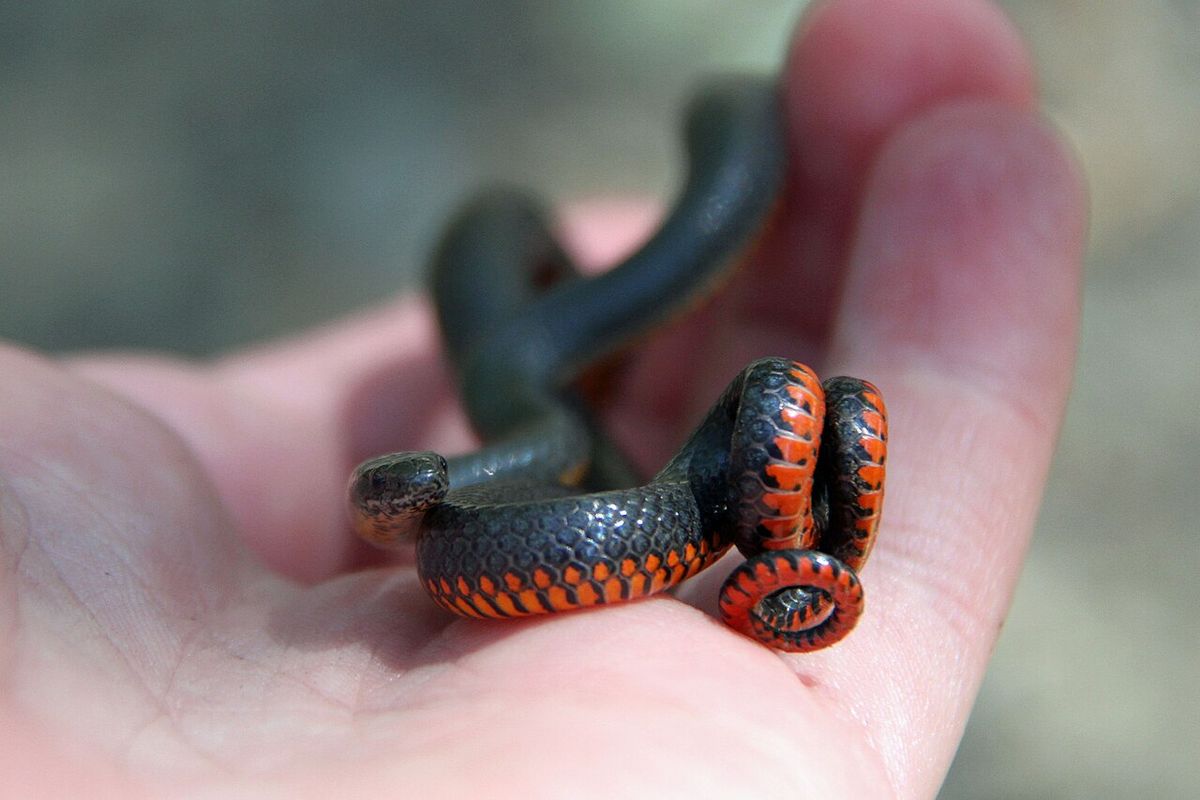
When threatened, the ring-necked snake exhibits a distinctive and complex defensive display rather than attempting to bite. Its primary strategy is to curl its tail into a tight corkscrew coil, partially roll onto its back, and expose its brightly coloured red-orange or yellow underside. This vivid ventral coloration, often accompanied by contrasting black spots, serves as aposematic or warning coloration. In nature, such bright colours often signal toxicity or venom, but in this non-venomous species, it is considered a form of mimicry, bluffing predators into thinking it is dangerous. This 'false warning' is a survival adaptation similar to that seen in some kingsnakes that mimic coral snakes. If this display fails to deter a threat, the snake may also emit a musky odour from its cloaca. The combination of secretive habits, nocturnal activity, and this elaborate defensive posture helps protect it from a variety of predators. The bright neck ring itself may also serve as a deflection mark, drawing a predator's strike away from the more vulnerable head.
Conservation Status and Threats
Globally, the ring-necked snake is listed as Least Concern by the International Union for Conservation of Nature (IUCN), and its status was confirmed in 2007. In Canada, the northern ring-necked snake has not been formally assessed by the Committee on the Status of Endangered Wildlife in Canada (COSEWIC) or the Ontario counterpart. It is not listed as a Specially Protected Reptile under Ontario's Fish and Wildlife Conservation Act. However, in some provincial wildlife action plans, such as in certain U.S. states bordering Canada, it is designated as a Species of Greatest Conservation Need due to specific vulnerabilities. The primary threats to Canadian populations are localized and include habitat destruction from logging or development, road mortality, and predation. Their colonial nature makes them susceptible to rapid local extirpation if a key den site or microhabitat is disturbed.
For the wider species, specific subspecies face acute threats. The Key ring-necked snake (D. p. acricus) of the Florida Keys is highly vulnerable to habitat loss from development and the impacts of climate change, including sea-level rise, storm surges, and flooding. Historically, the widespread use of persistent pesticides during the mid-20th century may have contributed to population declines. Conservation recommendations include protecting moist woodland habitats, minimizing pesticide use near colonies, maintaining long-term unburned areas when using prescribed fire, and implementing measures to reduce road mortality, especially during nocturnal activity periods.
- Habitat Loss: Clear-cutting, urban development, and pine rockland destruction.
- Climate Change: Sea-level rise and increased storm frequency threaten coastal subspecies.
- Road Mortality: Snakes are killed while crossing roads at night.
- Historical Pesticide Use: May have caused past population declines.
- Colonial Vulnerability: Localized colonies can be wiped out by single habitat disturbances.
Subspecies of Diadophis punctatus
The species Diadophis punctatus is currently divided into 14 recognized subspecies, though this classification based on morphology is sometimes questioned by herpetologists. These subspecies show variation in colouration, size, and geographic range. The northern ring-necked snake (Diadophis punctatus edwardsii) is the primary subspecies found in Canada. Other notable subspecies include the large regal ring-necked snake of the southwest and the coralbelly ring-necked snake. The Key ring-necked snake is a distinct subspecies of conservation concern. The following list details all currently recognized subspecies.
- D. p. acricus, Key ring-necked snake
- D. p. amabilis, Pacific ring-necked snake
- D. p. anthonyi, Todos Santos Island ring-necked snake
- D. p. arnyi, Prairie ring-necked snake
- D. p. dugesii, Dugès' ring-necked snake
- D. p. edwardsii, Northern ring-necked snake
- D. p. modestus, San Bernardino ring-necked snake
- D. p. occidentalis, Northwestern ring-necked snake
- D. p. pulchellus, Coralbelly ring-necked snake
- D. p. punctatus, Southern ring-necked snake
- D. p. regalis, Regal ring-necked snake
- D. p. similis, San Diego ring-necked snake
- D. p. stictogenys, Mississippi ring-necked snake
- D. p. vandenburgii, Monterey ring-necked snake
Questions about Ring-necked snake
Are ring-necked snakes venomous?
Ring-necked snakes are not considered venomous in a traditional, medically significant sense. They possess a Duvernoy's gland, which produces a mild secretion used to subdue prey. This secretion is delivered through rear fangs in most subspecies, though the northern ring-necked snake found in Canada is fangless. The venom is not dangerous to humans and is evolved as a feeding aid for small prey like salamanders and earthworms, not as a defence mechanism against larger animals.
Where can you find ring-necked snakes in Canada?
In Canada, the northern ring-necked snake (Diadophis punctatus edwardsii) is found in Nova Scotia, southern Quebec, and Ontario. They inhabit moist, forested areas, particularly those with shallow soils, exposed bedrock, and abundant cover like rocks, logs, and leaf litter. They are most common on the Precambrian Shield in Ontario. Due to their secretive, nocturnal habits and tendency to live in small colonies, they are rarely encountered despite being present in these regions.
What do ring-necked snakes eat?
The diet of the ring-necked snake consists mainly of small, soft-bodied prey. Their primary food sources are salamanders, earthworms, and slugs. In some areas, like Michigan, they feed almost exclusively on red-backed salamanders. They will also consume other amphibians, insects, lizards, frogs, and occasionally juvenile snakes of other species. They use a combination of constriction and a mild venom from their Duvernoy's gland to subdue their prey before swallowing it whole.
How does the ring-necked snake defend itself?
When threatened, the ring-necked snake employs a unique defensive display instead of biting. It curls its tail into a tight coil, rolls partially onto its back, and exposes its brightly coloured yellow, orange, or red underside. This vivid coloration acts as a bluff, mimicking the warning signals of truly dangerous animals to scare off predators. If this fails, the snake may also release a musky odour. Its secretive, nocturnal nature is its first line of defence against predation.
Are ring-necked snakes endangered?
Globally, the ring-necked snake is classified as Least Concern by the IUCN. In Canada, it has not received a formal national risk assessment. However, its secretive, colonial lifestyle makes populations vulnerable to local extirpation from habitat disturbance, road mortality, or historical pesticide use. Some management plans list it as a Species of Greatest Conservation Need. Specific subspecies, like the Key ring-necked snake in Florida, face severe threats from habitat loss and climate change.
How can you tell a ring-necked snake apart from similar snakes in Ontario?
The northern ring-necked snake in Ontario is identified by a solid coloured dark grey, brown, or black back and a distinct yellow, cream, or orange ring around its neck. Its belly is generally bright yellow or orange, often with dark edges or crescent shaped black spots along the margins. This distinguishes it from the red bellied snake, which has a solid red belly and dark stripes down its back, and the Dekay's brownsnake, which has a light brown belly and two rows of dark spots down its back, but lacks a complete, distinct neck ring. No other adult snake in Ontario possesses this clear, light coloured neck band. While juvenile Dekay's brownsnakes may have a light neck marking, it is not as pronounced as the ring necked snake's defining feature.
Sources and further reading
- Ring-necked snake (Wikipedia)
- » Northern Ring-necked Snake (ontarionature.org)
- Diadophis punctatus (arnyi) | INFORMATION (animaldiversity.org)
- Northern Ring-necked Snake, HRM (herprman.com)
Checked by the Your Space Hamilton desk. Last updated 2026-10-25.