Pileated woodpecker
The pileated woodpecker (Dryocopus pileatus) is the largest woodpecker species commonly found in North America, a crow-sized bird renowned for its striking black and white plumage and prominent red crest. Native to forested regions across Canada, from the boreal forests to the Great Lakes and parts of the Pacific Coast, it is a year-round resident and a vital component of the ecosystem. This powerful bird is famous for excavating large, rectangular cavities in trees while foraging for insects, which in turn provide essential nesting and roosting sites for numerous other species. Its adaptability to various wooded habitats and its increasing population have secured its status as a species of least concern, making it a familiar and charismatic symbol of Canada's mature forests.
Taxonomy and Description
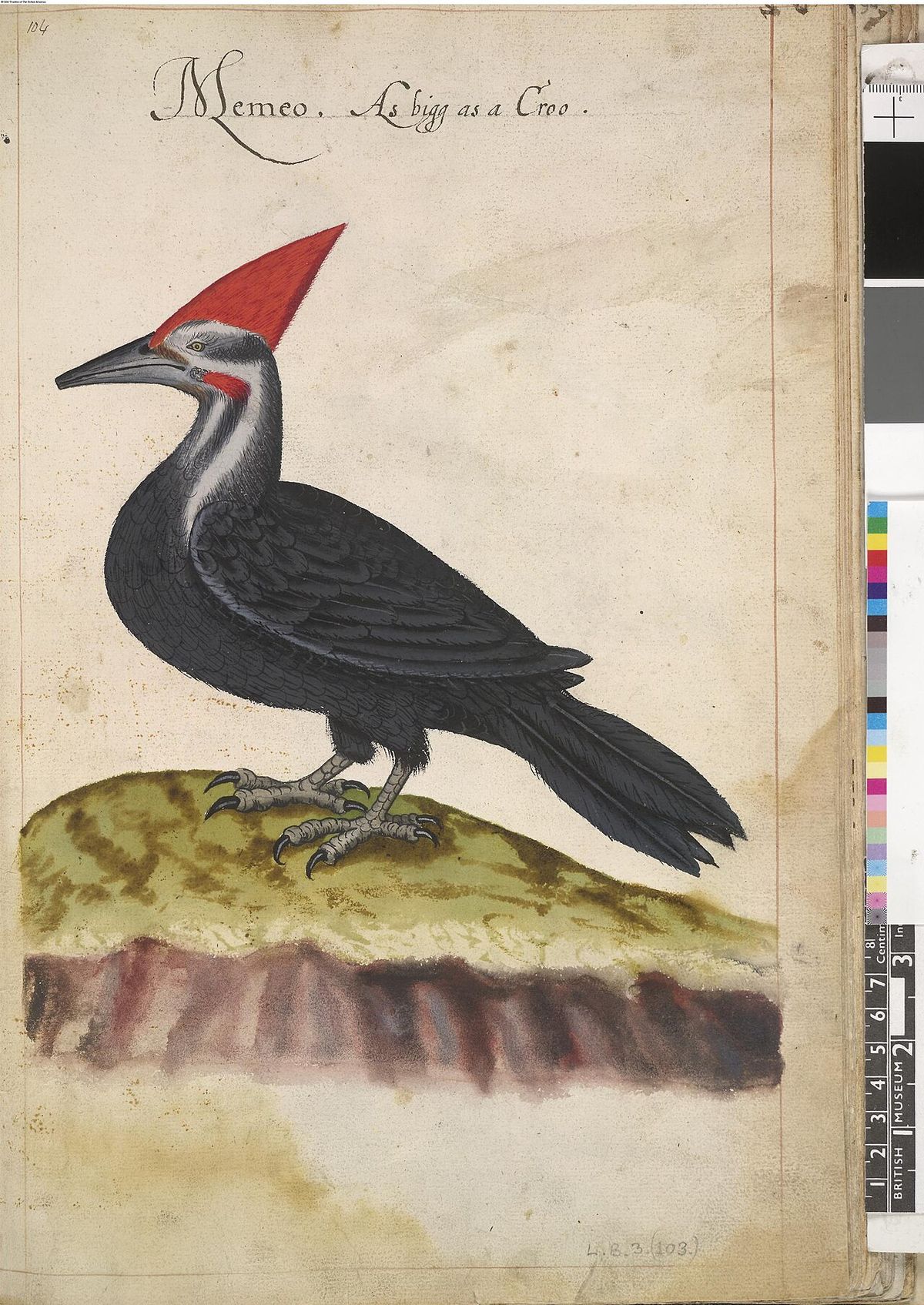
The pileated woodpecker was first described by English naturalist Mark Catesby in his 1729 to 1732 work The Natural History of Carolina, Florida and the Bahama Islands. Swedish naturalist Carl Linnaeus formally named it Picus pileatus in 1758, with the specific epithet meaning '-capped' in Latin. Today, it is classified in the genus Dryocopus, which includes five other species globally. Two subspecies are recognized, the northern pileated woodpecker (D. p. abieticola) and the southern pileated woodpecker (D. p. pileatus). The northern subspecies, found across southern Canada and the northern United States, is generally larger with lighter black and browner plumage, while the southern subspecies is smaller and darker.
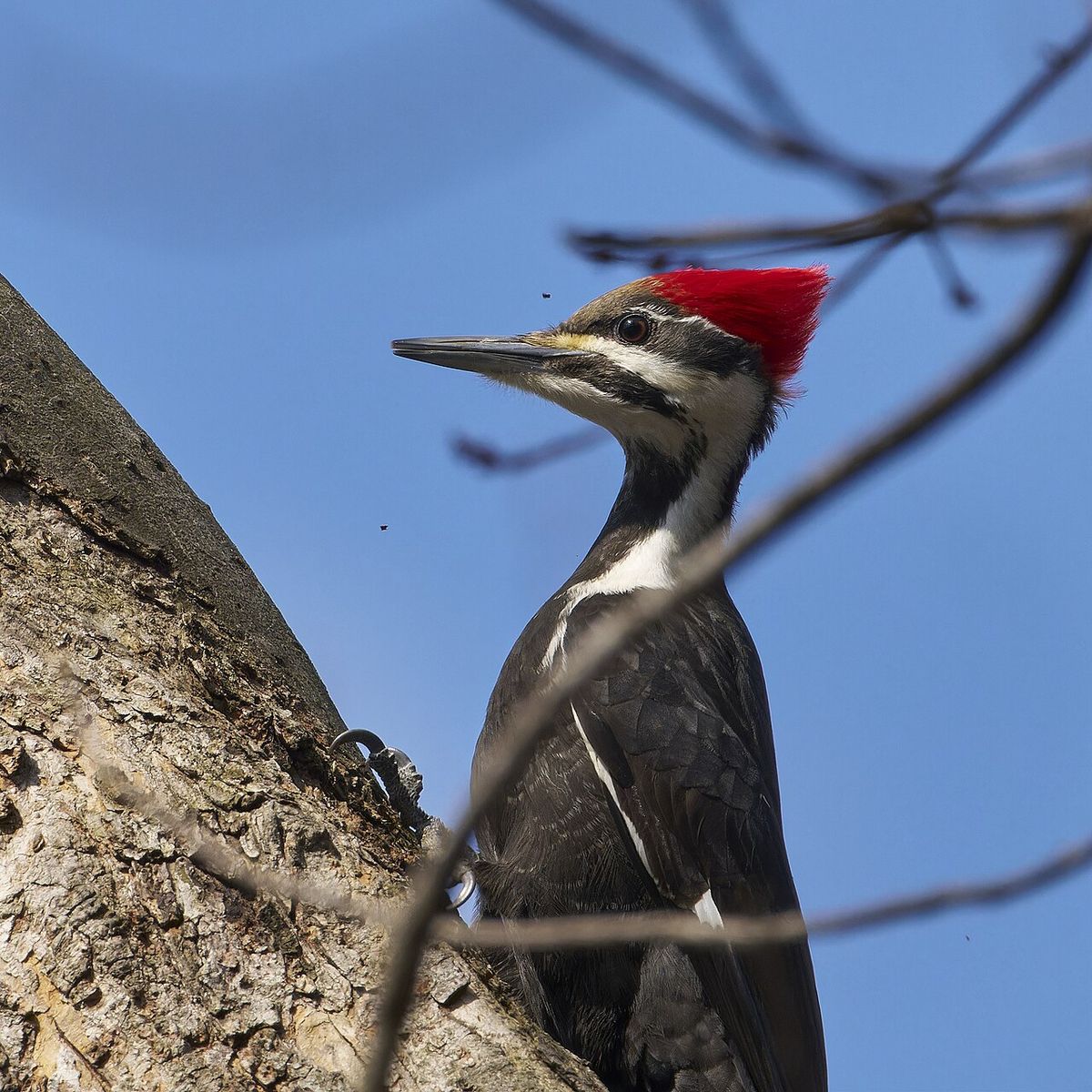
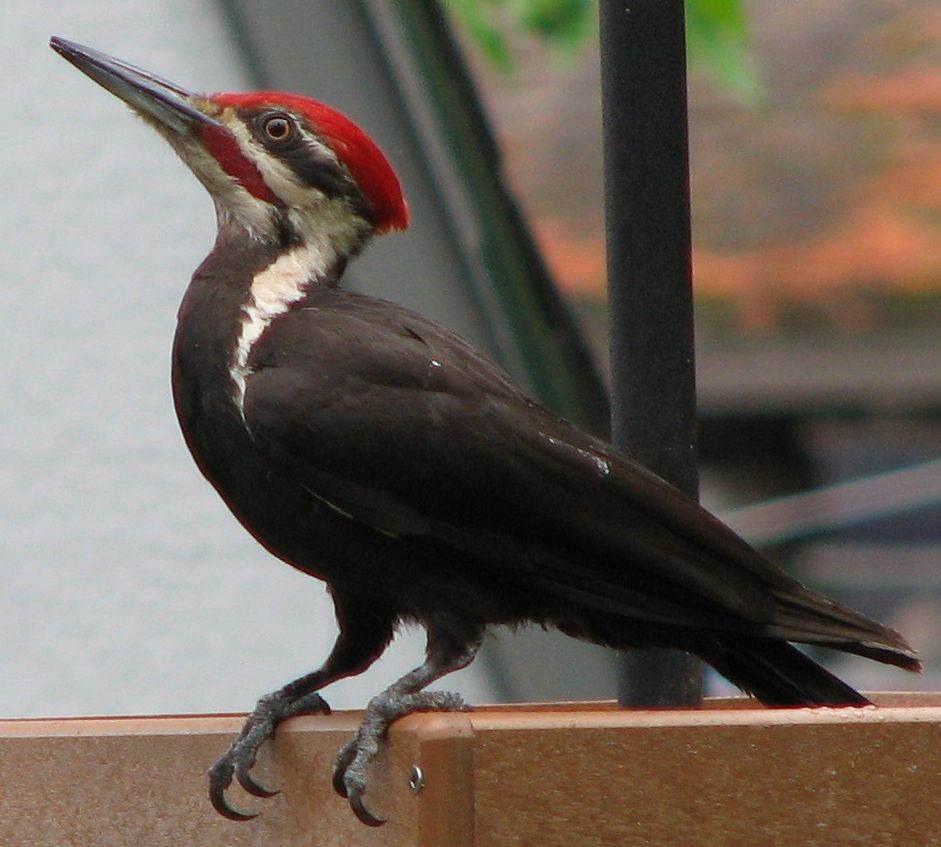
Adults are primarily black with bold white stripes down the sides of the neck and a brilliant red crest. A key distinguishing feature between sexes is the facial stripe. Males have a red stripe (malar stripe) extending from the bill to the throat, while females have a black stripe. In flight, large white patches on the underwings are conspicuous. Their size is formidable, with a body length of 40 to 49 centimetres and a wingspan reaching up to 75 centimetres. The average weight is around 277 grams, though males average slightly heavier than females. Their physical adaptations, including a long, chisel-shaped bill and zygodactyl feet (two toes facing forward, two backward), are perfectly suited for climbing and excavating wood.
Distribution and Habitat
The pileated woodpecker's range spans forested regions across much of North America. In Canada, it is a permanent resident from central Ontario, southern Quebec, New Brunswick, and Nova Scotia westward through the boreal forests to parts of the Pacific Coast. Its range extends south through the eastern United States and in pockets along the west coast. This bird is non-migratory, maintaining a territory year-round. It thrives in mature deciduous or coniferous forests, showing a strong preference for mesic habitats near streams with large, standing dead trees. These late-successional forests provide the essential resources for foraging and nesting.
Historically, populations declined in the 18th and 19th centuries due to extensive habitat loss from logging and land clearing. However, the species has demonstrated remarkable resilience and adaptability. It has rebounded significantly and can now be found in smaller woodlots and even suburban areas with sufficient large trees, contradicting earlier beliefs that it required vast, unbroken tracts of forest. Conservation efforts that restore woodlands by removing invasive brush have benefited the pileated woodpecker by improving foraging conditions on the forest floor.
Diet and Foraging Behaviour
The pileated woodpecker is primarily an insectivore, with carpenter ants and wood-boring beetle larvae constituting the majority of its diet. It uses its powerful neck and heavy bill to chisel large, distinctive rectangular holes into dead or decaying wood to access insect galleries deep within. This excavation can be so extensive that it sometimes causes smaller trees to snap. The bird uses its long, barbed, and sticky tongue to extract insect prey from tunnels. While insects are the mainstay, the diet is supplemented seasonally with wild fruits, nuts, and berries, including those from poison ivy and manzanita.
Foraging techniques are versatile. The bird is adept at scaling large vertical tree trunks but can appear awkward when reaching for berries on small branches. It will also forage on or near the ground, particularly around fallen logs, a behaviour that increases after events like forest fires when insect activity in downed timber is high. Although not a frequent visitor to backyard feeders, pileated woodpeckers may be attracted to suet, especially in areas with harsh winter conditions where natural food is scarce.
- Carpenter Ants: The primary food source, excavated from within trees.
- Wood-Boring Beetle Larvae: Extracted using the bird's long, barbed tongue.
- Wild Fruits and Berries: Consumed seasonally, making up about a quarter of the diet.
- Termites: Also taken when encountered during foraging.
Breeding and Life Cycle
Pileated woodpeckers are monogamous and typically mate for life, maintaining a pair bond throughout the year on a shared territory. Courtship displays in early spring include drumming on resonant dead trees, bill-waving, and distinctive 'woick' calls. Nest excavation is a major undertaking, primarily performed by the male with assistance from the female. They select a dead tree or a dead portion of a living tree, carving out a cavity that is oblong in shape and can be 10 inches wide and up to two feet deep. The process of creating this nest cavity can take three to six weeks.
The female lays a clutch of three to five white eggs, with four being the most common number. Both parents share incubation duties for 12 to 16 days, with the male taking the night shift. After hatching, the altricial young are fed by regurgitation by both adults. The nestlings fledge approximately 26 to 28 days after hatching but may remain dependent on their parents for an additional two to three months. Once the brood is raised, the family abandons the nest cavity, as it is typically structurally unsound for reuse the following year. However, these old cavities become critical real estate for a host of other forest creatures.
Ecological Role and Interactions
The pileated woodpecker is considered a keystone species due to the significant impact of its excavations on the forest ecosystem. The large cavities it creates for nesting and roosting are rarely reused by the woodpeckers themselves but are quickly adopted by a wide variety of secondary cavity-nesters. This provides essential shelter for species that cannot excavate their own holes, increasing biodiversity within the forest. By consuming large quantities of wood-boring insects like carpenter ants and beetle larvae, the pileated woodpecker helps control potential pest outbreaks, contributing to forest health.
Predation is a constant threat, particularly for eggs and nestlings. Common nest predators include American and Pacific martens, squirrels, rat snakes, and gray foxes. Free-flying adults face fewer threats but can be preyed upon by birds of prey such as Cooper's hawks, northern goshawks, great horned owls, and bald eagles. In defence, pileated woodpeckers use intimidation displays involving crest-raising and wing-flapping, and they emit alarm calls. Their powerful bill is also a formidable weapon against smaller attackers. If a nest is compromised, the pair may abandon it and excavate a new cavity elsewhere.
| Secondary Cavity Users | Type of Animal |
|---|---|
| Owls (e.g., Barred Owl) | Bird |
| Wood Ducks | Bird |
| Bats | Mammal |
| Pine Martens | Mammal |
| Raccoons | Mammal |
| Smaller Birds (e.g., wrens) | Bird |
Conservation Status and Human Relations
With an estimated population of 2.6 million individuals across North America and a range that is expanding in many regions, the pileated woodpecker is classified as a species of Least Concern by the International Union for Conservation of Nature (IUCN). Data from 1966 to 2015 shows populations increasing by more than 1.5 percent per year in areas like the northeastern United States, the Maritimes, and around the Great Lakes. The species is protected under the U.S. Migratory Bird Treaty Act, making it illegal to harm the birds or their active nests without a permit. Their adaptability to various wooded habitats, including suburban areas with mature trees, has been key to their successful recovery from historical declines.
Human interactions with pileated woodpeckers are a mix of appreciation and conflict. While birdwatchers cherish sightings of this dramatic species, homeowners sometimes experience damage as the birds may drill into wooden siding, eaves, or even newly placed utility poles in search of insects or to create roost holes. Various deterrents and protective measures are available to mitigate such damage. In a positive development for public education, the John Ball Zoo in Grand Rapids, Michigan, introduced a pileated woodpecker named Norman as an animal ambassador in 2026. Norman, who was rehabilitated from an injury but could not be released, is the first of his species to serve in such a role within the Association of Zoos and Aquariums, helping to teach visitors about forest ecology.
Cultural Significance
The pileated woodpecker holds a notable place in North American culture, most famously as the visual inspiration for the cartoon character Woody Woodpecker. While the character's signature laugh was modelled on the call of the acorn woodpecker, animator Walter Lantz based Woody's striking appearance and red crest directly on the pileated woodpecker. The species is also imbued with symbolic meaning in various cultural contexts, often representing persistence, transformation, and spiritual awakening due to its powerful, determined behaviour and dramatic excavations. Its loud, resonant drumming and calls make it an unforgettable auditory signature of the mature forests it inhabits, cementing its status as a memorable bird of the Canadian and American wilderness.
Questions about Pileated woodpecker
How big is a pileated woodpecker?
The pileated woodpecker is the largest woodpecker commonly found in North America, nearly the size of a crow. Adults measure 40 to 49 centimetres in length with a wingspan of 66 to 75 centimetres. They weigh between 225 and 400 grams, with an average weight of about 277 grams. Their substantial size and powerful build make them a striking presence in the forest.
Are pileated woodpeckers endangered?
No, pileated woodpeckers are not endangered. The species has a large range and an increasing population. It is categorized as a species of least concern by the IUCN. Their population has increased by greater than 1.5 percent per year in many regions from 1966 to 2015.
What does a pileated woodpecker eat?
The pileated woodpecker is primarily an insectivore, eating insects that live in trees, especially carpenter ants and wood-boring beetle larvae. It also eats fruits, nuts, and berries, including those from poison ivy and poison oak. The bird uses its long, barbed tongue and sticky saliva to extract ants and larvae from tunnels. It forages by chipping out large, rectangular holes in trees to access insect colonies and will also feed on the ground around fallen trees or at suet feeders in winter.
Where can you find pileated woodpeckers in Canada?
In Canada, pileated woodpeckers are permanent residents in forested regions. They inhabit the boreal forests of Canada and are found from central Ontario and southern Quebec east to Nova Scotia and New Brunswick. Their breeding habitat includes forested areas across Canada, and they also inhabit parts of the Pacific Coast. They favour mature deciduous or coniferous forests, often in mesic areas near streams, and can be found in large forest tracts or smaller woodlots with tall trees.
Why do pileated woodpeckers make such large holes in trees?
Pileated woodpeckers make large, nearly rectangular holes in trees primarily to extract insect prey like carpenter ant colonies and wood-boring beetle larvae. They also excavate these cavities to create nests. The nesting holes, which can be up to 8 inches wide and 2 feet deep, are mostly excavated by the male with assistance from the female. These excavations are so substantial they can cause a small tree to break in half. The abandoned cavities later provide essential nesting and roosting sites for many other forest species like owls, ducks, and raccoons.
What is the story of Norman the pileated woodpecker?
Norman is a pileated woodpecker who became the first of his kind to serve as an animal ambassador at the John Ball Zoo in Grand Rapids, Michigan. He was rescued by a rehabilitation veterinarian after the tree holding his nest was cut down, resulting in a broken leg. The vet repaired his leg and nursed him back to health. However, due to his young age at the time of injury and the extensive care required, he could not be returned to the wild, leading to his unique role as a zoo ambassador.
Sources and further reading
- Pileated woodpecker (Wikipedia)
- Dryocopus pileatus (pileated woodpecker) | INFORMATION (animaldiversity.org)
- Pileated Woodpecker: Words That Build or Destroy (ornitheology.com)
- Pileated Woodpecker (nationalgeographic.com)
Checked by the Your Space Hamilton desk. Last updated 2026-10-24.