Papilio glaucus
The eastern tiger swallowtail ( Papilio glaucus ) is a large butterfly species native to eastern North America, including southern Ontario. It is recognized for its bright yellow and black striped wings in males and a unique female colour dimorphism, making it one of the most familiar butterflies in its range. As a highly polyphagous species, it thrives in diverse habitats from deciduous forests to urban gardens, flying from spring until fall. Its historical significance is marked by being the first North American insect depicted in Europe, and it serves as the state butterfly or insect for several U.S. states.
Physical Description and Dimorphism
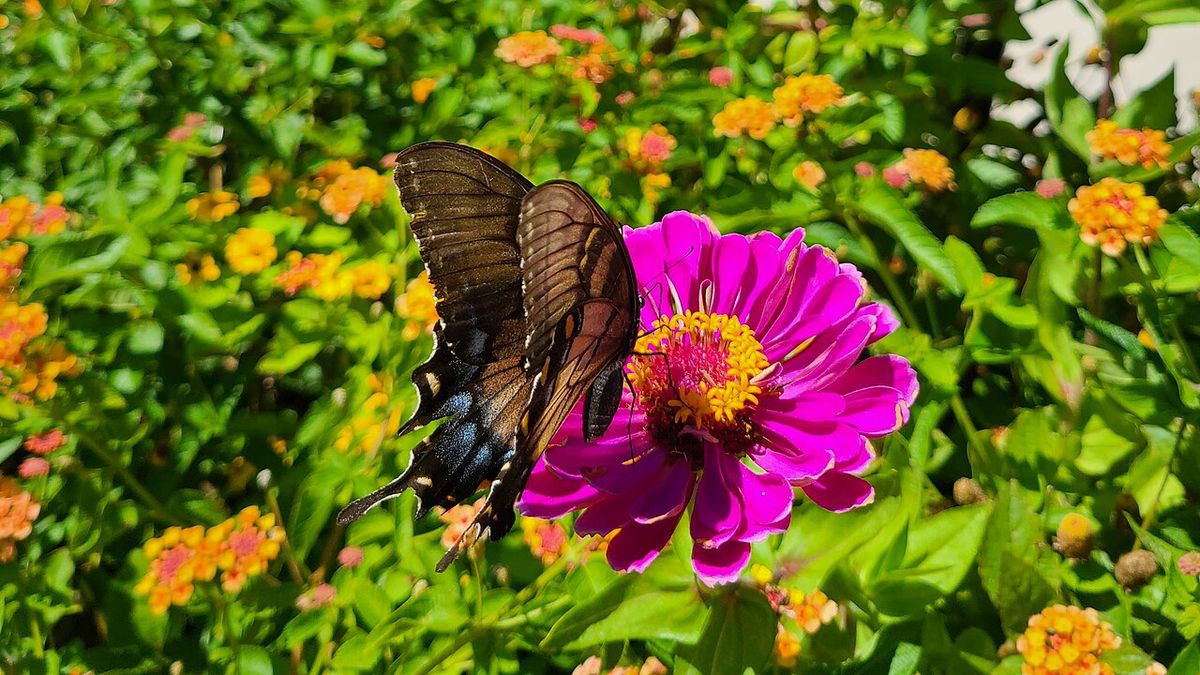
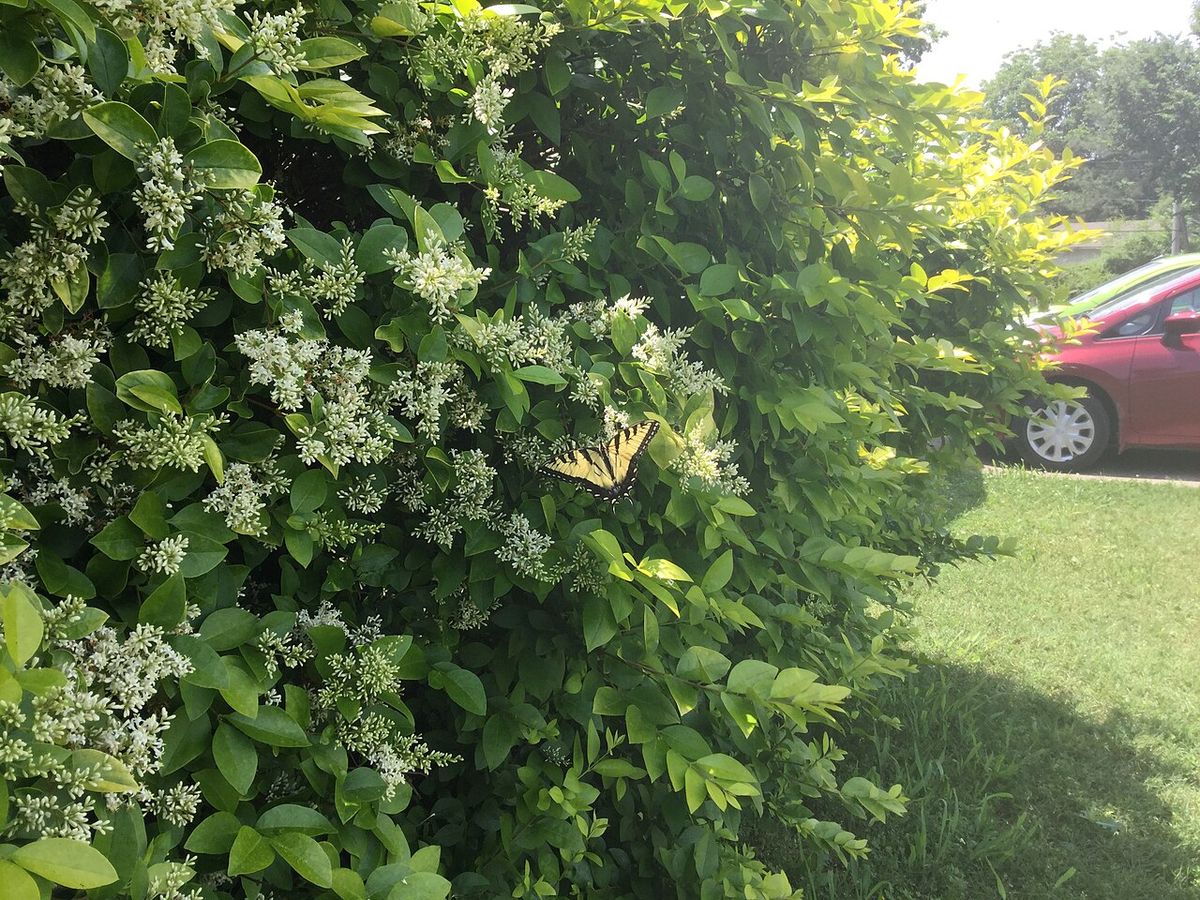
The eastern tiger swallowtail is a large butterfly with a wingspan ranging from 7.9 to 14 centimetres, with females generally larger than males and southern individuals larger than northern ones. The male is bright yellow with four distinctive black 'tiger stripes' on each forewing, black wing margins with yellow spots, and small red and blue spots along the inner margin of the hindwing. A key identification feature for the species is a broken yellow bar along the ventral forewing margin, present in both sexes, which is used to separate it from the similar Canadian and Appalachian tiger swallowtails. Females exhibit a striking colour polymorphism, meaning they occur in two distinct colour forms. The yellow morph resembles the male but has a conspicuous band of blue spots on the dorsal hindwing, while the dark morph is almost completely black or dark grey, with a shadow of the tiger stripes sometimes visible underneath and one row of orange spots on the ventral hindwing.
The dark morph female is a classic example of Batesian mimicry, as its appearance mimics the poisonous pipevine swallowtail (Battus philenor) to deter vertebrate predators. This dark form is more common in the southern parts of the range where the model butterfly is also prevalent, and the two extreme female colourings are thought to coexist because both have equally beneficial effects. The species is also one of the few papilionids known to produce gynandromorphs, individuals with both male and female characteristics, often found in hybrid zones with the closely related Canadian tiger swallowtail. Colour mosaics, another pattern variation, are found in the central part of the species range, and abnormalities of wing pattern have been documented in scientific literature. The ventral hindwing of the dark morph female has one row of orange spots, which helps distinguish it from the similar-looking spicebush swallowtail that has two rows and a more greenish colouration.
Taxonomy and Historical Record
The eastern tiger swallowtail holds a unique place in natural history as the first North American insect to be illustrated for a European audience. This drawing was made by John White in 1587 during Sir Walter Raleigh's third expedition to Virginia, and White labelled it 'Mamankanois', believed to be a Carolina Algonquian word for butterfly. The species was formally described by Carl Linnaeus in his seminal 1758 work, Systema Naturae. Some taxonomists place it, along with other tiger swallowtails, in the genus Pterourus, though Papilio glaucus remains the widely accepted name, and it is considered by some to be the American insect in the same way the Bald Eagle is the American bird.
Historically, the species was considered to have a vast range extending deep into northern Canada, but taxonomic revisions have clarified its boundaries. In 1991, the northern subspecies Papilio glaucus canadensis was recognised as a full species, the Canadian tiger swallowtail (Papilio canadensis), reducing the range of the true eastern tiger swallowtail to areas south of Canada. A second close relative, the Appalachian tiger swallowtail (Papilio appalachiensis), was described as a separate species from the southern Appalachian Mountains by researchers H. Pavulaan and D. M. Wright in 2002. These three species can be separated by size, wing markings, and female dimorphism, with P. canadensis being smaller and P. appalachiensis being larger than P. glaucus.
- Papilio canadensis: Smaller, solid yellow bar on ventral forewing, females not dimorphic.
- Papilio appalachiensis: Larger, solid yellow bar on ventral forewing, females rarely black.
- Papilio glaucus: Broken yellow bar on ventral forewing, females strongly dimorphic (yellow or black).
Similar species for the dark female morph of the eastern tiger swallowtail include the pipevine swallowtail, which has a row of light-coloured spots on each wing margin. Another similar species is the spicebush swallowtail, which is more greenish and has two rows of orange spots on the ventral hindwing. The female black swallowtail is also similar but is smaller than the dark morph eastern tiger swallowtail. The ventral hindwing of the female black swallowtail has two rows of yellow-orange spots.
Distribution, Habitat, and Sightings
The eastern tiger swallowtail is found throughout the eastern United States from southern Vermont to Florida, west to eastern Texas and the Great Plains. Its range extends north into southern Ontario, Canada, but it is absent from the Florida Keys and is rarer in southern Florida, though older descriptions sometimes inaccurately included Alaska and the Hudsonian zone of Canada. It is an adaptable generalist, common in nearly any area with deciduous woods, including woodlands, fields, riversides, creeks, roadsides, and gardens, and it is most numerous along streams and rivers and in wooded swamps. The butterfly readily strays into urban parks and city yards, making it a familiar sight in many communities, and its adaptability to various habitats and host plants contributes to its secure conservation status, with a NatureServe Global Rank of G5, indicating it is widespread and not threatened.
Adults are seen from spring to fall, with flight periods varying by latitude. In southern regions, adults may be observed from February to November, while in northern areas like Ontario, the flight period is typically from May to September. The species produces multiple broods annually, with two broods common in the north and three in the south, with the first brood adults being the smallest. A notable accidental introduction was recorded in 1932 when a single specimen was collected in County Wicklow, Ireland, believed to have been accidentally introduced from North America. More recently, sightings continue to mark the seasonal cycle, with the first individuals of the year, such as one noted flying past a person's head through a patch of Eastern Redbuds in 2026, being eagerly observed by enthusiasts.
Behaviour and Ecology
Eastern tiger swallowtails are diurnal and usually solitary, though males may congregate in specific behaviours like puddling. Adults are powerful fliers often seen high above the ground, circling near the tree canopy. Groups of up to fifty have been observed in Maryland flying approximately 50 metres high around the tops of tulip trees. Males seek mates by patrolling habitats that contain larval host plants, and during courtship, pairs fly about each other before landing, with males releasing perfume-like pheromones to entice the female. A common behaviour, especially among fresh males in their first couple of days, is puddling, where they congregate on mud, damp gravel, or puddles to extract sodium ions and amino acids, which are believed to aid in reproduction and may help cool them by initiating an active-transport pump.
Adults feed on nectar from a wide variety of flowers, showing a preference for sturdy plants with red or pink blossoms, and many members of the families Apocynaceae, Asteraceae, and Fabaceae are used as common nectar sources. They have also been observed feeding on dung, carrion, and urine, demonstrating a broad dietary range. The eastern tiger swallowtail is considered probably the most polyphagous of all 560 plus species of swallowtail butterflies in the world, with its caterpillars able to feed on many different host plants. This dietary breadth, linked to genetic traits and differential detoxification abilities, is a key factor in its success across diverse environments and its status as a generalist.
Life Cycle and Host Plants
The life cycle of the eastern tiger swallowtail includes egg, larval (caterpillar), pupal (chrysalis), and adult stages, with the number of generations per year dependent on climate. The green, spherical eggs are laid singly on the leaves of host plants, typically chosen near nectar sources, and hatch in four to ten days, though other sources note a three to five day period. The egg is large for a butterfly at 0.8 mm in height and 1.2 mm in width. The caterpillar progresses through five instars, with the first three being brown and white to mimic bird droppings for protection, and a large white saddle spot is found on the abdomen. After molting to the fourth instar, it becomes green with two prominent black, yellow, and blue eyespots on the thorax and a concealed yellow and black transverse stripe between the first and second abdominal segments, reaching a final length of about 5.5 centimetres.
When threatened, the caterpillar can exert a bright orange, foul-smelling organ called an osmeterium from behind its head to repel predators with terpenes. Prior to pupation, the caterpillar turns dark brown, a colour change that indicates it is preparing to pupate. The chrysalis, which measures about 3.2 centimetres, hangs from a surface by a silk girdle around the thorax and a silk pad at the base and varies in colour from off-white to dark brown, often with green or dark brown spots and sometimes a dark lateral stripe. In regions with cold winters, the species hibernates in the chrysalis stage, which can last nine to eleven days for non-hibernating pupae. The caterpillar is impossible to distinguish from those of its close relatives, P. canadensis and P. appalachiensis.
The species is highly polyphagous, with larvae feeding externally on the leaves of numerous woody plant families, and foodplant suitabilities have been a subject of entomological study. Primary host plants include members of the Magnoliaceae and Rosaceae families, but the list is extensive and includes plants from Lauraceae, Oleaceae, Rutaceae, and Tilioideae. Research indicates P. glaucus survives very poorly, at approximately a 15 percent rate, through its first larval instar on quaking aspen compared to its northern relative which thrives on it. Host plants recorded in older literature like aspen, birch, and willow are now understood to be primarily used by P. canadensis.
- Wild black cherry (Prunus serotina)
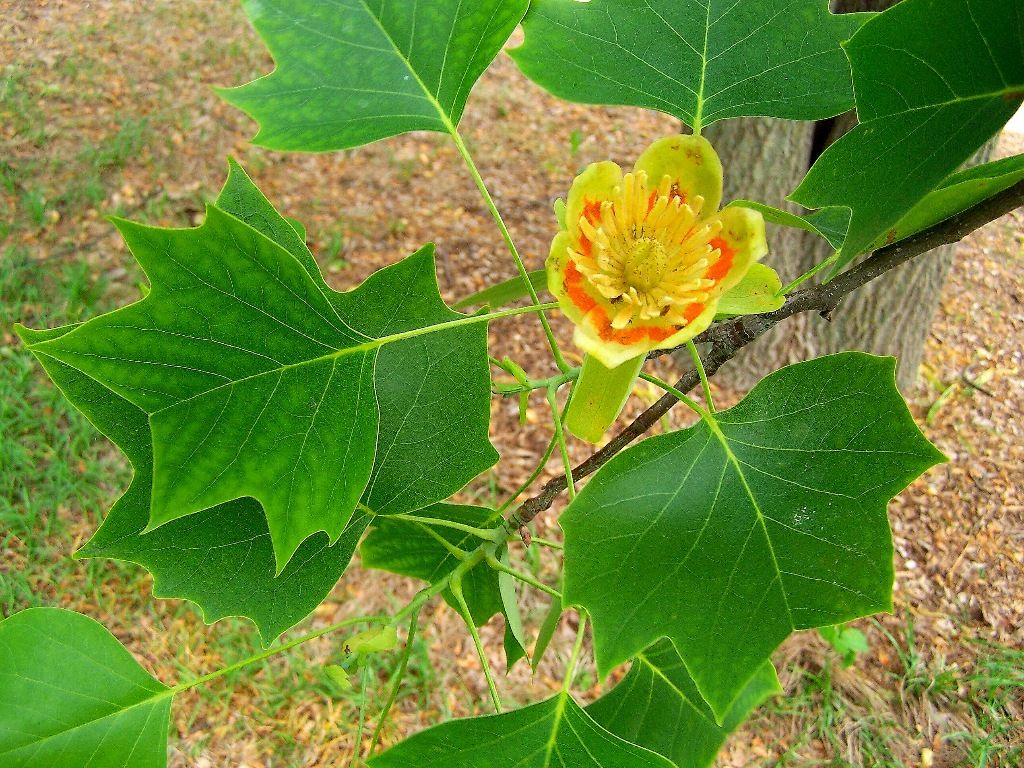
- Tulip tree or tulip poplar (Liriodendron tulipifera)
- Sweet bay magnolia (Magnolia virginiana)
- Ash (Fraxinus species)
- Cottonwood (Populus species)
- Willow (Salix species)
- Common lilac (Syringa vulgaris)
- Wafer ash or hoptree (Ptelea trifoliata)
- Other recorded hosts include mountain ash, birch, basswood, apple, maple, and occasionally sassafras.
Defence Strategies and Survival
The eastern tiger swallowtail employs multiple defence strategies across its life stages to survive predation. The first three instars of the caterpillar are camouflaged as bird droppings, a form of protective coloration that makes them inconspicuous to predators. In the later, green instars, the large eyespots on the thorax, which are much smaller than those of the spicebush swallowtail caterpillar, serve to startle or deter attacking birds. When physically threatened, the caterpillar reveals its osmeterium, an orange, fleshy, forked organ that emits repellent terpenes, enhancing its snake-like appearance when combined with the eyespots, and this organ is a synapomorphy of the family Papilionidae.
Adult butterflies are palatable to predators, leading to the evolution of the dark morph female as a Batesian mimic. By closely resembling the toxic pipevine swallowtail (Battus philenor), the dark morph gains protection from vertebrate predators that have learned to avoid the model, while the tiger striping of the yellow morph may help distract predators. This mimicry is more effective and thus more common in southern regions where the pipevine swallowtail's range overlaps extensively with that of the eastern tiger swallowtail, and in some southeastern populations like in Georgia, the yellow colouring can have more of an orange hint, with the subspecies australis sometimes applied. The combination of these larval and adult defences, along with the species' generalist feeding habits and high reproductive rate, ensures its continued abundance and secures its status as a non-threatened species across its range with no special status on the IUCN Red List.
Cultural Significance and Status
Often thought of as the 'American insect' in a manner analogous to the bald eagle, the eastern tiger swallowtail holds significant cultural and symbolic value. Its early depiction by John White in 1587 marks the beginning of North American entomology in European natural history, sent to England from Sir Walter Raleigh's third expedition to Virginia. This recognisable status is reflected in its adoption as an official symbol by multiple U.S. states, recognising its beauty and familiarity. It serves as the state butterfly of Alabama, Delaware, Georgia, North Carolina, and South Carolina, and is the state insect of Virginia. In Alabama, it also holds the title of state mascot, demonstrating its broad appeal.
Despite its widespread presence and cultural recognition, the species faces no major conservation threats at present due to human impact on its ecosystem. It is not listed on the IUCN Red List and holds a secure NatureServe Global Rank of G5, indicating it is common, widespread, and abundant with many occurrences and no known rangewide threats. Its adaptability to human-altered landscapes, including towns and cities, along with its broad dietary range, buffers it against many potential threats. Continued sightings, such as the first of the season noted in 2026, affirm its persistent presence in the ecosystems and gardens of eastern North America, from southern Ontario through the United States.
Questions about Papilio glaucus
Where can you find eastern tiger swallowtails in Canada?
In Canada, the eastern tiger swallowtail (Papilio glaucus) is found in southern Ontario. Its range extends north to this region but does not include the more northern areas now occupied by the separate Canadian tiger swallowtail species (Papilio canadensis). Within its range, it can be found in deciduous woods, along rivers and streams, in wooded swamps, and even in urban parks and gardens where host plants are present. It is common throughout its Canadian range where suitable habitat exists.
What is the difference between the male and female eastern tiger swallowtail?
Male eastern tiger swallowtails are always bright yellow with four black 'tiger stripes' on each forewing, black borders, and small red and blue spots on the hindwing. Females exhibit colour dimorphism, meaning they come in two forms. The yellow morph looks similar to the male but has a band of blue spots on the dorsal hindwing. The dark morph is almost completely black or dark grey, which serves as Batesian mimicry of the poisonous pipevine swallowtail. Females are also generally larger than males, and the dark morph may show a shadow of the stripes underneath.
What do eastern tiger swallowtail caterpillars eat?
The caterpillars are highly polyphagous, feeding externally on the leaves of many woody plants. Common host plants include wild black cherry, tulip tree, sweet bay magnolia, ash, cottonwood, willow, common lilac, and wafer ash. They also feed on other plants like basswood, apple, maple, and occasionally sassafras. They do not thrive on aspen, which is a primary host for the related Canadian tiger swallowtail, with survival as low as 15 percent on quaking aspen. The caterpillar's broad diet contributes to the species' success across diverse habitats.
Are eastern tiger swallowtails endangered?
No, eastern tiger swallowtails are not endangered or threatened. They have a NatureServe Global Rank of G5, meaning they are secure, widespread, and abundant with many occurrences. They are adaptable generalists, common in many habitats including human-dominated landscapes like gardens and city parks, and they are not yet threatened by human impact on their ecosystem. No major rangewide threats to their population are currently known, and they are considered a species of least concern.
Why do male swallowtails gather on mud puddles?
This behaviour is called puddling. Male eastern tiger swallowtails congregate on mud, damp gravel, or puddles to extract essential sodium ions and amino acids. These nutrients are believed to aid in reproduction and may also help cool the butterflies by initiating an active-transport pump, and males can recognise areas of high moisture absorption by sodium ion concentration. Males typically puddle only during their first couple of days as fresh adults, while females puddle only occasionally and do not form congregations like the males do.
What is the wingspan of an eastern tiger swallowtail?
The eastern tiger swallowtail has a wingspan ranging from 7.9 to 14 centimetres, which is approximately 3.1 to 5.5 inches. Females are typically the larger sex, and southern individuals are generally larger than northern ones. This species is one of the most familiar butterflies in eastern North America. The wingspan measurement is a key identifying feature. The outer edge of the forewing is black with a row of yellow spots, and the veins are marked with black.
Sources and further reading
- Papilio glaucus (Wikipedia)
- Papilio glaucus | INFORMATION (animaldiversity.org)
Checked by the Your Space Hamilton desk. Last updated 2026-10-30.