North Atlantic right whale
The North Atlantic right whale (Eubalaena glacialis) is one of the world's most endangered large whale species, with an estimated population of only 380 individuals as of 2026, including approximately 70 reproductively active females. Historically hunted to the brink of extinction for its valuable blubber, the species is now protected under Canadian and American endangered species legislation. Its survival is critically threatened by human activities, primarily vessel strikes and entanglement in fixed fishing gear, which occur along its migratory route between calving grounds off the southeastern United States and feeding areas in Canadian waters like the Gulf of St. Lawrence and the Labrador Sea. For Canadians, the whale's presence in Atlantic coastal regions has spurred significant conservation measures, including seasonal fishing closures and shipping lane adjustments, making its recovery a pressing environmental and economic issue.
Physical Description and Identification
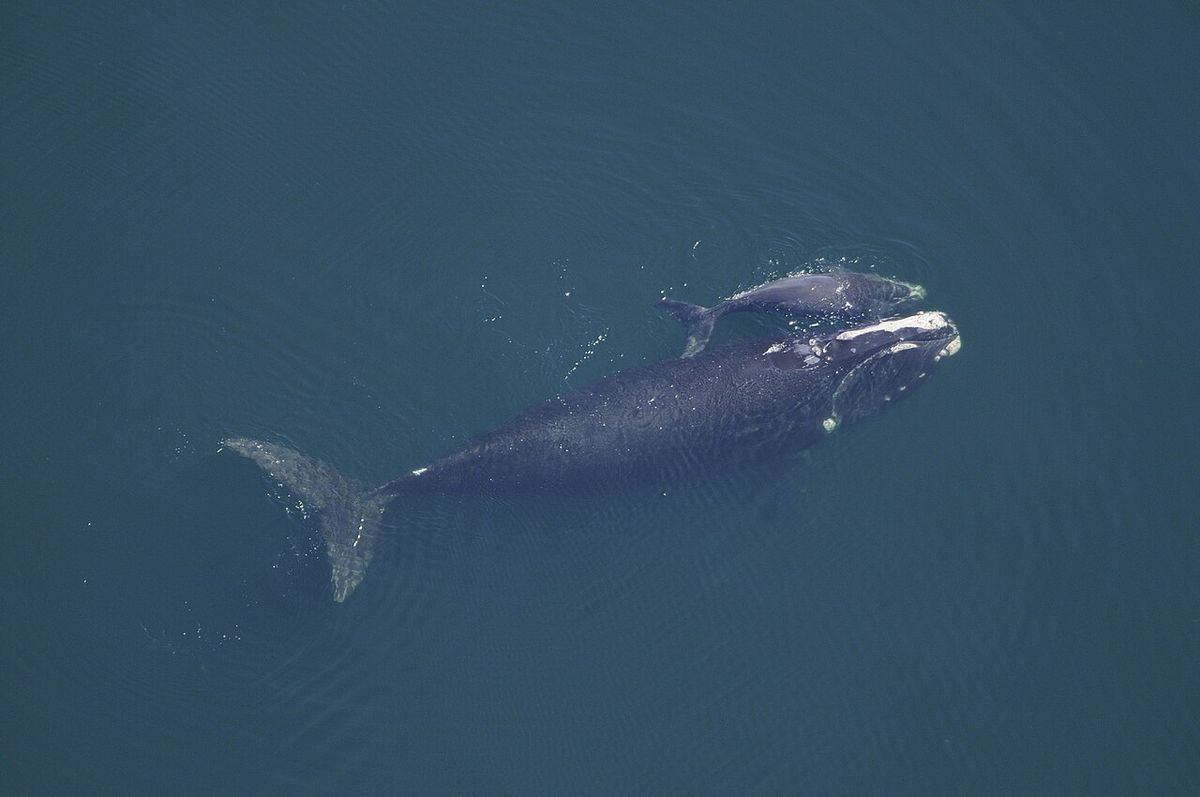
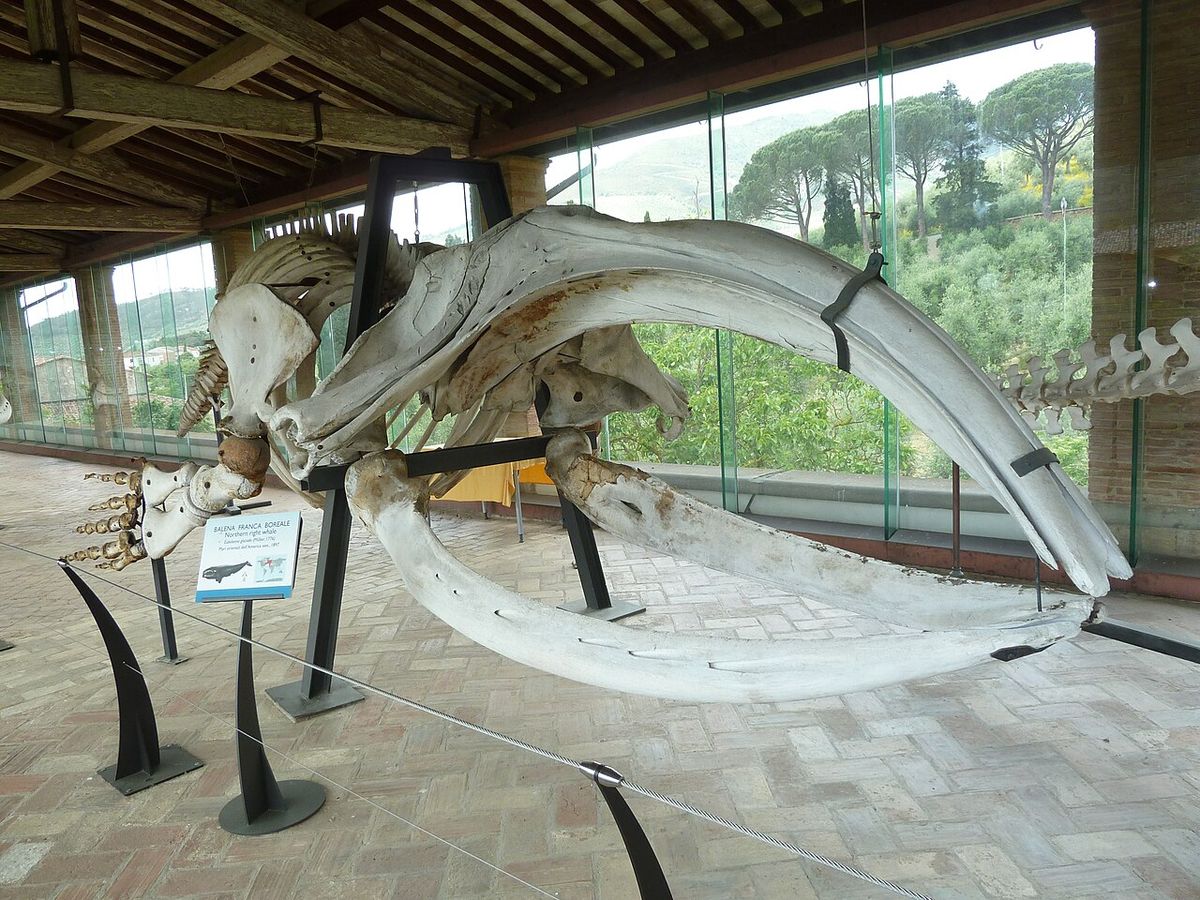
The North Atlantic right whale is a large, stocky baleen whale with a completely black body, though some individuals may have irregular white patches on the belly or throat. Its most recognizable features are the absence of a dorsal fin and a broad back, along with short, paddle-shaped pectoral flippers and a long, arching mouth that starts above the eye. The tail fluke is broad, deeply notched, and all black with a smooth trailing edge. Adults average between 13 and 18 metres in length and can weigh from 40,000 to 90,000 kilograms, with females typically larger than males. The species' head is large, comprising about a quarter of its body length, and is adorned with unique, rough patches of keratinized skin called callosities. These callosities are colonized by cyamids, or whale lice, which give them a white appearance and create a pattern as unique as a fingerprint, allowing scientists to identify and track individual whales. This identification is crucial for monitoring the small population's health and movements through photo databases maintained by organizations like the New England Aquarium.
The baleen apparatus consists of 200 to 270 narrow plates on each side of the upper jaw, each approximately 3 metres long and covered in very thin hairs that act as a sieve for filter feeding. Up to 45 percent of a right whale's body weight is blubber, a dense layer of fat that provides insulation and energy reserves but also causes the carcass to float after death. The pectoral fin measures about 1.7 metres in length. The largest measured specimens reached 18.5 metres in length and weighed between 106,000 and 108,000 kilograms. Age determination is challenging but can be done postmortem by examining layers in the earwax, with the oldest recorded individual thought to have lived about 70 years. A 2024 study, however, found the current average lifespan to be only 22 years, with just 10 percent of individuals living longer than 47 years, a reduction attributed to the cumulative impacts of commercial whaling and modern threats.
Behaviour and Life History
North Atlantic right whales are slow-moving, surface-skimming feeders that primarily consume tiny crustaceans called copepods, along with other small invertebrates like krill, pteropods, and larval barnacles. They feed by swimming slowly through dense patches of prey at or below the ocean surface with their mouths open, filtering vast volumes of water through their long, narrow baleen plates. Their vocalizations are low-frequency sounds used for navigation, locating food, and communication. Reproduction is a slow process for this species. Females are promiscuous breeders and first give birth at age nine or ten after a gestation period of about one year. The calving interval has increased since the 1990s and now averages three to six years. Calves are approximately 4 to 4.6 metres long and weigh about 1,400 kilograms at birth.
Social behaviour often involves surface-active groups, or SAGs, where a single female and several males engage in mating and socializing activities. These groups are observed in all seasons and habitats. The whales are also known to interact with other baleen species, including humpback whales and bottlenose dolphins. They share feeding grounds with competitors like sei whales and basking sharks, but no direct conflicts have been observed. The only known natural predator is the killer whale, with just one recorded case of predation. Their average lifespan is believed to be up to 70 years, though recent studies suggest current averages are significantly lower due to human-caused threats. The species' low reproductive rate and extended calving intervals are major factors limiting population recovery.
Historic Whaling and Population Collapse
The species earned the name 'right' whale from whalers who considered it the 'right' whale to hunt because it was slow, floated when killed, and yielded high quantities of oil and baleen. Basque whalers began hunting them in the Bay of Biscay as early as the 11th century and reached eastern Canada by 1530. American whalers from ports like Nantucket, New Bedford, and Long Island later took up to a hundred whales annually, with records showing 29 killed in Cape Cod Bay in a single day in January 1700. By 1750, the western North Atlantic population was commercially depleted. Yankee whalers then moved into the South Atlantic before the end of the 18th century. The population was so low by the mid-19th century that the famous British whaler William Scoresby claimed to have never seen one.
Despite global protection from commercial whaling enacted in 1937, the population had been driven to a perilous low. Back calculations using current population data suggest there may have been fewer than 100 individuals by 1935. The international ban was largely successful, though some illegal takes continued for several decades, with the last two right whales taken in Madeira in 1967. It was previously assumed Basque whaling caused the western Atlantic depletion, but later genetic studies disproved this. The population has never recovered to pre-whaling numbers, leaving it extremely vulnerable to modern anthropogenic threats. The whaling era established the ecological and economic context for the species' current endangered status.
Modern Threats to Survival
Since 1970, nearly half of all documented North Atlantic right whale deaths have been attributed to human activities, with the two leading causes being vessel strikes and entanglement in fishing gear. For the period from 1970 to October 2006, ship strikes accounted for 37 percent of recorded deaths, while entanglement in gear like bottom-set gillnets, cod traps, and lobster pots accounted for 11 percent. These figures are considered underestimates, as many deaths in offshore areas go undetected. The small population size and low reproductive rate mean that preventing even a few deaths, particularly of breeding females, is critical for population stabilization. It was calculated that preventing the deaths of just two females per year would enable the population to stabilize.
A 2012 New England Aquarium report indicated 85 percent of the whales had experienced rope entanglement at least once. A separate 2012 analysis of scarification from 1980 to 2009 showed 82.9 percent of all North Atlantic right whales had experienced at least one fishing gear entanglement, 59.0 percent had more than one, and an average of 15.5 percent of the population was entangled annually. Chronic entanglement depletes blubber reserves, reduces fertility, and can lead to fatal infections or drowning, with chronically entangled animals potentially sinking upon death and escaping detection. Debates between conservation advocates and the fishing industry intensified from 2019 to 2023, leading to actions like the Marine Stewardship Council revoking certification for the Gulf of Maine lobster fishery in 2022.
- Vessel Strikes: Collisions with ships are the single greatest danger, causing blunt force trauma and propeller injuries. Mortality from strikes averaged 1 per year from 1999 to 2003, rising to 2.6 per year from 2004 to 2006.
- Fishing Gear Entanglement: Ropes from trap and pot fisheries wrap around whales' bodies, flippers, and mouths, causing injury, exhaustion, and drowning. A female known as Snow Cone was spotted in September 2022 entangled for at least 18 months and was considered beyond saving.
- Ocean Noise: Noise from ships, seismic surveys, and pile driving disrupts whale communication. A 2011 analysis linked exposure to low-frequency ship noise in the Bay of Fundy with chronic physiological stress.
- Climate Change: Shifts in ocean temperature may affect the distribution of their copepod prey, forcing whales into areas with higher shipping and fishing activity.
- Low Reproductive Rate: The extended calving interval and small number of breeding females hinder population growth. Since 2010, lower calving rates have further restricted recovery.
Conservation Efforts and Management
In both Canada and the United States, a complex framework of regulations and adaptive management strategies aims to reduce human-caused mortality. In Canadian waters, particularly in the Gulf of St. Lawrence, a single visual or acoustic detection of a right whale triggers a 15-day closure of fishing activities in a surrounding zone of up to 2,000 square kilometres. Fisheries and Oceans Canada also employs acoustic monitoring technology, including stationary Viking buoys and mobile gliders, to detect species-specific whale calls. The United States has implemented vessel speed restrictions in seasonal management areas along the East Coast and has modified shipping lane locations to reduce strike risk. The first such change by the International Maritime Organization was in 2003 in the Bay of Fundy.
The Atlantic Large Whale Take Reduction Plan includes measures like seasonal gear restrictions, such as a five-month prohibition on gillnet fishing in southeastern U.S. calving waters starting each November 15. Disentanglement teams from both nations attempt to free entangled whales, sometimes using chemical sedation, as seen in successful operations in 2009 and 2011 where satellite tags and antibiotics were administered. Research confirmed in January 2013 that three disentangled whales had subsequently given birth. Canada and the United States both use gear marking schemes with colour-coded vertical lines to trace the origin of entangling gear. However, conservation efforts face political challenges, exemplified by the U.S. Consolidated Appropriations Act of 2023, signed in December 2022, which included a ban on new or stricter lobster fishing regulations until December 2028.
Population Status and Recent Trends
The North Atlantic right whale population remains critically low but has shown tentative signs of stabilization after years of decline. The North Atlantic Right Whale Consortium estimated the 2024 population at 384 individuals, with the 2026 estimate at approximately 380. This marks a slight increase from 2020 and represents the third consecutive year of modest population growth. The number of reproductively active females is estimated at about 70. The 2025 to 2026 calving season brought encouraging news, with 23 new mother and calf pairs sighted, the fourth-highest count on record. Brett Gilchrist of Fisheries and Oceans Canada noted in 2026 that the population decline 'seems to have been halted' and that it had been a 'very good calving year.'
Despite this, an Unusual Mortality Event declared by U.S. authorities in 2017 remains ongoing. Since its declaration, there have been 41 documented right whale deaths, 40 serious injuries, and 87 sublethal injuries or illnesses, representing over 40 percent of the current population. Research indicates only about one-third of right whale deaths are detected, meaning the true mortality is likely much higher. The eastern North Atlantic population is functionally extinct, numbering at most in the low teens and scientists believe it may become extinct within two decades. The future of the western Atlantic population hinges on continued and enhanced mitigation of human-caused mortality, with the goal of achieving a sustained increase from the current estimate of 380 whales.
| Year | Notable Event or Data Point |
|---|---|
| 1935 | Population low point after whaling. |
| 1970 | Listed as endangered under U.S. Endangered Species Act. |
| 2017 | Unusual Mortality Event declared. 12 whales found dead in Canadian waters in three months. |
| 2024 | Consortium estimate. |
| 2026 | Current estimate with 70 breeding females. |
| 2025 to 2026 | Fourth-highest calving season count recorded. |
Importance and Presence in Canada
The North Atlantic right whale is a species of significant conservation concern in Canada, utilizing key habitats in Atlantic Canadian waters from spring to fall. Critical feeding and nursing areas include the Gulf of St. Lawrence, the Bay of Fundy, and the Labrador Sea. Their presence has major implications for Canadian fisheries and shipping industries, leading to the implementation of dynamic protection measures. When whales are detected, Fisheries and Oceans Canada enacts temporary fishery closures to prevent entanglements, a strategy that, while effective for conservation, can create economic tension with harvesters who would prefer narrower closure areas. Canada also employs a gear marking scheme to help trace the origin of entangling gear found on whales.
The summer of 2017 was a significant period for public awareness in Canada, when 12 right whales were found dead in the Gulf of St. Lawrence in just three months, and seven others were observed entangled. This event accelerated government action and monitoring efforts. In 2026, DFO reported over 680 visual detections and more than 2,000 acoustic detections of right whales in Canadian waters. The survival of the species is linked to Canada's ability to maintain sustainable seafood certifications and export markets, as international bodies like the Marine Stewardship Council and Seafood Watch have delisted or red-listed fisheries over entanglement risks. Continued monitoring, including visual surveys and acoustic detection, is essential for the adaptive management that defines Canada's approach to protecting this critically endangered whale within its jurisdiction.
Taxonomy and Scientific Classification
The North Atlantic right whale's scientific name is Eubalaena glacialis, which translates to 'good, or true, whale of the ice.' It is one of three species within the genus Eubalaena, the others being the North Pacific right whale (Eubalaena japonica) and the Southern right whale (Eubalaena australis). All three were formerly classified as a single species. The whale belongs to the family Balaenidae, which also includes the bowhead whale. An 18th-century proposal by Emanuel Swedenborg described a 'Swedenborg whale' thought to be the North Atlantic right whale, but DNA analysis of fossil bones in 2013 revealed they were from the bowhead whale. The species' evolutionary relationships are illustrated through cladograms that show its branching from other baleen whales. This taxonomic clarity helps inform conservation strategies by accurately defining the unique genetic population that requires protection in the North Atlantic.
Questions about North Atlantic right whale
Why is it called the 'right' whale?
The North Atlantic right whale was named by whalers who considered it the 'right' whale to hunt. This was due to its docile nature, slow surface-skimming feeding behaviours, tendency to stay close to the coast, and high blubber content. The high blubber content made the whale float when killed and produced high yields of whale oil. These characteristics made right whales a preferred and easy target for whalers.
How many North Atlantic right whales are left?
As of 2026, there are an estimated 380 North Atlantic right whales. This number includes about 70 breeding females. The population in the eastern North Atlantic is at most in the low teens. Scientists believe the eastern North Atlantic population may become functionally extinct within the next two decades.
What are the biggest threats to North Atlantic right whales today?
The two greatest threats to recovery are vessel strikes and entanglement in fixed fishing gear. Together these have accounted for nearly half of all North Atlantic right whale mortality since 1970. The single greatest danger is injury from ship strikes. The next greatest source of human-induced mortality is entanglement in gear like gillnets and lobster pots.
What is Canada doing to protect North Atlantic right whales?
Canada implements strict, adaptive protection measures in Atlantic waters. When a right whale is visually or acoustically detected, Fisheries and Oceans Canada triggers a 15-day closure of fishing activities in a zone of up to 2,000 square kilometres around the whale. The department also uses acoustic monitoring technology, enforces gear marking to trace entanglements, and participates in disentanglement response efforts. These measures aim to reduce mortality while allowing fisheries to operate where possible.
Where can you see North Atlantic right whales?
North Atlantic right whales migrate along the eastern coast of North America. Their winter calving and nursing grounds are in the shallow coastal waters off Georgia and Florida. From late spring through fall, they migrate to feeding grounds in the north, including Canadian waters in the Bay of Fundy, the Gulf of St. Lawrence, and the Labrador Sea. In Canada, they are most commonly sighted in regions around Prince Edward Island, New Brunswick, and Nova Scotia.
How are individual right whales identified?
Individual whales are identified by the unique pattern of callosities on their heads. Callosities are rough, white patches of skin that are colonized by whale lice. Scientists photograph these patterns and maintain them in a comprehensive photo-identification database, primarily managed by the New England Aquarium. This allows researchers to track the life history, health, movements, and reproductive success of each known whale in the population.
Sources and further reading
- North Atlantic right whale (Wikipedia)
- North Atlantic Right Whale (fisheries.noaa.gov)
- North Atlantic right whale population appears to be ... (cbc.ca)
- North Atlantic Right Whale (cwf-fcf.org)
- 2026 North Atlantic right whale calving season (ifaw.org)
Checked by the Your Space Hamilton desk. Last updated 2026-10-28.