North American beaver
The North American beaver (Castor canadensis) is a large, semiaquatic rodent native to North America and a prominent national symbol of Canada. Known for its dam-building, the beaver modifies landscapes and creates wetland habitats. It is the largest rodent in North America and the second largest in the world, after the South American capybara. The species was central to the continent's fur trade and its subsequent conservation story.
Physical Characteristics and Adaptations
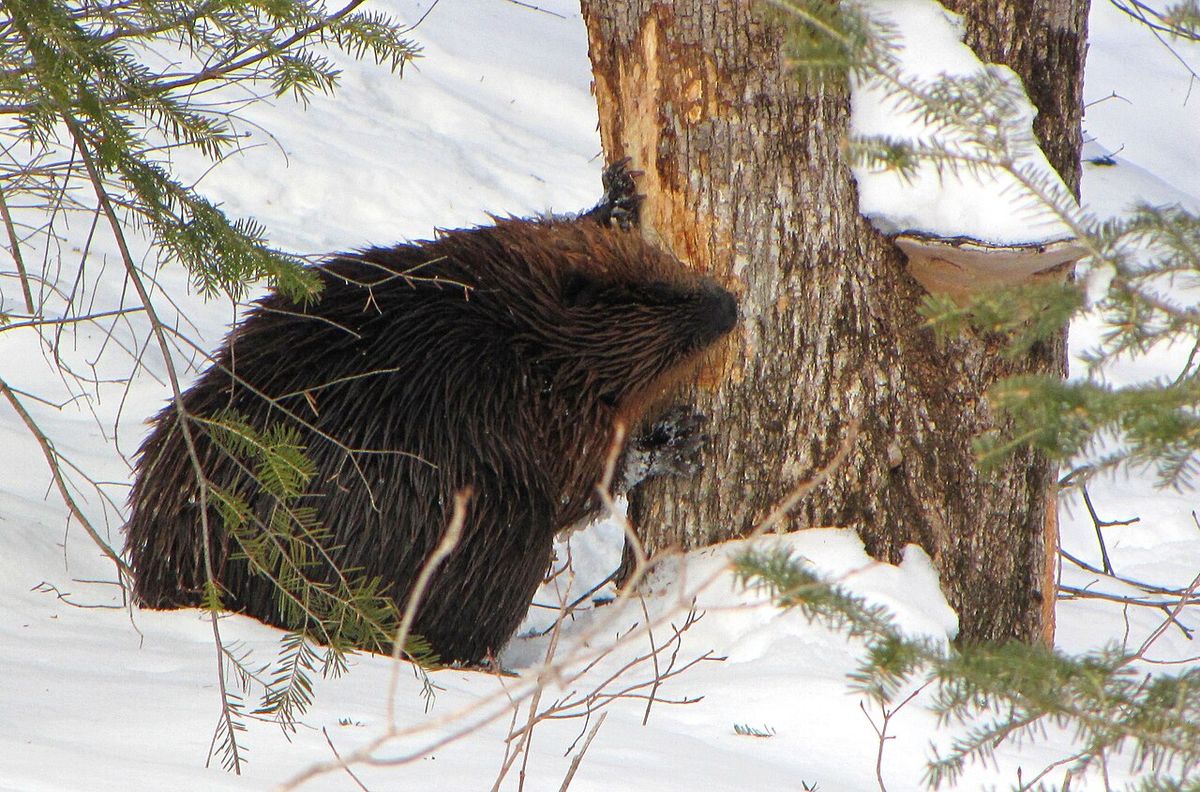
The North American beaver has a stocky body covered in a dense coat of long, coarse guard hairs and fine underfur, typically ranging from yellow-brown to almost black. This fur is waterproofed by an oily substance called castoreum secreted from scent glands. Adults usually weigh between 16 and 30 kilograms, with a median weight in northern regions like the Northwest Territory around 20.5 kilograms. Exceptionally old individuals can exceed 40 kilograms, with the heaviest recorded beaver weighing 50 kilograms. Their body length is 74 to 90 centimetres, with a broad, flat, scaly tail adding another 20 to 35 centimetres.
Several specialized adaptations equip beavers for their semiaquatic lifestyle. Their most distinctive feature is a pair of long, self-sharpening incisor teeth that are visibly orange due to a high iron content in the enamel, which strengthens them against chipping. These teeth grow continuously and allow beavers to gnaw through tree trunks. Their lips close behind these front teeth, enabling them to chew underwater. The hind feet are fully webbed for powerful swimming, while the small, dexterous front feet have sharp claws for digging and manipulating objects. A unique double-nailed 'preening toe' on each hind foot acts as a comb to maintain their fur's insulating and waterproofing qualities.
Beavers have several physiological traits for underwater activity. They can close their nostrils and ears and deploy a nictitating membrane to protect their eyes while submerged. Their flat, scaly tail serves multiple functions, acting as a rudder while swimming, a prop for balance on land, a fat storage organ for winter, and a tool for communication through loud slaps on the water to signal danger. Their eyesight is effective only at short range, but they rely on highly developed hearing and sensitive facial whiskers to move through their environment.
Distribution and Historical Range
The North American beaver's historical range was vast, encompassing almost all forested areas from south of the Arctic tundra to the deserts of northern Mexico and from the Atlantic to the Pacific Oceans. This near-ubiquitous presence was drastically reduced by intense trapping for the fur trade from the 17th to 19th centuries, which drove the species to near extinction and caused regional extirpations, particularly in the Great Plains. By the early 1900s, beavers persisted largely in isolated pockets across the continent. Through concerted reintroduction efforts, natural dispersal, and changes in management practices, the species has rebounded significantly.
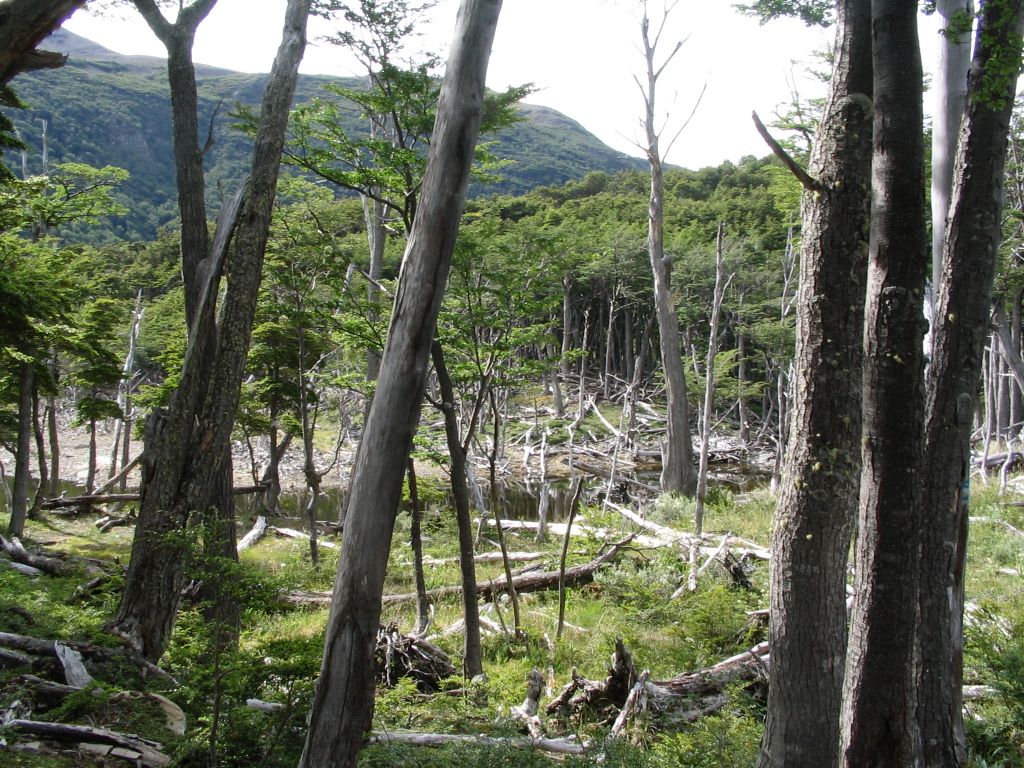
Today, beavers are widespread across the continental United States, Canada, southern Alaska, and have been reintroduced to parts of northern Mexico. They inhabit a wide variety of freshwater environments, including ponds, lakes, rivers, marshes, and streams. They are absent from the deserts of California, Nevada, and parts of Utah and Arizona. Recently, beavers have been observed colonizing Arctic tundra regions, a shift likely facilitated by climate-induced increases in riparian shrubs. The species has also been introduced outside its native range, notably in South America's Patagonia region and parts of Europe such as Finland and Karelia.
Behaviour and Engineering
Beavers are primarily nocturnal and are most vulnerable on land, tending to stay in the water as much as possible. Their complex social and construction behaviours have made them famous. They live in family groups, or colonies, typically consisting of a monogamous pair and their offspring from the current and previous years. Communication within the colony is sophisticated, involving vocalizations like whines, hisses, and growls, tail-slapping on water to warn of danger, and scent marking with castoreum on piles of mud and debris called scent mounds. A single territory can feature over 100 such mounds, with their number often increasing in areas with neighbouring colonies.
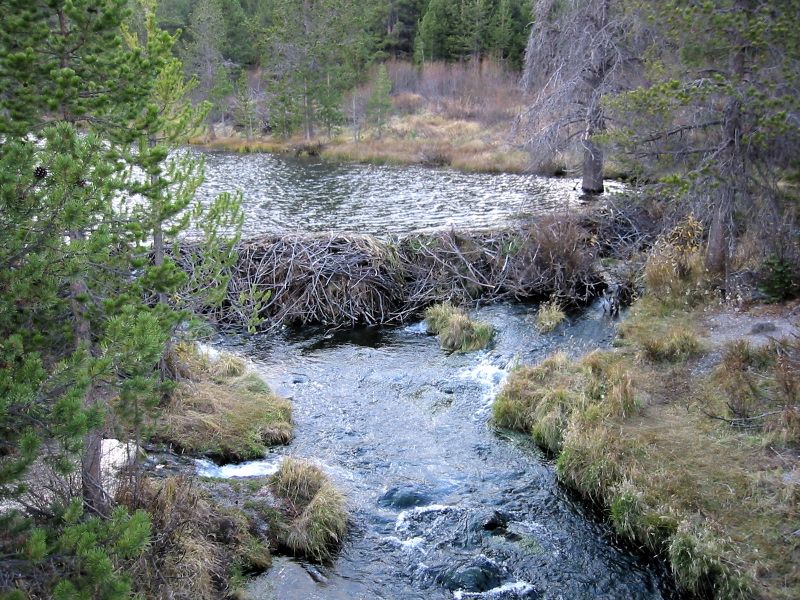
The beaver's signature behaviour is the construction of dams across streams and rivers. Using branches, rocks, grass, and mud, they build structures that slow water flow, creating deep ponds. The primary purposes are to create a predator-free refuge with underwater access to their home and to ensure water depth sufficient to prevent winter freeze-through to their lodge entrances. Dams are built and maintained in response to the sound of running water. The world's largest known beaver dam, discovered via satellite in 2007, is located in northern Alberta's Wood Buffalo National Park and stretches an astonishing 850 metres in length.
Within these ponds, beavers build their homes, called lodges, from sticks, twigs, and mud. Lodges are dome-shaped, can rise over two metres high, and contain a dry living chamber above water level with one or more underwater entrances. For winter, the lodge is often plastered with mud that freezes to a concrete-like hardness. In lakes or large rivers with deep water, beavers may forgo dam-building and instead live in bank lodges, which are burrows dug into riverbanks with underwater entrances. Beavers also dig canals, sometimes over half a kilometre long, to float logs and extend their foraging range safely from the water.
- Dam Purpose: Creates deep-water refuge from predators and stable winter habitat.
- Lodge Function: Provides a dry, sheltered living space with protected underwater access.
- Winter Preparation: Involves plastering lodges with mud and creating underwater food caches.
- Canals: Extend foraging range and facilitate safe transport of building materials and food.
- Food Cache: A pile of branches stored underwater near the lodge, accessed throughout winter.
In preparation for winter, beavers engage in critical behaviours beyond lodge fortification. They create a food cache by cutting and storing branches underwater, usually by sticking the sharp ends into the pond bottom. This cache, often projecting above the water, is their primary food source when ice covers the pond. The frozen combination of branches and surface ice forms an insulating 'cap' over the cache. Beavers may also deliberately lower pond levels in fall to create more air space under the ice or to access trees more easily, sometimes breaching their own dams to do so.
Diet and Ecological Role
Beavers are herbivorous generalists with a diet that shifts seasonally. During spring and summer, they consume a variety of herbaceous plants, including cattails, water lilies, and sedges. The rhizomes of water lilies are particularly important in northern latitudes and are often stored in the winter food cache. As vegetation becomes less available, they switch almost exclusively to the bark, cambium, and twigs of woody plants. Their preferred tree species include aspen, poplar, willow, alder, birch, and maple. They tend to avoid red maple, which can be left standing alone at pond edges. Contrary to popular myth, beavers do not eat fish.
The beaver's function as an ecosystem engineer is significant. By building dams and creating ponds, they fundamentally alter hydrological systems. Beaver ponds create rich wetland habitats that support a high diversity of other species, including waterfowl, fish, amphibians, and invertebrates. The slowed water flow reduces soil erosion, traps sediments, and can improve water quality through natural filtration. The ponds also increase groundwater recharge and can mitigate flooding by retaining water during high-flow periods and slowly releasing it.
Recent analyses, such as WWF-Canada's 2025 Living Planet Report Canada, highlight the interconnected nature of species and the beaver's keystone role. Their population recovery and range expansion can be tied to the presence of other keystone species like wolves. The decline of wolves historically led to overgrazing by herbivores, which reduced riparian vegetation and degraded the stream conditions beavers require. Conversely, wolf reintroduction or recovery promotes healthier riparian zones, which in turn supports beaver colonies. The activities of these beavers then further enhance biodiversity and ecosystem resilience, creating a positive feedback loop that benefits the broader landscape.
Reproduction and Life Cycle
North American beavers are monogamous, with pairs often staying together for multiple breeding seasons. They have one litter per year. The female comes into estrus for a very brief period of 12 to 24 hours sometime between late December and May, with peak activity in January in northern climates. Gestation averages about 128 days. Consequently, kits are typically born between April and June, with timing earlier in warmer southern regions. Litter size ranges from three to six, with four or five being most common. Most females do not reproduce until they are three years old, though approximately 20 percent of two-year-olds will breed.
Prior to birth, the female prepares a soft bedding area inside the lodge. Newborn kits are precocial, born fully furred and with their eyes open. They remain within the safety of the lodge for about a month before beginning to swim and sample solid food. The young beavers, called kits, are highly dependent on their parents and learn essential skills like dam construction and foraging over an extended period. Juvenile beavers usually stay with their family colony for up to two years before dispersing to find mates and establish their own territories. This prolonged parental care is crucial for developing the complex behaviours needed for independent survival.
Conservation History and Status
The story of the North American beaver is a dramatic narrative of overexploitation and recovery. From the 17th to the 19th century, the species was trapped intensively for its valuable pelt, a primary driver of the North American fur trade. This relentless harvest pushed beaver populations to the brink of extinction across much of their range. By the early 20th century, they had vanished from many areas and survived only in scattered, remote pockets. Conservation measures, including changes in trapping regulations, habitat protection, and active reintroduction programs, began to reverse this trend in the 1900s.
Today, the North American beaver is considered a species of Secure status in Canada, with populations rebounding across most of its historical range. Its successful return is one of North America's conservation achievements. However, modern conflicts persist. Beavers are sometimes viewed as nuisances when their dam-building floods roads, agricultural land, or other infrastructure, or when their tree-cutting damages property. These conflicts require careful management that balances the ecological benefits beavers provide with human land-use needs. Legal protections generally make it illegal to disturb or destroy active beaver dams and lodges without permits.
Cultural Significance in Canada
The beaver holds a place of deep cultural and historical significance in Canada. It was officially designated as the national animal of Canada in 1975, cementing its status as an enduring national symbol. Its image has been part of Canadian identity for centuries. The beaver first appeared on the coat of arms of the Hudson's Bay Company in 1671, reflecting its central economic role. The beaver, named 'Amik' (the Algonquin word for beaver), served as the mascot for the 1976 Summer Olympics in Montreal. The beaver is also the official symbol of Parks Canada, representing the agency's stewardship of the nation's natural heritage.
The beaver's legacy extends into commerce, exploration, and national identity. The pursuit of beaver pelts motivated the exploration of the Canadian interior and the establishment of trading posts that evolved into modern cities. This history is acknowledged in countless place names, corporate logos, and cultural references. The beaver embodies traits often associated with Canadians: industriousness, resilience, and a capacity to build and shape the environment. Its story of near-extinction and recovery also mirrors a growing national commitment to conservation and environmental stewardship.
Comparison with the Eurasian Beaver
The North American beaver is one of only two extant beaver species globally, the other being the Eurasian beaver (Castor fiber). The two species are superficially very similar, both being large, semiaquatic rodents with broad, flat tails and dam-building behaviours. However, there are subtle distinctions. On average, the Eurasian beaver is slightly larger, but the North American beaver holds the record for maximum known size. Genetic analysis confirms they are distinct species that cannot interbreed. Historically, some scientists speculated that North American beavers may have once inhabited parts of eastern Eurasia, based on genetic patterns in other species like wolves and moose, but this remains unconfirmed.
The most significant differences are in their chromosomes and skeletal details, such as the shape of the nasal bones. For observers in the wild, visual identification is extremely difficult without genetic testing. The North American beaver has been introduced to parts of Europe where the Eurasian beaver is native, such as Finland and Karelia, leading to potential competition and ecological concerns in those regions. In their native ranges, both species create wetlands that boost biodiversity and improve watershed health.
Questions about North American beaver
Why is the beaver a national symbol of Canada?
The beaver was designated as Canada's national animal in 1975 due to its historical and economic significance. For centuries, the beaver pelt was a primary commodity in the North American fur trade, driving exploration and settlement across the continent. Its image symbolizes industriousness and resilience. The beaver appears on the Canadian nickel, was the mascot for the 1976 Montreal Olympics, and is the symbol for Parks Canada, embedding it in the nation's identity.
What do beavers eat?
Beavers are herbivores with a diet that changes with the seasons. In spring and summer, they eat aquatic plants like cattails and water lilies, along with leaves and sprouts. In fall and winter, they switch to the inner bark, twigs, and buds of trees, preferring species such as aspen, poplar, willow, and maple. They do not eat fish. To survive winter, they create an underwater food cache of branches near their lodge, which they access under the ice.
How do beaver dams help the environment?
Beaver dams create ponds and wetlands that serve as rich habitats for a wide array of species, from fish and frogs to waterfowl and insects. These structures slow water flow, which reduces soil erosion, traps sediments, and can improve water quality. The ponds increase groundwater storage, help mitigate flooding by absorbing peak flows, and can enhance carbon sequestration in wetland soils. Their activities make them important for biodiversity and watershed health.
Are beaver populations still at risk?
No, following severe overhunting during the fur trade era, North American beaver populations have recovered dramatically due to conservation efforts. The species is now considered Secure across most of Canada and the United States. However, they face modern challenges from habitat loss due to urban sprawl and agriculture, and are often in conflict with humans when their flooding activities impact infrastructure. Legal protections and managed coexistence strategies are important for their continued success.
How long can a beaver stay underwater?
A beaver can remain submerged up to 15 minutes. This is a key adaptation for its semiaquatic lifestyle, allowing it to work on dams and lodges or escape from predators. While underwater, its nostrils and ears seal to prevent water entry, and a nictitating membrane covers its eyes for protection. Beavers are excellent swimmers and tend to stay in the water as much as possible because they are more vulnerable on land. Their large lungs and ability to slow their metabolism support these extended dives.
What is the largest beaver dam in the world?
The largest beaver dam is 2,790 ft (850 m) in length, located on the southern edge of Wood Buffalo National Park in northern Alberta. It was discovered via satellite imagery in 2007 and is more than half a mile long. This dam is more than twice the width of the Hoover Dam. Beavers build dams to create deepwater refuges from predators and to ensure their pond does not freeze solid in winter. The structure is constructed from branches, rocks, grass, and mud, and its immense size demonstrates the species' engineering impact.
Sources and further reading
- North American beaver (Wikipedia)
- Species Profile, North American Beaver (bcwfwatershedteam.ca)
- Beaver (nationalzoo.si.edu)
- LPRC 2025 species profile: North American beaver (Castor ... (wwf.ca)
Checked by the Your Space Hamilton desk. Last updated 2026-10-24.