Muskrat
The muskrat (Ondatra zibethicus) is a medium-sized semiaquatic rodent native to North America and a significant component of Canadian wetland ecosystems. As the largest species in the subfamily Arvicolinae, which includes voles and lemmings, it is a prolific herbivore that shapes the vegetation and structure of marshes, ponds, and rivers. The species has long been an important resource for Indigenous peoples and fur trappers, and its fur is used in the winter hats of the Royal Canadian Mounted Police. While still widespread, muskrat populations have experienced significant declines in parts of its native range, and it is considered a problematic invasive species in parts of Europe where it was introduced for fur farming in the early 20th century.
Physical Description and Adaptations
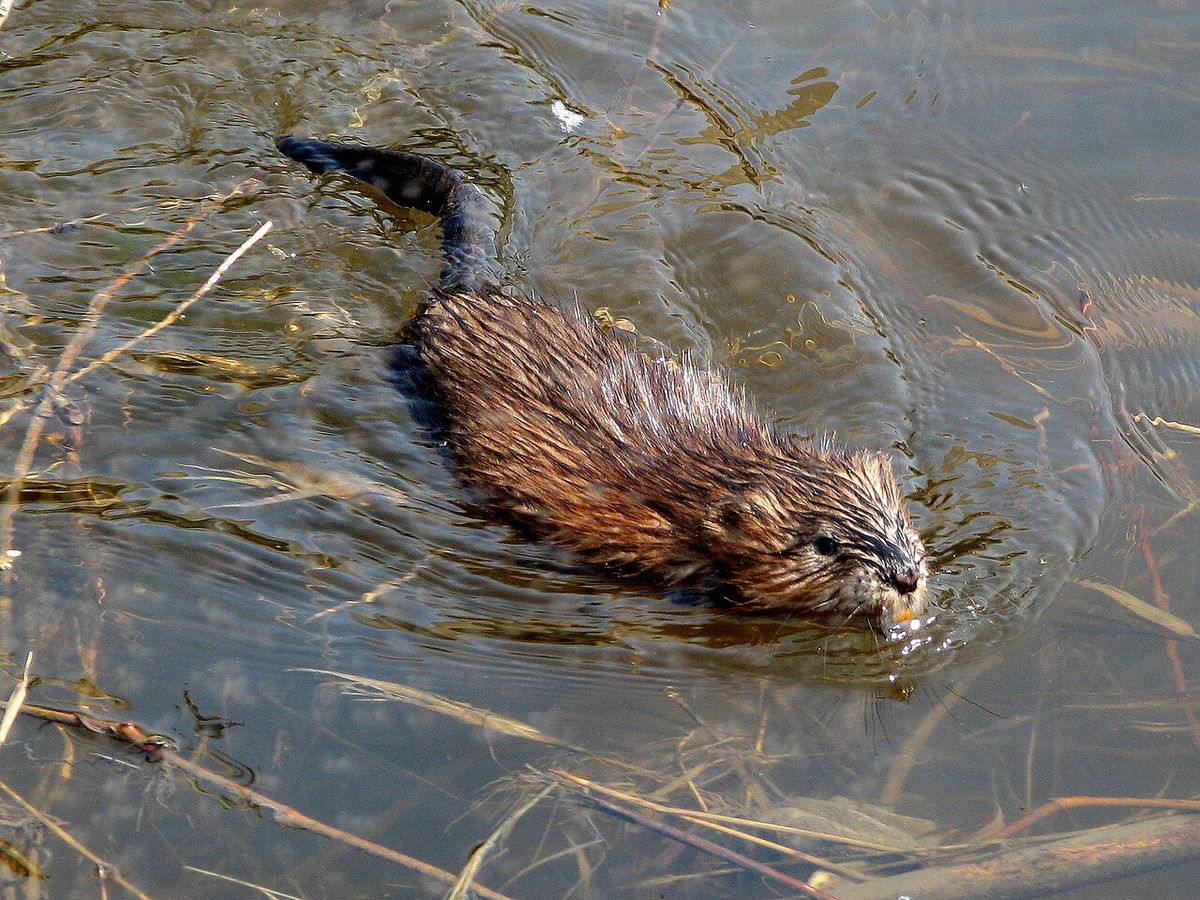
The muskrat is a stocky rodent, weighing between 0.6 and 2 kilograms and measuring 40 to 70 centimetres in total length, with its distinctive scaly tail accounting for roughly half that measurement. Its body is covered in a dense, two-layered coat of medium to dark brown fur, which provides insulation in cold water, with a lighter-coloured belly exhibiting countershading. As the animal ages, its fur often turns partly grey. The muskrat's adaptations for its semiaquatic lifestyle include partially webbed hind feet that serve as the primary means of propulsion in water. Its unique tail is vertically flattened, acting as a rudder for directional control while swimming, and contains the musk glands from which the animal derives its name. Muskrats can close their ears to keep out water and are tolerant of carbon dioxide buildup, allowing them to remain submerged for 12 to 17 minutes at a time. Their bodies are less sensitive to carbon dioxide than those of most other mammals, a trait shared with seals and whales. The muskrat is much smaller than a beaver, with which it often shares habitat, but it is about four times the weight of the brown rat and is one of the heaviest members of the diverse Cricetidae family, which includes all voles, lemmings, and most mice native to the Americas.
Behaviour and Life History
Muskrats are social animals that typically live in family groups consisting of a male and female pair and their offspring. During the spring, they often fight with other muskrats over territory and potential mates, and many are injured or killed in these conflicts. They are most active during the night or around dawn and dusk, and they establish and follow well-defined trails through their swamp and pond habitats, even continuing to use them under winter ice. These rodents are prolific breeders, with females capable of producing two or three litters annually, each containing six to eight young. The babies are born small and hairless, weighing only about 22 grams, and they reach maturity in about six months in southern climates or a full year in colder northern regions. Muskrat populations undergo natural cycles of boom and bust, with significant rises and declines occurring over a six- to ten-year period, a pattern shared with some of its vole and lemming relatives. While they may appear to steal food from beaver caches, observations have also shown seemingly cooperative interactions between the two species in shared habitats, as featured in wildlife documentaries.
Muskrat behaviour is heavily centred on construction for shelter and feeding. They build several types of structures, each serving a specific purpose in their wetland environment. In streams, ponds, or lakes, they dig bank burrows with underwater entrances 15 to 20 centimetres wide for protection from cold and predators. In marshy areas, they construct dome-shaped houses called push-ups from vegetation and mud, which can be up to 90 centimetres tall. In snowy regions, they plug the entrances daily with fresh vegetation to retain heat, and some lodges are swept away in spring floods and must be rebuilt yearly. They also build feeding platforms in the water from cut pieces of vegetation supported by a branch structure, which they use for eating. These constructions have significant ecological effects, as the muskrats' harvesting of vegetation helps maintain open water areas in marshes, which in turn provides crucial habitat for various aquatic bird species. In winter, the vegetation composing muskrat push-ups can also become an emergency food source for large ungulates like caribou, moose, and elk when other forage is scarce.
Diet and Ecological Role
Muskrats are primarily herbivores, with plant material composing about 95 percent of their diet. They are selective feeders with a strong preference for specific aquatic plants, most notably cattails (Typha) and yellow water lily (Nuphar lutea). This selective feeding behaviour allows them to play a major role in determining the plant species composition and structure of wetlands, particularly in prairie ecosystems. They do not store food for winter but may consume the insides of their push-ups when other resources are scarce. Although plant-based, their diet is supplemented with small animal prey, including freshwater mussels, frogs, crayfish, fish, and small turtles. Muskrats themselves are a vital prey species, forming an important part of the food web for a wide array of predators across North America. In their introduced range in the former Soviet Union, the golden jackal is their greatest predator, with one winter study in the Amu Darya river finding muskrats constituted 12.3 percent of jackal feces contents and jackals destroyed 71 percent of muskrat houses, 16 percent of which then froze and became unusable.
The muskrat is a keystone prey species, supporting populations of numerous predators across its native and introduced ranges. Key mammalian predators include the American mink, foxes, coyotes, gray wolf, American black bears, lynxes, and raccoons. Major avian predators are great horned owls, bald eagles, golden eagles, American goshawks, and gyrfalcons. Reptilian and piscine predators include snapping turtles, American alligators, black snakes, cottonmouths, and northern pike, with the absence of muskrats from Florida possibly linked to alligator predation. In Eurasia, the introduced golden jackal heavily preys on muskrats and also harms the fur industry by taking animals from traps or skins left to dry. Their role extends beyond being prey, as their feeding and lodge-building activities physically alter wetland habitats, creating open water and influencing which plant species thrive or diminish in a given area.
Distribution, Habitat, and Population Trends
The muskrat is native to most of Canada, the continental United States, and a small portion of northern Mexico. It is notably absent from Florida, where its ecological niche is filled by the round-tailed muskrat (Neofiber alleni). Its preferred habitat is wetlands, including freshwater and saline marshes, rivers, lakes, and ponds. The species has proven adaptable, even colonizing human-made waterways like irrigation canals and acequias, and it can tolerate environments such as streams draining from coal mines that are lethal to fish and frogs. Despite this adaptability, significant population declines have been recorded in its native range. According to a 2024 report in Hakai Magazine, muskrat numbers have fallen by at least half in 34 U.S. states, with collapses of 90 to 99 percent in a handful of states. The decline began in the 1990s and early 2000s, with states like Rhode Island now estimated to have only about 15 percent of their historical muskrat population. While much natural wetland habitat has been lost to human activity, the creation of new waterways has provided alternative habitat, and the species remains widespread in Canada though subject to natural population cycles.
The muskrat was introduced to Europe at the beginning of the 20th century for fur farming, with the first recorded release of five individuals (two males and three females) by the House of Colloredo-Mansfeld in Dobříš, Czech Republic, in 1905. It has since spread extensively and is now classified as an invasive alien species of Union concern by the European Union as of August 2, 2017, meaning it cannot be imported, bred, transported, commercialized, or intentionally released. In low-lying countries like Belgium, France, and the Netherlands, the muskrat is considered a serious pest because its burrowing activities damage dikes and levees that are critical for flood control. These nations, along with others, have implemented extensive trapping, poisoning, and hunting programs to control its population and mitigate ecological and infrastructural damage. The muskrat is also classed as a prohibited new organism under New Zealand's Hazardous Substances and New Organisms Act 1996, preventing its importation into that country.
Human Use and Cultural Significance
The muskrat has been an important resource for humans for centuries. Its thick, warm fur becomes prime in early December in northern regions and became the basis of a significant trapping industry in the early 20th century. The fur was often specially trimmed and dyed to be sold widely in the United States as "Hudson seal" fur. Notably, the winter hats of the Royal Canadian Mounted Police are traditionally made from muskrat fur. The animal has also served as a food source, particularly for some Indigenous communities and, in a unique cultural tradition, for certain Catholic communities in southeastern Michigan and along the Detroit River. A longstanding dispensation allows the consumption of muskrat on days when the eating of meat is otherwise prohibited, such as Lenten Fridays and Ash Wednesday, due to its historical classification as an aquatic animal. Preparation involves careful removal of the musk glands from the tail to prevent the meat from being tainted. Community dinners during Lent can consume up to 900 muskrats, prepared by gutting and cleaning the carcass, parboiling the meat for four hours with onion and garlic, and finally frying it.
In Indigenous cultures, the muskrat holds a place of importance in practical and spiritual life. Some nations used observations of muskrat lodge size and timing of construction to predict winter snowfall levels. Most significantly, the muskrat features in the creation myths of several peoples, including the Haudenosaunee (Iroquois). In these stories, after other animals fail, the muskrat dives to the bottom of the primordial waters to retrieve a pawful of mud, which is then used to create the earth. The animal's name itself has Indigenous origins, deriving from words in Algonquian languages such as muscascus (literally "it is red") or the Abenaki word mòskwas, seen in the archaic English name musquash. The association with its musky odour later altered the name to musk-beaver and then to muskrat due to its perceived resemblance to rats.
Taxonomy, Subspecies, and Etymology
The muskrat is the sole extant species within the genus Ondatra. Its closest living relative is the round-tailed muskrat (Neofiber alleni) of Florida. It holds the distinction of being the largest species in the subfamily Arvicolinae, a group that encompasses 142 other species of rodents, primarily voles and lemmings. The scientific name Ondatra zibethicus reflects its characteristics and origin. The genus name Ondatra comes from the Huron word for the animal, ondathra, which entered Neo-Latin via French. The specific epithet zibethicus means "musky," being the adjective of zibethus meaning "civet musk," and references the odor from its scent glands. Biologists recognize 16 distinct subspecies of Ondatra zibethicus across its vast range, reflecting regional variations in size and colouration from northern Canada to the southern United States.
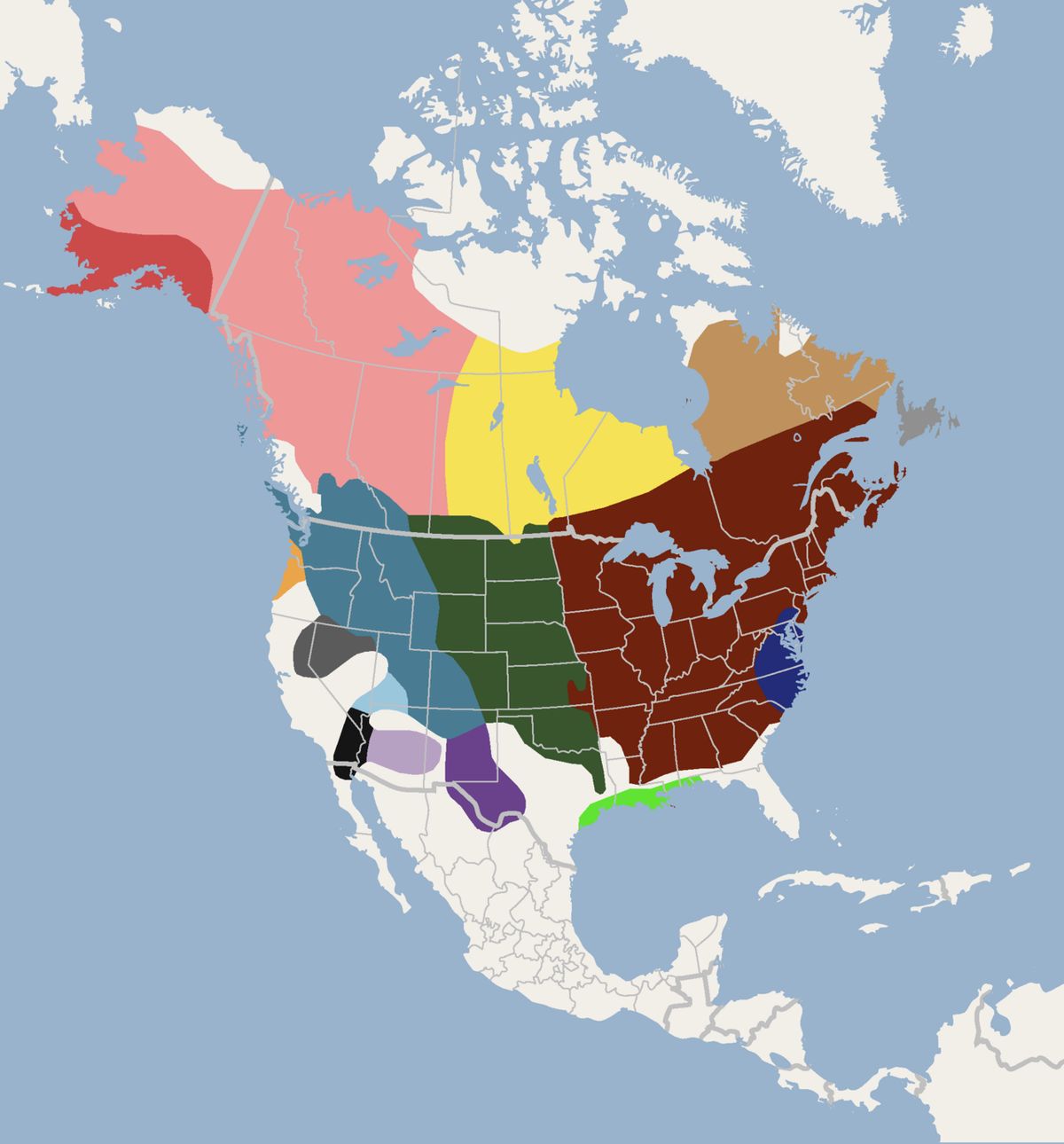
The common muskrat, Ondatra zibethicus, has sixteen recognized subspecies. These subspecies are O. z. albus, O. z. aquihnis, O. z. bemardi, O. z. cinnamominus, O. z. macrodom, O. z. mergens, O. z. obscurus, O. z. occipitalis, O. z. osoyoosensis, O. z. pallidus, O. z. ripensis, O. z. rivalicus, O. z. roidmani, O. z. spatulatus, O. z. zalaphus, and O. z. zibethicus. The muskrat can be infected by the trematode parasite Metorchis conjunctus. This single species is native to a wide range across North America, from most of Canada and the United States to a small part of northern Mexico. Its successful adaptation to various wetland habitats is reflected in this broad geographic distribution and its multiple subspecies.
Questions about Muskrat
What does a muskrat look like?
A muskrat is a medium-sized, stocky rodent with dark brown, water-repellent fur and a lighter belly. It has a body length of 20 to 35 centimetres not including its tail. Its most distinctive feature is its long, scaly, vertically flattened tail, which measures nearly as long as its body. It has small ears, partially webbed hind feet for swimming, and weighs between 0.6 and 2 kilograms, making it about four times heavier than a common brown rat but much smaller than a beaver.
Where do muskrats live in Canada?
Muskrats are found in wetlands across most of Canada, from coast to coast. They inhabit a variety of freshwater and saline environments, including marshes, ponds, lakes, rivers, and streams. They are highly adaptable and also thrive in human-made waterways such as irrigation canals and drainage ditches. Their presence is crucial for maintaining the ecological health of these wetland habitats through their feeding and construction activities.
What do muskrats eat?
Muskrats are primarily herbivores, with about 95 percent of their diet consisting of aquatic plants. They show a strong preference for cattails and yellow water lilies. They also consume other vegetation and will occasionally eat small animal prey such as freshwater mussels, crayfish, frogs, fish, and small turtles. They do not store food for winter but may eat the inner lining of their own lodges during harsh conditions.
Are muskrats endangered?
Muskrats are not currently classified as endangered on a global scale. In Canada, where they are native, they remain widespread. However, significant population declines have been documented in the United States since the 1990s. According to a 2024 report, muskrat populations have declined by at least one half in 34 US states, with some states seeing near total collapses of 90 to 99 percent. The causes of this widespread decline are not fully understood.
Why are muskrats a problem in Europe?
Muskrats are considered a problematic invasive alien species in Europe. They were introduced in the early 20th century for fur farming. Their burrowing activities damage river banks, flood control systems like dikes and levees, and agricultural crops. This damage is particularly concerning in low lying countries such as the Netherlands and Belgium, where it increases flood risk. The European Union has listed the muskrat as an invasive species of Union concern, leading to bans on import and release, and many countries have implemented control and eradication programs.
What is the connection between muskrats and the RCMP?
The muskrat has a practical connection to Canadian law enforcement through its fur. The distinctive winter hats worn by the Royal Canadian Mounted Police are traditionally crafted from muskrat fur. The fur is prized for its warmth and durability, becoming prime in early December, making it suitable for the cold weather conditions faced by officers on duty. This use stems from the historical importance of muskrat in the North American fur trade, where its pelt was a major commodity.
Sources and further reading
- Muskrat (Wikipedia)
- Muskrat (hww.ca)
- What Does a Muskrat Look Like? (crittercontrol.com)
- Muskrat (sierraclub.bc.ca)
- Fish and Wildlife: Muskrat (in.gov)
Checked by the Your Space Hamilton desk. Last updated 2026-10-22.