Mountain goat
The mountain goat (Oreamnos americanus), also known as the Rocky Mountain goat, is a cloven-footed mammal endemic to the remote and rugged mountains of western North America. This sure-footed climber is a truly alpine species, commonly seen on sheer rock faces and near-vertical cliffs across the Western Cordillera. In Canada, the animal holds significant ecological and cultural importance, with British Columbia supporting half of the world's mountain goat population. Its thick white coat and specialized climbing adaptations allow it to thrive in harsh, high-elevation environments where few other large mammals can survive, from the coastal ranges to the interior Rockies.
Classification and Evolution
The mountain goat is an even-toed ungulate within the order Artiodactyla and the family Bovidae, placing it alongside antelopes, gazelles, and cattle. It belongs to the subfamily Caprinae, a group that includes true goats, wild sheep, the chamois, and the muskox. Despite its common name, the mountain goat is not a true goat of the genus Capra but is more closely allied with the other bovids known as goat-antelopes, which include the European chamois, the gorals, the takins, and the serows of Japan and eastern South Asia. The mountain goat is the only living species in the genus Oreamnos, a name derived from the Greek words for 'mountain' and 'lamb'. The mountain goat lineage diverged from its relatives in the late Tortonian epoch, approximately 7.5 to 8 million years ago. All major caprine lineages likely emerged in the Late Miocene between today's Tibet and Mongolia, with the mountain goat's ancestors crossing the Bering Strait into North America before the Wisconsinian glaciation. The known fossil record in North America is fairly recent and barely differs from living animals, with a prehistoric sister species, Oreamnos harringtoni, living in the southern Rocky Mountains during the Pleistocene. Ancient DNA studies suggest the living species also dates back to at least the Pleistocene and is not directly descended from O. harringtoni.
Physical Characteristics and Adaptations
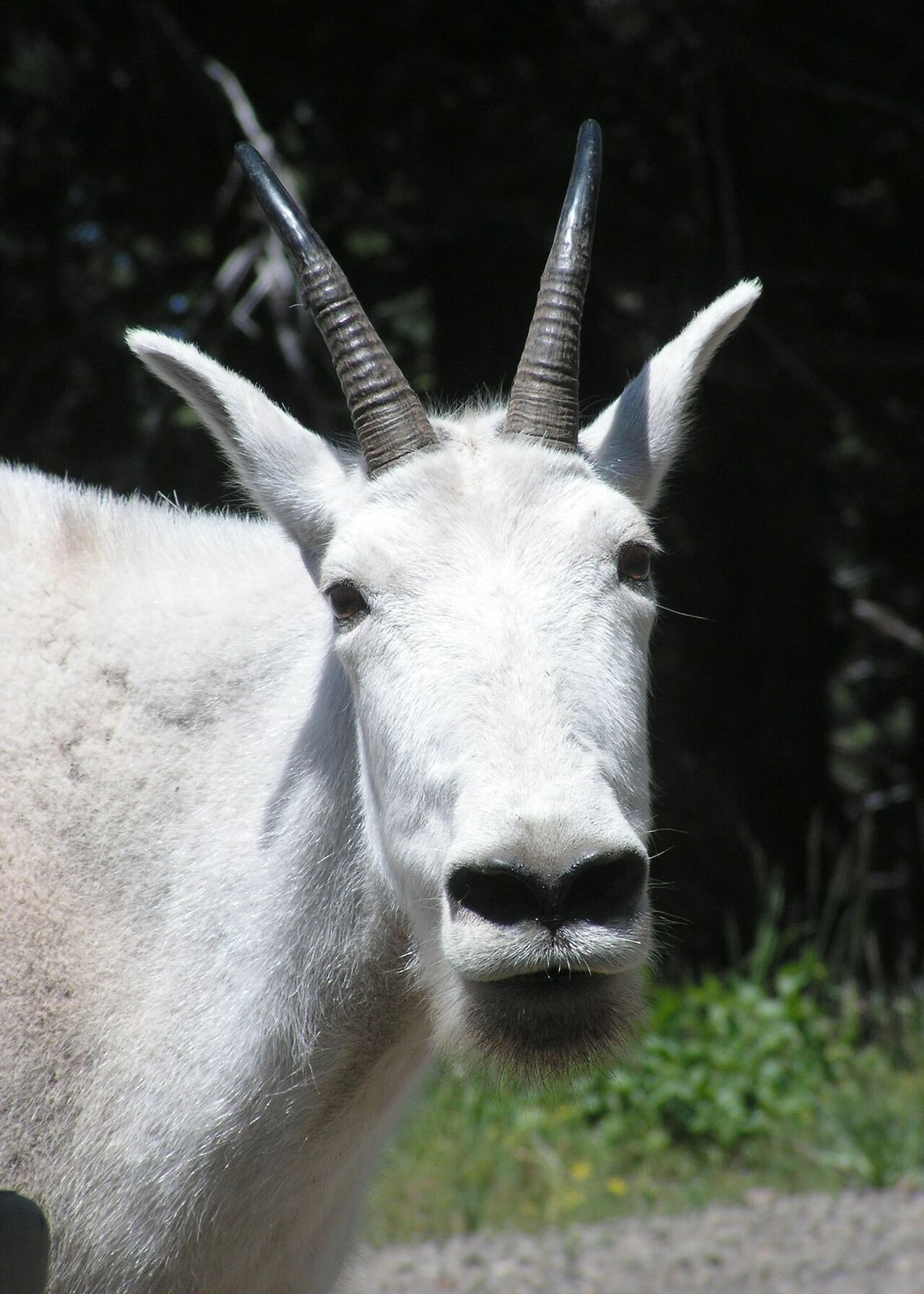
Mountain goats are instantly recognizable by their woolly, greyish-white double coats and contrasting black horns. Both males, known as billies, and females, known as nannies, possess beards, short tails, and long black horns ranging from 15 to 28 centimetres in length, which contain yearly growth rings. Their fine, dense undercoat is covered by an outer layer of longer, hollow hairs, providing insulation that allows them to withstand winter temperatures as low as -46°C and winds up to 160 kilometres per hour. In spring, they molt by rubbing against rocks and trees, with adult billies shedding their extra wool first and pregnant nannies shedding last. Males are larger than females, standing about one metre at the shoulder to the waist and often weighing around 30 percent more, and they also have longer horns and beards. Their most remarkable adaptations are for climbing steep, rocky slopes with pitches exceeding 60 degrees. Their cloven hooves have rough, rubbery inner pads for traction and can spread apart, while sharp dewclaws on the tips of their feet prevent slipping. Powerful shoulder and neck muscles help propel them up slopes. Research in the Canadian Rockies documented a specific climbing technique involving a two-phase movement where the goat extends its back legs and tucks its front legs first, then raises its back legs while keeping the front leg's humerus locked, allowing the elbow to remain close to the body's centre of balance for stable ascent.
Range, Habitat and Movement
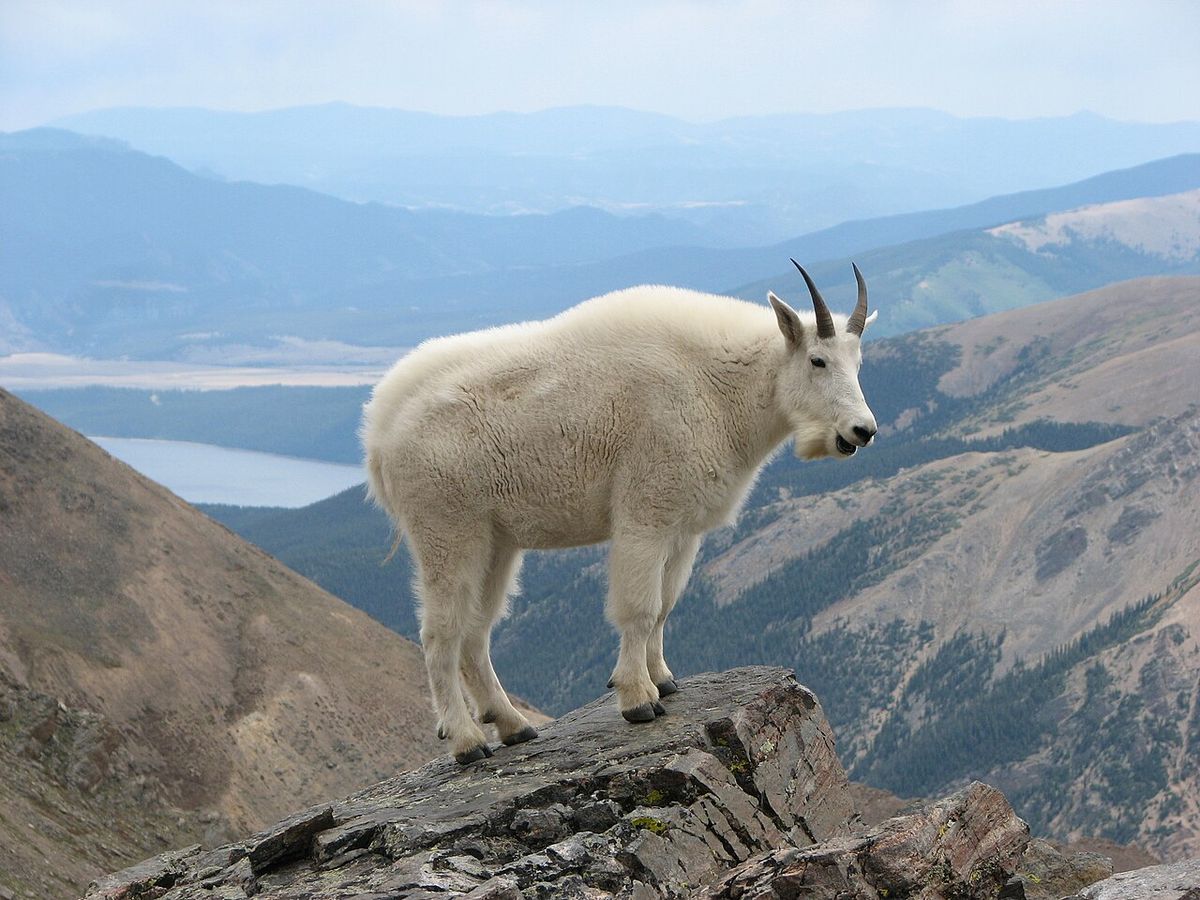
The mountain goat's native range spans the Rocky Mountains, Cascade Range, and other mountain regions of the Western Cordillera from Washington, Idaho and Montana through British Columbia and Alberta, into the southern Yukon and southeastern Alaska. Its northernmost range is modelled to be in the Talkeetna Mountains in south-central Alaska. British Columbia is a global stronghold for the species, containing an estimated half of the world's total population. Their habitat is exclusively alpine and subalpine, typically at or above the tree line in elevations that can exceed 4,000 metres, and they are the largest mammals routinely found in these extreme high-altitude environments. They sometimes descend to sea level in coastal areas but primarily remain alpine. Daily movements by individual goats are confined to areas on the same mountain face or drainage basin for foraging, resting, and security. Seasonal movements reflect nutritional needs, such as trips to mineral licks, reproductive needs like movement to kidding or rutting areas, and climatic influences. These seasonal movements often have a strong elevational component, using lower, forested elevations during spring and summer for security cover to access mineral licks and during winter for thermal cover and forage. The farthest movements are undertaken by dispersing goats, which may cross forested valleys to move between mountain blocks.
- Native Provinces/Territories: British Columbia, Alberta, Yukon, southeastern Alaska.
- Introduced Areas: Idaho, Wyoming, Utah, Nevada, Oregon, Colorado, South Dakota, Washington's Olympic Peninsula.
- Key Habitat Features: Alpine and subalpine zones above tree line, sheer rock faces, cliffs.
- Seasonal Movement Drivers: Access to mineral licks, kidding, rutting, winter forage, and thermal cover.
Diet and Foraging
Mountain goats are herbivores that spend most of their time grazing on the sparse vegetation of their high-altitude homes. Their diet is highly varied and changes with seasonal availability, designed to extract maximum nutrition from a challenging environment. Key dietary components include grasses, herbs, sedges, ferns, mosses, and lichens. They also browse on twigs and leaves from the low-growing shrubs and conifers found in their habitat. Access to mineral licks, which provide essential salts and minerals not readily available in their primary forage, is a crucial nutritional need that can prompt longer seasonal movements into forested valleys. In captive settings, such as zoos, their diet is often supplemented with grain, alfalfa, fruits, and vegetables to ensure balanced nutrition. Their daily movements are largely confined to a particular mountain face or drainage basin and are driven by the need to find food, rest, regulate body temperature, and avoid predators, with foraging being a primary activity throughout the daylight hours.
Life Cycle and Reproduction
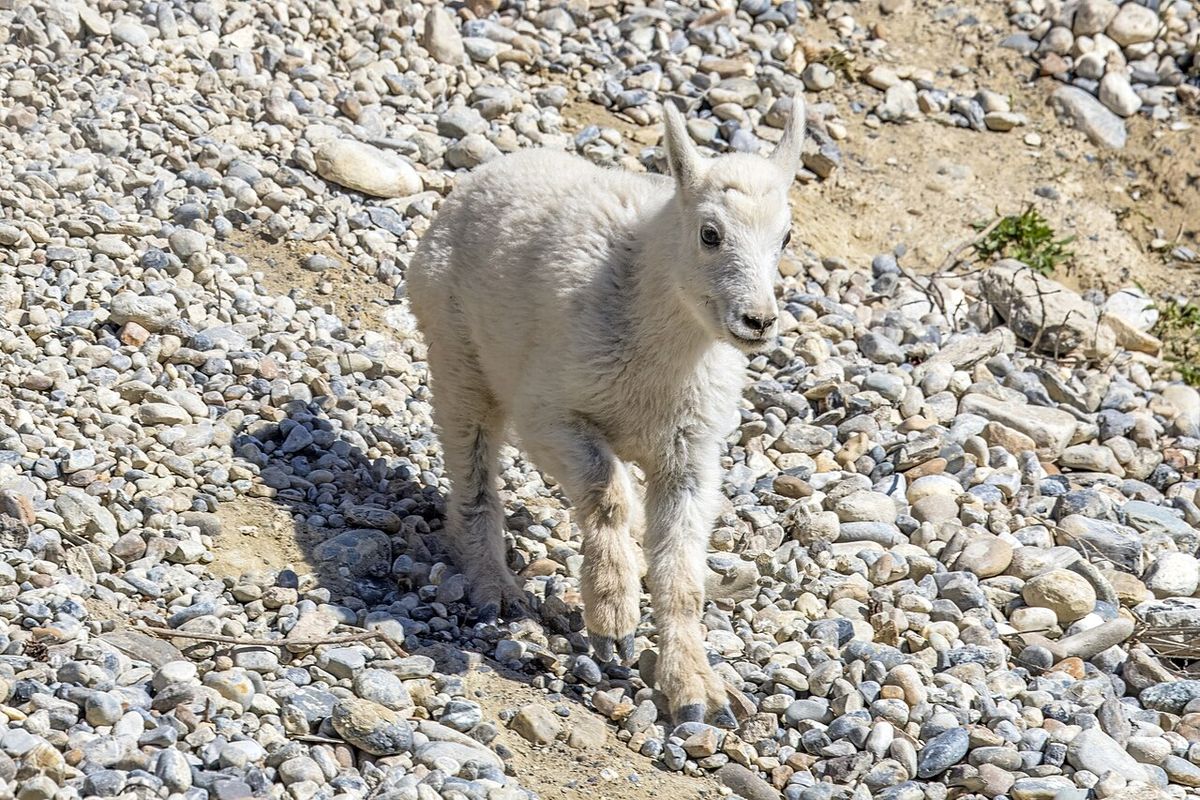
In the wild, mountain goats typically live 12 to 15 years, with their lifespan ultimately limited by the wearing down of their teeth from grinding alpine vegetation. In the protected conditions of zoos, they can live for 16 to 20 years. They reach sexual maturity at about 30 months of age. The breeding season, or rut, occurs from late October through early December when nannies undergo synchronized estrus. During this time, mature males engage in conspicuous displays to attract females, including staring for long periods, digging rutting pits, and engaging in dramatic, showy fights with other billies. Nannies often ignore younger males in favor of older partners. Both sexes usually mate with multiple individuals during the season, although some males try to keep others away from certain females. After breeding, the sexes separate, with nannies forming loose-knit nursery groups of up to 50 animals, while adult billies leave, often alone or with two or three other males. Following a six-month gestation period, nannies give birth in late May or June, usually to a single kid, after moving to an isolated ledge. They lick the kid dry and ingest the placenta. Newborn kids weigh just over three kilograms and are remarkably precocial, beginning to run and climb within hours. Although nursing is mostly finished after one month, kids follow their mothers closely for the first year of life or until the nanny gives birth again. Nannies protect their young by leading them from danger, standing over them when faced by predators, and positioning themselves below their kids on steep slopes to stop freefalls.
Behaviour, Predation and Conflicts
Mountain goat social structure is matriarchal, with nannies being very competitive and protective of their space and food sources. They fight with one another for dominance in conflicts that can involve all the nannies in a herd, circling with heads lowered to display their horns. These clashes are usually harmless but can occasionally lead to injury or death. To avoid fighting, an animal may show a posture of nonaggression by stretching low to the ground. Their primary defence against predators is the inaccessibility of their cliffside habitat, but they must still contend with several threats. Predators including wolves, wolverines, lynxes, and bears will attack goats of most ages given the opportunity. The cougar, or mountain lion, is considered the primary predator, being powerful enough to overwhelm the largest adults and agile enough to move through the rocky ecosystem. Although their size protects them at high altitudes, nannies must sometimes defend their kids from both bald and golden eagles. Nannies have also been observed trying to dominate the more passive bighorn sheep that share some of their territory. In a notable 2021 event in Yoho National Park, British Columbia, a mountain goat gored a grizzly bear to death. Introduced populations have created significant management issues. Goats introduced to Washington's Olympic Mountains in the 1920s became a nuisance due to the park's lack of natural salt licks, leading them to aggressively seek human urine and sweat for salt. This behaviour culminated in a goat killing a hiker in 2010, prompting officials to eradicate them from the Olympic Peninsula, mostly by capture and relocation to the Cascade Mountains.
| Predator/Threat | Type of Threat | Notes |
|---|---|---|
| Cougar (Mountain Lion) | Primary predator | Powerful and agile enough to hunt adults in steep terrain. |
| Wolves, Bears, Wolverines | General predators | Attack when goats descend to forested areas or are vulnerable. |
| Bald and Golden Eagles | Predator of kids | Nannies actively defend young from aerial attacks. |
| Avalanches | Natural mortality | Account for 23-65% of mortality in some Alaskan regions. |
| Human Conflict | Introduced populations | Led to aggressive behaviour and fatal incident in Olympic Mountains. |
Conservation and Human Relations
Mountain goats have never been domesticated or commercialized for their wool, but they hold a place in Indigenous material culture. Pre-Columbian Indigenous peoples of the Pacific Northwest Coast collected the wool shed during the spring molt from wild goats and incorporated it into their weaving traditions. The species faces natural threats in its environment, with avalanches being a significant and variable cause of mortality depending on the region. Their remote habitat offers considerable protection from human development, but introduced populations have sometimes created complex management challenges that require active intervention, as seen in the Olympic Peninsula case. Conservation efforts in Canada focus on habitat preservation within extensive protected areas like national parks and on population monitoring. Their status as a large mammal uniquely adapted to the alpine zone makes them a species of significant interest for wildlife viewing, scientific study, and as an indicator of ecosystem health in Canada's western mountains.
Questions about Mountain goat
Are mountain goats actually goats?
Despite their common name, mountain goats are not true goats belonging to the genus Capra, which includes domestic goats. They are more closely related to a group known as goat-antelopes, which includes the chamois of Europe and the serows and gorals of Asia. They are the only living species in the genus Oreamnos and belong to the broader Bovidae family, which also includes antelopes, cattle, and sheep. Their evolutionary lineage split from their closest relatives around 7.5 to 8 million years ago.
Where can you see mountain goats in Canada?
Mountain goats are found in the rugged mountain ranges of western Canada, primarily in British Columbia, Alberta, and the southern Yukon. British Columbia supports the largest population, estimated to be half of the world's total. They inhabit alpine and subalpine regions, often above the tree line in national parks such as Banff, Jasper, Yoho, and Glacier. Their range extends from the coastal Cascade Range through the interior Rockies, and they are sometimes seen descending to lower elevations near mineral licks or in coastal areas.
How do mountain goats climb so well?
Mountain goats possess several specialized anatomical adaptations for climbing steep, rocky terrain. Their cloven hooves have rough, flexible inner pads that provide grip and can spread apart for stability on narrow ledges. Sharp dewclaws on the back of their feet act like climbing picks to prevent slipping. They have incredibly powerful shoulder and neck muscles that propel them up slopes exceeding 60 degrees. Research in the Canadian Rockies documented a specific two-phase climbing technique that keeps the animal's centre of mass balanced, allowing for efficient vertical movement on near-vertical surfaces.
What do mountain goats eat?
Mountain goats are herbivores with a diverse diet suited to their sparse alpine habitat. They graze on grasses, sedges, herbs, ferns, mosses, and lichens. They also browse on the twigs and leaves of low-growing shrubs and conifers. Access to natural mineral licks is an important part of their nutrition, providing essential salts and minerals not readily available in their primary forage, which can prompt them to descend to lower elevations seasonally. In captivity, their diet is supplemented with grains, alfalfa, fruits, and vegetables.
What are the main predators of mountain goats?
The primary predator of mountain goats is the cougar, or mountain lion, due to its strength and exceptional agility in rocky terrain. Other predators include wolves, wolverines, lynxes, and both black and grizzly bears. Their high-altitude habitat is their main defence, but predators will attack when given the opportunity, especially when goats descend to forested areas. Golden and bald eagles are a significant threat to newborn kids, and nannies are vigilant in defending their young from aerial attacks. Avalanches also represent a major non-predatory source of mortality.
How long do mountain goats live and how do they reproduce?
In the wild, mountain goats typically live 12 to 15 years, with their lifespan limited by tooth wear. They reach sexual maturity at about 30 months. Breeding occurs from late October to early December, after which males and females separate. After a six-month gestation, a single kid is born in late spring. The kid is able to follow its mother and climb within hours and will stay with her for at least a year. Nannies are highly protective, using their bodies to shield kids from predators and positioning themselves below them on slopes to prevent falls.
Sources and further reading
- Mountain goat (Wikipedia)
- Mountain Goat (Oreamnos americanus) Species Profile (adfg.alaska.gov)
- Mountain Goat (nationalgeographic.com)
- Stuffed Animal Safari: Mountain Goats (carnegiemnh.org)
- Wild Aware Utah | Mountain goats (wildawareutah.org)
Checked by the Your Space Hamilton desk. Last updated 2026-10-22.