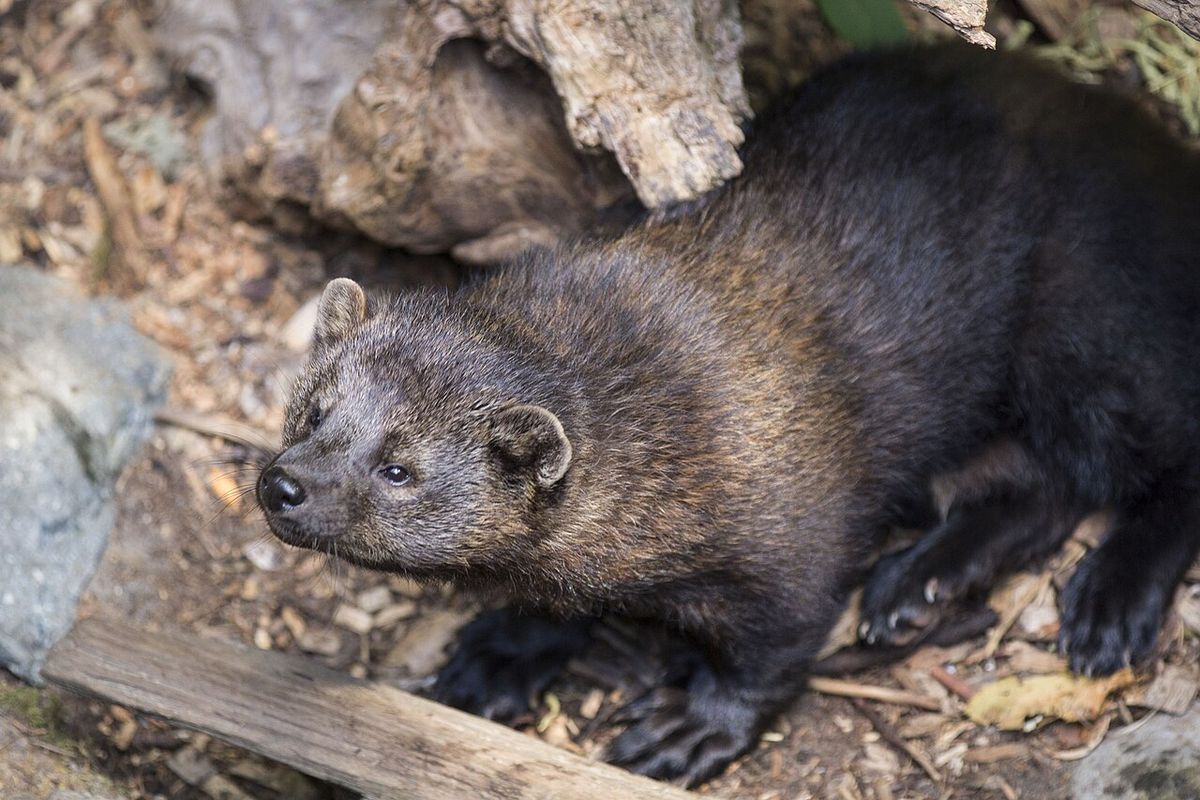
Long-tailed weasel
The long-tailed weasel (Neogale frenata), also known as the bridled weasel or masked ermine, is a small, slender carnivore found across the Americas, with a range extending from southern Canada through the United States, Mexico, Central America, and into northern South America. It is one of the larger weasel species in North America, characterized by its elongated body, short legs, and a distinctive black-tipped tail that remains year-round. This adaptable predator inhabits a variety of environments, from forests and meadows to suburban areas, playing a crucial role in controlling rodent populations. For Canadians, the long-tailed weasel is a widespread mammal that undergoes a striking seasonal colour change, molting to a white winter coat in northern regions to blend with the snow.
Taxonomy and Evolution
The long-tailed weasel was first scientifically described as Mustela frenata by Hinrich Lichtenstein in 1831. For many decades, it was classified within the genus Mustela alongside other weasels and stoats. A significant taxonomic revision occurred in 2021, when a study published in the Journal of Animal Diversity by Bruce Patterson and colleagues reclassified the species into the genus Neogale. This new genus also includes several other former Mustela species from the Americas. The evolutionary history of the long-tailed weasel began 5 to 7 million years ago, driven by environmental changes that prompted the diversification of small, burrowing rodents. The ancestors of the modern weasel were larger and underwent a reduction in size to specialize in hunting these new prey sources. The species as we know it arose in North America approximately 2 million years ago. It thrived during the Ice Age, as its elongated body was well-suited for hunting beneath the snow. While its close relative, the stoat (Mustela erminea), evolved in Eurasia and crossed into North America via the Bering land bridge around half a million years ago, the long-tailed weasel remained confined to the Americas and never spread into Eurasia.
Physical Description
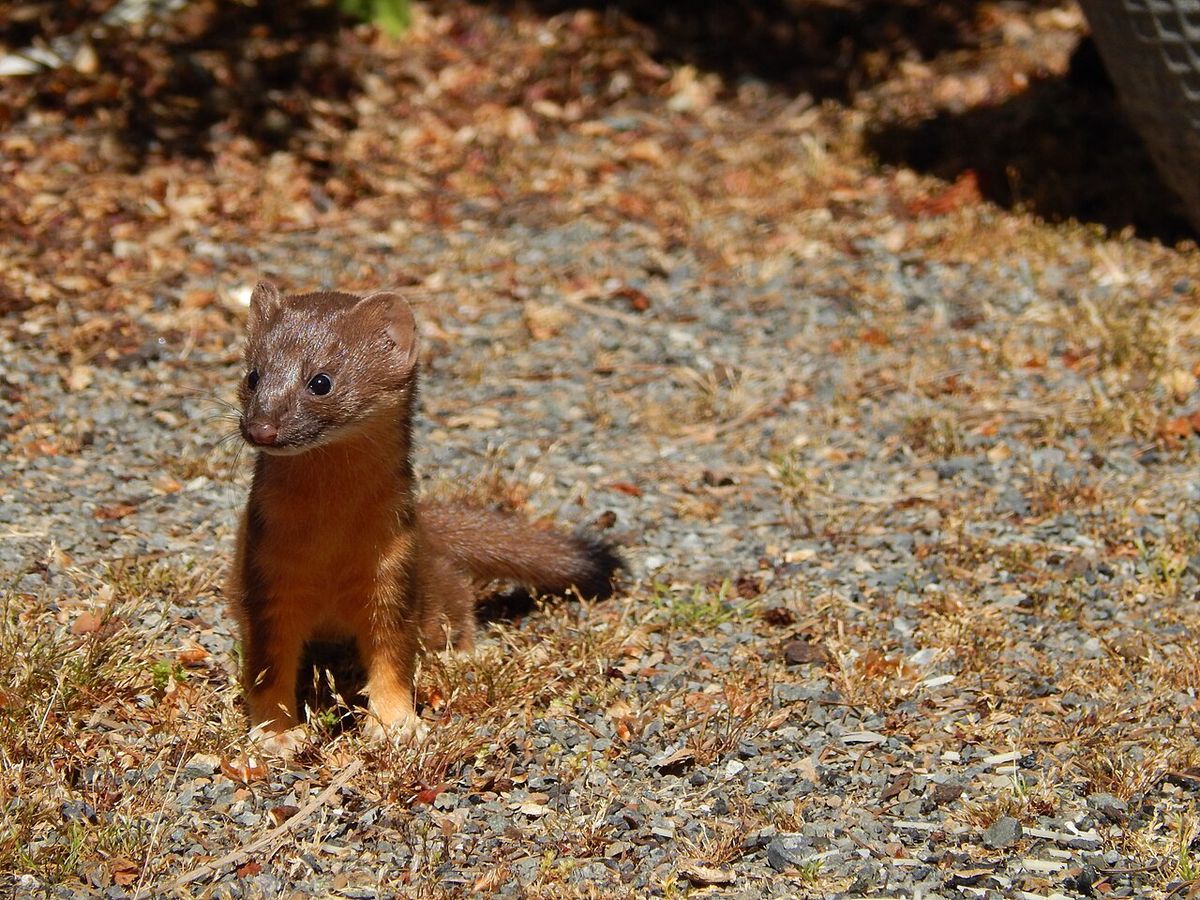
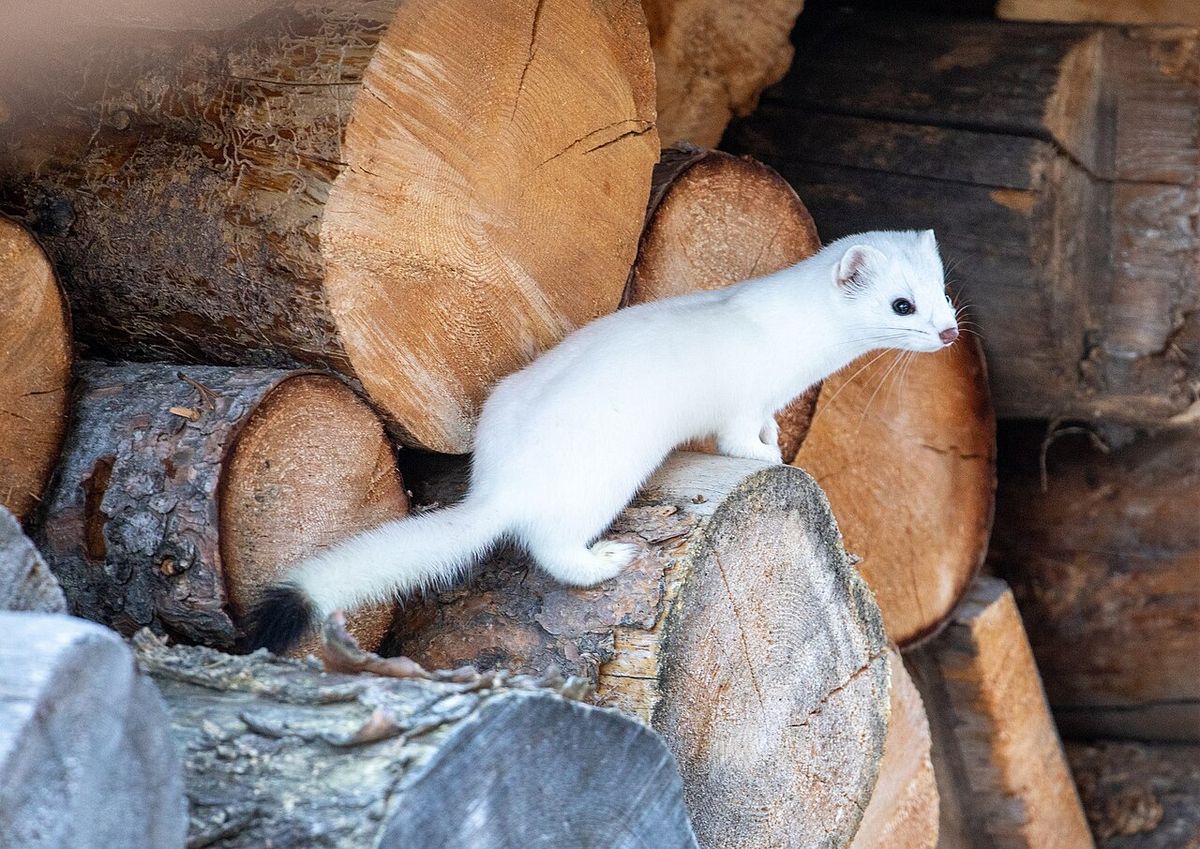
The long-tailed weasel possesses the classic mustelid build: a long, slender body and neck with short legs, facilitating movement through burrows and dense vegetation. There is considerable size variation, with males being significantly larger than females. The summer pelage is primarily cinnamon brown on the back and sides, with white or yellowish underparts. The tail has a distinct black tip, a key identifying feature. In northern populations, the weasel undergoes a biannual molt, shedding its brown summer coat for a pure white winter one, though the black tail tip remains. Southern populations generally remain brown year-round. The molt is triggered by photoperiod, or day length, and takes about three to four weeks to complete each spring and autumn. The eyes are black in daylight but glow a bright emerald green when caught in light at night. The species has well-developed anal scent glands which produce a strong, musky odour used for communication and territory marking.
Habitat and Distribution
The long-tailed weasel has the largest distribution of any mustelid in the Western Hemisphere. Its range extends from southern Canada throughout the entire continental United States, Mexico, and Central America, and into northern South America as far as central Bolivia. In Canada, it is found in southwestern regions. This weasel is a habitat generalist but shows clear preferences within its broad range. It favours environments that offer cover and hunting opportunities, such as open forests, wooded areas, shrublands, riparian zones, natural meadows, and forest edges. It also utilizes human-altered landscapes like farmland, fencerows, and drainage ditches. The species typically avoids dense, unbroken forests and arid deserts. Long-tailed weasels are solitary and territorial. A single animal's home range is estimated to be between 10 and 20 hectares, with population densities generally around one weasel per square kilometre. They are not found in areas of intensive agriculture, indicating a susceptibility to habitat fragmentation. Dens are often appropriated from prey, such as in abandoned chipmunk, ground squirrel, or gopher burrows, or located in hollow logs, rock piles, or under structures like barns.
Behaviour and Life Cycle
Long-tailed weasels are solitary, agile, and alert animals, known for their fearlessness and aggressive nature. They are primarily nocturnal but can be active during the day. They are proficient climbers and swimmers, capable of reaching speeds up to 25 kilometres per hour. Communication involves visual cues, sounds like squeals, squeaks, and trills, and scent marking from their anal glands. Mating occurs in mid-summer (July-August), but through a process called delayed implantation, the fertilized egg does not attach to the uterine wall until the following March. Actual embryonic development then takes only about four weeks, with births occurring from late April to early May. This adaptation times the arrival of kits with spring, when prey is abundant. Litters typically consist of 5 to 8 kits, born blind, nearly hairless, and weighing only about 3 grams. Development is rapid. Their eyes open at five weeks, and weaning begins at 36 days. They learn to hunt from their mother and can kill prey on their own by 56 days old. Females can breed at 3 to 4 months of age, while males reach sexual maturity at 15 to 18 months. Many young weasels do not survive their first year, but adults that do may live for several years in the wild.
Long-tailed weasels are quick, agile, and alert animals. They are good climbers and swimmers. The long-tailed weasel mates in July or August, but the fertilized egg does not implant until about March. The kits are born in April or May, blind and partially naked, and they grow rapidly. By three weeks of age, the kits are well furred and can eat meat, and by five weeks their eyes open and weaning begins.
- Mating Season: Occurs in July and August each year.
- Delayed Implantation: The fertilized egg delays attachment until March, for a total gestation of about 280 days.
- Birth Weight: Newborn kits weigh approximately 3 grams, similar to a hummingbird.
- Eyes Open: Kits' eyes open at five weeks of age.
- Weaning Age: Weaning begins at 36 days old.
- Independent Hunting: Kits can kill their own prey by 56 days old.
- Sexual Maturity: Females can breed at 3-4 months. Males at 15-18 months.
- Home Range Size: An individual's territory is typically 10-20 hectares (25-50 acres).
Diet and Hunting
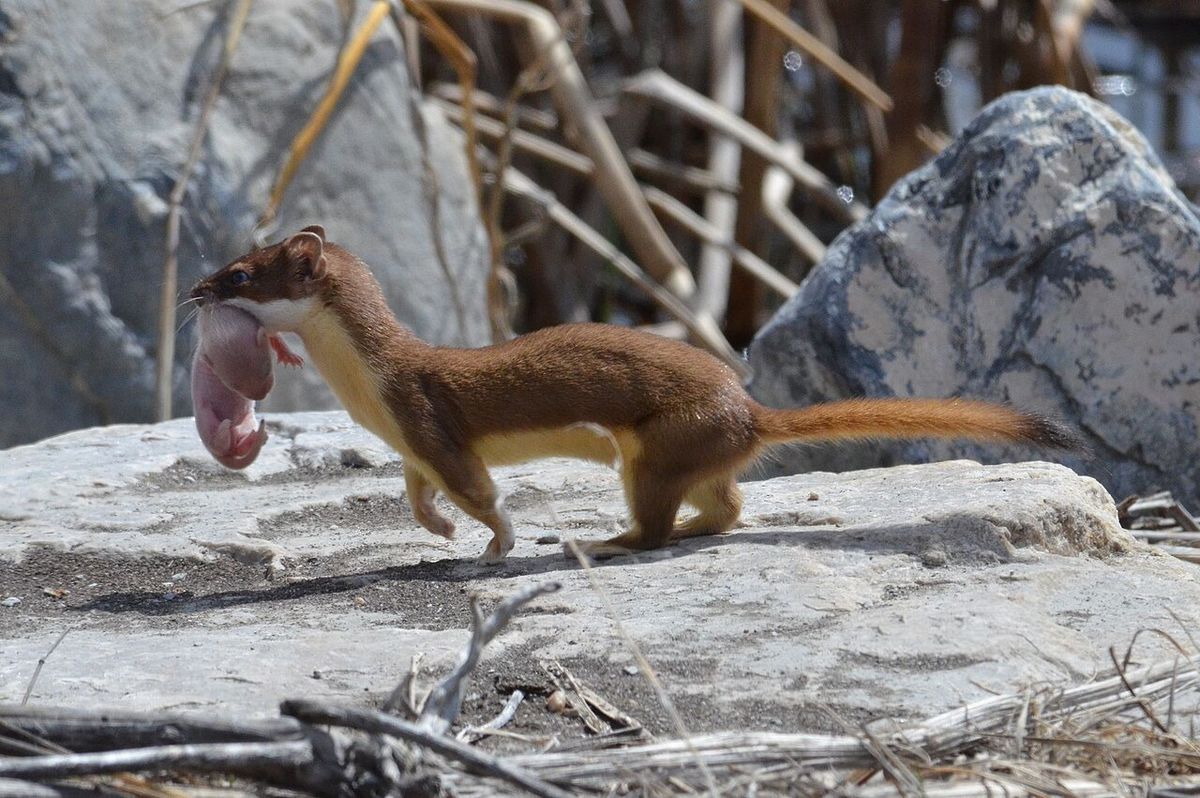
As an obligate carnivore, the long-tailed weasel prefers fresh, live prey and is a voracious and efficient hunter. Its diet primarily consists of small mammals, which helps regulate rodent and rabbit populations. Females, with their narrower skulls and smaller bodies, are particularly adept at pursuing rodents like mice, voles, and shrews directly into their burrows. Males more frequently tackle larger prey such as squirrels, chipmunks, and rabbits. The hunting technique involves picking up the scent or sound of prey, stalking carefully, and then launching a swift, decisive attack. For small prey, a single bite to the head is fatal. For larger animals like rabbits, the weasel will latch on and manoeuvre to deliver a lethal bite to the base of the skull or the neck. They are known to occasionally surplus kill, especially in spring when feeding kits and again in autumn, sometimes caching uneaten prey. Their diet can also include birds, eggs, reptiles, amphibians, fish, and insects. They have even been observed taking bats from nursery colonies. Their small, tubular body shape is perfectly adapted for pursuing prey underground and in the subnivean zone beneath winter snow.
The long-tailed weasel is an obligate carnivore which prefers its prey to be fresh or alive. Its primary prey consists of mice, rats, squirrels, chipmunks, shrews, moles, and rabbits. Occasionally, it may eat small birds, bird eggs, reptiles, amphibians, fish, earthworms, and some insects. The species has also been observed to take bats from nursery colonies.
- Primary Prey: Mice, rats, squirrels, chipmunks, shrews, moles, and rabbits.
- Occasional Prey: Small birds and their eggs.
- Other Food Sources: Reptiles, amphibians, fish, and earthworms.
- Specialized Hunting: Has been observed taking bats from nursery colonies.
- Surplus Killing: Occurs most often in spring and autumn.
- Daily Consumption: Adults eat 20-33% of their body weight daily. Kits eat 25-50%.
- Hunting Speed: Capable of a top running speed of 25 km/h.
Predators and Defense Mechanisms
Despite their ferocity, long-tailed weasels face predation from a variety of larger animals. Key predators include coyotes, foxes, bobcats, lynx, owls (such as great horned and barred owls), hawks, and large snakes like rattlesnakes. Young kits in the den are especially vulnerable. To defend themselves, weasels employ several strategies. Their primary defence is evasion, using their speed and agility to escape. They are excellent climbers and will ascend trees to avoid ground predators, remaining motionless until the threat passes. When threatened or startled, they can emit a strong, musky odour from their anal glands by dragging their bodies across surfaces, which may discourage predators from investigating an area further. Their distinctive black-tipped tail serves as a defensive adaptation, particularly in winter. When the body is white, the moving black tip can distract avian predators, potentially causing them to strike at the tail rather than the body, allowing the weasel to escape.
Conservation and Human Interaction
The long-tailed weasel is currently not considered a species at risk due to its extremely large geographic distribution and presence in a variety of habitats. However, local populations face threats that are common to many wildlife species. Habitat loss and fragmentation, particularly the conversion of wild lands to intensive agriculture or urban development, can reduce available territory and prey. The use of rodenticides poses a significant danger through secondary poisoning, as weasels may eat rodents that have consumed the poison. Climate change presents a unique challenge, especially for northern populations that rely on seasonal camouflage. Low winter snowpack can leave a white-coated weasel starkly visible against brown ground, increasing its vulnerability to predators. Conservation efforts beneficial to the long-tailed weasel include protecting natural habitats, creating wildlife corridors, and promoting alternatives to rodenticides for pest control. Supporting protected areas and land trusts in regions like Alberta helps conserve the mixed habitats these weasels require. They are generally beneficial to humans due to their control of agricultural and household rodent pests.
Long-tailed weasels are susceptible to habitat fragmentation as they avoid areas used for farming. Predators of the long-tailed weasel include foxes, coyotes, bobcats, owls, hawks, and snakes. In North America, some Native American traditions deemed crossing the path of a long-tailed weasel to be a bad sign. The species is not typically found in dry desert habitats.
- Habitat Loss: Conversion of wild lands to agriculture or urban areas.
- Secondary Poisoning: From consuming rodents killed by rodenticides.
- Prey Reduction: Decreases in populations of small mammal prey species.
- Climate Change: Low snowpack exposes white winter coats, increasing predation risk.
- Habitat Fragmentation: Avoids intensive farming areas, isolating populations.
Identification and Signs
Identifying a long-tailed weasel involves looking for a combination of physical traits and field signs. The most reliable visual characteristic is the black tip on a long, bushy tail, which is present in both summer and winter coats. In summer, look for brown fur on the back and sides with creamy white or yellowish underparts. In winter, northern individuals are almost entirely white except for that black tail tip. The body is long and thin with short legs, and the head is small and triangular with rounded ears. Tracks can also indicate their presence. The tracks often appear in a bounding pattern. Another sign is tail drag marks, which appear as wavy lines in snow between footprints. They also use specific latrine sites, depositing scat repeatedly in one location near their den until environmental conditions cover it. Their vocalizations, including high-pitched squeaks and trills, especially when disturbed, can also alert observers to their presence.
Questions about Long-tailed weasel
Where can you find long-tailed weasels in Canada?
Long-tailed weasels are found in southwestern Canada, ranging from southern regions northward. They inhabit a variety of landscapes including forests, wooded areas, shrublands, meadows, and riparian zones. They can also be found in agricultural areas and parklands, such as Fish Creek Provincial Park in Alberta, where they were observed in August 2026. Their presence is widespread but dependent on the availability of prey and suitable cover.
What is the difference between a long-tailed weasel and a short-tailed weasel (stoat)?
The long-tailed weasel (Neogale frenata) and the short-tailed weasel or stoat (Mustela erminea) are similar in appearance but have key differences. The long-tailed weasel is generally larger, and its tail is longer relative to its body, typically making up about half its total length. Both have a black tail tip, but the stoat often has a neat line where the white winter fur meets the brown summer fur on its flanks, and its foot soles are thickly furred year-round. The long-tailed weasel lacks a distinct line on its flanks and has naked foot soles in summer.
Why do long-tailed weasels turn white in winter?
Long-tailed weasels in northern populations molt twice a year, changing their coat colour to match the seasonal environment. In autumn, they shed their brown summer fur and grow a white winter coat for camouflage in the snow, a process called seasonal polymorphism. This molt is triggered by photoperiod, the length of daylight. The black tip on the tail remains year-round. Southern populations, where snow is less common, typically remain brown throughout the year.
Are long-tailed weasels dangerous to humans or pets?
Long-tailed weasels are not considered dangerous to humans. They are small, secretive animals that generally avoid contact. However, they are fearless predators and may attack animals much larger than themselves if cornered or threatened. While unlikely, a weasel could potentially bite a pet that investigates it too closely. Their primary defence is to flee or emit a strong musky odour. They are beneficial as they help control populations of rodents like mice and rats.
What do long-tailed weasels eat?
Long-tailed weasels are strict carnivores with a diet focused on small mammals. Their primary prey includes mice, voles, rats, shrews, moles, chipmunks, and squirrels. They also hunt rabbits and hares. Occasionally, they will eat birds, bird eggs, reptiles, amphibians, fish, and insects. They are known for their voracious appetite, needing to consume 40 to 50 percent of their own body weight each day to fuel their high metabolism. They kill prey with a swift bite to the skull or neck.
How can you tell if a long-tailed weasel is living nearby?
Signs of a long-tailed weasel include small, four-toed tracks (about 1 inch long) often in a bounding pattern, sometimes with tail drag marks in snow. Look for scat deposited in a single, repeatedly used latrine site near a burrow entrance or rock pile. You might hear their vocalizations, such as trills or squeaks, especially if they are disturbed. Visual sightings are often brief, characterized by a glimpse of a long, brown or white body with a black-tipped tail darting across a path or into cover.
Sources and further reading
- Long-tailed weasel (Wikipedia)
- Mustela frenata (long-tailed weasel) | INFORMATION (animaldiversity.org)
- Long-Tailed Weasel (ealt.ca)
- Long Tailed Weasel (osstewardship.ca)
- Meet the long-tailed weasel: A cute but ferocious critter (rmconservancy.org)
Checked by the Your Space Hamilton desk. Last updated 2026-10-31.