Lethocerus americanus
Lethocerus americanus, commonly known as the giant water bug, toe biter, or electric light bug, is a large aquatic insect native to freshwater habitats across southern Canada and the United States. It is a formidable predator in ponds and slow-moving streams, feeding on insects, tadpoles, and small fish. The species is noted for its painful defensive bite, which has earned it a memorable reputation among Canadians who encounter it while swimming or wading. As one of the largest true bugs in North America, it is a significant component of aquatic ecosystems and a subject of interest for naturalists and entomologists. Its biology, from its unique breathing apparatus to its cooperative hunting, offers a fascinating glimpse into the life of a top invertebrate predator.
Physical Description and Identification
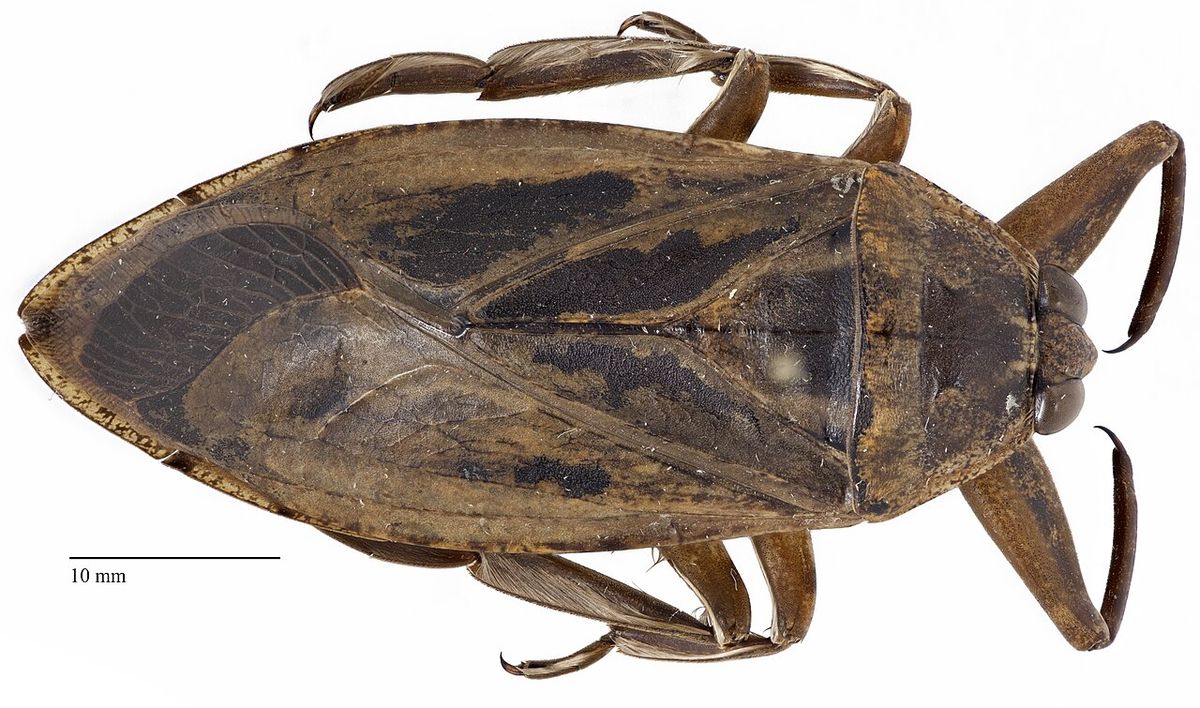
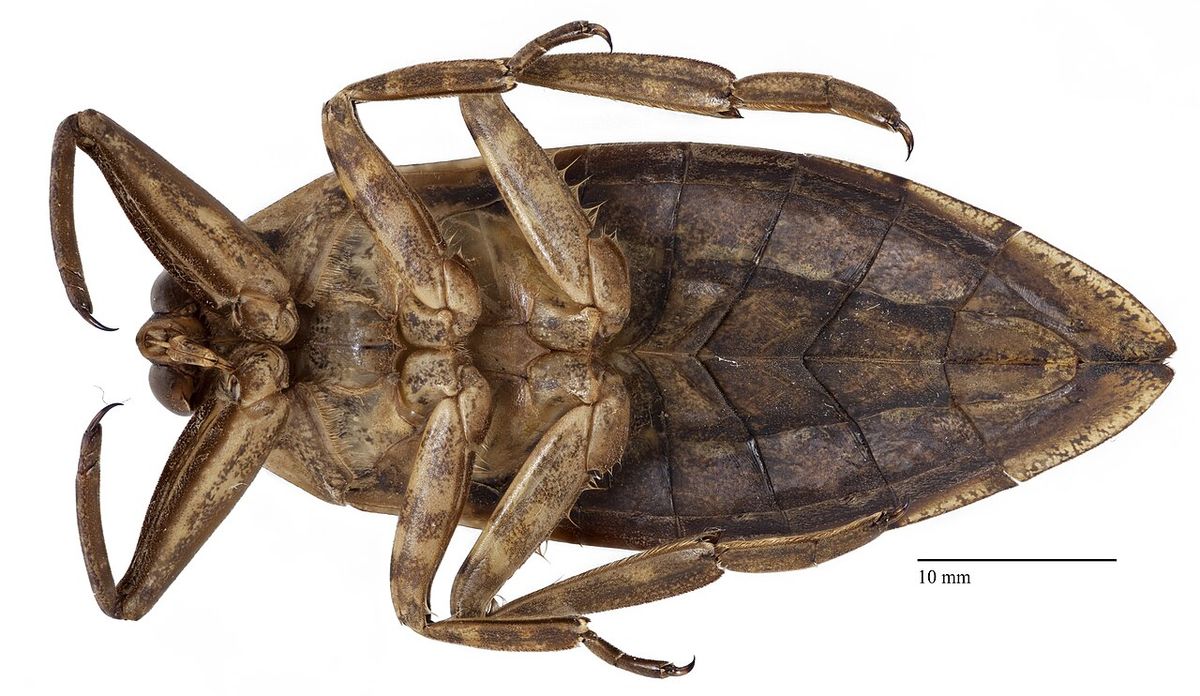
Lethocerus americanus is a large, flattened insect typically measuring between five and six centimetres in length, which is approximately two to two and a half inches. Its body is adapted for an aquatic lifestyle, with a streamlined shape and powerful hind legs used exclusively for swimming. The insect's coloration is generally a mottled brown, providing effective camouflage against the muddy bottoms of ponds and streams where it hides. A key identification feature distinguishing it from the similar Benacus griseus is the presence of distinct grooves on its fore femora, which accommodate the tibiae when the limbs are folded tightly against the body. The adult breathes underwater by trapping an air bubble under its wings, which it replenishes using two snorkel-like tubes that extend from the tip of its abdomen to the water's surface. This species was originally classified within the genus Belostoma before being moved to Lethocerus, and it is very similar in appearance to another species, Lethocerus uhleri, requiring careful examination to differentiate.
Geographic Distribution and Preferred Habitat
This species is native to North America, with its range extending throughout southern Canada and the United States north of the 35th parallel. Other species within the Lethocerus genus are found further south beyond this latitude. It inhabits a variety of freshwater environments, particularly those with still or slow-moving water which are common across the Canadian landscape. Specific locations include the vegetated edges of ponds, marshes, lakes, and slow-moving streams and creeks. The bugs are often found clinging to submerged plants or hiding in debris, where their natural camouflage easily conceals them from both prey and predators. They are a widespread component of aquatic ecosystems across many Canadian provinces, contributing to the biodiversity of these wetland areas and serving as a reliable indicator of such habitats.
Predatory Diet and Hunting Methodology
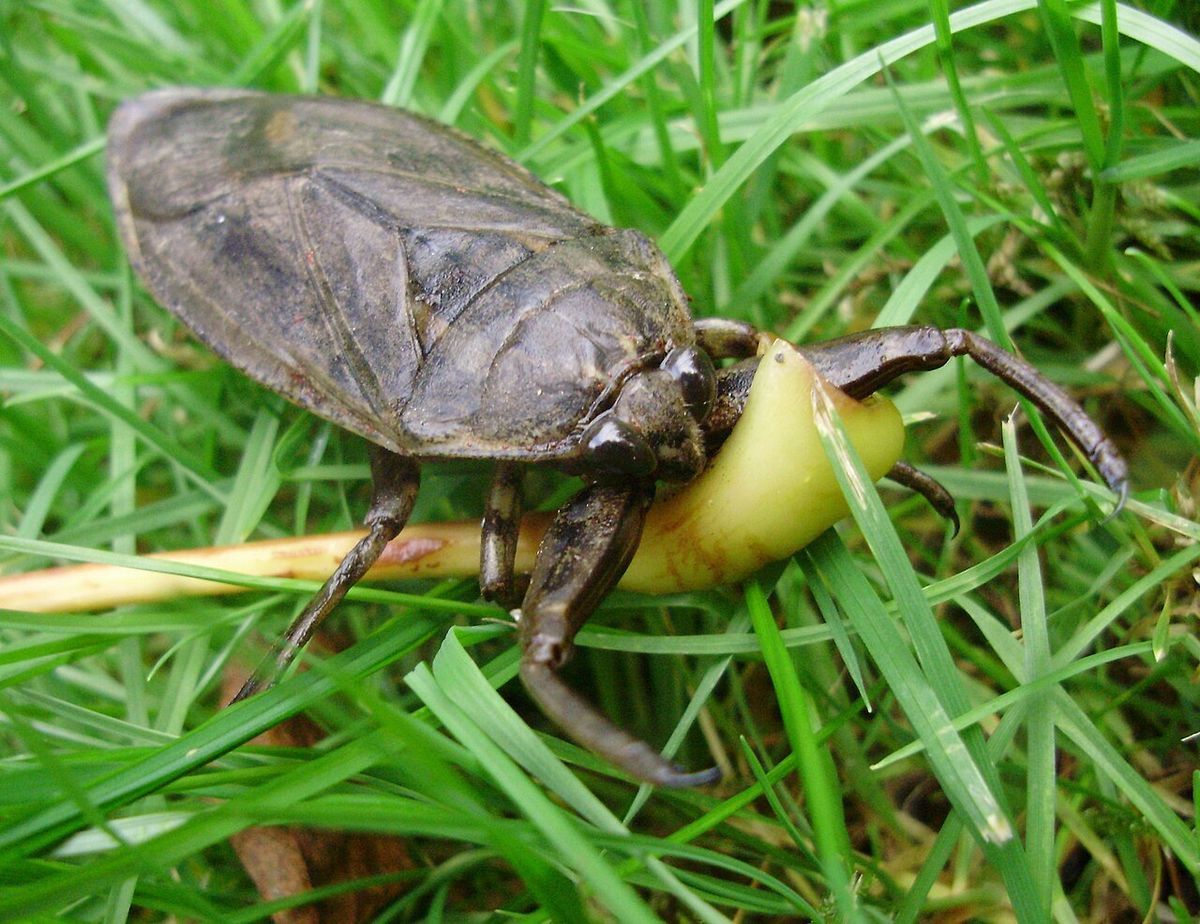
Lethocerus americanus is an apex invertebrate predator within its habitat, and both adults and larvae are strictly carnivorous. They employ a patient ambush strategy to capture prey, remaining motionless until a target comes within reach. They use their strong, raptorial front legs to seize and firmly latch onto animals, which can include other insects, small crustaceans like crayfish and crabs, tadpoles, frogs, snails, and small fish. Upon capturing prey, the bug injects powerful digestive toxins through a somewhat retractable proboscis that operates much like that of a mosquito. The bug then waits for a period of 10 to 15 minutes for this external digestion to liquefy the internal tissues before consuming the resulting fluid. Remarkably, multiple L. americanus individuals have been observed cooperatively hunting and then sharing the same prey animal, an uncommon behaviour among solitary insects. Their hunting prowess has earned them the alternative common names of 'fish killer' and 'toe biter'. The adult swims primarily with the aid of its hind legs while keeping its fore limbs ready for capturing any suitable prey that approaches.
Defensive Behaviours and Human Encounters
The giant water bug is best known to the public for its defensive capabilities and its memorable common name derived from them. When threatened, handled, or accidentally stepped on in shallow water, it can deliver an intensely painful bite with its proboscis, which has led to the universal name 'toe biter'. Despite this fearsome reputation, the insect is not aggressive and prefers to avoid confrontation with humans whenever possible. Its primary defences are escape and concealment, aided by its considerable speed in water and its excellent camouflage that blends with pond bottoms. If disturbed in the water, the speed of L. americanus allows it to quickly break away while its natural camouflage easily conceals it once it stops moving. If agitated on dry land, L. americanus will first attempt to escape or play dead before raising its fore limbs and hind quarters in what resembles a fighting stance. If agitation continues, L. americanus will use its fore limbs to latch onto the source of the agitation and attempt to deliver a painful bite as a final deterrent. Another notable behaviour is its attraction to electric lights at night during its dispersal flights, which explains the name 'electric light bug' and often leads to encounters on porches or near streetlights.
Life Cycle, Reproduction, and Seasonal Survival
The life cycle of Lethocerus americanus includes egg, nymph, and adult stages, with the entire process adapted to seasonal changes in Canadian climates. Females lay their eggs on emergent vegetation located precisely at the water's edge, and these egg masses may be actively guarded by an adult, which is often the male. The young nymphs then hatch about two weeks later, emerging as miniature, wingless versions of the adults. These nymphs undergo several moults as they grow, facing significant challenges to reach maturity. The reproductive strategy and development of this insect involve several specific and documented facts.
- Adult females will alternate between feeding and mating throughout the active season.
- A single female lays about 150 or more eggs in her lifetime across multiple egg-laying events.
- Few nymphs survive to maturity due to high rates of cannibalism among the young and predation from other animals in the habitat.
- Adults survive the winter by burrowing under mud and leaf matter at the bottom of their pond or stream, entering a state of dormancy.
- This overwintering in submerged debris allows them to withstand freezing temperatures until spring.
Female Lethocerus americanus lay eggs on vegetation at the water's edge, and these eggs may be guarded by an adult. The young nymphs hatch about two weeks later, but few survive to maturity due to cannibalism and other predators. Adults survive winter by burrowing under mud and leaf matter. This complete life cycle, from guarded eggs to overwintering adults, ensures the species persists from year to year in its native habitats of southern Canada and the United States.
Ecological Function and Entomological Study
As a top predator in many small aquatic systems, Lethocerus americanus directly influences the population dynamics of other invertebrates, amphibians, and small fish. Its predatory activity helps regulate the abundance and alters the behaviour of various prey species within its community. The bug itself serves as a substantial food source for larger predators, including fish, birds, and amphibians, forming a critical link in the aquatic food web. Its presence is often an indicator of a healthy, productive freshwater ecosystem with a complex trophic structure. For Canadian naturalists and scientists, the species is a compelling subject for the study of aquatic insect behaviour, physiology, and adaptation to cold climates. Specific biological notes on Lethocerus americanus were published in the journal Psyche: A Journal of Entomology in 1924 by researcher W. L. Hoffman, contributing foundational knowledge to the scientific understanding of the species. The insect's considerable size, distinctive hunting method using digestive toxins, and powerful defensive bite make it a notable and frequently encountered member of Canada's diverse aquatic insect fauna, often sparking public curiosity and scientific inquiry.
Taxonomic History and Similar Species
Lethocerus americanus can be confused with other large aquatic bugs, but several definitive morphological features allow for accurate identification in the field or laboratory. It is definitively differentiated from a similar insect, Benacus griseus, by the grooves found on its fore femora that are specifically designed to accommodate the tibiae when they are folded tightly. Within its own genus, it is noted as being very similar to Lethocerus uhleri, and distinguishing between the two requires meticulous examination by a trained entomologist. The species is part of the family Belostomatidae, which contains all giant water bugs, a group known for their size and predatory habits. Its original classification was in the genus Belostoma, reflecting the historical taxonomic work of earlier naturalists who first described it. Understanding these distinctions is important for entomologists conducting biodiversity surveys and for naturalists aiming to accurately record and understand the insect life in Canadian wetlands, ensuring correct species data is collected for conservation and study.
Questions about Lethocerus americanus
What does Lethocerus americanus eat and how does it feed?
The giant water bug is a carnivorous predator that feeds on a wide variety of small aquatic animals. Its diet includes other insects, small crustaceans such as crabs and crayfish, tadpoles and frogs, snails, and small fish. It uses its front legs to capture and latch onto prey, then injects digestive toxins through a retractable proboscis. The bug typically waits 10 to 15 minutes after injecting its toxins for external digestion to occur before eating the liquefied tissues, and multiple bugs may share a single prey animal.
Where in Canada can you find giant water bugs and what is their habitat?
Lethocerus americanus is native to southern Canada, inhabiting freshwater environments across many provinces. It is commonly found in the vegetated edges of ponds, marshes, lakes, and slow-moving streams and creeks. Its range in North America is specifically north of the 35th parallel, encompassing suitable habitats throughout the southern regions of the country. Other Lethocerus species occupy the geographic areas further south in the United States and beyond.
How does Lethocerus americanus breathe and move underwater?
The adult giant water bug breathes air but can remain submerged for extended periods. It traps a bubble of air under its wings, using this reservoir as a physical gill. The bug uses two snorkel-like tubes that extend from the rear of its abdomen to reach the water's surface and replenish this air supply. For locomotion, the adult swims with the aid of its powerful hind legs, which propel it through the water while the front limbs are reserved for capturing prey.
Are giant water bugs dangerous to humans and how should they be handled?
While their bite is notably painful and can be compared to a bee or wasp sting, giant water bugs are not considered medically dangerous to humans. They are not venomous in a toxicological sense and do not transmit diseases. The bugs are reclusive and will always attempt to escape or hide before resorting to biting. If encountered, they should be observed from a distance and not handled, as agitation may provoke a defensive bite.
How do giant water bugs reproduce and care for their young?
Females lay eggs on vegetation at the water's edge, and these egg masses may be guarded by an adult, which is often the male. The eggs hatch about two weeks later into nymphs. A female lays approximately 150 or more eggs in her lifetime, alternating between feeding and mating periods. However, very few nymphs survive to maturity due to high rates of cannibalism among the young and predation from other animals in their habitat, making adult guarding behaviour potentially critical for some egg survival.
Why is it called a toe biter and an electric light bug?
Lethocerus americanus is called a toe biter because it may deliver a painful bite if handled or disturbed. It is called the electric light bug because it may be attracted by electric lights while flying at night. This insect prefers to avoid humans and will typically attempt to escape or play dead if agitated. However, if agitation continues, it will raise its fore limbs and hind quarters in a defensive stance before latching on to deliver its bite. Its common names reflect these defensive behaviours and its nocturnal attraction to artificial light sources.
Sources and further reading
- Lethocerus americanus (Wikipedia)
- Lethocerus americanus: The Voracious Giant Water Bug (davethebugguy.org)
- Lethocerus americanus, the "toe biter" (pubmed.ncbi.nlm.nih.gov)
- Giant Water Bug (nps.gov)
- Beware of this giant, 'toe-biting' water bug this summer (theweathernetwork.com)
Checked by the Your Space Hamilton desk. Last updated 2026-10-31.