Groundhog
The groundhog (Marmota monax), also known as the woodchuck or whistle-pig, is a large, burrowing rodent native to North America. It is found across much of Canada, from the Maritimes through Ontario and Quebec, and into the northern territories and Alaska. The species is a crucial ecosystem engineer, its burrowing activity aerating soil and creating shelter for other wildlife, though it is also considered an agricultural pest. In Canadian culture, the groundhog is most famously associated with the annual Groundhog Day tradition on February 2, with celebrated prognosticators like Wiarton Willie in Ontario and Shubenacadie Sam in Nova Scotia.
Physical Description and Adaptations
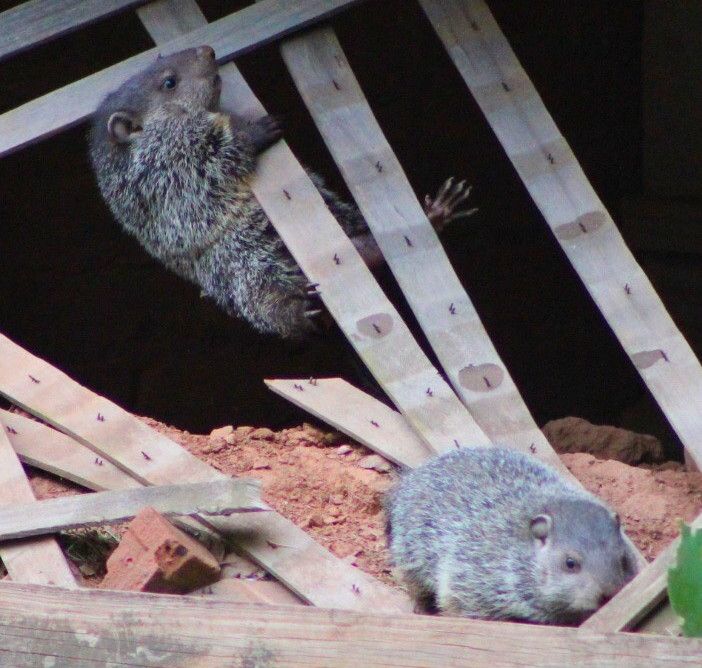
The groundhog is the largest member of the squirrel family (Sciuridae) within most of its Canadian range, except in British Columbia where its range overlaps with the somewhat larger hoary marmot. Adults measure from 41.8 to 68.5 centimetres in total length, which includes a relatively short tail of 9.5 to 18.7 centimetres, only about one-fourth of its body length. Weights vary significantly with the seasons, typically ranging from 2 to 6.3 kilograms, with males being slightly larger than females on average. Adult males average 3.83 kilograms year-round, while females average 3.53 kilograms, but both sexes are considerably heavier in autumn than in spring due to fat deposition for hibernation. Groundhogs have four prominent white to ivory-white incisors that grow approximately 1.5 millimetres per week, a growth rate matched by the wear from constant digging and gnawing. Their physical form is superbly adapted for a fossorial lifestyle, with powerful short legs, broad long claws, and a heavy-bodied build that belies their ability to swim and occasionally climb trees.
Distribution and Habitat
Groundhogs have a wide geographic range across North America, inhabiting lowland areas throughout eastern Canada and into Alaska. Unlike other marmot species like the yellow-bellied or hoary marmot that prefer rocky, mountainous terrain, groundhogs are exclusively lowland creatures. They prefer open country and the edges of woodland, being rarely found far from a burrow entrance. Typical habitats include small woodlots, low-elevation forests, fields, pastures, and hedgerows where they construct dens in well-drained soil. Human activity, such as agriculture and suburban development, has increased food access and abundance for groundhogs, allowing the species to thrive in these modified landscapes. Most individuals maintain separate summer and winter burrows to suit their seasonal needs, with winter burrows often located in wooded or brushy areas. This preference for open areas and forest margins makes them a common sight in rural and semi-rural regions across southern Canada, where they play a significant role in soil ecology.
Behaviour and Ecology
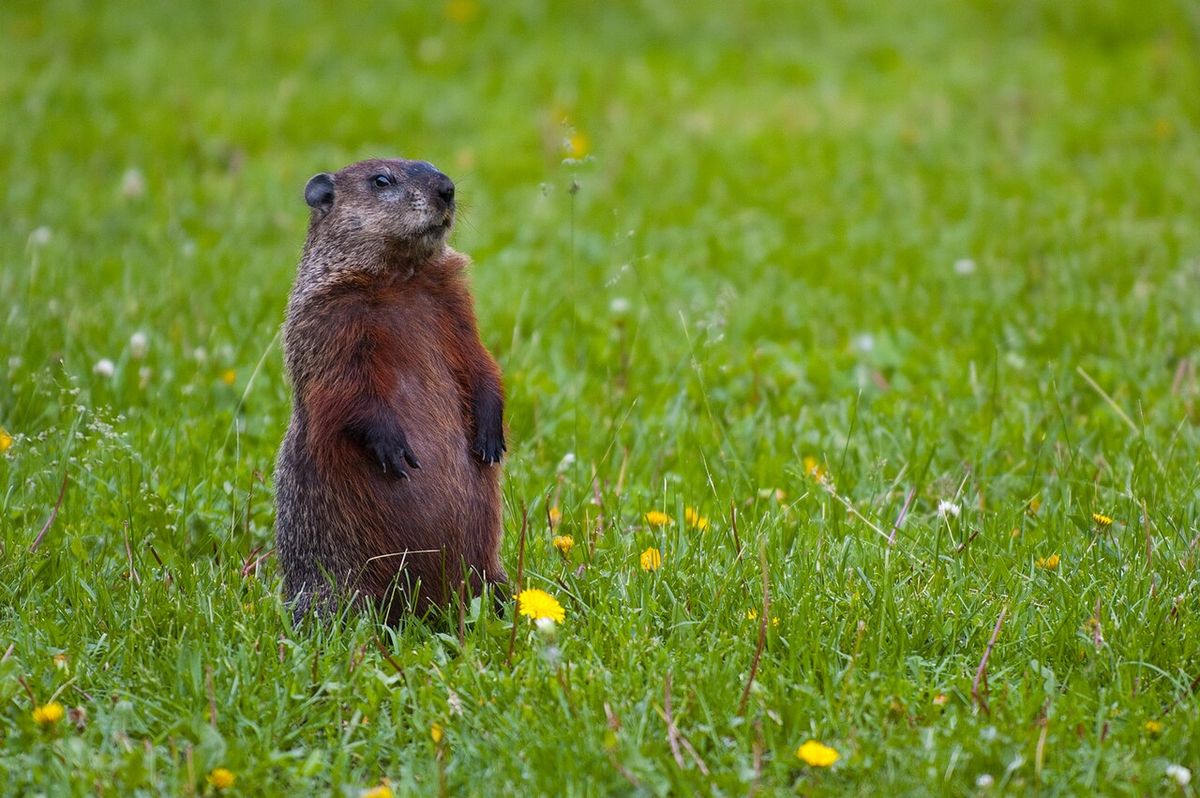
Groundhogs are primarily diurnal, most active in the early morning or late afternoon. They are generally solitary and territorial animals, often described as the most solitary of the marmot species, though they may live in loose aggregations and their social organization varies across populations. When not feeding, individuals are highly alert and it is common to see them standing erect on their hind feet watching for danger. If threatened, they emit a distinctive high-pitched whistle to warn the rest of the colony, earning them the nickname 'whistle-pig'. Other vocalizations include low barks, a sound produced by grinding their teeth, and squeals emitted when fighting, seriously injured, or caught by a predator. Despite their stocky build, groundhogs are accomplished swimmers and will occasionally climb trees to escape predators or survey their surroundings. Their primary defence is to retreat to their burrow, but if the burrow is invaded, the groundhog will tenaciously defend itself with its two large incisors and front claws. Play-fighting in an upright posture has been observed but is considered rare due to the species' low social tolerance and physical spacing between individuals.
Their diet is overwhelmingly herbivorous, consisting of wild grasses, leaves, bark, berries, and agricultural crops like clover and alfalfa. An adult groundhog can eat more than 0.45 kilograms of vegetation daily. In early spring, emerging plants like dandelion and coltsfoot are critical food items. Some additional important foods include sheep sorrel, timothy-grass, buttercup, persicaria, agrimony, red and black raspberries, mulberries, buckwheat, plantain, wild lettuce, and all varieties of clover. While largely plant-eaters, they occasionally eat small animals such as grubs, grasshoppers, snails, and even bird eggs and baby birds, but are not as omnivorous as many other squirrels. Groundhogs do not store food for winter. Instead, they engage in intense feeding in late summer and autumn to build fat reserves. Their metabolism slows significantly in early June, and while their food intake decreases, their weight increases by as much as 100% as they produce fat deposits to sustain them during hibernation and late winter.
Burrowing and ShelterGroundhogs are excellent burrowers, and their extensive dens are central to their survival for sleeping, rearing young, and hibernating. A typical burrow system usually has two to five entrances, providing groundhogs their primary means of escape from predators, and includes a main entrance and concealed 'spy holes'. The volume of earth removed to create a single den averages about 0.17 cubic metres, or six cubic feet. The longest recorded burrow, excluding side galleries, was 7.3 metres long, while the average length of eleven dens studied was 4.3 metres. The nest chamber, used for sleeping, rearing young, and hibernating, is lined with dead leaves and dried grasses and can be located 51 to 91 centimetres below the surface, measuring about 41 centimetres wide and 36 centimetres high. There is also a separate excrement chamber within the burrow system.
- Burrows provide safety, a retreat in bad weather, and a place for hibernation, sleeping, mating, and raising young.
- Abandoned groundhog burrows are used by many other species including cottontail rabbits, raccoons, red foxes, skunks, river otters, eastern chipmunks, and a wide variety of small mammals, snakes, and birds.
- Extensive burrowing can damage farm machinery and undermine building foundations, leading to conflicts with humans and being cited as a nuisance in historical reports like the 1883 New Hampshire Legislative Woodchuck Committee findings.
- In urbanizing areas, the number of burrows per individual groundhog tends to decrease, and young groundhogs dig numerous practice holes around their natal den before dispersing, some of which are never occupied.
The groundhog's winter burrow is dug below the frost line and remains at a stable temperature well above freezing during the winter months. The volume of earth removed from groundhog burrows can be significant, with one study averaging 6 cubic feet per den. Abandoned groundhog burrows benefit many other species by providing shelter for animals like cottontail rabbits, raccoons, foxes, and birds. The groundhog aids in soil improvement by bringing subsoil to the surface during its digging activities. As such, the groundhog is considered a crucial habitat engineer for maintaining healthy soil in woodlands and plains.
Hibernation and Reproduction
Groundhogs are one of the few mammal species that enter into true, deep hibernation, and often build a separate 'winter burrow' for this purpose. This burrow is usually in a wooded or brushy area and is dug below the frost line to remain at a stable temperature well above freezing during the winter months. In Canada, hibernation typically lasts from October to March or April, with longer dormancy periods in northern latitudes than southern ones, and in more temperate areas it may last as little as three months. To survive the winter, they are at their maximum weight shortly before entering hibernation. When the groundhog enters hibernation, there is a drop in body temperature to as low as 2 degrees Celsius, heart rate falls to 4-10 beats per minute and breathing rate falls to one breath every six minutes. During hibernation, they experience periods of torpor and arousal, and hibernating woodchucks lose as much as half their body weight by February. They emerge from hibernation with some remaining body fat to live on until the warmer spring weather produces abundant plant materials for food. Males emerge from hibernation before females, initiating the annual breeding season.
Groundhogs are considered the most solitary marmots and generally do not form stable, long-term pair bonds, with male-female interactions usually limited to the mating season and copulation. However, studies in Ohio have observed populations where adult males and females associate with each other throughout the year and often from year to year. The breeding season occurs shortly after emergence from hibernation, extending from early March to mid- or late April. Most groundhogs breed for the first time in their second year, though a small proportion may breed in their first. Woodchucks are polygynous but only alpine and woodchuck marmot females have been shown to mate with multiple males. After mating, a mated pair may remain in the same den throughout the 31- to 32-day gestation period. As birth approaches in April or May, the male leaves the den. A single annual litter is produced, ranging from one to nine pups, with three to five being most common.
The young are born blind and helpless in the nest chamber but develop quickly. Groundhog mothers introduce their young to the wild once their fur is grown in and they can see. At this time, if at all, the father groundhog comes back to the family. The young groundhogs prepare for independence by digging a number of practice holes in the area of their early home before dispersing. By the end of August, the family breaks up and the larger number scatter, to burrow on their own, establishing independent territories.
Health, Mortality, and Predators
In the wild, groundhogs can live up to six years with two or three being the average life expectancy. In captivity, with protection from predators and consistent food, they can live up to 14 years. Human development often leaves vacant space near secondary forests which are indigenous to groundhogs, ensuring that in well-developed areas they are nearly free of predators other than humans through pest control or vehicles, or mid-to-large sized dogs. They can suffer from parasitism and may die from infestation or from bacteria transmitted by vectors. Historically, exaggerated reports of damage led to excessive culling in some regions. In the dairying regions of Wisconsin, particularly in southern areas, the woodchuck had been almost extirpated by 1950 due to such control measures. While still common, numbers have decreased in areas like Illinois, and they had protected status in Wisconsin until 2017. In some areas they remain important game animals, taken regularly for sport, food, or fur, with an estimated 267,500 taken annually in Kentucky from 1964 to 1971.
Groundhogs have a suite of natural predators across their range in eastern North America. Significant predators of adult groundhogs include coyotes, badgers, bobcats, and foxes, largely the red fox. Many of these are stealth stalkers that catch groundhogs by surprise before they can escape, and badgers likely hunt them by digging them out from their burrows. Coyotes are particularly effective, with the groundhog being the third most significant prey species in a statewide Pennsylvania study. Large predators such as the gray wolf and eastern cougar, likely extirpated in the eastern U.S., may still hunt groundhogs on occasion in Canada. Birds of prey present a varied threat. Golden eagles can prey on adults but seldom share the same habitats, while great horned owls can reportedly prey upon them but rarely do so given temporal differences in their behaviours.
- Young groundhogs, usually those less than a couple months in age, may also be taken by the American mink, other small mustelids, cats, timber rattlesnakes, and hawks.
- Red-tailed hawks can take groundhogs at least of up to the size of yearling juveniles and northern goshawks can take them up to perhaps young adulthood in the spring.
- Their primary anti-predator strategies are vigilance, whistling alarms, and retreating to burrows, but they also use concealing burrows under trees in winter and scaling trees to escape a threat.
- The combination of natural predation, human conflict, hunting, and disease shapes the relatively short average lifespan of this widespread rodent.
Relationship with Humans
The groundhog has a complex relationship with humans, viewed both as a pest and a valuable part of the ecosystem. Both their diet and their habit of burrowing make them a challenge around farms and gardens, as they will eat many commonly grown vegetables and their burrowing can undermine building foundations. Historically, this led to their characterization as a nuisance, exemplified by a colourful 1883 report from the New Hampshire Legislative Woodchuck Committee that declared the woodchuck 'not only a nuisance, but also a bore' and criticized its lack of progress in 'social science'. However, their ecological role is significant and extends across several areas. Their burrowing activity aerates and mixes soil, bringing subsoil to the surface, which improves soil health. Their abandoned dens provide essential homes for other animals like skunks, red foxes, and cottontail rabbits, which in turn feed on field mice, grasshoppers, and beetles that destroy crops, indirectly helping the farmer.
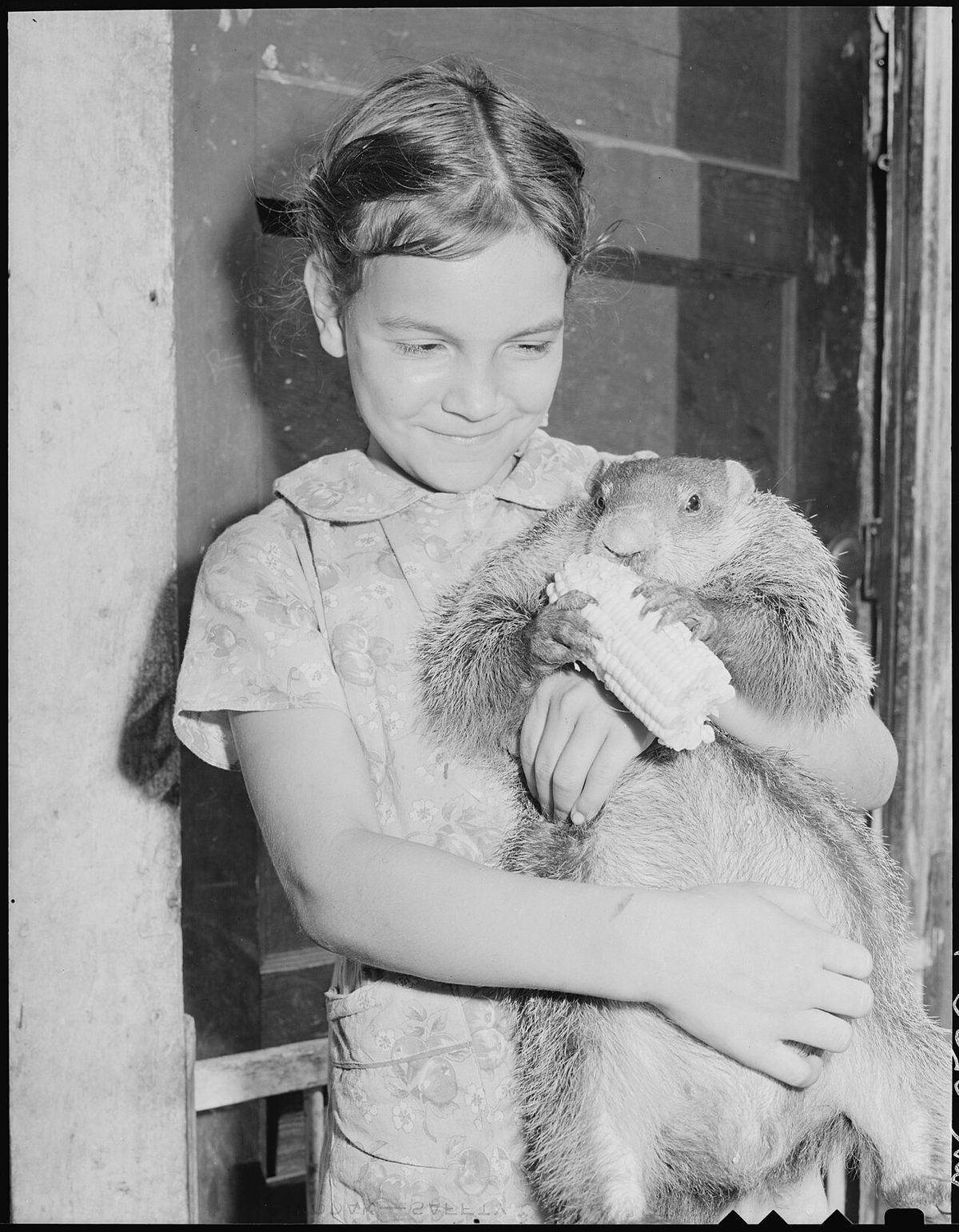
Groundhogs have also been historically hunted as a valuable game animal and are considered a difficult sport when hunted in a fair manner. In some parts of the U.S. they have historically been eaten and are still considered a delicacy in some places. They can be aggressive and challenging to handle in captivity, a trait noted by zookeepers like Doug Schwartz of the Staten Island Zoo, who described their natural impulse as aggressive and starting training from 'a hard place'. Those that cannot be released back into the wild after wildlife rehabilitation may remain with caregivers as educational ambassadors. The species' most prominent cultural role is its association with Groundhog Day. This tradition, celebrated on February 2 in Canada and the United States, has made groundhogs like Wiarton Willie in Ontario and Shubenacadie Sam in Nova Scotia beloved cultural symbols. The 1993 comedy film 'Groundhog Day' further cemented the animal and the ceremony in popular culture.
| Notable Groundhog Day Prognosticators | Location |
|---|---|
| Punxsutawney Phil | Punxsutawney, Pennsylvania, USA |
| Wiarton Willie | Wiarton, Ontario, Canada |
| Shubenacadie Sam | Shubenacadie, Nova Scotia, Canada |
| Buckeye Chuck | Marion, Ohio, USA |
| Jimmy the Groundhog | Sun Prairie, Wisconsin, USA |
| Dunkirk Dave | Dunkirk, New York, USA |
| Staten Island Chuck | Staten Island, New York, USA |
| General Beauregard Lee | Atlanta, Georgia, USA |
The animal's scientific history dates to 1758 when Carl Linnaeus gave it the name Mus monax based on a 1743 description by naturalist George Edwards. Its many folk names, such as 'thickwood badger' used in the Northwest to distinguish it from the prairie badger, and the French Canadian 'siffleux', reflect its widespread presence and characteristics. The popular tongue-twister 'How much wood would a woodchuck chuck...' plays on the misleading nature of its English name, which actually stems from the Algonquian word 'wuchak', meaning digger. This linguistic history, combined with its ecological and cultural roles, shows the groundhog's deep integration into the North American landscape.
Questions about Groundhog
What is the difference between a groundhog and a woodchuck?
There is no difference. 'Groundhog' and 'woodchuck' are two common names for the same animal, Marmota monax. The name 'woodchuck' likely originates from the Algonquian word 'wuchak', and its misleading similarity to 'wood' inspired the famous tongue-twister. Other regional names include whistle-pig, Canada marmot, thickwood badger, moonack, weenusk, red monk, and land beaver, with French Canadians in eastern Canada using 'siffleux'.
How long do groundhogs hibernate in Canada?
In Canada, groundhogs typically hibernate from October through to March or April. The duration is longer in northern latitudes than in southern ones, and in more temperate areas hibernation may last only three months. During this deep hibernation, their body temperature drops to as low as 2°C, their heart rate falls to 4-10 beats per minute, and breathing slows to one breath every six minutes. They survive solely on fat reserves, losing up to half their body weight by February, and emerge with some fat left to live on until spring plants are abundant.
Are groundhogs dangerous to humans or pets?
Groundhogs are not typically aggressive toward humans but will defend themselves fiercely if cornered or trapped, using their sharp incisors and claws. They can pose a threat to small pets if confronted. Their primary danger to human property is through extensive burrowing, which can damage gardens, farm machinery, and building foundations. Their aggressive nature is well-known in captivity, with zookeepers noting they require work to produce a 'sweet and cuddly' demeanour from a naturally hard starting point.
What do groundhogs eat?
Groundhogs are primarily herbivores. Their diet consists of wild grasses, leaves, bark, berries, and agricultural crops like clover, alfalfa, and vegetables. In early spring, they rely heavily on plants like dandelions and coltsfoot. Some specific foods include sheep sorrel, timothy-grass, buttercup, persicaria, agrimony, red and black raspberries, mulberries, buckwheat, plantain, wild lettuce, and all varieties of clover. They occasionally eat small animals such as grubs, grasshoppers, snails, or bird eggs, but are not as omnivorous as many other squirrels.
What animals eat groundhogs?
Major predators of adult groundhogs include coyotes, badgers, bobcats, and red foxes, with coyotes being a particularly significant predator. Badgers may dig them from their burrows. Large predators like gray wolves and cougars may hunt them in Canada. Birds of prey like red-tailed hawks can take juveniles, and northern goshawks can take young adults. Golden eagles and great horned owls are rare predators. Young pups are vulnerable to American mink, other small mustelids, cats, timber rattlesnakes, and various hawks.
Why is the groundhog famous on February 2?
The groundhog is the central figure in the North American tradition of Groundhog Day on February 2. Folklore holds that if a groundhog emerges from its burrow and sees its shadow, it will retreat, forecasting six more weeks of winter. If it does not see its shadow, an early spring is predicted. This tradition has made groundhogs like Wiarton Willie in Ontario and Shubenacadie Sam in Nova Scotia cultural icons, celebrated with annual ceremonies that draw public attention and were notably featured in the 1993 film 'Groundhog Day'.
Sources and further reading
- Groundhog (Wikipedia)
- Groundhog, facts and photos (nationalgeographic.com)
- Living with Groundhogs (montgomeryparks.org)
- Five things to know about groundhogs, an animal for all ... (reconnectwithnature.org)
- Fish and Wildlife: Groundhog (in.gov)
Checked by the Your Space Hamilton desk. Last updated 2026-10-19.