Great auk
The great auk (Pinguinus impennis) was a large, flightless seabird that once thrived across the cold North Atlantic, including the coastal waters of Canada. It was the original bird to bear the name 'penguin', a moniker later transferred to the unrelated Southern Hemisphere birds it resembled. Valued for its meat, oil, and feathers, the great auk was hunted relentlessly by humans, leading to its extinction in the mid-19th century. Its story is a poignant chapter in the natural history of the North Atlantic, highlighting the impact of human exploitation on vulnerable species and serving as a cautionary tale for modern conservation.
Physical Description and Adaptations
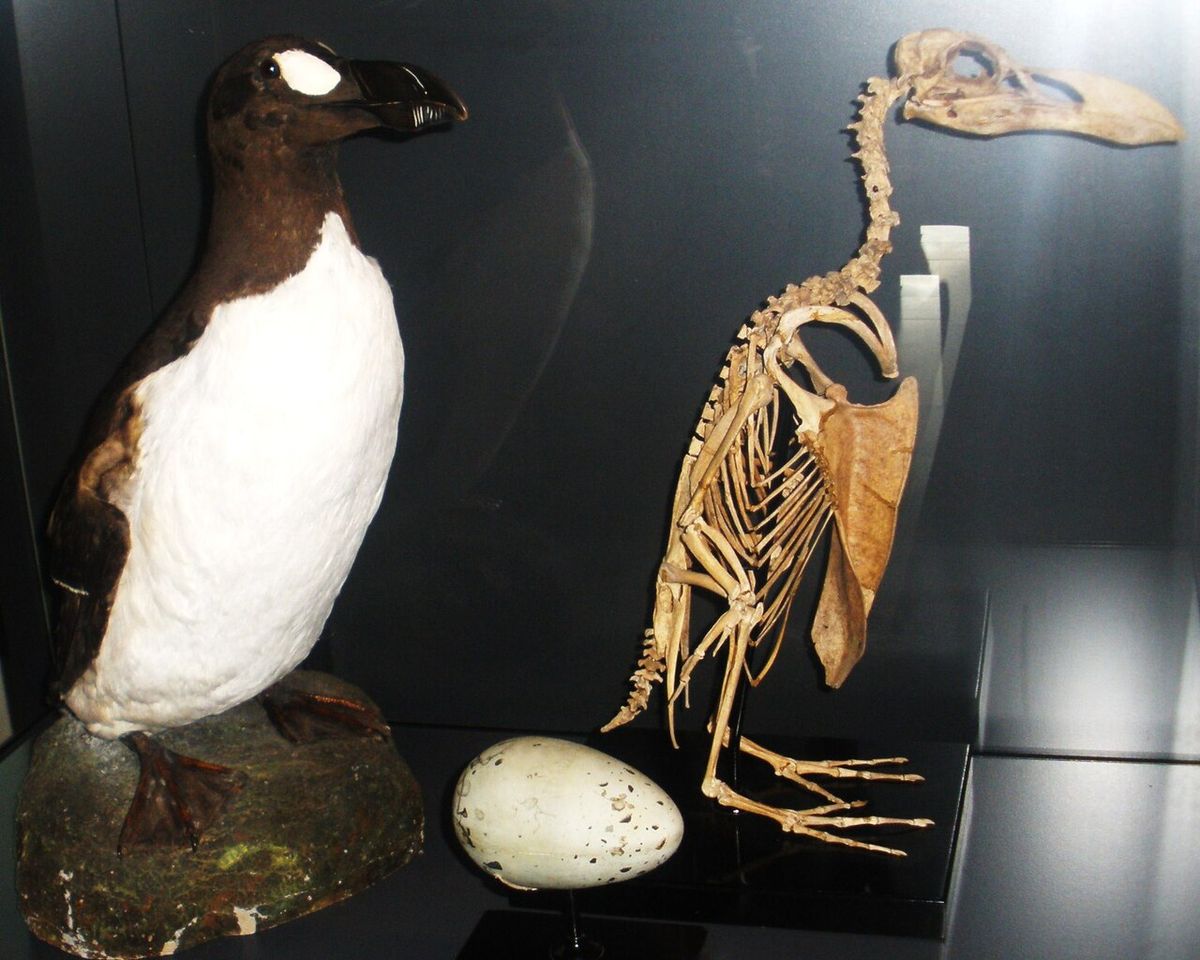
The great auk was a stout, powerful bird, standing about 75 centimetres tall and weighing around 5 kilograms, making it the largest member of the auk family to survive into modern times and the second-largest alcid overall, surpassed only by the prehistoric Miomancalla. Its plumage was a classic example of countershading, with a glossy black back and a white belly, a pattern that provided camouflage in the water. During the breeding season, adults developed a distinctive white patch over each eye with a hazel or chestnut iris, which was replaced in winter by a white band and a grey line of feathers stretching from the eye to the ear. The bird's most notable feature was its large, heavy, and hooked black beak, which bore deep white grooves on both the upper and lower mandibles, up to seven on the upper and twelve on the lower in summer. The great auk's wings were remarkably small, only about 15 centimetres long with the longest feathers being 10 centimetres, and were flipper-like, rendering the bird completely flightless. This adaptation, along with legs set far back on its body and black feet with brownish-black webbing, made it an exceptionally powerful swimmer and diver, capable of propelling itself underwater with its wings. It could dive to depths of at least 75 metres and some accounts claim to 1 kilometre, and could hold its breath for up to 15 minutes, hunting fish and crustaceans in the cold Atlantic waters.
The sexes were similar in plumage, though males may have been slightly larger, particularly in bill and femur length, and individuals living farther north averaged larger in size. Some individuals reportedly had grey plumage on their flanks, though the purpose and frequency of this is unknown. Juveniles had fewer prominent beak grooves than adults and had mottled black and white necks, lacking the eye patches of adults, instead having a grey line running through the eye with white eye rings. Hatchlings were grey and downy, though no skins of young birds survive today. The great auk's vocalizations are poorly documented but are believed to have included low croaks, hoarse screams, and a gurgling noise when anxious, likely deeper and louder than the calls of its closest relative, the razorbill. The bird's clumsy, waddling gait on land, where it sometimes used its small wings for balance and took short, awkward steps in a straight line when running, contrasted sharply with its grace, speed, and ability to bank, veer, and turn underwater in the ocean. It could accelerate underwater and shoot out of the water to land on rocky ledges.
Distribution, Habitat and Breeding Colonies
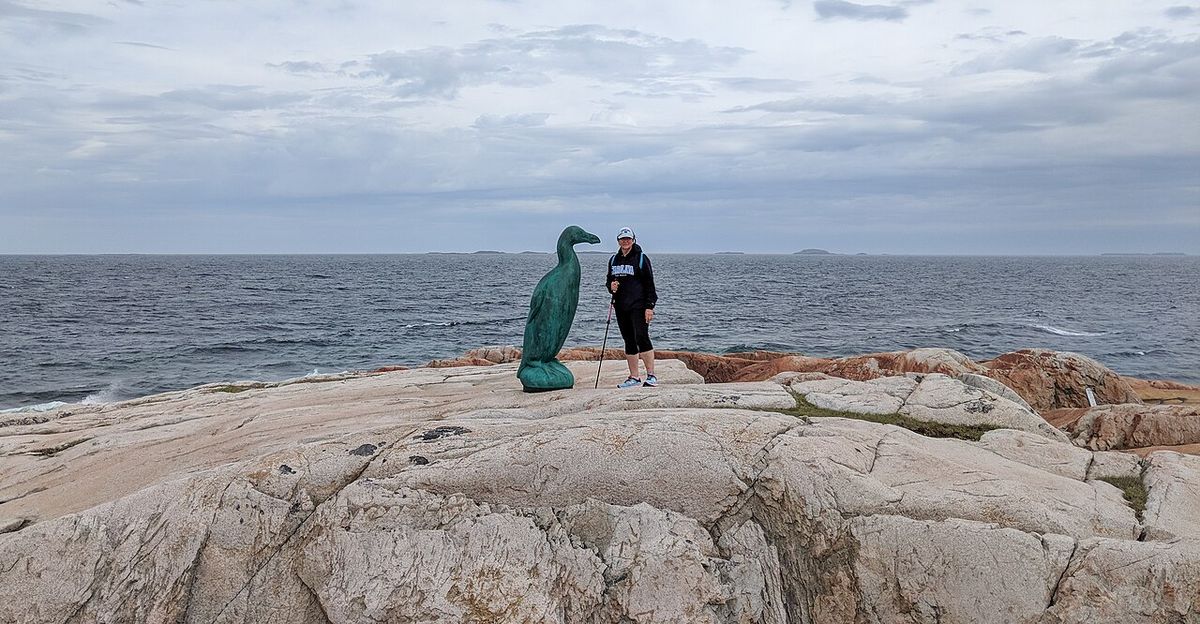
The great auk's range spanned the North Atlantic Ocean, from the coasts of Canada and the northeastern United States across to Greenland, Iceland, the Faroe Islands, and northern Europe to Norway, Great Britain, Ireland, and south to France and the Iberian Peninsula. Pleistocene fossils indicate it also inhabited Southern France, Italy, and other Mediterranean coasts, with isolated bones found in North Africa. During the non-breeding season, birds ranged as far south as northern Spain and, in the western Atlantic, to Massachusetts Bay and historically, bones suggest, to Florida around 1000 BC, AD 1000, and the 17th century. The species was particularly abundant on the Grand Banks of Newfoundland, the location of the last reported sighting in 1852. The bird spent most of its life at sea, even roosting on the water when not breeding, coming to land only to breed on remote, rocky islands with sloping shorelines for easy ocean access. These specific habitat requirements were rare, limiting the great auk to an estimated 20 or fewer breeding colonies globally, which also needed to be close to rich feeding grounds and distant from mainland predators like humans and polar bears. Key known nesting sites included Funk Island near Newfoundland, the Bird Rocks (Rochers-aux-Oiseaux) in the Gulf of St. Lawrence, Grimsey Island, Eldey Island, and the skerry Geirfuglasker near Iceland, St. Kilda and Papa Westray in the Orkney Islands off Scotland, and possibly Cape Cod in Massachusetts. Funk Island was the largest known breeding colony. After breeding, the great auk migrated north and south away from the colonies, tending to go southward in late autumn and winter.
- Funk Island, Newfoundland: The largest known colony, destroyed by circa 1800.
- Bird Rocks (Rochers-aux-Oiseaux), Gulf of St. Lawrence: A significant Canadian breeding site.
- Geirfuglasker, Iceland: A skerry that was a historic colony.
- Eldey Island, Iceland: Site of the last confirmed kill in 1844.
- Grimsey Island, Iceland: A colony that persisted into the 19th century.
- St. Kilda, Scotland: A remote archipelago with a breeding colony.
- Papa Westray, Orkney Islands, Scotland: A known Pleistocene and historic site.
Reproduction and Life Cycle
Great auks nested in extremely dense, social colonies, with pairs often occupying just one square metre of ground, and they were dominant over other alcid species in mixed colonies due to their size. They are believed to have mated for life, though some theorize they may have mated outside their pair as razorbills do. Breeding began in early to mid-May, with pairs engaging in social displays involving head-bobbing to show off their white eye patches, bill markings, and yellow mouths. The female laid a single, large egg directly on the bare rock up to 100 metres from shore between late May and early June, and could lay a replacement if the first was lost. In years of food shortage, they did not breed at all. The egg was ovate and elongate, averaging 12.4 centimetres in length and 7.6 centimetres at the widest point, and was yellowish white to light ochre with a varying pattern of black, brown, or greyish spots and lines often congregated on the large end. The unique egg patterning likely helped parents identify their own egg in the crowded colony.
Both parents took turns incubating the egg in an upright position for 39 to 44 days, with hatching typically in June, though eggs could be present as late as August. After hatching, the downy chick was fed by both parents and fledged to the sea after only two to three weeks, typically by mid-July. The parents continued to care for the young chick at sea, sometimes carrying it on their backs, and adults would be seen swimming with their young perched on their backs. The young left the nest site but continued to receive parental care. Great auks reached sexual maturity between four and seven years of age and had an estimated lifespan of 20 to 25 years. The entire breeding cycle, from egg-laying to fledging, was completed in about seven weeks.
Diet, Behaviour and Predation
The great auk was a pursuit diver, using its powerful wings to swim underwater in search of prey. It typically foraged in relatively shallow, shoaling waters, which differentiated it from other alcid species, though after breeding it could range up to 500 kilometres from land. Its diet consisted primarily of small fish, usually 12 to 20 centimetres in length and weighing 40 to 50 grams, but occasionally up to half the bird's own length. Atlantic menhaden and capelin were favoured prey based on bone remains found at colony sites like Funk Island. It also consumed other fish such as lumpsuckers, shorthorn sculpins, cod, sand lance, as well as crustaceans. Chicks were likely fed plankton and regurgitated fish and crustaceans by their parents. Great auks may have fed cooperatively in flocks. On land, they were described by naturalist Otto Fabricius as being either remarkably tame and stupid or difficult to approach, possibly related to the bird's age. They reacted to noises but were rarely frightened by sight alone and used their bills aggressively when threatened or in dense nesting sites.
Natural predators included large marine mammals like orcas and polar bears, which would raid nesting colonies, as well as white-tailed eagles. Humans became the most significant predator. The great auk had few natural predators, which contributed to its lack of fear and ultimate vulnerability. Outside the breeding season, they migrated south in pairs or small groups, though not as entire colonies. Their ability to dive deeply reduced competition with other alcid species for food resources.
Historical Relationship with Humans and Path to Extinction
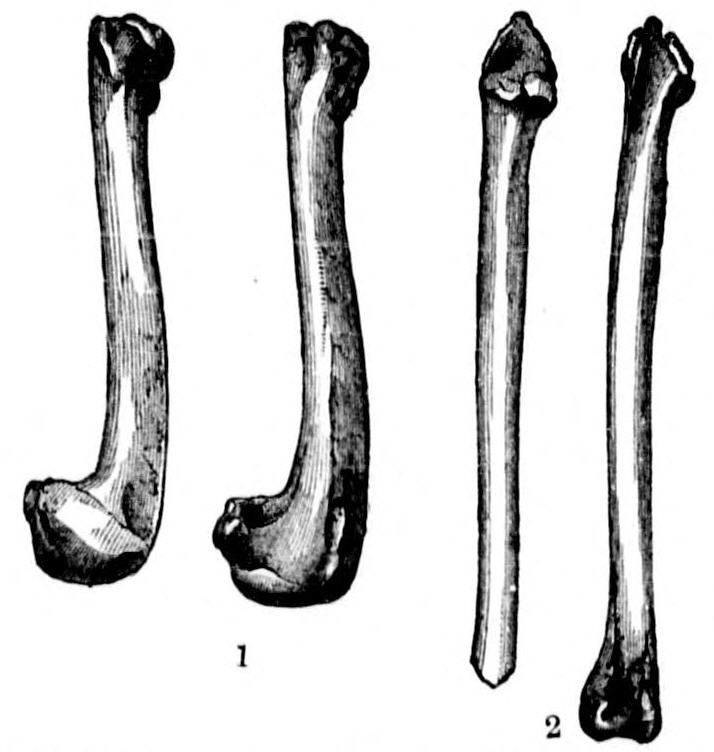
The great auk had a long and complex relationship with humans, stretching back over 100,000 years to Neanderthals. Later Indigenous peoples, including the Maritime Archaic culture, used the bird as a food source and for ceremonial purposes. One notable burial contained a corpse covered by more than 200 great auk beaks, presumed to be from a skin cloak. Early European explorers and fishermen in the North Atlantic, from Basque whalers to Newfoundland crews, found the flightless, colonial birds an easy and convenient source of fresh meat, oil, and fishing bait. By the mid-16th century, demand for its down feathers in Europe had largely eliminated the bird from European waters.
Despite some of the world's earliest bird protection laws being enacted on its behalf in places like Great Britain, enforcement was ineffective. The largest known colony, on Funk Island, Newfoundland, was systematically destroyed by feather hunters who would drive the birds onto boats. It was eradicated by approximately 1800. The last refuge for the species became the islands off Iceland. The final chapter occurred on 3 June 1844, when the last confirmed breeding pair was killed on Eldey Island by three Icelandic sailors commissioned by a collector. The two birds were captured, their single egg was accidentally crushed, and the adults were killed and sold. The skins were later separated from soft tissues preserved in alcohol. A possible sighting in 1852 on the Grand Banks is sometimes considered the last record, but it remains unconfirmed. The extinction of the great auk was a direct result of systematic overexploitation across centuries.
- Mid-16th Century: European populations largely eliminated for the down feather trade.
- Circa 1800: Destruction of the massive colony on Funk Island, Newfoundland.
- 3 June 1844: Last confirmed pair killed on Eldey Island, Iceland. Egg destroyed.
- 1852: Last reported (unconfirmed) sighting on the Grand Banks of Newfoundland.
Taxonomy, Evolution and Etymology
It was later placed in its own genus, Pinguinus, in 1791, and it is the only modern species in that genus. Genetic and morphological studies confirm its closest living relative is the razorbill (Alca torda), a much smaller, flight-capable bird. Molecular evidence suggests the great auk, razorbill, and little auk (dovekie) diverged from a common ancestor probably similar to a stout Xantus's murrelet. The great auk is not closely related to the penguins of the Southern Hemisphere, which were named by explorers due to their superficial resemblance to this northern bird. Some ornithologists historically placed it in the genus Alca with the razorbill due to outward similarities apart from size and flightlessness. It is the only recorded British bird made extinct in historic times.
The genus name Pinguinus is derived from Spanish, Portuguese, and French names for the bird, which in turn come from the Latin pinguis, meaning 'fat' or 'plump'. The species name impennis is Latin for 'flightless', referring to its lack of substantial flight feathers or pennae. The word 'penguin' first appears in the 16th century as a synonym for the great auk, with debated origins possibly from the Welsh pen gwyn, meaning 'white head'. Other historical names include garefowl or gairfowl (from the Norse geirfugl, or 'spearbird'), the Basque arponaz ('spearbill'), the early French apponatz, modern French grand pingouin, and the Inuit isarukitsok ('little wing'). Whalers used the name 'woggins' for both great auks and southern penguins. The Irish name is falcóg mhór ('big seabird').
Fossil evidence shows the modern great auk first appeared around 400,000 years ago during the Middle Pleistocene, with oldest fossils from Boxgrove, England, and Bermuda. An earlier, larger, and also flightless relative, Pinguinus alfrednewtoni, lived in the Western Atlantic during the Early Pliocene. After that species died out, the great auk expanded into its territory. The great auk represents a distinct evolutionary lineage within the alcid family, having adapted to a flightless, marine predatory lifestyle in the North Atlantic, a path convergent with but independent from the penguins of the south.
Modern Research, Specimens and Cultural Legacy
Today, the great auk is known only from approximately 80 preserved skins, 75 eggs, and various bones held in museum collections worldwide. These remains have become the subject of sophisticated scientific inquiry. In a significant 2017 study published in the journal Genes, researchers used DNA extracted from preserved soft tissues of the last pair killed in 1844, held at the Natural History Museum of Denmark, to trace the fate of their skins. By cross-referencing genetic data with historical sale and auction records and personal correspondence, they identified one of the last birds: the male skin held at the Institut Royal des Sciences Naturelles de Belgique in Brussels, known as the 'Brussels Auk'. The fate of the female skin remained a mystery until follow-up research extended the search.
Historical documentation suggested the female skin was among four sold in London in the 1970s, one of which was acquired by the Cincinnati Museum Center. In 2025, researchers contacted the museum to request a tissue sample. A minimally destructive sample was taken from the foot pad and feathers, and genetic analysis confirmed this skin was indeed the last female great auk, solving a long-standing historical mystery. This modern detective work, combining genetics and archival history, has provided a definitive endpoint to the story of the species' final moments. The great auk also maintains a cultural legacy. It is mentioned in several novels, and the scientific journal of the American Ornithological Society was named The Auk in its honour until 2021.
| Specimen Type | Approximate Number Held Worldwide | Notable Examples and Details |
|---|---|---|
| Study Skins | 80+ | Includes the 'Brussels Auk' (last male) and Cincinnati specimen (last female). |
| Eggs | 75 | Collected from historic colonies. Patterns are unique to each egg. |
| Soft Tissue Samples (in alcohol) | 2 (from last pair) | Preserved at the Natural History Museum of Denmark. Used for DNA studies. |
| Bones (archaeological) | Thousands | Found at sites like Funk Island (NL), El Harhoura 2 (Morocco), and many coastal middens. |
| Complete Skeletons | Several | Reconstructed from bones in various natural history museums. |
| Fossil Remains | Numerous | From Pleistocene sites across the Atlantic basin, including Mediterranean. |
Questions about Great auk
Could the great auk fly and how did it move?
The great auk was completely flightless. Its wings were only 15 centimetres long, functioning as flippers for swimming. It was an exceptionally powerful swimmer and diver, using its wings to propel itself underwater to depths of 75 metres or more. On land, it was clumsy, walking slowly and sometimes using its wings for balance, running awkwardly with short steps in a straight line.
What role did Canada play in the great auk's history?
Canadian waters and islands were central to the great auk's existence and extinction. Key breeding colonies were located at Funk Island, Newfoundland, and the Bird Rocks in the Gulf of St. Lawrence. The Grand Banks were a major foraging area and the location of the last reported sighting in 1852. The destruction of the massive Funk Island colony by feather hunters around 1800 was a major step toward the species' extinction.
What is being done with the remaining great auk specimens?
Existing specimens are invaluable for scientific research. They are used for morphological studies, and now, through minimally destructive sampling, for genetic analysis. Recent projects have successfully used DNA from 1844 tissues to trace the provenance of skins, confirming the identity of the last male and female. Museums carefully preserve these remains for future study and as poignant reminders of extinction.
When and where was the last great auk killed?
The last two confirmed great auks were killed on Eldey Island, off the coast of Iceland, on 3 June 1844. This event ended the last known breeding attempt of the species. The birds were captured by three Icelandic sailors, their single egg was crushed, and the birds were killed and sold. Their skins were later separated and their soft tissues preserved in alcohol. Modern genetic research has since been able to identify these specific remains in museum collections, confirming the details of this final extinction event.
How do we know so much about an extinct bird?
We know about the great auk from several key sources. Historical accounts from sailors and naturalists, such as Otto Fabricius, provide direct observations of its behaviour and appearance. Archaeological evidence comes from bone remains found in middens and former breeding colonies like Funk Island. Furthermore, approximately 80 preserved skins and 75 eggs held in museums around the world offer physical specimens for study. Modern genetic techniques, applied to these preserved remains, combined with historical documents allow scientists to reconstruct its biology and final history with significant accuracy.
Why is the great auk important to Canadian natural history?
The great auk is important to Canadian natural history as it was once a common species in Canadian coastal waters, ranging along the coastlines of Canada and foraging on the Grand Banks of Newfoundland. It bred on Canadian islands, with Funk Island near Newfoundland being its largest known breeding colony. Its exploitation and eventual extinction, driven by European demand for its down and use as fishing bait, is a critical early case study in the unsustainable use of marine resources. This history serves as a powerful and relevant example of human driven extinction for contemporary conservation efforts in Canada's oceans.
Sources and further reading
- Great auk (Wikipedia)
- Is this the last Great Auk? (cincymuseum.org)
- Great Auk (thecanadianencyclopedia.ca)
Checked by the Your Space Hamilton desk. Last updated 2026-10-21.