Gray fox
The gray fox (Urocyon cinereoargenteus) is a small, omnivorous canid native to North and Central America, and is the only member of its genus whose natural range spans both continents. Distinguished by its grizzled grey fur, black-tipped tail, and unique ability to climb trees, this adaptable mammal inhabits a variety of environments from deciduous forests to urban edges. In Canada, the gray fox is found in southern regions, including parts of Manitoba and southeastern Quebec, representing the northernmost extent of its range. While historically common in eastern North America, its populations have been influenced by habitat changes and competition with the red fox, yet it remains a resilient and ecologically significant predator.
Physical Description and Identification
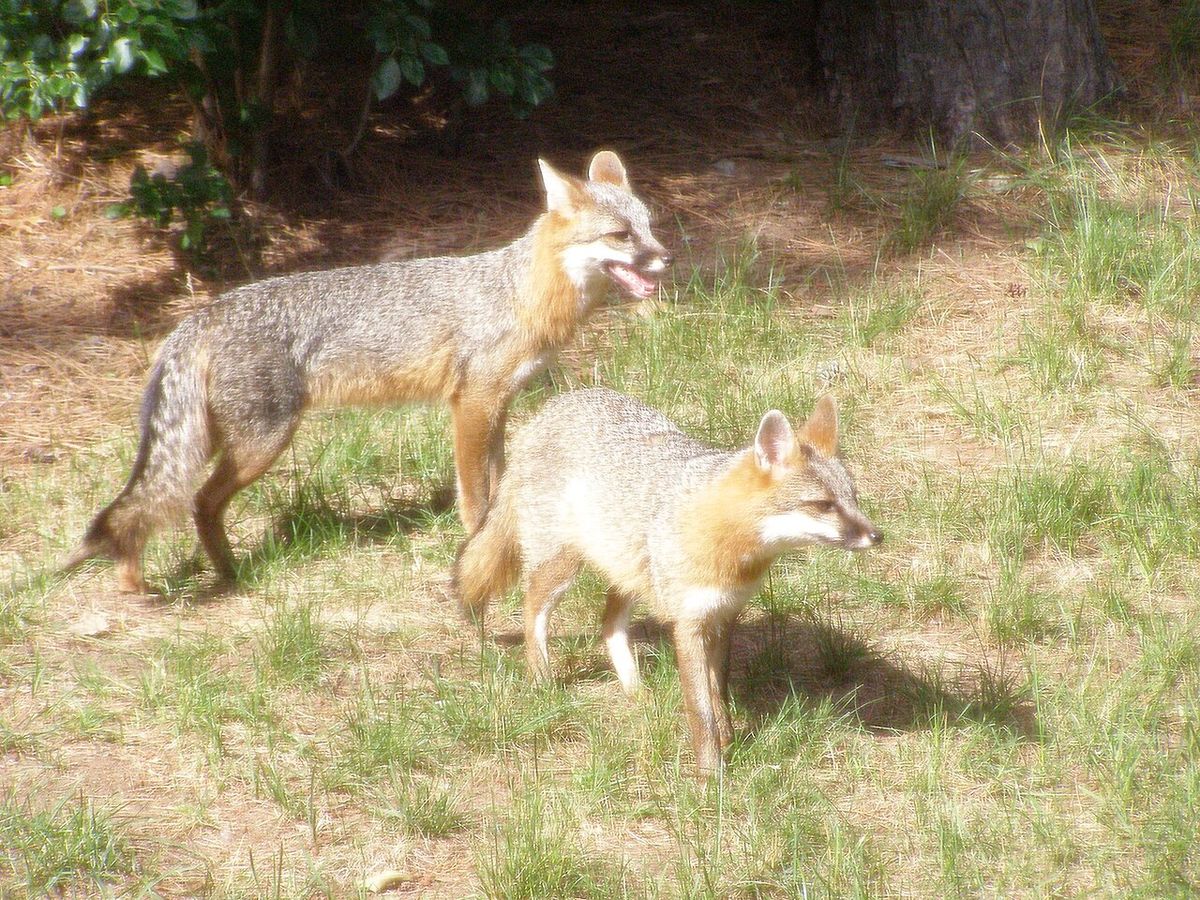
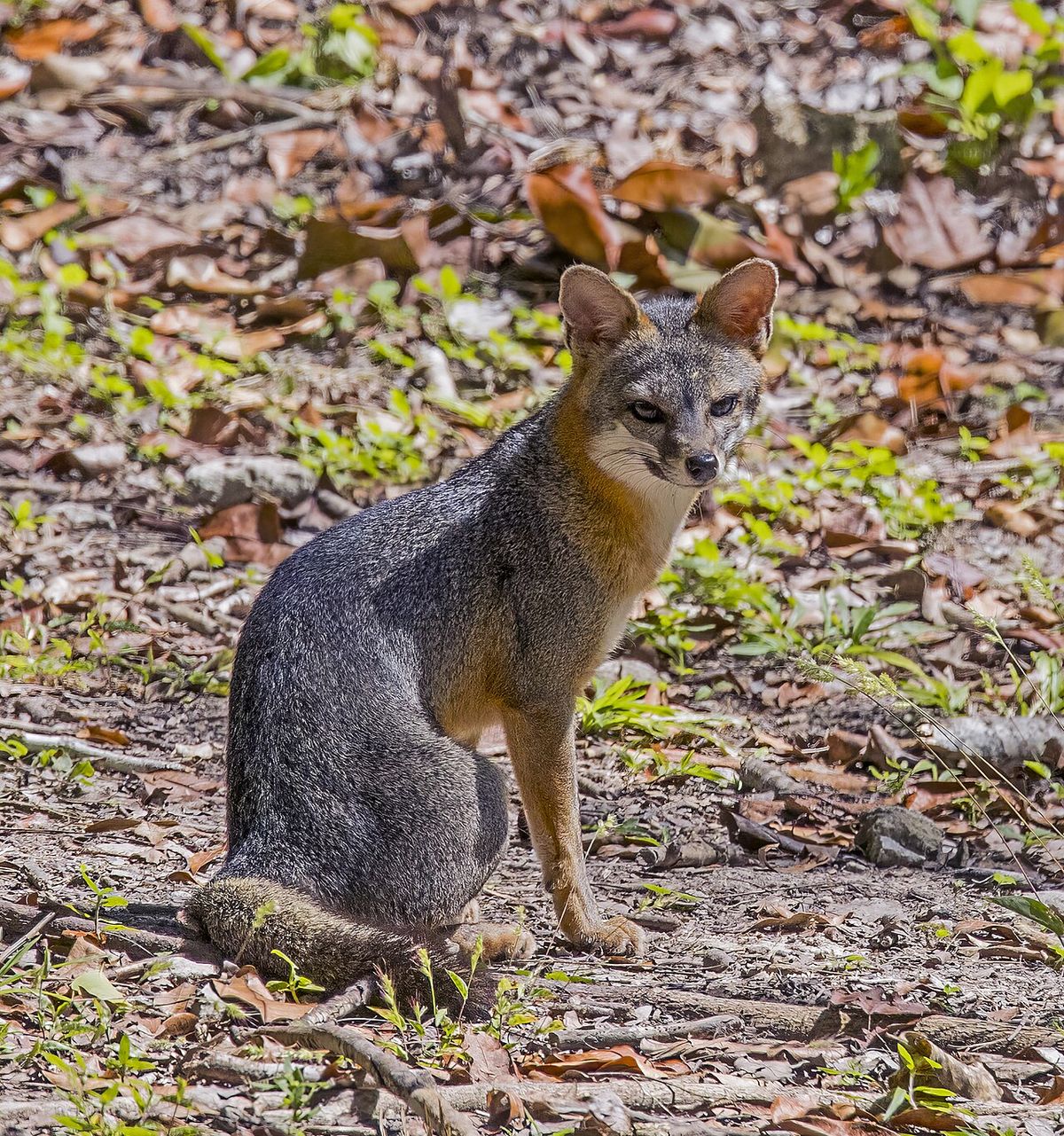
The gray fox possesses a distinctive appearance that sets it apart from other North American canids. Its coat is primarily grizzled grey on the back and sides, with strong reddish coloration on the legs, chest, and the back and sides of the head and neck. A defining characteristic is the prominent black stripe that runs along the top of its tail, ending in a black tip. The throat, chest, belly, and hind legs are white, and it has black markings around the eyes, on the lips, and on the nose. Unlike the red fox, the gray fox lacks conspicuous 'black stockings' on its legs. The skull is unique among local canids, featuring widely separated temporal ridges that form a distinct 'U' shape. Another notable physical trait is its oval pupils, contrasting with the slit-like pupils of foxes in the Vulpes genus. Adult gray foxes typically measure between 76 and 112.5 centimetres in total length, with the tail accounting for 27.5 to 44.3 centimetres of that. They usually weigh from 3.6 to 7 kilograms, though exceptional individuals may reach 9 kilograms. Sexual dimorphism is minimal, with females being slightly smaller than males on average.
Evolution and Genetics
The gray fox is an ancient lineage within the dog family. Fossil evidence indicates it first appeared in North America during the mid-Pliocene epoch, approximately 3.6 million years ago, with early remains found at the lower 111 Ranch site in Graham County, Arizona. Genetic studies confirm the genus Urocyon, which includes the gray fox and its diminutive relative the island fox, is the most basal sister group to all other living canids. This places it on a separate evolutionary branch from red foxes and wolves, and it often clusters genetically with other ancient lineages like the raccoon dog and the bat-eared fox. Recent mitochondrial DNA research suggests eastern and western populations in North America diverged into separate sister taxa during the mid-Pleistocene. The species has a diploid chromosome number of 66 with a fundamental number of 70. The island fox of California's Channel Islands is descended from mainland gray foxes that were likely transported by humans, demonstrating a history of association with human activity.
Habitat and Distribution
The gray fox has an extensive range from southern Canada through the United States, Mexico, Central America, and into northern South America as far as Venezuela and Colombia. In Canada, its presence is documented in southern regions, including Manitoba and southeastern Quebec. This species is highly adaptable, inhabiting a mix of wooded, brushy, and rocky areas. It shows a strong preference for forest edges and transitional zones, which provide cover and hunting opportunities, earning it the classification of an 'edge species'. Specific habitat choices vary by region, from deciduous forests in the east to juniper and ponderosa pine forests in the west. Notably, gray foxes have successfully adapted to human-altered landscapes, often living near roads, agricultural land, and even in suburban areas, as seen in southern Florida. This adaptability allows them to utilize habitats where larger predators like coyotes may be less common. The species is the only canid whose natural range spans both North and South America.
Behaviour and Ecology
The gray fox is primarily nocturnal or crepuscular, being most active during dawn, dusk, and night. It is renowned among canids for its adept climbing ability, a skill enabled by strong, hooked claws. It can scramble up vertical, branchless trunks to heights of 18 metres to escape predators like coyotes or domestic dogs, or to access arboreal food sources. Descent is achieved by jumping between branches or backing down slowly in a cat-like manner. Dens are made in hollow trees, stumps, rock crevices, or appropriated burrows, and may be located up to 9 metres above ground. Despite this arboreal prowess, they spend most of their resting time on the ground. Their social structure is generally solitary or in small family groups. Key aspects of their ecology include their role as mesopredators and their behavioural adaptations to avoid competition.
- Arboreal Adaptation: Unique tree-climbing ability for escape and foraging.
- Nocturnal/Crepuscular: Primary activity during low-light hours.
- Denning: Uses hollow trees, stumps, or burrows, often well-concealed.
- Habitat Use: Heavily utilizes forest edges as travel corridors and hunting grounds.
- Response to Coyotes: Often selects habitats nearer to human activity where coyotes are less frequent.
These behaviours collectively enhance the gray fox's survival in landscapes shared with larger, dominant predators. Gray foxes are known as mesopredators because they are mid-tier predators and their prey consists mostly of smaller mammals. Coyotes are known as de facto apex predators due to the removal of other apex predators in North America, which explains the gray fox's tendency to change behaviour in response to the coyote threat. It has been suggested that gray foxes could be more active at night than during the day to avoid larger, diurnal competitors. In California, gray foxes also avoid competitors by living in chaparral where their competitors are fewer.
Diet and Hunting
As an omnivorous and solitary hunter, the gray fox has a highly varied diet that shifts with season and location. Small mammals form a core part of its prey, including rodents like deer mice, woodrats, and voles, as well as lagomorphs such as the eastern cottontail and jackrabbits. Birds, insects like grasshoppers and beetles, and carrion are also consumed. A significant portion of its diet, often greater than that of the red fox, consists of plant material, including fruits, nuts, and grains. Fruits are an important component, and they seek whatever fruits are readily available. Foxes will cache excess food, covering it with scent from glands or urine to mark it for later retrieval and to deter other animals. In some regions, such as Zion National Park in Utah, their diet can be primarily insectivorous and herbivorous. This dietary flexibility is a key to their success across diverse habitats. Generally, there is an increase in fruits and invertebrates within the gray fox's diet in the transition from winter to spring.
Reproduction and Life Cycle
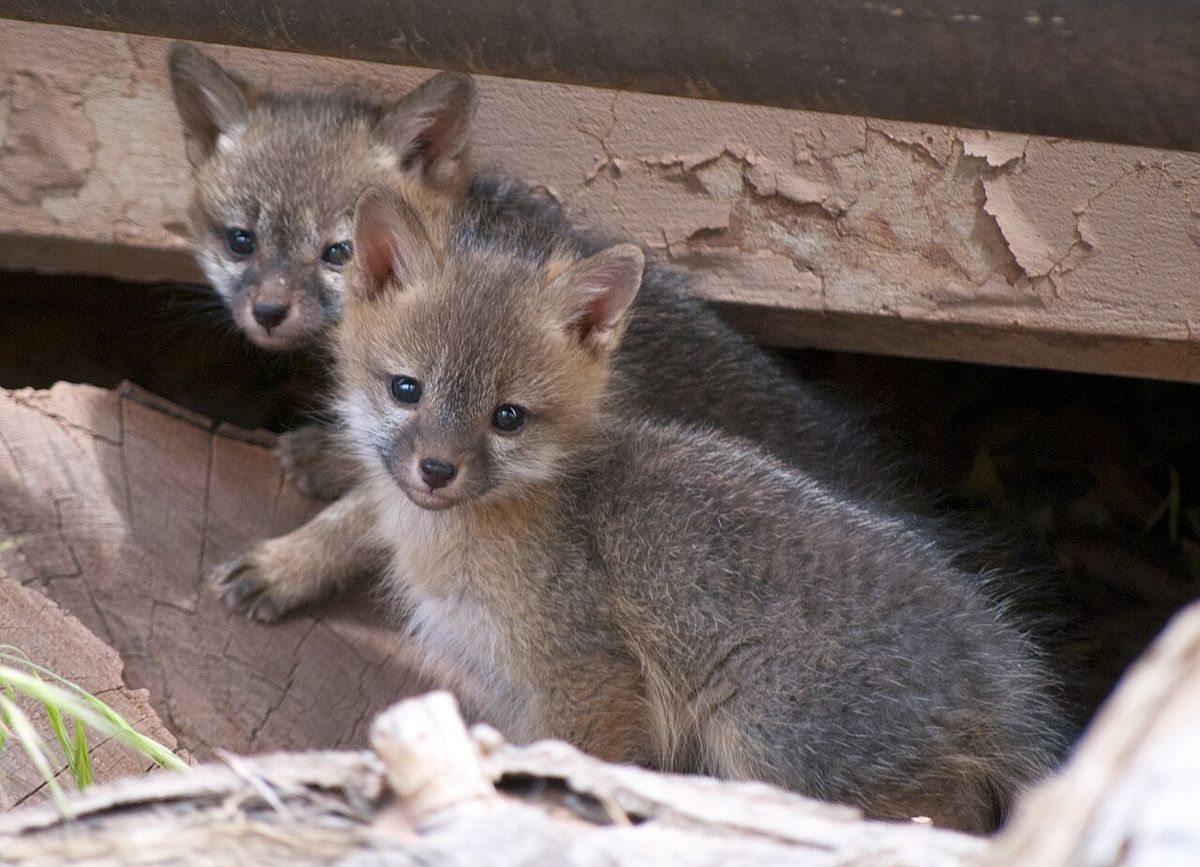
The gray fox is assumed to be monogamous. The breeding season varies geographically, occurring in early March in Michigan and peaking in February in Alabama. After a gestation period of approximately 53 days, the female gives birth to a litter ranging from 1 to 7 kits, with an average of 3.8. Dens are located in well-concealed sites such as hollow logs, rock piles, or brushy areas, and are used mostly during the whelping season. Kits begin to venture out of the den at about three months of age and start hunting with their parents. By four months, they have developed their permanent teeth and can forage independently. The family unit stays together until autumn, when the young males, upon reaching sexual maturity, disperse. Studies show juvenile males may disperse up to 84 kilometres from the natal den, while females typically remain within 3 kilometres. Females can reach sexual maturity at around 10 months of age. In the wild, gray foxes typically live between six and ten years. The annual reproductive cycle of males, studied through epididymal smears, shows they become fertile earlier and remain fertile longer than females.
Subspecies
There are sixteen recognized subspecies of the gray fox, which vary across its vast geographical range. These subspecies are differentiated by subtle variations in size, colouration, and regional adaptation. The subspecies relevant to North America include those found in the eastern United States, the Gulf states, the Central Plains, the southwestern United States, and northern California and Oregon. The presence of distinct subspecies highlights the species' long evolutionary history and adaptation to local environments across the continent.
- U. c. borealis: Found in New England.
- U. c. californicus: Inhabits southern California.
- U. c. cinereoargenteus: The nominate subspecies of the eastern United States.
- U. c. floridanus: Located in the Gulf states.
- U. c. ocythous: Occupies the Central Plains states.
- U. c. scottii: Found in the southwestern United States and northern Mexico.
- U. c. townsendi: Inhabits northern California and Oregon.
Other subspecies extend the range through Central America and into South America, such as Urocyon cinereoargenteus venezuelae in Colombia and Venezuela and Urocyon cinereoargenteus costaricensis in Costa Rica. The species occurs to the northern part of South America, specifically Venezuela and Colombia. The species epithet cinereoargenteus is a combination of 'cinereo' meaning ashen and 'argenteus' meaning silver. This name references the colour of the tail.
Conservation and Human Interaction
The gray fox is not currently considered a species at risk in Canada or the United States, with overall populations remaining stable. However, it faces pressures from habitat fragmentation and interspecific competition. Historically, it was the most common fox in the eastern United States, but landscape changes facilitated the expansion of the more adaptable red fox. The gray fox has shown resilience by thriving in urban and suburban edges. It is legally hunted and trapped in many jurisdictions, primarily for its pelt. The intensity of harvest correlates with pelt prices, as seen in the 1970s when hunted numbers jumped from 26,109 to over 163,458 in a five-year period. Recent reports indicate over 500,000 gray foxes are taken annually for fur globally. As a predator of rodents like woodrats and cotton rats, it plays a beneficial role in ecosystems as a regulator of small mammal populations. It also hosts parasites like fleas, tapeworms, and roundworms, with the flea Pulex simulans being common in the U.S. and Taenia pisiformis being a frequent tapeworm. Climate change may influence the distribution of these parasites northward from central Mexico.
Comparison with Other Foxes in Canada
In Canada, the gray fox shares its range primarily with the more widespread and familiar red fox (Vulpes vulpes). Several key differences distinguish the two species. The gray fox has a stockier build with shorter legs, giving it a more compact appearance despite similar weights. Its fur is coarser and shorter, with a salt-and-pepper grizzled grey colour and a distinct black tail stripe, unlike the red fox's uniform red coat with white-tipped tail and black legs. Behaviourally, the gray fox's unique tree-climbing ability sets it apart, as red foxes are strictly terrestrial. Ecologically, gray foxes tend to prefer denser woodland and brush habitats, while red foxes are more commonly found in open fields, farmlands, and urban areas. Historically, the gray fox was more associated with deciduous forests prior to European colonization, while the red fox dominated boreal regions.
| Feature | Gray Fox | Red Fox |
|---|---|---|
| Primary Colouration | Grizzled grey with reddish accents | Bright reddish-orange |
| Tail Marking | Black stripe along top, black tip | White tip |
| Leg Colour | Reddish, no 'stockings' | Distinct black 'stockings' |
| Pupil Shape | Oval | Slit-like |
| Arboreal Ability | Excellent climber | Terrestrial, does not climb |
| Preferred Canadian Habitat | Woodland edges, brush | Open areas, fields, urban edges |
The dental formula of Urocyon cinereoargenteus is 3.1.4.2 over 3.1.4.3, which equals 42 teeth. The genus Urocyon comes from Ancient Greek words for 'tail' and 'dog'. The gray fox's skull can be easily distinguished from all other North American canids by its widely separated temporal ridges that form a 'U' shape. Like other canids, the fox's ears and muzzle are angular and pointed.
Questions about Gray fox
Where can you find gray foxes in Canada?
Gray foxes inhabit the southernmost parts of Canada, with their range extending into southern regions of Manitoba and southeastern Quebec. They are at the northern limit of their continental range in these areas, preferring habitats that offer a mix of forest and brushy cover. Their presence in Canada is less common and widespread than that of the red fox. The species prefers a mix of wooded and agricultural land, and in the Midwest, it is often found near brush-covered bluffs.
What is the most distinctive feature of the gray fox?
The gray fox's most distinctive feature is its ability to climb trees, a trait rare among canids. This is enabled by its strong, hooked claws, allowing it to scale vertical trunks to escape predators or access food. Physically, it is readily identified by its grizzled grey coat, the black stripe running the length of its tail, and its oval-shaped pupils. Its strong neck and curved claws are specific adaptations that support its arboreal lifestyle.
What do gray foxes eat?
Gray foxes are omnivores with a highly varied diet. They primarily hunt small mammals like rabbits, voles, and mice, and also eat birds, insects, and carrion. A significant part of their diet consists of plant material, including fruits, nuts, and grains. Their diet shifts seasonally, with more insects and fruit consumed in spring and summer, and they are known to cache food items for later consumption.
How does the gray fox differ from the red fox?
The gray fox differs from the red fox in appearance, behaviour, and habitat. It has a grizzled grey coat with a black tail stripe, lacks the red fox's black leg stockings, and has oval pupils. It is an adept tree climber, while the red fox is not. Ecologically, gray foxes prefer denser woodland and brush, whereas red foxes thrive in more open and urbanized landscapes. The gray fox's skull also has a unique 'U'-shaped formation of temporal ridges.
Are gray foxes endangered?
No, gray foxes are not considered endangered. The species is classified as 'Secure' or of 'Least Concern' across most of its range, including in Canada and the United States. Populations are generally stable due to the fox's adaptability to various habitats, including areas near human development. They are, however, subject to regulated hunting and trapping for fur, with hundreds of thousands taken annually.
How do gray foxes raise their young?
Gray foxes are believed to be monogamous. After a gestation of about 53 days, the female gives birth to a litter of one to seven kits in a concealed den. The kits begin to explore outside the den at three months and learn to hunt with their parents. The family stays together until autumn, when the young males disperse to establish their own territories, while young females often remain closer to the natal area. Dens are better concealed than those of red foxes.
Sources and further reading
- Gray fox (Wikipedia)
- Gray Fox (naturecanada.ca)
- Sonoran Desert Fact Sheet, Gray Fox (desertmuseum.org)
- Gray Fox (cmnh.org)
- Thunder Bay Field Naturalists Club | Gray Fox Project (tbfn.net)
Checked by the Your Space Hamilton desk. Last updated 2026-10-23.