Common snapping turtle
The common snapping turtle (Chelydra serpentina) is a large freshwater turtle native to North America, with a range extending from southeastern Canada to the Rocky Mountains and south to Florida. In Canada, it is found in provinces from Nova Scotia to Ontario, where it is often the heaviest native freshwater turtle. The species is noted for its powerful, beak-like jaws, highly mobile neck, and combative disposition when on land, though it is typically docile and reclusive in water. Due to life-history traits sensitive to human disturbance, the common snapping turtle is listed as a species of Special Concern under Canada's Species at Risk Act.
Description and Physical Characteristics
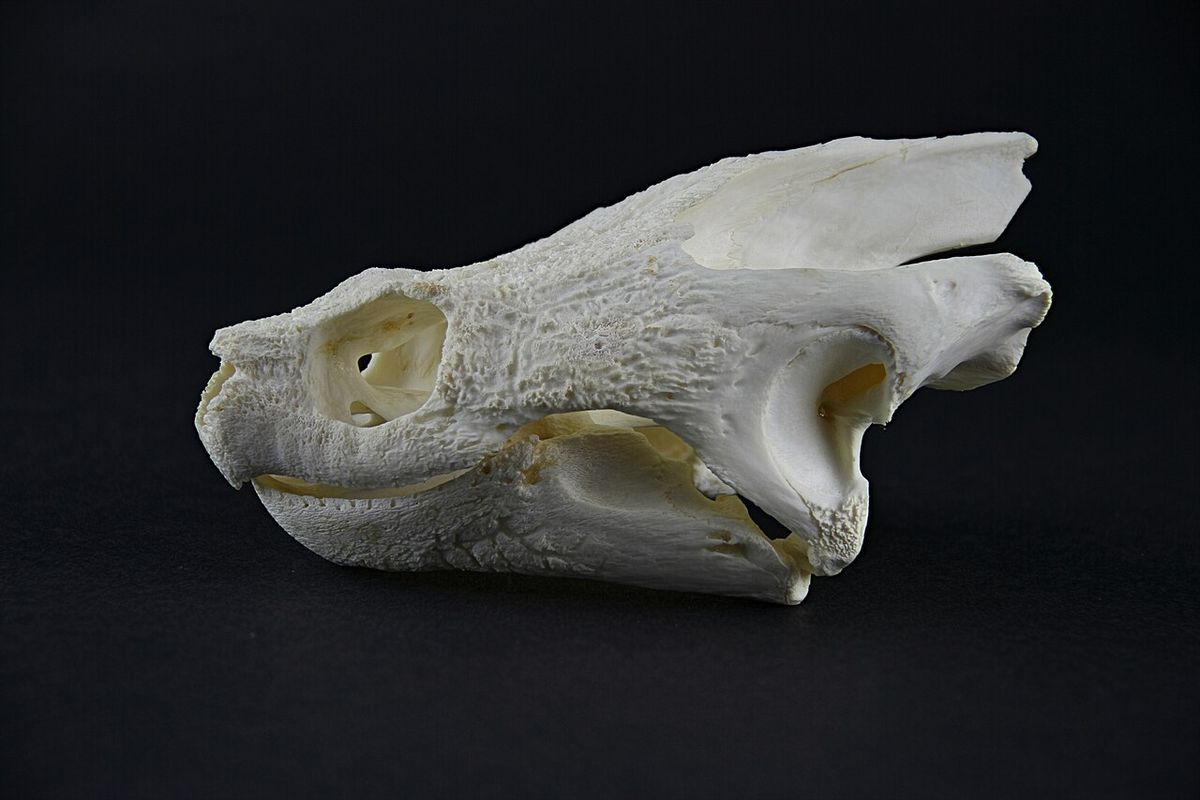
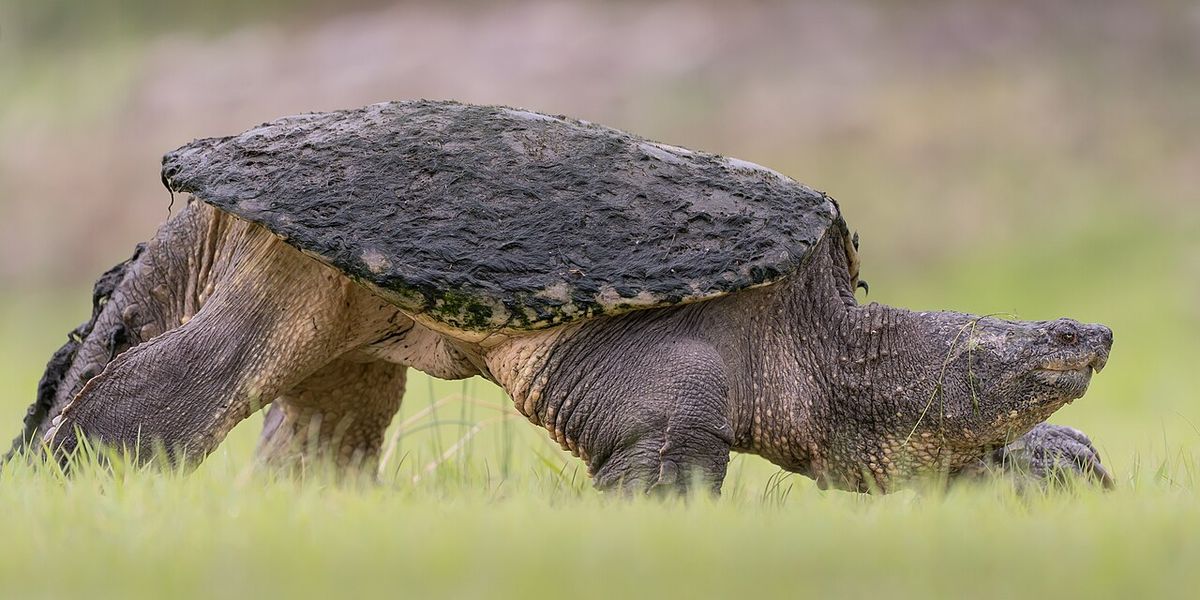
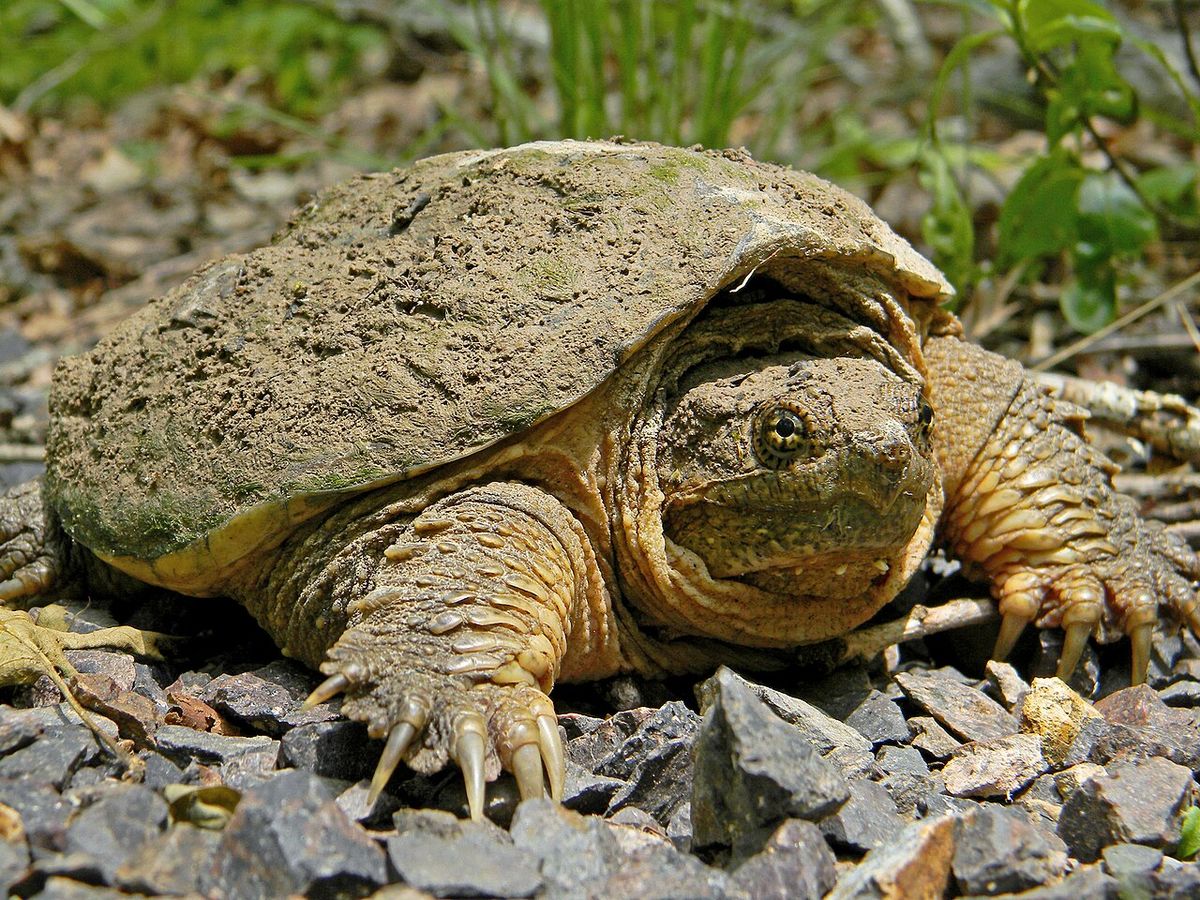
The common snapping turtle possesses a rugged, muscular build with a ridged carapace, or upper shell, that ranges in colour from tan to dark brown or black. These ridges are typically more pronounced in younger individuals. The straight-line carapace length for adults commonly falls between 25 and 47 centimetres, though it can approach 50 centimetres. Adults usually weigh between 4.5 and 16 kilograms, with males being significantly larger than females. Virtually all individuals exceeding 10 kilograms are old males, as the species exhibits indeterminate growth throughout its long life. Exceptional wild specimens have been recorded, with the heaviest reportedly weighing 34 kilograms, while captive turtles, often overfed, have reached 39 kilograms. The species has a highly flexible, snake-like neck and a powerful jaw with a sharp, beak-like edge. Its sense of smell is exceptionally well-developed, aided by sophisticated olfactory organs and nerves. The specific epithet 'serpentina', meaning snake-like, directly references the turtle's long and highly mobile head and neck. In the northern parts of its range, this species is frequently the heaviest native freshwater turtle encountered in local ecosystems.
Habitat, Distribution, and Physiology
The common snapping turtle is a habitat generalist, occupying most permanent bodies of freshwater across its broad range. Its preferred habitats include shallow ponds, slow-moving streams, and wetlands with abundant aquatic vegetation. The species can also tolerate brackish environments like estuaries, which provide different foraging opportunities. In Canada, its range spans from Nova Scotia westward through to southwestern Ontario, and it is one of only three extant species in the family Chelydridae, a family now restricted to the Americas. Evidence suggests the turtle has been present in the Middle Rio Grande drainage in the United States since at least the 17th century, indicating a long-standing native presence. During early spring in northern regions, individuals may bask on fallen logs, though they more commonly float just below the water's surface with only their carapace exposed. In shallow water, they often bury themselves in mud with only their nostrils, positioned at the very tip of the snout, exposed to function like snorkels. This adaptation allows them to breathe while remaining almost completely concealed from potential prey and predators. The turtle's respiratory adaptations are remarkable, as it can survive for over six months under ice without breathing air by using extrapulmonary respiration through membranes in its mouth and throat, or by switching to anaerobic metabolism which creates an oxygen debt repaid in spring.
Diet and Foraging Behaviour
As omnivorous scavengers and active hunters, common snapping turtles have a highly varied diet that plays a significant role in their aquatic ecosystems. They are important aquatic scavengers, consuming carrion, but they also use ambush tactics to prey on live animals. Their powerful jaws allow them to consume hard-bodied prey, and their diet includes invertebrates, fish, frogs, other amphibians, reptiles such as snakes and smaller turtles, unwary birds, and small mammals. Research has shown no significant difference between the diets of males and females, indicating similar ecological roles. Young turtles have a lower bite force, which correlates with more active foraging behaviour as they seek out softer prey that is easier to consume. While adults can occasionally prey on ducklings and goslings, their impact on waterfowl populations is frequently exaggerated and they are not a primary limiting factor. A substantial portion of their diet also consists of aquatic vegetation, nuts, and seeds, confirming their role as true omnivores. The ability to generate significant bite force, measured between 62 and 564 Newtons in a 2023 study, is extremely useful for processing hard foods like mollusks, crustaceans, and the shells of other turtles.
Life History and Reproductive Strategy
The life history of the common snapping turtle is characterized by high and variable mortality of embryos and hatchlings, delayed sexual maturity, extended adult longevity, and repeated reproductive events with low success per event. In northern populations, including those in Canada, females and males mature late, at 15 to 20 years of age, compared to about 12 years in southern populations, and they also reach a larger size at maturity. Mark-recapture data from Algonquin Park in Ontario suggests a maximum lifespan exceeding 100 years, which is supported by their iteroparous strategy of reproducing many times over a long life. Mating occurs from April to November, with peak egg-laying in June and July, and females can store sperm for several seasons to use as needed. Females travel overland, sometimes considerable distances, to find sandy soil in which to dig a nest and deposit a clutch of 25 to 80 leathery-shelled eggs annually, each egg measuring only 26-28 mm in diameter. Incubation time is temperature-dependent, ranging from 9 to 18 weeks, and temperature also determines the sex of the hatchlings, with males developing at intermediate temperatures and females at both low and high extremes. Hatchlings in cooler climates often overwinter in the nest, and recent studies have found they produce clicking and creaking sounds before emerging, a behaviour also seen in some South American turtles.
Key aspects of their reproductive and life history include high and variable mortality of embryos and hatchlings, delayed sexual maturity, extended adult longevity, and repeated reproductive events with low success per event. Females in northern populations mature later, at 15 to 20 years, than those in southern populations which mature at about 12 years. Their lifespan in the wild is poorly known, but long-term data from Algonquin Park in Ontario suggests a maximum age over 100 years. The species mates from April through November, with a peak laying season in June and July, and females can hold sperm for several seasons to use as necessary.
- Mating Season: April through November.
- Peak Egg-Laying: June and July.
- Clutch Size: 25 to 80 eggs per year.
- Egg Characteristics: Leathery, flexible shell, 26-28 mm diameter.
- Sex Determination: Temperature-dependent (males at intermediate temperatures).
- Age at Maturity (Northern Range): 15-20 years.
- Sperm Storage: Females can hold sperm for multiple seasons.
- Hatchling Behaviour: Produce sounds before nest exit and may overwinter in nest.
These turtles are remarkably cold-tolerant, with radiotelemetry studies showing some individuals do not hibernate but remain active under the ice during winter. In the northern part of their range, they do not breathe for more than six months because ice covers their hibernating site. During this time, they drastically reduce their metabolic rate and rely on aquatic oxygen uptake, a process known as extrapulmonary respiration. Experimental data supports the idea that common snapping turtles can sense the Earth's magnetic field, which could be used for orientation during their extensive overland travel to new habitats or nesting sites. These movements are often driven by factors such as pollution, habitat destruction, food scarcity, or overcrowding.
Predators, Threats, and Mortality Factors
Common snapping turtle eggs and juveniles face significant predation pressure, while large adults have very few natural enemies due to their formidable size and defensive capabilities. Nests are targeted by visual, tactile, and chemosensory cues, leading to predation by crows, American mink, skunks, foxes, and raccoons. The female leaves a musk scent on the soil surface while digging, which can attract predators using chemosensory cues. Hatchlings and juveniles are preyed upon by many of the same animals, plus herons, bitterns, hawks, owls, fishers, American bullfrogs, large fish, and snakes. Records from Canada indicate hibernating adults can be ambushed by northern river otters. Other reported predators of adults include coyotes, American black bears, American alligators, and the related alligator snapping turtles. Large, old male snapping turtles have an extremely low annual mortality rate from natural causes. The greatest modern threats are anthropogenic. Road mortality is a severe issue, with one southwestern Ontario population near a busy roadway declining from 941 individuals in 1985 to just 177 by 2002, a loss of 764 turtles in 17 years. This level of mortality may put populations at risk of local extirpation, prompting the consideration of mitigation strategies like exclusion fencing. Habitat degradation, pollution, collection for the pet trade, and consumption in turtle soup also contribute to population declines. In large quantities, turtle meat can pose a health concern due to the bioaccumulation of toxic environmental pollutants.
Conservation Status and Management in Canada
Globally, the common snapping turtle is classified as Least Concern by the International Union for Conservation of Nature. However, in Canada, it was listed as a species of Special Concern under the federal Species at Risk Act in 2011 due to sensitivities to human activity and anthropogenic disruption of its life history. This designation triggers the development of management plans aimed at preventing the species from becoming threatened or endangered. Conservation projects involve governmental departments, universities, museums, and citizen science initiatives in activities like population surveys, identification of major habitats, investigation and mitigation of threats, and public education targeting landowners. The species is a target for these coordinated efforts because its delayed maturity means the loss of breeding adults has a disproportionately negative impact on population sustainability. Research and monitoring, such as the long-term studies in Algonquin Park, are crucial for understanding population trends and demographic parameters. The implementation of road mortality mitigation, such as wildlife crossing structures and fencing, is a priority conservation action identified for many Canadian populations.
Interactions with Humans and Cultural Significance
The common snapping turtle has a long and complex relationship with human societies across its range. It is a traditional ingredient in turtle soup, though health concerns exist over bioaccumulated pollutants like heavy metals that can concentrate in its flesh over its long lifespan. The species is a poor choice for a pet due to its defensive nature, powerful bite, specialised care needs, and potential to live for decades. A common and dangerous misconception is that they can be safely picked up by the tail, but this risks serious injury to the turtle's tail and vertebral column. The safest handling methods involve grasping the back of the carapace behind the legs, using a shovel placed square across the bottom of the shell from behind, or moving the turtle on a tarp or blanket. If threatened, a wild snapping turtle may emit a musky odor from glands behind its legs and make a hissing sound, though it generally prefers to avoid confrontation. The species has been raised on turtle farms in mainland China for commercial purposes.
Notable human cultural interactions include its role as a traditional ingredient in turtle soup, though consumption in large quantities can be a health concern due to potential pollutants. It was the central feature of a famous 1808 American political cartoon protesting the Embargo Act of 1807. In 2006, it was declared the state reptile of New York by vote of the legislature after being chosen by elementary school children. The species is sometimes kept in captivity, but it is not an ideal pet, and unwanted pet releases have led to its establishment as an invasive species in places like Italy and Japan.
- It was the central feature of a famous 1808 American political cartoon by Alexander Anderson protesting the Jeffersonian Embargo Act of 1807, where it was labelled 'Ograbme'.
- It was declared the official state reptile of New York in 2006 after being chosen by the state's public elementary school children and a vote of the legislature.
- A folkloric belief of uncertain origin claims a snapping turtle will not release its bite until it hears the sound of thunder.
- It has become an invasive species in parts of Italy and Japan due to releases of unwanted pets, with a 20 kg individual captured near Rome in 2011 and about 1,000 individuals found in Chiba Prefecture, Japan in 2004 to 2005.
- Despite their fierce reputation, no proven cases exist of this species biting off human fingers or toes, though their jaws are capable of it, unlike the alligator snapping turtle for which there are documented cases.
When encountered in the water by humans or swimmers, they usually slip quietly away from any disturbance or may seek shelter under mud or grass nearby. In rare instances, they may become curious and survey the situation, and even more rarely may bump their noses on a person's leg. Although they have fierce dispositions when out of the water, they are quite docile animals underwater that prefer to avoid confrontations. Their reputation for aggression is largely based on their combative disposition when out of the water and feeling vulnerable, where they will use their powerful, beak-like jaws and highly mobile head and neck.
Comparative Bite Force and Defensive Adaptations
The common snapping turtle's powerful bite is a key adaptation for feeding and defence, but its force is often misunderstood. A 2023 study by Lagrange et al. measured the bite force of Chelydra serpentina and found it ranged between 62 and 564 Newtons. This range overlaps with the average human molar bite force, which is between 300 and 700 Newtons, indicating that while powerful, the snapping turtle's bite is not supernaturally strong compared to humans. The bite is extremely useful for consuming hard-bodied prey items like mollusks and crustaceans, and for processing some plant matter like nuts and seeds. When defending itself on land, the turtle can stretch its neck back across its own carapace and even reach its hind feet on either side to deliver a bite. This defensive reach, combined with a hiss and the release of a musky odor, makes handling a wild specimen difficult and dangerous without proper technique. The species uses its overall size and strength to deter would-be predators more often than it relies on its bite, and it is considered quite docile when in its preferred aquatic environment.
Systematics and Invasive Populations
Currently, no subspecies of the common snapping turtle are formally recognized, as previous subspecies like the Florida osceola are now considered synonyms of Chelydra serpentina. The other former subspecies, Chelydra rossignonii and Chelydra acutirostris, are both recognized as full separate species within the genus. The family Chelydridae now contains only the three Chelydra species and the larger alligator snapping turtles of the genus Macrochelys, all restricted to the Americas. The common snapping turtle's status as an invasive species highlights problems with the exotic pet trade. In Italy, large mature adults have been captured from various water bodies, likely released by owners, including a 20 kilogram individual taken from a canal near Rome in March 2011. In Japan, the species was introduced as an exotic pet in the 1960s, and by 2004 and 2005, approximately 1,000 individuals were discovered in Chiba Prefecture, constituting the majority of introduced turtles found there. These invasive populations demonstrate how releasing unwanted pets can disrupt local ecosystems far from the turtle's native range.
Questions about Common snapping turtle
Are common snapping turtles dangerous to humans?
While common snapping turtles have a fierce reputation and powerful jaws capable of inflicting serious injury, they are generally not aggressive toward humans in the water and prefer to flee. No proven cases exist of this species biting off human fingers or toes. Their primary defence is their size and intimidating appearance. When on land, they can be defensive due to feeling vulnerable, so caution is advised. They are often described as quite docile animals underwater that prefer to avoid confrontations.
What should I do if I find a snapping turtle on the road?
If you need to help a snapping turtle cross a road, safety for both you and the turtle is paramount. Never pick it up by the tail, as this can injure its spine and is a common misconception. The safest method is to grasp the back of its shell firmly behind the hind legs, where a large gap allows for a secure hold, keeping your hands safe from its beak and claws. Alternatively, gently coax it onto a blanket, tarp, or car mat and drag it to safety. Using a shovel to lift it from behind, making sure the shovel is square across the bottom of the shell, is another option. Do not get it to bite a stick and drag it, as this can severely scrape its legs and lead to deadly infections.
How long do common snapping turtles live?
Common snapping turtles are exceptionally long-lived. While exact wild lifespans are difficult to determine, long-term mark-recapture data from Algonquin Park in Ontario suggests they can live for over 100 years. Their life history involves delayed sexual maturity, which in northern Canadian populations occurs between 15 and 20 years of age, contributing to their potential for great longevity. This extended lifespan is part of an iteroparous life-history strategy where they reproduce repeatedly over many decades.
What do common snapping turtles eat?
Common snapping turtles are omnivorous scavengers and active hunters. Their diet is highly varied and includes carrion, aquatic vegetation, invertebrates, fish, frogs, other reptiles (including snakes and turtles), birds, and small mammals. They are not specialised feeders and will consume almost anything they can catch and swallow, playing an important role as both predator and scavenger in their ecosystems. Research shows their lower bite force when young requires them to actively forage for softer prey, and there is no documented difference between the diets of adult males and females.
Can you keep a common snapping turtle as a pet in Canada?
While not illegal everywhere, the common snapping turtle is not an ideal pet and veterinary care is best left to a reptile specialist. They require large, specialised aquatic enclosures, can become very large and long-lived, and have specific dietary needs. Their powerful bite and defensive nature when handled make them dangerous, and they can release a musky odor when stressed. Capturing wild specimens may be regulated due to their conservation status, and releasing unwanted pets has created invasive populations in countries like Italy and Japan, where thousands have been introduced.
Why is the common snapping turtle a species of Special Concern in Canada?
The common snapping turtle is listed as a species of Special Concern in Canada under the Species at Risk Act because its life history is sensitive to disruption by human activity. This designation is due to its specific biological traits, including delayed sexual maturity, which can take 15 to 20 years in northern populations, high mortality of embryos and hatchlings, and low reproductive success per event. Anthropogenic threats such as road mortality, habitat destruction, and pollution have caused severe population declines. For example, a monitored population in southwestern Ontario near a busy road lost 764 individuals over 17 years, dropping from 941 to 177 turtles. These slow growing, long lived turtles have a low annual adult mortality rate naturally, so increased deaths from human causes can lead to population declines that are difficult to reverse.
Sources and further reading
- Common snapping turtle (Wikipedia)
- » Snapping Turtle (ontarionature.org)
- Common Snapping Turtle, BioKIDS (biokids.umich.edu)
- Snapping Turtle, Chelydra serpentina (ontarioturtle.ca)
- Common Snapping Turtle | Oklahoma Department ... (wildlifedepartment.com)
Checked by the Your Space Hamilton desk. Last updated 2026-10-23.