American red squirrel
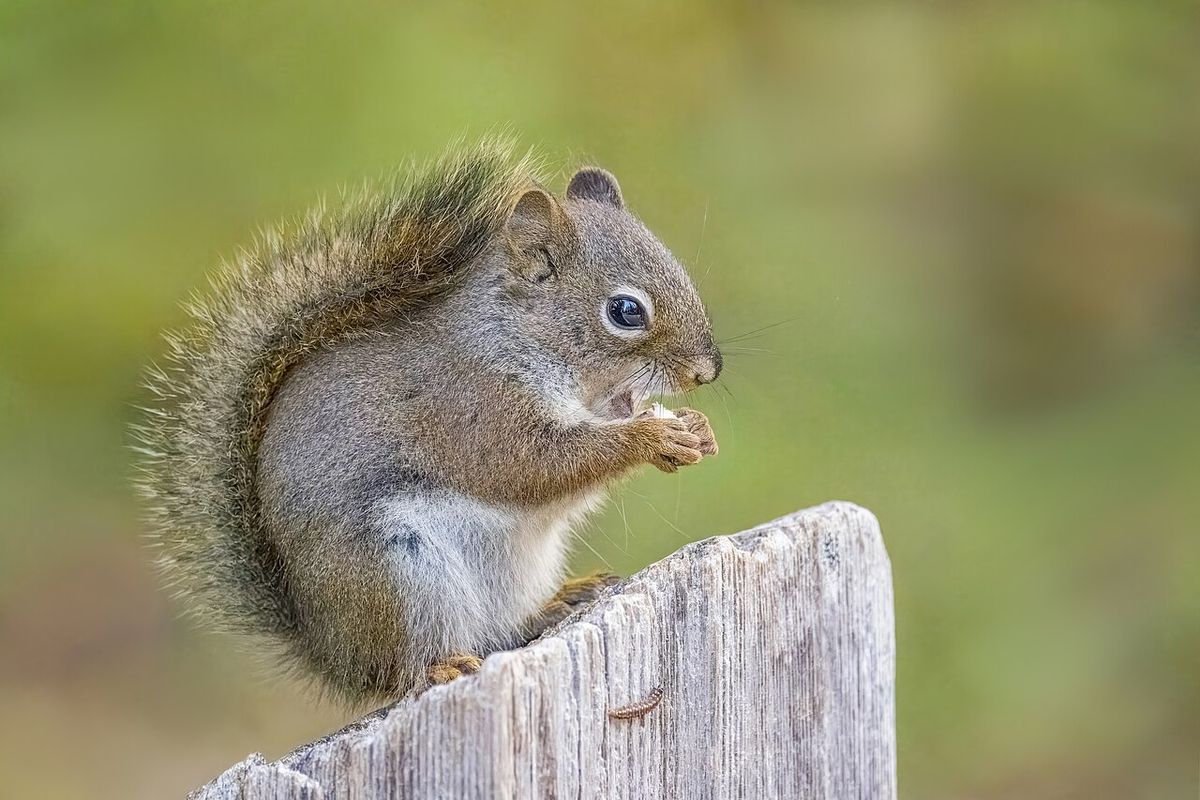
The American red squirrel (Tamiasciurus hudsonicus) is a small, diurnal tree squirrel native to much of Canada and the northern United States. Known for its reddish fur, territorial nature, and loud chattering calls, it is a common and charismatic resident of coniferous and mixed forests. The species plays a significant ecological role as a seed disperser and a key prey item for many predators. Its adaptability and widespread presence make it a familiar sight to Canadians from coast to coast.
Taxonomy and Physical Description
The American red squirrel is one of three species in the genus Tamiasciurus, collectively known as pine squirrels, with the others being the Douglas squirrel and the southwestern red squirrel. It was first catalogued in 1777 near Hudson Bay, which is reflected in its specific epithet hudsonicus and led to an older common name, the Hudson's Bay squirrel. For many years, the southwestern red squirrel (Tamiasciurus fremonti) was considered conspecific, but a 2016 phylogenetic study confirmed it as a distinct species. The American red squirrel should not be confused with the Eurasian red squirrel (Sciurus vulgaris), as their ranges do not overlap. Within North America, it can be distinguished from the similar Douglas squirrel by its white underbelly, whereas the Douglas squirrel has a rust-coloured venter. Their ranges overlap in southern British Columbia, northwestern Washington, and eastern Oregon. The squirrel's fur colour is highly variable, often appearing brownish or olive-red on the back with a white or cream belly and a distinctive black side stripe in summer. Its tail is less bushy than other North American tree squirrels, is often edged with white, and measures between 95 and 150 mm of the animal's total 280 to 350 mm length. The species is compact and muscular, well-adapted for climbing and running through trees with strong claws and powerful hind limbs, and it features white bands around its large, black eyes.
Distribution and Habitat Adaptations
The American red squirrel has a vast range across North America, encompassing most of Canada except the treeless far north and the southwestern coast of British Columbia where the Douglas squirrel is found. In the United States, it inhabits the southern half of Alaska, the Rocky Mountains up to elevations of 2,500 feet, and the northern half of the eastern states. The species is strongly associated with coniferous forests but has shown notable adaptability by expanding into hardwood forests and even suburban and urban settings. In Alberta, it has been detected in all of the province's natural regions where mature white spruce or conifer-dominated forests are present. The population on Vancouver Island is genetically unusual, with nuclear DNA matching the American red squirrel but mitochondrial DNA aligning with the Douglas squirrel, a result of historical hybridization and gene flow. Red squirrels were introduced to Newfoundland decades ago and to Graham Island in Haida Gwaii around 1950, where the introduced population is believed to have contributed to an increase in Pacific martens. The endangered Mount Graham red squirrel in Arizona, once considered a subspecies (T. h. grahamensis) of this species, is now classified under the southwestern red squirrel.
Diet, Feeding Behaviour, and Food Storage
American red squirrels are primarily granivores, with conifer seeds forming the majority of their diet. In the Yukon, white spruce seeds can comprise over 50% of their food intake, and they may consume up to two-thirds of the pine seed crop in an area each year. They are also highly opportunistic omnivores, consuming a wide array of other items which they locate using a tremendous sense of smell, capable of finding seeds buried 30 cm underground and 4 meters under snow. Their diverse diet includes spruce buds and needles, willow leaves, poplar buds and catkins, bearberry flowers and berries, tree sap, bark, fruits, and nuts like walnuts which they chew open leaving distinct tooth marks. They are known predators, eating bird eggs, nestlings, young snowshoe hares, voles, and other small animals, and they will gnaw on bones for minerals. A unique behaviour is their consumption of a variety of mushrooms, including species deadly to humans, which they often clip and hang in tree branches to dry. Red squirrels harvest white spruce cones in August and September, storing them in large central caches called middens. The discarded scales from consumed cones can accumulate in middens up to 12 meters across. These stores are critical for winter survival and spring reproduction, though many stored seeds are not recovered, aiding in forest regeneration. White spruce trees exhibit two- to six-year masting cycles, creating significant boom-and-bust variation in food availability that shapes squirrel ecology and evolution.
Reproduction and Development
American red squirrels are spontaneous ovulators, with females entering estrus for only a single day. Prior to ovulation, females venture from their territory on exploratory forays that may serve to advertise their upcoming receptivity. On the day of estrus, they are pursued by several males in an extended mating chase, and males compete for the opportunity to mate. A single female will mate with 4 to 16 different males during this period. Gestation lasts between 31 and 35 days. Females can first breed at one year of age, though some delay until age two or older. Most produce one litter per year, but in some years they may skip breeding or, less commonly, breed twice. Litter sizes typically range from one to five offspring, with three or four being most common. Newborns are pink, hairless, and weigh about 10 grams. They grow at a rate of approximately 1.8 grams per day while nursing, first emerge from the nest around 42 days old, and continue to nurse until approximately 70 days. They reach adult body size at 125 days. Nests are most commonly built of grass in the branches of spruce or pine trees or within cavities in the trunks of spruce, poplar, and walnut trees. Red squirrels rarely nest below ground, and each individual maintains several nests within its territory, with females moving young between them. Long-term studies in southwest Yukon have shown that the average date of birth in that population advanced by about 18 days over a ten-year period, largely due to phenotypic plasticity in response to increased food supply with a smaller evolutionary component. Research from the same population indicates that multiple mating does not influence pregnancy rate, litter size, or offspring survival, and the genetic relatedness of mates does not predict patterns of parentage.
Territoriality, Social Structure, and Vocalizations
American red squirrels are highly territorial and largely asocial animals, defending exclusive, year-round territories centred on their food middens. Non-reproductive physical interactions are exceptionally rare, accounting for only 0.6% of all recorded behaviours in one 19-year study, and those recorded were all instances of chasing an intruder. The vast majority of interactions occur during mating or between mothers and their dependent offspring before dispersal. Intruders are vigorously chased away, accompanied by a repertoire of loud vocalizations including the familiar angry chattering and scolding, a rolling 'Tcher-r-r' call, and high-pitched, bird-like tones. They communicate aggression through rapid tail flicking and foot stamping. They are known for their fearless aggression, often confronting animals much larger than themselves, including eastern grey squirrels, and have been observed attacking and even preying upon them. This intense territoriality is driven by the critical need to secure sufficient food stores, particularly conifer seeds, to survive the winter. Dispersing juveniles face the essential task of acquiring a territory and midden before their first winter, as those without one do not survive.
Dispersal Strategies, Survival Rates, and Key Predators
Juvenile survival is heavily dependent on securing a territory with a food cache before their first winter. They can acquire one through three main methods: competing for a vacant area, creating a new territory, or through a behaviour known as bequeathal, where a mother gives all or part of her territory to her offspring. This bequeathal occurs in about 15% of litters and is a form of maternal investment influenced by food abundance and the mother's age. In some cases, females acquire additional middens before reproduction specifically to bequeath. Offspring that do not receive a bequeathed territory typically settle within 150 metres, or about three territory diameters, of their natal territory. Early mortality is severe, with only about 22% of squirrels surviving to one year of age. Survival probability increases until age three before declining again. Females that reach one year have a life expectancy of 3.5 years and a maximum recorded lifespan in the wild of 10 years. Increased maternal attention is correlated with faster offspring growth and higher lifetime reproductive success for the mother. Observations suggest that in years of plentiful food, male red squirrels may exhibit alternative reproductive strategies leading to higher rates of sexually selected infanticide. The American red squirrel is prey for a wide array of predators across its range, forming a key component of the food web.
- Mammalian predators: Canada lynx, bobcat, coyote, American marten, Pacific marten, red fox, gray fox, wolf, and various weasels including ermine.
- Avian predators: Great horned owl, American goshawk, red-tailed hawk, and American crow.
- Other threats: Domestic dogs in suburban areas and, rarely, predation by other red squirrels.
Ecological Role and Interactions with Other Species
The American red squirrel plays a significant ecological role as a prolific harvester and consumer of conifer seeds, influencing forest composition and regeneration through their unrecovered seed caches which effectively plant new trees. Their habit of drying mushrooms in trees and their predation on small animals and bird nests integrate them into various food webs as both consumer and prey. They are a primary food source for many predators, making their population dynamics important for species like the marten and lynx, and their introduction to Graham Island in Haida Gwaii is believed to have supported an increase in the Pacific marten population there. Their predation on bird eggs and nestlings can impact local songbird populations, a noted concern for some biologists. They interact competitively with other squirrels, notably chasing away larger eastern grey squirrels, and have been observed feeding on grey squirrel carcasses. The species is abundant and not of conservation concern throughout most of its range, demonstrating successful adaptation to various habitats including human-dominated landscapes where they can nest in attics and raid bird feeders.
Long-Term Research and the Kluane Red Squirrel Project
Long-term research has provided deep insights into the ecology, behaviour, and evolution of the American red squirrel. The Kluane Red Squirrel Project, ongoing in southwest Yukon since 1987, is a landmark study designed as a long-term field experiment specifically to test the importance of food abundance, particularly the masting cycles of white spruce, on the species' population dynamics, behaviour, and evolutionary pressures. This project has documented how individual squirrels experience both very high and very low food levels within their lifetimes due to these cycles and has tracked changes in breeding phenology, noting the 18-day advancement in average birth dates over a decade. The project's behavioural observations have quantified diet, territoriality, and mating systems, and a three-year genetic study within this population reported high levels of multiple-male mating but found it did not affect offspring quality or survival. Genetic studies from broader research have clarified the species' taxonomy, leading to the recognition of the southwestern red squirrel as separate and understanding the hybrid history of the Vancouver Island population, providing fundamental understanding of how small mammals respond to environmental change.
Table: Comparative Features of American Red Squirrel and Close Relatives
The American red squirrel is one of three species of tree squirrels in the genus Tamiasciurus, known as the pine squirrels. It is not to be confused with the Eurasian red squirrel, as their ranges do not overlap. The American red squirrel is a small, diurnal mammal that defends a year-round exclusive territory. It is widely distributed across much of the United States and Canada wherever conifers are common. This species is known by several names including pine squirrel, chickaree, and boomer.
| Species | Primary Range in Canada | Key Identifying Feature | Venter (Underbelly) Colour | Conservation Status |
|---|---|---|---|---|
| American Red Squirrel (Tamiasciurus hudsonicus) | Most of Canada, except SW BC coast | Smaller size, territorial chatter | White or cream | Abundant, not of concern |
| Douglas Squirrel (Tamiasciurus douglasii) | Southwestern coast of BC, Pacific Northwest | Rust-coloured venter, similar morphology | Rust-coloured | Common in its range |
| Southwestern Red Squirrel (Tamiasciurus fremonti) | Southwestern United States | Distinct species since 2016 | Not white | Includes endangered subspecies |
| Eastern Grey Squirrel (Sciurus carolinensis) | Eastern North America, introduced elsewhere | Larger size, less territorial | Grey or white | Common |
Questions about American red squirrel
Do American red squirrels hibernate?
No, American red squirrels do not hibernate. They remain active throughout the winter, relying on the food caches, or middens, they have built up during the fall. Their activity is essential for accessing these stored seeds and cones to survive the cold months. You may see them out on milder winter days, and they are known for their energetic foraging and territorial defence even in snow.
What is the difference between a red squirrel and a chipmunk?
American red squirrels are somewhat larger than chipmunks, with a total length of 28 to 35 centimetres compared to a chipmunk's smaller size. Red squirrels lack the distinctive stripes on the face and back that are characteristic of chipmunks. While both are diurnal, red squirrels are highly territorial and defend exclusive areas, whereas chipmunks are less territorial. Their diets also differ, with red squirrels heavily reliant on conifer seeds.
Are red squirrels destructive to property?
Red squirrels can cause damage to homes, particularly if they gain access to attics or wall cavities to build nests, where they may use insulation as nesting material. They are also known to chew on wood, siding, and electrical wiring. However, they are not inherently more destructive than grey or black squirrels. Humane deterrents and exclusion methods are recommended to manage conflicts without needing to trap and relocate the animals.
What months do red squirrels have their babies?
Red squirrels can have their first litter of the year quite early, sometimes as early as March. Breeding is tied to food availability and environmental conditions. Most females produce one litter per year, typically containing three or four offspring, though in some years with abundant food, a second litter may be attempted later in the summer. The exact timing can vary across their extensive range.
Are red squirrels a keystone species?
Red squirrels can be considered a keystone species due to their significant ecological roles. They are a primary food source for many predators, including martens, hawks, owls, and lynx. Their seed caching and feeding habits make them important agents of seed dispersal and forest regeneration. Their population dynamics can therefore have a cascading effect on the structure and health of their forest ecosystems.
What should I do if I find an injured or orphaned red squirrel?
If you find an injured or orphaned red squirrel, you should contact a licensed wildlife rehabilitation centre immediately for advice and assistance. For instance, the Alberta Institute for Wildlife Conservation operates a wildlife hotline at 403-946-2361 for such situations. It is crucial not to attempt to care for the animal yourself, as red squirrels require specialized care and a proper diet to survive and be successfully returned to the wild. Red squirrels are small diurnal mammals that weigh between 200 and 250 grams and defend exclusive territories. Their survival in the wild depends on acquiring a territory and a food cache, known as a midden, which are resources a rehabilitator can help prepare them to secure. Red squirrels experience severe early mortality, with only about 22 percent surviving to one year of age, making professional intervention critical for orphaned juveniles.
Sources and further reading
- American red squirrel (Wikipedia)
- Six Things to Know about Red Squirrels! (aiwc.ca)
- Red squirrels at the FWG (ofnc.ca)
- American Red Squirrel (growls.ca)
- Tamiasciurus hudsonicus (red squirrel) | INFORMATION (animaldiversity.org)
Checked by the Your Space Hamilton desk. Last updated 2026-10-29.