American bullfrog
The American bullfrog (Lithobates catesbeianus) is the largest species of true frog native to North America, easily recognized by its deep, resonant call reminiscent of a bull's bellow. Originally found from the Maritime Provinces of eastern Canada to the central United States, it has been widely introduced across the continent and globally, often with severe ecological consequences. In Canada, it is a well-established invasive species in parts of British Columbia and is also present in Ontario, where it is managed as a game amphibian. Its substantial appetite, rapid reproduction, and role in spreading amphibian diseases make it a significant concern for native wildlife and ecosystem balance.
Description and Identification
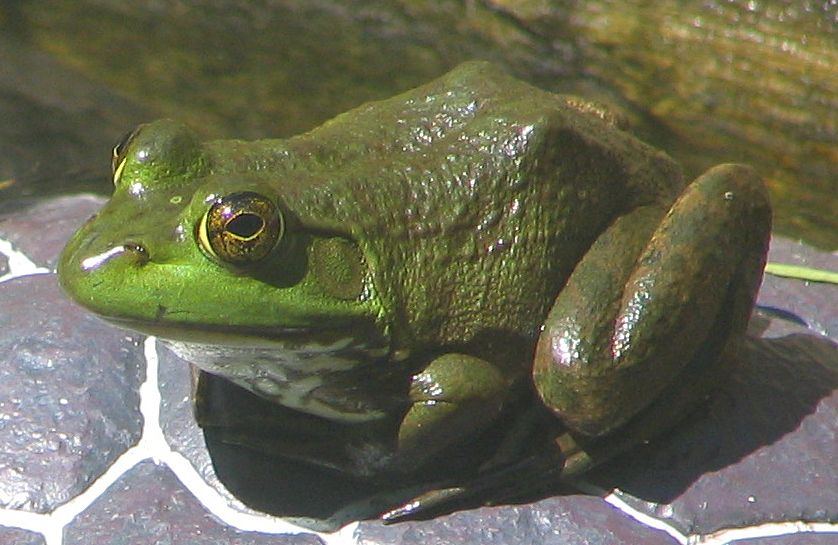
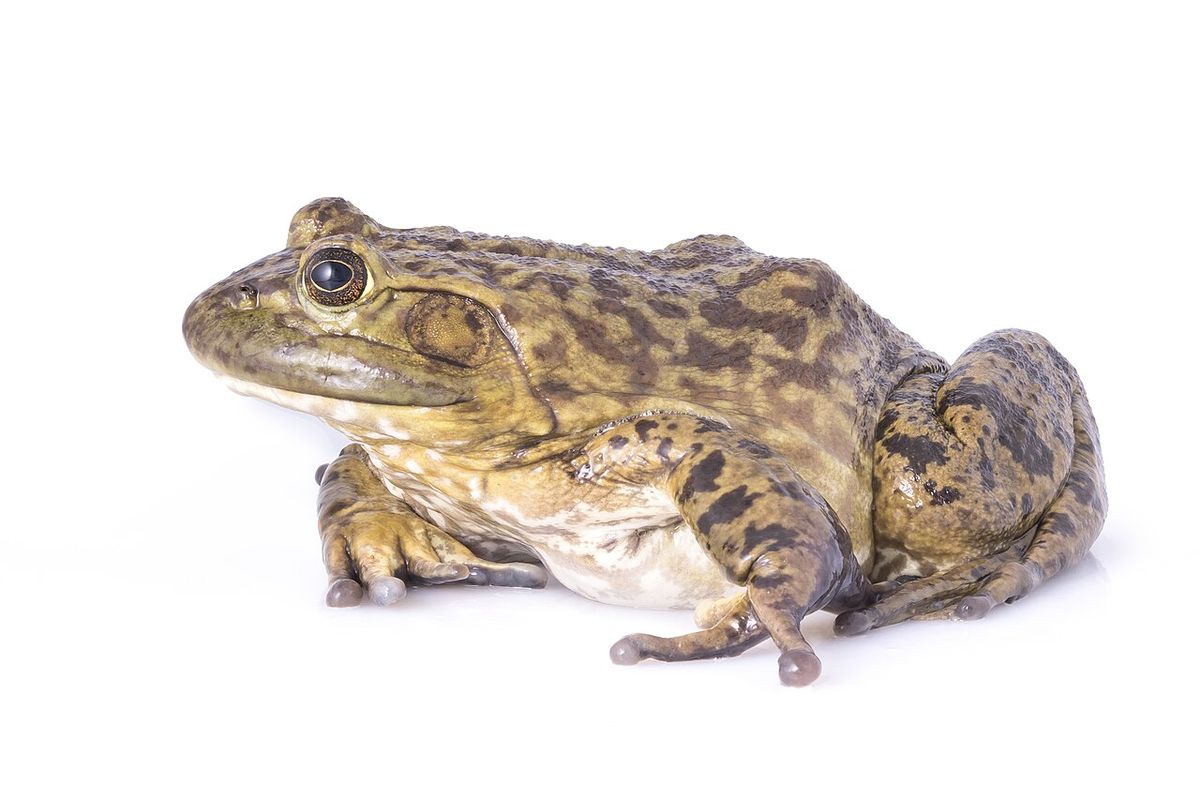
The American bullfrog is a large amphibian with a body that can reach up to 20 centimetres in length and a weight of up to 800 grams, though most individuals are smaller. Its dorsal colouration varies from pale green to dark olive-brown, often with grey or brown mottling, while the underside is off-white or cream with yellow or grey blotches. A key identifying feature is the prominent supratympanic fold, a ridge of skin that curves from behind the eye down around the large, circular tympanum (eardrum). In males, the tympanum is significantly larger than the eye, whereas in females it is roughly the same size. Males also develop a distinctive yellow throat during the breeding season. The species lacks the dorsolateral folds that run down the backs of many other true frogs, and its powerful hind legs are adapted for leaping distances up to six feet.
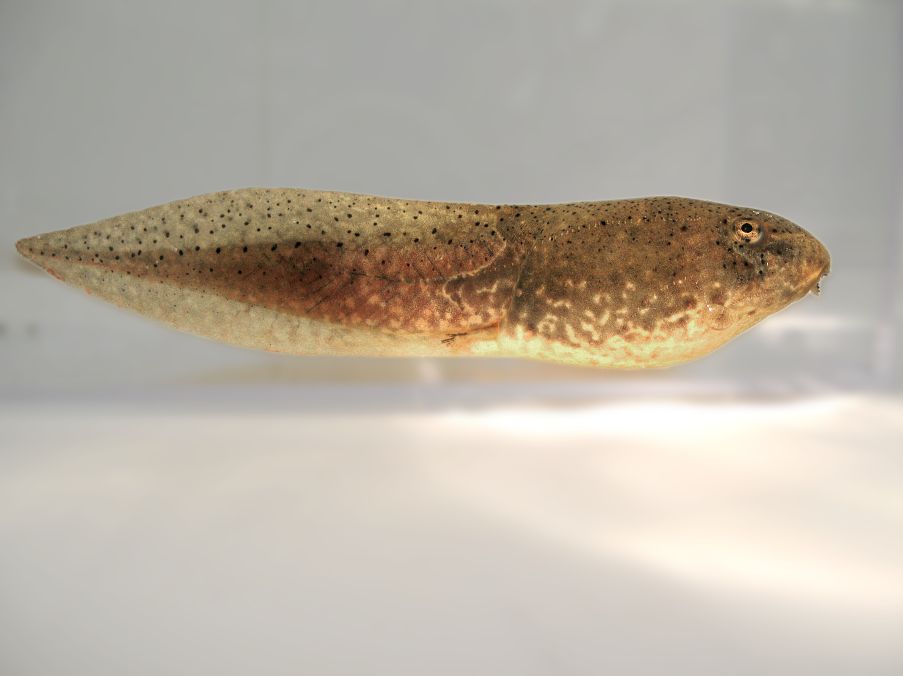
Sexual dimorphism is evident not only in throat colour and tympanum size but also in forelimb strength. Studies show male bullfrogs have significantly stronger forelimb muscles, an adaptation for maintaining a firm grip during amplexus, the mating embrace. The bullfrog's call is a deep, resonant series of notes often described as a 'jug-o-rum', which carries over long distances and is the source of its common name. Juveniles resemble adults but are marked with distinct inky black specks on their backs. The tadpoles are exceptionally large compared to other species, growing up to 10 centimetres or more before metamorphosis, which can take up to three years.
Native and Introduced Range
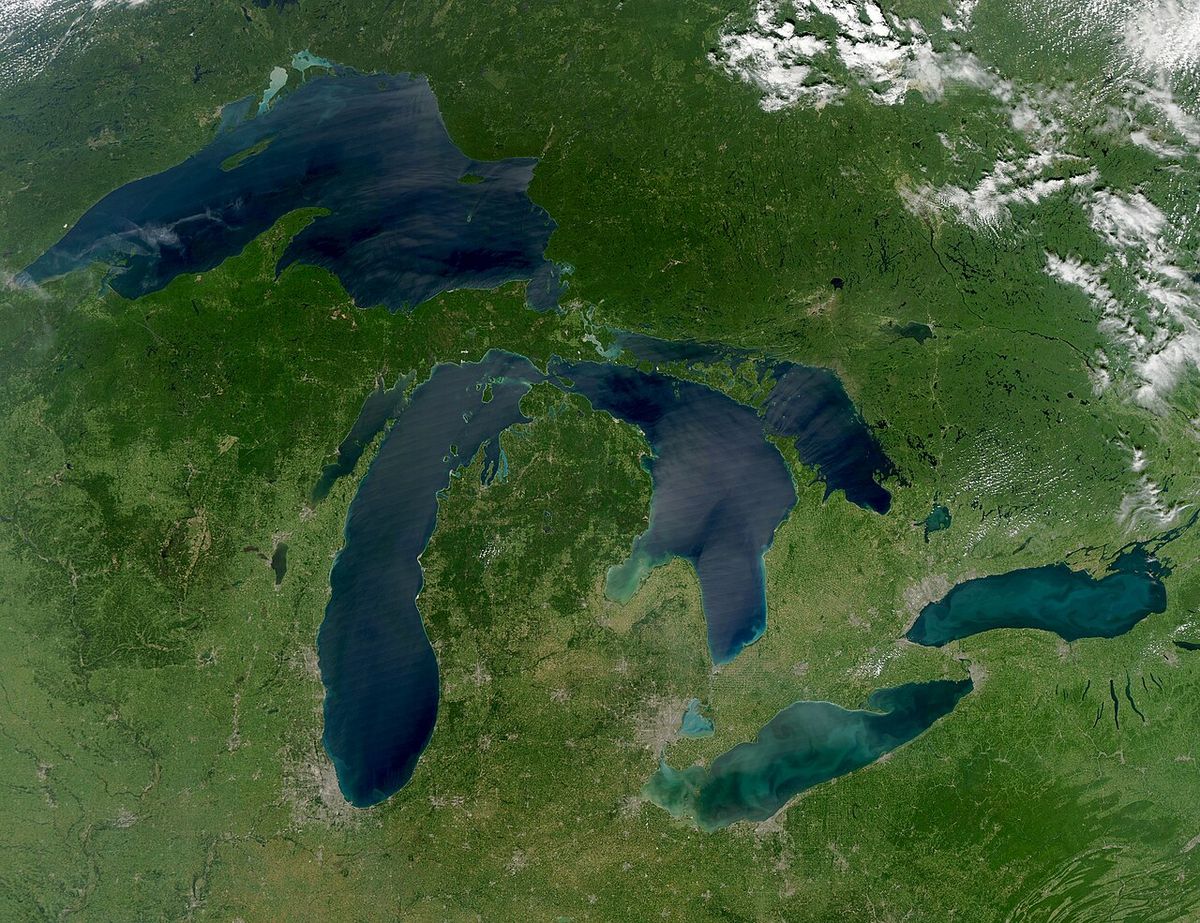
The bullfrog is native to eastern North America, with its historic range extending from the Canadian Maritime Provinces west to the Great Lakes region and south through the eastern United States to the Mississippi River. It is commonly found in every state east of the Mississippi. Within Canada, native populations exist in eastern provinces, and the species is present in Ontario. However, the bullfrog has been deliberately and accidentally introduced far beyond its original range, becoming a pervasive invasive species. In North America, it is now established in many western states including Washington, Oregon, California, Idaho, Nevada, Utah, Arizona, Colorado, New Mexico, and Wyoming.
Globally, introductions have occurred on multiple continents. The bullfrog has been established in parts of Europe such as Belgium, Italy, the Netherlands, Spain, and the United Kingdom since at least 1999. It is also found in Asia, including China, Japan, and South Korea, and in South American countries like Argentina, Brazil, Colombia, Uruguay, and Venezuela. In the Caribbean, populations exist in Cuba, the Dominican Republic, Haiti, Jamaica, and Puerto Rico. These introductions were primarily driven by the frog farming industry for food, the pet trade, and misguided attempts at biological control. In Canada, the bullfrog is a noted invasive species in the extreme south of British Columbia, where it was originally introduced for farming.
Habitat and Life Cycle
American bullfrogs are aquatic generalists but require large, permanent water bodies for breeding and overwintering. They inhabit swamps, ponds, lakes, slow-moving rivers, and reservoirs, typically favouring shorelines with abundant vegetation. They are also adaptable to human-altered environments such as canals, ditches, koi ponds, and culverts. During the summer, individuals may disperse overland on warm, rainy nights and can be found in smaller, temporary ponds. For hibernation, they retreat to the deep waters of lakes, ponds, or rivers to survive the winter.
The breeding season occurs later than for most native frogs, typically from mid-June to late July in regions like Ontario, triggered by warm, humid, or rainy nights. Males aggregate in dynamic groups called choruses, emitting their loud advertisement calls to attract females. A female can deposit a surface film of 1,000 to 40,000 eggs, with some masses containing over 20,000 eggs and spreading more than 30 centimetres in diameter. These eggs hatch in three to five days. The resulting tadpoles are herbivorous, feeding on algae and organic debris, and they undergo an exceptionally long larval period, often taking two to three years to metamorphose into froglets. Bullfrogs reach sexual maturity two to four years after metamorphosis and can live up to ten years in the wild.
Diet and Ecological Role
The American bullfrog is a voracious, opportunistic, and ambush predator with a famously indiscriminate appetite. Its diet includes virtually any animal it can overpower and swallow, making it a generalist carnivore of significant impact. Analysis of stomach contents has revealed a wide array of prey, from typical invertebrates like insects, snails, and crayfish to much larger animals. Bullfrogs regularly consume other amphibians, including frogs and salamanders, as well as small reptiles like lizards and snakes. They have been documented eating small mammals such as rodents and bats, birds, fish, and even other bullfrogs, with cannibalism observed in resource-limited environments.
This expansive diet is a key factor in its success as an invasive species, as it directly predates and competes with native fauna. Studies show bullfrogs can consume predators of their own young, such as dragonfly nymphs, garter snakes, and giant water bugs, thereby reducing ecological checks on their own populations. They also exhibit a degree of resistance to defensive mechanisms, consuming prey like wasps, spiny stickleback fish, and even scorpions. As a prey species, adult bullfrogs are eaten by a variety of predators including large wading birds like herons, North American river otters, predatory fish, snakes such as cottonmouths and water snakes, and alligators. Their loud calls and conspicuous behaviour can make them vulnerable, but they are quick to escape into deep water with a splash when threatened.
Invasive Impact and Management
Where introduced, the American bullfrog poses a severe threat to native ecosystems through predation, competition, and disease transmission. Its large size, high reproductive output, and generalist diet allow it to outcompete and consume native amphibians, reptiles, and insects. In the western United States, it is implicated in the decline of vulnerable species like the California red-legged frog and is a known predator of the threatened giant garter snake. The bullfrog is also a carrier of the chytrid fungus (Batrachochytrium dendrobatidis), a pathogen devastating to amphibian populations worldwide. As an asymptomatic carrier, it can spread this lethal disease to more susceptible native species.
Management efforts focus on controlling established populations and preventing further spread. In Washington State, regulations prohibit the transport of live bullfrogs or tadpoles without a permit. Control methods include physical removal through trapping, hand capture, or night-time spotlighting. Some jurisdictions, like Utah, have encouraged public participation by providing tips on catching and cooking bullfrogs to help control populations. In British Columbia, organizations like the Fraser Valley Invasive Species Society promote public awareness and provide best management practices, which include habitat modification and the careful, humane removal of egg masses, tadpoles, and adults. Preventing the release of pet bullfrogs and the escape of farmed frogs is a critical component of containment strategies.
- Physical removal via trapping, netting, or hand capture.
- Public engagement campaigns to report sightings and participate in removal.
- Regulatory measures to prohibit the live transport and release of bullfrogs.
- Habitat management to make sites less suitable for bullfrog breeding.
- Control of egg masses and tadpoles in affected water bodies.
- Research and monitoring to track spread and ecological impact.
Human Use and Cultural Significance
The American bullfrog has a long history of human use, primarily as a source of food. Its meaty hind legs are considered a delicacy and have been harvested commercially, particularly in the southern United States. This demand led to the establishment of bullfrog farms and was a primary reason for its initial introduction to areas outside its native range, including British Columbia. In the 1980s and early 1990s, frog legs were a popular menu item, and harvesting for food, along with collection for biological supply companies, led to localized declines in some native bullfrog populations. In Ontario, the species is legally listed as a game amphibian under the Fish and Wildlife Conservation Act.
Beyond culinary use, bullfrogs are commonly used for dissection in high school and university biology classes, providing a large specimen for anatomical study. Albino morphs are sometimes kept in the pet trade, and bullfrog tadpoles are occasionally sold in aquatic garden stores. The species also holds a place in popular culture, often featured as a symbol of wetland environments. Its distinctive call is a familiar sound in many regions and is frequently used in media to evoke a sense of place. However, its cultural presence is now intertwined with its problematic status as an invasive species, prompting educational campaigns about the ecological dangers of releasing captive animals.
Conservation Status and Trends
Globally, the American bullfrog is assessed as Least Concern by the International Union for Conservation of Nature, a status confirmed in December 2020, due to its wide native range and generally large population. Within its native eastern range, it remains a common species. However, trends are more complex. In some areas, historical overharvesting for food and educational dissection led to population declines, though numbers in places like Ontario have shown signs of recovery in previously depleted wetlands. The overall population trend across its native range is not precisely known but is not currently considered a major conservation concern.
The primary conservation focus regarding the American bullfrog is on its impact as an invasive species rather than on its own protection. In Canada, neither the Committee on the Status of Endangered Wildlife in Canada nor the Ontario committee has assessed its status. The bullfrog's ecological influence is significant in invaded regions, where it contributes to the decline of native species and alters ecosystem dynamics. Ongoing research investigates its potential for niche shift, meaning its ability to adapt its ecological role in new environments, which could pose future threats to a wider array of endemic species, such as those in Mexico. Conservation efforts are therefore directed towards managing invasive populations and protecting native biodiversity from the bullfrog's effects.
Questions about American bullfrog
Where are American bullfrogs found in Canada?
American bullfrogs are native to eastern Canada, including the Maritime Provinces. They are also found in Ontario. The species has been introduced to the extreme south of British Columbia. In these introduced areas, it is considered an invasive species.
Why is the American bullfrog considered invasive?
The American bullfrog is considered invasive outside its native eastern range because it reproduces rapidly, produces thousands of eggs, and has a voracious, generalist diet. It preys on and outcompetes native amphibians, reptiles, fish, and insects, disrupting local ecosystems. It also acts as a carrier for the deadly chytrid fungus, spreading disease to vulnerable native frog populations. These traits allow it to establish dominant populations that are difficult to control.
What do American bullfrogs eat?
American bullfrogs are opportunistic carnivores that will eat almost any animal they can overpower and swallow. Their diet includes insects, snails, crayfish, fish, tadpoles, other frogs, small snakes, lizards, rodents, bats, and even small birds. They are also known to practice cannibalism. This wide dietary range is a key reason for their success and ecological impact as an invasive species.
How can you identify an American bullfrog?
Identify an American bullfrog by its large size, smooth skin without dorsolateral folds, and the distinctive supratympanic fold that curves from the eye around the large, circular eardrum. Males have a tympanum larger than the eye and a yellow throat during breeding season. Their colour is olive-green to brown with mottling, and their call is a deep 'jug-o-rum'. Tadpoles are notably large, often over 10 cm long.
Are American bullfrogs harmful to humans?
American bullfrogs are not directly harmful to humans. They are skittish and will leap away when approached. They do not possess venom or pose a biting threat. The primary harm associated with bullfrogs is ecological, due to their invasive nature. However, they can be a nuisance in garden ponds by preying on fish and other wildlife. Their legs are also harvested for human consumption.
What is being done to control invasive bullfrog populations?
Control measures include public education to prevent the release of pets, regulations against transporting live bullfrogs, and physical removal programs. In some areas, wildlife agencies encourage the harvesting of bullfrogs for food. Management practices involve trapping adults, removing egg masses and tadpoles, and modifying habitats to be less favourable. Organizations provide best practice guides to coordinate control efforts across affected regions.
Sources and further reading
- American bullfrog (Wikipedia)
- » American Bullfrog (ontarionature.org)
- American bullfrog | Washington Department of Fish & Wildlife (wdfw.wa.gov)
- Know Your Invasives: The American Bullfrog (naisma.org)
- American Bullfrog (Lithobates catesbeianus) (fviss.ca)
Checked by the Your Space Hamilton desk. Last updated 2026-10-25.