Tornado outbreak of May 18-21, 2013
The tornado outbreak of May 18-21, 2013, was a significant and destructive severe weather event that primarily impacted the Midwestern United States and lower Great Plains. It was caused by a large, slow-moving weather system that produced 75 tornadoes over several days, including a catastrophic EF5 tornado that struck Moore, Oklahoma, resulting in 24 fatalities and widespread devastation. The outbreak was responsible for a total of 30 deaths and over 200 injuries in the United States, with damage estimates ranging from $2 to $5 billion, making it one of the costliest severe weather events on record. While the most severe impacts were south of the border, the event is notable to Canadians as the parent storm system later moved into southeastern Canada, producing severe weather in Ontario and contributing to a prolonged period of heavy rain and unusual late-season snowfall in parts of eastern Canada.
Meteorological synopsis
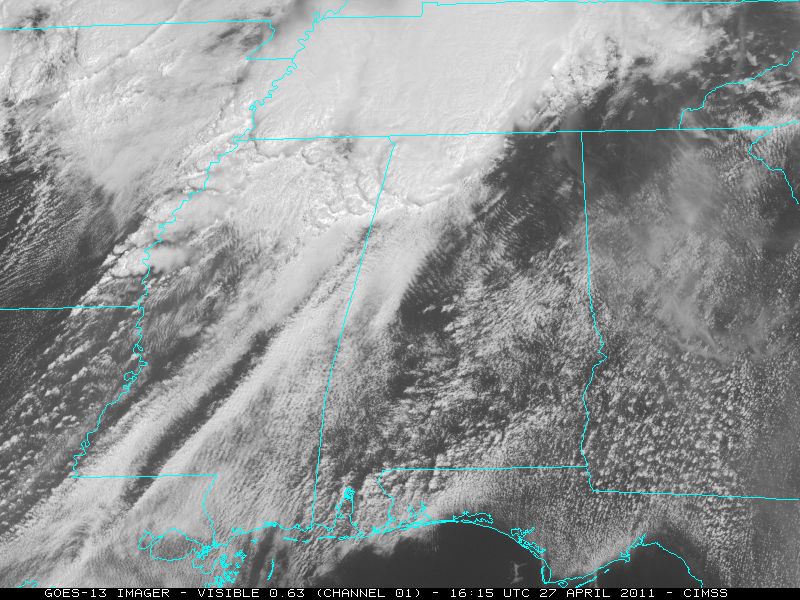
The outbreak was driven by a large, slow-moving upper-level trough and associated cold front that traversed the western Great Plains beginning on May 16. This system, along with several embedded shortwave troughs, created a prolonged severe weather threat across a vast area from the Rocky Mountains to New England. Forecast models first indicated the potential for a multi-day event on May 13. Initial activity on May 16 and 17 was limited to scattered severe thunderstorms, with the Storm Prediction Center (SPC) receiving 103 reports of severe weather on May 17, including 10 tornado reports not fully associated with the main system. The primary ingredients for the outbreak came together on May 18 as the trough moved into the Plains, bringing extreme atmospheric instability with convective available potential energy (CAPE) values reaching 4,000-5,000 J/kg. A strengthening low-level jet and increasing moisture set the stage for widespread supercell thunderstorms capable of producing large hail, damaging winds, and tornadoes. Over the entire eleven-day lifespan of the system across the United States, the SPC received 1,967 reports of severe weather, comprising 101 tornado reports, 1,176 wind reports, and 690 hail reports.
The outbreak unfolds: May 18
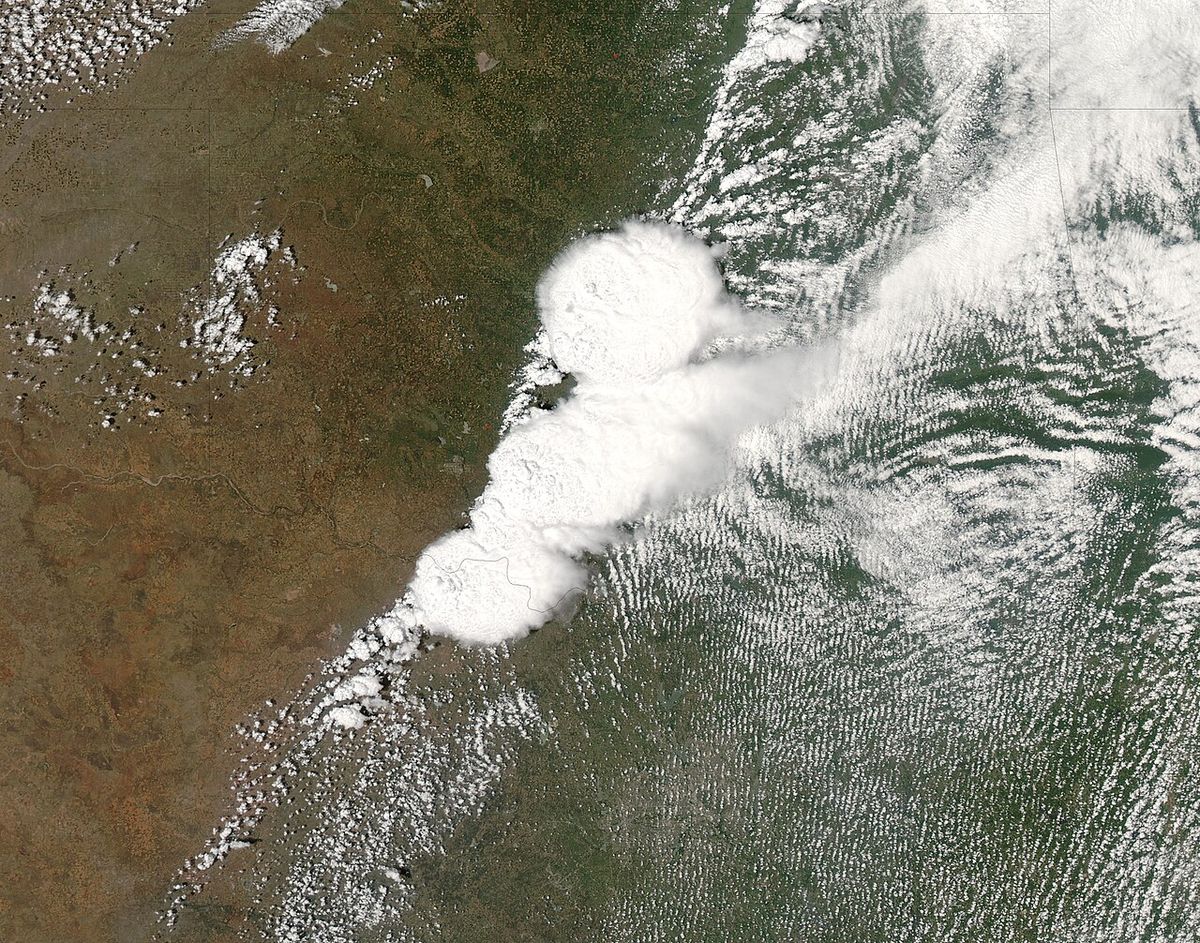
On May 18, the SPC issued a moderate risk for severe weather across northwestern Kansas and southwestern Nebraska, later extending it into western Oklahoma. The first tornado watch was issued that afternoon as a dry line interacted with moist northerly flow. Tornadic activity that evening was initially limited and mostly confined to open country, causing little damage. The most significant tornado of the day developed from a supercell northeast of Dodge City, Kansas. At 7:18 p.m. CDT, a large EF4 tornado touched down near Rozel, Kansas, destroying one home and damaging five farms. The tornado took a sharp northward turn as it reached peak intensity, passing within one mile of Rozel, a move that likely spared the town from destruction. A second, brief tornado touched down later, and a squall line began developing over south-central Nebraska and central Kansas, producing corridors of intense winds. A non-tornadic gust of 100 mph was measured near Milford Lake, injuring two people when their camper tipped over. Scattered severe storms also developed farther north along a stationary front. The SPC received 231 severe weather reports for the day, including 24 tornado reports.
Intensification and fatalities: May 19
The threat shifted eastward on May 19, with the SPC issuing a moderate risk for south-central Oklahoma, eastern Kansas, western Missouri, and extreme southeastern Nebraska. Two surface lows developed along the trough, and a plume of deep moisture with dew points exceeding 70 °F spread across the central and southern plains. Strong wind shear and daytime heating favoured the development of long-lived supercells capable of violent tornadoes. A tornado watch was issued for central Oklahoma by mid-afternoon, noting the risk for strong tornadoes. Activity began in Kansas, where a supercell produced an EF2 tornado southwest of Wichita, prompting a tornado emergency for the city. The most significant tornado activity then focused on central Oklahoma. A large EF3 tornado developed northwest of Luther around 4:41 p.m. CDT and tracked for roughly 20 miles. The strongest tornado of the day formed over Cleveland County around 6:00 p.m. CDT. This violent EF4 tornado caused significant damage, particularly near Shawnee, where it killed two people and injured 39 others. Further north, tornadic activity in Iowa ended a record 358-day span with no tornadoes in the state. A squall line with damaging winds developed over Missouri and gradually weakened overnight. The SPC received 558 severe weather reports for May 19, though some were associated with a separate system in the Southeastern United States.
On May 19, a violent EF4 tornado formed over Cleveland County in Oklahoma. This storm was the strongest of the day and caused significant damage, particularly near the city of Shawnee where two people were killed. Earlier, a large EF3 tornado developed northwest of Luther, Oklahoma, and tracked for roughly 20 miles. In addition to these, two other tornadoes, one rated EF2 and one EF1, touched down in eastern Oklahoma during the evening. Overall, these tornadoes resulted in two fatalities and 39 injuries across the state.
- An EF2 tornado southwest of Wichita, Kansas.
- An EF3 tornado near Luther, Oklahoma, with a 20-mile path.
- A violent EF4 tornado near Shawnee, Oklahoma, killing two people and injuring 39.
- An EF2 tornado in eastern Oklahoma.
- An EF1 tornado in eastern Oklahoma.
Storm coverage over eastern Kansas increased during the day, with the main threat being damaging winds. Further north over parts of Iowa and Minnesota, a mid-level vortex and scattered thunderstorms presented a risk of severe storms. Increasing wind shear and moist air from the south allowed convection to persist for much of the evening, with the primary threat being damaging winds and a few tornadoes. By the evening hours, several squall lines developed across the region and moved slowly eastward. In Iowa, a rapidly moving vorticity maximum resulted in a significant increase in thunderstorms, some of which were tornadic, marking the end of a record 358-day span with no tornadoes in the state.
The Moore EF5 tornado and widespread damage: May 20
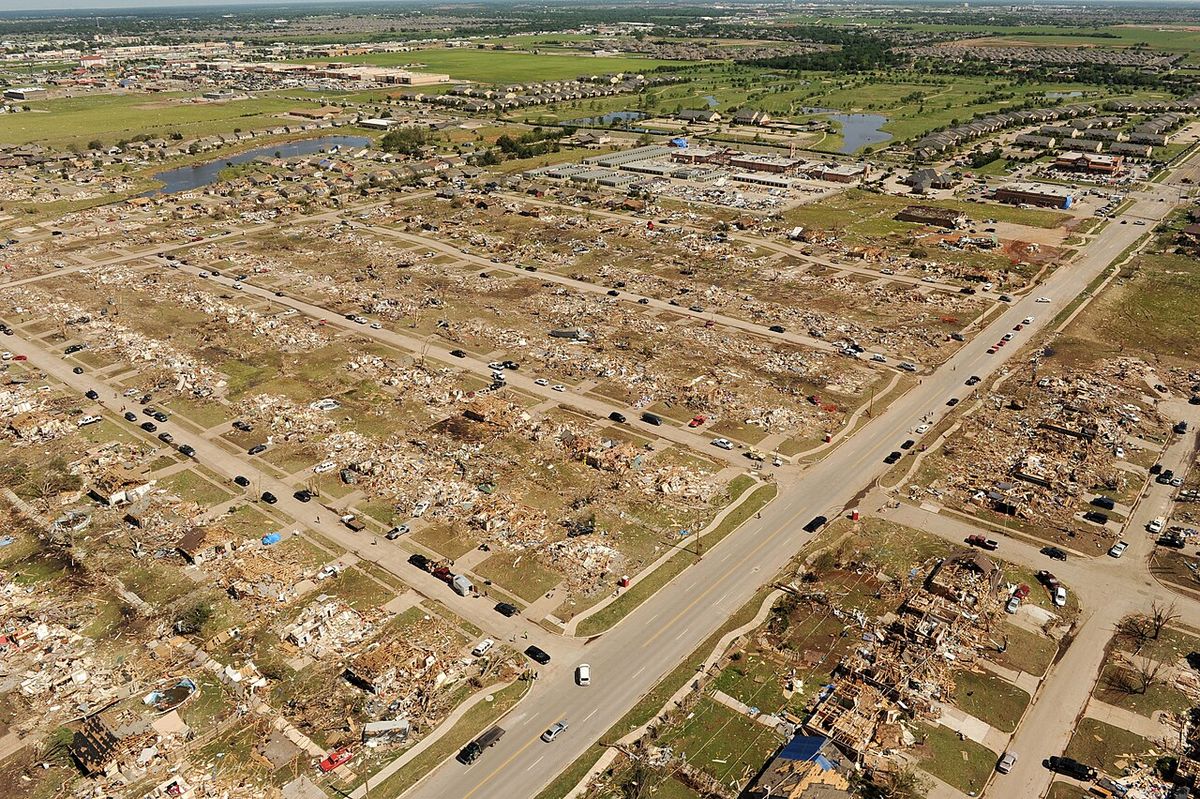
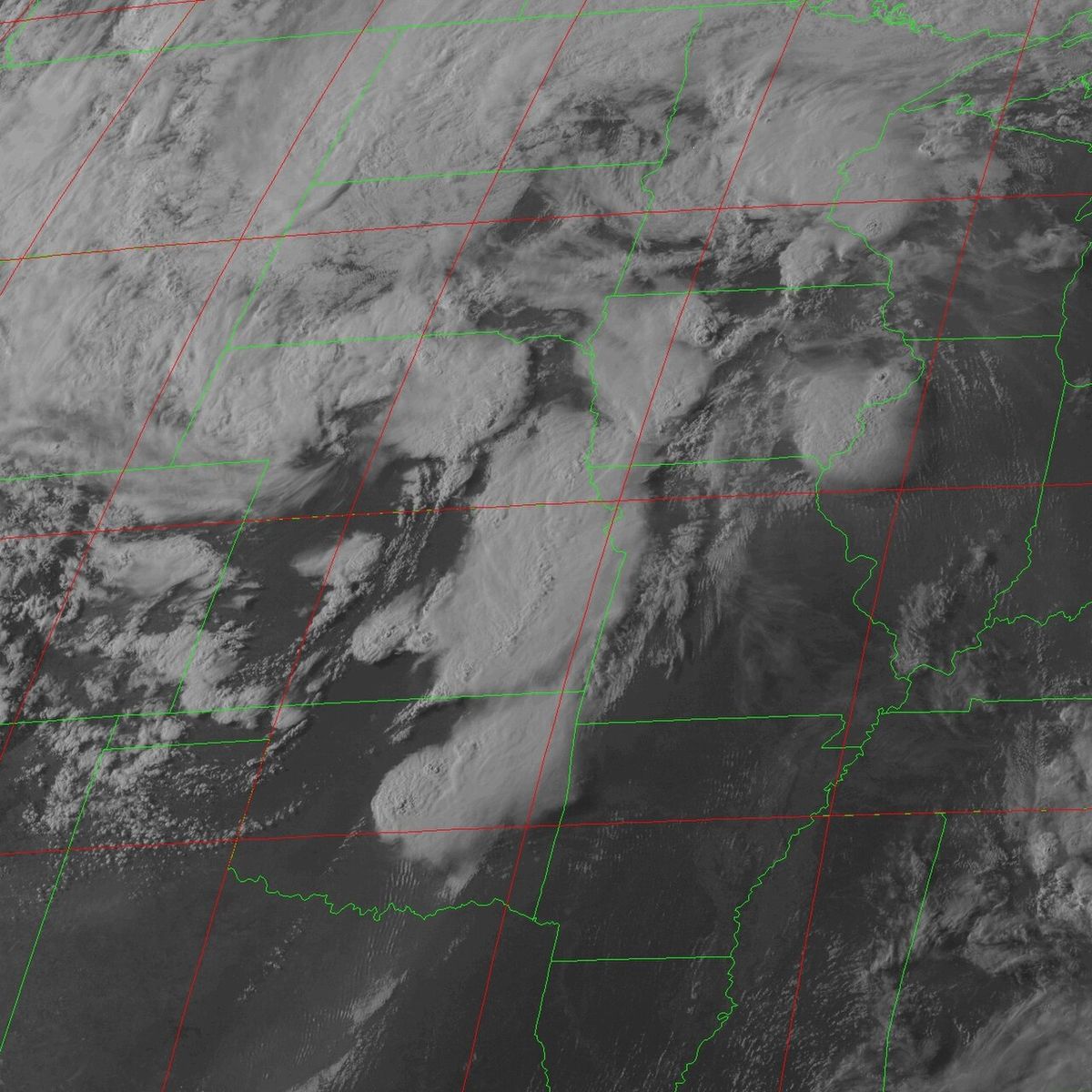
May 20 featured the most catastrophic event of the outbreak. The SPC had issued a moderate risk from southeastern Missouri to north-central Texas, highlighting the threat of isolated strong tornadoes in central and eastern Oklahoma. A violent EF5 tornado struck the city of Moore, Oklahoma, during the afternoon. This tornado devastated the community, damaging or destroying more than 13,000 homes. It killed 25 people, including seven children who died when Plaza Towers Elementary School was flattened. The tornado's path and intensity drew comparisons to the F5 tornado that hit the same area on May 3, 1999. Elsewhere, the storm system produced a powerful squall line that caused extensive damage across several states. In Michigan, gusts reached 80 mph, downing trees and power lines and leaving roughly 30,000 customers without power. Considerable wind damage occurred in Missouri and Arkansas, with an 88 mph gust recorded in Hannibal, Missouri. One person was killed in Springdale, Arkansas, by wind-driven debris. Several weak tornadoes touched down within the squall line in Missouri and Arkansas. The line continued eastward, producing damaging winds in Illinois and Indiana, and spawned a brief EF2 tornado in Mount Olive, Illinois, late in the evening. The SPC received 447 severe weather reports for May 20, though some reports were linked to a separate system in the Southeast.
Final day and impacts in Canada: May 21
On the final day of the focused outbreak, the slow-moving trough and cold front continued eastward. The SPC issued a moderate risk for parts of the southern United States, though the primary threat shifted to damaging straight-line winds rather than tornadoes. A loosely organized squall line formed over central Tennessee by late morning and moved into an environment with strong instability. This line produced widespread wind damage as it tracked into eastern Kentucky, with measured winds up to 77 mph, downing numerous trees and power lines and injuring one person in Wilson County, Tennessee. The storm system also extended into Ontario, Canada. A squall line there produced strong winds that downed trees and power lines, leaving approximately 3,000 people without power and causing some local flooding. The system also spawned three tornadoes in Ontario: an EF2 tornado near Glenarm and two EF0 tornadoes elsewhere in the province. In the northeastern United States, the system produced microbursts with winds up to 70 mph in New York state. The parent weather system responsible for the entire outbreak would continue to affect eastern North America for several more days, eventually stalling off the coast of New England and later moving into southeastern Canada by May 26.
Aftermath and records
The tornado outbreak of May 18-21, 2013, left a major and costly impact. Overall, severe weather from the parent storm system was responsible for 30 fatalities in the United States, with 26 of those deaths caused by tornadoes. More than 200 people were injured. The damage estimate of $2 to $5 billion placed it among the costliest severe weather events in U.S. history. The Moore EF5 tornado was the single deadliest event, accounting for 24 of the 26 tornado-related deaths. The storm system's exceptionally slow movement led to additional impacts beyond the tornado outbreak. It resulted in record-breaking rainfall in North Dakota, New York, and Vermont. In the overnight period of May 25-26, unusually cold air behind the cyclone produced record-late snowfall across northern New England. The event demonstrated the destructive potential of slow-moving spring storm systems and the vulnerability of populated areas to violent tornadoes. The tenth anniversary of the outbreak was marked in May 2023, reflecting on the three significant tornado events that affected the Norman, Oklahoma forecast area in the latter half of that month.
The storm system responsible for the outbreak moved very little across the Eastern United States over five days, virtually stalling off the coast of New England by May 24 and resulting in several days of heavy rain. Its slow movement also led to record-breaking rainfall in North Dakota, New York, and Vermont. During its eleven-day trek across the United States, the system produced 75 tornadoes and over 1,000 reports of damaging winds. Unusually cold air behind the cyclone resulted in record-late snowfall across northern New England during the overnight of May 25-26. Overall, severe weather associated with the storm was responsible for 30 fatalities and over 200 injuries in the United States.
- A record 358-day tornado-free period in Iowa ended on May 19.
- Record-breaking rainfall in North Dakota, New York, and Vermont.
- Record-late snowfall in northern New England on May 25-26.
- Over 1,000 reports of damaging winds received by the SPC.
- Approximately 3,000 power outages in Ontario, Canada, on May 21.
- The parent system's duration of eleven days from May 16 to 26.
Comparative outbreak statistics
| Date | Tornado Reports | Wind Reports | Hail Reports | Total Reports |
|---|---|---|---|---|
| May 18 | 24 | 92 | 115 | 231 |
| May 19 | 34 | 325 | 199 | 558 |
| May 20 | 37 | 281 | 129 | 447 |
Over the entire eleven-day duration of the parent system from May 16 to 26, the SPC received a total of 1,967 severe weather reports. The outbreak produced 75 confirmed tornadoes, four of which were rated EF3 or higher. The event also generated over 1,000 reports of damaging winds across the affected regions, contributing to the high overall impact and cost. The four strongest tornadoes of the outbreak were:
- The EF5 tornado in Moore, Oklahoma, on May 20.
- The EF4 tornado near Shawnee, Oklahoma, on May 19.
- The EF4 tornado near Rozel, Kansas, on May 18.
- The EF3 tornado near Luther, Oklahoma, on May 19.
Questions about Tornado outbreak of May 18-21, 2013
How many people died in the May 2013 tornado outbreak?
Severe weather associated with the storm system was responsible for 30 fatalities in the United States. Of these, 26 deaths were directly caused by tornadoes. The single deadliest event was the EF5 tornado that struck Moore, Oklahoma, on May 20, which killed 24 people. Two additional tornado fatalities occurred near Shawnee, Oklahoma, on May 19. The remaining four fatalities were attributed to other severe weather hazards, such as straight-line winds.
Did the tornado outbreak affect Canada?
Yes, the parent storm system that caused the outbreak did eventually affect parts of Canada. On May 21, severe storms extended into Ontario, where a squall line produced damaging straight-line winds that downed trees and power lines, leaving roughly 3,000 people without power. The system also spawned three tornadoes in Ontario: one EF2 near Glenarm and two EF0 tornadoes. The low-pressure system later moved into southeastern Canada by May 26, contributing to heavy rainfall.
Why was the storm system so impactful?
The impact was due to a combination of meteorological factors and the system's slow movement. A large, slow-moving upper-level trough provided a persistent trigger for severe thunderstorms over multiple days. Extreme atmospheric instability, strong wind shear, and abundant low-level moisture created an environment conducive to long-lived supercells capable of producing violent tornadoes. The system's sluggish pace meant the severe weather threat lingered over the same general areas for days, and it also led to record rainfall and unusual late-season snowfall in the northeastern United States and Canada.
What was the strongest tornado in the outbreak?
The strongest tornado was the violent EF5 that struck Moore, Oklahoma, on the afternoon of May 20, 2013. This catastrophic tornado devastated parts of Moore, killing 24 people and damaging or destroying more than 13,000 homes. It shared similarities with another F5 tornado that hit the same area on May 3, 1999. The tornado was the most destructive event of a multi-day outbreak caused by a large, slow moving trough. Over the entire outbreak period from May 18 to 21, four tornadoes were rated EF3 or higher, with the Moore tornado being the sole EF5.
How much damage did the outbreak cause?
Total damage from the severe weather was estimated to amount to $2 to $5 billion, making it one of the costliest severe weather events on record. The vast majority of this damage resulted from tornadoes, particularly the EF5 tornado that devastated Moore, Oklahoma, on May 20, which flattened thousands of structures. Overall, the storm system was responsible for 30 fatalities in the United States, with 26 of those deaths caused by tornadoes. The outbreak also resulted in over 200 injuries and produced over 1,000 reports of damaging winds across the affected regions.
How many tornadoes were confirmed during the outbreak?
During the storm's eleven day trek across the United States from May 16 to 26, it produced 75 tornadoes. The core outbreak period from May 18 to 21 featured numerous tornadoes, with 34 confirmed on May 19 and 37 on May 20. Of the total 75 tornadoes, four were rated EF3 or higher on the Enhanced Fujita Scale. These included the EF5 in Moore, Oklahoma, an EF4 near Shawnee, Oklahoma, on May 19, an EF4 near Rozel, Kansas, on May 18, and an EF3 near Luther, Oklahoma, on May 19. The Storm Prediction Center received 101 tornado reports associated with this and a separate system.
Sources and further reading
- Tornado outbreak of May 18-21, 2013 (Wikipedia)
- March 2026 Tornado Outbreak: 11 Significant Tornadoes (disasteraware.com)
Checked by the Your Space Hamilton desk. Last updated 2026-10-28.