Saguenay flood
The Saguenay flood, known in French as the Déluge du Saguenay, was a catastrophic series of flash floods that struck Quebec's Saguenay-Lac-Saint-Jean region on July 19 and 20, 1996. It was the largest overland flood in 20th-century Canadian history, triggered by extreme rainfall that overwhelmed rivers, dams and dikes. The disaster resulted in ten fatalities, forced the evacuation of approximately 16,000 people, and caused property damage that exceeded a billion dollars. The event permanently changed flood management and emergency preparedness in Quebec, leaving a lasting mark on the region's infrastructure and collective memory.
Meteorological conditions and immediate impact
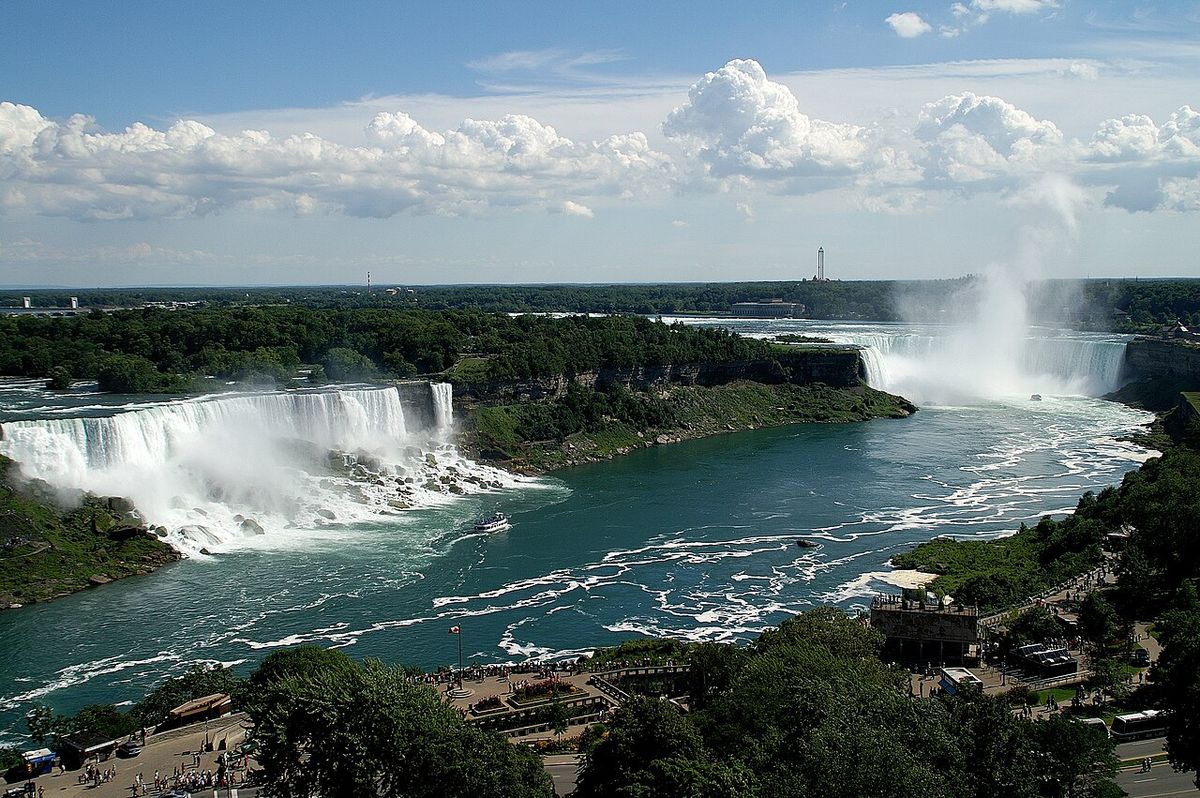
The flood was preceded by two weeks of consistent rain in early July 1996, which saturated soils and filled reservoirs across the Saguenay region. The crisis began in earnest on July 19 when a series of intense storm cells stalled over the area, dumping torrential rain for more than 36 hours. In some locations, nearly 300 millimetres of rain fell during this period, with more than 155 millimetres recorded in just 24 hours in the hardest-hit zones. This volume of rainfall was described as equivalent to the water that flows over Niagara Falls in four weeks. The region's unique geology, a geological graben, amplified the flooding by channelling the immense runoff. Rivers such as the Rivière-à-Mars and the Ha! Ha! River swelled into destructive torrents that burst their banks, sweeping away everything in their path. The flash floods and associated mudslides devastated urban and rural communities alike. In the city of Chicoutimi, over 2.4 metres of water inundated neighbourhoods, completely levelling one entire residential area. The neighbouring borough of La Baie was similarly overwhelmed, with floodwaters filling basements and destroying property. Critical infrastructure failed as roads and bridges were washed away, isolating entire communities. The force of the water was so powerful that residents reported watching houses being swept from their foundations and massive tree trunks carried downstream. The disaster's timing at the height of the tourist season compounded the economic losses and logistical challenges for responders.
Human toll and emergency response
The human cost of the flood was severe, with ten people losing their lives. Two of these fatalities were a direct result of mudslides triggered by the incredible rainfall. Between 14,000 and 16,000 residents were forced to evacuate their homes, many with only moments to spare as waters rose. Families, like that of France Roy in La Baie, escaped using old trails after main roads were submerged, describing the experience as terrifying. The Canadian Armed Forces deployed troops to the region to assist with search and rescue operations, reinforce faltering flood defences, and evacuate people from cut-off areas. The Canadian Red Cross played a major role in the aftermath, reporting that it ultimately provided assistance to 18,000 people affected by the disaster. The scale of the destruction was immense on a personal and community level. A total of 488 homes were completely destroyed and another 1,230 were damaged, leaving hundreds of families with nowhere to return. The collective trauma was significant, with many survivors, such as France Roy, describing lasting emotional impacts and comparing the scene to a horror movie. Roy recalled the sound of the roaring river and the sight of rooftops floating down the Saguenay River, which disturbed her for years. The disaster also featured acts of bravery and community solidarity, with volunteers like a young Luc Boivin, who would later become mayor, using amateur radio to help coordinate rescues and relay critical information for evacuees. Boivin himself narrowly escaped when the road beneath his truck collapsed, forcing him to abandon the vehicle before it was swept away.
Financial cost and infrastructure failures
Initial damage estimates varied widely, but subsequent assessments confirmed the Saguenay flood as the first natural disaster in Canadian history to cause over a billion dollars in losses. Quebec's statistics institute reported in 2003 that the disaster caused nearly $1 billion in damage, while other estimates reached as high as CA$1.5 billion. A significant portion of this cost was attributed to the destruction of public infrastructure, including roads, bridges, and the water management systems that were meant to protect the region. Post-flood inquiries revealed that the network of dikes and dams protecting Chicoutimi had been poorly maintained, contributing to the scale of the catastrophe. The failure of this infrastructure prompted immediate scrutiny and long-term change. The provincial government established a commission of inquiry led by engineer Roger Nicolet to investigate the causes and make recommendations. The Nicolet Commission's key findings led to major reforms in dam safety and flood preparedness across Quebec. Governments invested hundreds of millions of dollars in the years that followed to better protect the Saguenay region from future disasters. This investment funded new reservoirs, upgraded dams, and other critical flood-control measures that were built during a lengthy reconstruction period. The commission's specific recommendations created a new standard for infrastructure management in high-risk zones.
- Implementation of stricter, more frequent inspections for dams and dikes.
- Improved training and certification requirements for dam operators.
- Stronger government oversight and enforcement of safety regulations for water-retaining structures.
- Revised emergency response plans for municipalities in high-risk zones.
- Mandatory risk assessments and updated zoning to limit development in floodplains.
The flood marked a turning point in how the Saguenay region manages flood risks and responds to emergencies. Mayor Luc Boivin stated that there was disaster management before the flood and after the flood. He explained that the management of dams, high-risk zones and emergency response plans all changed. The lessons from the disaster extended beyond the region, contributing to Quebec's risk management plans. In the years that followed, governments invested hundreds of millions of dollars to better protect the region from future disasters.
Environmental aftermath and unexpected benefits
Beyond the visible destruction, the flood had significant and lasting environmental effects on the region's river systems. The powerful torrents of water scoured riverbeds and reshaped landscapes, but they also produced an unexpected ecological benefit. The Saguenay and Ha! Ha! rivers had historically been contaminated with industrial sediments, particularly from aluminum smelting operations. The flood deposited a new layer of sediment, between 10 and 50 centimetres thick, over these polluted areas at the bottom of the rivers. Scientific research conducted after the event, including work by the Project Saguenay scientific team, concluded that this new layer of relatively clean sediment effectively sealed off the older contaminants. This natural capping process meant the toxic sediments were no longer an immediate threat to river ecosystems, and the enormously expensive and disruptive process of dredging and treating the riverbeds was deemed unnecessary. This remains one of the few positive long-term outcomes noted by scientists studying the disaster's impact. The research showed that the river would not have to be dredged and treated to control the historical contamination, saving considerable public funds and preventing further environmental disturbance from a large-scale cleanup operation.
Cultural legacy and symbols of resilience
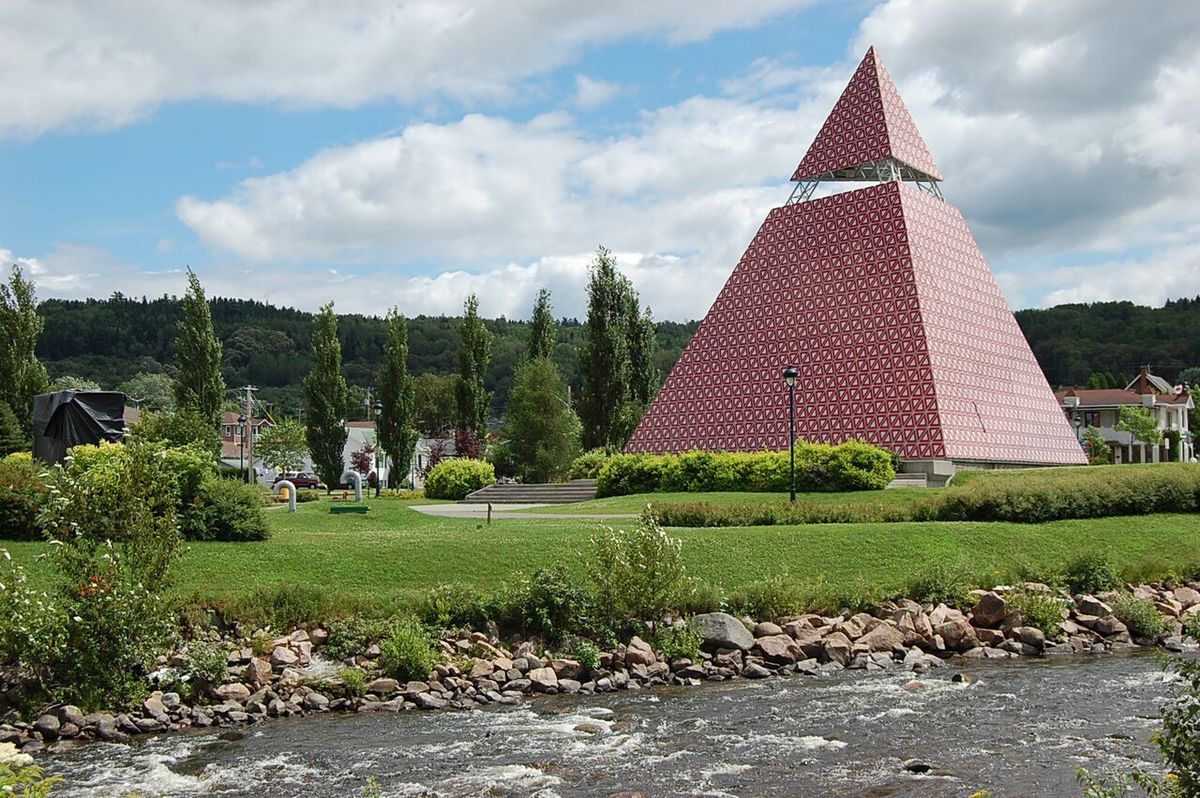
The flood left a permanent mark on the cultural memory of Saguenay-Lac-Saint-Jean and Canada. The most enduring symbol of the disaster is a small white house in Chicoutimi, known as La petite maison blanche. Owned by Jeanne d'Arc Lavoie-Genest, the house remained standing almost miraculously while torrents of water raged around it, becoming a powerful symbol of survival and resilience. With its foundation permanently exposed, the house was preserved as a historical park and museum by the city of Saguenay, serving as a permanent memorial to the flood and its victims. Survivor France Roy noted that visiting the museum years later reminded her of both the destruction and the solidarity that emerged across the region. Another notable memorial is the Ha! Ha! Pyramid, constructed in 1997 in the town of La Baie. The pyramid was built using 3,000 recycled yield signs, a poignant reminder of the halted traffic and disrupted lives. The disaster also prompted a massive national outpouring of support. A nationally televised telethon broadcast from Montreal featured performances by prominent Canadian artists like Sarah McLachlan, Robert Charlebois, and Gilles Vigneault, with contributions from Céline Dion, Alanis Morissette, and Bryan Adams, raising over $3 million for flood relief. This event highlighted the wave of compassion from across Quebec and Canada in response to the catastrophe.
Long-term preparedness and regional transformation
In the three decades following the flood, the region underwent a complete transformation in its approach to disaster risk. As noted by Saguenay Mayor Luc Boivin in 2026, the flood created a clear dividing line in emergency management philosophy for the area. Governments at the federal, provincial, and municipal levels invested hundreds of millions of dollars in new flood-control infrastructure, including upgraded dams, new reservoirs, and improved dike systems. The region's emergency response plans were completely overhauled to prioritize early warning and coordinated evacuation. Mayor Boivin, who experienced the flood firsthand as a young man, stated that the devastation of 1996 directly contributed to Quebec's modern, comprehensive risk-management plans. He expressed confidence that the region is now far better equipped to face future extreme weather events because of the hard lessons learned. Boivin said that what was lived through in 1996 serves to ensure better preparation today, and that there will be other events, but the region is now well-prepared to face the future. This sentiment reflects a broader shift across Canada, where the Saguenay flood is studied as a case study in both catastrophic failure of infrastructure and subsequent systemic reform in disaster preparedness and environmental management. The changes implemented have been tested by subsequent severe weather, including a supercell storm that hit the same region on July 2, 2026, demonstrating the ongoing need for vigilance.
Comparative rainfall and flood events in Quebec
The Saguenay flood remains the benchmark for extreme rainfall and flooding events in Quebec due to its intensity, duration, and catastrophic results. The table below compares key metrics from the 1996 disaster with notable subsequent severe weather events in the province, illustrating the unique severity of the Saguenay event. While events like the 2026 West Island rainfall demonstrated extreme short-term intensity, the Saguenay flood's combination of prolonged heavy rain over a large, vulnerable watershed set it apart. The region has continued to experience significant severe weather, including Quebec's first recorded tornado of 2026 which also touched down in Saguenay-Lac-Saint-Jean, highlighting the area's exposure to meteorological extremes. The data shows that the Saguenay region remains a focal point for severe weather decades after the 1996 flood, experiencing a wide range of hazards from tornadoes to multi-hazard winter storms.
| Event | Date | Region | Primary Impact |
|---|---|---|---|
| Saguenay Flood | July 19-21, 1996 | Saguenay-Lac-Saint-Jean | Catastrophic flooding, 10 fatalities |
| Torrential Rainfall | June 20, 2026 | Montreal (West Island) | Urban flash flooding |
| Severe Supercell Storm | July 2, 2026 | Saguenay-Lac-Saint-Jean | Damaging winds, hail, tornado risk |
| First Tornado of 2026 | May 25, 2026 | Saguenay-Lac-Saint-Jean | Tornado touchdown |
| Multi-Hazard Storm | Winter 2026 | Saguenay, North Shore | Snow, freezing rain, 90 km/h winds |
The Saguenay flood was the biggest overland flood in 20th century Canadian history. In some areas, nearly 300 millimetres of rain fell in as little as 36 hours after an already rainy start to July. This torrential rain overwhelmed rivers and reservoirs, triggering floods, landslides and dam failures. The disaster caused nearly one billion dollars in damage, killed ten people, and forced thousands from their homes. This devastation validated the subsequent investment in improved flood control infrastructure and emergency planning.
Personal accounts and lasting memories
For those who lived through it, the memory of the flood remains vivid and emotionally powerful even after thirty years. France Roy, a resident of La Baie, recalled the moment the Rivière-à-Mars burst its banks, with water loudly entering her driveway. Alone with her three young children, she was rescued by a neighbour in a camper van, escaping via old trails because the roads were flooded. Her basement filled with about four feet of water, and her family spent three weeks displaced from their home. Roy stated that the stress of the event really affected her, and for many years afterward she would cry whenever she saw flooding on the news. She described watching houses being swept away and uprooted trees carried downstream as being like a horror movie. For Mayor Luc Boivin, who was 20 at the time, the memory is of the road collapsing beneath his truck as he drove toward his cottage, forcing him to jump to safety. These personal stories form the human core of the historical event, detailing the fear, loss, and disruption experienced by thousands. They also record the community response, with Roy noting that what stayed with her was how people helped each other during the crisis, a sentiment that defines the disaster's legacy of solidarity alongside its legacy of loss. The emotional impact was deep, with Roy stating that thinking about the flood thirty years later still makes her sad, a feeling shared by many in the region who carry the memory of those days engraved in their minds.
Questions about Saguenay flood
What caused the Saguenay flood of 1996?
The flood was caused by an extreme meteorological event where a series of storm cells stalled over the Saguenay-Lac-Saint-Jean region. This followed two weeks of already rainy weather that saturated the ground. Between July 19 and 21, 1996, torrential rains dumped nearly 300 millimetres of rain in some areas over 36 hours, with more than 155 millimetres falling in a single 24-hour period. This immense volume of water overwhelmed rivers, reservoirs, and the region's network of dams and dikes, many of which were found to be poorly maintained, leading to widespread flash flooding and mudslides.
How many people died or were displaced by the flood?
The flood resulted in the deaths of ten people. Two of these fatalities were caused by mudslides triggered by the rainfall. The disaster forced a massive evacuation, with between 14,000 and 16,000 residents forced to leave their homes. The Canadian Red Cross reported that it ultimately provided assistance to 18,000 people in the aftermath. Hundreds of families lost everything, with 488 homes completely destroyed and another 1,230 damaged, leaving many with nowhere to return after the waters receded.
What was the total financial cost of the disaster?
The Saguenay flood was the first natural disaster in Canadian history to cause over a billion dollars in damage. Estimates at the time varied, but subsequent analysis by Quebec's statistics institute in 2003 confirmed nearly $1 billion in losses. Other estimates reached as high as CA$1.5 billion. The cost was exacerbated by the disaster's timing at the peak of the summer tourist season and the extensive damage to public infrastructure like roads, bridges, and water management systems, which required years of reconstruction.
What is 'La petite maison blanche' and why is it significant?
La petite maison blanche, or 'The little white house,' is a small house in Chicoutimi that became the enduring symbol of the flood. Owned by Jeanne d'Arc Lavoie-Genest, it survived virtually unscathed while surrounded by raging floodwaters that destroyed neighbouring structures. Its survival against the odds made it a powerful symbol of resilience for the region. The city of Saguenay later preserved the house, with its dramatically exposed foundation, as a historical park and museum dedicated to commemorating the flood and its impact on the community.
How did the flood change disaster preparedness in Quebec?
The flood marked a turning point in disaster management for Quebec. The provincial government established the Nicolet Commission, whose recommendations led to sweeping reforms. These included stricter dam inspections, improved training for operators, stronger government oversight of water-retaining structures, and revised emergency response plans for high-risk zones. In the years following, governments invested hundreds of millions of dollars in new flood-control infrastructure for the Saguenay region. As Mayor Luc Boivin stated in 2026, the lessons learned fundamentally improved Quebec's risk-management plans and left the region far better prepared for future extreme weather events.
Were there any positive environmental outcomes from the flood?
Surprisingly, yes. One unexpected ecological benefit was the natural remediation of historically contaminated sediments in the Saguenay and Ha! Ha! rivers. The flood deposited a new layer of clean sediment, between 10 and 50 centimetres thick, over old industrial pollutants on the riverbeds. Scientific research concluded this new layer effectively sealed off the contaminants, eliminating them as an immediate threat to river ecosystems. This natural capping process meant the costly and disruptive work of dredging and treating the rivers was avoided, a rare positive outcome from the disaster.
Sources and further reading
- Saguenay flood (Wikipedia)
- 'Still makes me sad': Memories of devastating Saguenay ... (panow.com)
- Remembering the deadly Saguenay floods, 30 years later (montreal.citynews.ca)
- Memories of devastating Saguenay flood 30 years on (chatnewstoday.ca)
Checked by the Your Space Hamilton desk. Last updated 2026-10-26.