1974 Super Outbreak
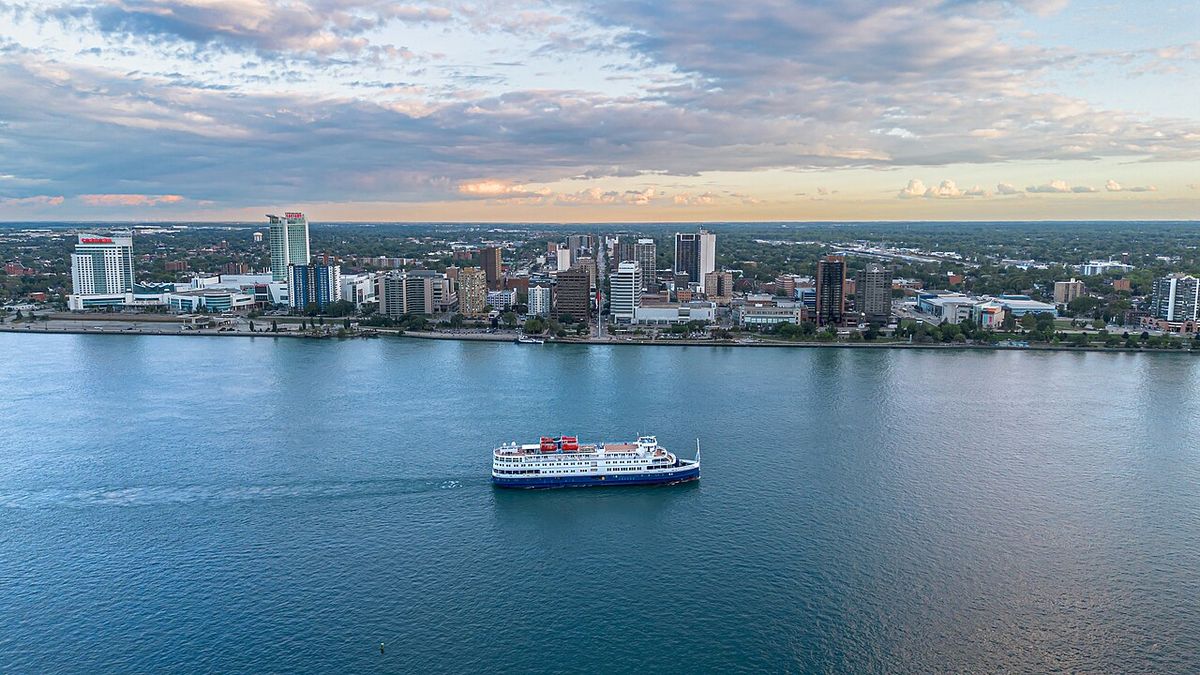
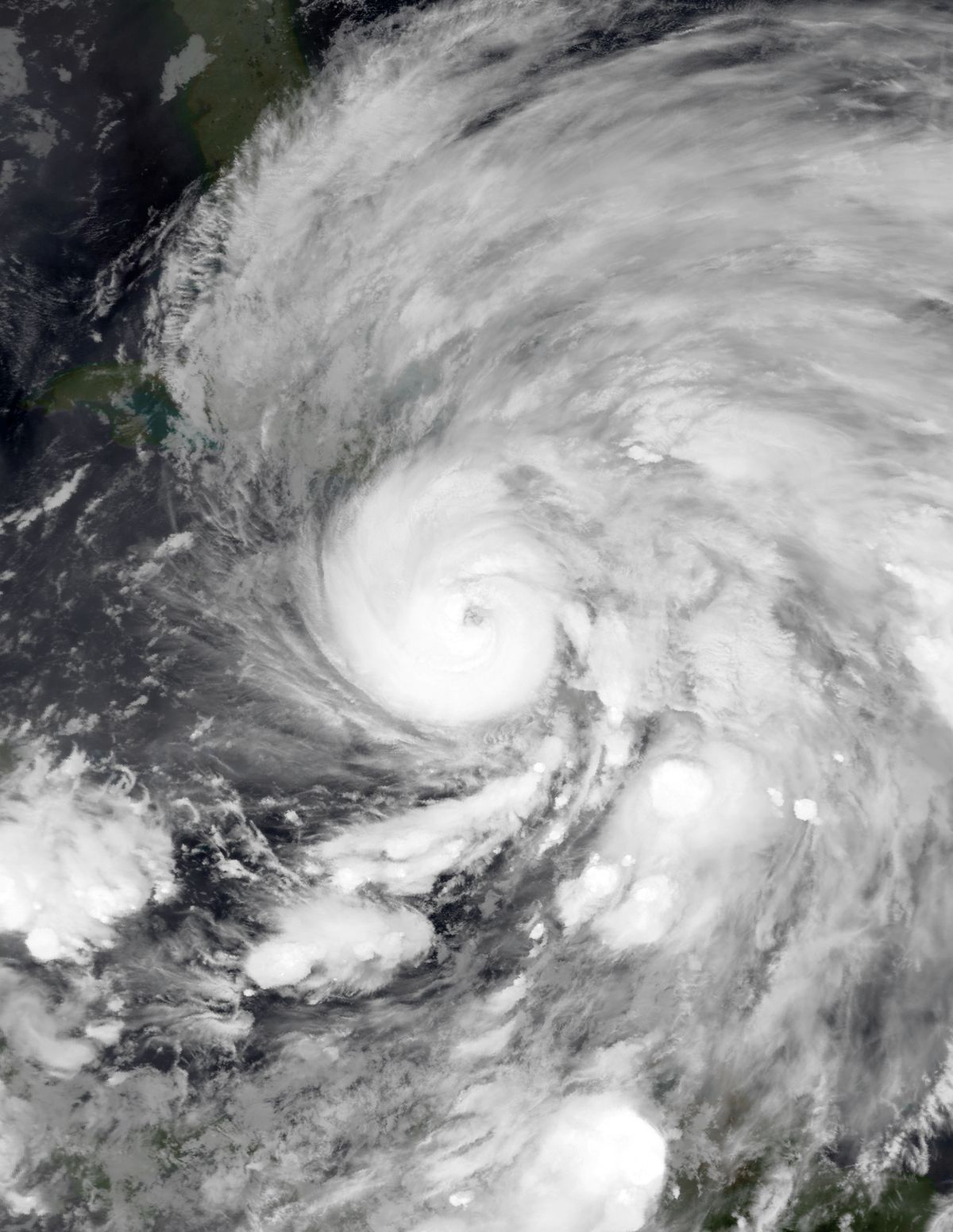
The 1974 Super Outbreak was an unprecedented and catastrophic tornado outbreak that struck the central and eastern United States and southern Ontario on April 3-4, 1974. It remains the most violent tornado outbreak ever recorded, with 30 confirmed violent tornadoes rated F4 or F5, including seven F5s. The outbreak produced 149 confirmed tornadoes across 13 U.S. states and Ontario, causing 319 fatalities, injuring 5,484 people, and inflicting approximately $600 million USD in damage (equivalent to $3.92 billion in 2025). For Canadians, the event is remembered for a deadly F3 tornado that struck Windsor, Ontario, killing nine people and highlighting the cross-border nature of severe weather threats.
Meteorological Setup and Progression
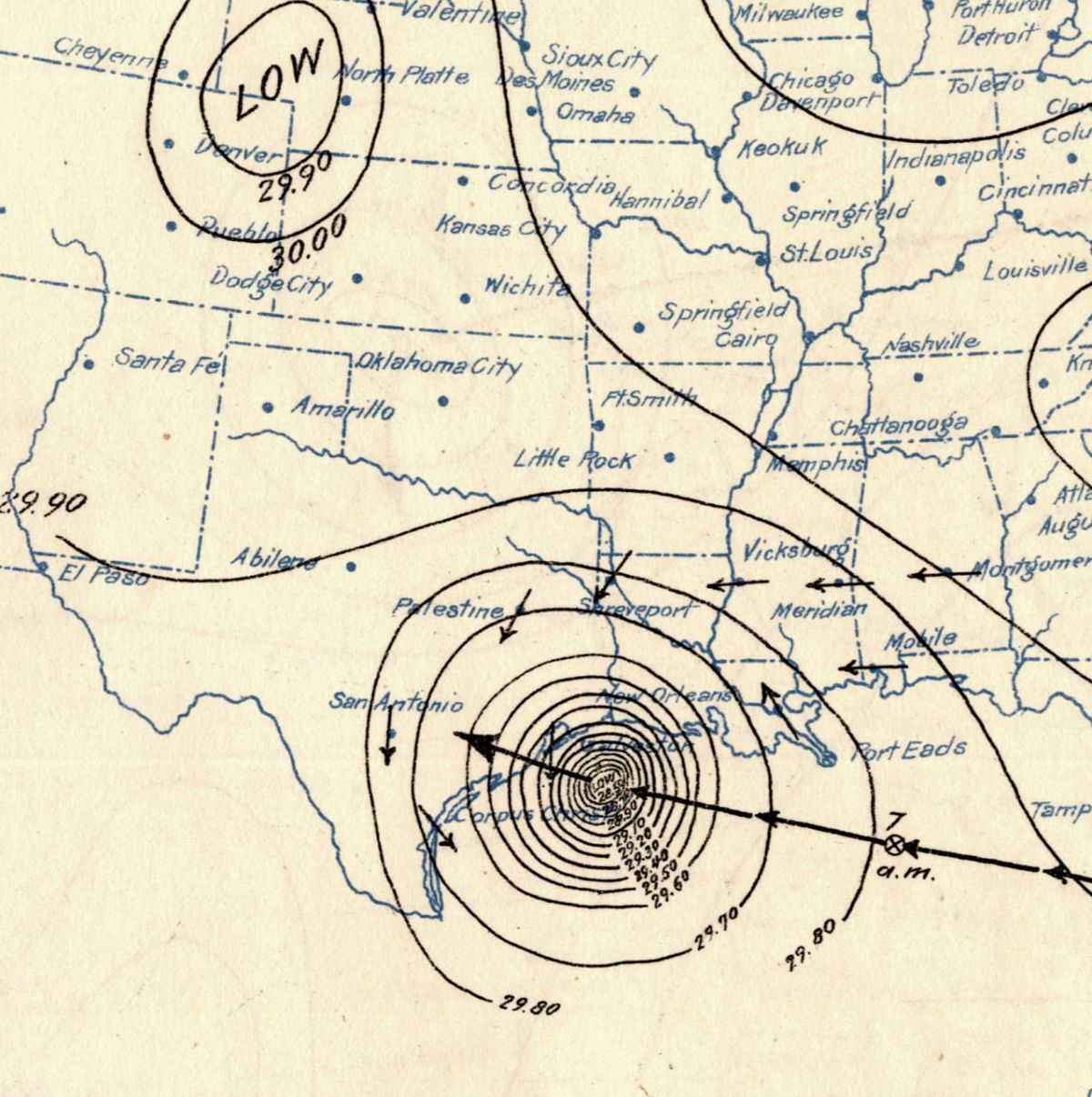
The outbreak was driven by a powerful springtime low-pressure system that developed over the North American Interior Plains on April 1. As it moved into the Mississippi and Ohio Valley areas, a surge of unusually moist air intensified the storm amid sharp temperature contrasts. While forecasters at NOAA and the National Weather Service were expecting severe weather on April 3, the scale of the outbreak far exceeded expectations. The atmospheric conditions featured extreme instability, with Convective Available Potential Energy (CAPE) levels rising to 1,000 J/kg in the region initially and then exceeding 2,500 J/kg over the lower Ohio and Mississippi valleys by 18:00 UTC on April 3. Strong wind shear and helicity values over 230 m²/s² created an environment highly conducive to tornadogenesis. The event unfolded through three main convective bands that produced tornadoes over an 18-hour period, with as many as 15 tornadoes occurring simultaneously at one point. The outbreak occurred at the end of a very strong La Niña event, the 1973-74 La Niña, which was as strong as the 1998-99 event, though no definitive causal link between La Niña and this tornado activity has been established.
On April 3, severe weather watches were issued from the morning from areas south of the Great Lakes. A large mesoscale convective system (MCS) that had developed overnight in Arkansas continued to strengthen and became the first of the three main convection bands. By 16:30 UTC, this MCS began to splinter into two sections, with the northern part accelerating toward Pennsylvania and the southern part lagging into southeast Tennessee. This split was influenced by a band of subsidence over eastern Kentucky, local downslope winds over the Appalachians, and an inversion over the same area. In the wake of the MCS, backing low-level winds and rapid diurnal destabilization weakened the convective inhibition layer, allowing numerous surface-based supercells to develop. A third band of convection developed near St. Louis at about 16:00 UTC, enhanced by differential positive vorticity advection coinciding with the left exit region of an upper-level jet streak with winds up to 130 kn.
The Outbreak Timeline and Tornado Families
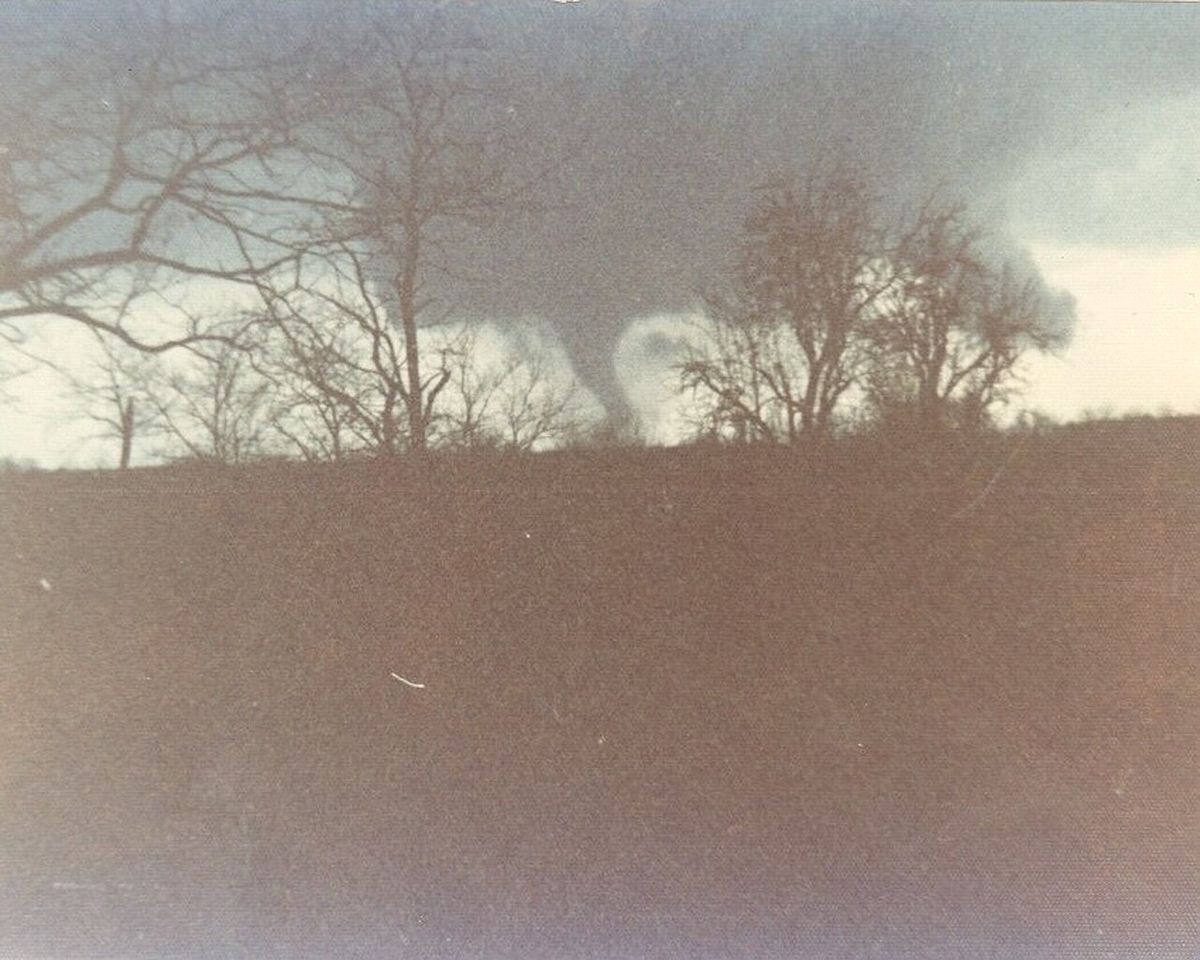
Tornado activity on April 3 began with several F2 and F3 tornadoes that had struck portions of the Ohio Valley and the South in a separate, earlier outbreak on April 1 and 2, which included three killer tornadoes in Kentucky, Alabama, and Tennessee. The town of Campbellsburg, northeast of Louisville, was hard-hit in this earlier outbreak, with a large portion destroyed by an F3. Between the two outbreaks, an additional tornado was reported in Indiana in the early morning hours of April 3. The official Super Outbreak activity is considered to have begun on the afternoon of April 3, with the first tornado disputed between an isolated F2 in Indiana at 13:30 UTC and an F0 in Illinois at 18:10 UTC as marked by Dr. Tetsuya Fujita. As the storm system moved east into areas destabilized by daytime heating, the tornadoes grew more intense. A seminal study by Fujita in 1974-75, later cited in a 2004 survey by Risk Management Solutions, found that three-quarters of all tornadoes in the outbreak were produced by 30 'families' of tornadoes, multiple tornadoes spawned in succession by a single thunderstorm cell.
The outbreak featured several exceptionally long-tracked and destructive tornado families. The most prolific and longest-lasting family tracked from central Illinois and across the entirety of northern Indiana from 2:47 p.m. to 6:59 p.m. CDT, a span of 4 hours and 12 minutes. This family produced eight tornadoes, including the longest-tracked single tornado of the outbreak: the 121-mile F4 Monticello tornado, though that tornado may itself have been composed of three individual F4 tornadoes. Another supercell produced a series of five consecutive violent tornadoes from southern Indiana into extreme northern Kentucky and then southwestern Ohio, beginning with the first F5 tornado of the day near Depauw, Indiana, at 19:20 UTC. In east-central Indiana, the Parker City tornado family was described as a Type II-A family, indicating cyclical tornadoes that turn left as a new tornado forms, with twin circulations rotating within the supercell. Multiple violent, long-tracked tornadoes formed after 23:00 UTC over Alabama and Tennessee, including a large F4 that tracked for 110 miles across Alabama and three F5s that struck Tanner and Guin. The final tornado of the outbreak touched down in Caldwell County, North Carolina, at about 7:00 a.m. on April 4.
The 1974 Super Outbreak produced more than 100 tornadoes associated with 33 tornado families. A series of studies by Dr. Tetsuya T. Fujita found that three quarters of all tornadoes in the outbreak were produced by just 30 families of tornadoes, which were multiple tornadoes spawned in succession by a single thunderstorm cell. The majority of these were long lived and long tracked individual supercells. The most prolific and longest lasting tornado family of the outbreak tracked from central Illinois through the entirety of northern Indiana for a span of 4 hours and 12 minutes, producing eight tornadoes.
- The Northern Indiana Family: Lasted 4 hours and 12 minutes, produced 8 tornadoes, and included the 121-mile Monticello F4.
- The Depauw Supercell Family: Produced five consecutive violent tornadoes, including the first F5 at Depauw, Indiana.
- The Parker City Family: A Type II-A cyclical family in east-central Indiana with twin circulations observed.
- The Alabama-Tennessee Nocturnal Family: Formed after 23:00 UTC, producing multiple violent tornadoes including three F5s at Tanner (two) and Guin.
- The Decatur, Illinois Supercell: Part of the third convective band, producing an F3 that struck Decatur without adequate warning.
Notable and Record-Setting Tornadoes
The 1974 Super Outbreak set numerous records for violence and destruction, producing the most violent (F4 and F5) tornadoes ever observed in a single outbreak. The seven F5 tornadoes represented an extreme concentration of force. The Monticello, Indiana F4 tornado had the longest path of the outbreak at 121 miles, killing 19 people as it tracked from near Otterbein to near Valentine. The first F5 tornado struck near Depauw, Indiana, at 3:20 p.m. EDT, killing six and injuring 86 along a 65-mile path where homes in Depauw and Daisy Hill were leveled and swept away. The tornado grew to over a mile wide in Crawford County and destroyed 38 out of 48 homes in Martinsburg, with the Indianapolis News describing the town as "for all practical purposes is no longer there. In Canada, an F3 tornado struck Windsor, Ontario, killing nine and injuring 30 at the former Windsor Curling Club. The outbreak's sheer intensity is quantified by the Outbreak Intensity Score (OIS), a metric developed by expert Thomas P. Grazulis in 2023. The 1974 event received an OIS of 578, the highest in recorded history.
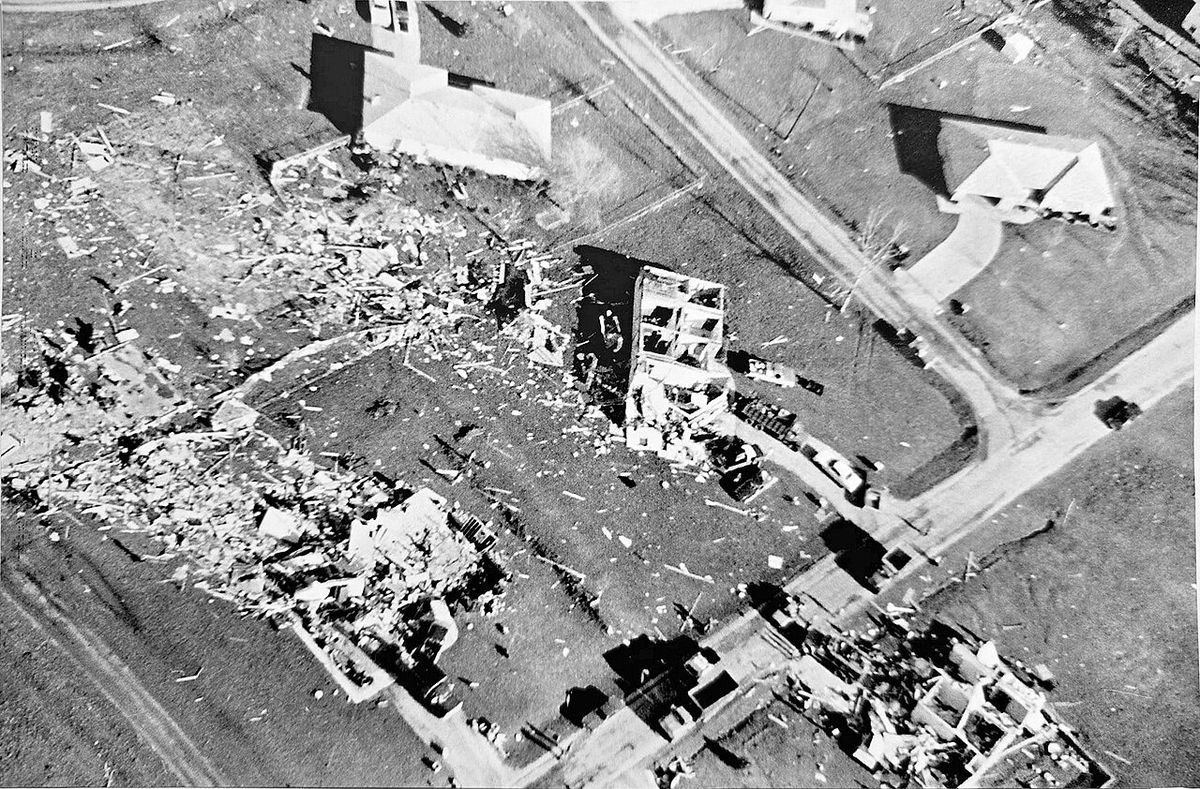
Other significant tornadoes included the Decatur, Illinois F3, which struck the city around 2:45 p.m. CST without a specific tornado warning, as sirens were sounded based on a severe thunderstorm warning issued at 2:43 p.m. and a tornado warning was not issued until 2:56 p.m. This tornado killed one person, destroyed 55 homes, damaged 106 others, and caused $3.2 million in damage, including the destruction of an exhibit housing 21 boats and 2 campers at the Macon County Fairgrounds. The storm system also produced significant non-tornadic impacts, including baseball-sized hail by 17:20 UTC in Illinois and in St. Louis, Missouri, which reported a very severe thunderstorm that was the costliest to hit the city up to that time despite not producing a tornado. Michigan experienced one deadly tornado near Coldwater and Hillsdale, flash floods from thunderstorm downpours, and heavy snowfall in the Upper Peninsula north of the warm front.
This outbreak set several records and featured extreme events. It was the most violent tornado outbreak ever recorded, with 30 violent F4 or F5 tornadoes confirmed. It produced seven F5 tornadoes, one of which was the first of the day near Depauw, Indiana. A tornado that struck near Monticello, Indiana had a path length of 121 miles, which was the longest of the outbreak. The outbreak was the first in recorded history to produce more than 100 tornadoes in under a 24 hour period. At one point, as many as 15 separate tornadoes were occurring simultaneously.
- First outbreak to produce over 100 tornadoes in under 24 hours.
- Most violent tornadoes in one outbreak: 30 (7 F5, 23 F4).
- Highest Outbreak Intensity Score (OIS) ever: 578.
- Longest single tornado track: 121 miles (Monticello, IN F4).
- Most F5 tornadoes in one outbreak: 7.
- Largest simultaneous tornado count: up to 15 tornadoes at once.
- Most extensive damage area: approximately 900 square miles.
- Total combined tornado path length: 2,600 miles.
Impact and Damage Statistics
The human and economic toll of the outbreak was staggering. Across the affected region, 319 people lost their lives and 5,484 were injured. The tornadoes caused roughly $600 million USD in damage (1974 dollars), extensively damaging approximately 900 square miles along a total combined path length of 2,600 miles. The outbreak overwhelmed local warning systems and emergency response capabilities in many communities. In Decatur, for example, local police established two command posts and dispatched officers, including off duty and auxiliary, for patrol duties after the tornado. Fifteen firefighters were deployed to check for fires and assist with downed wires while the street division assisted with debris removal. The storm system also produced significant non-tornadic impacts, including flash floods in Michigan and heavy snowfall in the Upper Peninsula north of the warm front.
The outbreak caused a total of 319 fatalities and 5,484 injuries across 148 tornadoes from April 3 through April 4. Another exceptionally deadly F5 tornado devastated Guin, Alabama, killing 28. An F4 tornado with a 121 mile path near Monticello, Indiana killed 19 people. In terms of damage, the outbreak caused roughly $600 million USD in damage, which is equivalent to $3.92 billion in 2025. It extensively damaged approximately 900 square miles along a total combined path length of 2,600 miles.
| Location | Rating | Fatalities | Path Length | Notable Details |
|---|---|---|---|---|
| Guin, AL | F5 | 28 | Long track | Extremely potent tornado that caused extensive devastation. |
| Monticello, IN | F4 | 19 | 121 mi (195 km) | Longest track of the outbreak. May have been three tornadoes. |
| Depauw-Martinsburg, IN | F5 | 6 | 62 mi (100 km) | First F5 of the outbreak. Homes swept away. Town of Martinsburg largely destroyed. |
| Windsor, ON | F3 | 9 | , | Canadian impact. All fatalities at Windsor Curling Club. |
| Decatur, IL | F3 | 1 | , | Caused $3.2 million in damage, destroying 55 homes and damaging 106. |
| Tanner, AL | F5 | Multiple | , | Hit by two separate F5 tornadoes. |
Response and Recovery Efforts
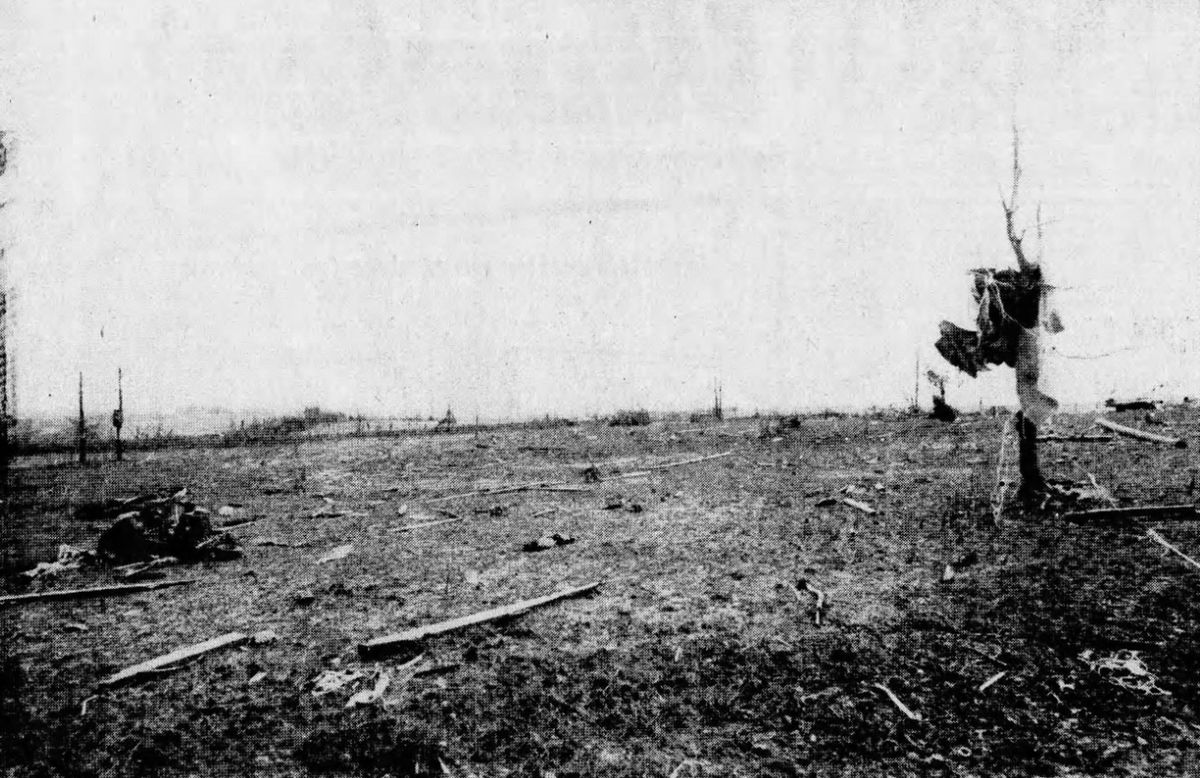
In the immediate aftermath, communities mobilized extensive recovery operations. In Decatur, Illinois, local police established command posts and dispatched all available officers, while firefighters checked for fires and assisted with downed wires. The American Red Cross set up a relief headquarters at Boling Springs Church of God with coordinators assisting victims with federal assistance paperwork. The Salvation Army operated a canteen providing food and Catholic Charities distributed clothing. Volunteer efforts were massive. On April 5, 300 to 400 volunteers, including farmers from DeWitt and Moultrie Counties, gathered at the Fairgrounds to help with cleanup across the city, with over 2,000 people assisting during a four-day period that concluded on April 7. Representative Edward Rell Madigan pledged all possible federal assistance to victims. Electrical service was restored to most of Decatur by 8:00 a.m. on April 4, with the exception of 35 homes, though Cablevision service remained offline due to damaged wires. All roads in the city were cleared by April 5.
The disaster prompted reviews of emergency procedures. The Decatur tornado prompted the addition of procedures to an in-the-works emergency preparedness program which would now include the Inspection and Public Works Department. Faster emergency medical response was identified as a pressing issue and plans to have a mobile headquarters were made. The Macon County Fairgrounds president sought state aid to repair the facility after an exhibit housing 21 boats and 2 campers was destroyed and three barns were destroyed, with losses reaching $100,000. The Council of Community Services was likely to head long-term relief efforts in the area.
Following the tornado that struck Decatur, Illinois, local police established two command posts and dispatched officers, including off duty and auxiliary personnel, for patrol duties. Fifteen firefighters were deployed to check for fires and assist with downed wires while the street division assisted with debris removal. The American Red Cross set up a relief headquarters at Boling Springs Church of God to assist victims with federal assistance paperwork. A canteen operated by the Salvation Army provided food and Catholic Charities distributed clothing. Electrical service was restored to most of the city by the morning of April 4.
- American Red Cross: Set up relief headquarters at Boling Springs Church of God.
- Salvation Army: Operated a canteen to provide food.
- Catholic Charities: Distributed clothing to victims.
- Decatur Police: Established two command posts, deployed off-duty and auxiliary officers.
- Decatur Fire Department: Deployed 15 firefighters to check for fires and downed wires.
- City Street Division: Assisted with debris removal on roads.
- Volunteers: Over 2,000 people assisted in cleanup from April 5-7.
- Representative Edward Rell Madigan: Pledged federal assistance for victims.
Scientific and Historical Significance
The 1974 Super Outbreak holds a major place in meteorological history and severe weather research. It was the first recorded outbreak to produce more than 100 tornadoes in under 24 hours, a feat not repeated globally until the 1981 United Kingdom tornado outbreak and in the United States until the 2011 Super Outbreak. Dr. Tetsuya Fujita's subsequent studies of the event advanced the understanding of tornado families and supercell behaviour, describing phenomena like the cyclical Parker City family. The outbreak provided a vast dataset that helped debunk several tornado myths, such as the belief that tornadoes cannot cross certain terrains or rivers, as multiple long-track tornadoes demonstrated otherwise. The event's intensity led to the later development of the Outbreak Intensity Score (OIS) by Thomas P. Grazulis, against which it remains the highest-ranked outbreak. For Canada, the Windsor tornado served as a clear reminder of the nation's vulnerability to severe weather systems originating in the U.S., influencing cross-border severe weather communication and preparedness.
The 1974 Super Outbreak also highlighted deficiencies in warning systems, as seen in Decatur where a tornado warning was issued after the tornado had dissipated. It demonstrated the need for more precise forecasting and faster public alert dissemination. The event's connection to a very strong La Niña has been noted, though scientists state no definitive linkage exists between La Niña and this outbreak or tornado activity in general. The physical scope of the damage, covering 900 square miles, and the simultaneous nature of the tornadoes, with up to 15 occurring at once, presented a disaster management challenge that informed future emergency response planning across North America. The outbreak remains a benchmark event for comparing the intensity of subsequent tornado outbreaks, such as those in 2011 and 2023.
Questions about 1974 Super Outbreak
How many tornadoes were in the 1974 Super Outbreak?
There were 149 confirmed tornadoes in the 1974 Super Outbreak. These occurred across 13 U.S. states and the Canadian province of Ontario. The outbreak included a record 30 violent tornadoes rated F4 or F5, with seven of those reaching F5 intensity. It was the first outbreak in recorded history to produce more than 100 tornadoes in under 24 hours.
Where did the 1974 Super Outbreak hit in Canada?
In Canada, the outbreak affected Windsor, Ontario. An F3 tornado struck the city, killing nine people and injuring 30 others. All fatalities occurred at the former Windsor Curling Club. This event highlighted the transboundary nature of major severe weather systems and remains a significant tornado disaster in Canadian history.
Why was the 1974 Super Outbreak so severe?
The outbreak's severity resulted from a rare combination of extreme atmospheric conditions. A powerful, deepening low pressure system interacted with a surge of unusually moist air, creating sharp temperature contrasts. Exceptionally high instability with CAPE values over 2,500 J/kg, strong wind shear at all levels of the troposphere, and high helicity created an environment where long lived supercell thunderstorms could form. These conditions were conducive to tornadogenesis and allowed storms to produce multiple violent, long track tornado families.
What is the Outbreak Intensity Score (OIS) for the 1974 event?
In 2023, tornado expert Thomas P. Grazulis created the Outbreak Intensity Score (OIS) to rank tornado outbreaks. The 1974 Super Outbreak received an OIS of 578. This is the highest score ever recorded, confirming the outbreak's status as the most intense tornado outbreak in documented history. The score synthesizes factors like the number, intensity, and duration of tornadoes.
How does the 1974 outbreak compare to the 2011 Super Outbreak?
The 2011 Super Outbreak holds the record for the most tornadoes in a 24-hour period. However, the 1974 Super Outbreak remains the most violent, with a higher concentration of F4 and F5 tornadoes (30 versus 2011's 15). The 1974 outbreak also has a higher Outbreak Intensity Score (578), indicating greater overall severity despite a lower total tornado count. The 1974 event was also the first to surpass 100 tornadoes in a day.
What was the deadliest tornado of the 1974 Super Outbreak?
This was one of seven F5 tornadoes confirmed during the outbreak. Another exceptionally deadly tornado was the F5 that hit Guin, Alabama, killing 28 people. In terms of total fatalities from a single path, the F4 tornado that tracked 121 miles near Monticello, Indiana, killed 19 people. The outbreak overall resulted in 319 fatalities across 13 U.S. states and Ontario, Canada, making it one of the deadliest in U.S. history.
Sources and further reading
- 1974 Super Outbreak (Wikipedia)
- April 3-4, 1974 Super Outbreak | News (ncei.noaa.gov)
- Tornado Outbreak of April 3, 1974 (weather.gov)
- A New Look at the Super Outbreak of Tornadoes on 3-4 April ... (journals.ametsoc.org)
- The Super Outbreak: The Day Weather Changed Forever (pbs.org)
Checked by the Your Space Hamilton desk. Last updated 2026-10-20.