Windsor, Ontario
Windsor is a city in southwestern Ontario, Canada, situated directly across the Detroit River from Detroit, Michigan. As the southernmost major city in Canada, it is a critical component of the Quebec City-Windsor Corridor and forms North America's most populous trans-border urban area with Detroit. With a population of 229,660 as of the 2021 census, Windsor is a culturally diverse hub known nationally as the "Automotive Capital of Canada. Its economy is deeply intertwined with cross-border trade, anchored by the Ambassador Bridge, which carries approximately one-quarter of all merchandise trade between Canada and the United States.
History and Settlement
The Detroit River region was originally inhabited by Huron, Odawa, Potawatomi, and Iroquois First Nations, with the Anishinaabemowin name Wawiiatanong Ziibi meaning "where the river bends." European settlement began in 1749 with the establishment of a French agricultural community named la Petite Côte, making it the oldest continually inhabited European-founded settlement in Canada west of Montreal. The area's French-Canadian heritage is preserved in numerous street names such as Ouellette, Pelissier, and Lauzon, reflecting the long, narrow riverfront farm lots of the Canadien land division system. After the American Revolution, the settlement of Sandwich was established in 1797, later renamed Windsor in 1892 after the English town to promote the heritage of new English settlers. The city's oldest building, the Duff-Baby House, was constructed in 1792 and now houses government offices under the Ontario Heritage Trust.
Windsor grew steadily through the 19th century, serving as a crucial terminus on the Underground Railroad where an estimated 20,000 to 30,000 African-American refugees settled in Essex County. It was incorporated as a village in 1854, the same year it was connected by the Grand Trunk Railway, became a town in 1858, and achieved city status in 1892. A major fire on October 12, 1871, destroyed over 100 buildings in the downtown core. The city expanded significantly in the 20th century by annexing the formerly independent towns of Sandwich, Ford City, and Walkerville in 1935, followed by the villages of Ojibway and Riverside in 1966. During the 1920s, Windsor became a centre for rum-running due to alcohol prohibition in neighbouring Michigan.
Key historical events in Windsor's development include the establishment of a French agricultural settlement in 1749, which is the oldest continually inhabited European-founded settlement in Canada west of Montreal. The settlement of Sandwich was established in 1797 after the American Revolution and was later renamed Windsor. The city was incorporated as a village in 1854, became a town in 1858, and gained city status in 1892. Windsor was the site of a battle during the 1838 Upper Canada Rebellion when it was attacked by a band of 400 Americans and rebels from Detroit.
- 1792: Construction of the Duff-Baby House, the city's oldest building.
- 1812: François Baby House built, now home to Windsor's Community Museum.
- 1838: Site of a battle during the Upper Canada Rebellion, attacked by a band from Detroit.
- 1854: Incorporated as a village and connected to the national railway.
- 1867: Windsor Police Service established on July 1.
- 1892: Incorporated as a city, choosing the name Windsor over alternatives like Richmond.
- 1935: Annexed the towns of Sandwich, Ford City, and Walkerville.
- 1960: A gas explosion on Ouellette Avenue killed ten people and injured over one hundred.
The city's industrial character was cemented with the founding of the Hiram Walker distillery in Walkerville in 1858 and the later rise of the automotive industry. Windsor is known as the Automotive Capital of Canada and is a major contributor to Canada's automotive industry, home to the headquarters of Stellantis Canada. The Windsor Star newspaper documented the city's past extensively in its 1992 Centennial Edition, covering its success as a railway centre and its contributions to World War I and World War II fighting efforts. The historic Sandwich neighbourhood on the city's west side retains some of Windsor's oldest structures, including Mackenzie Hall, built as the Essex County Courthouse in 1855 and now a community centre.
Geography and Climate
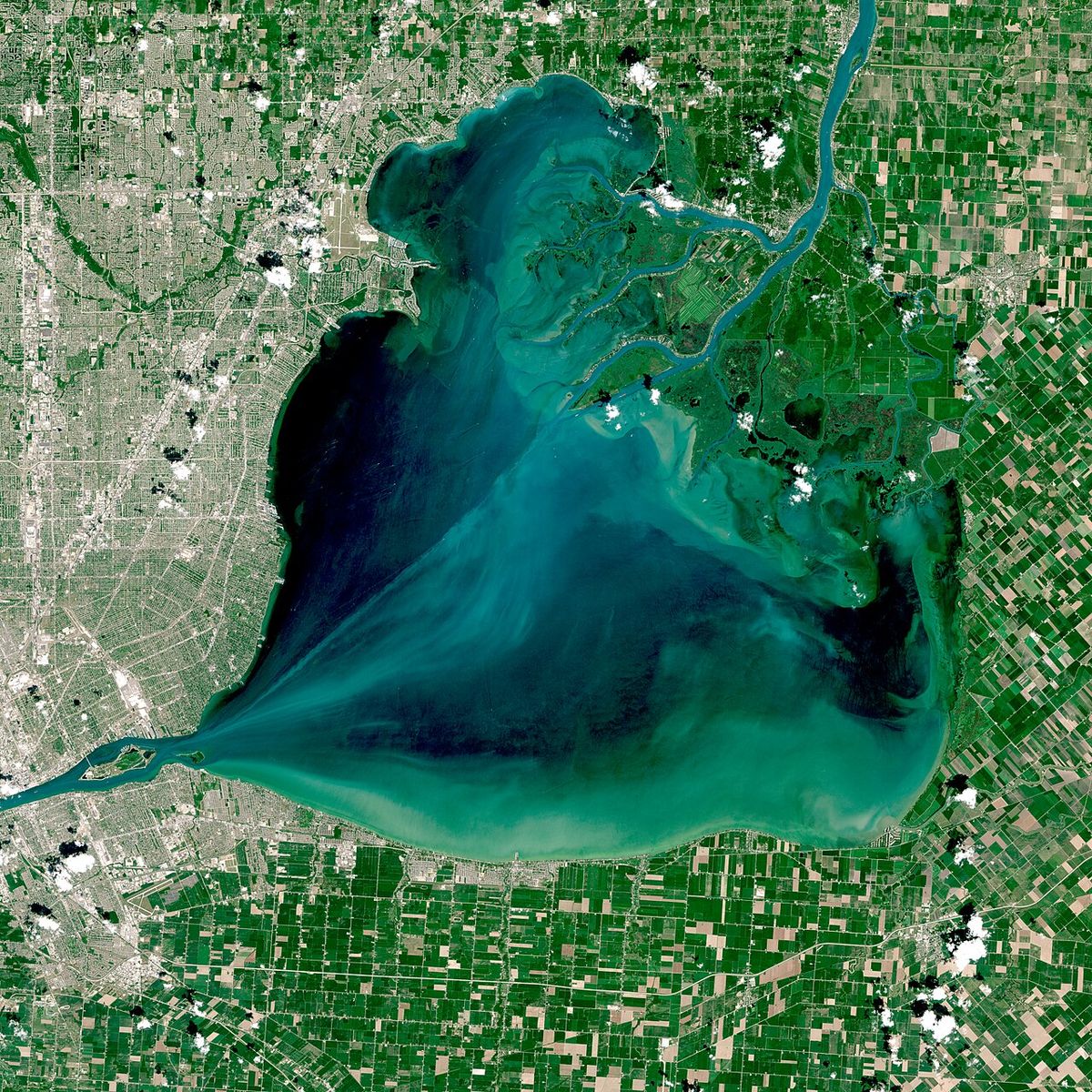
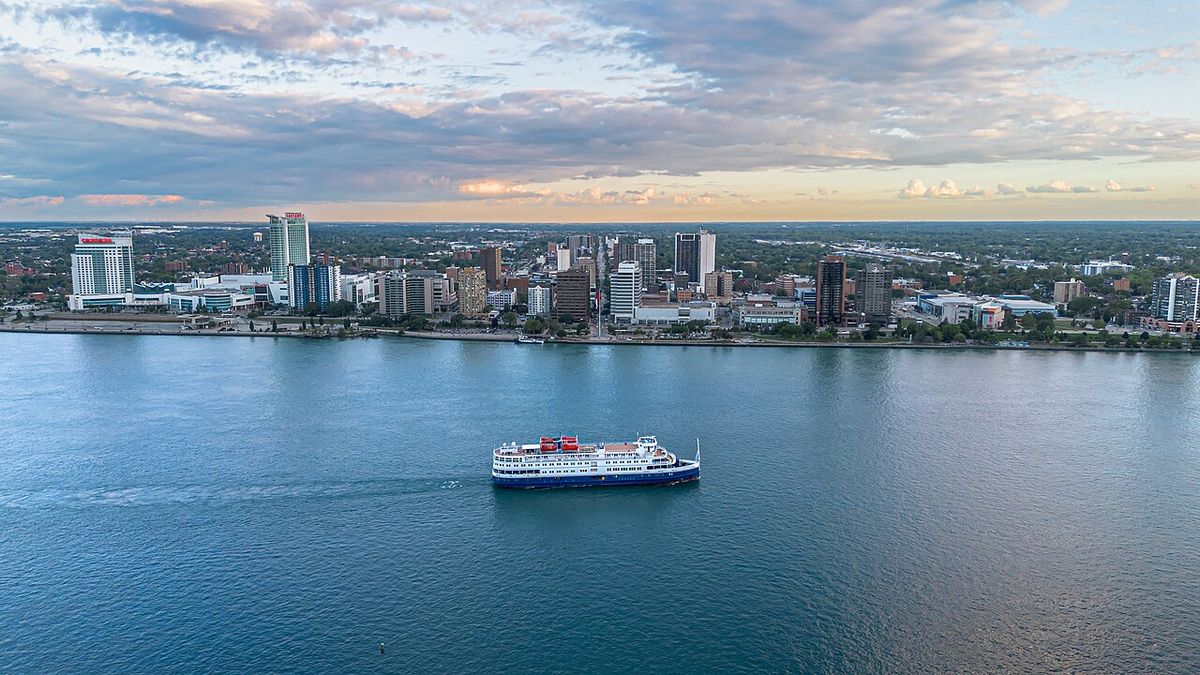
Windsor is located on the south bank of the Detroit River in Essex County, though it is administratively independent. It holds the distinction of being Canada's southernmost major city and forms the southwestern terminus of the densely populated Quebec City-Windsor Corridor. The city experiences a humid continental climate that closely borders a humid subtropical climate, giving it the warmest climate among cities in Ontario. The mean annual temperature is 10.1 °C at the airport, among the highest in Canada, primarily due to hot, humid summers. Winters are cold but relatively mild for the region, with a January mean temperature of -3.6 °C at the airport, and snow cover is intermittent with an average of 46 days with measurable snowfall each year.
Summers are very warm to hot and humid, with a July mean temperature of 23.2 °C at the airport, the highest summer mean temperature in Canada. The humidex reaches 30 °C or higher on over 70 days in an average summer, and Windsor holds the provincial record for the highest humidex ever recorded at 52.1 °C on June 20, 1953. The city averages 32 days with thunderstorms per year, some severe, and has the highest number of days per year with lightning and haze in Canada. Precipitation is well-distributed, with February being the driest month and July the wettest. Windsor also experiences Canada's warmest climatological fall season, with the highest mean temperatures for September, October, and November.
| Climate Extremes | Value | Date/Location |
|---|---|---|
| Record High | 40.2 °C | June 25, 1988 |
| Record Low | -32.8 °C | January 29, 1873 |
| Highest Recorded Humidex in Ontario | 52.1 °C | June 20, 1953, Windsor |
| Warmest Month at Airport (Mean Temp.) | 25.7 °C | July 2011 |
| Most Precipitation in 32 Hours | 285 mm | Late August 2017 |
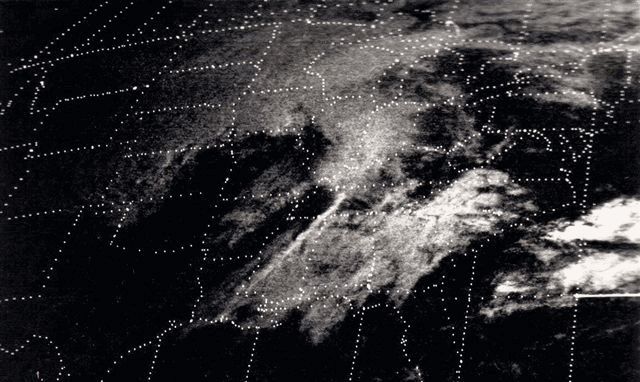
The city is prone to severe weather, including historic flooding in 2016, 2017, and 2019, which prompted the declaration of a state of emergency in 2016. Located in a region sometimes called "Tornado Alley," Windsor has experienced significant tornadoes, including an F4 in 1946 and an F3 during the 1974 Super Outbreak that killed nine people at the Windsor Curling Club. More recently, two tornadoes, an F1 and an F2, touched down on August 24, 2016, causing damage in Windsor and LaSalle. Waterspouts are also commonly seen over nearby Lake St. Clair and Lake Erie, particularly in the autumn months.
Economy and Industry
Windsor's economy is fundamentally driven by manufacturing, tourism, education, and government services. It is nationally recognized as the "Automotive Capital of Canada" and is home to the headquarters of Stellantis Canada. Major automotive facilities include the Stellantis minivan assembly plant, two Ford Motor Company engine plants, and numerous tool, die, and parts manufacturers. As of 2025, automotive manufacturing accounted for 7.3 percent of total jobs in the Windsor-Sarnia Corridor, leading city leaders to warn of potential catastrophic economic repercussions due to this heavy reliance. The city's strategic location supports a massive trade relationship with the United States, facilitated by the Ambassador Bridge, the busiest commercial border crossing between the two nations, handling about one-quarter of their total trade volume.
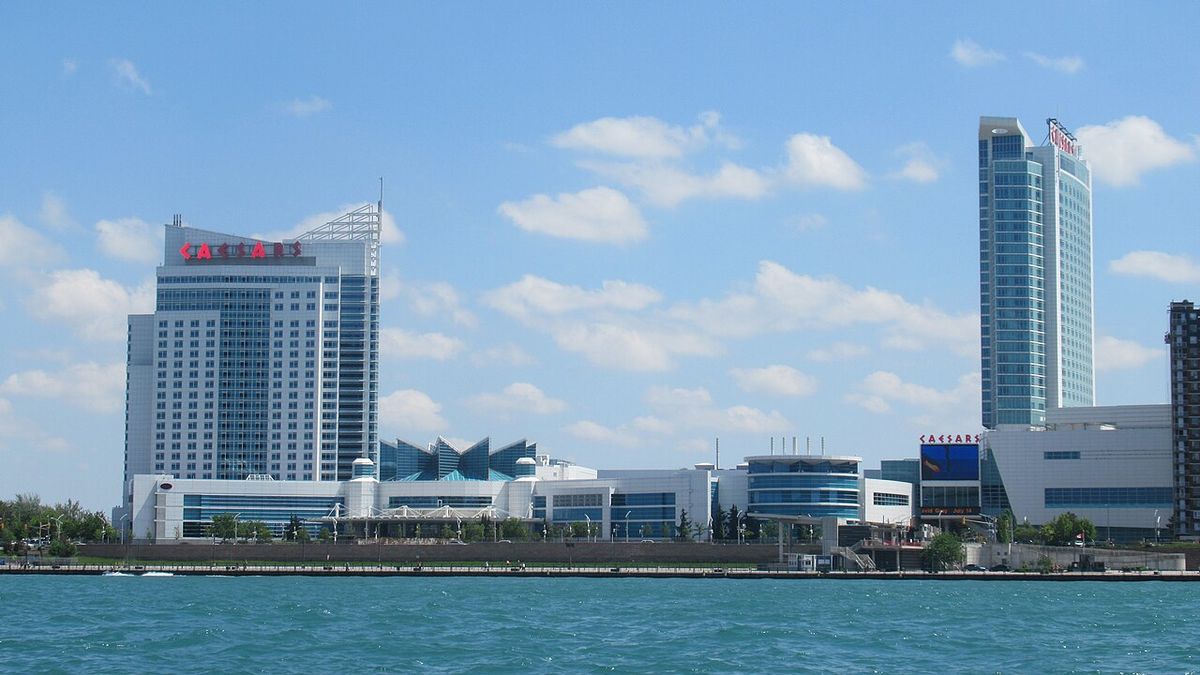
Tourism represents another major economic pillar, significantly bolstered by Caesars Windsor, one of Canada's largest casinos and a major local employer since opening as Casino Windsor in 1994. The city attracts visitors with its extensive riverfront parks, the dining district of Erie Street known as "Via Italia" or Little Italy, and its proximity to the Lake Erie North Shore Wine Region in Essex County. The Quebec City-Windsor Corridor, home to 18 million people and 51 percent of Canada's population as of 2011, provides a substantial regional market. Education is also a key sector, with the University of Windsor and St. Clair College serving as significant employers. The university opened a satellite medical school in 2008 and completed a $112 million engineering facility in 2013.
The local economy features several other notable industries and employers. Hiram Walker & Sons Limited, founded in 1858 in Walkerville and now owned by Pernod Ricard, maintains its headquarters in the city. Diversification efforts have seen growth in pharmaceuticals, alternative energy, insurance, and software. Established technology companies include Cypher Systems Group, AlphaKor Group, and Red Piston, while startups like Sirved and Hackforge have emerged with support from the non-profit WEtech Alliance. In 2019, Dan Gilbert's Quicken Loans purchased a building in Windsor with plans to restore it and employ 50 to 100 technology workers. Other significant entities based in the city are the Windsor Salt Mine and the Great Lakes Regional office of the International Joint Commission.
Cityscape and Parks
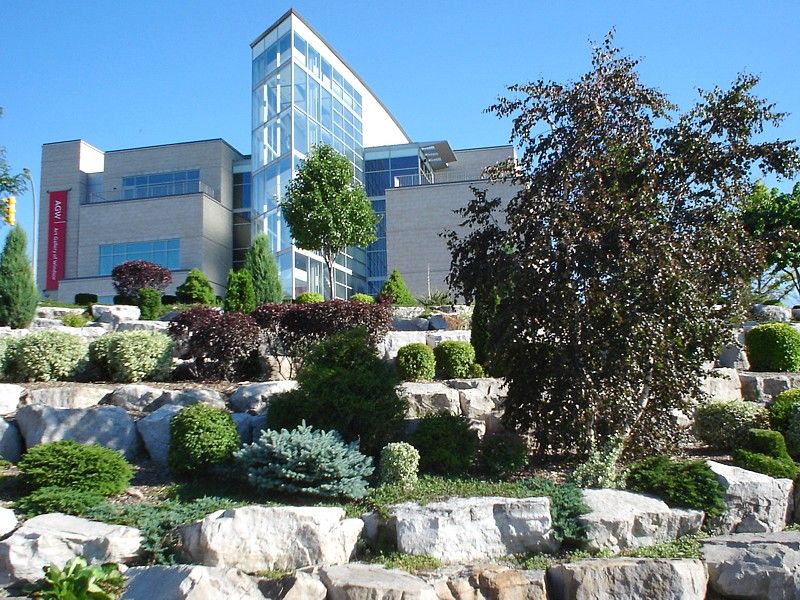
Windsor's urban layout is defined by Ouellette Avenue, the historic main commercial street running north-south from the Detroit River, which divides the city into east and west sections. Address numbering increases by 100 per block away from Ouellette Avenue for east-west roads and away from the Detroit River for north-south roads, with resets at Wyandotte Street for consistency. The city maintains an extensive network of green spaces through its Department of Parks and Recreation, which oversees 1,200 hectares of green space, 180 parks, and 64 kilometres of trails. The largest park is Mic Mac Park, supporting activities like baseball, soccer, biking, and sledding. A key recreational asset is the Ganatchio Trail on the city's far east side, part of a growing network that council has sought to expand with on-street bicycle lanes.
The city's trail system connects to regional pathways, including the LaSalle Trail to the west and is planned to link with the Chrysler Canada Greenway, a 42-kilometre segment of the Trans Canada Trail. This greenway is a former railway corridor used for hiking, biking, cross-country skiing, and horseback riding, connecting communities from Oldcastle to Ruthven. Along the waterfront, a separate five-kilometre landscaped trail runs between downtown and the Ambassador Bridge, passing through the Windsor Sculpture Park. This park features a collection of modern and post-modern sculptures, including family-themed pieces like elephants and penguins, as well as notable works such as Chicken and Egg, Consophia, and Eve's Apple. The riverfront parks system is a central feature for both residents and tourists, enhancing the city's quality of life and appeal.
Demographics and Culture
Windsor's population was 229,660 according to the 2021 census, a 5.7 percent increase from 217,188 in 2016, making it the third-most populated city in Southwestern Ontario after London and Kitchener. The city is part of the Detroit-Windsor urban area, North America's most populous trans-border conurbation, linking the Great Lakes Megalopolis. Windsor is notably culturally diverse, with a significant French-speaking minority reflected in areas like Lakeshore, Tecumseh, and LaSalle, and street names that honour its French-Canadian heritage. The city's development patterns still show the influence of both the French-Canadian long-lot system and the British system of land concessions in outlying areas. The city's identity remains closely tied to its automotive manufacturing roots, which have drawn a multinational workforce for over a century, further enriching its social fabric. The University of Windsor and St. Clair College add a youthful, academic dimension to the city's demographic profile, with the university's growth in programs like medicine and engineering attracting students and faculty.
Infrastructure and Transportation
Windsor's infrastructure is critically defined by its international border crossing, the Ambassador Bridge, which is the busiest commercial crossing on the Canada-United States border. This bridge is a vital conduit for the automotive industry and general trade, carrying approximately one-quarter of the merchandise trade volume between the two countries. The city's historical development was propelled by rail connections, specifically the Grand Trunk Railway in 1854, which linked it to the rest of Canada. Today, road networks facilitate both local transit and the heavy truck traffic associated with cross-border commerce. The Detroit River itself has always been a transportation corridor, historically served by ferries and now by the bridge. Within the city, transportation includes an extensive network of trails and sidewalks maintained by the Parks Department, totalling 64 kilometres of trails and 35 kilometres of sidewalks. The city council has advocated for adding bicycle lanes to streets to better connect the existing trail network. Public transit is operated by Transit Windsor, providing bus service throughout the city and cross-border tunnel bus service to Detroit. The city's airport, Windsor International Airport, handles regional flights and cargo. Major infrastructure challenges have included managing severe weather events, such as the historic flooding in 2016 and 2017 that overwhelmed drainage systems and required provincial disaster mitigation funding. The city also maintains 60 municipal parking lots as part of its infrastructure to support downtown and commercial areas.
Questions about Windsor, Ontario
What is the population of Windsor, Ontario?
According to the 2021 census, the population of Windsor is 229,660. This represents a 5.7 percent increase from the 2016 census count of 217,188. Windsor is the third-most populated city in Southwestern Ontario, after London and Kitchener. The city is also part of the Detroit-Windsor urban area, which is the most populous trans-border conurbation in North America.
Why is Windsor called the Automotive Capital of Canada?
Windsor earned the nickname "Automotive Capital of Canada" due to its deep-rooted and dominant automotive manufacturing industry. The city is home to the headquarters of Stellantis Canada and hosts major facilities including a Stellantis minivan assembly plant and two Ford engine plants. As of 2025, automotive manufacturing accounted for 7.3 percent of total jobs in the Windsor-Sarnia Corridor. The city's economy has historically been and remains heavily reliant on this sector.
How does the climate in Windsor compare to the rest of Canada?
Windsor has the warmest climate among cities in Ontario and one of the warmest in Canada. It has a humid continental climate that borders on humid subtropical, with a mean annual temperature of 10.1 °C at the airport. The city experiences hot, humid summers, with the highest climatological summer mean temperature in Canada, and relatively mild winters. Windsor also holds the record for the highest humidex ever recorded in Ontario, at 52.1 °C on June 20, 1953.
What major tourist attractions are in Windsor?
Major tourist attractions in Windsor include Caesars Windsor, one of Canada's largest casinos, which opened in 1994. The city's extensive riverfront parks system and the Windsor Sculpture Park are popular destinations. The Erie Street dining district, known as "Via Italia" or Little Italy, attracts visitors for its restaurants. Proximity to the Lake Erie North Shore Wine Region in Essex County also enhances tourism in the area.
Has Windsor experienced any major natural disasters?
Yes, Windsor has experienced several major natural disasters, primarily severe flooding and tornadoes. Historic flooding occurred in 2016, 2017, and 2019, with the 2016 event prompting a declared state of emergency. The city is also located in a region prone to tornadoes, experiencing an F4 tornado in 1946 and an F3 tornado in 1974 that killed nine people. More recently, two tornadoes touched down in Windsor on August 24, 2016.
What is the oldest building in Windsor?
The oldest building in Windsor is the Duff Baby House, constructed in 1792. This historic structure is owned by the Ontario Heritage Trust and currently houses government offices. Another early significant building is the François Baby House, built in 1812, which now serves as the location for Windsor's Community Museum dedicated to local history. The city's oldest structures reflect its long settlement history, which began with a French agricultural settlement established in 1749, making it the oldest continually inhabited European founded settlement in Canada west of Montreal. The Sandwich neighbourhood on Windsor's west side is also home to some of the city's oldest buildings, including Mackenzie Hall, originally built as the Essex County Courthouse in 1855.
Sources: Wikipedia and current public reporting, checked by the Your Space Hamilton desk. Last updated 2026-10-20.