Kingston, Ontario
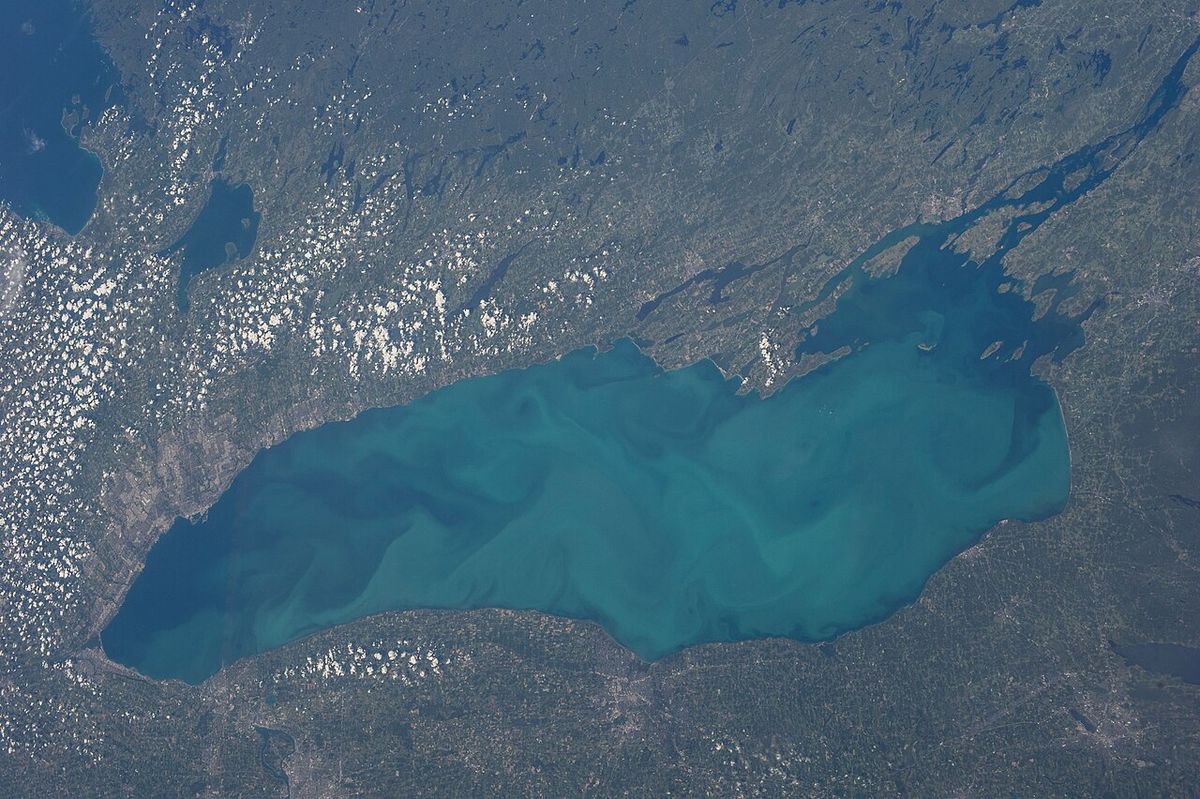
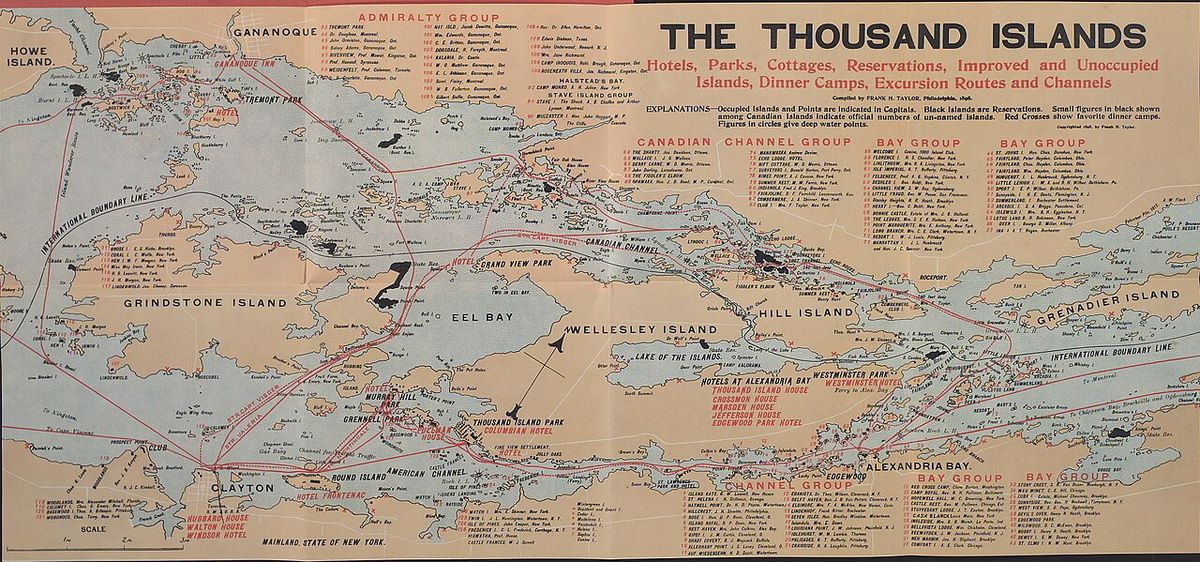
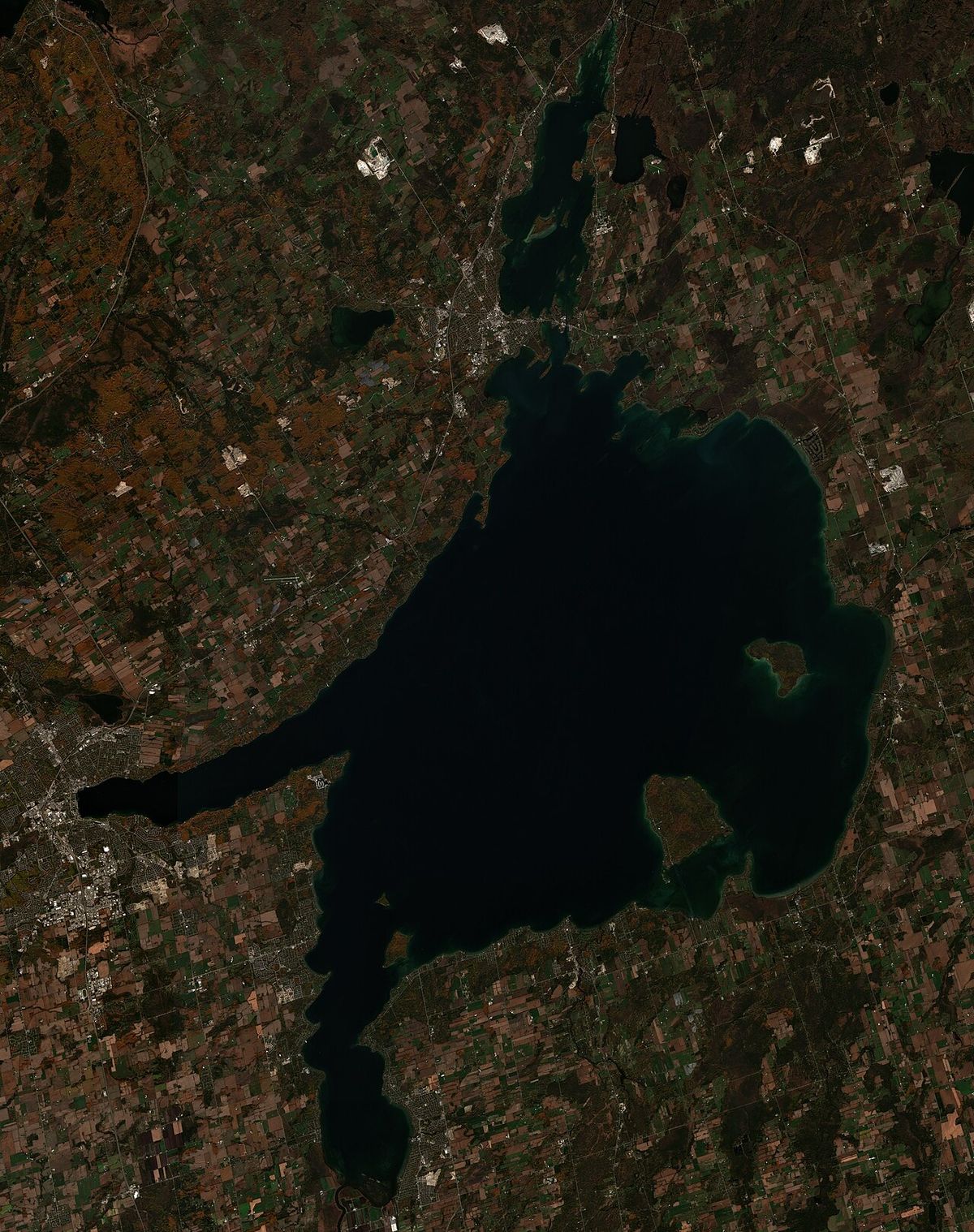
Kingston is a city in southeastern Ontario, Canada, situated at the northeastern end of Lake Ontario, where the lake meets the St. Lawrence River and the Cataraqui River flows into it. Known as the "Limestone City" for its many heritage buildings constructed from local limestone, Kingston holds a central place in Canadian history as the first capital of the United Province of Canada from 1841 to 1844. The city is a significant regional centre for education and health care, home to Queen's University, the Royal Military College of Canada, and several major hospitals. Its strategic location at the entrance to the Rideau Canal and its rich military and political heritage, including being the longtime home of Canada's first prime minister, Sir John A. Macdonald, continue to define its national importance.
Early History and Indigenous Presence
Archaeological evidence indicates human habitation in the Kingston region dates back to the Archaic period, approximately 9,000 to 3,000 years ago. More permanent encampments by Indigenous peoples began around 900 AD, with the Wendat (Huron) people likely being the first occupants before the arrival of the French. By the time French explorers reached the area, the north shore of Lake Ontario was settled by the Haudenosaunee (Iroquois) Confederacy. The original Indigenous name for the area, Cataraqui, has several possible meanings including "Great Meeting Place" or "rocks standing in water." Following the dispersal of the Haudenosaunee from the north shore around 1700, the Mississaugas, a subtribe of the Anishinaabe, moved into the region including the Kingston area from the Lake Huron and Lake Simcoe regions. European influence began with the visit of French explorer Samuel de Champlain to the area in 1615, setting the stage for later settlement and trade.
Establishment of Fort Frontenac and French Era
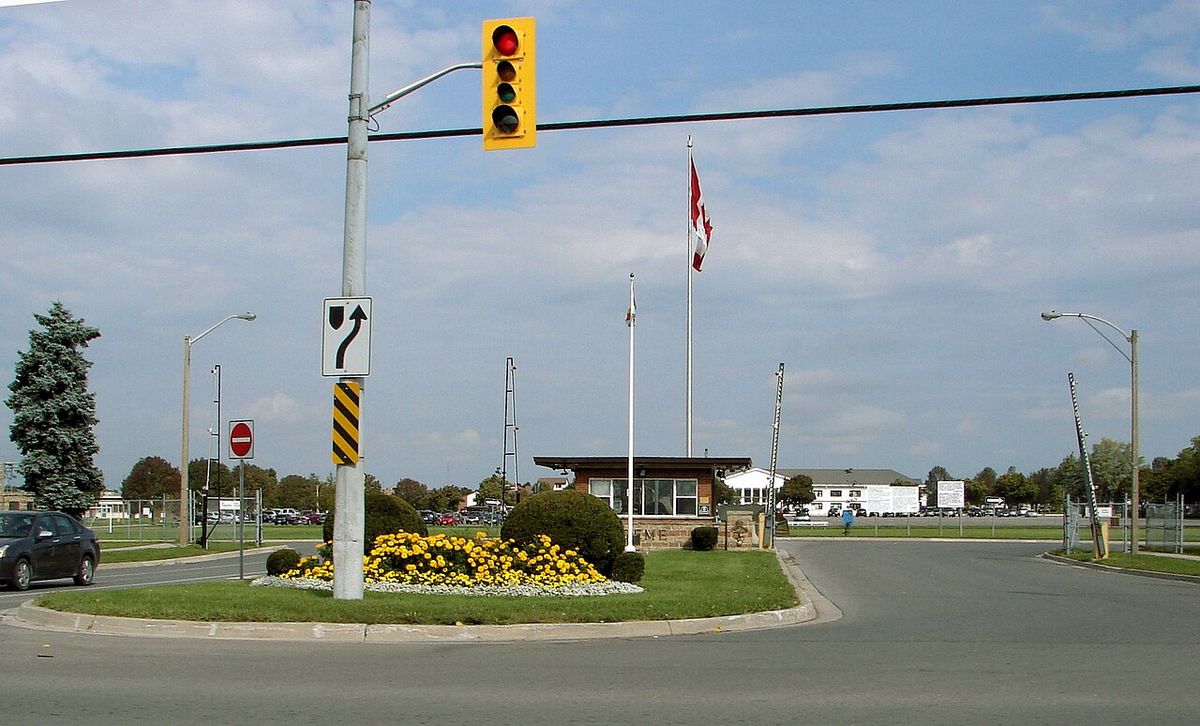
In 1673, Louis de Buade de Frontenac, Governor of New France, established Fort Cataraqui, later renamed Fort Frontenac, to control the fur trade on Lake Ontario. The fort served as a trading post and military base, attracting both Indigenous and European settlement. In 1674, René-Robert Cavelier, Sieur de La Salle was appointed commandant of the fort and used it as a base for explorations west and south as far as the Gulf of Mexico. The fort was rebuilt several times and experienced periods of abandonment, including after a Haudenosaunee siege in 1688 which led to many deaths and the French destroying the fort before rebuilding it. The British destroyed the fort during the Battle of Fort Frontenac in 1758 as part of the Seven Years' War, and its ruins remained abandoned until the British took possession and partially reconstructed it in 1783. The fort was renamed Tête-de-Pont Barracks in 1787, turned over to the Canadian military in 1870-71, and renamed Fort Frontenac again in 1939. Partially reconstructed parts of the original fort can be seen today at the western end of the La Salle Causeway.
Loyalist Settlement and Town Founding
After the American Revolutionary War, the British sought to settle Loyalists fleeing the United States. In 1783, Governor Frederick Haldimand directed Major Samuel Holland to survey the old French post at Cataraqui, and Holland's report praised the location's advantageous situations and good harbour. Major John Ross, commanding officer of the King's Royal Regiment of New York, partly rebuilt Fort Frontenac that same year and played a significant role in establishing the settlement. The British Crown secured the land through the Crawford Purchase with the Mississaugas in October 1783, enabling settlement for much of the eastern north shore of Lake Ontario. Three groups of Loyalists settled at Cataraqui: organized companies under militia officers, provincial colonial regiments and their dependants, and unincorporated Loyalists who came independently. Many had initially settled on Carleton Island, relocating to Cataraqui after the island was ceded to the United States. The settlement was called King's Town by 1787, abbreviated to Kingston in 1788. Notable early settlers included Molly Brant, businessman Richard Cartwright, clergyman John Stuart who arrived in 1785, and Captain Johan Jost Herkimer. The first child born in King's Town was John Godfrey Lloyd in 1783, son of a discharged Hessian soldier. Captain Michael Grass led a group of Loyalists from New York who established a camp at Mississauga Point in 1784. John Stuart founded the first high school in what would become Ontario in Kingston in 1792, which evolved into Kingston Collegiate and Vocational Institute.
War of 1812 and Economic Ascendancy
During the War of 1812, Kingston was a major British naval centre with a population of 2,250. It was the base for the Lake Ontario division of the British fleet, engaged in an arms race with the American fleet at Sackets Harbor, New York. The Provincial Marine quickly placed ships into service and troops were brought in, while a Royal Naval detachment built warships to control the lake. The first Fort Henry was built to protect the dockyards in Navy Bay, replaced by a more extensive fort on Point Henry in 1813. The present limestone Fort Henry citadel was constructed between 1832 and 1836 to defend the recently completed Rideau Canal, the harbour, and the naval dockyard. An advanced battery overlooking the lake was completed in 1843 when casemated commissariat stores and magazines were built. The completion of the Rideau Canal in 1832 made Kingston the primary military and economic centre of Upper Canada. The city became a critical transshipment port where commodities like wheat, flour, meat, and potash were unloaded from lake vessels and stored for transfer to boats that could manage the St. Lawrence River. The canal provided a safer alternative route for cargo, especially lumber, and was a popular route for transporting it. Kingston was incorporated as a town in 1838, with Thomas Kirkpatrick as its first mayor, and as a city in 1846. It had the largest population in Upper Canada until the 1840s.
Capital City and Mid-19th Century Growth
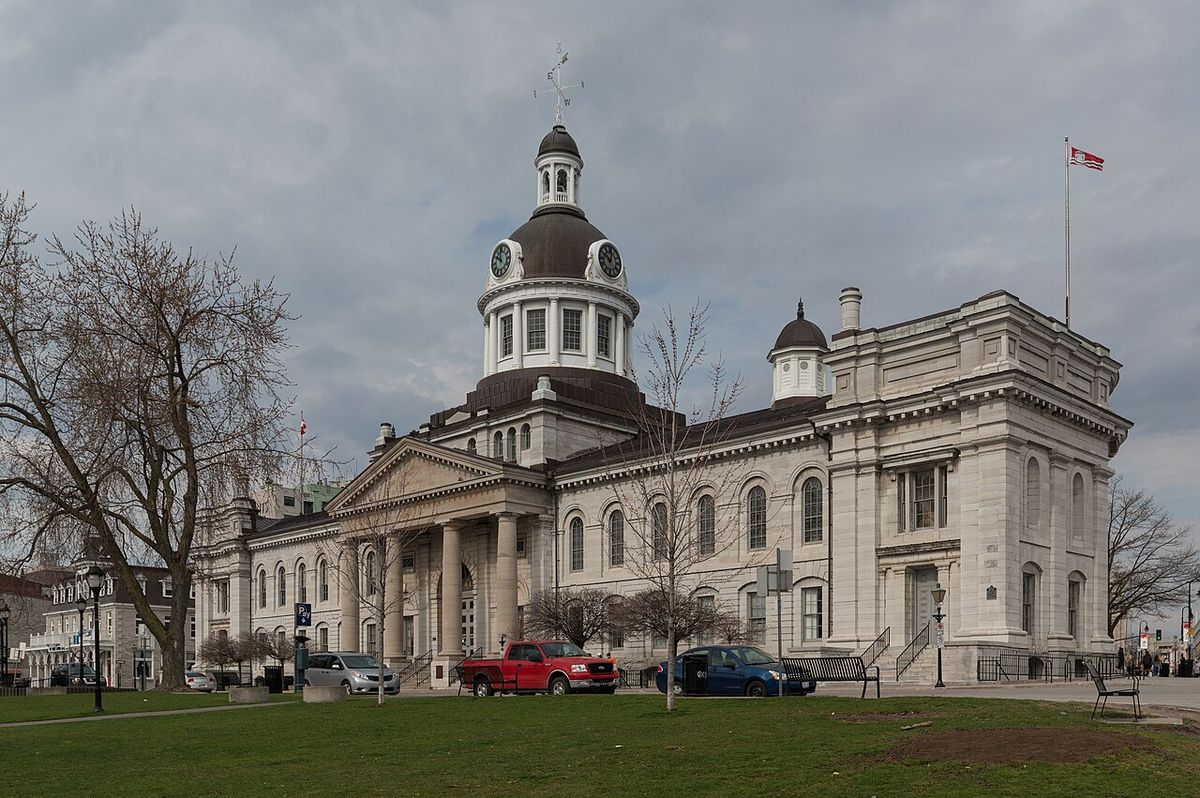
Selected by Governor General Lord Sydenham, Kingston served as the first capital of the United Province of Canada from February 10, 1841, until 1844. The first meeting of the provincial parliament was held on June 13, 1841, on the site of the present-day Kingston General Hospital. The city was soon deemed too small, lacking amenities, and vulnerable to American attack, so the capital moved to Montreal in 1844. Despite this short tenure, the period spurred development including the completion of Kingston City Hall in 1844. A catastrophic fire on April 18, 1840, destroyed a warehouse containing between 70 and 100 kegs of gunpowder and spread through the downtown, leading to a reconstruction with limestone or brick known as the "Limestone Revolution." When incorporated as a city in 1846 with John Counter as mayor, Kingston had a population of 6,123, stone buildings, a market house described as the finest and most substantial in Canada, five weekly newspapers, and ten churches or chapels. Industry included a steam grist mill, three foundries, two shipbuilders, ship repairers, and five wagon makers. Ten steamboats ran daily, and the city had four bank agency offices. Both Hotel Dieu Hospital and Kingston General Hospital cared for victims of the 1847 typhus epidemic. KGH's site originally held a common grave for 1,400 Irish immigrants who died in fever sheds, re-interred at St. Mary's Cemetery in 1966. The Kingston Gas Light Company began operation in 1848, and the Grand Trunk Railway arrived in 1856, connecting the city to Toronto and Montreal with a station 3.2 kilometres north of downtown.
Institutions, Industry and the Macdonald Legacy
The 19th century saw the establishment of several defining institutions in Kingston. Kingston Penitentiary, Canada's first large federal penitentiary, opened in 1835 with a structure intended to reform inmates. Regiopolis College for training priests was incorporated in March 1837 and given full degree-granting powers in 1866 before closing in 1869. Its building became Hotel Dieu Hospital in 1892, though the college reopened at another location in 1896. Queen's University, originally Queen's College established by the Presbyterian Church, held its first classes in March 1842. The Royal Military College of Canada was founded in 1876. Sir John A. Macdonald, who lived in Kingston at Bellevue House, won his first election to city council in 1843 and represented the city for nearly 50 years nationally. The city's industrial might grew in the late 19th and early 20th centuries, with the Canadian Locomotive Company becoming the largest locomotive works in the British Empire. The Davis Tannery was the largest tannery in the empire before closing in 1973 after a century of operation. Other manufacturers included the Marine Railway Company which built steamboats, the Victoria Iron Works which produced iron bars from scrap, several breweries, a distillery, and two soap and candle manufacturers. By 1869, the population reached 15,000 with four banks and two shipyards. A telephone system began in 1881 when the population was 14,091, and electricity arrived in 1888.
20th Century Transition and Modern Role
Kingston's economy shifted from an industrial to an institutional base after the Second World War. Queen's University expanded from about 2,000 students in the 1940s to over 28,000 students today. Fort Henry, garrisoned by British troops until 1871, was restored starting in 1936 as a tourist attraction and is part of a World Heritage Site. The federal prison system expanded in the area with the Prison for Women opening in 1930 and closing in the 1990s, Millhaven Institution, Collins Bay Institution, Frontenac Institution which amalgamated with Collins Bay in 2013, and Joyceville Institution. Most heavy industry left by the start of the 21st century, with former sites gradually rehabilitated and redeveloped. Kingston separated from Frontenac County in 1998 to become a single-tier municipality. It is now the largest municipality in southeastern Ontario and Ontario's tenth largest metropolitan area, functioning as a regional centre for education, health care, and tourism, positioned between the Prince Edward County and Thousand Islands regions.
Notable Historic Sites and Landmarks
Kingston is home to numerous historic sites that reflect its national significance. Fort Frontenac, originally built in 1673, remains in use by the Canadian military, with partially reconstructed parts visible at the La Salle Causeway. Fort Henry, the 19th century limestone citadel, was restored starting in 1936 and is now a major tourist attraction and part of a UNESCO World Heritage Site. Bellevue House, the former home of Sir John A. Macdonald, is a National Historic Site depicting the house as it would have been in the 1840s. Kingston Penitentiary, Canada's first large federal penitentiary, operated from 1835 until its closure in 2013. Kingston General Hospital, founded in the 19th century, was designated a National Historic Site in 1995 as the oldest public hospital in Canada still in operation with most of its buildings intact. The city's architectural landscape is notably defined by its limestone construction, a legacy of the rebuilding after the 1840 fire.
- Fort Frontenac (1673): A still-active military base with remnants of the original fort.
- Fort Henry (1832 to 1836): A restored limestone fortification and tourist attraction.
- Bellevue House: National Historic Site and former home of Prime Minister John A. Macdonald.
- Kingston Penitentiary (1835 to 2013): Canada's first large federal penitentiary.
- Kingston General Hospital (founded 19th century): A National Historic Site and Canada's oldest operating public hospital.
- Kingston City Hall (completed 1844): A prominent limestone building constructed when Kingston was the capital.
- Rideau Canal (opened 1832): A UNESCO World Heritage Site terminating at Kingston.
During the Upper Canada Rebellion of 1837-38, much of the local militia was posted in Kingston under Lieutenant-colonel Richard Henry Bonnycastle, who completed construction of the new Fort Henry. Kingston Penitentiary, Canada's first large federal penitentiary, was established in 1835. Kingston General Hospital, a major hospital, was established earlier and cared for victims of the 1847 typhus epidemic. The Hotel Dieu hospital was also established in Kingston, opening in 1892. These institutions illustrate the city's long-standing roles in correctional services and health care.
Demographic and Economic Evolution
Kingston's population and economic character have evolved significantly since its founding. The population was 2,250 during the War of 1812, grew to 6,123 at city incorporation in 1846, and reached approximately 15,000 by 1869. The 1881 census recorded 14,091 residents. The city's early economy was based on transshipment, forwarding, and later heavy manufacturing like locomotives and tanning. The table below illustrates key population milestones and corresponding economic developments.
| Period | Approximate Population | Key Economic Activities |
|---|---|---|
| War of 1812 | 2,250 | British naval base, shipbuilding, fortifications |
| City Incorporation (1846) | 6,123 | Transshipment port, foundries, shipbuilding, steam grist mill |
| 1869 | 15,000 | Four banks, two shipyards, locomotive works |
| Early 20th Century | Growing | Locomotive production (largest in British Empire), tannery, breweries |
| Post-WWII | Expanding via annexation | Transition to institutional base (universities, hospitals), residential development |
This institutional focus is centred on Queen's University, which first held classes in 1842, and the Royal Military College of Canada, which was founded in 1876. The city is also a regional centre of health care, being home to three major hospitals. Kingston's location between the Prince Edward County and Thousand Islands tourist regions supports a significant tourism sector, capitalizing on its historic sites and waterfront. Kingston was the county seat of Frontenac County until 1998, when it became a separate municipality from the County of Frontenac, consolidating its status as an independent urban centre.
Questions about Kingston, Ontario
Was Kingston ever the capital of Canada?
Yes, Kingston served as the first capital of the United Province of Canada from February 10, 1841, until 1844. The first meeting of the provincial parliament was held in the city on June 13, 1841. However, Kingston was considered too small, lacking in amenities, and too vulnerable to American attack due to its proximity to the border. Consequently, the capital was moved to Montreal in 1844 before eventually being established permanently in Ottawa.
What is the historical significance of Fort Henry?
Fort Henry is a large 19th century limestone fortification built between 1832 and 1836 to defend the Rideau Canal entrance on Lake Ontario and the Kingston harbour. It replaced earlier wooden forts built during the War of 1812. Garrisoned by British troops until 1871, it was restored starting in 1936 and is now a popular tourist attraction. Fort Henry is part of the Rideau Canal UNESCO World Heritage Site, representing Kingston's crucial military role in Canadian history.
What major universities are located in Kingston?
Kingston is home to two major degree-granting institutions. Queen's University, originally Queen's College, was founded in 1842 and has grown to over 28,000 students. The Royal Military College of Canada (RMC), a federal military academy, was founded in 1876. St. Lawrence College, a large vocational college, is also located in the city. These institutions establish Kingston as a primary regional centre for post-secondary education.
When was the Rideau Canal built and why was it important to Kingston?
The Rideau Canal was completed in 1832, connecting Ottawa (then Bytown) to Kingston on Lake Ontario. It was constructed as a secure military supply route bypassing the vulnerable St. Lawrence River. Kingston's location at the canal's Lake Ontario terminus made it the primary military and economic centre of Upper Canada after its opening. The canal facilitated the safer transport of cargo like lumber and solidified the city's strategic importance, leading to the construction of Fort Henry for its defence.
Why is Kingston called the Limestone City?
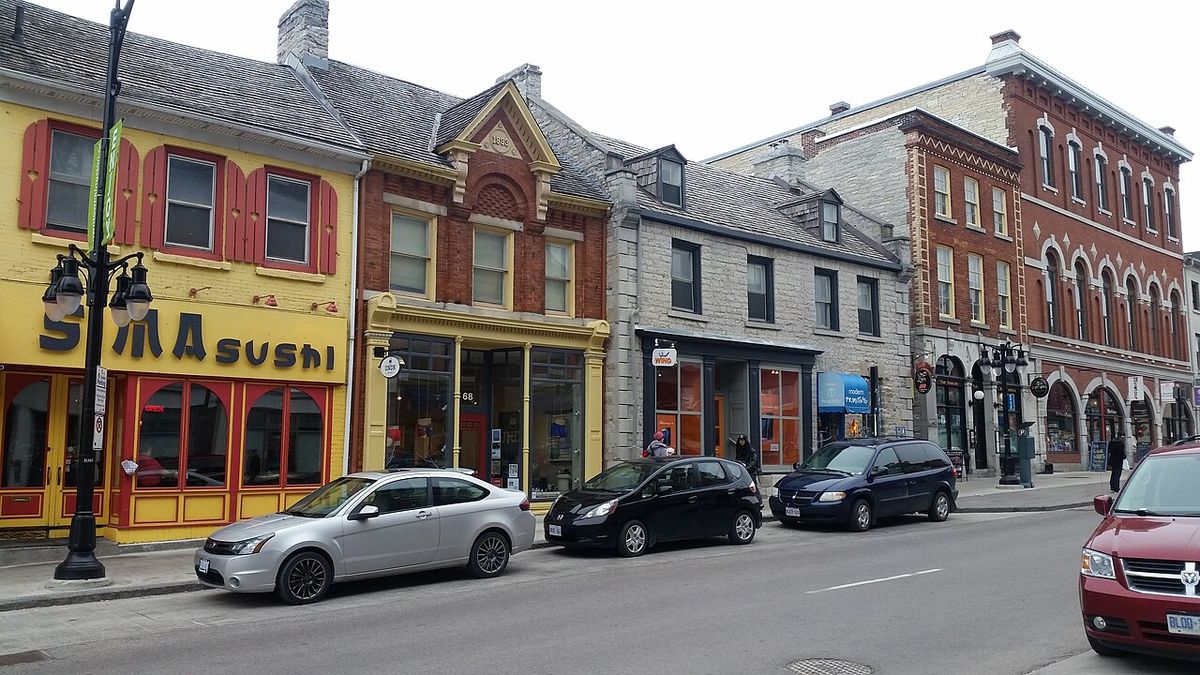
Kingston is nicknamed the Limestone City because it has many heritage buildings constructed using local limestone. This architectural character was solidified after a major fire in 1840 destroyed much of the downtown area. To prevent future disasters, the city mandated rebuilding with limestone or brick, a period known as the Limestone Revolution. The widespread use of this local material gives the city its distinct historic appearance and enduring nickname. Kingston's location provided ample access to this natural building resource.
What is the connection between Sir John A. Macdonald and Kingston?
Sir John A. Macdonald, the first prime minister of Canada, had a deep and enduring connection to Kingston. He lived in the city, and his political career began there when he won his first election to Kingston City Council in 1843. Macdonald represented Kingston for nearly 50 years at the national level, both before and after Confederation in 1867. One of his residences, Bellevue House, is now a National Historic Site of Canada open to the public, depicting life in the 1840s. His long service cemented Kingston's importance in Canadian political history.
Sources and further reading
- Kingston, Ontario (Wikipedia)
- City of Kingston: Home (cityofkingston.ca)
- Visit Kingston | Fresh made daily (visitkingston.ca)
Checked by the Your Space Hamilton desk. Last updated 2026-10-20.