Semotilus atromaculatus
Semotilus atromaculatus, commonly known as the creek chub or common creek chub, is a small, hardy species of freshwater minnow native to eastern North America, including much of southeastern Canada. This adaptable fish is a familiar resident of small to medium streams and rivers, where it often forms schools and can be a dominant species in headwater creeks. While not a sport fish itself, the creek chub is ecologically significant as a forage species for larger fish and birds, and it is also commonly used as live bait by anglers. Its presence across a wide range, from the Great Lakes region to Atlantic drainages, makes it a well-known component of Canada's aquatic biodiversity.
Distribution and Habitat
The creek chub is widely distributed across eastern North America, with its range encompassing the eastern two-thirds of the continental United States and southeastern Canada, including provinces like Ontario. This species is highly adaptable and can thrive in a variety of freshwater environments, though it shows a strong preference for flowing water. It is most commonly found in small to medium-sized creeks and rivers, where it gravitates toward areas with weed cover for security and pools with specific substrates. Documented substrates where creek chubs are found include gravel, sand, silt, rubble, mud, boulders, clay, bedrock, and detritus, demonstrating their ecological flexibility.
Despite this adaptability, creek chubs are notably rare in lake environments. Of over 440 individuals documented in one study, only nine were caught in lakes, and when surveys were limited solely to lakes, only six individuals were found. The fish's current range includes areas surrounding the Great Lakes, such as Wisconsin and Minnesota, where it has historically been described as plentiful. However, more recent reports indicate population declines in Wisconsin and throughout the Great Lakes region, suggesting environmental pressures in these specific areas. In contrast, they remain continually documented in smaller river and stream systems across their range.
Physical Description
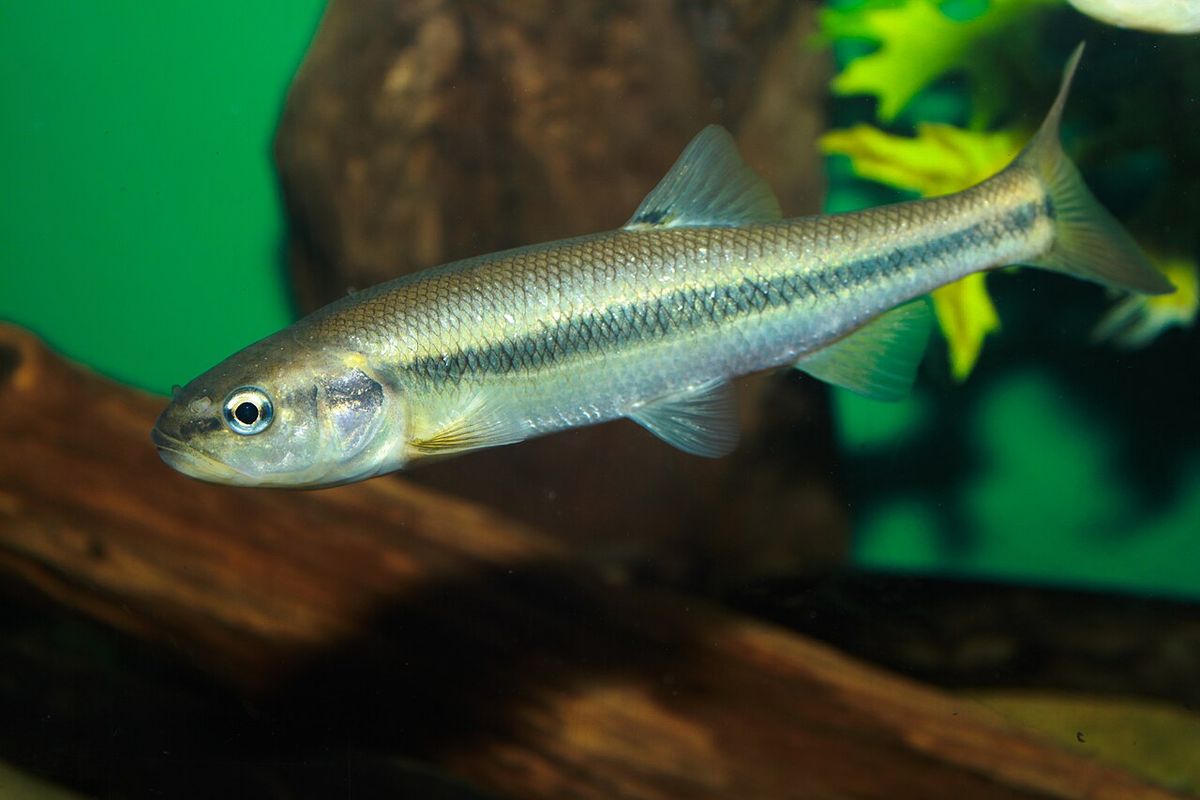
The creek chub is a small, cylindrical fish with a compressed posterior and a terminal, large mouth positioned under the anterior part of the eye. Its coloration typically consists of a greenish-brown back, cream-coloured sides, and a white belly, though variations exist with some individuals showing black backs and brown or yellowish midlines. A key identifying feature is the prominent black lateral line that runs horizontally from the nose to the tail, giving the species its atromaculatus name, which references this dark spot. Another distinctive marking is a black 'moustache' on the upper lip and a conspicuous black spot at the front base of the dorsal fin.
Sexual dimorphism is present in this species, with males generally growing larger and faster than females. The average male reaches about 125 mm (4.9 in) in length, while the average female is about 105 mm (4.1 in). The typical size range for the species is 127 to 178 mm (5.0-7.0 in), with the largest documented specimen measuring 197 mm (7.8 in). During development, juvenile males develop a rosy band along their sides and glossy, dark spots on their dorsal fin, which become more pronounced as they mature. The species possesses a unique combination of scale types, including bony-ridge scales, cycloid scales, and leptoid scales, which aid in movement, reduce water disturbance, and provide protective armour.
Behaviour and Ecology
Creek chubs are social fish that commonly form schools from birth through to late adulthood, typically occupying the edges of pools in their stream habitats. They exhibit specific thermal tolerances, with an upper lethal temperature of 32 °C (90 °F) and a lower lethal temperature of 1.7 °C (35.1 °F). Juveniles are particularly hesitant to venture far from known territory, often remaining within a 50-metre radius as a school for safety from predators and unfamiliar environments. As they develop and grow larger, individuals begin to exhibit more aggressive and territorial behaviours, especially towards others of their own species.
This aggression is ritualized and involves displays such as parallel swimming, where a fish widens its fins and mouth while swimming at a caudal beat to intimidate an opponent. If the display does not deter the intruder, the territorial fish may stop and direct blows to the head of the other fish to assert dominance. In ecosystem dynamics, creek chubs tend to be the dominant fish species in small headwater creeks where larger predators like bass cannot thrive. In larger creeks and rivers, however, they become subordinate and their population numbers are controlled by predation from species such as smallmouth bass, largemouth bass, and spotted bass. Their hardy nature and lack of sharp dorsal spines make them a preferred forage for many predatory fish.
- Schooling: Forms schools from juvenile to adult stages for protection.
- Thermal Limits: Can survive between 1.7°C and 32°C.
- Juvenile Range: Schools often stay within a 50-metre radius.
- Territorial Displays: Engages in ritualized parallel swimming and head-butting.
- Ecological Role: Dominant in small creeks, prey species in larger waters.
- Forage Value: Preferred food source due to lack of sharp defensive spines.
Diet and Feeding Habits
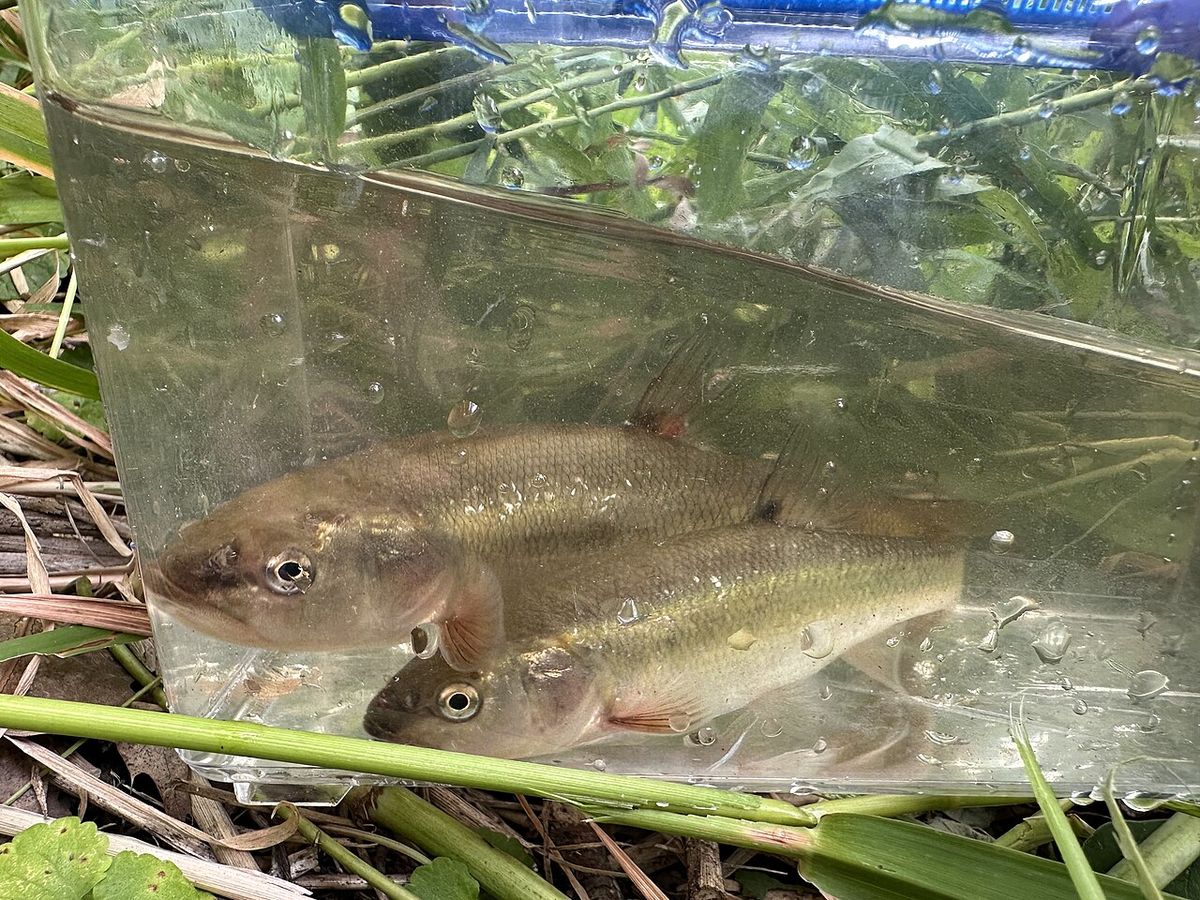
The creek chub is an opportunistic carnivore with a highly varied diet that allows it to survive in many different stream conditions. Its consumption includes a wide range of aquatic organisms, reflecting its role as a generalist feeder within the ecosystem. Documented food items include other small fish, insect remains, vegetation, amphipods, adult beetles (Coleoptera), mayfly nymphs (Ephemeroptera), dragonfly and damselfly larvae (Odonata), and both adult and larval flies (Diptera). This dietary flexibility is a key factor in the species' adaptability and widespread distribution across eastern North America.
Feeding habits are closely tied to the specific creek or river environment and the age of the fish. Juvenile creek chubs actively feed during the early morning hours on organisms within the water column and are often reluctant to leave their shelter until water temperatures have increased to the daily maximum. Larger, adult chubs exhibit a different foraging pattern, actively searching for food for one to two hours and then waiting in sheltered areas to feed on items that drift by in the current. This strategy of active hunting combined with opportunistic drift feeding maximizes energy intake while minimizing exposure to predators.
Reproduction and Life Cycle
Reproduction in creek chubs involves distinct roles for males and females and often occurs in communal nesting sites. The process begins with males migrating to a suitable spawning area, where they initiate the construction of a nest to attract females from the surrounding area. These nests are typically small pits dug into the stream bottom and lined with small pebbles, which help protect the eggs after they are laid. Once a female enters the nest, the male wraps his body around her pectoral fin and body, fertilization occurs externally, and the female departs shortly after. Each fertilization cycle results in the release of approximately 25 to 30 eggs.
Males aggressively control and protect their nesting territory from intruding males, a behaviour supported by physical changes during the breeding season. Males develop small, keratin-based bumps called nuptial tubercles on their heads, which are used in ritualized combat with rival males. This combat is rarely dangerous or destructive but serves to establish dominance and ward off competitors from the valuable nesting site. This reproductive strategy, with males providing site preparation and defence, helps increase the survival odds for the offspring.
Predators, Threats, and Management
The creek chub faces predation pressure from a wide array of birds and fish, reflecting its position in the middle of the aquatic food web. Common predators include loons, kingfishers, brown trout, northern pike, and smallmouth bass. Its food supply can also be limited by competition from other species, such as trout and other chub species. Beyond natural predation, viral infections have been documented to decrease local creek chub populations, adding a biological threat to the pressures they face from introduced species and habitat alteration.
In regions like Wisconsin and the Great Lakes, reports suggest a decline in creek chub populations, though they remain common in smaller streams elsewhere. Management efforts for creek chubs have been recorded, particularly in the context of cultivating them for bait. Successful management has been achieved in small, flowing-water ponds that replicate their preferred stream habitat, providing the right conditions for growth and survival. Their use in fish ladders, as noted in a 2026 observation from Algonquin Provincial Park, demonstrates their adaptability and the role of human-made structures in facilitating their movement downstream in search of food and habitat.
Interaction with Anglers
The creek chub is a familiar fish to many Canadian anglers, not as a target sport fish but primarily as a source of live bait for catching larger species. They are considered a hardy minnow that can be easily caught in small creeks using simple techniques, stored in aquariums, and then used effectively to catch predator fish like bass and catfish. Their lack of sharp dorsal spines, unlike species such as bluegill or largemouth bass, makes them a safer and more palatable meal for predatory fish, increasing their desirability as bait. Angling for creek chubs typically involves small hooks baited with sections of nightcrawlers, and they feed in schools during daylight hours and will initially compete aggressively for the bait.
However, after several individuals from the school are caught, the remaining fish become wary and may only nibble at the bait or avoid it altogether. An effective alternative method for capturing them is the use of minnow traps baited with dry dog food. While they can be a dominant species in small creeks, their behaviour and catchability in larger rivers change due to increased predation pressure and competition. They are a key species for anglers seeking bait, and their movements have even been studied in low-gradient, sand-bottomed streams on the western plains to understand their patterns.
| Aspect | Details |
|---|---|
| Primary Use | Live bait for bass, catfish, and other predators |
| Common Bait for Catching | Small hooks with nightcrawler pieces. Minnow traps with dog food |
| Feeding Behaviour | Schooling, daylight feeders. Become wary after catch |
| Advantage as Bait | Lacks sharp dorsal spines, making it a preferred forage |
| Habitat for Collection | Most effective in small creeks where they dominate |
Questions about Semotilus atromaculatus
How can you identify a creek chub?
A creek chub can be identified by several distinctive physical features. It has a cylindrical body with a greenish-brown back, cream-coloured sides, a white belly, and a prominent black lateral line running from nose to tail. Key markings include a black 'moustache' on the upper lip and a black spot at the front base of the dorsal fin. Males average about 125 mm in length, while females are slightly smaller, averaging 105 mm.
Are creek chubs good for bait?
Yes, creek chubs are considered excellent live bait by anglers. They are hardy, easy to catch in small creeks, and can be stored in aquariums. They are particularly effective for catching larger predator fish like bass and catfish because they lack sharp dorsal spines, making them a palatable and safe meal for these predators. They are commonly caught on small hooks with nightcrawlers or in minnow traps baited with dry dog food.
Where are creek chubs found in Canada?
Creek chubs are found in southeastern Canada. Their current range includes this region, and they have been specifically documented in places like Algonquin Provincial Park in Ontario. This species thrives in small and medium rivers and streams, gravitating toward areas with weeds for security. They are rarely found in lakes, with a strong preference for stream or river environments over various substrates like gravel, sand, silt, and cobble. While reports suggest some population declines in the Great Lakes region, they remain continually documented in flowing waterways across their Canadian range.
What do creek chubs eat?
Creek chubs are opportunistic carnivores that consume many different foods. Their diet includes other fish, insect remains, vegetation, amphipods, adult beetles, mayfly nymphs, dragonfly larvae, and both adult and larval flies. Feeding habits are specific to their creek and river habitats. Juveniles actively feed throughout the early morning on organisms within the water. Large chubs actively forage for one to two hours and then wait in their environment to feed on drift items that come by in the current.
How do creek chubs reproduce?
Creek chub reproduction involves males migrating to a spawning area and building a nest site to attract females. This typically occurs in small pits lined with small pebbles to protect the eggs. Once a female enters, the male wraps around her pectoral fin and body for external fertilization, after which she leaves, releasing around 25 to 30 eggs per cycle. These cycles often occur in communal nesting sites where the male controls and protects the territory. During breeding, males develop small keratin based bumps called nuptial tubercles on their heads for use in ritualized combat with intruding males.
Are creek chub populations declining?
Creek chub populations have shown declines in specific regions, particularly in Wisconsin and throughout the Great Lakes area. However, across their broader eastern North American range, they are still described as plentiful and are continually documented in small and medium rivers and streams. Threats contributing to local declines include predation by species like bass and trout, viral infections, and competition for food. Despite these pressures, the creek chub is considered an adaptable species that can withstand many different environments outside of these specific declining areas.
Sources: Wikipedia and current public reporting, checked by the Your Space Hamilton desk. Last updated 2026-10-30.