Kananaskis Country
Kananaskis Country, often called K-Country, is a multi-use recreation and conservation area located in the foothills and front ranges of the Canadian Rockies west of Calgary, Alberta. Established by the Alberta government in 1978, it encompasses over 4,200 square kilometres of provincial parks, wildlands, ecological reserves, and public land. The region is named after the Kananaskis River and was created to balance outdoor recreation, resource protection, and commercial interests. It serves as a vital year-round playground for Albertans and international visitors, offering a vast array of activities from hiking and skiing to wildlife viewing, while also hosting significant international events like the G8 and G7 summits.
History and Establishment
The Kananaskis region has a long human history, with First Nations including the Blackfoot Confederacy, Kootenay, and Stoney (Nakoda) peoples using the area for seasonal hunting and migration for thousands of years. Following the signing of Treaty 7 in 1877, the Stoney people moved to the reserve at Mînî Thnî (Morley). European exploration began in the late 1700s, and the area's name was cemented by explorer John Palliser during his 1857 to 1860 expedition. Palliser named a pass, a river, and lakes after a legendary Cree man named Kananaskis, who was said to have miraculously survived an axe blow to the head. Throughout the late 19th and early 20th centuries, the eastern slopes saw increased commercial activity including logging, hydroelectric development, and coal mining.
After control of natural resources was transferred from the federal government to Alberta in 1930, recreational and tourism demand grew significantly following the Second World War. This surge, coupled with environmental concerns from industrial activity and unmanaged recreation, led to the formal creation of Kananaskis Country in 1978. The establishment was driven by a vision to diversify Alberta's economy while protecting the environment, championed by three key figures. Premier Peter Lougheed sought to balance profit-generating activities like tourism and resource extraction with conservation. Minister of Highways Clarence Copithorne advocated for improved highway access to manage recreational use. Architect and environmentalist Bill Milne promoted a multi-use plan that prioritized public participation and environmental protection without excessive commercial development.
Administration and Land Designations
Kananaskis Country is not a single park but a complex mosaic of land designations managed under an Integrated Resource Plan to prioritize conservation. The area is administered by Alberta Parks, with the main regional office located in Canmore. Local municipal services such as fire protection, ambulance, and business licensing are provided by Improvement District No. 5 (Kananaskis), whose boundaries largely overlap with K-Country and whose municipal office is in Kananaskis Village. The different designations within Kananaskis Country each have specific purposes, levels of protection, and permitted activities.
The protected areas within Kananaskis Country include five provincial parks, four wildland provincial parks, and one ecological reserve. Provincial parks like Peter Lougheed and Bow Valley are focused on recreation and conservation, while wildland provincial parks such as Bluerock and Don Getty offer more remote experiences with stricter protections. The Plateau Mountain Ecological Reserve is dedicated to preserving unique alpine environments. There are several Provincial Recreation Areas (PRAs) like Evan-Thomas and Sibbald Lake that provide specific recreational facilities.
Significant portions of Kananaskis Country are also designated as Public Land Use Zones (PLUZs), which are Crown lands managed for multiple uses. The four PLUZs are the Kananaskis Country PLUZ, Sibbald, Cataract Creek, and McLean Creek. These zones permit a wider range of activities, which can include cattle grazing and agricultural cultivation, trapping, mining, and oil and gas exploration, logging and pipeline operations, and recreational activities like camping, hiking, and hunting. Motorized recreation is permitted in all zones except the Kananaskis Country PLUZ. Two designated Public Land Recreation Trails, the Ford Creek-Jumpingpound and Little Elbow Loop, are roads specifically intended to accommodate motorized recreation. The management of these varied zones ensures that resource extraction, recreation, and conservation goals are coordinated across the entire region.
Recreation and Tourism
Recreation is a primary focus of Kananaskis Country, established in part to alleviate congestion in nearby Banff National Park. The area functions as a year-round destination with a vast network of facilities and trails catering to a wide range of outdoor pursuits. Major developed sites include the Nakiska ski area, which hosted alpine and freestyle moguls events during the 1988 Calgary Winter Olympics, and the Canmore Nordic Centre, the Olympic venue for cross-country skiing that remains open for public use. Other key recreational hubs are the Kananaskis Village hotel complex, the Kananaskis Country Golf Course, and several holiday ranches.
The trail system is extensive, offering hundreds of kilometres for hiking, mountain biking, horseback riding, cross-country skiing, and snowshoeing. Popular activities also include scrambling, rock climbing, backpacking, fishing, and hunting in designated areas. The region's accessibility via a network of highways makes these activities available to a large population from Calgary and beyond. To manage the impact of this visitation and fund conservation, the Alberta government implemented the Kananaskis Conservation Pass in June 2021. All personal and commercial vehicles stopping in Kananaskis Country require a pass, which costs $15 per day or $90 per year per vehicle and is registered to a licence plate. The pass is required for parking at provincial park and public land sites, but not for merely driving through the area.
Several special facilities enhance the recreational and educational offerings of K-Country. William Watson Lodge in Peter Lougheed Provincial Park provides accessible accommodation and outdoor experiences for people with disabilities, seniors, and their families. The University of Calgary operates an ecological research station at Barrier Lake. The area also hosts multiple youth camps, including a Tim Horton Children's Foundation camp, Easter Seals Camp Horizon, and the YMCA's Camp Chief Hector. These institutions contribute to the area's role in conservation education, accessibility, and youth development.
Natural Environment and Wildlife
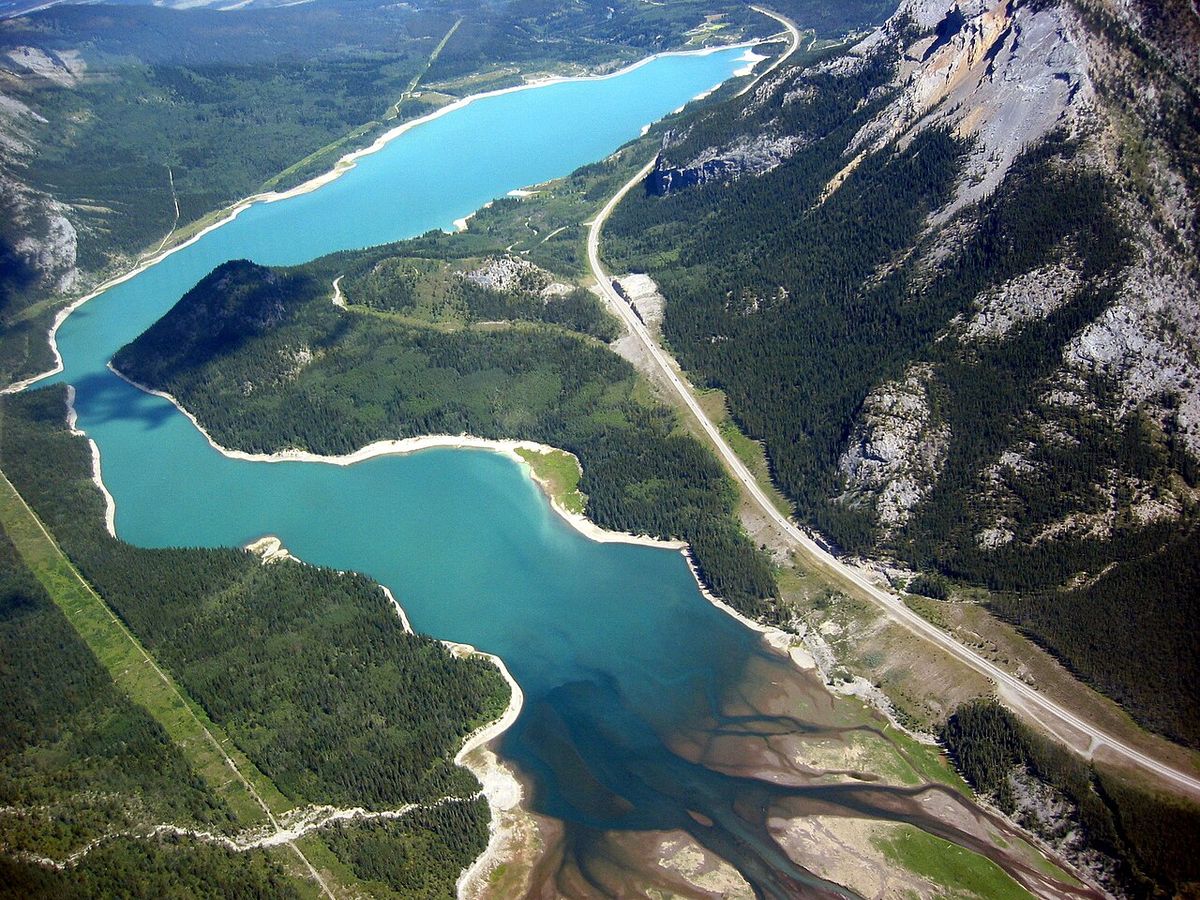
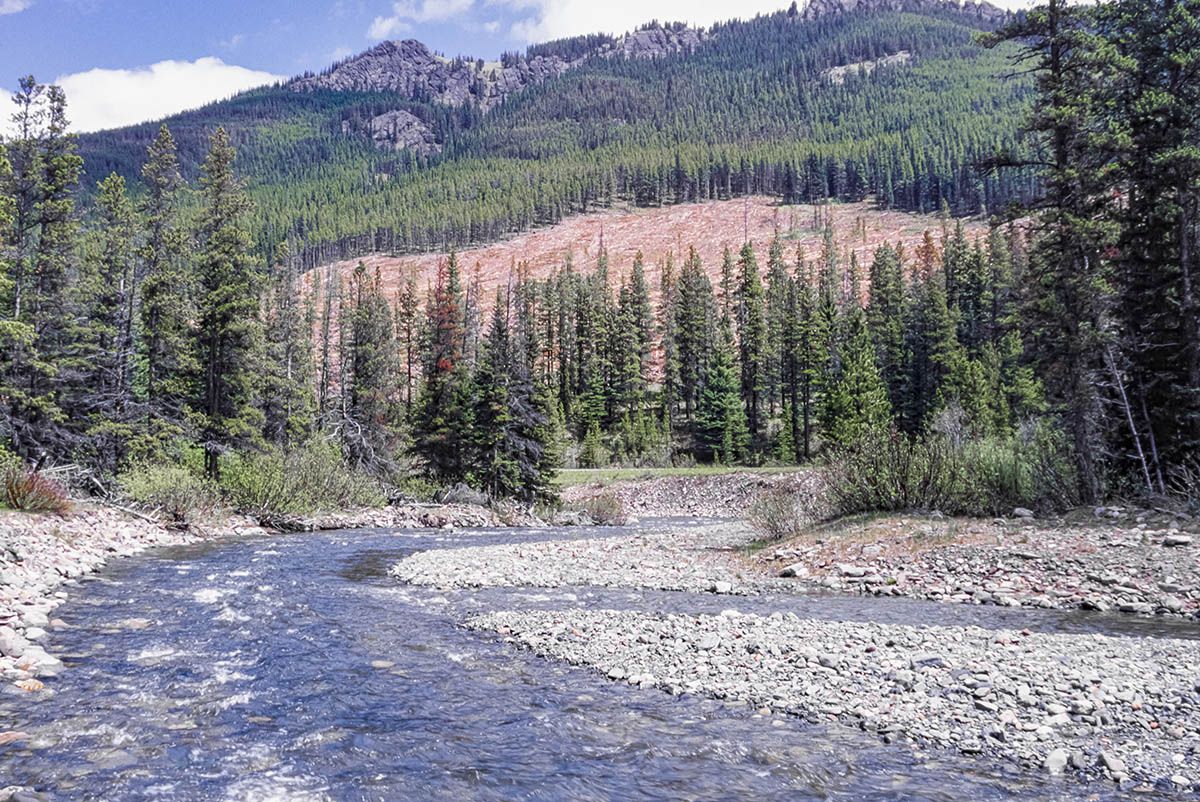
Kananaskis Country's landscape is defined by two major geographical regions: the high, rugged peaks of the Canadian Rockies to the west and the rolling, forested foothills to the east. A transitional zone blends characteristics of both, creating diverse habitats. The area is a crucial headwater region, serving as the source for several major rivers including the Kananaskis, Elbow, Highwood, Sheep, and Livingstone Rivers. This network of waterways is vital for downstream communities and ecosystems. The varied topography supports a rich array of wildlife, with large mammals commonly found in the region including grizzly bears, black bears, cougars, elk, moose, wolves, and both mule and white-tailed deer.
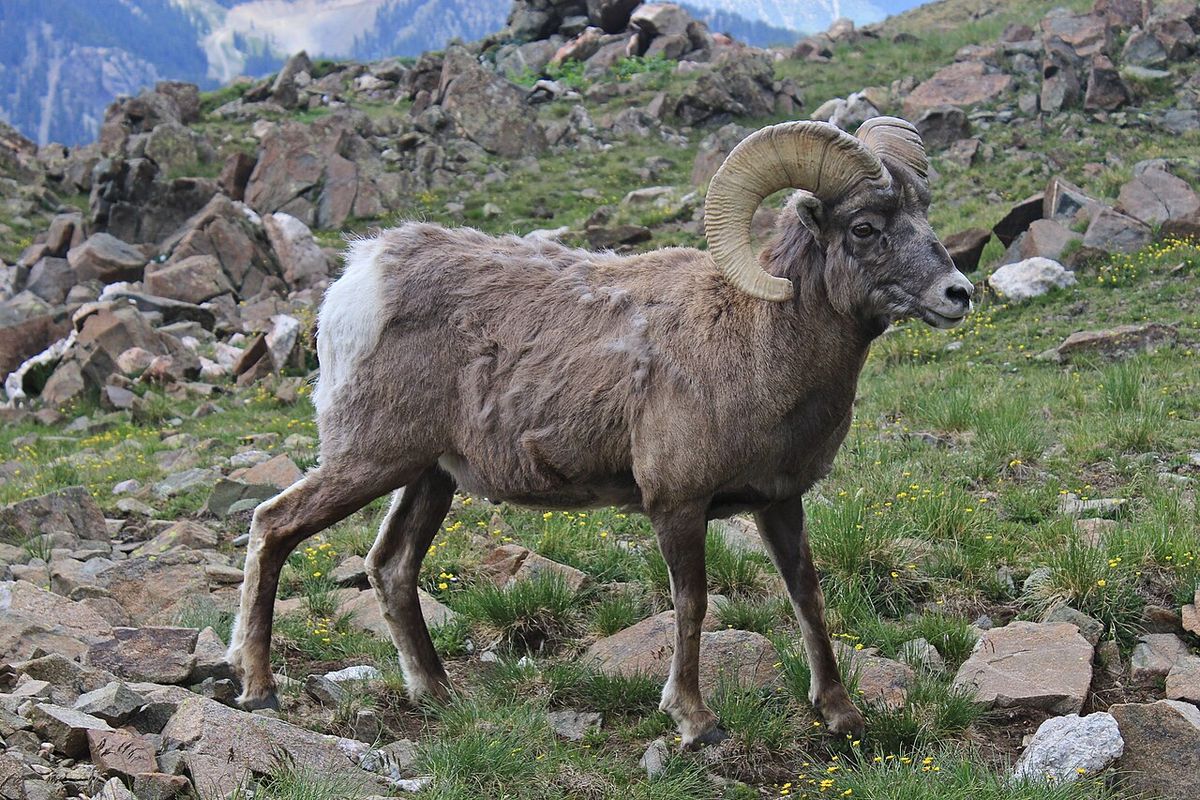
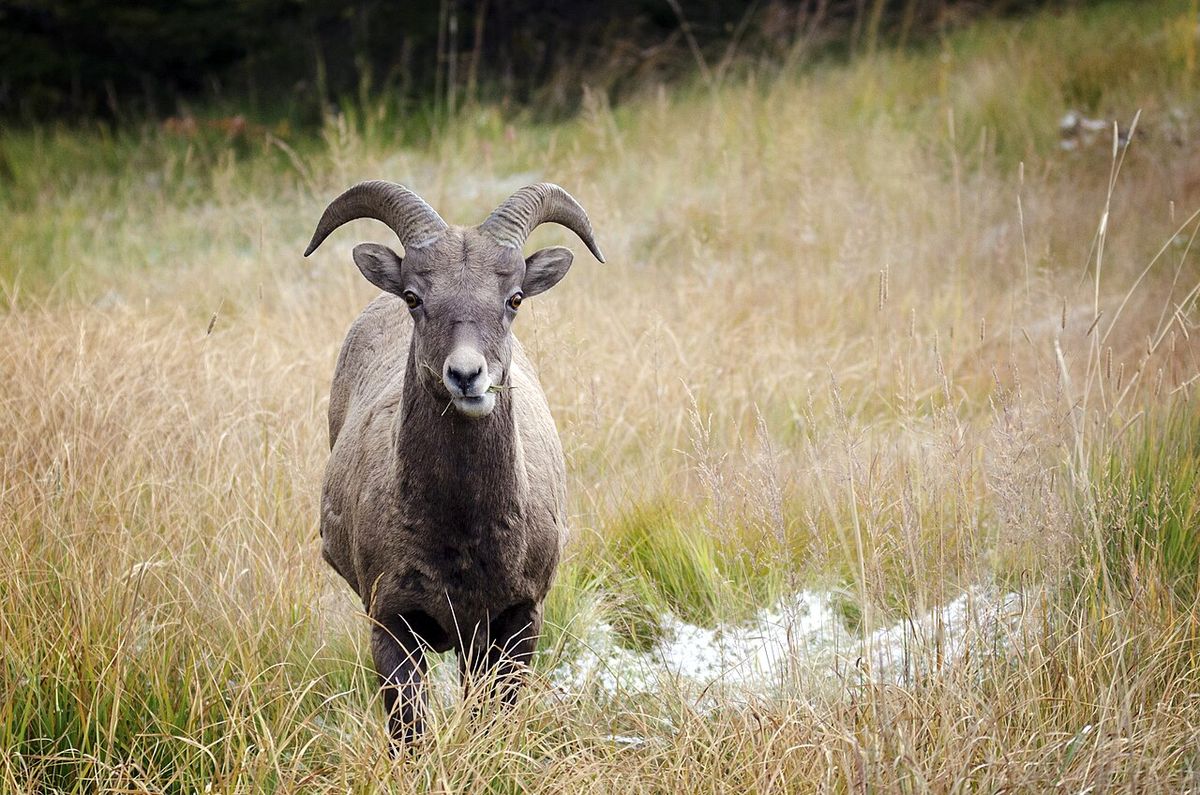
Bighorn sheep are a common sight on rocky slopes, while smaller mammals like pikas inhabit alpine areas. Birdlife includes raptors such as the golden eagle. The plant communities change with elevation, featuring forests of Engelmann spruce, subalpine fir, lodgepole pine, and Douglas fir. In higher alpine zones, hardy species like alpine larch and whitebark pine thrive, while grasslands in the foothills are home to rough fescue. The rivers and lakes provide habitat for numerous fish species, making the area popular for angling. Common sport fish include several types of trout such as rainbow, brown, brook, cutthroat, bull, and lake trout. Other species present are Arctic grayling and mountain whitefish. This biodiversity is managed carefully across the different land designations, with the most protected areas aiming to preserve critical habitat and wildlife corridors, especially for sensitive species like the grizzly bear.
Access and Major Highways
Kananaskis Country is accessed by a network of highways, some of which are subject to seasonal closures for wildlife protection or due to weather conditions. The primary corridor is Highway 40, also known as the Kananaskis Trail or Bighorn Highway, which runs north-south for 66 kilometres parallel to the Kananaskis and Highwood Rivers. This road provides access to the heart of the region, including Peter Lougheed Provincial Park and Kananaskis Village, and has a seasonal winter closure on the southern section. Highway 66, the Elbow Falls Trail, enters from near Bragg Creek and travels 28 kilometres into the Elbow River valley. Other important access routes include Highway 68 (Sibbald Creek Trail), a 42-kilometre partly gravel road from the Trans-Canada Highway, and Highway 742 (Smith-Dorrien/Spray Lakes Road), a gravel road originating in Canmore that traverses the scenic Spray Valley.
From the south, visitors can enter Kananaskis Country via Highway 546, which is known as Sheep River Trail and is located west of Turner Valley. Another southern access route is Highway 549, which is located west of Millarville. Kananaskis Country can be accessed by several routes, some of which have seasonal closures. Other key highways for access include Highway 40, Highway 66, Highway 68, and Highway 742. These roads provide entry to the different landscapes and recreational areas within the multi-use region.
| Highway | Key Features/Access |
|---|---|
| Highway 40 | Main north-south corridor, seasonal closure |
| Highway 66 | Access from Bragg Creek to Elbow Valley |
| Highway 68 | Partly gravel road from Trans-Canada Highway |
| Highway 742 | Gravel road from Canmore through Spray Valley |
| Highway 546 | Access west of Turner Valley |
| Highway 549 | Access west of Millarville |
All vehicles parked at provincial park and public land sites in Kananaskis Country and the Bow Valley corridor require a Kananaskis Conservation Pass. The pass requirement does not apply to vehicles accessing the McLean Creek Public Land Use Zone, which caters to motorized recreation. Passes can be purchased online and registered to a licence plate, or they can be bought in person at visitor information centres in Barrier, Elbow, Peter Lougheed, and William Watson Lodge, or at the Canmore Nordic Centre Day Lodge. The province offers several free entry days throughout the year, including the first Wednesday of every month, known as Wilderness Wednesday, as well as Indigenous Peoples' Day on June 21 and Parks Day on the third Saturday of July.
International Significance and Events
Kananaskis Country has twice been selected as the host site for major international diplomatic meetings, leveraging its secluded yet accessible mountain setting. In June 2002, Kananaskis Village hosted the 28th G8 summit, bringing world leaders to the region. This event was only the second time Canada had used a lodge venue for a G7/G8 summit, following the 1981 summit in Montebello, Quebec. The 2002 conference provided a substantial economic boost, injecting an estimated $300 million into the local economy, though security costs for the event exceeded $200 million. Over two decades later, Kananaskis was again chosen to host world leaders for the 51st G7 summit in June 2025. This marked the seventh time Canada has hosted the summit and the second time it was held in Kananaskis, reinforcing the area's reputation as a secure and prestigious venue for high-level diplomacy.
The selection for these events highlights the global profile of the Canadian Rockies and the infrastructure and scenic appeal of Kananaskis Village as a conference location. These summits have contributed to the international recognition of Kananaskis Country beyond its recreational and ecological value. The area's role as a summit venue is part of a broader history of hosting notable facilities and events. Other significant sites within Kananaskis Country that contribute to its profile include:
- Nakiska Ski Resort, designed for and host to alpine events of the 1988 Winter Olympics.
- The Canmore Nordic Centre, host to cross-country skiing events for the 1988 Olympics.
- William Watson Lodge, a unique facility for people with disabilities and seniors, opened in 1981.
- The University of Calgary's Barrier Lake Ecological Research Station, established for environmental science.
- Camp Chief Hector YMCA, a historic summer camp operating since 1930.
- The Tim Horton Children's Foundation summer camp, providing outdoor experiences for youth.
Protected Areas and Provincial Parks
Kananaskis Country contains a specific collection of provincially designated areas, each with its own management priorities and permitted uses. The five provincial parks within its boundaries are the most developed for public recreation and conservation. These parks offer campgrounds, visitor centres, and maintained trail networks. The four wildland provincial parks provide a higher level of protection for natural landscapes, allowing for more primitive recreation and preserving wildlife habitat. The single ecological reserve is dedicated to scientific research and the preservation of a specific natural feature. The list of these core protected areas is as follows.
- Bow Valley Provincial Park
- Canmore Nordic Centre Provincial Park
- Peter Lougheed Provincial Park
- Sheep River Provincial Park
- Spray Valley Provincial Park
- Bluerock Wildland Provincial Park
- Bow Valley Wildland Provincial Park
- Don Getty Wildland Provincial Park
- Elbow-Sheep Wildland Provincial Park
- Plateau Mountain Ecological Reserve
Kananaskis Country encompasses several Provincial Recreation Areas, which are smaller sites focused on specific recreational activities. Examples of these areas include the Evan-Thomas Provincial Recreation Area, the Sentinel Provincial Recreation Area, and the Sibbald Lake Provincial Recreation Area. These Provincial Recreation Areas are part of the broader system of lands within Kananaskis Country, which also includes provincial parks, wildland provincial parks, and an ecological reserve. Each land use designation within Kananaskis Country has its own purpose, different levels of protection, and different permitted activities. Together, these areas form the interconnected multi-use region that provides for recreation, tourism, industry, and preservation.
Questions about Kananaskis Country
What is the Kananaskis Conservation Pass and do I need one?
The Kananaskis Conservation Pass is a mandatory vehicle fee implemented in June 2021 to support conservation, safety, and facility improvements in Kananaskis Country and the Bow Valley Corridor. A pass is required for any personal or commercial vehicle that is parked at provincial park or public land sites within the designated area. The cost is $15 for a daily pass or $90 for an annual pass, and it is registered to your vehicle's licence plate. You do not need a pass if you are only driving through without stopping.
Are there any days when I can visit Kananaskis Country for free?
Yes, the Alberta government designates several free entry days throughout the year when the Kananaskis Conservation Pass is not required for vehicle parking. These include the first Wednesday of every month, known as Wilderness Wednesday. Other annual free days in 2026 include Indigenous Peoples' Day on June 21 and Parks Day on the third Saturday of July. Visitors should be aware that parking lots can fill up quickly on these popular free access days.
What are the main recreational activities available in Kananaskis Country?
Kananaskis Country is a year-round recreational destination with activities for every season. In winter, popular pursuits include downhill skiing at Nakiska, cross-country skiing at the Canmore Nordic Centre, snowshoeing, and dog sledding. Summer and fall activities encompass hundreds of kilometres of hiking, mountain biking, and horseback riding trails, as well as fishing, scrambling, rock climbing, and backpacking. The area also offers campgrounds, a golf course, and facilities for wildlife viewing and photography.
How is Kananaskis Country different from Banff National Park?
Kananaskis Country is a multi-use area managed by the Province of Alberta, while Banff is a national park managed by Parks Canada. Kananaskis Country comprises several provincial parks, wildland provincial parks, provincial recreation areas, an ecological reserve, and Crown Land, allowing for a variety of uses including resource extraction, recreation, and preservation. It was established partly to alleviate congestion in the national parks and to provide greater recreation opportunities for Albertans. In contrast, Banff National Park is a federally protected area with a primary focus on conservation and national-level tourism.
What wildlife might I see in Kananaskis Country?
The diverse habitats of Kananaskis Country support a wide variety of wildlife. Commonly observed large mammals include elk, moose, mule deer, white-tailed deer, and bighorn sheep. Predators such as black bears, grizzly bears, cougars, and wolves also inhabit the region. Smaller mammals like pikas are found in alpine areas. Birdwatchers may spot golden eagles and other raptors. Visitors are reminded to practice proper wildlife safety, including carrying bear spray, storing food securely, and maintaining a safe distance from all animals.
Where are the main visitor information centres located in Kananaskis?
Visitor information centres are strategically located throughout Kananaskis Country to provide maps, advisories, and trip planning assistance. Key centres include the Barrier Lake Visitor Information Centre on Highway 40, the Elbow Valley Visitor Information Centre on Highway 66, and the Peter Lougheed Provincial Park Visitor Centre. The William Watson Lodge also serves as an information point. The Canmore Nordic Centre Day Lodge provides visitor services and is a location where the Kananaskis Conservation Pass can be purchased in person.
Sources and further reading
- Kananaskis Country (Wikipedia)
- Kananaskis Conservation Pass (alberta.ca)
- Kananaskis Conservation Pass (explorecanmore.ca)
- Kananaskis Conservation Pass (kananaskisoutfitters.com)
- Kananaskis Country: Visitor Information (kananaskis.com)
Checked by the Your Space Hamilton desk. Last updated 2026-10-25.