Sun Life Building
The Sun Life Building is a historic 24-story office tower located at 1155 Metcalfe Street on Dorchester Square in downtown Montreal, Quebec. Completed in 1931, it was constructed in three distinct phases as the exclusive head office for the Sun Life Assurance Company of Canada. At the time of its completion, it was the largest building by square footage in the entire British Empire, reflecting its immense scale and corporate importance. Today, it remains a significant architectural landmark in Montreal's central business district, known for its role in a major clandestine financial operation during the Second World War.
Architecture and Construction
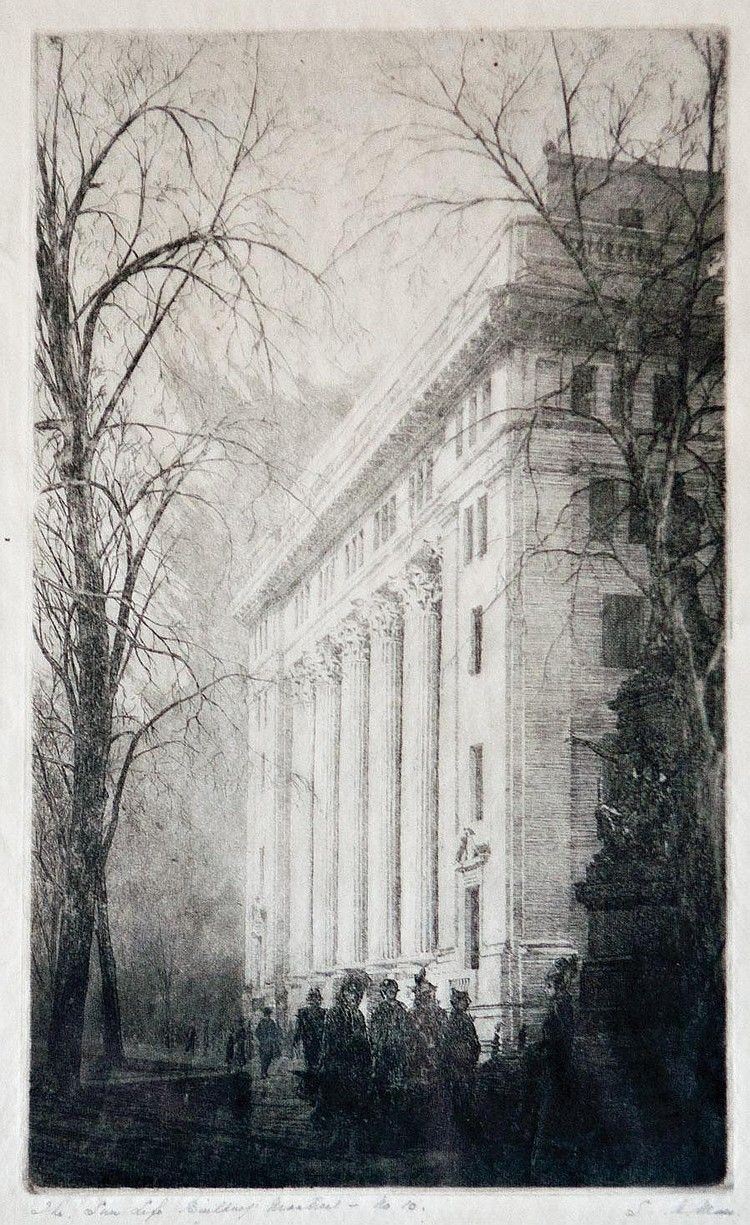
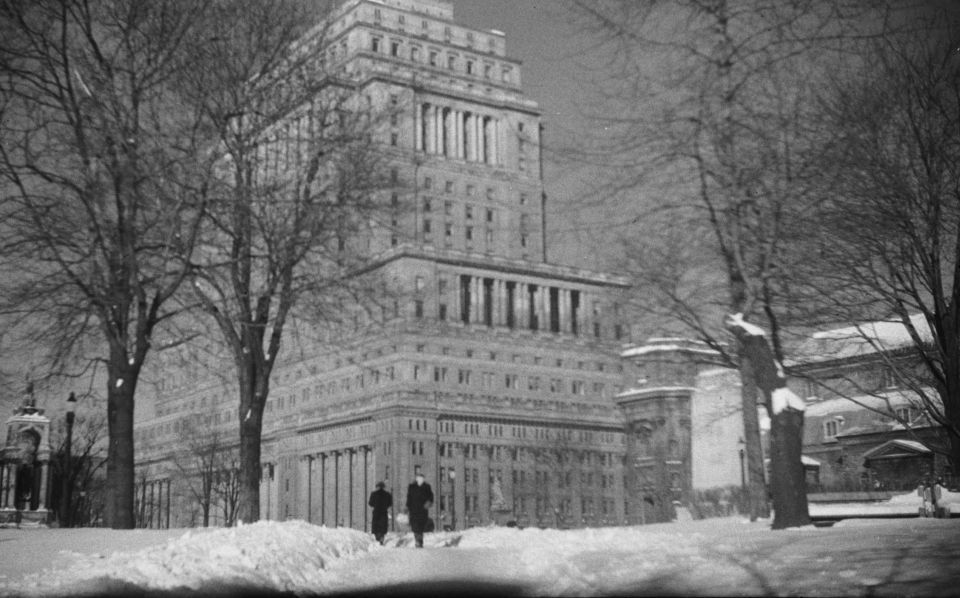
Its construction was not a single continuous project but occurred in three distinct phases over nearly two decades. The first phase, built between 1913 and 1918, resulted in a seven-storey southern section that served as the company's initial new headquarters. This was followed by a significant expansion between 1923 and 1926, which extended the building's base eastward and northward to create a larger footprint. The final and most dramatic phase took place from 1929 to 1931, during which the 16-storey set-back tower was erected, bringing the building to its full height and completing the vision. Although the nearby Royal Bank of Canada building on Saint Jacques Street had more floors, the Sun Life Building's immense floor area secured its claim as the largest building in the British Empire upon completion.
The building's massing and detailing were designed to project stability and permanence, qualities desired by a major life insurance company. Its prominent location on Dorchester Square placed it at the heart of Montreal's financial and commercial district. While it was once the city's tallest and most voluminous building, its stature has been overshadowed by later skyscrapers like Place Ville Marie and the CIBC Tower. Nevertheless, it remains Montreal's 17th tallest building and a commanding presence on the square, its classical facade offering a contrast to the modernist glass towers that surround it. The three-stage construction process resulted in a cohesive structure that successfully integrated its expanding components into a unified whole.
Predecessor Building and Site History
Before the current skyscraper was erected, the site at 1155 Metcalfe was occupied by an earlier Sun Life Building. That structure was a red brick building designed by Buffalo architect Richard A. Waite and constructed in 1889. It was expanded just a year later in 1890 by architect Robert Findlay to accommodate the growing company. This original building served as Sun Life's headquarters for 24 years until the company relocated into the newly completed first phase of the larger building in 1913. The demolition of the 1889 structure made way for the subsequent phases of construction that would eventually produce the monumental tower seen today.
Operation Fish and Wartime Role
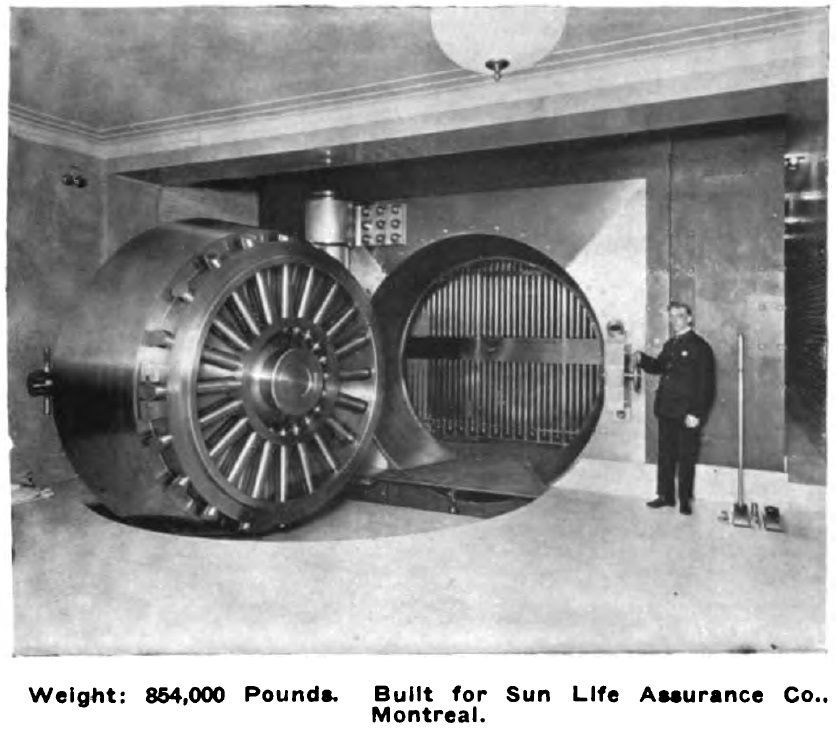
During the Second World War, the Sun Life Building played a crucial and highly secret role in Allied financial operations. In 1940, as part of the clandestine initiative known as Operation Fish, Britain shipped its gold reserves and negotiable foreign securities across the Atlantic to Canada for safekeeping from potential German invasion. The securities arrived at the port of Halifax on July 1, 1940, and were transported to Montreal. They were then secured in a specially prepared underground vault located three storeys beneath the Sun Life Building. This vault was guarded around the clock by officers of the Royal Canadian Mounted Police to ensure absolute security.
The operation within the vault was conducted by the extremely secretive United Kingdom Security Deposit. Its personnel were tasked with managing and gradually selling Britain's vast holdings of negotiable securities on the New York Stock Exchange over the subsequent years. The proceeds from these sales were vital for funding Britain's war expenses. Remarkably, the operation was conducted with complete secrecy. The approximately 5,000 Sun Life employees working in the building above were entirely unaware of the immense treasure stored beneath them. The mission was a total success, with none of the invaluable cargo going missing and no information about the operation ever being leaked to the enemy or the public during the war. The gold portion of the shipment was sent onward to Ottawa, while the securities remained in the Montreal vault for the duration of the conflict.
Location and Urban Context
The Sun Life Building occupies a central and highly visible plot on the western edge of Dorchester Square, a key public square in Montreal's downtown core. Its address at 1155 Metcalfe Street places it within the city's traditional central business district, an area dense with corporate offices, financial institutions, and major hotels. The building's siting was strategic, intended to announce Sun Life's prominence and solidity at the heart of Canadian commerce. The square itself is flanked by other historic buildings and serves as a major transit hub and pedestrian thoroughfare. While the Sun Life Building was once the dominant structure in its immediate vicinity, the post-war construction boom dramatically altered the skyline.
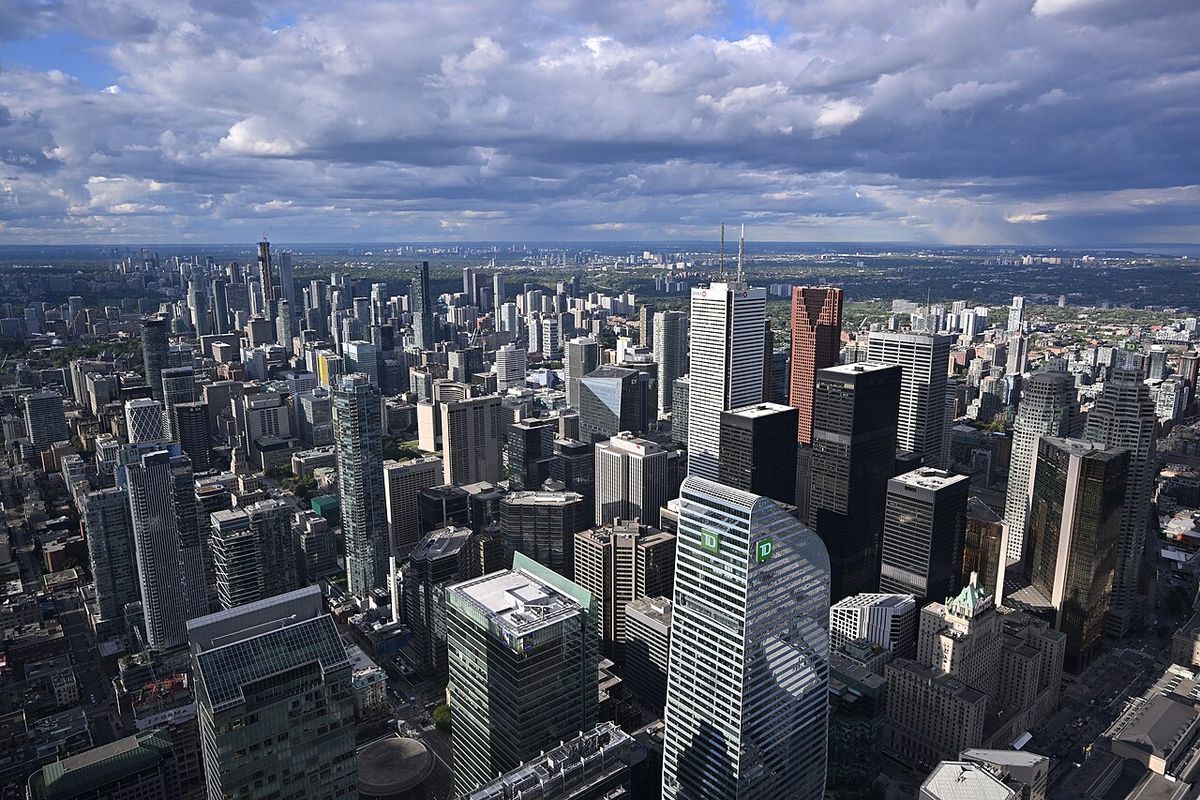
The Sun Life Building was once the largest building in square footage in the British Empire. Today, it is Montreal's 17th tallest building. It stands in the middle of the central business district centred on Dorchester Square. The building is now dwarfed by neighbouring Place Ville Marie and the nearby CIBC Tower. Its continued use as an office building keeps it active in the district. Its presence contributes to the historical character of Montreal's downtown.
Historical Significance
The Sun Life Building is significant for multiple reasons that extend beyond its architectural scale. Its construction timeline, spanning from 1913 to 1931, mirrors a period of tremendous growth and confidence for both the Sun Life company and the city of Montreal as a financial centre. The claim that it was the largest building in the British Empire by square footage upon completion is a point of national and imperial pride, reflecting Canada's rising economic stature. Architecturally, it represents the culmination of pre-Depression era commercial classicism before the widespread adoption of the International Style. Its most unique chapter in history is undoubtedly its role in Operation Fish, which transformed the building from a corporate headquarters into a fortress for the wealth of a nation at war.
The successful, secret safeguarding of Britain's financial assets was a critical contribution to the Allied war effort, one that involved close cooperation between British and Canadian authorities. This episode adds a layer of historical intrigue and national importance to the building's legacy, distinguishing it from other commercial structures of its era. The fact that its everyday operations continued uninterrupted above the secret vault demonstrates the effectiveness of the security measures in place. The building's history encapsulates corporate ambition, architectural achievement, and a vital, hidden service to the Allied cause during a global conflict.
Key Dates in the Building's History
The first Sun Life Building on the site was a red brick building designed by Richard A. Waite and built in 1889. It was expanded by Robert Findlay in 1890. This building was home to Sun Life until 1913. The current Sun Life Building was completed in 1931 after three stages of construction. It was built exclusively for the Sun Life Assurance Company of Canada. During the Second World War, Britain's securities were stored in a vault beneath the building.
- 1889: The first Sun Life Building, designed by Richard A. Waite, is constructed on the site.
- 1890: Architect Robert Findlay expands the original red brick building.
- 1913: Sun Life moves into the new, partially completed building. First construction phase begins.
- 1918: Completion of the initial seven-storey southern section.
- 1923 to 1926: Second phase expands the building's base eastward and northward.
- 1929 to 1931: Final phase adds the 16-storey set-back tower, completing the 24-storey structure.
- July 1, 1940: British negotiable securities arrive for storage in the building's underground vault as part of Operation Fish.
The building's first construction stage was a 7-storey southern part built from 1913 to 1918. The base was extended eastward and northward from 1923 to 1926. The main 24-storey tower was erected from 1929 to 1931, completing the project. During the war, the building housed Britain's securities in a secret vault as part of Operation Fish. This phase involved the Royal Canadian Mounted Police and a secret British unit. The building is now a historic landmark in Montreal.
Questions about Sun Life Building
When was the Sun Life Building built?
The current Sun Life Building was constructed in three stages between 1913 and 1931. The first seven-storey section was built from 1913 to 1918. An expansion of the base occurred from 1923 to 1926. The final and most prominent stage, the 16-storey set-back tower, was added from 1929 to 1931, completing the 24-storey structure.
What was Operation Fish and how was the building involved?
Operation Fish was a Second World War mission where Britain's gold reserves and negotiable foreign securities were shipped to Canada. The securities arrived at Halifax on July 1, 1940, and were locked in an underground vault three storeys beneath the Sun Life Building. They were guarded around the clock by the Royal Canadian Mounted Police. The extremely secretive United Kingdom Security Deposit operated in the vault to sell the securities on the New York Stock Exchange to pay for Britain's war expenses. The 5,000 Sun Life employees never knew what was stored beneath them.
Why was the Sun Life Building historically significant?
The building was historically significant for several reasons. Upon completion in 1931, it was the largest building by square footage in the British Empire. Its scale reflected Sun Life's corporate power and Montreal's financial importance. Its secret wartime role in Operation Fish marks it as a site of crucial Allied financial operations, adding a unique chapter to its legacy.
Where is the Sun Life Building located?
The Sun Life Building is located at 1155 Metcalfe Street on Dorchester Square in the downtown core of Montreal, Quebec, Canada. It stands in the middle of the central business district centred on Dorchester Square. This historic office building was built exclusively for the Sun Life Assurance Company of Canada. The site was previously occupied by an earlier Sun Life Building constructed in 1889. Today, it is a prominent structure within Montreal's city centre.
How tall is the Sun Life Building?
The Sun Life Building is a historic 122 metre (400 ft), 24 story office building. Upon the completion of its main tower in 1931, it was the largest building in square footage anywhere in the British Empire. This was notable even though the then new Royal Bank of Canada head office on Saint Jacques Street was taller by several floors. The building was constructed in three distinct stages between 1913 and 1931. Today, it is ranked as Montreal's 17th tallest building and is visually dwarfed by neighbouring skyscrapers like Place Ville Marie and the CIBC Tower.
What was on the site before the current building?
Before the current building, the site was occupied by the first Sun Life Building. This original structure was designed by Buffalo architect Richard A. Waite and was built in 1889. It was subsequently expanded by architect Robert Findlay in 1890. This red brick building served as the home for the Sun Life Assurance Company until 1913. In that year, the company moved its operations to the newly completed first stage of the larger, newer building that stands today.
Sources and further reading
- Sun Life Building (Wikipedia)
- Sun Life Building (sunlifebuilding.ca)
- Celebrating the 100th anniversary of the Sun Life Building ... (sunlife.com)
- Sun Life Building | Landmark in Downtown, Montreal | The Main (themain.com)
Checked by the Your Space Hamilton desk. Last updated 2026-10-31.