Rosedale, Toronto
Rosedale is an affluent neighbourhood in central Toronto, Ontario, known for its historic character and status as one of Canada's most prestigious residential areas. Located north of Downtown Toronto, it is one of the city's oldest suburbs, having been subdivided from the Jarvis estate in 1854 to become Toronto's first 'garden suburb'. The neighbourhood is characterized by winding streets that follow old trails, ravines preserved as parkland, and large, often century-old homes, many of which are over 100 years old. It is home to many prominent Canadians, including Gerry Schwartz, Adrienne Clarkson, and David Thomson, and was ranked the best neighbourhood in Toronto to live in by Toronto Life in 2013.
History and Development
The history of Rosedale is deeply tied to the Jarvis family, who were among Toronto's early prominent settlers. Sheriff William Botsford Jarvis and his wife Mary settled on the land in 1826, two years after Jarvis inherited it from his father. Mary Jarvis, the granddaughter of Chief Justice William Dummer Powell, frequently explored the trails that would later become the neighbourhood's meandering streets. She named the estate "Rosedale" in tribute to the abundant wild roses on the property. The Jarvis estate was formally subdivided in 1854, creating Toronto's first planned "garden suburb," a model of residential development that emphasized natural landscaping. The family sold the original homestead in 1864, which accelerated residential development in the area, including the extension of Cluny Drive.
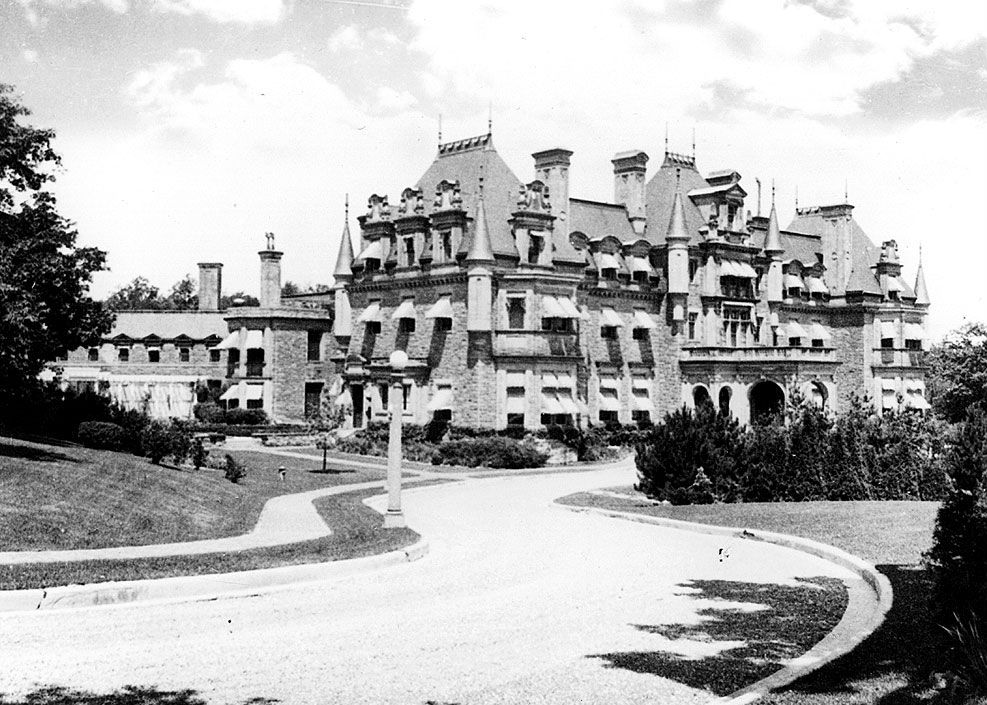
A significant historical site was Chorley Park, which served as Ontario's fourth Government House. Built for the Lieutenant Governor in 1915, the grand residence was demolished by the City of Toronto in 1960 as a cost-saving measure. The land is now a public park bearing the same name. This act removed a major governmental landmark but preserved green space in the ravine system. The neighbourhood's development was shaped by its topography, with ravines dictating the layout of roads and lots, contributing to its secluded and park-like atmosphere that persists today.
Geographical Character and Layout
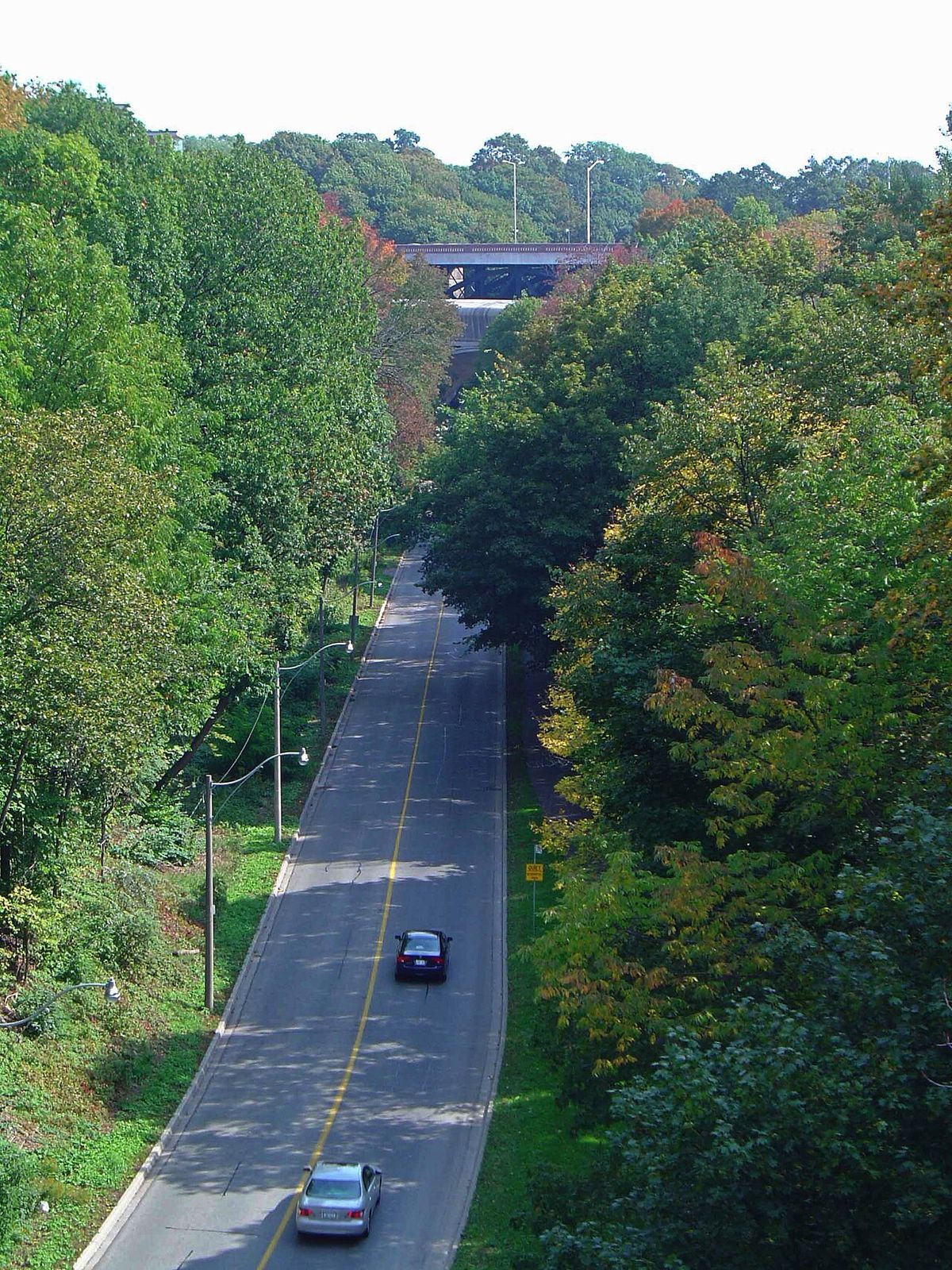
Rosedale's distinctive character is largely defined by its geography, built among three major ravines that are preserved as public parkland. The neighbourhood is physically divided into north and south portions by the Park Drive Ravine. Its boundaries are the Canadian Pacific Railway tracks to the north, Yonge Street to the west, Aylmer Avenue and Rosedale Valley Road to the south, and Bayview Avenue to the east. This enclave is part of the City of Toronto's official Rosedale-Moore Park neighbourhood designation. The road network is famous for its cul de sacs and convoluted, winding routes, which, combined with the natural barriers of the ravines and bridges, result in very low levels of through vehicular traffic.
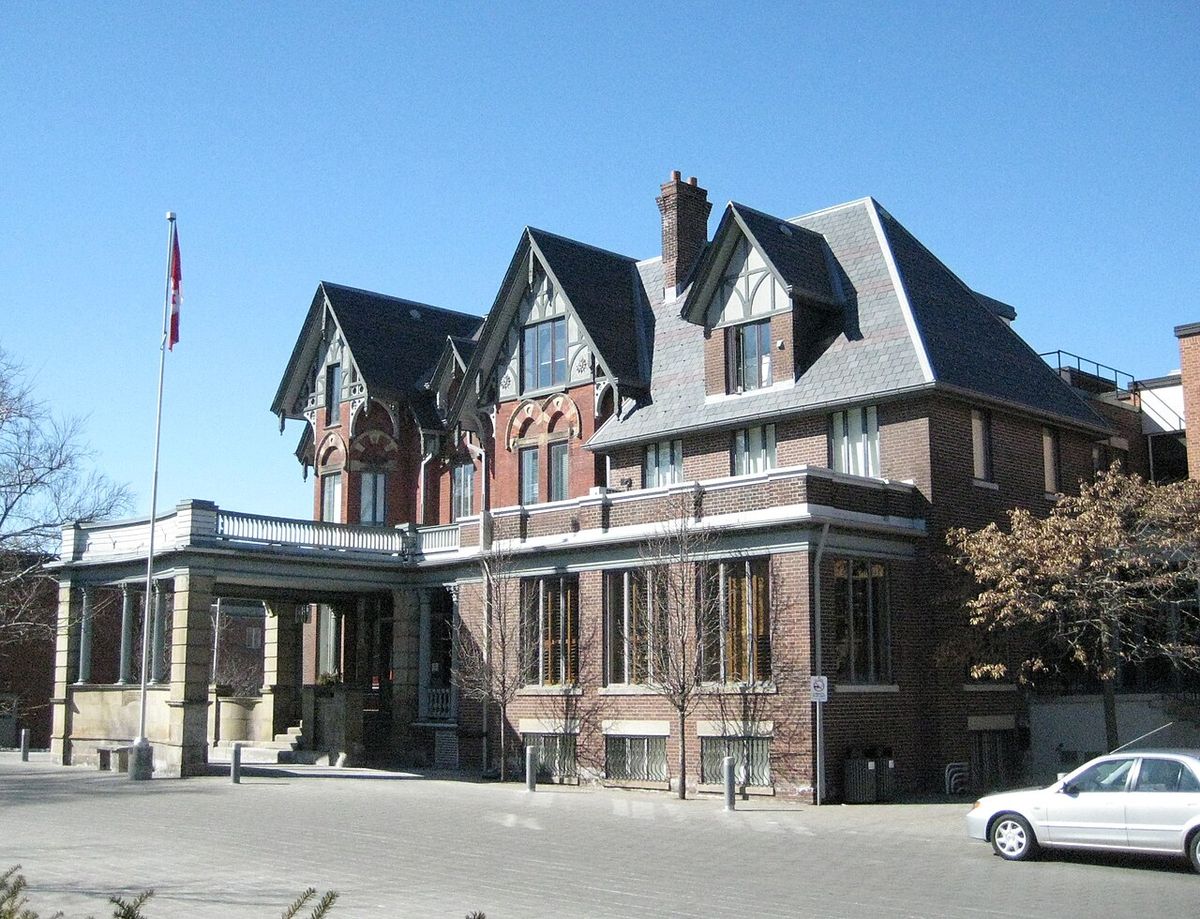
Despite its central location in Toronto, the area is remarkably quiet, muffled by a dense canopy of mature trees and foliage. The housing stock consists predominantly of single family detached dwellings, many of which are at least 100 years old, with some former farmhouses approaching 200 years in age. Architectural styles are varied and historically significant, ranging from Edwardian and Tudor to the more common Victorian and Georgian designs. This preservation of historic homes and natural features creates a unique urban oasis that feels removed from the surrounding city.
Demographics and Socioeconomic Profile
Rosedale has long been associated with wealth and established families, often described as an area of 'old money.' According to the 2006 Canadian census, the neighbourhood had 7,672 residents, representing a 4.8 percent increase from 2001. The socioeconomic data from that census highlights its affluence, with a median income of $55,906 and an average total income of $165,827, one of the highest figures for any Toronto neighbourhood. The median income was double that of Canada and Ontario, while the average total income was 4.5 to 5 times larger than the provincial and national averages. This trend continued in the 2011 National Household Survey, which reported a total income median of $61,284 and an average of $210,484.
The high income levels are reflected in the real estate market, where the average Rosedale house sold for over $1,800,000 in 2015. The neighbourhood also possesses a large population of people of English, Scottish, and Irish ethnic origin. In 2013, Rosedale was ranked the best neighbourhood in Toronto to live in by Toronto Life. It is known as the area where the city's 'old money' lives and is home to some of Canada's richest and most famous citizens.
Notable Residents and Cultural Connections
Rosedale has been home to numerous influential Canadians from business, literature, sports, and public life. The neighbourhood is known as the residence of some of Canada's richest citizens, including Gerry Schwartz, founder of Onex Corporation, and David Thomson, 3rd Baron Thomson of Fleet of the Thomson Corporation, who is frequently cited as the richest person in Canada. Former Governor General Adrienne Clarkson and her husband, author John Ralston Saul, have also lived in the area. In the literary world, renowned author Morley Callaghan lived at 20 Dale Avenue in South Rosedale from 1951 until his death in 1990. A historic plaque on the nearby Glen Road footbridge commemorates his career and his associations with writers like Ernest Hemingway and F. Scott Fitzgerald.
The area has inspired artistic works, such as the second movement titled "Rosedale" in Japanese composer Toru Takemitsu's 1995 three-movement piece for solo guitar called "Into the Woods." In sports history, Hockey Hall of Fame inductees W. A. Hewitt and Foster Hewitt lived on Roxborough Street at Yonge Street. The neighbourhood is home to some of Canada's richest and most famous citizens. Notable residents have included Gerry Schwartz, Adrienne Clarkson, John Ralston Saul, and David Thomson.
Landmarks and Institutions
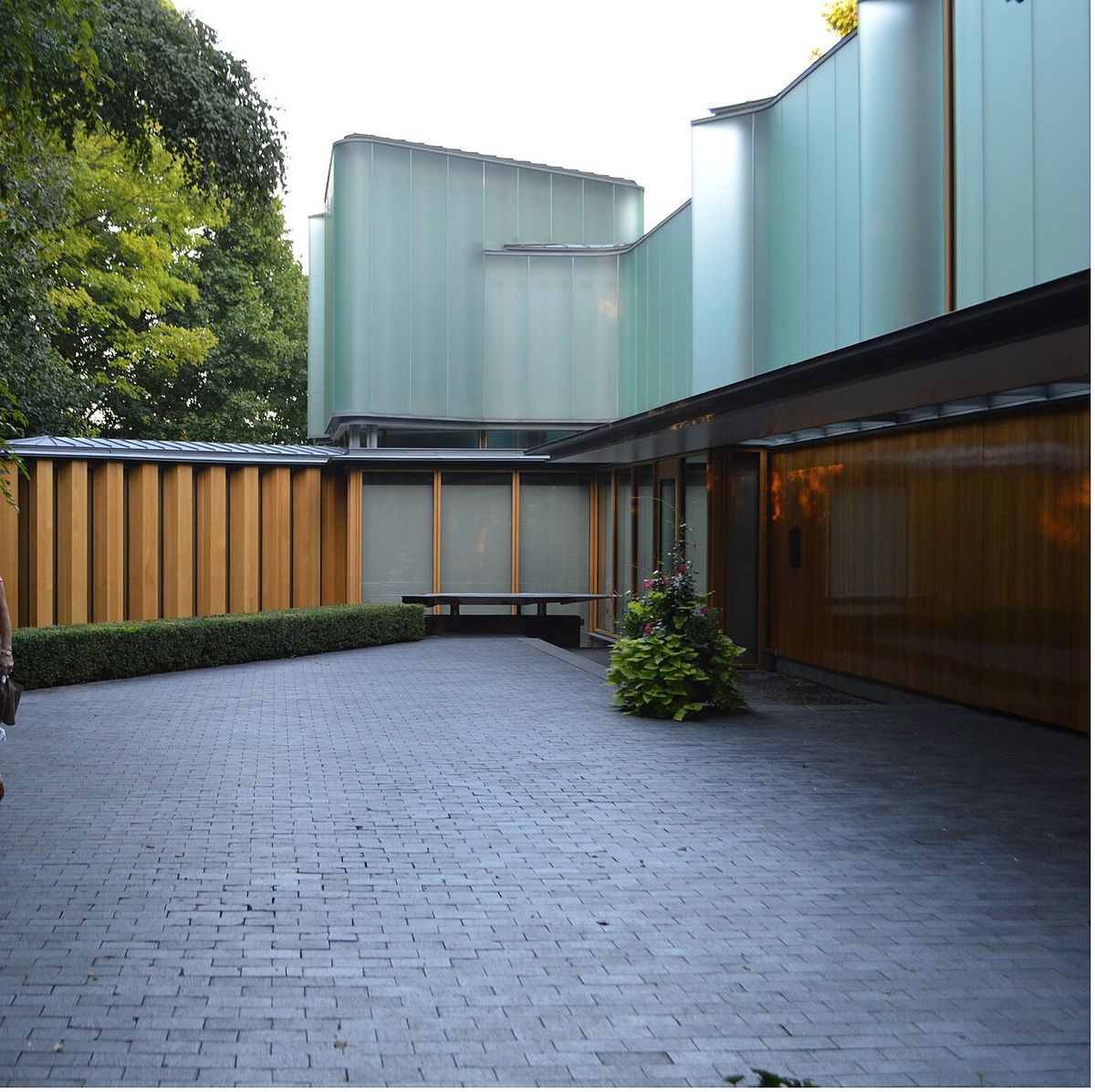
Rosedale contains several architecturally and historically significant buildings that contribute to its character. Among the most famous is the Studio Building at 25 Severn Street, a National Historic Site of Canada that was crucial in the development of the Group of Seven artists. Integral House, a private residence designed by architect Shim-Sutcliffe for mathematician James Stewart, is celebrated for its innovative design. The neighbourhood is also home to the North Toronto railway station, a designated heritage building, and the University of Toronto President's Estate. Religious institutions include the Rosedale Presbyterian Church and Rosedale United Church, which have served the community for generations. Another major institution is the Toronto Lawn Tennis Club, located in Rosedale since 1913 and holding the distinction of being the oldest active and surviving lawn tennis club in the world.
Education and Community Life
Education in Rosedale is served by both public and private institutions, catering to a range of educational philosophies. The public system includes Rosedale Public School for elementary students and Rosedale Heights School of the Arts, a secondary school specializing in arts education. On the private side, Branksome Hall is a prominent all girls independent school offering an International Baccalaureate program. Gradale Academy provides an alternative approach as an outdoor education school, emphasizing learning in natural settings. These schools contribute to the neighbourhood's family oriented character and its appeal to residents seeking high quality education options. Community life is anchored by events like the annual Mayfair, a spring park party held in Rosedale Park on the first Saturday in May.
The annual spring park party, Mayfair, is run and funded by Mooredale House. The event typically consists of rides, games, a flea market, and other such carnival-like activities. It is traditionally held on the first Saturday in May. Rosedale is built among three ravines, which are preserved as parkland.
Political Representation
Rosedale falls within the federal and provincial electoral district of University Rosedale. The federal riding was renamed from Toronto Centre to University Rosedale in 2015. As of the latest available information, the Member of Parliament for University Rosedale is Danielle Martin. At the provincial level, the Member of Provincial Parliament for the same district is Jessica Bell. This representation connects Rosedale with adjacent areas like the University of Toronto and the downtown core, integrating it into the civic affairs of central Toronto and ensuring its interests are represented at both levels of government.
Key Community Features and Events
Rosedale offers a distinct blend of secluded residential living, historic preservation, and community oriented amenities. Its defining features are deeply intertwined with its natural environment and social fabric. The ravine park system, with three major ravines, provides extensive walking trails and natural green space that physically defines the neighbourhood. Architectural heritage is evident in the high concentration of century old homes in Edwardian, Tudor, Victorian, and Georgian styles. The Toronto Lawn Tennis Club, the world's oldest active lawn tennis club, has been a social and athletic hub since 1913. Chorley Park, the site of the former Government House, remains a key public green space within the ravine system, offering walking trails and natural scenery to residents.
- Rosedale Park: The central public park and site of the annual Mayfair community festival.
- Studio Building (25 Severn Street): A National Historic Site crucial to Canadian art history.
- Low Traffic Design: A network of winding streets and cul de sacs, enhanced by natural barriers, ensures minimal through traffic.
- Mooredale House: A community organization that runs programs and funds events like the Mayfair.
These elements combine to create a neighbourhood that values privacy, history, and natural beauty. The annual Mayfair event in Rosedale Park is a prime example of an active community institution. Rosedale is full of cul de sacs and convoluted routes, which lead to low levels of vehicular traffic. The homes are mostly single family detached dwellings, many of which are at least 100 years old.
Questions about Rosedale, Toronto
What are the boundaries of Rosedale?
Rosedale's boundaries are clearly defined by major roads and infrastructure. To the north, the neighbourhood is bounded by the Canadian Pacific Railway tracks. Yonge Street forms the western boundary. The southern limit runs along Aylmer Avenue and Rosedale Valley Road. Finally, Bayview Avenue serves as the eastern boundary. Internally, the Park Drive Ravine divides the area into North and South Rosedale.
What is the average income and house price in Rosedale?
Rosedale has consistently shown very high income and property values. According to the 2006 census, the average total income was $165,827, with a median of $55,906. By 2011, the average had risen to $210,484. The real estate market reflects this affluence. In 2015, the average house in Rosedale sold for over $1,800,000. These figures are multiple times higher than the averages for Ontario and Canada as a whole.
What schools are located in Rosedale?
Rosedale is served by several educational institutions. The public schools are Rosedale Public School (elementary) and Rosedale Heights School of the Arts (secondary). In the private sector, Branksome Hall is a well known all girls independent school. There is also Gradale Academy, which offers an outdoor education program. These schools provide a range of educational options for families in the neighbourhood.
What is Chorley Park in Rosedale?
Chorley Park was the site of Ontario's fourth Government House, a residence built for the Lieutenant Governor in 1915. The grand building was demolished by the City of Toronto in 1960 as a cost saving measure. Today, the land is a public park that retains the name Chorley Park. It is located within the Rosedale ravine system and offers green space and walking trails, serving as a reminder of the area's historical significance.
Why is Rosedale, Toronto so famous?
Rosedale is famous for being one of Toronto's oldest and most affluent neighbourhoods, often associated with 'old money.' It was Toronto's first 'garden suburb' after the Jarvis estate was subdivided in 1854. It is renowned for its historic homes, many of which are at least 100 years old, winding streets that are a neighbourhood trademark, and its setting among three ravines preserved as parkland. The neighbourhood is home to some of Canada's richest and most famous citizens, including Gerry Schwartz, Adrienne Clarkson, John Ralston Saul, and David Thomson, the richest man in Canada. In 2013, Toronto Life ranked Rosedale as the best neighbourhood in Toronto to live in. Its character is defined by low traffic, an abundance of trees, and its status as a historic garden suburb.
Who is the current Member of Parliament for Rosedale?
Rosedale is represented in the House of Commons by Danielle Martin. The neighbourhood is a part of the federal electoral district named University Rosedale, which was renamed in 2015 and was formerly known as Toronto Centre. At the provincial level, Rosedale is also part of the University Rosedale electoral district and is represented in the Provincial Parliament by Jessica Bell. This representation covers the central Toronto district that includes the Rosedale neighbourhood. The electoral boundaries encompass this historically significant and affluent area within the city's core.
Sources and further reading
- Rosedale, Toronto (Wikipedia)
- Rosedale, Toronto Neighbourhood guide (neighbourhoodguide.com)
- Rosedale-Moore Park Neighbourhood Guide (hoodq.com)
- A Complete Guide To The Rosedale Toronto Neighborhood (getleo.com)
- Rosedale Real Estate Toronto, Discover Luxury Living (barrycohenhomes.com)
Checked by the Your Space Hamilton desk. Last updated 2026-10-21.