Orleans, Ontario
Orléans is a major suburban district in the eastern part of Ottawa, Ontario, located along the Ottawa River approximately 16 kilometres from the city's downtown core. With a population of 139,309 as of the 2021 census, it is one of Ottawa's largest residential and commercial centres. Originally settled in the 1830s by French Canadian families, the community developed as a principal Francophone centre in the National Capital Region before undergoing rapid suburban expansion from the late 1960s onward. Today, Orléans retains a strong bilingual character and Franco-Ontarian heritage while serving as a diverse and active hub for Ottawa's east end.
History and Development
The history of Orléans is defined by its evolution from Indigenous lands and early French Canadian settlement into a major Ottawa suburb. The Ottawa River corridor has supported human activity for thousands of years, serving as a vital travel and trade route for Indigenous peoples, whose knowledge was essential to later European exploration and the fur trade. European settlement in the area began during the 1830s, with early francophone families like the Dupuis, Besserer, Major, Duford, and Vezina families establishing farms. By 1880, the community had grown to 174 families, with francophone families constituting a clear majority, reflecting the area's strong French Canadian character throughout the 19th and early 20th centuries.
For over a century, Orléans remained a predominantly agricultural community, with families engaged in mixed farming and supplying produce to markets like Ottawa's Byward Market. Landmarks of this era include the Vinette Silo, built in 1945, and Ferme St. Joseph, established by the Oblate Fathers in 1917, which later became the Orléans Fruit Farm. A major transformation began in the late 1960s as Orléans shifted from a rural area into a suburban community. The construction of Queenswood Heights marked the start of large scale residential development, a process that accelerated in the 1970s following improvements to Highway 174, which improved access to central Ottawa. The population grew from about 6,000 in 1971 to roughly 24,000 by 1981, with new neighbourhoods like Convent Glen and Orléans Woods developed on former farmland.
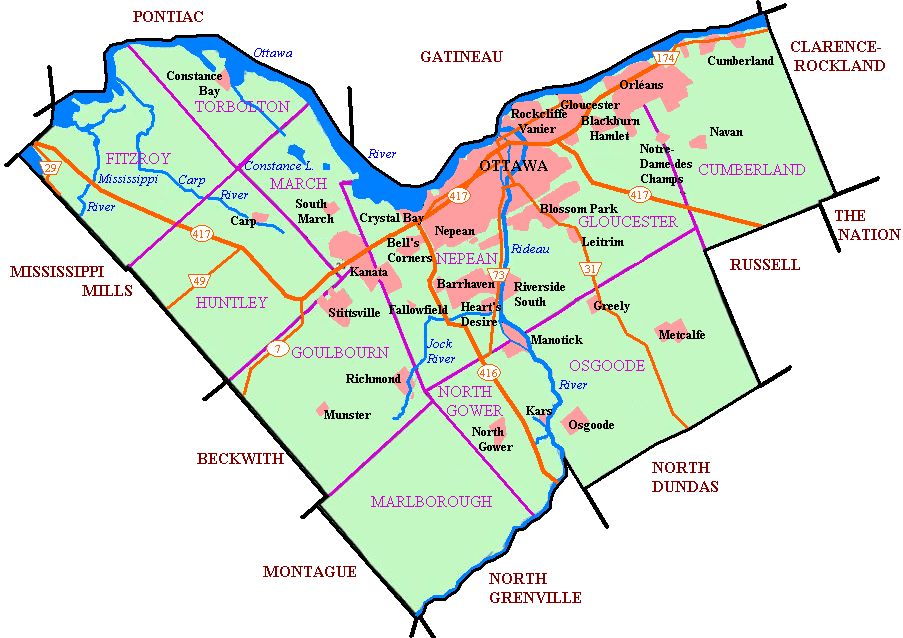
Suburban growth continued through the 1980s and 1990s with the creation of communities such as Chapel Hill and Fallingbrook. This period also saw the development of local commercial infrastructure, most notably the opening of Place d'Orléans shopping centre in 1979. For most of the 20th century, the community was divided between the former municipalities of Gloucester and Cumberland. This changed in 2001 when municipal amalgamation brought the entire area under the single government of the new City of Ottawa. Today, Orléans is administered within the municipal wards of Orléans East-Cumberland, Orléans West-Innes, and Orléans South-Navan, completing its journey from a small rural parish to a major urban district.
Geography and Natural Environment
Orléans occupies a distinct area in eastern Ottawa, characterized by its riverfront setting and a mix of suburban development and protected natural landscapes. The community is generally bounded by the Ottawa River to the north, Green's Creek and the former Gloucester boundary to the west, and rural areas of Cumberland and Navan to the east. Its southern extent reaches the areas around Innes Road and Renaud Road. Several significant natural features define the local environment and provide ecological and recreational value for residents.
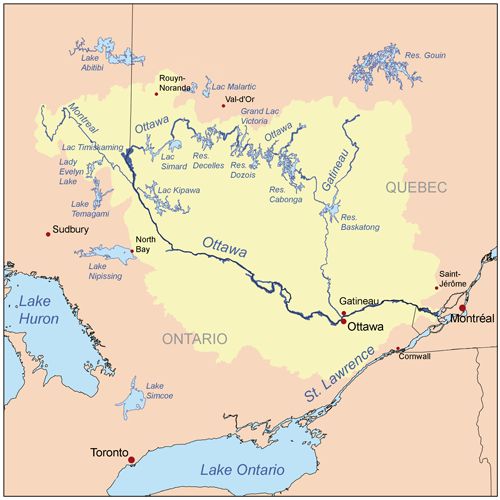
The Ottawa River, known in Anishinàbemowin as Kichi Sibi or Great River, forms the northern boundary and is a central geographical and historical feature. To the west, Green's Creek creates a natural corridor with steep ravines and forested slopes, forming an ecological connection between the river and inland areas like the Mer Bleue Conservation Area. Located south of Orléans, the Mer Bleue Conservation Area is a 3,500 hectare protected site within Ottawa's Greenbelt, famous for containing the 7,700 year old Mer Bleue Bog, a Ramsar wetland of international importance. Within Orléans itself, the Orléans Escarpment is a notable landscape feature running along the southern side of St. Joseph Boulevard, acting as a transition zone between developed and natural areas.
A unique geological feature in eastern Orléans is the Cardinal Creek Karst, a landscape formed by the erosion of soluble bedrock that includes cave systems and sinkholes. The southern portion of this site was designated as an Earth Science Area of Natural and Scientific Interest by the Province of Ontario in 2009. These natural areas collectively support biodiversity, offer extensive trail networks for recreation, and are integral to the community's environmental planning. They represent a crucial balance between the area's rapid suburban growth and the preservation of its natural heritage.
Demographics and Population
Orléans has experienced remarkable population growth, transforming from a small settlement into one of Ottawa's most populous districts. The community's expansion began in earnest in the 1970s, growing from approximately 6,000 residents in 1971 to around 24,000 by 1981. The 2011 census recorded a population of 107,823, and by the 2021 census, the population had reached 139,309. City estimates in the mid 2020s placed the population at over 130,000, confirming its status as a major suburban centre. According to 2016 census data, the median age in Orléans was 40 years, with an average household size of 2.8 persons. The demographic profile reflects a community that is bilingual, culturally diverse, and has a significant immigrant population.
The linguistic character of Orléans is shaped by its historical roots and contemporary diversity. English is the most common mother tongue, reported by 53.5 percent of residents, while French is reported by 33.4 percent, highlighting the community's strong Francophone heritage. Other commonly reported mother tongues include Arabic at 3.7 percent and Spanish at 1.2 percent. In terms of ethnic and cultural origins, the most frequently reported include French (34.6 percent), Irish (16.9 percent), English (15.6 percent), Scottish (14.2 percent), and Canadian (13.9 percent). Visible minorities account for 32.4 percent of the population, with Arab, Black, and South Asian communities being the largest groups.
Immigration has played a significant role in the community's recent growth. In 2021, immigrants represented 24.5 percent of Orléans' population, while non immigrants constituted 74.0 percent and non permanent residents 1.5 percent. The largest immigrant populations by place of birth were Haiti (10.3 percent), Lebanon (9.5 percent), the United Kingdom (5.7 percent), the Democratic Republic of the Congo (4.2 percent), India (3.6 percent), the Philippines (3.6 percent), and Cameroon (2.9 percent). Religiously, Christianity is the most common affiliation at 64.5 percent, with Catholicism being the largest denomination at 43.3 percent. Other religions account for 11.7 percent of residents, while 23.6 percent report no religious affiliation.
Francophone Heritage and Bilingual Culture
Orléans possesses a distinctive cultural identity deeply rooted in its Franco Ontarian history, which continues alongside its evolution as a bilingual and multicultural suburb. Historically, the community was one of Ontario's largest Francophone centres outside Quebec, established by French Canadian settlers in the 1830s and centred on the parish of St. Joseph d'Orléans. Today, an estimated 29 to 30 percent of residents speak French as their first language, representing between 37,000 and 42,000 people. This strong Francophone presence is supported by a network of French language institutions that are central to community life, including the landmark Paroisse St Joseph d'Orléans, a campus of La Cité college, and 15 French language elementary schools.
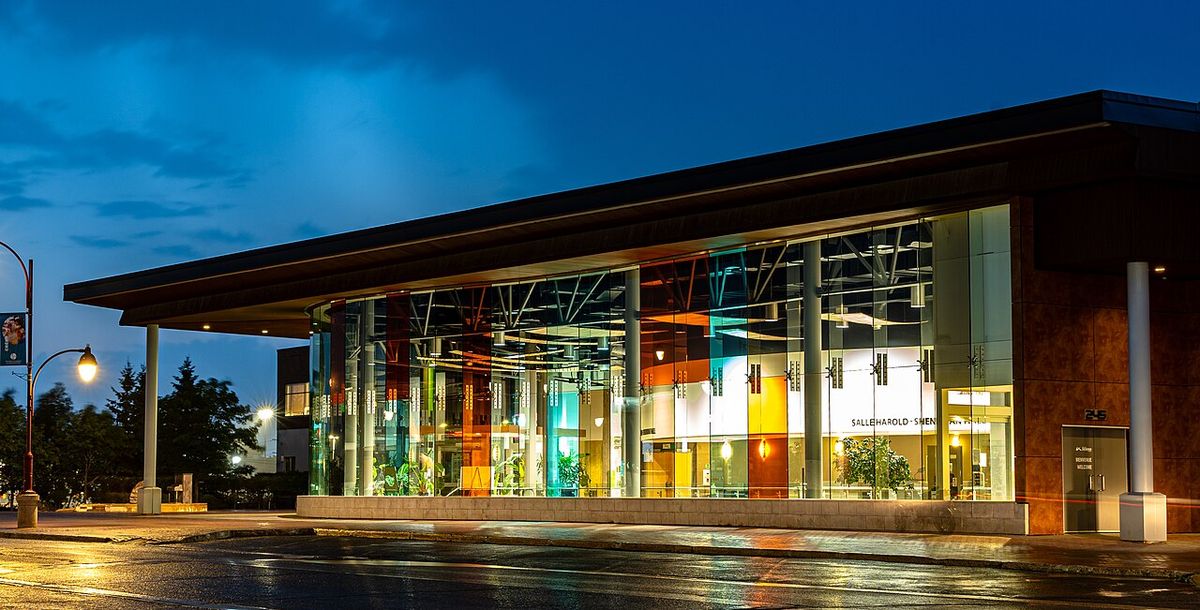
Cultural vitality is sustained by dedicated organizations and a full calendar of francophone events. The Mouvement d'implication francophone d'Orléans (MIFO) is a key driver, presenting nearly 30 French language performances annually at venues like the Shenkman Arts Centre. Major annual celebrations of Francophone culture include 25 fois Franco, 25 fois les Jeux, which marks Franco Ontarian Day and commemorates the 2001 Jeux de la Francophonie. The Festival Objective Cinéma Desjardins is dedicated to independent and international francophone cinema, while Le Soleil Jeunesse à Orléans is a family festival featuring francophone artists and workshops. These events, alongside the community's bilingual public services, ensure the French language and culture remain an active and visible part of Orléans' community life.
The community's bilingual character is further reflected in its mainstream cultural offerings and public life. Many major festivals and markets, such as the Orléans Holiday Arts Market at the Shenkman Arts Centre, are presented bilingually. This integration demonstrates how Orléans' Francophone heritage is not isolated but interwoven with its broader identity as a dynamic, growing part of Ottawa. The result is a community where historical linguistic roots actively shape contemporary cultural expression, civic engagement, and daily life for all residents.
Community Life and Annual Events
A rich calendar of festivals, markets, and community gatherings fosters a strong sense of local identity and provides year round engagement for residents of Orléans. These events range from large scale seasonal celebrations to weekly community meetups, reflecting the suburb's family oriented character and diverse interests. Many are organized by local business associations, cultural groups, or the City of Ottawa, and several have become established traditions that draw participants from across the region. The following list highlights some of the key annual and recurring events that define community life in Orléans.
- Cork and Fork: An annual food and beverage event held at the Shenkman Arts Centre featuring wineries, distilleries, cider producers, breweries, food vendors, and live music.
- Fête Frissons: A winter carnival hosted in early February at the Shenkman Arts Centre with activities including live entertainment, ice carving, hot chocolate stations, and snow based activities.
- Santa's Parade of Lights: Held annually on the last Saturday in November along St. Joseph Boulevard, this parade features themed floats and marching bands and is organized by the Ottawa Firefighters Association.
- Orléans Fun Fair: A weekend carnival held in mid May at the Ray Friel Recreation Complex, featuring amusement rides, carnival games, and food vendors.
- Orléans Craft Beer Festival: An annual event in early June at Centrum Plaza with regional breweries, food vendors, and live music.
- Orléans Ribfest and Buttertart Festival: A popular summer festival at Centrum Plaza featuring barbecue vendors, food trucks, a beverage garden, live music, and butter tart competitions.
- Orléans Comic Book & Novelty Show: A free quarterly comic convention held at the Place d'Orléans shopping centre, celebrating comics, pop culture, and cosplay.
- Orléans Capital Cruisers Cruise Night: A weekly car meet held on Thursday afternoons at the Fallingbrook Centre, with classic and unique vehicles.
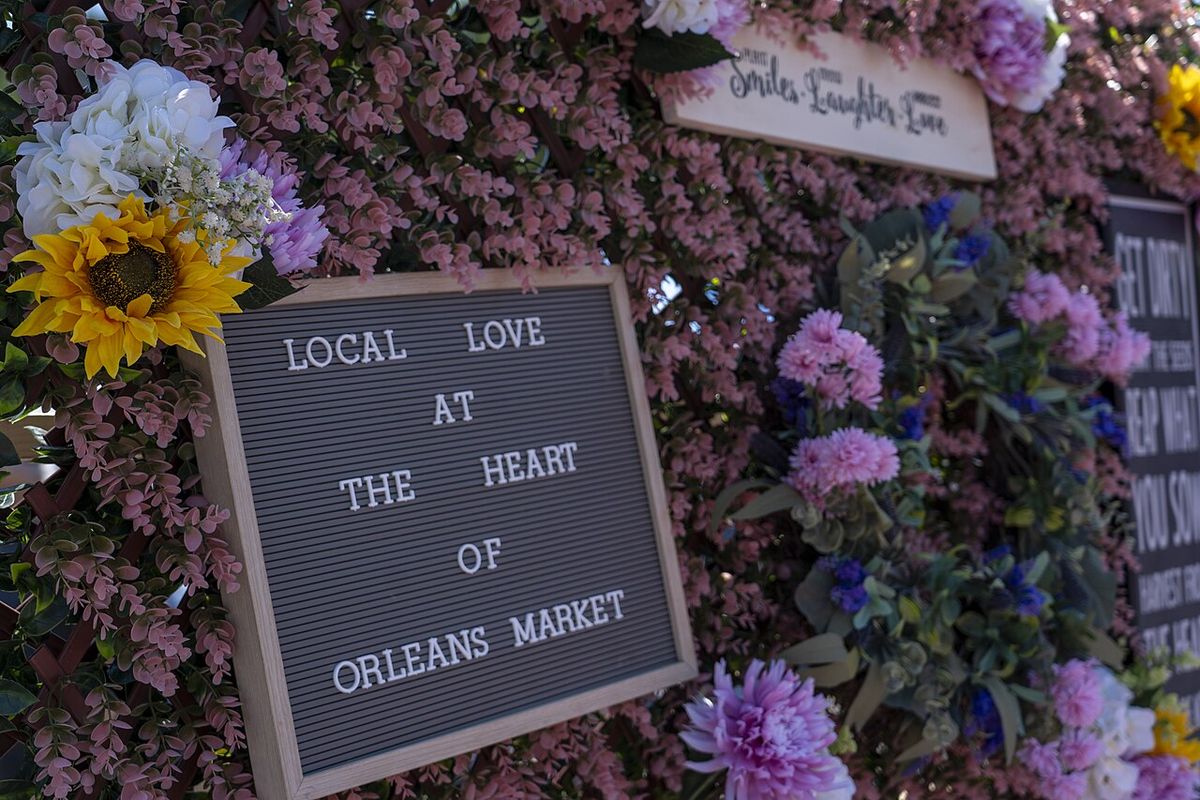
In addition to these signature events, regular markets provide ongoing opportunities for community connection and support local producers. The Orléans Farmers’ Market operates seasonally on Thursday afternoons, while the Heart of Orléans Market is held monthly on the first Sunday from August to November at Orléans Town Centre. The Heart of Orléans Business Improvement Area also organizes an Annual Night Market and Tree Lighting in November on Centrum Boulevard, complete with a holiday market, live performances, and seasonal festivities. This full schedule of activities ensures Orléans maintains an engaged community spirit throughout the year.
Commercial and Recreational Infrastructure
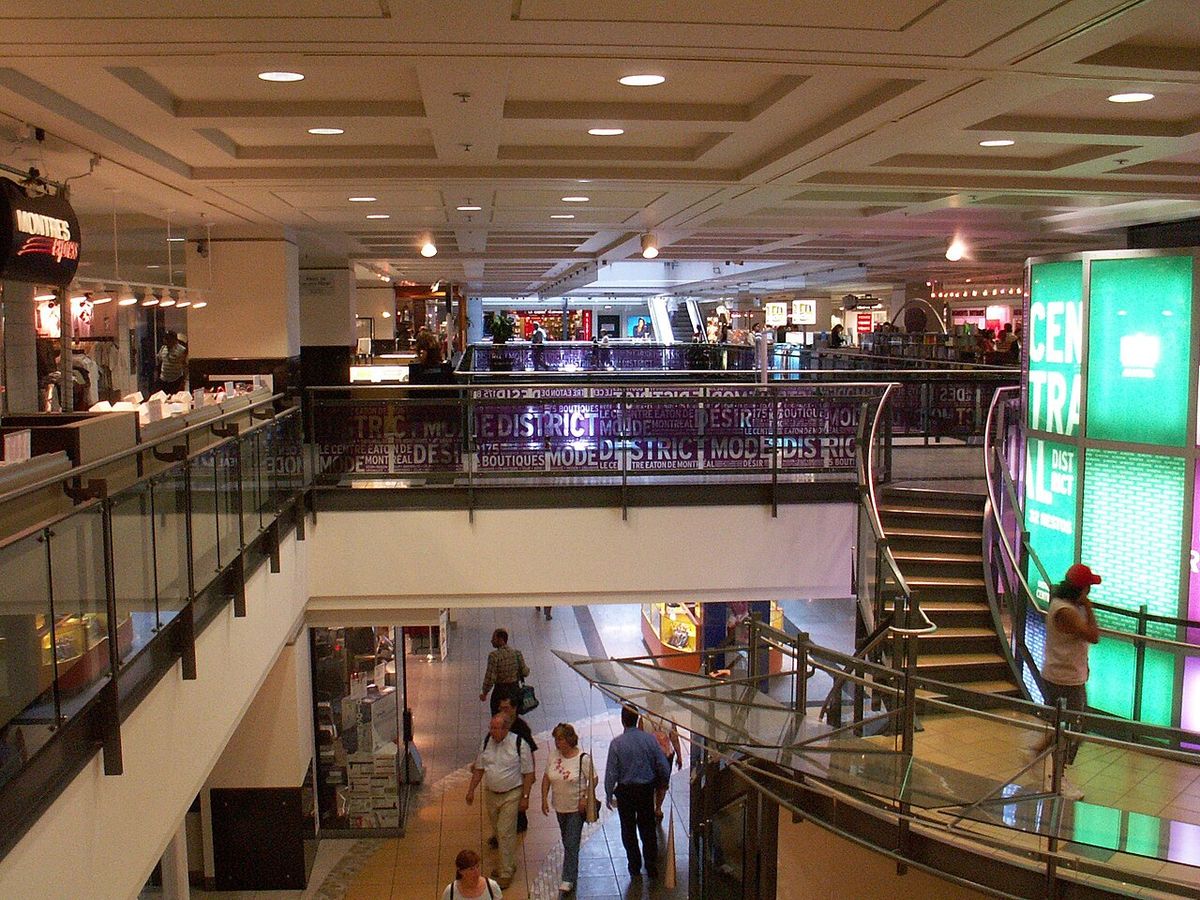
Orléans is supported by extensive commercial, recreational, and institutional infrastructure that serves its large population and reinforces its role as a self contained hub in east Ottawa. The community's main commercial corridor is St. Joseph Boulevard, which has evolved from a historic rural road into an active artery lined with shops, services, and restaurants. The premier retail destination is Place d'Orléans, a major shopping centre that opened in 1979 and continues to be a central gathering place. Additional commercial nodes have developed along Innes Road and at centres like the Fallingbrook Centre and the Orléans Town Centre on Centrum Boulevard, which hosts seasonal markets and events. These districts provide residents with comprehensive shopping, dining, and professional services close to home.
Recreational facilities are plentiful and cater to a wide range of interests and ages. The Ray Friel Recreation Complex on Tenth Line Road is a major community hub, housing multiple ice rinks, a pool, gymnasiums, and community rooms, and it hosts large events like the Orléans Fun Fair. The Shenkman Arts Centre is the cultural heart of the community, offering theatres, art galleries, studios, and classrooms, and serving as the venue for numerous performances and festivals. For outdoor enthusiasts, Petrie Island on the Ottawa River provides beaches, conservation areas, and trails, while the network of pathways through Green's Creek and along the Orléans Escarpment offers walking, cycling, and nature observation opportunities within the urban area.
The community is also well served by educational and community institutions that reflect its bilingual character. There are numerous public and Catholic schools operating in both English and French, including 15 French language elementary schools. Post secondary education is represented by a campus of La Cité college. Healthcare needs are met by facilities like the Orléans Urgent Care Centre and larger hospitals in nearby Ottawa neighbourhoods. This developed infrastructure, built over decades of suburban growth, ensures Orléans functions not merely as a bedroom community but as a full fledged urban district with the amenities and services necessary for its substantial population.
Population Growth and Census Data
The demographic expansion of Orléans is one of the most defining narratives of modern Ottawa's suburban development. The transition from a quiet agricultural area to a major residential centre is clearly illustrated by census figures and municipal estimates over the past half century. Growth began accelerating in the late 1960s with the first large scale housing developments, and it has continued steadily, driven by the community's appeal to families, its bilingual nature, and its proximity to employment in the capital. The table below tracks the key population milestones for Orléans from the early stages of its suburban transformation through to the most recent official census data.
| Year | Approximate Population | Notes |
|---|---|---|
| 1971 | 6,000 | Beginning of major suburban development |
| 1981 | 24,000 | Rapid growth following highway improvements |
| 2011 | 107,823 | Canadian Census figure |
| 2021 | 139,309 | Canadian Census figure (adjusted boundary) |
| Mid 2020s | Over 130,000 | City of Ottawa estimate |
This sustained growth has had significant implications for the community's physical development and social composition. Each decade of expansion has required the development of new neighbourhoods, schools, parks, and commercial centres to accommodate incoming residents. The population increase has also contributed to Orléans' cultural and linguistic diversity, as seen in the 2021 census data where immigrants constituted nearly a quarter of the population. The growth has solidified Orléans' position within Ottawa's urban structure, ensuring it receives significant attention in municipal planning and infrastructure investment. Understanding this population history is essential to appreciating Orléans' current scale, its community dynamics, and its future role in the broader Ottawa region.
Questions about Orleans, Ontario
What is the population of Orléans, Ontario?
According to the 2021 Canadian Census, the population of Orléans is 139,309 residents. The community has experienced substantial growth over the past several decades. It grew from approximately 6,000 residents in 1971 to around 24,000 residents in 1981. By 2011, the population had reached 107,823 residents. City of Ottawa population estimates indicate the population at more than 130,000 residents by the mid 2020s.
Is Orléans a French speaking community?
Orléans has a strong Francophone heritage and a significant bilingual population. Historically, it was one of Ontario's principal Franco Ontarian centres. Today, French is the mother tongue for 33.4 percent of residents, and an estimated 29 to 30 percent speak it as a first language. The community is home to numerous French language institutions, including schools, the parish of St. Joseph d'Orléans, and cultural organizations like MIFO that host French language performances and festivals.
When did Orléans become part of Ottawa?
Orléans was amalgamated into the new City of Ottawa in 2001. For most of the 20th century, Orléans developed as a suburban community divided between the former municipalities of Gloucester and Cumberland. The 2001 amalgamation of the Regional Municipality of Ottawa-Carleton brought all of Orléans under a single municipal government. Today, Orléans spans the municipal wards of Orléans East-Cumberland, Orléans West-Innes, and Orléans South-Navan.
What are some major attractions or things to do in Orléans?
Orléans offers a variety of attractions and activities. The Shenkman Arts Centre is a major cultural hub hosting performances, galleries, and festivals like Cork and Fork. Place d'Orléans is a large shopping centre, and St. Joseph Boulevard is a main commercial corridor. For outdoor recreation, residents enjoy Petrie Island on the Ottawa River for beaches and conservation, and the trails through Green's Creek. The community also hosts numerous annual events such as the Santa's Parade of Lights, the Orléans Ribfest, and weekly farmers' markets.
What is the historical significance of Orléans?
Orléans was originally settled in the 1830s by French Canadian families, forming the parish of St. Joseph d'Orléans. It developed as a key Francophone agricultural community in Ontario. For over a century, it remained a rural farming area before undergoing a dramatic transformation into a suburban community starting in the late 1960s. Its history reflects the broader patterns of Francophone settlement in Eastern Ontario and the postwar suburban expansion of Canada's capital.
What natural features are found in Orléans?
Several significant natural features define Orléans' landscape. The Ottawa River forms its northern boundary. Green's Creek creates a wooded ravine corridor connecting to the Mer Bleue Conservation Area, a massive protected bog south of the community. Within Orléans, the Orléans Escarpment is a distinct linear natural feature, and the Cardinal Creek Karst in the east is a unique geological area with caves and sinkholes, designated as an Area of Natural and Scientific Interest. These areas provide important habitat and extensive recreational trail networks.
Sources and further reading
- Orleans, Ontario (Wikipedia)
- What Are the Main Neighbourhoods in Orleans, Ontario? (marcandre-perrier.c21.ca)
- Orleans, Ottawa Neighbourhood Guide (paulrushforth.com)
- Orleans Ottawa | Real Estate & Neighbourhood (chellteam.com)
- Orleans Neighbourhood Guide | Living in Orleans Ottawa (ottawa-properties.ca)
Checked by the Your Space Hamilton desk. Last updated 2026-10-22.