Nuns' Island
Nuns' Island, known in French as Île des Sœurs, is an island in the Saint Lawrence River and a neighbourhood within the Montreal borough of Verdun, Quebec. Historically owned for nearly two centuries by the Congrégation de Notre-Dame, the island's modern development began in the 1960s following its sale and the opening of the Champlain Bridge. Today, it is a primarily residential area known for its parks, natural woodlands, and as the site of the national headquarters for Bell Canada. The island is connected to Montreal and the South Shore by major bridges and, since 2023, by a station on the Réseau express métropolitain automated light rail network.
Historical Ownership and Early Settlement
The island's recorded history begins in 1634 when it was acquired by Jean de Lauzon, a future governor of New France, and was originally named Île Saint-Paul in honour of Paul de Chomedey, Sieur de Maisonneuve, the founder of Montreal. The island was initially part of the expansive seigneurie of La Citière on the south shore of the St. Lawrence. In 1664, Lauzon ceded the island in three equal parts to three prominent citizens of Ville-Marie: Jacques Le Ber, sieur de Saint-Paul et Senneville. Claude Robutel de Saint-André, sieur de La Noue. And Jean de la Vigne. Jean de la Vigne transferred his portion to Jacques Le Ber's sister Marie in 1668, and she subsequently sold her share to her brother, leaving the island divided between the seigneuries of Saint-Paul and La Noue. A major change in ownership occurred in 1706 when the nuns of the Congrégation de Notre-Dame acquired the seigneurie de La Noue.
Following the British conquest of New France, the other seigneurie was put up for auction, and the nuns purchased it as well in 1769, becoming the sole owners of the island for the next 187 years. Their lengthy stewardship gave the island its enduring popular name, which was attested since the early 19th century and eventually replaced the original Saint-Paul designation. The congregation operated the island as a farm, constructing houses and agricultural buildings and later hiring women to help with raising livestock. For much of this period, the island had no fixed link to the Island of Montreal. A tax dispute with the municipality of Verdun in the late 19th century led to the island being incorporated as the separate municipality of L'Île-Saint-Paul in 1899.
The nuns continued farming until 1956, when they sold the island to the Quebec Home and Mortgage Co. Ltd. In the same year, the provincial government merged it with Verdun. By that time the name Saint-Paul had fallen out of use, and the name île des Sœurs was officialized. The nuns entirely left the island in 1957. The development of the island began in earnest with the opening of the Champlain Bridge in 1962.
Modern Urban Development and Architecture
The island's transformation from farmland to a modern suburb began in earnest with the opening of the Champlain Bridge in 1962, which provided a critical road connection to the South Shore and Montreal. The Chicago-based company Metropolitan Structures was responsible for the urbanization, guided by a master plan created by the American firm Johnson, Johnson, and Roy. Several master plans had been previously drawn up by the architect Harold Ship, but they were never realized. Phase 1 of the implemented master plan was completed in 1968 when the first 3000 inhabitants moved into the first leased 800 units. A second phase, still in accordance with the master plan, was completed the following year in 1969.
The 1969 phase notably included the construction of four buildings designed by the renowned architect Ludwig Mies van der Rohe. These comprised three high-rise apartment buildings, the first of which at 201 rue Corot was occupied in 1969, and a contemporaneous Esso service station of the same vintage. Development accelerated through the 1970s, supported by extensive landfill operations in the island's southern areas that reclaimed land from the St. Lawrence River. Much of this fill material originated from the excavation of Montreal's underground Metro system in the mid-1960s. This land reclamation, which involved building dykes to control annual spring floods caused by runoff, created several million additional square feet for development as well as space for a golf course.
Since the mid-1970s, eclectic and unsystematic construction has continued rapidly across various parts of the island. The island's distinctive modern architecture also served as a filming location for Canadian filmmaker David Cronenberg's 1975 horror film They Came from Within, also known as Shivers. The island's hotel tower doubled for the film's 'Starliner Tower' apartment building. The ongoing development has progressively altered the island's landscape from the original master-planned community to a more varied urban neighbourhood.
Geography, Geology, and Natural Environment
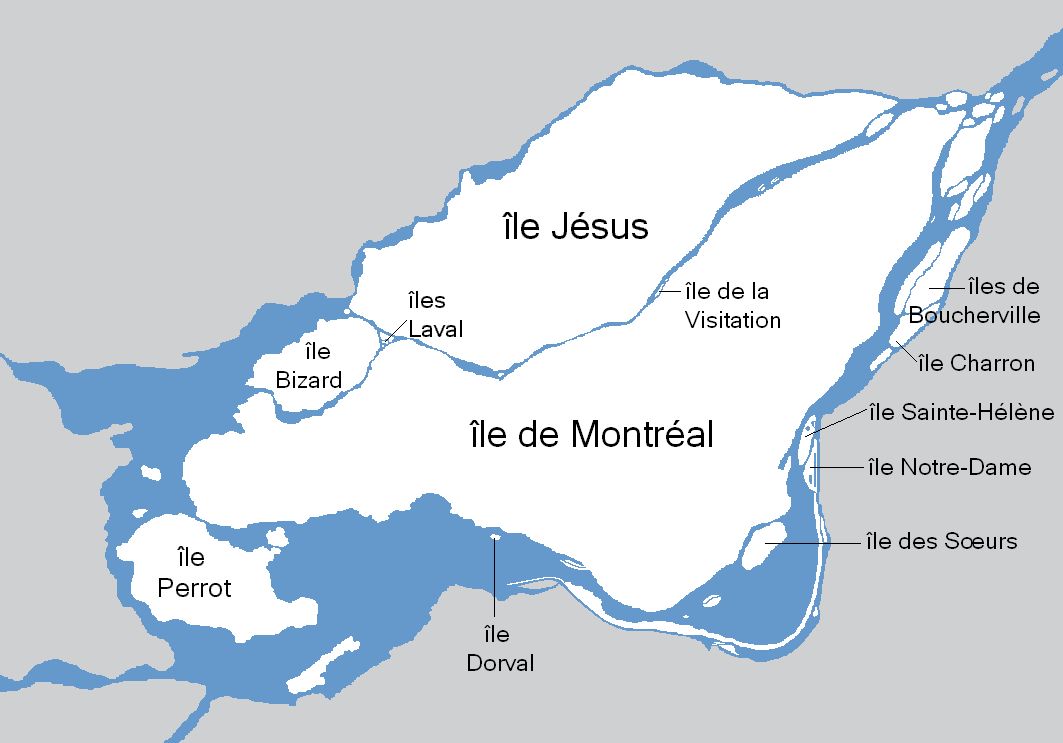
Nuns' Island is a 3.74-square-kilometre landmass within the Hochelaga Archipelago in the St. Lawrence River, situated immediately southeast of the Island of Montreal and north of the La Prairie Bassin. A narrow channel separates it from Montreal. The island's soils are mostly of clay loam to clay texture, and are usually somewhat poorly drained, classified as the MacDonald series. Areas with very poorly drained clay were mapped as Laplaine series, while well-drained glacial till areas were mapped as Chateaugay clay loam or St. Bernard loam. A small gravel deposit at the northern end of the island was mapped as Ste-Philomène sandy loam.
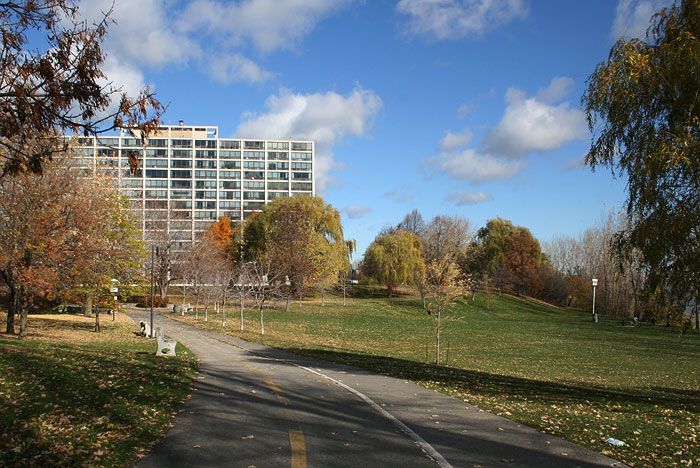
The island is noted for its parks and scenery including West Vancouver Park which overlooks the Saint Lawrence River. The most significant natural feature is the Domaine Saint-Paul, a 26-hectare natural woodland in the southern part of the island. This woodland is one of the last remaining natural woodlands in southern Montreal and serves as a crucial nesting area for more than a hundred species of birds. It surrounds an artificial body of water called Lac des Battures, which was created by accident when parts of the river known as 'water lots' became landlocked during the major landfill operations of the 1960s and 1970s.
The southern part of the island was historically subject to annual floods caused by spring runoff. The dykes built to contain this runoff and the subsequent filling of the areas not only created the lake but also enabled significant real estate development on the newly stable land. Despite its ecological value, the Domaine Saint-Paul woodland has faced progressive erosion due to ongoing development pressures on the island. The interplay between the natural clay-based geology, deliberate land reclamation, and accidental water feature creation defines the island's unique physical character.
Government and Civic Administration
As part of the borough of Verdun, Nuns' Island constitutes the neighbourhood of L'Île-des-Sœurs. For municipal representation, it is combined with the eastern third of mainland Verdun to form the city council district of Champlain-L'Île-des-Sœurs. This administrative structure integrates the island's governance fully within the City of Montreal. At the provincial level, the island falls within the electoral riding of Verdun. For federal elections, it is part of the riding of Ville-Marie, Le Sud-Ouest, Île-des-Sœurs. This layered political geography reflects the island's status as an integral, yet distinct, component of the larger urban community with representation at all three levels of government.
Economic Activity and Major Developments
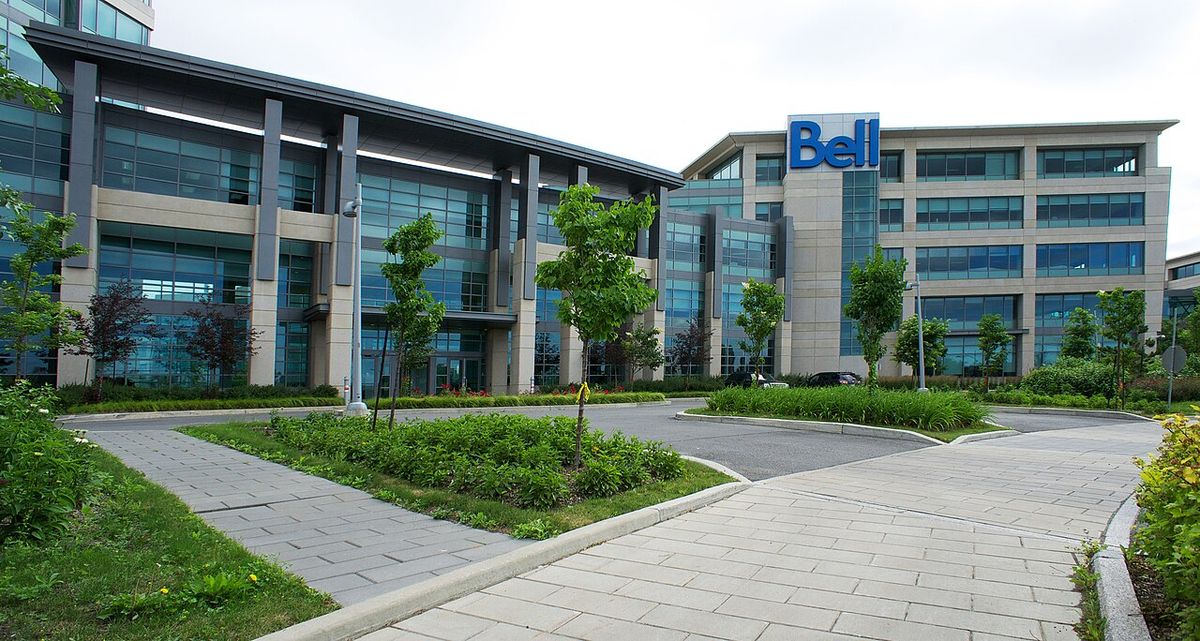
The commercial heart of Nuns' Island is centred around the Place du Commerce shopping centre, located near the Champlain Bridge. Civic services, including a community centre and a church, are clustered around the nearby Place Elgar. A substantial portion of the island's land is leased by Structures Metropolitaines from the current landowners of the island. The most significant economic development in recent decades was the opening of the Bell Canada national headquarters campus in 2009. As Canada's largest communications company, Bell consolidated workers from several locations throughout Montreal at this new complex on the northern tip of the island.
The Bell campus consists of a cluster of five low-rise buildings situated at the interchange of Autoroute 10 and Autoroute 15 at the northerly end of the island. This development not only brought a major corporate presence and employment centre to the island but also reinforced its connectivity and importance within the metropolitan region. The island's economy otherwise remains oriented towards serving its residential population, with the Place du Commerce mall acting as the primary retail hub. The presence of a major national corporate headquarters distinguishes Nuns' Island from many other residential suburbs.
Transportation, Infrastructure, and Education
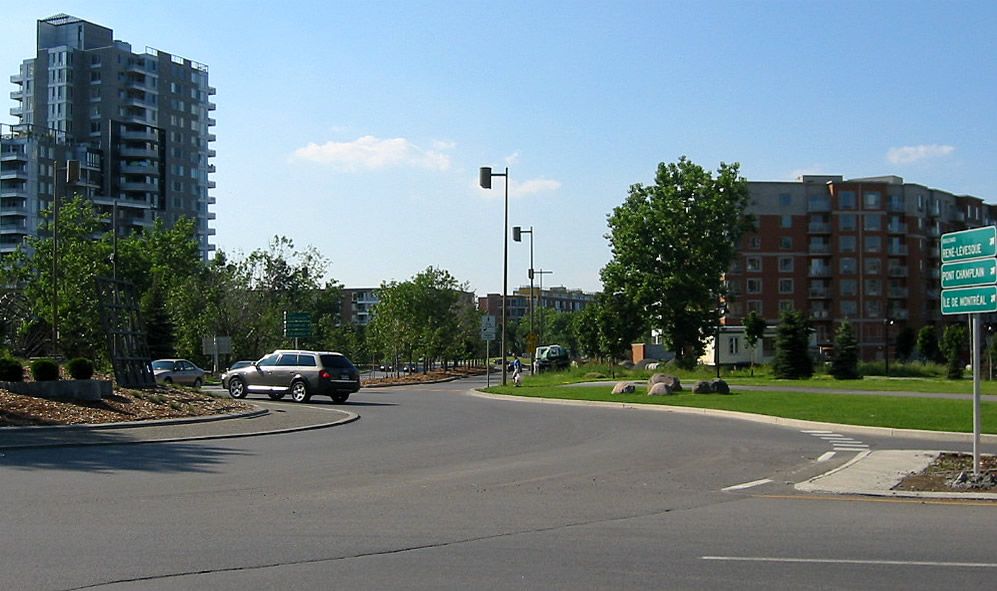
Nuns' Island is served by major road infrastructure, with the Décarie South Expressway (Autoroute 15) running through it. This highway connects the island to the south bank of the St. Lawrence River via the Champlain Bridge and to the Island of Montreal via the Pont de l'Île-des-Sœurs, which is part of the Champlain Bridge complex. The Clément Bridge provides a direct link to the Bonaventure Expressway (Autoroute 10). For public transit, a major advancement occurred in July 2023 with the opening of the Île-des-Sœurs station. This station is part of the driverless Réseau express métropolitain (REM) light rail line that connects downtown Montreal with Brossard on the South Shore, significantly enhancing the island's rapid transit options and connectivity.
The island's educational infrastructure is limited to two schools, both operating under Montreal's French-language Marguerite-Bourgeoys School Board. These are École primaire Île-des-Sœurs and École des Marguerite, which serve the elementary-level educational needs of the community. The island lacks secondary schools, requiring students to travel off-island for higher grades. The community is also served by local civic infrastructure centred around Place Elgar. The combination of new rapid transit, established highway bridges, and basic local schools forms the essential infrastructure supporting the residential community.
Key Landmarks and Notable Sites
Nuns' Island features several landmarks of architectural, historical, and natural significance. The most architecturally notable are the four structures designed by Ludwig Mies van der Rohe, completed around 1969. These include three high-rise apartment buildings and a distinctive Esso filling station, which represent a significant example of modernist architecture in a Canadian residential context. The Domaine Saint-Paul natural woodland is the island's primary ecological landmark, preserving a fragment of the area's original forest cover and providing vital habitat for numerous bird species. The artificial Lac des Battures, located within this woodland, is itself a notable feature born from the island's land reclamation history.
Other important sites include the Place du Commerce shopping centre, which functions as the main commercial hub, and the Bell Canada headquarters campus, a landmark of corporate architecture and a major employer. The island's parks, such as West Vancouver Park, offer residents and visitors scenic overlooks of the Saint Lawrence River. The road and bridge infrastructure, particularly the Champlain Bridge and Pont de l'Île-des-Sœurs, are defining elements of the island's built environment and its connection to the wider region. The historic Esso station designed by Mies van der Rohe has also been the subject of redevelopment plans.
- Four buildings by Ludwig Mies van der Rohe (c. 1969), including three apartment towers at locations like 201 rue Corot and a service station.
- Domaine Saint-Paul, a 26-hectare natural woodland and bird sanctuary with over a hundred nesting species.
- Lac des Battures, an artificial lake created within the woodland from landlocked 'water lots'.
- Place du Commerce, the central shopping centre and commercial cluster.
- Bell Canada National Headquarters campus, a five-building complex opened in 2009.
- West Vancouver Park, offering river views.
- Champlain Bridge complex, including the Pont de l'Île-des-Sœurs (opened 1962).
- Île-des-Sœurs REM station, opened in July 2023 as part of the automated light rail network.
Demographic and Community Profile
Nuns' Island is a primarily residential community that grew rapidly from its first inhabitants in 1968. The initial development phase housed 3000 people in 800 units, establishing the core of the population. The community is served by a single municipal district, Champlain-L'Île-des-Sœurs, which it shares with part of mainland Verdun. The population is served by French-language elementary schools, reflecting the linguistic character of the borough and the wider city. The arrival of the Bell Canada headquarters in 2009 introduced a significant daytime population of workers to the northern tip of the island, complementing the residential base. The community's amenities are focused in two main areas: commercial services at Place du Commerce and civic services at Place Elgar. The opening of the REM station in 2023 is likely to influence future demographic trends and connectivity. The community maintains a distinct identity within Verdun, rooted in its island geography, its history of convent ownership, and its notable modernist architecture.
Questions about Nuns' Island
Where is Nuns' Island located?
Nuns' Island is an island located in the Saint Lawrence River that forms a part of the city of Montreal, Quebec. It is part of the Hochelaga Archipelago in the St. Lawrence River. It is located immediately southeast of the Island of Montreal, from which it is separated by a narrow channel, and north of the La Prairie Bassin. It is part of the borough of Verdun.
How did Nuns' Island get its name?
The island was originally called Île Saint-Paul. The nuns of the Congrégation de Notre-Dame became the sole owners of the island in 1769. Their ownership would give the island its unofficial name, attested since the early 19th century. By 1956 the name Saint-Paul had fallen out of use, and the name île des Sœurs was officialized.
What is the Domaine Saint-Paul?
The Domaine Saint-Paul is a 64 acre (26-hectare) natural woodland in the southern part of the island. It is one of the last remaining natural woodlands in southern Montreal and is a crucial nesting area for more than a hundred species of birds. It has been progressively eroded by development. The woodland surrounds an artificial lake called Lac des Battures.
What major company has its headquarters on Nuns' Island?
Bell Canada, the largest communications company in Canada, has its national headquarters on Nuns' Island. In 2009, the company consolidated workers from several Montreal locations into a new complex on the island's northern tip. This campus headquarters consists of a cluster of five low rise buildings situated at the Autoroute 10 and 15 highway interchange. The establishment of this major corporate campus represents a significant recent development in the island's economy, which also features commercial services clustered in malls around the Place du Commerce shopping centre near the Champlain Bridge.
How do you get to Nuns' Island from Montreal?
You can reach Nuns' Island from Montreal via road and rapid transit. The Décarie South Expressway (Autoroute 15) runs through the island, connecting it to the Island of Montreal via the Pont de l'Île des Sœurs, which is part of the Champlain Bridge complex. The Clément Bridge connects the island with the Bonaventure Expressway (Autoroute 10). Since July 2023, a rapid transit connection has been available via the Île des Sœurs station, which is part of the driverless Réseau express métropolitain line running between downtown Montreal and Brossard.
Are there any famous buildings on Nuns' Island?
Yes, Nuns' Island features four notable buildings designed by the renowned architect Ludwig Mies van der Rohe. These were constructed as part of the second phase of the island's master plan development and were completed around 1969. The buildings include three high rise apartment buildings, with the first one at 201 rue Corot being occupied in 1969, and a contemporaneous Esso filling station. This urbanization was carried out by the Metropolitan Structures company of Chicago, following a master plan created by the American firm Johnson, Johnson, and Roy after the island's development began in earnest with the 1962 opening of the Champlain Bridge.
Sources and further reading
- Nuns' Island (Wikipedia)
- Verdun, L'Île des Sœurs (Nuns' Island) (hpaa.ca)
- Community life on Nuns' Island, IDS Social (idssocial.ca)
- Living in Montreal: Nuns' Island, A haven of peace (realta.ca)
- Nuns' island | Bardagi, RE/MAX du Cartier GB (bardagi.com)
Checked by the Your Space Hamilton desk. Last updated 2026-10-23.