Liberty Village
Liberty Village is a 28-hectare neighbourhood in west-downtown Toronto, Ontario, bounded by King Street West, Dufferin Street, the Gardiner Expressway, and Strachan Avenue. Once a heavily industrialized zone defined by railway corridors and penitentiaries, it has transformed since the early 2000s into a densely populated, transit-oriented district known for its concentration of young professionals, creative industries, and repurposed industrial lofts. The area is a significant hub for technology, media, and design firms and is directly adjacent to major venues like BMO Field and Lamport Stadium. Its ongoing evolution is guided by the recently adopted 'Liberty for All' planning framework, aiming to address infrastructure needs and enhance public spaces.
Historical Foundations and Industrial Era
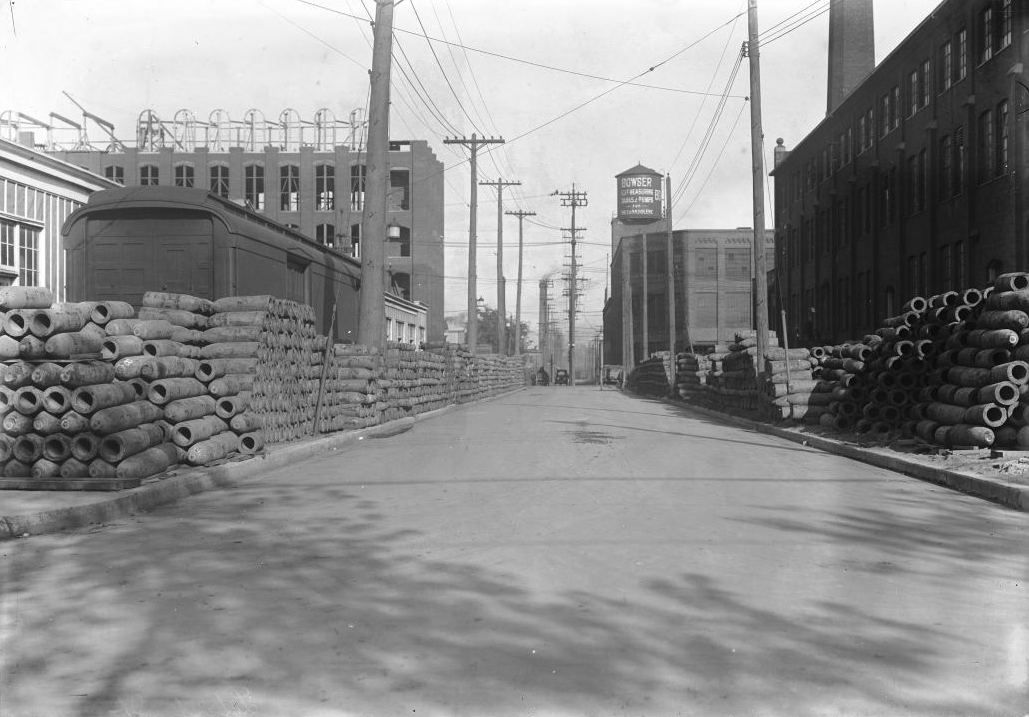
The origins of Liberty Village as a distinct, isolated district stem from railway construction in the 1850s. The Toronto, Grey and Bruce Railway and the Great Western Railway laid tracks that severed the area from the surrounding city, redirecting its development away from residential use. This isolation made it suitable for institutional and industrial purposes. The Toronto Central Prison opened in 1873, followed by the Andrew Mercer Reformatory for Women in 1878 on the site of the present-day Lamport Stadium. The neighbourhood's name derives from Liberty Street, the first street convicts from these institutions would walk upon their release. The area's excellent rail access catalyzed its growth as a major industrial centre from the late 19th century onward.
Major manufacturing companies established large operations in Liberty Village, taking advantage of the railway spurs and nearby labour force from Parkdale. John Inglis and Company opened in 1884, producing heavy machinery, boilers, and later electrical appliances. Massey-Harris, later Massey Ferguson, built a factory for agricultural implements in 1891. Other significant firms included Toronto Carpet Manufacturing, St. David's Wine, and Ontario Wind Engine and Pump. In the early 20th century, new arrivals included Brunswick-Balke-Collender, Irwin Toy, Canada Metal, Simmons Bedding, Hinde and Dauch Paper, and Sunbeam Incandescent Lamp. Many of these factories shifted production to armaments and weapons during the First and Second World Wars, leaving a legacy of soil pollution.
During the late 1970s and early 1980s, manufacturing operations within Liberty Village began to decline. This was due to a shift from rail to road shipping, the need for larger manufacturing facilities, and lower manufacturing costs in suburban or offshore locations. In 1990, the Toronto Carpet Manufacturing plant on Liberty Street shut down. The Inglis plant, owned by Whirlpool since 1985, ceased operations in 1991. Decreased industrial activity caused many Liberty Village buildings to fall into neglect. During the 1970s and 1980s, the combination of low rent and large industrial spaces attracted visual artists seeking affordable studio space, creating an informal arts enclave.
Transformation and Contemporary Character
The formal revitalization of Liberty Village gained momentum with the founding of the Liberty Village Business Improvement Area (BIA) in 2001, which now represents over 600 businesses employing more than 10,000 people. From approximately 2004 onward, the neighbourhood experienced rapid development, converting old factories into residential lofts, offices, and commercial spaces. Landmark industrial structures like the Toronto Carpet Factory building on Mowat Avenue and the converted Irwin Toy Factory were repurposed to house design, technology, media, and marketing firms. This period saw the area marketed as an 'artsy loft district' and a 'bohemian enclave' for young professionals and artists.
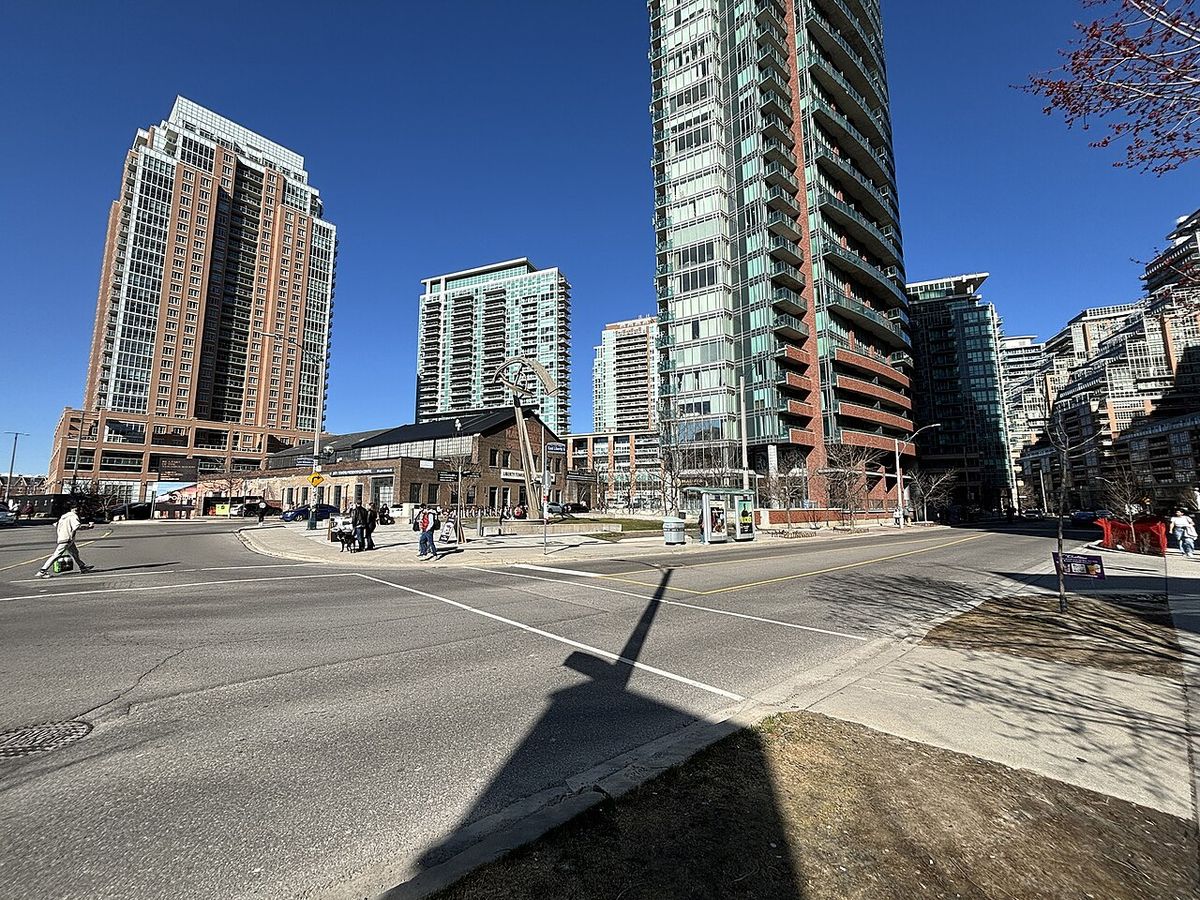
The neighbourhood's character today is defined by its dense concentration of condominiums, a commercial strip along East Liberty Street, and a distinctly youthful demographic, with most residents aged 25 to 40. It has a Walk Score of 88 and a Transit Score of 96, which highlights its urban accessibility. The area is a hub for technology and creative sector businesses, with many located in creatively adapted heritage buildings. The Liberty Market, a collection of converted storage and factory spaces at Liberty and Hanna, epitomizes this blend of historic fabric and contemporary use. The pace of development remains high, with nine additional condominiums under construction as of 2018, adding thousands of new units and amenities.
Community life is actively shaped by the Liberty Village Residents' Association (LVRA), formed in 2011. It grew rapidly to represent 95 percent of local condominiums and operates a Facebook group with over 14,000 members. The LVRA describes itself as a YIMBY ('Yes In My Backyard') organization and claims to be the largest residents' association in North America. It organizes numerous annual events and acts as a central forum for addressing neighbourhood issues such as transit, daycare, and safety, with sponsorship from local companies like Beanfield Metroconnect.
Planning, Infrastructure, and 'Liberty for All'
Rapid growth has brought significant infrastructure challenges, including traffic congestion, overcrowded transit, and a noted lack of community facilities like a public library, community centre, or school. In response, the City of Toronto initiated the 'Liberty for All' planning study. This process culminated on June 25, 2026, when Toronto City Council adopted the Liberty for All Official Plan Amendment, establishing a comprehensive long-term framework for the neighbourhood. The plan focuses on creating a complete community centred around transit investment and mandates the development of new public spaces, community facilities, affordable housing, and improved traffic management. A key component of the new framework is the creation of a Secondary Plan for lands west of Hanna Avenue, which were redesignated from Employment Areas to Regeneration Areas in late 2023. This change allows for residential uses while requiring the retention and expansion of non-residential space and the inclusion of affordable housing in new developments. The Liberty for All plan builds upon several preceding city initiatives, including the Liberty Village Public Field Strategy and the Liberty Village Traffic Action Plan, which was approved in fall 2024 to address immediate congestion issues.
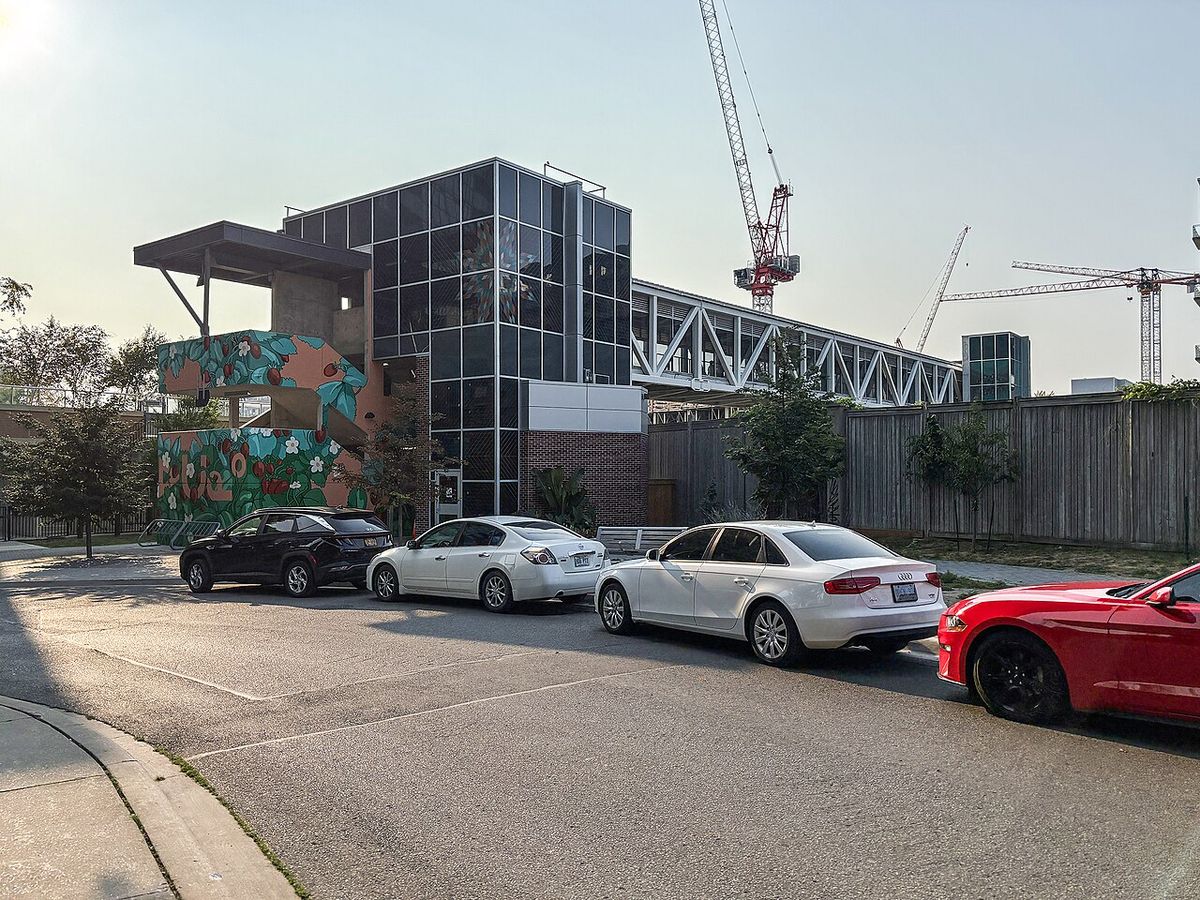
Major infrastructure projects are underway or planned. The King-Liberty pedestrian bridge, an $11.5 million steel truss span connecting Liberty Village to the Niagara neighbourhood, opened in April 2021 after construction began in 2018, though it has experienced operational issues with its elevators. Looking ahead, the Ontario Line subway is scheduled to reach the nearby Exhibition Station by 2031, providing a new rapid transit connection. The six-lane Gardiner Expressway, which borders the neighbourhood to the south, was reopened 18 months ahead of schedule following repairs.
Parks, Recreation, and Major Events
Liberty Village has historically been criticized for a lack of green space, a deficiency that current planning aims to correct. The most significant new park project is at 34 Hanna Avenue, on the site of a former parking lot across from Liberty Market. A design competition for this 4,900-square-metre park was launched, with five teams shortlisted in March 2026 and a winning design anticipated later that year. Construction is targeted for Spring 2028, with an opening slated for 2029. In the interim, a 'Park in Progress' was activated on a portion of the lot in June 2025, providing passive recreation space with seating and planters.
The neighbourhood's primary existing recreational facility is Lamport Stadium, home to the Toronto Wolfpack rugby league team. The stadium's parking lot also hosts the annual Give Me Liberty Street Party, a nighttime event featuring live music and over 40 local vendors. Directly south of Liberty Village, Exhibition Place is a major venue complex that includes BMO Field, the home stadium of Toronto FC of Major League Soccer. This proximity makes Liberty Village a destination on game days. Exhibition Place also hosts large annual events like the Canadian National Exhibition (CNE) and the Toronto Festival of Beer.
- Lamport Stadium: Home to the Toronto Wolfpack rugby team and community events.
- BMO Field at Exhibition Place: Home to Toronto FC and a host venue for six FIFA World Cup 2026 matches.
- Give Me Liberty Street Party: Annual summer party in the Lamport Stadium parking lot.
- Toronto Festival of Beer: Annual craft beer festival held at Exhibition Place.
- Canadian National Exhibition (CNE): Major annual fair held at Exhibition Place in late summer.
- New Park at 34 Hanna: A 4,900 m² public park slated for construction starting in 2028.
There is an update on a design competition for a new 4900 square metre public park at 34 Hanna Avenue and Liberty Street. Five teams were shortlisted in March 2026. The winning design was anticipated later in 2026. Construction for the new park is targeted for Spring 2028. For indoor recreation, Joe Rockhead's Indoor Rock Climbing offers a large facility for bouldering and climbing courses.
Local Economy and Lifestyle
Liberty Village functions as a significant employment node, with over 10,000 people working within the Business Improvement Area. The economy is dominated by creative and knowledge-based sectors, with a high concentration of technology startups, advertising agencies, design studios, and media companies occupying the converted industrial lofts. This business density supports a daytime population and a corresponding service economy of restaurants, cafes, and shops catering to professionals and residents alike. The residential market is almost exclusively condominium-based, with a median price of $610,000 for a condo and a median one-bedroom rent of $2,608 as of December 2025.
The neighbourhood is known for its walkable, urban convenience, with a high density of amenities within a compact area. Dining is a major attraction, with a reputation for brunch spots like Mildred's Temple Kitchen and SCHOOL Restaurant, and popular eateries such as Burger Drops. Nightlife centres on venues like Liberty Soho, which features a large patio. Retail offerings include design-focused stores like EQ3 and Structube, and unique boutiques such as I Have A Crush On You. Parking remains a practical concern, with Green P lots charging $3 to $5 per hour and monthly rates ranging from $150 to $250.
| Metric | Figure (2025 to 2026) |
|---|---|
| Approximate Population | 9,000 |
| Median 1-Bedroom Rent | $2,608 |
| Median Condo Price | $610,000 |
| Walk Score | 88 |
| Transit Score | 96 |
| BIA Member Businesses | 600+ |
| BIA Employment | 10,000+ |
Liberty Village sits directly adjacent to BMO Field. BMO Field was the host venue for six FIFA World Cup 2026 matches. The neighbourhood prepared extensively for the event. Preparations included updates on road closures and transit changes. There were also details on fan zones and what Liberty Village residents needed to know. These efforts were coordinated to manage the impact of the major international event.
Transportation and Access
Liberty Village is served by multiple public transit options, contributing to its high Transit Score of 96. The Toronto Transit Commission operates the 504 King streetcar along the northern border and the 29 Dufferin bus along the western edge. At the southern boundary, the Exhibition GO Station provides commuter rail service on GO Transit's Lakeshore West line. A major future improvement is the Ontario Line subway, which will have its southern terminus at Exhibition Station by 2031, connecting Liberty Village to downtown Toronto and other subway lines.
Road access is defined by the bordering arterial roads: King Street West, Dufferin Street, and the Gardiner Expressway. Internal traffic congestion has been a persistent issue, leading to the adoption of the Liberty Village Traffic Action Plan. The King Street Transit Priority Corridor project, implemented in 2017, aimed to speed up streetcar travel times along the central section of King Street, benefiting access to the neighbourhood. For pedestrians and cyclists, the King-Liberty Bridge provides a vital dedicated link across the railway corridor to the Niagara neighbourhood, improving connectivity that was previously only possible via lengthy detours to Dufferin or Strachan Avenue.
In Popular Culture
Liberty Village's unique transformation has been captured in documentary film. 'Liberty Village, Somewhere in Heaven,' produced and directed by David Sloma for Rockin' Films, was released in 2006. The film features interviews with longtime residents and artists from the area's earlier artistic enclave period, including musician Corky Laing, who provided the soundtrack. The documentary was made with partial support from the National Film Board of Canada through its Filmmaker Assistance Program, offering a portrait of the neighbourhood before its most intensive wave of condominium development. It documents the community of artists and workers that occupied the low-rent industrial spaces prior to the area's rapid residential and commercial redevelopment.
Questions about Liberty Village
What is Liberty Village known for?
Liberty Village is known for its transformation from a 19th century industrial zone into a dense, trendy neighbourhood. It is characterized by converted factory lofts housing technology, media, and design firms. The area has a restaurant and cafe scene and a condominium dominated residential landscape. It is also known for its proximity to major sports venues like BMO Field, home of Toronto FC, and Lamport Stadium, home of the Toronto Wolfpack rugby team.
Is Liberty Village a good place to live?
Liberty Village is considered a desirable place to live for those seeking a walkable, transit-connected urban lifestyle with abundant amenities. It scores 88 for walkability and 96 for transit, and it is packed with restaurants, bars, gyms, and shops. The demographic is predominantly young professionals aged 25 to 40. Considerations include ongoing traffic congestion, a historical lack of major parks, and the high density, which the new 'Liberty for All' plan aims to address with new public spaces and community facilities.
What are the transit options in Liberty Village?
Liberty Village is well-served by public transit. The primary TTC routes are the 504 King streetcar along the northern border and the 29 Dufferin bus on the west side. The Exhibition GO Station at the southern edge provides commuter rail service on the Lakeshore West line. A significant future addition is the Ontario Line subway, which will terminate at Exhibition Station by 2031, offering a direct rapid transit link to the downtown core and other subway lines.
What is the 'Liberty for All' plan?
Liberty for All is a comprehensive planning framework for the future of Liberty Village, officially adopted by Toronto City Council on June 25, 2026. The plan establishes a long-term vision to create a 'complete community' centred on transit. It mandates the development of new public spaces, community facilities like a potential library or community centre, more affordable housing, and better traffic management. It builds on previous studies and redesignates lands to encourage mixed-use regeneration while preserving employment spaces.
What is there to do in Liberty Village?
Activities in Liberty Village include dining at its many restaurants and cafes. People can attend Toronto FC or Toronto Wolfpack home games at nearby stadiums. The area features indoor rock climbing at Joe Rockhead's Indoor Rock Climbing. The Liberty Village Residents' Association creates six annual events attended by thousands every year. New park spaces are also in development for the community.
How did Liberty Village get its name?
Liberty Village is named after Liberty Street. Liberty Street was the first street convicts from the area's two prisons would walk once freed. These prisons were the Toronto Central Prison and the Andrew Mercer Reformatory for Women. The name symbolically marks the transition from incarceration to freedom.
Sources and further reading
- Liberty Village (Wikipedia)
- Liberty Village, Toronto, Neighbourhood Guide (2026) (libertyvillage.co)
- Neighbourhood: Liberty Village (destinationtoronto.com)
- Liberty For All, City of Toronto (toronto.ca)
Checked by the Your Space Hamilton desk. Last updated 2026-10-24.