Wheelchair rugby
Wheelchair rugby is a full-contact, indoor team sport for athletes with disabilities, invented in Canada in 1976. Created by five Winnipeg athletes seeking a competitive team sport accessible to people with tetraplegia, the game combines elements of basketball, hockey, handball and rugby. Governed globally by World Wheelchair Rugby, it has been a full-medal Paralympic sport since the Sydney 2000 Games. As a Canadian innovation, wheelchair rugby holds a special place in the nation's parasport history and continues to be a source of national pride, with Canadian teams regularly competing at world championships and hosting major international tournaments.
Origins and Canadian Invention
Wheelchair rugby was invented in 1976 in Winnipeg, Manitoba, by five Canadian wheelchair athletes: Gerry Terwin, Duncan Campbell, Randy Dueck, Paul LeJeune and Chris Sargent. Their goal was to create a team sport that was accessible and competitive for individuals with tetraplegia, who often found themselves in supporting roles in wheelchair basketball due to its physical demands. The sport was originally nicknamed "murderball" due to its aggressive, full-contact nature, a characteristic that remains a defining feature. This Canadian innovation filled a significant gap in adaptive sports, providing a platform where athletes with significant impairments in three or four limbs could be central, impactful players. The invention quickly demonstrated the potential for high-level, physically demanding team sports within the disability community and led to its rapid international spread.
The first international tournament was held in 1982, featuring teams from North America. By the end of the 1980s, the sport had expanded to include teams from the United Kingdom and had also reached Australia. This rapid global adoption confirmed the appeal and viability of the Canadian-created game. The sport's formal international recognition came in 1993 when it was officially recognized for athletes with a disability and the International Wheelchair Rugby Federation, now World Wheelchair Rugby, was established in that same year.
Gameplay and Core Rules
Wheelchair rugby is played on a standard basketball court measuring 28 by 15 metres. Two teams, each with four players on the court at any time, compete to carry a ball across the opponent's goal line. For a goal to count, a player must have possession of the ball while two wheels of their wheelchair cross the line between two pylons. The game is a mixed-gender sport, with teams often including both male and female athletes. Physical contact between the wheelchairs is not only permitted but is a fundamental strategic component, used for blocking and defensive plays, though no contact between players' bodies is allowed.
The rules incorporate a shot clock and time limits to maintain a fast pace. A team in possession of the ball must pass or dribble it within eight seconds and must advance it over the halfway line within twelve seconds. The entire offensive possession is limited to forty seconds, after which the ball is turned over if no goal is scored. Defensive players are restricted, with no more than three allowed in their own key area at one time, while offensive players cannot remain in the opposing key for more than eight seconds. Fouls are penalized with thirty-second penalties for defensive infractions or a loss of possession for offensive fouls. Games consist of four eight-minute quarters, with overtime periods played if the score is tied after regulation time.
Common fouls in wheelchair rugby include spinning, which is striking an opponent's wheelchair behind the main axle to cause it to spin, and illegal use of hands or reaching in to strike an opponent. Holding, which involves grasping or obstructing an opponent's wheelchair or body, is also a frequent foul. The combination of strategic physical contact, speed, and precise ball handling creates a dynamic and physically demanding sport that requires both individual skill and cohesive team strategy. This rule set ensures the game remains fast, competitive and safe for all participants.
Athlete Classification System
To be eligible for the Paralympic version of wheelchair rugby, athletes must have a disability that results in a loss of function in at least three limbs. The majority of players have spinal cord injuries at the cervical level, but the sport also includes athletes with multiple amputations, polio, cerebral palsy, muscular dystrophy and other neurological conditions. A formal classification system is used to ensure fair competition by evaluating each athlete's functional ability. Players are assessed through muscle tests and game observation, then assigned a point value ranging from 0.5 for the lowest functional level to 3.5 for the highest.
The total point value of the four players from one team on the court cannot exceed eight points at any time. This rule forces teams to strategically balance their lineups, mixing players of different classifications to maximize both offensive and defensive capabilities. Classification is conducted by trained personnel, typically with medical backgrounds such as physicians, physiotherapists or occupational therapists. Athletes can appeal their classification if they believe it does not accurately reflect their function, and they can be granted a permanent classification after demonstrating a stable level of ability over multiple evaluations. This system is fundamental to the sport's integrity, ensuring that competition is based on skill and teamwork rather than the degree of physical impairment alone.
Specialized Equipment and Variations
Players use custom-made manual sports wheelchairs that are specifically designed for the rigours of the game. Key features include a front bumper for striking and holding opposing chairs, and wings mounted in front of the main wheels to make the chair harder to stop and hold. All chairs must have spoke protectors and an anti-tip device at the rear. The sport uses a regulation volleyball, specifically the Molten soft-touch model, which is often over-inflated to increase its bounce. Players frequently use gloves, adhesives and strapping to aid with ball handling and maintain a secure, functional seating position due to impaired grip and trunk control.
Beyond the classic four-a-side Paralympic version, several variations of wheelchair rugby have been developed to include a wider range of athletes. The Invictus Games version uses a three-category system with Maximum, Moderate and Open classes and reduces team size in later rounds. Wheelchair Rugby 5s, officially adopted by World Wheelchair Rugby in 2021, is a five-a-side game with a broader classification system that includes players with impairments in one or two limbs. These variations aim to make the sport more inclusive while maintaining its core competitive spirit and physical nature.
Key variations include the Invictus Games format, which features categories for players with non-permanent injuries or illnesses like PTSD, with a 10-point limit for 4 players on court. Wheelchair Rugby 5s is a five-player format with classifications from 0.5 to 4.0, allowing players with single-limb impairments to compete. Women's Wheelchair Rugby is a growing discipline, with the first Women's World Championship scheduled for Paris in December 2026. Each variation adapts the core principles of the original Canadian game to welcome new participants and audiences.
International Competition and Canada's Role
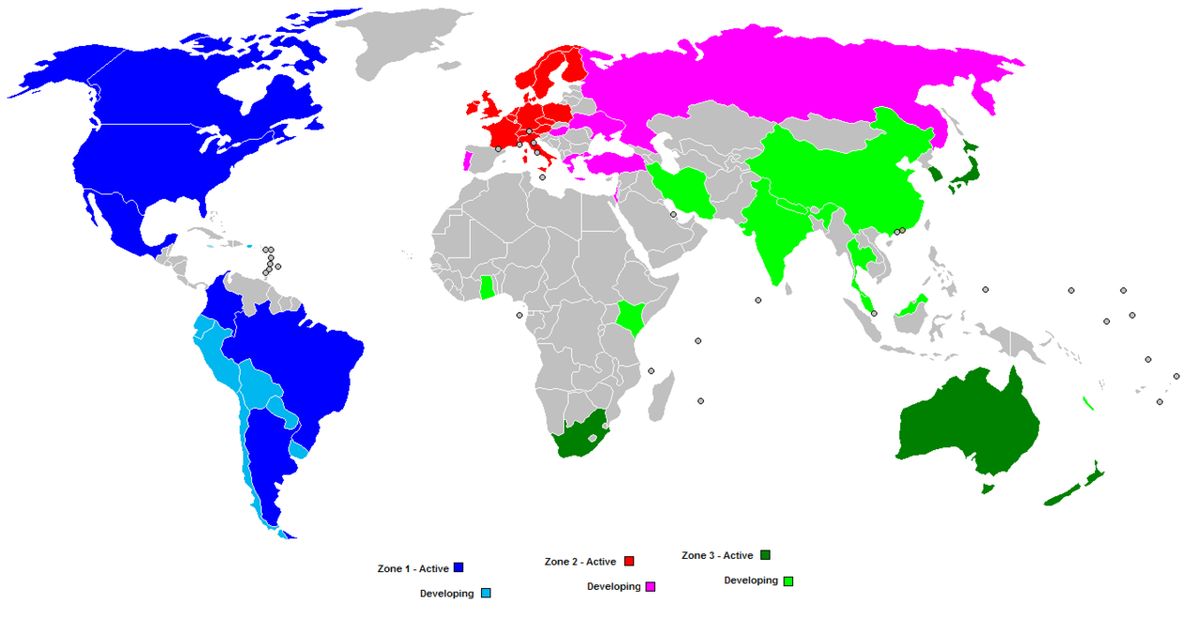
World Wheelchair Rugby governs the sport and organizes major international competitions, including the biennial Zone Championships and the quadrennial World Championships. The sport has been part of the Summer Paralympic Games since 2000, following its debut as a demonstration sport at the 1996 Atlanta Games. As of 2026, thirty-one countries have active national teams, with another twenty-six developing programs. Canada is consistently among the world's top nations, contributing not only athletes but also officials, classifiers and coaches to the international scene. The country's ongoing involvement reflects its foundational role in the sport's creation and global development.
Canada regularly hosts significant international events, strengthening its role in the global community. In 2026, Canada hosted the International Wheelchair Rugby Canada Cup in Richmond, British Columbia, and the Défi sportif AlterGo hosted an international women's wheelchair rugby tournament in Montreal. Ottawa was set to host the IWBF Wheelchair Basketball World Championships in September 2026, highlighting the nation's commitment to major parasport events. The 2026 Wheelchair Rugby National Championships were also held at Carleton University in May, providing a platform for domestic talent to compete at a high level.
At the 2026 World Championships in São Paulo, Brazil, Canada finished seventh in the twelve-team field. The team recorded three wins and five losses, gaining valuable experience for a developing squad aiming for the LA2028 Paralympics. Five athletes made their World Championship debuts, and head coach Trevor Hirschfield led the team for the first time at this event. Canadian representation extended beyond the team, with officials like referees Kevin Bowie and Pierre Alexandre Brière, and classifiers Paul Easton and Julie Bakke contributing to the tournament's operations. This broad involvement demonstrates the depth of Canadian expertise in the sport worldwide.
Recent Canadian Performance and Development
The Canadian wheelchair rugby program uses major tournaments as development platforms for future Paralympic cycles. The 2026 World Championship in São Paulo served this purpose for the LA2028 Games, introducing several new athletes to the highest level of international competition. Head coach Trevor Hirschfield noted the team's growth in playing "calculated gritty rugby" during matches against nations like Denmark, Great Britain and Brazil. Individual Canadian athletes also earned recognition, with Cody Caldwell named Best in Class for the 2.0 classification and Austin MacLellan leading the team in tries scored with 114 over the tournament. These performances indicate a strong foundation for the next generation of Canadian players.
Domestically, the sport continues to grow through provincial programs and national championships. In 2025, Alberta's provincial team won the gold medal at the Wheelchair Rugby National Championships in Montréal. These events are crucial for identifying and nurturing talent across the country. Canadian expertise is also exported internationally, as seen with Dave Willsie serving as a co-coach for the French national team in 2026. The ongoing development of women's wheelchair rugby is another focus, with the inaugural Women's World Championship in 2026 providing a new pinnacle for female athletes in the sport. This domestic and international activity ensures the Canadian program remains competitive and influential.
Cultural Impact and Recognition
Wheelchair rugby gained significant public attention through the 2005 documentary Murderball, which was nominated for an Academy Award and was voted the number-one Top Sports Movie of all time by Rotten Tomatoes. The film provided an intimate look at the sport's intensity and the lives of its athletes, particularly focusing on the rivalry between the Canadian and American teams. This exposure helped bring the sport to a mainstream audience and challenged perceptions about disability and athleticism. It also cemented the sport's original nickname in popular culture and highlighted its unique appeal.
The sport has also been featured in popular television, such as in an episode of Friday Night Lights, where a paralysed character tries out for the United States quad rugby team. These portrayals have contributed to a broader understanding and appreciation of adaptive sports. The sport's inherent drama, physicality and teamwork make it compelling for spectators, both in person and through media coverage. As the sport continues to grow globally, its presence in popular culture helps promote inclusivity and presents the high level of competition within parasports to a wide audience.
Questions about Wheelchair rugby
Where and when was wheelchair rugby invented?
Wheelchair rugby was invented in 1976 in Winnipeg, Manitoba, Canada. It was created by five Canadian wheelchair athletes: Gerry Terwin, Duncan Campbell, Randy Dueck, Paul LeJeune and Chris Sargent. They developed the sport to provide a competitive team sport option for individuals with tetraplegia, who had limited opportunities in other wheelchair sports at the time. The sport was originally called murderball due to its full-contact nature.
What are the basic rules of wheelchair rugby?
Two teams of four players compete on a basketball-sized court to carry a volleyball across the opponent's goal line. Players must bounce or pass the ball within eight seconds and must cross the halfway line within twelve seconds of gaining possession. A team has forty seconds to score before losing the ball. Physical contact between wheelchairs is allowed and is a key part of defence and strategy. The total classification points of the four players on court for one team cannot exceed eight points.
Who is eligible to play wheelchair rugby?
To be eligible for the Paralympic version, athletes must have a disability that causes loss of function in at least three limbs. Most players have cervical spinal cord injuries, but those with multiple amputations, polio, cerebral palsy, muscular dystrophy or other neurological conditions also qualify. Players are classified on a points system from 0.5 to 3.5 based on their functional ability. Variations like Wheelchair Rugby 5s have broader eligibility, including players with impairments in one or two limbs.
How did Canada perform at the 2026 Wheelchair Rugby World Championships?
At the 2026 World Championships in São Paulo, Brazil, Team Canada finished in seventh place among twelve nations. The team's record was three wins and five losses over eight games. The tournament featured a developing Canadian squad, with five athletes making their World Championship debuts. Despite the result, head coach Trevor Hirschfield highlighted the team's growth and determination, viewing the event as valuable experience building toward the LA2028 Paralympic Games.
Is wheelchair rugby a Paralympic sport?
Yes, wheelchair rugby has been a full-medal sport at the Summer Paralympics since the 2000 Games in Sydney, Australia. It first appeared as a demonstration sport at the 1996 Paralympics in Atlanta. The sport is governed by World Wheelchair Rugby and features eight teams at the Paralympic Games. Canada has been a consistent participant in the Paralympic competition since the sport's inclusion, reflecting its status as the country where the sport originated.
What major wheelchair rugby events is Canada hosting in 2026?
In 2026, Canada hosted several major wheelchair rugby events. These included the International Wheelchair Rugby Canada Cup in Richmond, British Columbia, and the Wheelchair Rugby National Championships at Carleton University in Ottawa. Montréal hosted an international women's wheelchair rugby tournament as part of the Défi sportif AlterGo in April. Ottawa was scheduled to host the IWBF Wheelchair Basketball World Championships in September 2026, a related major parasport event.
Sources and further reading
- Wheelchair rugby (Wikipedia)
- Looking Back: Canada at the 2026 Wheelchair Rugby ... (wheelchairrugby.ca)
- Wheelchair Rugby World Championship gets underway in ... (paralympic.org)
- wheelchair rugby tournament, Défi sportif AlterGo 2026 (defisportif.com)
Checked by the Your Space Hamilton desk. Last updated 2026-10-30.