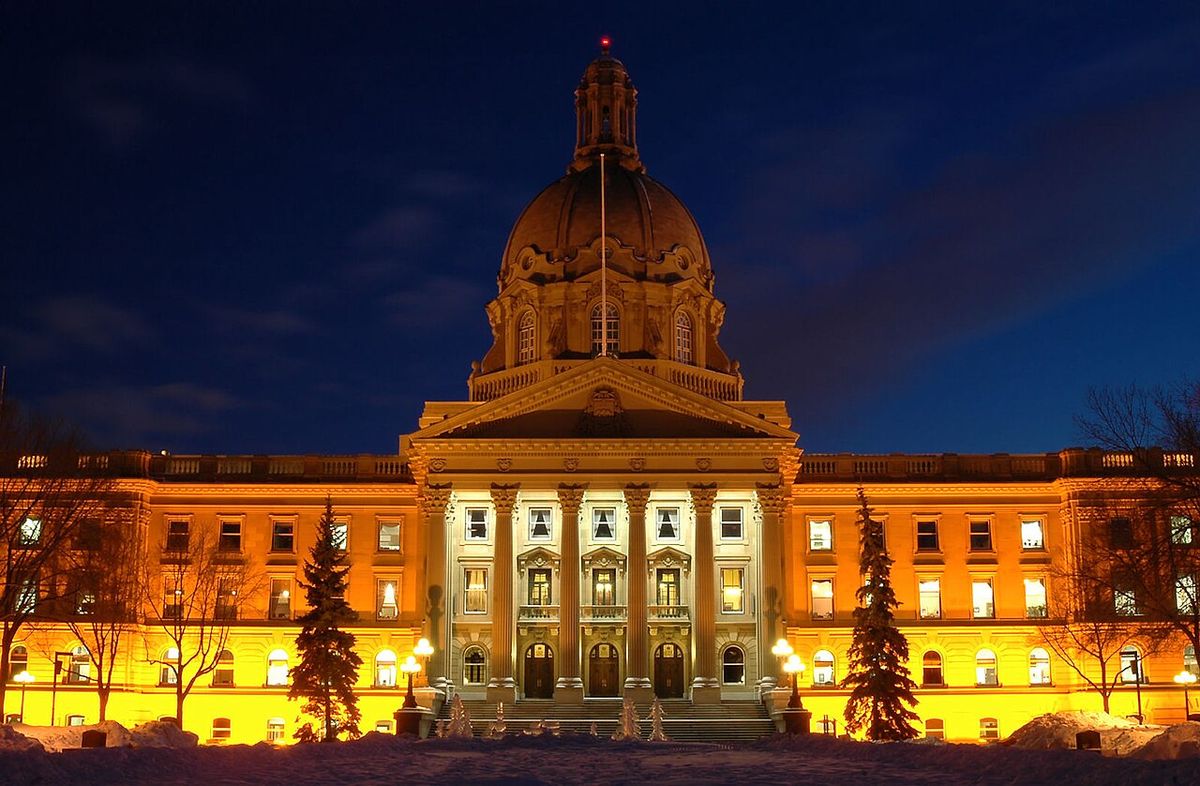
Richmond, British Columbia
Richmond is a city located in the Metro Vancouver region of British Columbia, Canada, situated on a series of islands in the Fraser River delta. It is the fourth-largest city in the province, with an estimated population of 241,375 residents as of recent city data. Richmond is notable for its significant diversity, with over 60 percent of its population being immigrants and East Asian Canadians forming a majority. The city is a major economic and transportation hub, home to Vancouver International Airport and a dynamic mix of retail, technology, agriculture, and heritage tourism.
Geography and Environment
Richmond occupies a unique geographical position, comprising most of Lulu Island, the entirety of Sea Island, and fifteen smaller islands within the Fraser River estuary. The city's land area totals 128.87 square kilometres, with an average elevation of just one metre above sea level. This low-lying delta landscape consists of rich alluvial soil, which has supported agriculture for over a century, but also necessitates an extensive system of dykes for flood protection. Recreational trails run along the tops of many dykes, providing scenic routes for walking and cycling with views of the North Shore mountains and the river. The city's proximity to Vancouver International Airport on Sea Island imposes a building height restriction of approximately 46 metres. Richmond's oceanic climate is milder and receives about 30 percent less rainfall than neighbouring Vancouver, with infrequent snowfall in winter.
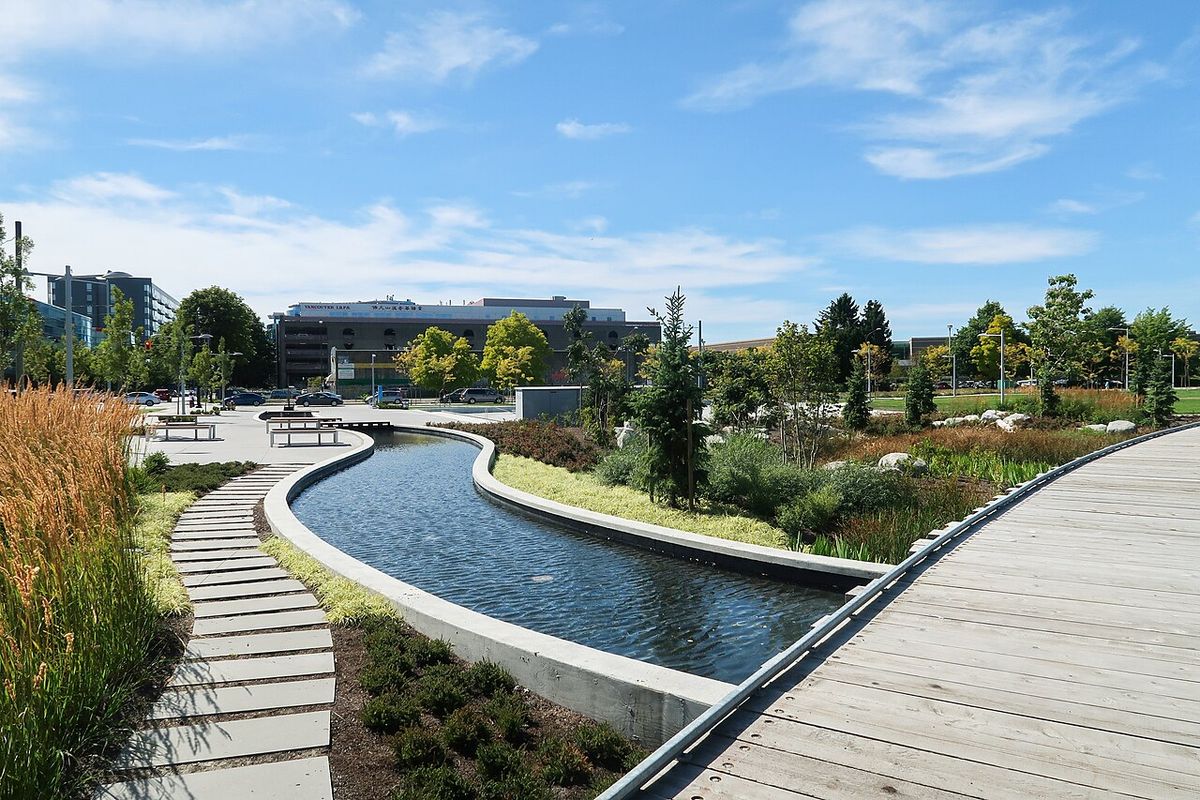
The islands that make up Richmond include several notable areas beyond the main population centres. Mitchell Island is an industrial area connected to Vancouver via the Knight Street Bridge. Richmond Island, a former sandbar, is a peninsula accessible only from Vancouver but within city limits. The historic fishing village of Steveston is located on the southwestern tip of Lulu Island, while the community of Burkeville shares Sea Island with the airport. The city manages about 1,400 acres of parkland, integrated into the dyke and trail network. The ongoing challenge of managing flood risk and seismic liquefaction potential shapes much of the city's planning and infrastructure development.
History
The area now known as Richmond has been used by Coast Salish peoples for millennia, with seasonal camps for fishing and gathering at locations like Garry Point and Woodward's Landing. The Musqueam Band had a village at the site of the later Terra Nova cannery. The origin of the city's name is debated, with possibilities including the McRoberts' Australian homestead 'Richmond View', early settler and Reeve Hugh Boyd's connection to Richmond, North Yorkshire, or petition drafter W.D. Ferris's link to Richmond, Surrey, England. The Township of Richmond was officially incorporated on 10 November 1879, modelled on Ontario's township system with a ward electoral system. The first civic buildings, including a town hall and church, were built at the intersection of River Road and Cambie Road. The ward system was replaced by an at-large electoral system in 1946. Richmond was designated as a city on 3 December 1990. The Steveston area, once an independent village, remains a focal point of the city's heritage, home to sites like the Britannia Shipyard National Historic Site and the Gulf of Georgia Cannery. The city's Japanese Canadian community, established in Steveston in the 1800s, was forcibly relocated and interned during the Second World War.
Demographics and Culture
According to the 2021 census, Richmond had a population of 209,937, with a median age of 43.6 years. The city has experienced rapid growth, with a recent municipal estimate placing the population at 241,375. A defining characteristic is its ethnic and linguistic diversity, with immigrants comprising 60 percent of residents, the highest proportion in Canada. East Asian Canadians form a majority at 57.1 percent of the population, with the broader Asian Canadian community making up 73.4 percent. The most common mother tongues are English (37.1%), Cantonese (23.3%), and Mandarin (22.7%).
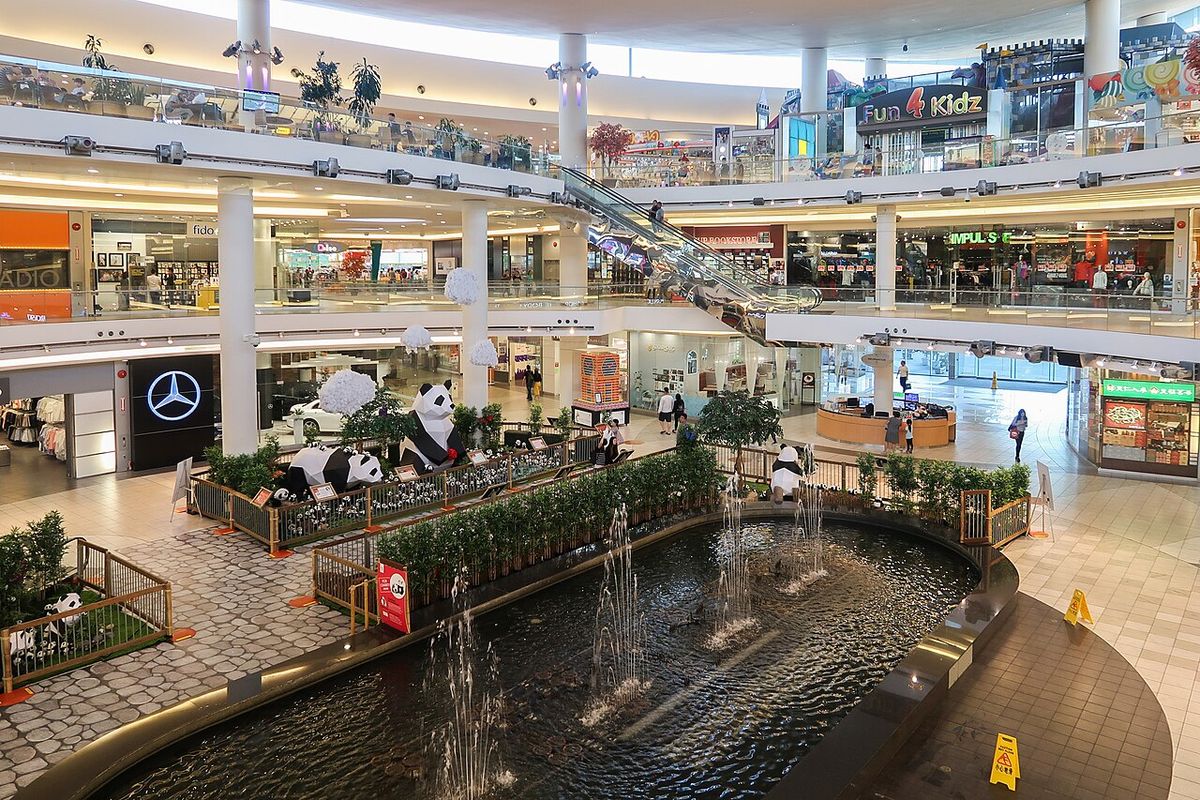
Religiously, the population is predominantly non-religious (53.3%), with Christianity (30.9%) and Buddhism (5.6%) as the next largest affiliations. Richmond is home to two of the largest Buddhist temples in North America, the International Buddhist Temple and the Ling Yen Mountain Temple. The city's character is reflected in its numerous Asian-oriented shopping malls in the 'Golden Village' district and major annual events like the Richmond Night Market. The Richmond Arts Coalition hosts various exhibitions and events throughout the year, while institutions like the Richmond Art Gallery and Richmond Museum provide cultural programming.
Economy and Major Sectors
Richmond's economy is diverse, supporting approximately 100,000 jobs across multiple sectors. Key industries include retail, tourism, light manufacturing, aviation services, technology, agriculture, and fishing. The city is a regional leader for high-technology companies, hosting firms like Norsat and Sierra Wireless. Vancouver International Airport is a major employer and economic driver. Historically, Richmond was the headquarters for several airlines, including Air BC, Harmony Airways, Pacific Western Airlines, and Canadian Pacific Air Lines. The first McDonald's restaurant outside the United States opened in Richmond in June 1967.
Agriculture remains a significant land use, with 4,916 hectares within the Agricultural Land Reserve. Active farming occurs on 3,012 hectares operated by 247 farms, with cranberries and blueberries as the dominant crops. Richmond contains about 47 percent of British Columbia's cranberry acreage. The retail sector is anchored by several major shopping centres, including Richmond Centre, Lansdowne Centre, and the specialty Asian malls of the Golden Village along No. 3 Road. Richmond Centre was ranked fourth in Canada for sales per square foot in 2023. The 'food street' area on Alexandra Road is known for its concentration of restaurants.
Urban Development and Neighbourhoods
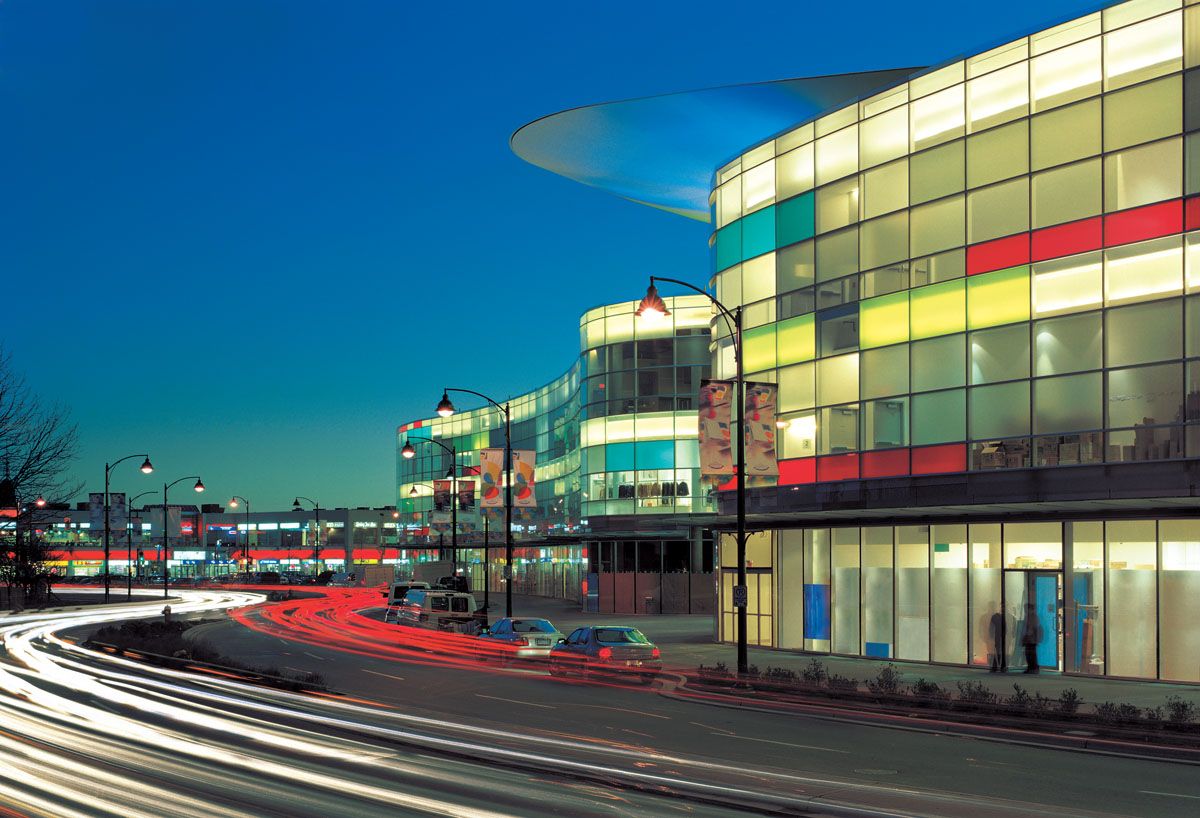
Richmond is composed of sixteen distinct areas, including City Centre, Steveston, Broadmoor, Sea Island, and Bridgeport. The city is undergoing significant transformation, guided by an updated official community plan focused on transit-oriented development around the Canada Line rapid transit route. The plan envisions nine village centres and aims to increase the City Centre population from about 40,000 to 120,000 residents. A key planning goal is to reorient development towards the Fraser River, making it a focal point rather than a boundary.
Major development projects are reshaping parts of the city. The Lansdowne Centre site is proposed for a 20-year, 50-acre mixed-use community with retail, offices, and housing. The Oval Village project, adjacent to the Richmond Olympic Oval, is a $1 billion plan for 16 high-density towers and new public spaces along the riverfront. The Capstan Village development near No. 3 Road and Capstan Way plans over 2,100 residential units, commercial space, and a hotel. Critical to this project was the opening of Capstan Station on the Canada Line in December 2024, a station funded in part by developer contributions. These projects emphasize pedestrian-friendly design, green space, and higher-density living.
- City Centre: The urban core, focus of transit-oriented development.
- Steveston: Historic fishing village with museums and a working harbour.
- Sea Island: Home to Vancouver International Airport and Burkeville.
- Bridgeport: Major transportation node near the airport and Canada Line.
- East Richmond: Predominantly agricultural area within the Land Reserve.
- Thompson, Shellmont, West Cambie, East Cambie: Established residential neighbourhoods.
- Hamilton, Gilmore: Areas with community shopping centres and services.
Parks, Recreation and Major Events
Richmond maintains an extensive parks system with 140 public parks categorized as City, Community, or Neighbourhood parks. The city's recreational facilities are anchored by the Richmond Olympic Oval, a legacy venue from the 2010 Winter Olympics that now serves as a community sports and event centre. During those Games, Richmond hosted long-track speed skating events and the O Zone celebration site in Minoru Park. The city hosts several major annual events that draw regional visitors. The Richmond Night Market operates on summer weekends and is the largest of its kind in North America, featuring street food, merchandise, and entertainment. The Steveston Salmon Festival on Canada Day includes a parade, food vendors, and a large salmon barbecue. The Richmond Maritime Festival, held each August at the Britannia Shipyard, celebrates local maritime heritage. Other notable past events include a tall ships festival in 2002 and the 2006 Gemini Awards ceremony at the River Rock Casino. The Richmond Art Gallery's 2026 Tourism Challenge program engages tourism workers and volunteers from across the Lower Mainland.
Governance and Recent Initiatives
The City of Richmond operates under a mayor-council system, with the municipal government based at City Hall at 6911 No. 3 Road. The city is a member municipality of Metro Vancouver. For the 2026 municipal election, a total of 90 candidates have registered, comprising seven for mayor, 55 for councillor, and 28 for school trustee. Voting options include advance voting on multiple days in October and general voting day.
The city's 2026 capital projects highlight ongoing investments in community infrastructure. These projects, detailed in an interactive online portal, focus on new community spaces, dedicated pathways, energy upgrades, and infrastructure improvements aimed at building a more connected and resilient city. The planning department continues to implement the city centre area plan, which emphasizes sustainable growth, enhanced public spaces, and improved connectivity along the Fraser River waterfront. The successful integration of major developments like Oval Village and Capstan Village with transit infrastructure remains a key focus for civic planners.
Questions about Richmond, British Columbia
What is the population of Richmond, BC?
According to the 2021 Canadian census, Richmond's population was 209,937. More recent municipal estimates, as cited by the City of Richmond, place the population at approximately 241,375 residents. This makes Richmond the fourth-largest city in British Columbia after Vancouver, Surrey, and Burnaby. The city has experienced consistent growth, driven significantly by immigration.
What is there to do in Richmond?
Richmond offers a wide range of activities, from exploring the historic fishing village and museums in Steveston to shopping at major malls like Richmond Centre and Aberdeen Centre. The city's extensive dyke trail network is popular for walking and cycling. Major annual events include the Richmond Night Market in summer and the Steveston Salmon Festival on Canada Day. Cultural institutions like the Richmond Art Gallery, Richmond Museum, and the Britannia Shipyard National Historic Site provide educational and artistic experiences.
How do you get to Richmond from Vancouver?
Richmond is well-connected to Vancouver and the rest of Metro Vancouver by road and rapid transit. Major bridges like the Knight Street Bridge and the Oak Street Bridge provide road access. The Canada Line rapid transit system offers a direct train link from Vancouver's Waterfront Station through downtown Vancouver to Richmond City Centre, the airport, and other stations in the city. Vancouver International Airport (YVR), located on Sea Island in Richmond, is a major transportation hub for air travel.
What are the major development projects in Richmond?
Several large-scale development projects are underway in Richmond. The Oval Village, adjacent to the Olympic Oval, is a $1 billion plan for 16 high-density towers and riverfront amenities. Lansdowne Centre is planning a 50-acre, 20-year mixed-use community redevelopment. Capstan Village, near No. 3 Road, is a development of over 2,100 residential units and commercial space, facilitated by the new Capstan Station which opened on the Canada Line in December 2024. These projects focus on creating transit-oriented, pedestrian-friendly neighbourhoods.
Why is Richmond considered diverse?
Richmond is considered diverse primarily because it has the highest immigrant population proportion in Canada at 60 percent. As of the 2021 census, East Asian Canadians make up a majority of the population at 57.1 percent, and the broader Asian Canadian population, which includes Southeast and South Asian Canadians, comprises 73.4 percent of residents. This demographic makeup is reflected in language, with 23.3 percent of the population speaking Cantonese and 22.7 percent speaking Mandarin as a mother tongue. The city's commercial landscape also shows this diversity, notably in areas like the 'Golden Village' along No. 3 Road, which features many Chinese oriented shopping malls and restaurants.
What was Richmond's role in the 2010 Olympics?
Richmond's primary role in the 2010 Winter Olympics was as a venue city for long track speed skating events, which were held at the Richmond Olympic Oval. The Oval was a key competition site during the Games. The city hosted an Olympic celebration zone called the O Zone at Minoru Park, which featured outdoor viewing screens, live performances, and exhibitions. The Holland Heineken House, a cultural pavilion with Dutch DJs and events, was also located in Richmond at the Minoru Arenas. Following the Olympics, the Richmond Olympic Oval was repurposed as a lasting community recreation and sports facility.
Sources and further reading
- Richmond, British Columbia (Wikipedia)
- Capital Projects Highlights 2026 | Let's Talk Richmond (letstalkrichmond.ca)
- Tourism Challenge 2026, Richmond Art Gallery (richmondartgallery.org)
- City Profile, City of Richmond, BC (richmond.ca)
Checked by the Your Space Hamilton desk. Last updated 2026-10-26.