Trojan Ballistics Suit of Armor
The Trojan Ballistics Suit of Armour was a prototype protective exoskeleton designed by Canadian inventor Troy Hurtubise for military use in conflict zones such as Iraq and Afghanistan. Hurtubise claimed it was the world's first ballistics exoskeleton, offering extensive body coverage and flexibility while incorporating a wide array of integrated combat and survival tools. The project represented a significant personal investment for Hurtubise, who spent years and substantial personal funds on its development. Despite generating media interest and public curiosity, the suit never underwent formal military testing or adoption, and its development ceased following Hurtubise's death in 2018.
Design and Development
Troy Hurtubise dedicated two years and approximately $150,000 of his own money to develop the Trojan Ballistics Suit of Armour. The primary design goal was to protect soldiers from the threat of improvised explosive devices, a common weapon in the Iraq and Afghanistan conflicts during the suit's development period. Hurtubise claimed the finished suit provided 97 percent coverage of the wearer's body while maintaining 95 percent flexibility, with a total maximum weight of 50 pounds. He asserted that if mass-produced, each unit could be manufactured for around $2,000 Canadian, though this projection was never realized. A critical component of the suit's protective capability was a bullet-resistant foam of Hurtubise's own design, intended to repel bullets and knife attacks.
Despite the ambitious claims, the suit's protective capabilities were never formally validated through independent testing against live explosives or standard ballistic protocols. Hurtubise did not conduct a live test against an improvised explosive device, leaving its efficacy against its primary designated threat unproven. The development process was marked by significant personal and financial strain for the inventor, who sought various methods to fund continued work on the prototype. His efforts to secure funding or military interest ultimately did not lead to a production contract or further institutional research and development.
Integrated Features and Systems
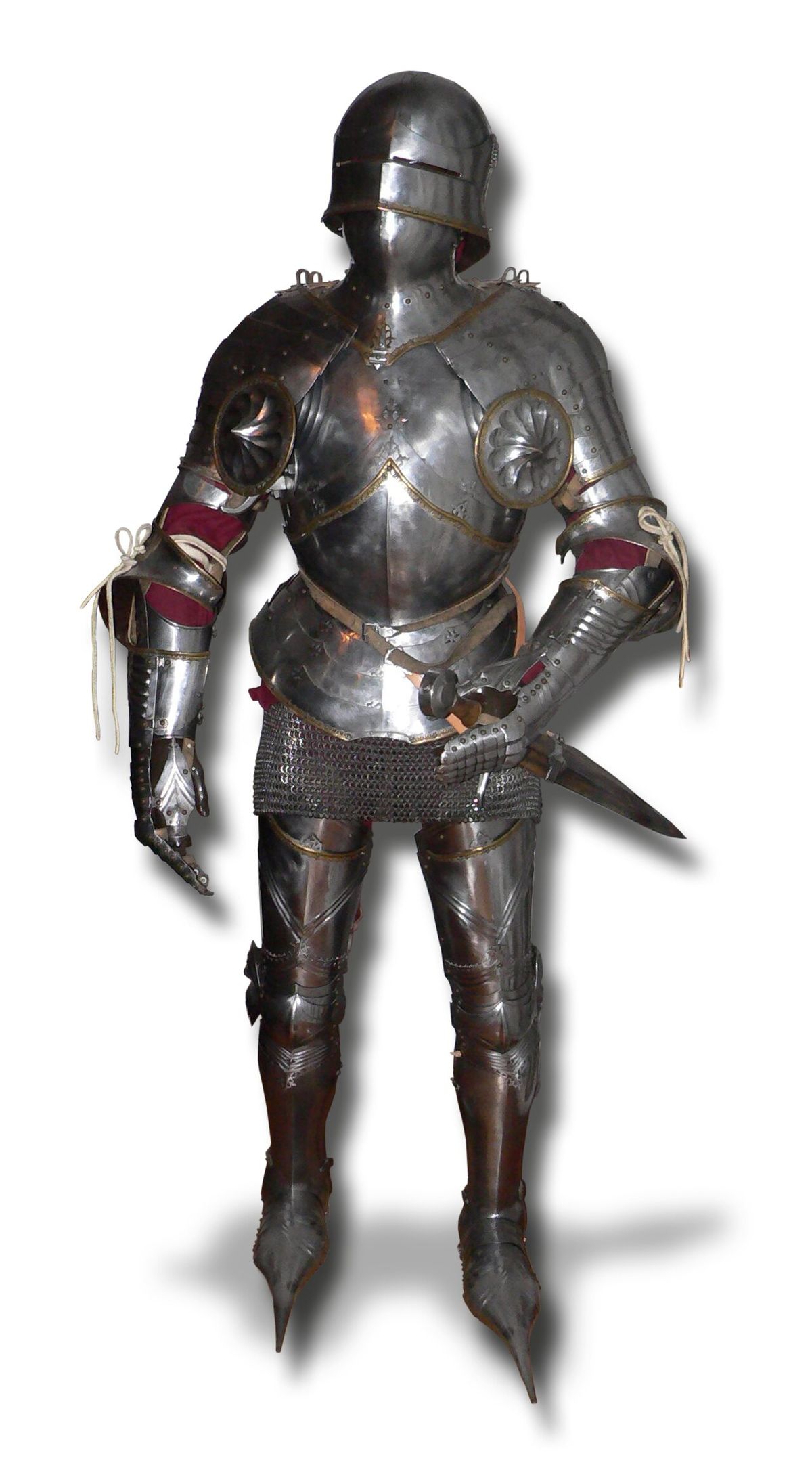
The Trojan suit was conceived as a comprehensive survival and combat system far beyond simple body armour. Its integrated weapon systems included dual pistols mounted on magnetic holsters and a wrist sheath containing a knife for close-quarters combat. For non-lethal engagement, Hurtubise integrated a pepper spray capsule containing a 3 percent concentration of oleoresin capsicum, which he claimed could incapacitate up to 40 insurgents, though its use would violate the 1997 Chemical Weapons Convention. The helmet was a complex subsystem designed to manage the wearer's environment and enhance situational awareness, incorporating an intake and exhaust fan system to prevent overheating in hot climates, a voice-activated radio for communication, and a voice-changing mechanism.
The helmet included a perfectly centered laser targeting system to mark a target to be taken out by a sniper or assault vehicle. Two high power lights were integrated into the side of the helmet for illumination. A compartment on the left arm contained a small vial of salt for the soldier, and the inventor stated that each Trojan suit would contain one dose of morphine. The suit also contained a transponder chip that could be swallowed by a soldier so that he could be extracted. A light transponder on the chest could also be activated to signal a helicopter. A last words recorder could be taken off of a soldier and given to the family of the soldier.
- A "last-words" recorder could be removed and given to a soldier's family.
- A transponder chip, designed to be swallowed, would allow for the location and extraction of a soldier.
- A light transponder on the chest could be activated to signal rescue helicopters.
- A small remote-controlled surveillance robot was stored on the right leg, with its feed viewed on a fold-out screen on the left leg.
- A military world clock was integrated into the groin protector.
- One of the boots contained a small, locked-in handheld shovel.
Public Engagement and Media
Hurtubise actively promoted the Trojan suit to the public in an effort to garner support and funding for the project. This outreach included a detailed feature on a Discovery Channel special, where he explained the suit's numerous functions and design philosophy. In interviews, Hurtubise openly acknowledged the visual inspiration for the suit's design, citing the MJOLNIR battle armour from the popular Halo video game series as an influence alongside other science fiction like Star Wars. This resemblance contributed to the suit's notable public profile and discussion within technology and gaming communities, and the suit and its inventor were the subject of articles by technology publications like Engadget and photo agencies such as Edit International, which covered its features and the inventor's ongoing struggles.
Hurtubise held a raffle for his Trojan suit to raise funds to continue development. The winner of the raffle was Sara Markis. Sara Markis agreed to let Troy Hurtubise keep the suit. The Trojan suit was featured on a Discovery channel special where he explained the features of his suit in detail. Despite his efforts to promote the suit, the inventor experienced personal and financial hardship. The project did not secure institutional backing from military or government sources.
Project Conclusion and Context
The development of the Trojan Ballistics Suit of Armour effectively concluded with the death of its inventor, Troy Hurtubise, in a traffic collision in June 2018. His passing ended any potential future research or iteration on the Trojan suit concept. The project remains a unique chapter in the history of Canadian independent invention, highlighting the challenges of transitioning a complex, self-funded prototype into a militarily viable product. The suit existed at the intersection of personal ambition, popular science fiction aesthetics, and the practical demands of modern asymmetric warfare, incorporating an array of imaginative features intended to address multiple battlefield contingencies.
Hurtubise never actually tested the suit against a live improvised explosive device. Its practical value was never established through formal testing and validation by military or ballistic standards. Troy Hurtubise spent two years and one hundred and fifty thousand dollars developing the Trojan suit. The story of the Trojan suit represents one inventor's dedicated effort to contribute to soldier safety. Hurtubise's death in a traffic collision in June 2018 was believed to have aborted any future research on the Trojan suit. The project ended without achieving its stated military objectives.
Questions about Trojan Ballistics Suit of Armor
Who invented the Trojan Ballistics Suit of Armour?
The Trojan Ballistics Suit of Armour was invented by Troy Hurtubise, a Canadian inventor from North Bay, Ontario. He spent two years and approximately $150,000 of his personal funds developing the prototype. Hurtubise was known for his earlier work on bear-proof suits and dedicated significant effort to promoting the Trojan suit for military use. His death in a traffic collision in 2018 ended further development on the project.
What unusual features were included in the Trojan suit?
The suit's main weapons were dual pistols on magnetic holsters. There was a sheath on the wrist that contained a knife for close quarter combat. The suit contained a pepper spray capsule for emergency situations. The helmet utilized both an intake fan and an exhaust fan. It included a voice activated radio and a voice changing mechanism. A compartment on the left arm contained a small vial of salt and one dose of morphine. A last words recorder and a transponder chip were included. On the right leg was a small remote controlled surveillance robot. A military time world clock was integrated into the groin protector. One of the shoes also had a small handheld shovel locked into it.
Was the Trojan suit ever sold or used by the military?
No, the Trojan suit was never purchased, tested, or adopted by the Canadian military or any other armed forces. It remained a working prototype. Hurtubise attempted to fund continued development through a public raffle, which was won by Sara Markis, who let him keep the suit. The project did not progress beyond the prototype stage.
What was the Trojan suit designed to protect against?
The Trojan Ballistics Suit of Armour was originally designed to stop improvised explosive devices like the kind used in Iraq. It used a bullet resistant foam of Hurtubise's own design to repel bullets and knives as well. However, the inventor never actually tested the suit against a live improvised explosive device. The suit was intended for Canadian soldiers serving in conflict zones such as Iraq and Afghanistan. Its development was a personal project by Troy Hurtubise, who spent two years and $150,000 creating it.
How much did the Trojan suit weigh and what was its claimed flexibility?
The Trojan suit weighed fifty pounds maximum. When worn, it provided ninety seven percent coverage of the body and a claimed ninety five percent flexibility. These specifications were part of Hurtubise's design to create a functional exoskeleton body suit of armour. He claimed the suit could be produced for a soldier for CA$2000 if it were mass produced. The design aimed to balance protection with a degree of mobility for the wearer in combat situations.
Why does the Trojan suit look like video game armour?
The Trojan suit bore a striking resemblance to the MJOLNIR battle armours from the Halo video game series. Hurtubise confirmed this inspiration in an interview, stating he looked at Halo, the video game. He also mentioned that he looked at Star Wars for design ideas. This explains the suit's futuristic and visually distinctive appearance. The inventor promoted the suit as the first ballistics exoskeleton body suit of its kind in the world.
Sources and further reading
- Trojan Ballistics Suit of Armor (Wikipedia)
- RPGGamer.org (Equipment D6 / Troy Hurtubise Trojan ... (rpggamer.org)
- Face The Urban Jungle In Style (slashgear.com)
Checked by the Your Space Hamilton desk. Last updated 2026-11-01.