Steve Mann
Steve Mann is a Canadian engineer, inventor and professor widely recognized as the "father of wearable computing". His career is distinguished by a series of influential inventions, including high-dynamic-range imaging, the chirplet transform and the hydraulophone musical instrument. Mann is also a prominent advocate for privacy and sousveillance, a term he coined for "inverse surveillance". He was a candidate in Toronto's 2023 mayoral by-election, where he advocated for recreational swimming in Lake Ontario.
Early life and education
Steve Mann was born on 8 June 1962 in Canada. His early fascination with technology was evident during his high school years, where he constructed a wearable computer based on a 6502 microprocessor housed in a steel-frame backpack. This early device was designed to control photographic equipment, foreshadowing his lifelong integration of computing and imaging. He pursued his post-secondary education at McMaster University in Hamilton, Ontario, earning a Bachelor of Science in 1987, a Bachelor of Engineering in 1989 and a Master of Engineering in 1992. Mann then completed a PhD in Media Arts and Sciences at the Massachusetts Institute of Technology in 1997, where his work significantly influenced the founding of the Media Lab's Wearable Computing group. Nicholas Negroponte, then director of the MIT Media Lab, stated that Mann 'brought the seed' that founded the group and persisted in his vision to found a new discipline, calling Mann the perfect example of someone who ended up founding a new discipline.
Academic and professional career
Steve Mann is a tenured full professor in the Department of Electrical and Computer Engineering at the University of Toronto. He holds cross-appointments to the university's Faculty of Arts and Sciences and Faculty of Forestry, reflecting the interdisciplinary nature of his work. Mann is also a licensed Professional Engineer through Professional Engineers Ontario. Beyond academia, he has held leadership roles in technology startups, serving as the Chief Technology Officer of Blueberry X Technologies from 2019 to 2021. He is the Chairman of MannLab, an entity that continues his research and development initiatives. Mann is a founding member of the IEEE Council on Extended Intelligence and has served as General Chair of the IEEE International Symposium on Technology and Society. He also holds the position of Associate Editor for the journal IEEE Technology and Society, contributing to discourse on the societal impacts of technology. His career spans rigorous academic research, professional engineering practice and entrepreneurial activity in the technology sector.
Key inventions and technological contributions
Mann's career is defined by a prolific series of inventions that have advanced multiple fields of computing and digital media. His work is fundamentally interdisciplinary, blending hardware, software and theoretical insights to create new paradigms for human-computer interaction. Many of his most significant contributions fall under the umbrella of computational photography and wearable systems designed to augment human perception. The following list highlights several of his foundational inventions and concepts.
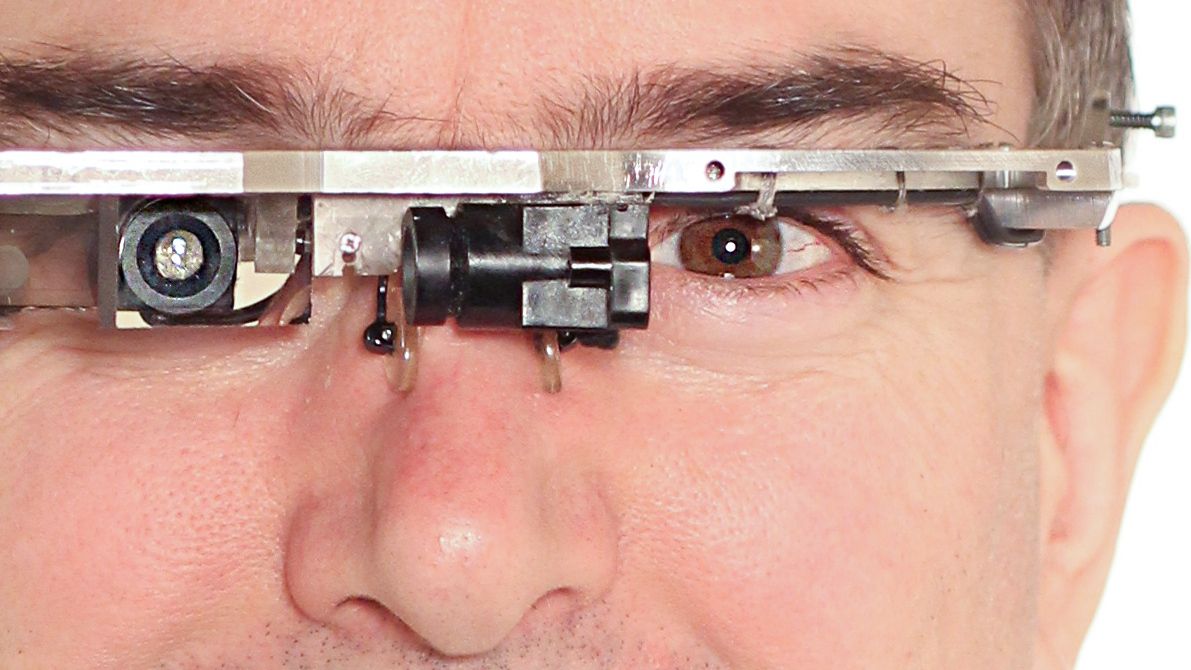
- EyeTap (1978): Often called Digital Eye Glass, this device turns the human eye into both a camera and a display, forming the core of Mann's wearable computing and mediated reality systems.
- Chirplet Transform (1991): Mann was the first to propose and implement this signal representation, a generalization of the wavelet transform based on chirp signals.
- Comparametric Equations and HDR (1993): He created the first algorithms to estimate a camera's response function and to combine multiple exposures to extend dynamic range, pioneering high-dynamic-range imaging.
- Video Orbits Algorithm (1993): This was the first method to automatically 'stitch' multiple images using projective geometry for perspective correction.
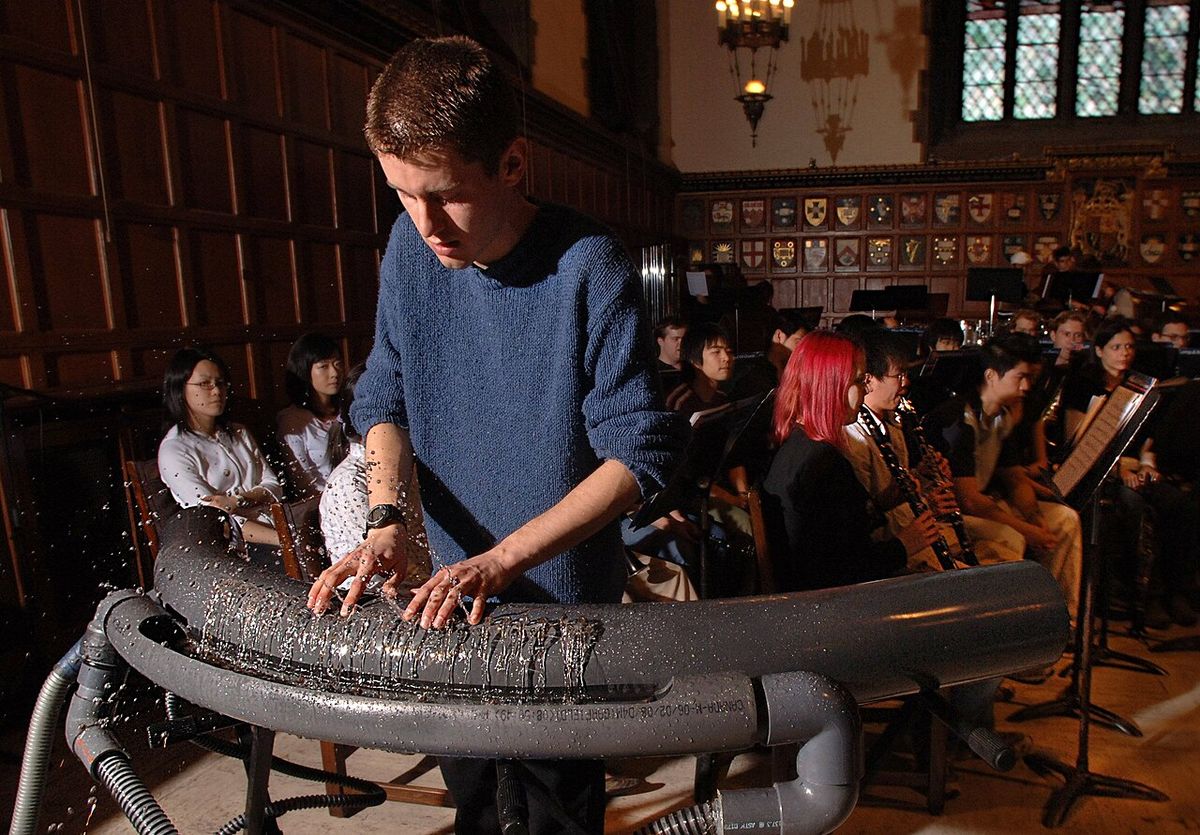
- Hydraulophone: Mann invented this experimental musical instrument where sound is produced by pressurized water or hydraulic fluid, played by direct finger contact.
- Natural User Interface (1980s-90s): He developed interface strategies using natural interaction with the real world as an alternative to command-line or graphical interfaces.
- Scratch Input: This human-computer interaction method uses the characteristic acoustic sounds of a finger or object scratching a surface for input.
- Telepointer and SixthSense: This wearable system uses a pendant with a webcam and laser projector for gesture-based computing.
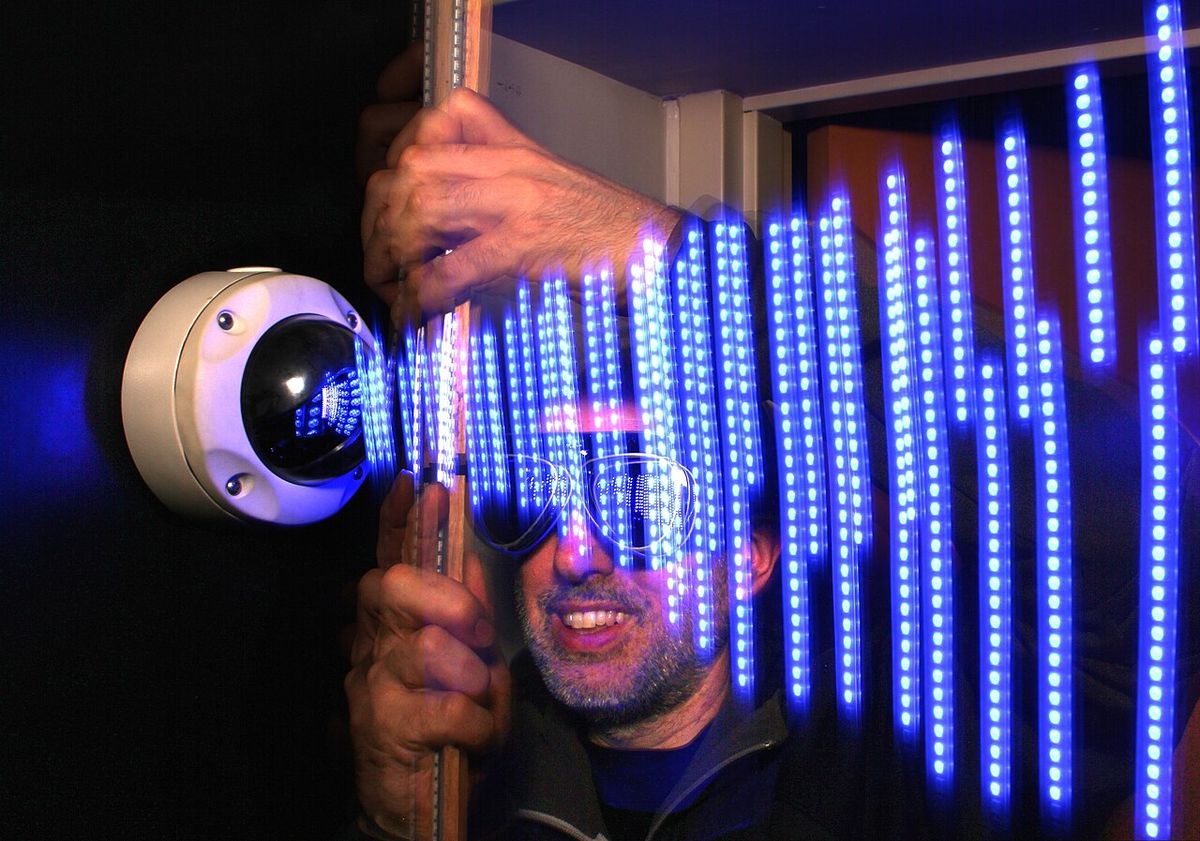
Mann's theoretical work is equally influential. He coined the term 'sousveillance' to describe inverse surveillance by individuals. Together with Marvin Minsky and Ray Kurzweil, he proposed the theory of the 'Sensularity' or Sensory Singularity. His concept of 'humanistic intelligence' describes a system where the computer and human work in close synergy. His 2014 paper on 'Integral Kinematics and Integral Kinesiology' explored the principles of negative derivatives of displacement, such as absement, which is the area under the displacement-time curve, as embodied by his hydraulophone instruments. Mann also invented the surveilluminescent wand, a device that visualizes the sightfield of a camera using an array of lights and time-exposure to make visible to one camera what another camera can see. His continuous, real-time transmission of life experiences to a website from 1994 to 1996 is recognized as a precursor to moblogging and lifelogging, with Joi Ito crediting Mann with initiating the moblogging movement in 2003. These CyborGLOGS were an early predecessor of blogs and the concept of blogging, and his pre-internet-era live streaming defined cyborg-logging as a new form of social networking.
Research projects and advocacy
A consistent thread through Mann's work is a focus on the societal and ethical implications of technology. His advocacy for privacy and individual agency is embodied in his research on sousveillance and equiveillance, the latter being a balance between surveillance and sousveillance. He has collaborated extensively with University of Ottawa Professor Ian Kerr, the Canada Research Chair in Ethics, Law and Technology, who teaches a 'Cyborg Law' course using Mann's book. Together, they are conducting a Social Sciences and Humanities Research Council funded project called the Anonequity Project. This ongoing initiative studies the ethics, law and technology of anonymity, authentication, surveillance and sousveillance, including issues related to cyborg law and implantable technologies, which collaborator Kerr has also researched and lectured on widely. Mann, together with his PhD student James Fung and other students, has also built a cyborg community based on the cyborg-logging concept, an early form of social networking that preceded modern blogs. His work on computer-mediated reality has been motivated by systems that help people see better, such as in welding or other high-dynamic range situations, using dynamic range management, overlays and augmentation as well as diminishment.
Awards and honours
Steve Mann's groundbreaking contributions have been recognized with numerous awards and honours from academic, professional and engineering institutions. His induction into the McMaster University Alumni Hall of Fame in 2004 acknowledged his dual impact as an inventor and educator. That same year, he received the Leonardo Award for Excellence for his article 'Existential Technology,' published in the journal Leonardo. In 2024, his work on sousveillance earned him the Lifeboat Foundation Guardian Award. A pinnacle of professional recognition came in 2025 when he was awarded the IEEE Masaru Ibuka Consumer Electronics Award for his foundational work in wearable computing. His professional standing is further affirmed by his status as a Senior Member of the IEEE and his role as a founding member of the IEEE Council on Extended Intelligence. These accolades span decades and highlight the sustained impact and innovation of his research across multiple domains of technology and society.
Public engagement and 2023 mayoral campaign
Mann has been a notable figure in Canadian media, often described as the 'father of wearable computing' and, in popular press like The Globe and Mail, NOW, National Post and Toronto Life, as the 'world's first cyborg,' a label he has himself rejected as being too vague. His work has been contrasted with earlier wearable devices like Edward O. Thorp and Claude Shannon's roulette computers, which were timing devices concealed in shoes or cigarette packs, as Mann created the first general-purpose wearable system. In 2023, he entered the political arena as a candidate in the Toronto mayoral by-election. His campaign platform included advocacy for recreational swimming in Lake Ontario and support for efforts to preserve the beach at Ontario Place. Although his bid for mayor was unsuccessful, it demonstrated his commitment to applying his technological and environmental perspectives to civic issues. His media profile extends beyond technology reporting into discussions of urban policy and public space.
Selected publications and written work
Mann is the author or co-author of more than 200 academic and technical publications. His body of work includes textbooks, research papers and books aimed at a popular audience, exploring the intersection of technology, society and human experience. His writings serve as key reference points in the fields of wearable computing and digital ethics. The following are selected key publications that represent the breadth of his output.
- Intelligent Image Processing (ISBN 0-471-40637-6)
- Cyborg: Digital Destiny and Human Possibility in the Age of the Wearable Computer (Randomhouse Doubleday, 2001)
- The Wireless Application Protocol (WAP): A Wiley Tech Brief (ISBN 0-471-39992-2)
- Guest Editor, International Journal of Human-Computer Interaction 2003: Special Issue: Mediated Reality (ISBN 0-8058 to 9604-X)
- Advanced Palm Programming: Developing Real-World Applications (ISBN 0-471-39087-9)
Personal life and current work
Steve Mann was born in Canada and currently lives in Toronto with his wife and their two children. He maintains an active role in the technology community through his position as Chairman of MannLab. His current research continues to explore the frontiers of wearable computing, computational photography and the societal frameworks for new technologies. Mann's work on the Anonequity project with Ian Kerr remains ongoing, examining critical issues of anonymity and surveillance in the digital age. He continues to teach and mentor students at the University of Toronto, holding cross-appointments that allow him to integrate engineering with arts and environmental sciences. His work in the field of computer-mediated reality and his advocacy for privacy rights continue to be central to his professional activities and public engagements.
Questions about Steve Mann
What is Steve Mann's most famous invention?
Among his many inventions, the EyeTap or Digital Eye Glass is one of his most famous and foundational. Developed starting in 1978, this device allows the wearer's eye to function as both a camera and a display, enabling augmented and mediated reality. He is also widely recognized for pioneering the algorithms for high-dynamic-range imaging by combining multiple exposures, a technology now commonplace in smartphones and digital cameras. The Video Orbits algorithm for image stitching and the chirplet transform for signal processing are other major contributions from his extensive portfolio. According to Robertson et al., the first report of digitally combining multiple pictures to improve dynamic range appears to be Mann.
Did Steve Mann really run for mayor of Toronto?
Yes, Steve Mann was a candidate in the 2023 Toronto mayoral by-election. His campaign included advocacy for environmental and recreational issues, specifically promoting recreational swimming in Lake Ontario and supporting efforts to save the beach at Ontario Place. Although he was not elected, his candidacy brought his technological and civic perspectives into the public political discourse. His campaign highlighted his commitment to applying innovative thinking to local urban and environmental challenges, extending his public engagement beyond his work in technology and academia.
What awards has Steve Mann won?
Steve Mann has received several prestigious awards. He was inducted into the McMaster University Alumni Hall of Fame in 2004 and won the Leonardo Award for Excellence the same year for his article 'Existential Technology.' More recently, he received the 2024 Lifeboat Foundation Guardian Award for his work on sousveillance. In 2025, he was honoured with the IEEE Masaru Ibuka Consumer Electronics Award for his contributions to wearable computing. These awards recognize his impact across invention, academia and technology ethics, spanning from early career recognition to recent honours for his sustained influence.
Where does Steve Mann work and teach?
Steve Mann is a tenured full professor in the Department of Electrical and Computer Engineering at the University of Toronto. He also holds cross-appointments to the university's Faculty of Arts and Sciences and Faculty of Forestry. He is a licensed Professional Engineer in Ontario and maintains an active research lab, continuing his work on wearable computing, computational photography and related fields. Beyond the university, he is the Chairman of MannLab and served as CTO of Blueberry X Technologies from 2019 to 2021. He is also a founding member of the IEEE Council on Extended Intelligence and Associate Editor of IEEE Technology and Society.
Why is Steve Mann called the father of wearable computing?
Steve Mann is called the father of wearable computing for his early inventions and continuing contributions that created the first general purpose wearable computer. This contrasts with previous single function wearable devices like wristwatches. Nicholas Negroponte of the MIT Media Lab stated Mann brought the seed that founded the lab's Wearable Computing group and persisted in his vision to found a new discipline. Mann's role as a founding member of the IEEE Council on Extended Intelligence and his 2025 IEEE Masaru Ibuka Consumer Electronics Award further cement this legacy.
What does the term 'sousveillance' mean?
Sousveillance is a term coined by Steve Mann to mean inverse surveillance, or observing from a participant's perspective rather than from a position of institutional power. It represents a form of personal information gathering, such as with camera phones, that contrasts with traditional surveillance. Mann, a strong advocate for privacy rights, developed this concept alongside related ideas like equiveillance with University of Ottawa Professor Ian Kerr. Their work, including an ongoing SSHRC funded project on the ethics of anonymity and surveillance, has created a new dialog for cyborg technologies. Mann's contributions to this field earned him the 2024 Lifeboat Foundation Guardian Award.
Sources and further reading
- Steve Mann (Wikipedia)
- Steve Mann (ethw.org)
- Steve Mann (thewalrus.ca)
- Steve Mann, keynote speaker (gspeakers.com)
Checked by the Your Space Hamilton desk. Last updated 2026-10-22.