Hydraulophone
The hydraulophone is a tonal acoustic musical instrument played by direct physical contact with water, where sound is generated or affected hydraulically. Invented and named by Canadian engineer and professor Steve Mann in 2005, the instrument represents a unique fusion of art, technology, and sensory exploration. It functions on principles analogous to woodwind instruments and pipe organs but uses flowing water as its primary medium, producing sound when a player blocks water jets with their fingers. The world's largest public hydraulophone is a landmark installation at the Ontario Science Centre in Toronto, serving as both a musical device and an accessible public art piece that engages visitors of all abilities.
Invention and Development
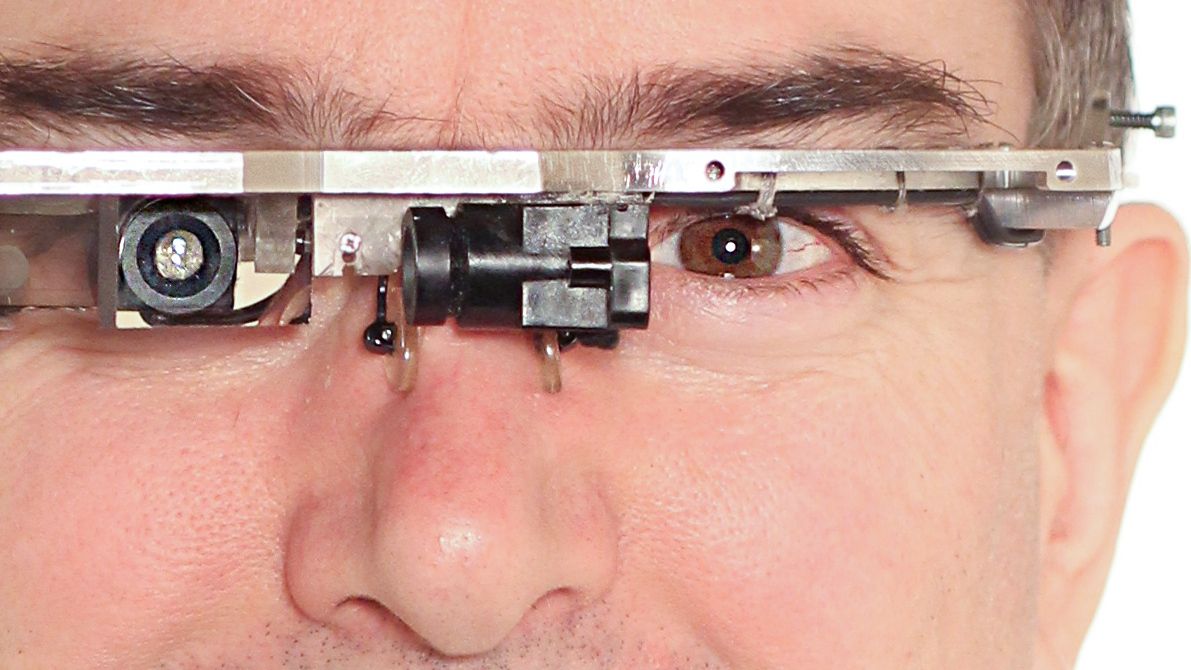
The hydraulophone was formally described and named by Steve Mann, a Canadian engineer, professor, and inventor, in 2005. Mann secured a patent for the instrument in 2011, establishing its legal and technical identity. His work built upon the concept of using incompressible fluids for musical expression, differentiating it from traditional wind instruments that rely on air. The development process focused on creating a reliable user interface where blocking water flow would consistently produce specific musical notes. This innovation opened new avenues for interactive public art and music therapy, particularly as a sensory exploration device for individuals with low vision. The instrument's design philosophy emphasizes direct tactile feedback, making music creation a physical and immersive experience. Mann's prototypes explored various sound production mechanisms, including water jets striking perforated spinning disks, shafts, or valves to create a pulsating flow similar to a siren disk. A single disk or valve assembly can have rings with different numbers of holes to produce different notes, contributing to the instrument's scalability.
Mechanism and Operation
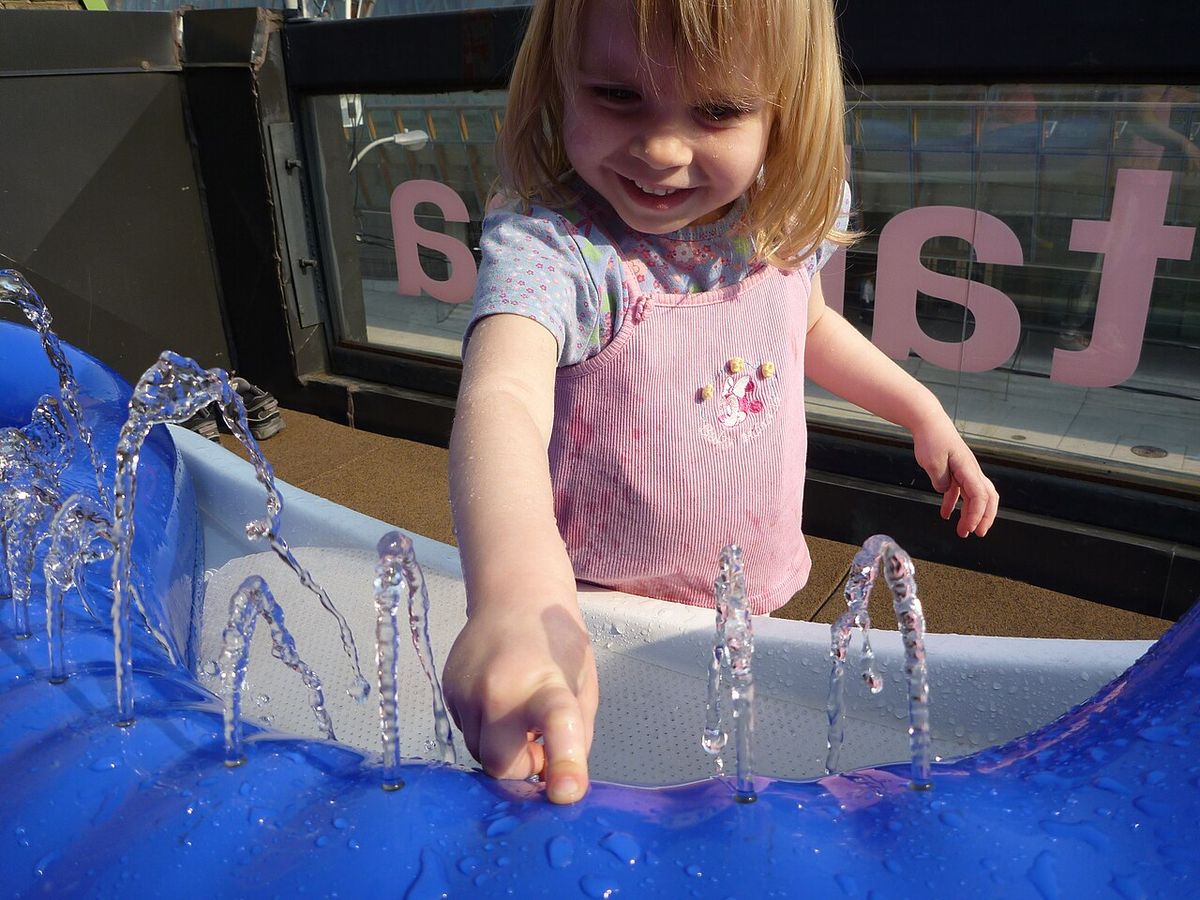
A hydraulophone produces sound through the controlled flow and interruption of water. Water is pumped into a manifold or chamber and exits through a series of precisely sized jets or finger holes. When a player places a finger over a hole, they block the water jet, redirecting the flow internally to a sound-producing mechanism. This mechanism can vary in design, often involving the water striking a perforated spinning disk, shaft, or valve to create pulsations, or exciting a reed or fipple edge to generate tone. The instrument requires a constant supply of water, provided by a hand-operated, wind-operated, water-powered, or electric pump. Unlike a flute with one mouthpiece, a typical public hydraulophone has a separate 'mouth' or exit port for each finger hole, often 12 in total. The sound produced is continuous for as long as a hole is blocked, creating a sustained tone similar to an organ or a woodwind instrument.
The player's interaction with the water jet is termed 'embouchure,' though it is controlled by the finger rather than the lips. This polyphonic embouchure allows a player to dynamically shape each note by how they insert their finger into the water stream. Fingering the centre of a jet produces a different sound quality than fingering near the edge of the circular opening. Some models include an underwater hydrophone pickup to amplify the acoustic sounds electronically, allowing for the addition of audio effects. This capability can transform the hydraulophone into a hyper-acoustic instrument, where computational processing can alter the natural water sounds into those of other instruments. In one specific embodiment, each hydrophone signal undergoes further electronic processing, and other designs use acoustic or optical pickups. The instrument's response to player input is complex, reacting to the time-integral of displacement, displacement, velocity, and higher-order dynamics.
The water must be supplied to the hydraulophone by a pump which can be hand-operated, wind-operated, water-powered, or electric. For use in cold weather, hydraulophones may be built into hot tubs, a design known as a balnaphone. This solves the problem of keeping the hydraulist warm and keeping the hydraulic fluid heated using standard pumping and heating equipment. In this kind of hydraulophone, the player is immersed in the fluid used by the instrument. In contrast, the WaterHammer hydraulophone produces sound from the water hammer impact that dies down after being initially struck. This creates a percussive note more like a piano than the typical sustained sound of other hydraulophones.
Design Variations and Technical Specifications
Hydraulophones are built in several distinct configurations, each suited to different environments and musical purposes. The most common public installation is the 12-jet diatonic model, with a standard compass from A to E spanning an octave and a half. These are designed for durability, accessibility, and intuitive play in parks, museums, and waterparks. For concert performance, a 45-jet chromatic hydraulophone is used, offering a three-and-a-half-octave chromatic range from A-flat to E. This model features a keyboard-like layout with holes arranged in the pattern of piano keys, allowing for complex polyphonic music. Another significant variation is the WaterHammer hydraulophone, which utilizes the water hammer principle to create a percussive, decaying sound more akin to a piano than a sustained organ tone.
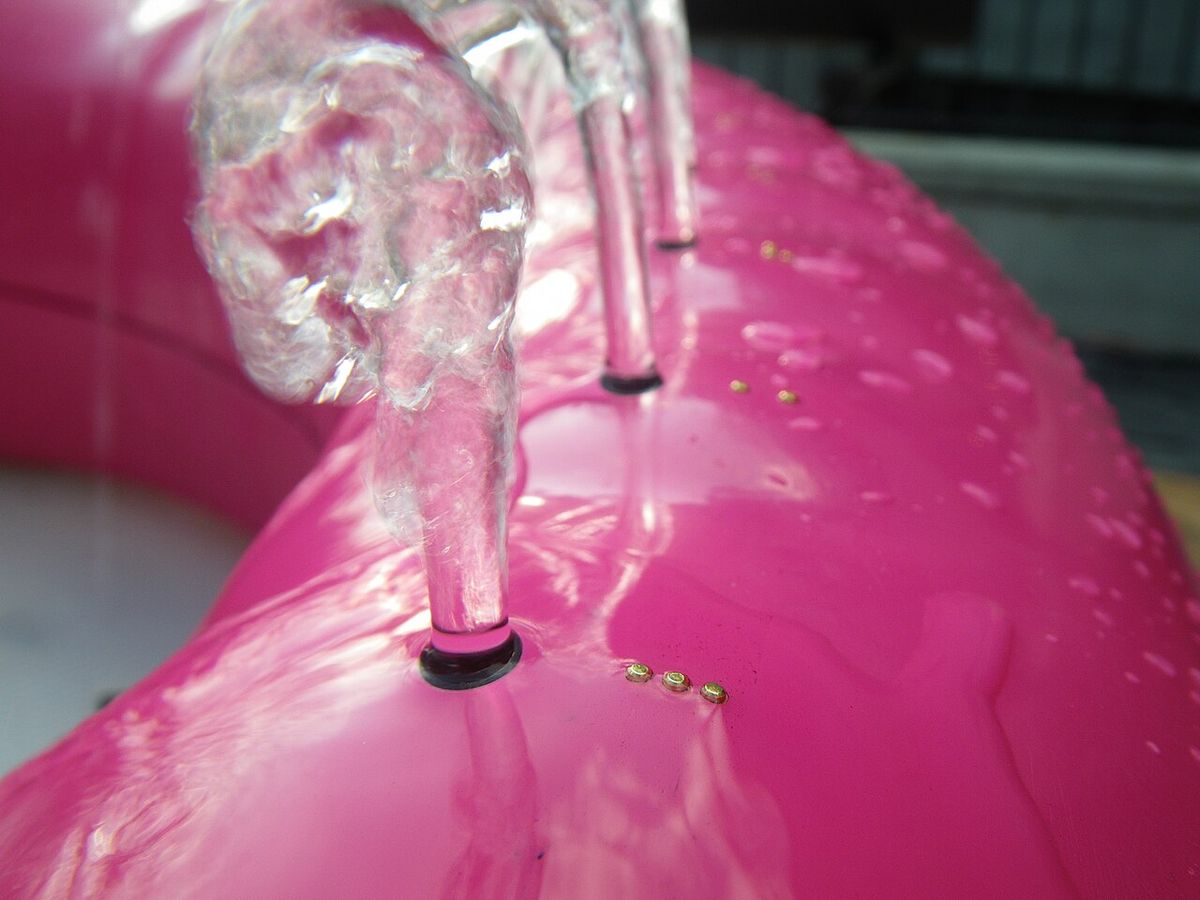
Builders also create themed hydraulophones for specific installations, such as the Aquatune at the Legoland waterpark in Carlsbad, California, which is described as a 'musical water stand' and is flanked by educational exhibits on water flow. For cold-weather operation, hydraulophones can be integrated into heated environments like hot tubs, a design sometimes called a balnaphone, where the player is immersed in the warm water that also powers the instrument. To aid players, especially in conditions where water spray or underwater placement obscures vision, finger holes are often marked with Braille encoding using raised brass pins. This tactile system aligns naturally with the instrument's operation, as the skill needed to feel and block water jets is similar to reading Braille. The one-to-one correspondence between Braille numbers and the standard A-minor hydraulophone scale, where jet 1 is A and jet 2 is B, reinforces this accessibility feature.
- 12-jet Diatonic: Standard public model with an A to E range, often with change-valves for limited key modulation.
- 45-jet Chromatic: Concert model with a full A-flat to E chromatic range, exemplified by the instrument at the Ontario Science Centre.
- WaterHammer: Percussive model using impact sound that decays after being struck.
- Balnaphone: Integrated into a bath or hot tub for warm-water play in cold climates.
- Themed Installations: Custom designs like the Aquatune at Legoland, built for specific architectural contexts.
- Reed vs. Reedless: Some hydraulophones have reeds for each finger hole, while reedless models use fipple mechanisms with no moving parts.
Many diatonic hydraulophones are built with 12 water jets, one for each of the instrument's 12 notes. With change-valves, the diatonic hydraulophone is polyphonic in the same sense as a chromatic harmonica. Chords can be played and all members of a chord can be moved down one semitone or up one semitone together. The function of the valves is usually not separated to work on a per-note basis. Thus the diatonic hydraulophone is called diatonic conservatively to under promise and over deliver. In contrast, concert hydraulophones are usually 45-jet chromatic. The 45-jet hydraulophone has a playing compass of 45 water jets that is the same as its 45-note sounding range.
Relationship to Traditional Instruments
The hydraulophone occupies a unique acoustic niche, sharing functional principles with several families of traditional instruments while operating on a different medium. Its closest analogue is the woodwind instrument, leading to its occasional nickname 'woodwater,' as it replaces compressible air with incompressible water to generate sound. Like a woodwind, it uses a player-controlled interruption of flow to excite a resonant system. In its pipe-based designs, the hydraulophone strongly resembles a pipe organ, with a separate water-filled pipe and sound production mechanism for each note, but with water flowing through the pipes instead of air. This gives it the sustained, polyphonic capability of an organ, maintaining a flute-like user interface with finger holes.
The user interface of a concert hydraulophone is modelled on the piano keyboard, with finger holes arranged in a similar pattern of naturals and accidentals to facilitate playing. However, the key action or response is distinct. While a piano responds to the velocity of a key press and an organ to displacement, a hydraulophone responds to a combination of factors including displacement, the time-integral of displacement (total water flow), and higher-order dynamics. This creates a nuanced and highly tactile playing experience. The instrument is also part of a broader family of instruments that use water in different states, such as the pagophone, which uses ice bars like a xylophone, and the calliope, a steam-powered pipe organ.
Unlike internal ducted flutes that have one fipple for the player's mouth shared across all finger holes, the hydraulophone provides a separate mouthpiece for each finger hole. This architectural difference enables the polyphonic embouchure control unique to the instrument. The ability for a player to sing while playing is a direct result of this separation, as the player's own mouth is not required to generate the instrument's airflow. The standard park model has 12 such mouths, while a concert model has 45, each corresponding to a specific note in the instrument's range.
Notable Installations and Public Presence
Hydraulophones have been installed as interactive public art and educational exhibits in museums, science centres, and parks worldwide. The most prominent Canadian installation is the world's largest hydraulophone, located in the outdoor plaza of the Ontario Science Centre in Toronto. This circular sculpture is a centrepiece of the Teluscape area and operates as a freely accessible aquatic play facility that runs 24 hours a day, though it is not displayed during winter months. Other notable installations include instruments at the Chicago Children's Museum, the Thinkery Children's Museum in Austin, Legoland California, the Experimentarium in Copenhagen, and the Sydney Olympic Park Aquatic Centre. In Canada, installations can also be found at African Lion Safari and the University of Toronto.
The company Splashtones Music, based in Toronto, specializes in building hydraulophones and related instruments for waterparks, attractions, musicians, and music therapy applications. These installations often serve dual purposes as engaging play structures and as tools for demonstrating principles of fluid dynamics and acoustics. The instrument has been featured at public events like the SPLASH Festival, offering visitors a rare opportunity to see and hear a performance on the water-based instrument. Its role in public spaces highlights its value as an accessible, community-focused innovation that blends science, art, and play. The instrument's construction and maintenance involve specialized aquatic systems knowledge, an area served by commercial firms in the aquatics industry.
| Location | City/Country | Type of Venue | Notes |
|---|---|---|---|
| Ontario Science Centre | Toronto, Canada | Science Museum | World's largest, 45-jet concert model, centrepiece of Teluscape. |
| Chicago Children's Museum | Chicago, USA | Children's Museum | Public interactive exhibit. |
| Legoland California | Carlsbad, USA | Theme Park | 'Aquatune' themed hydraulophone at waterpark entrance. |
| Experimentarium | Copenhagen, Denmark | Science Centre | Interactive science exhibit. |
| Sydney Olympic Park Aquatic Centre | Sydney, Australia | Aquatic Centre | Installation in a major sports facility. |
| Baylor University | Waco, USA | University | Educational or artistic installation. |
| African Lion Safari | Toronto, Canada | Wildlife Park | Public attraction. |
| University of Toronto | Toronto, Canada | University | Academic and demonstration site. |
Significance and Applications
The hydraulophone holds significance as a Canadian invention that expands the boundaries of musical instrument design and interactive public art. Its primary acoustic innovation is the use of hydraulic fluid, typically water, as both the excitation medium and the point of tactile contact for the player. This makes it inherently accessible and intuitive, as the act of playing involves the direct, physical manipulation of a natural element. A major application is in sensory exploration and music therapy, particularly for individuals with low vision or blindness. The Braille markings on finger holes and the instrument's reliance on touch rather than sight make it an ideal tool for inclusive musical engagement. The complex tactility required to play it well is comparable to the skill needed to read Braille, creating a natural link for users.
As an educational exhibit, the hydraulophone demonstrates core principles of physics, including fluid dynamics, pressure, resonance, and the conversion of mechanical energy into sound. Its presence in science centres around the world confirms its value as a hands-on learning tool. For musicians, it offers a new palette of sounds and playing techniques, with the potential for electronic augmentation through hydrophone pickups. The instrument's ability to allow a player to sing while playing, due to its non-oral embouchure, is another unique feature. The hydraulophone's design encourages a deep understanding of material behaviour in fluid systems, where the geometry of jets and chambers directly affects sound production and playing feel.
The instrument has been presented at technology and innovation forums such as LIFE2026, where demonstrations of shaping future technologies included real-world applications like the hydraulophone. Its construction and maintenance involve specialized knowledge in aquatic systems, an area served by companies like Landmark Aquatic, which manages large-scale aquatic centre renovations. The hydraulophone ultimately functions as a bridge between disciplines, requiring knowledge from music, engineering, public space design, and accessibility to realize its full potential. It provides a unique capability for polyphonic embouchure, allowing players to dynamically sculpt the sound of each note through finger position, a feature not found in traditional wind or keyboard instruments.
Playing Technique and Musical Considerations
Mastering the hydraulophone involves developing a refined tactile sense to control the water jets effectively. The primary skill is achieving a clean seal over a jet to produce a stable, clear pitch. A partial or shaky seal results in a breathy, unstable tone that can be used for expressive effect. Players learn to feel for the point where the instrument's resonator or edge-tone system 'locks' into a stable pitch, a subtle feedback felt through the finger. This intonation is controlled by seal quality rather than lip angle or breath support as in wind instruments. On a well-built instrument, the note has a rounded, damped attack that blooms rather than snaps into existence, with the onset feeling like a flute tone with the corners smoothed.
Polyphonic embouchure allows for advanced techniques where different fingers can apply varying pressures and positions to sculpt chords with complex timbres. For example, a player can bend a single note within a chord, such as raising a C to C-sharp to form an A major chord, though this requires significant skill beyond the average hydraulist. The standard 12-jet diatonic layout with change-valves allows for chordal playing where entire chords can be shifted a semitone up or down using levers, but individual note bending within a chord is more challenging. The instrument's response to flow integral, displacement, and velocity means that phrasing is controlled by the duration and manner of blocking jets, not by breath.
When evaluating a hydraulophone, technicians listen for excess jet hiss, which can indicate rough edges, worn nozzles, or inconsistent water pressure, all of which reduce expressive control. In curated studio settings, hydraulophones are often paired with dedicated pumps, filters, and pressure-regulating manifolds to ensure consistent performance, distinguishing them from more variable public fountain installations. The chromatic concert model demands clean semitone relationships and stable tuning, making it a serious melodic and harmonic instrument for composed music. Material selection remains important for maintaining dimensional tolerances and resisting mineral buildup, which affects long-term playability and sound quality.
Questions about Hydraulophone
Who invented the hydraulophone?
The hydraulophone was invented by Canadian engineer, professor, and inventor Steve Mann. He formally described and named the instrument in 2005 and was granted a patent for it in 2011. Mann's work is known for blending technology with human-computer interaction, and the hydraulophone is a prime example of his innovative approach to creating new sensory and musical experiences. His designs include models using reeds, reedless fipple mechanisms, and various sound production methods like spinning disks.
How do you play a hydraulophone?
You play a hydraulophone by placing your fingers over water jets that stream from holes on the instrument's surface. Blocking a jet redirects the water flow internally to a sound-producing mechanism, such as a spinning disk or a reed, which generates a specific musical note. The instrument is played using a technique called polyphonic embouchure, where the placement and pressure of each finger shapes the tone and quality of each note, similar to how a wind player uses their lips. The sound continues for as long as the hole is blocked, and players can sing simultaneously as their mouth is not needed to produce the sound.
Where is the world's largest hydraulophone?
The world's largest hydraulophone is installed in the outdoor plaza of the Ontario Science Centre in Toronto, Ontario, Canada. It is a circular sculpture that serves as the centrepiece of the Teluscape area. This public installation is freely accessible and functions as an aquatic play facility that runs 24 hours a day, though it is typically not on display during the winter months due to freezing temperatures. It is a 45-jet chromatic concert model with a range from A-flat to E.
What is the difference between a diatonic and a chromatic hydraulophone?
A diatonic hydraulophone typically has 12 water jets for the notes of a diatonic scale, often installed in public spaces like parks. A chromatic hydraulophone, designed for concerts, usually has 45 jets for a full chromatic scale over three and a half octaves. The 12-jet model has a standard compass from A to E, while the 45-jet model ranges from A-flat to E. The diatonic model may use change-valves to shift entire chords semitonally but not individual notes independently. The chromatic model allows for playing all semitones across its full range like a piano keyboard.
Can people with visual impairments play the hydraulophone?
Yes, the hydraulophone is particularly well-suited for players with visual impairments. Many models feature Braille markings using raised brass pins above each finger hole to identify the notes. Since the instrument is played entirely by touch and feel, relying on the tactile sensation of the water jets, it does not require sight to operate. This design makes it an effective tool for sensory exploration and music therapy for low-vision and blind individuals. The tactile skill needed is comparable to reading Braille.
Is the hydraulophone related to the pipe organ?
Yes, the hydraulophone is functionally related to the pipe organ. In many designs, it uses a separate water-filled pipe for each note, with a sound production mechanism similar to that of a pipe organ but using water instead of air. This gives it the ability to produce sustained, polyphonic sound like an organ. However, the user interface is more akin to a woodwind instrument or a keyboard, where the player blocks finger holes to activate the notes. It is also related to woodwinds in principle, leading to the nickname 'woodwater' instrument.
Sources and further reading
- Hydraulophone (Wikipedia)
- Hydraulophone Instrument: How Water Creates Music (History ... (rareinstrument.com)
- Event Calendar (landmarkaquatic.com)
Checked by the Your Space Hamilton desk. Last updated 2026-10-28.