Snow blower
A snow blower, also known as a snow thrower, is a mechanized device designed for the removal of snow from surfaces such as driveways, sidewalks, roadways, and runways. It functions by using an auger or impeller to intake snow and propel it to a designated area, distinguishing it from snow plows which push snow. These machines are powered by gasoline, diesel, or electric motors and are an essential tool for winter maintenance across Canada, where heavy snowfall is common. Their use ranges from small residential models to large vehicle-mounted units employed by municipal and transportation authorities.
Design and Operation
The fundamental operation of a snow blower involves an intake mechanism that collects snow and a discharge system that directs it away from the cleared path. Contrary to what the name might imply, snow is not blown by air but is mechanically moved by either an auger or a combination of auger and impeller. The machine's power source is typically a small internal combustion engine or an electric motor, which drives the moving parts and, in self-propelled models, the wheels or tracks. Discharge is controlled by a movable chute, allowing the operator to direct the thrown snow across a wide arc, typically up to 180 degrees, to either side of the machine. The clearing width and snow depth capacity vary dramatically from compact residential units to industrial-grade equipment mounted on trucks or railcars.
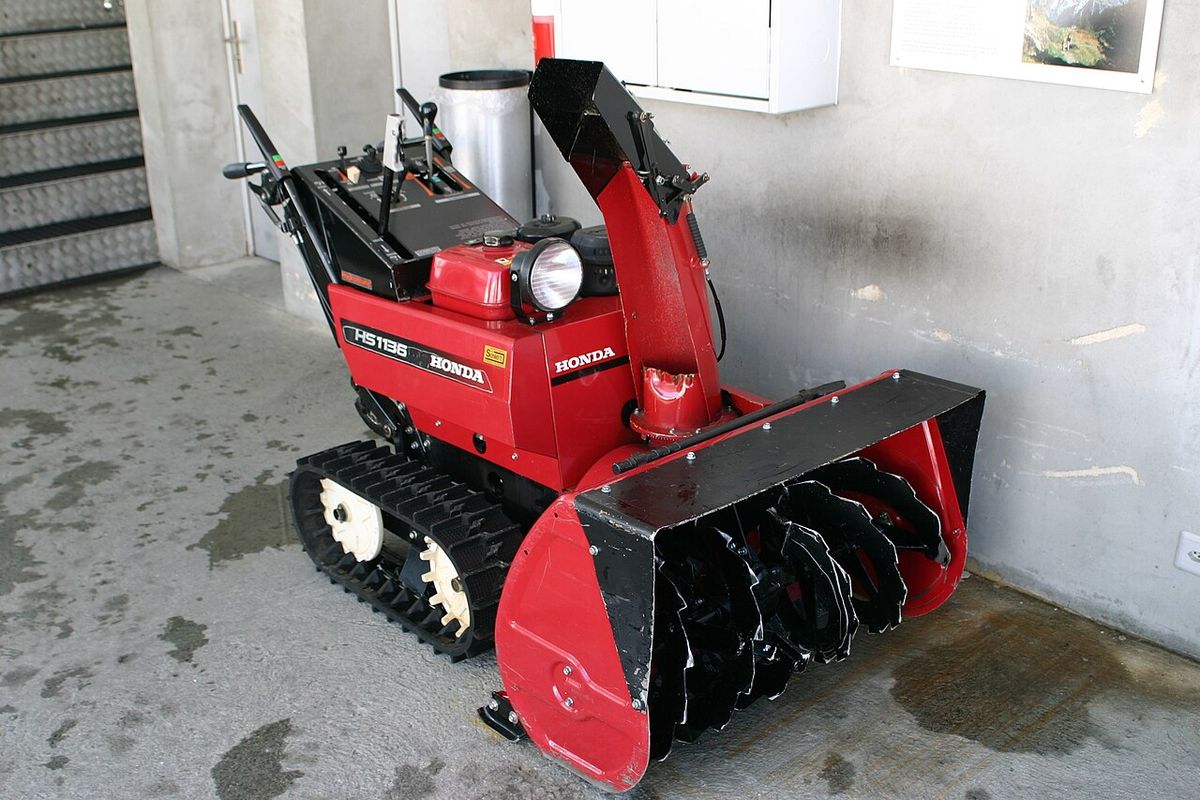
Snow blowers are categorized into two primary design classes, which dictate their capability and suitable applications. The single-stage snow blower is the simpler design, where a single rotating auger, visible from the front, both pulls in the snow and throws it out through the discharge chute. This auger makes direct contact with the ground surface, which makes these models effective on smooth, paved areas but unsuitable for gravel or unpaved driveways as it can pick up and throw debris. Two-stage snow blowers incorporate a more complex system where the initial auger gathers snow and feeds it into a separate, high-speed impeller fan. This second stage is responsible for propelling the snow out of the chute with greater force and to a greater distance.
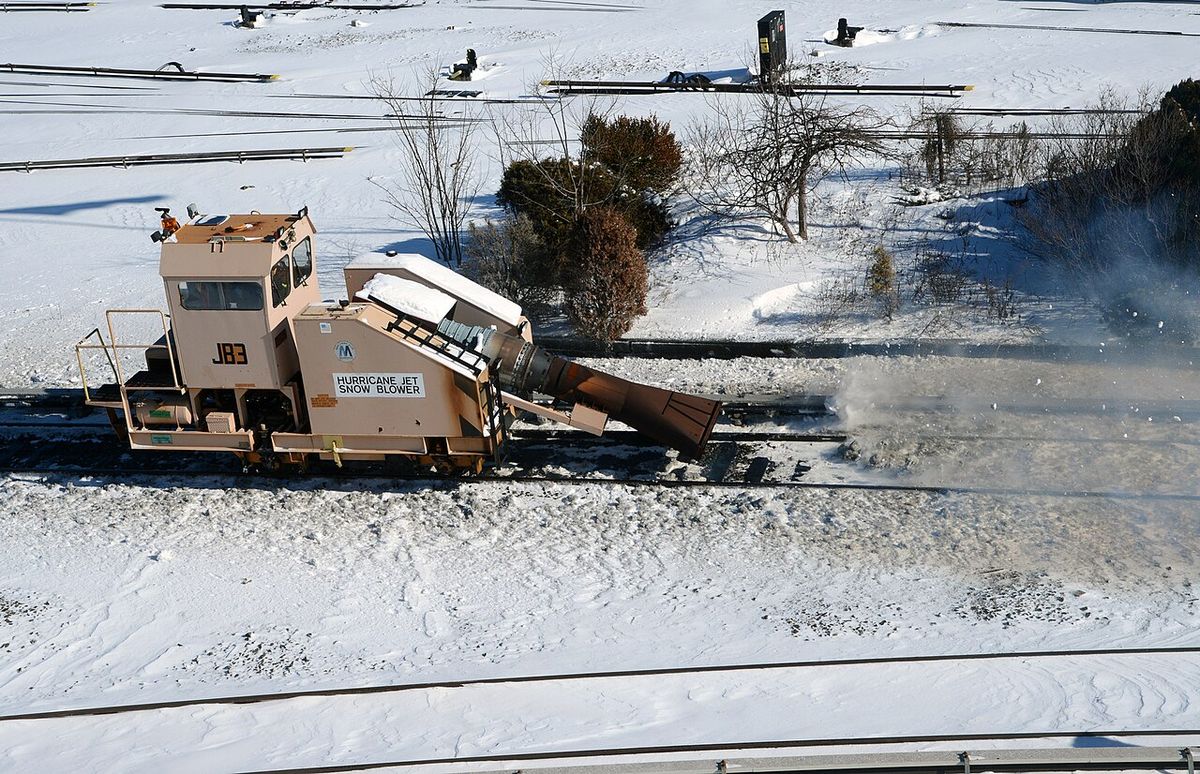
The two-stage design offers several advantages over the single-stage, particularly for heavy or deep snow conditions. Because the primary auger does not need to contact the ground, these machines can be used safely on unpaved surfaces like gravel driveways. The impeller allows them to handle significantly deeper snow accumulations and heavier, wetter snow types. For the largest scale snow removal, such as on railways or airport runways, massive blowers powered by jet engines or other gas turbines are employed. These units, first used in Canada and Russia in the 1960s, use tremendous thrust to both melt and blow snow, clearing paths much faster than mechanical methods but at a substantially higher operational cost.
Historical Development
The conceptual and mechanical evolution of the snow blower spans over a century, with several key patents and innovations leading to the modern machine. Early precursors include a "Railway Screw Snow Excavator" patented by Robert Carr Harris of Maple Green, New Brunswick in 1870. In 1923, Robert E. Cole patented a design that used cutters and a fan to blow snow from a surface. However, the individual widely credited with inventing the first practical, functional snow blower is Arthur Sicard, a farmer and inventor from Sainte-Thérèse, Quebec. Sicard first conceived of a machine to automate snow removal from roads in 1894, driven by the need to reliably transport milk from farms to dairy factories during Quebec's harsh winters.
Arthur Sicard spent decades developing his idea, finally completing his first working prototype in 1925. His machine mounted a large rotating blower mechanism onto a truck chassis, creating a vehicle that could clear roads efficiently. He founded Sicard Industries in Sainte-Thérèse to manufacture his invention, and by 1927, his snow blowers were successfully deployed to clear the roadways of Outremont, which is now a borough of Montreal. This commercial adoption marked the beginning of mechanized municipal snow clearing in Canada. Sicard's company and its designs continued to evolve, and the corporate lineage persists today as a division of SMI-Snowblast, Inc. based in Watertown, New York. The technology continued to advance throughout the 20th century, with manufacturers refining engine power, reliability, and user controls.
The introduction of smaller, single-stage machines brought snow blowing capability to homeowners and small businesses. A significant technological leap occurred in the 1960s with the adaptation of jet engines for extreme snow removal tasks. This innovation was pioneered simultaneously in Russia and Canada to clear deep snow from railway lines, utilizing the immense power and heat of the engines to melt and displace snow rapidly. The Boston Transportation Authority later introduced this method to the United States. The ongoing evolution of snow blowers continues with improvements in engine efficiency, ergonomic controls, battery technology for cordless models, and enhanced safety systems.
Safety Considerations and Injuries
Operating a snow blower requires careful attention to safety due to the powerful mechanical forces involved. The most significant hazard is the rotating auger, which can cause severe injuries if hands or feet come into contact with it while it is moving. A common dangerous scenario occurs when snow, particularly wet and heavy snow, builds up and jams the auger or the discharge chute, stalling the machine. If an operator attempts to clear this jam by hand while the engine is running or the clutch is engaged, the auger can suddenly rotate with great force once the obstruction is freed. This action can result in traumatic injuries, including lacerations, fractures, and amputations of fingers and hands.
The United States Consumer Product Safety Commission provides stark data on the risks, estimating that approximately 5,740 snow-blower-related injuries requiring medical attention occur annually in the United States. Snow blowers are consistently cited as a leading cause of traumatic hand and finger amputations during winter months. The correct procedure for clearing a jam is to first turn off the engine completely. The operator must then disengage the clutch or ensure all power is disconnected. Only then should the jam be cleared using a long object like a broom handle or a specifically designed plastic clearing tool, keeping hands far away from the intake and discharge areas.
In response to these dangers, manufacturers and regulators have implemented several safety features. Most modern snow blowers are equipped with a dead man's switch or control, which requires the operator to continuously hold a lever or bar for the auger and drive mechanisms to operate. Releasing this control immediately stops all rotating parts. This feature is now mandatory in many jurisdictions. Many models also include a dedicated plastic clearing tool, often mounted on the machine itself, to discourage the use of hands. Public safety campaigns consistently emphasize turning off the machine and using a tool to clear jams as the fundamental rule for safe operation.
Types and Scale of Machines
Snow blowers are produced in a vast range of sizes and configurations to meet different needs, from light residential duty to heavy industrial clearing. The smallest units are compact, single-stage electric or battery-powered models designed for clearing light snowfalls from decks, steps, and short driveways. These typically clear a path 18 to 20 inches (460 to 510 mm) wide and are not intended for deep or heavy snow. Mid-sized two-stage gas-powered machines are the workhorses for most homeowners with larger paved or gravel driveways, offering greater power, clearing width, and snow-throwing distance.
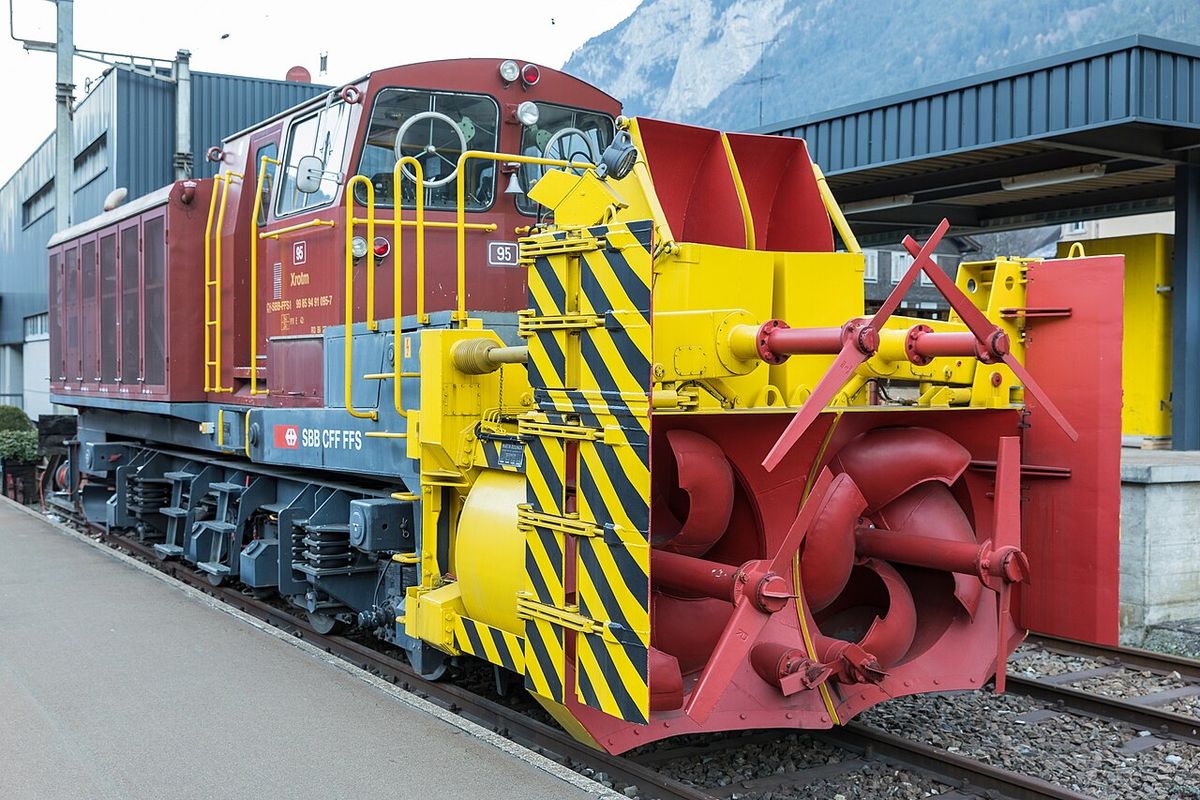
At the commercial and municipal level, the scale increases significantly. Large, heavy-duty snow blowers are mounted on the front of trucks or loaders and are used to clear parking lots, city streets, and highways. These can clear swaths 8 feet wide or more and handle deep snowdrifts. The most formidable snow removal machines are those used for railways and airport runways. These are often custom-built vehicles that can clear a path 20 feet (6 meters) wide or wider and cut through snow packs up to 6 feet (1.8 meters) deep. Their immense power is necessary to maintain critical transportation infrastructure during and after major snowstorms.
The most powerful and specialized category is the jet-engine snow blower. First deployed in the 1960s in Canada and Russia, these machines use the exhaust thrust from a jet engine or gas turbine to simultaneously melt and blast snow off railway tracks or roads. While offering considerable power in a relatively lightweight machine compared to mechanical blowers of similar capacity, they are vastly more expensive to operate due to high fuel consumption. In some cases, such as in Russia, retired military jet engines like the Klimov VK-1 have been repurposed for this use to offset costs.
- Small Residential: Single-stage, clears 18-20 inch path, for light snow.
- Mid-Sized Two-Stage: Gas-powered, for larger driveways and gravel surfaces.
- Commercial Truck-Mounted: Clears swaths over 8 feet wide for streets and lots.
- Railway/Runway Blowers: Clears paths over 20 feet wide and up to 6 feet deep.
- Jet-Engine Blowers: First used in the 1960s in Canada and Russia.
- Power Source Examples: Gasoline, diesel, electric (corded or battery), jet turbine.
Usage and Applications
The primary application for snow blowers is the removal of snow from surfaces where accumulation impedes access or travel. For individual Canadians, this most commonly means clearing residential driveways, sidewalks, and walkways. Their use prevents the physical strain of shovelling and allows for faster clearing after significant snowfalls. Beyond the home, snow blowers are indispensable tools for property managers, business owners, and institutions like schools and hospitals to maintain safe access to buildings and parking areas throughout the winter season.
Municipal public works departments across Canada rely on fleets of truck-mounted snow blowers to supplement snow plows, especially when snow banks become too high for plows to push further or when narrow streets require snow to be fully removed rather than piled. They are crucial for clearing snow from areas where plows cannot efficiently operate, such as around fire hydrants, catch basins, and bus stops. On railways, specialized snow blowers are essential for keeping tracks clear to ensure the safe and uninterrupted passage of freight and passenger trains, particularly in mountain passes and remote areas prone to drifting. Other specific applications include clearing ice rinks, where a light layer of snow must be removed from the surface between periods of a hockey game or before resurfacing.
Airports use massive snow blowers to quickly clear runways and taxiways to minimize flight disruptions. These machines are designed for removing snow from areas where it is problematic. Depending on the design, snow blowers can be pressed into service throwing other things, such as water. This adaptation for other granular materials is not their intended primary function.
- Residential: Driveways, sidewalks, and walkways.
- Municipal: City streets, around fire hydrants, bus stops, and catch basins.
- Transportation: Railway tracks, airport runways, and taxiways.
- Recreational: Clearing snow from the surface of ice rinks.
- Commercial: Parking lots for businesses, hospitals, and schools.
Key Figures and Milestones
The development of the snow blower involved contributions from several inventors over many decades, with key milestones marking its evolution from concept to essential winter tool. The earliest relevant patent was granted to Robert Carr Harris of Maple Green, New Brunswick, for his "Railway Screw Snow Excavator" in 1870. In 1923, Robert E. Cole patented a snowplow design that incorporated a fan to blow snow, representing a step toward the modern snow blower concept. However, the individual whose work directly led to the commercially viable machines used today was Arthur Sicard. Born in 1876, this Quebec inventor is universally credited with creating the first practical snow blower, driven by the practical need to ensure reliable winter transport for Quebec farmers.
Arthur Sicard's invention was driven by a very practical Canadian problem: ensuring reliable winter transport. As a farmer, he was frustrated by roads being blocked for days after snowstorms, preventing milk from reaching dairies. His solution, conceived in 1894 and prototyped in 1925, mounted a large rotary blower on a truck. He founded Sicard Industries in Sainte-Thérèse to build his machines, and their successful deployment in Outremont in 1927 proved their utility. Sicard died in 1946, but his company continued and remains part of the snow removal industry today. His innovation fundamentally changed winter road maintenance in Canada and beyond. Later development involved many unnamed engineers and companies who refined the technology for different scales.
Jet engine snow blowers were first used in Russia and Canada in the 1960s. They were later introduced into the United States by the Boston Transportation Authority. The jet engine both melts and blows the snow, clearing tracks faster than other methods. This method offers considerably greater power in a relatively lightweight machine. However, it is much more expensive than traditional snow removing methods.
- 1870: Robert Carr Harris patents the "Railway Screw Snow Excavator" in New Brunswick.
- 1894: Arthur Sicard first conceives of his snow blower idea in Quebec.
- 1923: Robert E. Cole patents a fan-based snowplow design.
- 1925: Arthur Sicard completes his first working snow blower prototype.
- 1927: Sicard's machines first clear roads commercially in Outremont, Quebec.
- 1960s: Jet-engine snow blowers are first deployed in Canada and Russia.
- Later 20th Century: Introduction of smaller single-stage and two-stage machines for homeowners.
Questions about Snow blower
Who invented the snow blower?
The first practical snow blower was invented by Arthur Sicard, a farmer and inventor from Sainte-Thérèse, Quebec. He first conceived the idea in 1894 to solve the problem of snow-blocked roads hindering milk transport. After years of development, he completed his first working prototype in 1925. He founded Sicard Industries, and by 1927 his truck-mounted blowers were clearing roads in Outremont, Quebec, marking the beginning of mechanized municipal snow removal.
What is the difference between a single-stage and two-stage snow blower?
A single-stage snow blower uses a single rotating auger to both gather snow from the ground and throw it out the discharge chute. This auger contacts the ground, making it suitable only for paved surfaces. A two-stage snow blower uses an auger to gather snow and then feeds it into a separate, high-speed impeller fan that throws the snow. The auger does not touch the ground, allowing use on gravel or unpaved driveways, and the design can handle deeper and heavier snow more effectively.
Are snow blowers dangerous to use?
Yes, snow blowers can be dangerous if not operated correctly. The primary risk comes from the rotating auger, which can cause severe hand and finger injuries, including amputations, especially if used to clear a jam while the machine is powered. The U.S. Consumer Product Safety Commission estimates about 5,740 related injuries annually. Safety requires always turning off the engine and using a long tool to clear jams, never your hands. Modern machines include safety features like dead man's switches to reduce risk.
What are jet-engine snow blowers used for?
Jet-engine snow blowers are used for large-scale, rapid snow removal on railways, airport runways, and major roads. First deployed in Canada and Russia in the 1960s, they use the intense thrust and heat from a jet engine or gas turbine to simultaneously melt and blow away deep snow. They clear tracks much faster than mechanical blowers but are significantly more expensive to operate. Some models use retired military jet engines to help offset the high fuel costs associated with this powerful method.
Can you use a snow blower on a gravel driveway?
A two stage snow blower can be used on a gravel driveway because its auger does not contact the ground. This design makes it suitable for unpaved surfaces. In contrast, single stage snow blowers are unsuitable for use on unpaved surfaces like gravel because their augers do contact the ground. Single stage machines pull snow in and direct it out using only the auger mechanism. Two stage models use an auger to feed snow into a high speed impeller for discharge. Therefore, selecting the correct machine type is crucial for different surfaces.
When were snow blowers first used in Canada?
Snow blowers were first used commercially in Canada in 1927. This occurred when Arthur Sicard's vehicles began removing snow from the roadways of Outremont, Quebec. Arthur Sicard, from Sainte Thérèse, Quebec, is generally credited as the inventor of the first practical snow blower, completing his first prototype in 1925. Canada was one of the first countries to use jet engine snow blowers in the 1960s. These large scale machines use gas turbines to propel and melt snow over rails and roads.
Sources and further reading
- Snow blower (Wikipedia)
- Used Residential Walk-Behind Snow Blowers For Sale (machinefinder.com)
Checked by the Your Space Hamilton desk. Last updated 2026-11-01.