Maud Menten
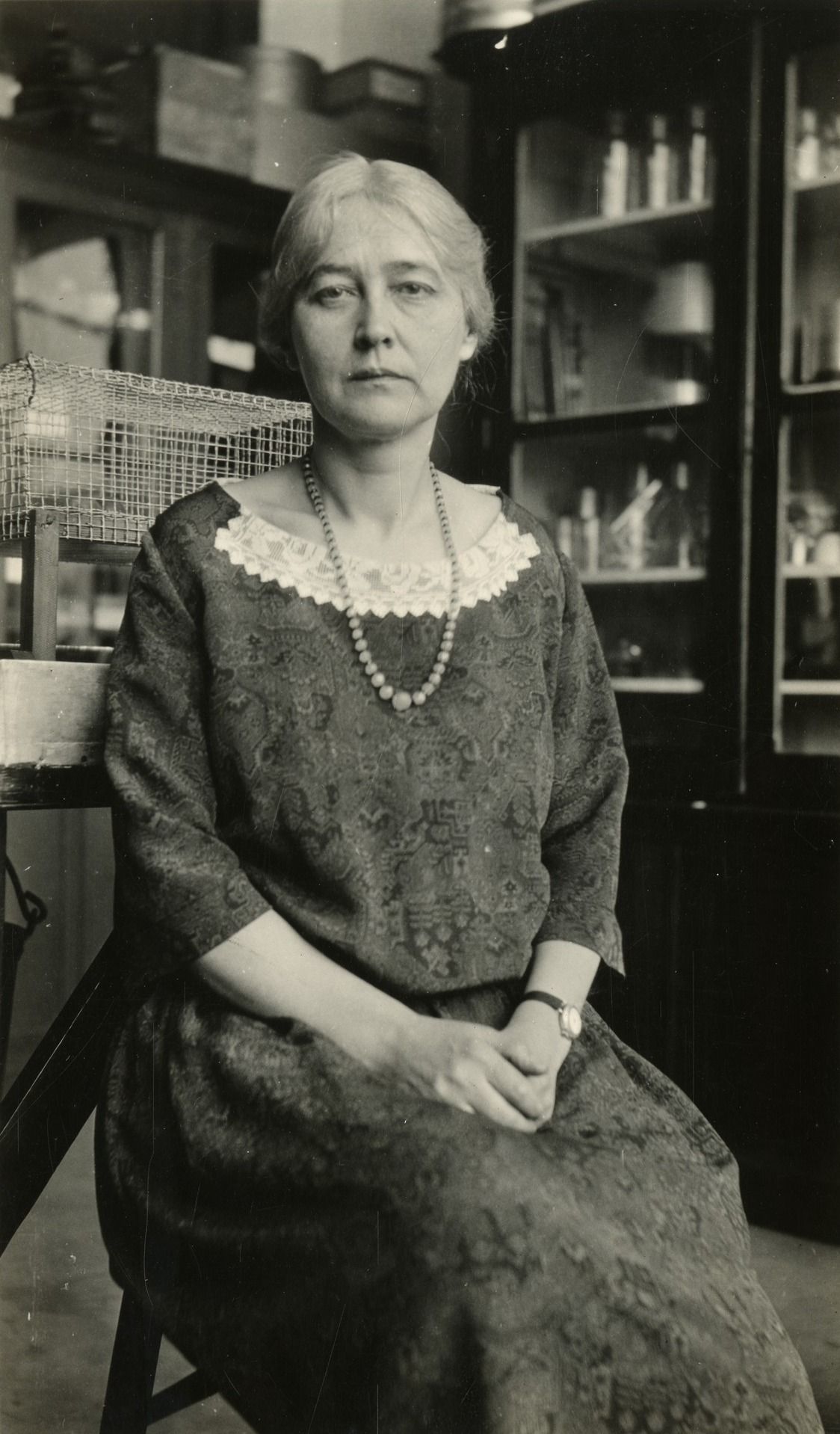
Maud Leonora Menten (March 20, 1879 to July 17, 1960) was a pioneering Canadian physician and biomedical researcher whose work fundamentally shaped modern biochemistry. She is best known for co-discovering the Michaelis-Menten equation in 1913, a mathematical description of enzyme kinetics that is essential to biological and chemical sciences. Despite facing significant barriers as a woman in early 20th-century science, Menten made substantial contributions across multiple fields, including histochemistry, pathology, and immunology, authoring over 70 research publications. Her legacy is honoured in Canada through her induction into the Canadian Medical Hall of Fame and her status as one of the nation's first female medical doctors, with her work continuing to influence global research and education.
Early Life and Education
Maud Menten was born in Port Lambton, Ontario, the eldest of two children to Charles William Menten, a river pilot and boat operator, and Emma Trusler, who was involved in managing family business ventures including a hotel and general store. In 1889, when Menten was ten years old, the family moved west to the Harrison River region of British Columbia, where her father served as postmaster at Harrison Mills and operated boats on the nearby Fraser River. Harrison Mills was a small river transport settlement at the junction of the Fraser and Harrison rivers, where riverboats carried passengers, freight, and mail through the Fraser Valley. Menten spent much of her childhood in this frontier environment, growing up among both settler and Indigenous communities of the Fraser Valley, particularly Stó:lō peoples, and she learned Chinook Jargon, a trade language widely used throughout the Pacific Northwest during the late nineteenth century.
After completing secondary school, Menten attended the University of Toronto where she earned a bachelor of arts degree in 1904 and a master's degree in physiology in 1907. While earning her graduate degree, she worked as a demonstrator in the physiology laboratory at the university, gaining valuable early research experience. Menten wanted to further her medical research, but found that opportunities for women in Canada were scarce at the time, a reality that would shape her career path. As a result, she accepted a fellowship at the Rockefeller Institute for Medical Research and left Canada, arriving in New York City in 1907 to begin her formal research career. She returned to the University of Toronto to complete her medical studies, and in 1911, she became one of the first Canadian women to qualify as a medical doctor, earning her M.D.
Early Research Career and Barriers
Following her master's degree in 1907, Menten immediately encountered the professional restrictions placed on women in Canadian academia and so accepted a fellowship at the Rockefeller Institute for Medical Research in New York City. There she studied the effect of radium bromide on cancerous tumors in rats, and Menten and two other scientists published the results of their experiment, authoring the first monograph published by Rockefeller Institute. She also worked as an intern at the New York Infirmary for Women and Children, gaining clinical pathology experience. After a year at the Institute, Menten returned to Canada and began her studies at the University of Toronto where she earned her medical doctorate in 1911.
In 1912, Menten returned to medical research, working with renowned surgeon George Crile, in whose honour the Crile crater on the Moon is named, on the control of acid-base balance during anaesthesia. Around this time she became acquainted with Leonor Michaelis, who was one of the world's leading experts in pH and buffers, and Menten became attracted to early work of Michaelis in enzyme kinetics. Despite his modest laboratory establishment in Berlin, she made the difficult decision to cross the sea to work with Michaelis, as she still could not find an academic position for a woman in Canada. This move to Germany led directly to her most famous scientific contribution, the Michaelis-Menten equation.
The Michaelis-Menten Equation
In Berlin in 1913, Maud Menten and Leonor Michaelis co-authored a seminal paper in *Biochemische Zeitschrift* that demonstrated the relationship between enzyme concentration, substrate concentration, and reaction rate. Michaelis and Menten used an equation to express the relationship they were investigating: v = (V * a) / (K_m + a) for a steady-state rate v in terms of the substrate concentration a and constants V and K_m (written with modern symbols). A decade earlier, Victor Henri had included an equivalent equation in his doctoral thesis, but he did not appreciate the importance of the steady state nor the simplification that would result from considering the initial rate, and did not use it. The paper deriving the Michaelis-Menten equation is Menten's most famous work and has been translated from its original German into English.
The equation shows not only that each enzyme is specific for its substrate, but also that the rate of reaction increases to saturation as the substrate concentration increases. The constant K_m used in expressing this rate is now called the Michaelis constant, a fundamental parameter in biochemistry that quantifies an enzyme's affinity for its substrate. The Michaelis-Menten equation provided the experimental and theoretical framework that made enzyme kinetics a rigorous, quantifiable science, moving beyond qualitative descriptions. This 1913 work established a mathematical model that is applied in drug design, metabolic engineering, and molecular biology, and it is a required component of biochemistry education in universities worldwide.
Academic Career at the University of Pittsburgh
After her research in Berlin and earning a Ph.D. from the University of Chicago in 1916, Menten still could not find an academic position for a woman in Canada. In 1923, she took a position as part of the faculty of the medical school at the University of Pittsburgh while serving as a clinical pathologist at Children's Hospital in Pittsburgh. She became an assistant professor and then an associate professor in the School of Medicine and was the head of pathology at the Children's Hospital of Pittsburgh. Despite the demands both jobs had, Menten found time to maintain an active research program, authoring or coauthoring more than 70 publications across a span of nearly three decades.
Although her promotion from assistant to associate professor was timely, she was not made a full professor until she was 70 years old, within one year of her retirement in 1950. Her final promotion to full professor, in 1948, was at the age of 69 in the last year of her career, highlighting the gender-based barriers she faced despite her productivity and international reputation. She continued to work on cancer, especially in children, as well as other illnesses of children throughout her tenure. After her retirement from the University of Pittsburgh in 1950, she returned to Canada where she continued to do cancer research at the British Columbia Medical Research Institute from 1951 to 1953.
Major Research Contributions Beyond Enzyme Kinetics
Menten's research portfolio was remarkably diverse and impactful, extending far beyond her famous equation. As part of extensive work on alkaline phosphatase, Menten invented the azo-dye coupling reaction, which is still used in histochemistry. This was described in a major textbook of the 1950s in the following terms: It is not too much to say that the use of this principle was a stroke of genius. She characterised bacterial toxins from B. paratyphosus, Streptococcus scarlatina, and Salmonella ssp. that were used in a successful immunisation program against scarlet fever in Pittsburgh in the 1930s and 1940s. In 1944, she conducted the first electrophoretic separation of blood haemoglobin proteins, anticipating the results of Linus Pauling and his collaborators by several years, though he is usually credited with the discovery.
Maud Menten also worked on the properties of hemoglobin, regulation of blood sugar level, and kidney function. Her early work at the Rockefeller Institute for Medical Research involved studying the effect of radium bromide on cancerous tumors in rats. She maintained a focus on cancer research throughout her life, especially cancers affecting children. After her retirement from the University of Pittsburgh in 1950, she returned to Canada and continued her cancer research as a research fellow at the British Columbia Medical Research Institute from 1951 to 1953.
Key research contributions by Maud Menten include her co-authorship of the famous 1913 paper on enzyme kinetics with Leonor Michaelis, which established the Michaelis-Menten equation. She invented the azo-dye coupling reaction for histochemistry, a procedure that remains in use. Menten characterized bacterial toxins used in a successful immunization program against scarlet fever in Pittsburgh. She also conducted the first electrophoretic separation of blood hemoglobin proteins in 1944.
- Co-discovery of the Michaelis-Menten equation for enzyme kinetics (1913).
- Invention of the azo-dye coupling reaction for histochemistry, used to visualize alkaline phosphatase.
- Characterization of bacterial toxins used in a scarlet fever immunization program in Pittsburgh.
- First electrophoretic separation of blood hemoglobin proteins (1944).
- Over 70 scientific publications on topics including cancer, kidney function, and blood chemistry.
- Early research on the effects of radium bromide on cancerous tumors in rats at the Rockefeller Institute.
Personal Life, Character, and Final Years
Colleagues and biographers portray Menten as a petite dynamo of a woman who wore Paris hats, blue dresses with stained-glass hues, and Buster Brown shoes. She drove a Model T Ford through the University of Pittsburgh area for some 32 years and enjoyed many adventurous and artistic hobbies, including playing the clarinet, creating paintings worthy of art exhibitions, climbing mountains, going on an Arctic expedition, and enjoying astronomy. By the time of her death, she had mastered several languages, including Russian, French, German, Italian, and at least one First Nations language, Halkomelem, in addition to the Chinook Jargon she learned as a child. Although Menten did most of her research in the United States, she retained her Canadian citizenship throughout her life, returning to her home country after her retirement from Pittsburgh.
Poor health forced Maud Menten's retirement in 1955. She died on July 17, 1960, at the age of 81 in Leamington, Ontario. At her death, colleagues Aaron H. Stock and Anna-Mary Carpenter honored her in an obituary in the journal Nature. They noted she was untiring in her efforts on behalf of sick children and was an inspiring teacher. They stated she would be remembered for her keen mind, dignity of manner, unobtrusive modesty, wit, and above all for her enthusiasm for research.
Honours, Memorials, and Scientific Legacy
Maud Menten's contributions have been recognized through numerous posthumous honours that affirm her status as a Canadian scientific pioneer. In 1998, she was posthumously inducted into the Canadian Medical Hall of Fame. She also was honored at the University of Toronto with a plaque. At the University of Pittsburgh she was honored with a named chair and memorial lectures. Port Lambton, Canada, where Menten was born, installed a commemorative bronze plaque about her in 2015, ensuring her story is known in her hometown.
Her most significant legacy is the continued use and teaching of the Michaelis-Menten equation in every biochemistry textbook and course around the globe. The constant K_m she helped define is a standard parameter reported in enzyme studies. Her inventive azo-dye coupling histochemical technique continues to be a standard tool in pathology and cell biology laboratories for localizing enzyme activity in tissues. Menten's career demonstrates scientific excellence achieved despite systemic barriers, and she serves as an important figure for women in science.
Throughout her career Menten was affiliated with many scientific societies. Her work has had a direct and lasting impact on fields as diverse as clinical pathology, immunology, and chemical biology. The immunisation program against scarlet fever in Pittsburgh that used toxins she characterized represents a direct application of her research to public health. The electrophoretic separation of hemoglobin she performed in 1944 paved the way for later discoveries in sickle cell disease and other blood disorders, influencing the course of medical diagnostics.
Questions about Maud Menten
What is Maud Menten most famous for?
Maud Menten is most famous for co-discovering the Michaelis-Menten equation in 1913 with German biochemist Leonor Michaelis. This mathematical equation describes the rate of enzyme-catalyzed reactions and is a fundamental principle in biochemistry and molecular biology. It demonstrated that reaction rate is proportional to enzyme-substrate complex formation and introduced the Michaelis constant (K_m) to measure enzyme affinity. The equation remains essential to scientific education and research worldwide.
Where was Maud Menten born and educated?
Maud Menten was born on March 20, 1879, in Port Lambton, Ontario. She earned a Bachelor of Arts in 1904 and a Master's in physiology in 1907 from the University of Toronto. She became one of the first women in Canada to earn a medical doctorate from the University of Toronto in 1911. She later obtained a Ph.D. in biochemistry from the University of Chicago in 1916.
What barriers did Menten face as a woman in science?
Menten faced significant gender-based barriers throughout her career. After earning her medical degree, she found that Canada offered no academic research positions for women, forcing her to seek fellowships in the United States and Germany. Despite a prolific research career at the University of Pittsburgh, where she authored over 70 papers, she was not promoted to full professor until 1948, at age 69, just one year before her retirement. These systemic obstacles defined much of her professional journey and delayed formal recognition.
What other scientific contributions did she make besides the famous equation?
Beyond the Michaelis-Menten equation, Menten made several other major contributions. She invented the azo-dye coupling reaction for histochemistry, a technique still used to visualize enzymes in tissues. She characterized bacterial toxins from B. paratyphosus and Streptococcus scarlatina used in a successful scarlet fever immunization program in Pittsburgh. In 1944, she performed the first electrophoretic separation of hemoglobin proteins. Her research also spanned cancer studies, kidney function, and blood sugar regulation.
Where did she work during her career?
Menten's research career took place primarily in the United States, though she remained a Canadian citizen. After early work at the Rockefeller Institute in New York and with Leonor Michaelis in Berlin, she joined the University of Pittsburgh School of Medicine in 1923, where she remained until retirement in 1950. She simultaneously worked as a pathologist and head of pathology at the Children's Hospital of Pittsburgh. After retiring from Pittsburgh, she returned to Canada for a final research post at the British Columbia Medical Research Institute from 1951 to 1953.
How is Maud Menten honoured in Canada today?
Menten is honoured in Canada as a national scientific pioneer. She was posthumously inducted into the Canadian Medical Hall of Fame in 1998. The University of Toronto, her alma mater, has a plaque commemorating her achievements. Her birthplace, Port Lambton, Ontario, installed a commemorative bronze plaque about her life in 2015. Her most enduring honour is the continued global use of her scientific discoveries, including the Michaelis-Menten equation and her histochemical methods, in education and research.
Sources and further reading
- Maud Menten (Wikipedia)
- Maud Menten: Pioneering Pediatric-Perinatal Pathologist ... (pmc.ncbi.nlm.nih.gov)
- The Incredible Life Of Maud Menten (bcmag.ca)
- MENTEN, MAUD LEONORA (Maud, Lenora, Leonora) (biographi.ca)
Checked by the Your Space Hamilton desk. Last updated 2026-11-01.